DD
MM
YYYY

PAGES

DD
MM
YYYY

spot_img

PAGES

Home Blog Page 4876

CBN Disburses N41bn to Wheat Farmers In Nigeria Amid Russia-Ukraine War

0

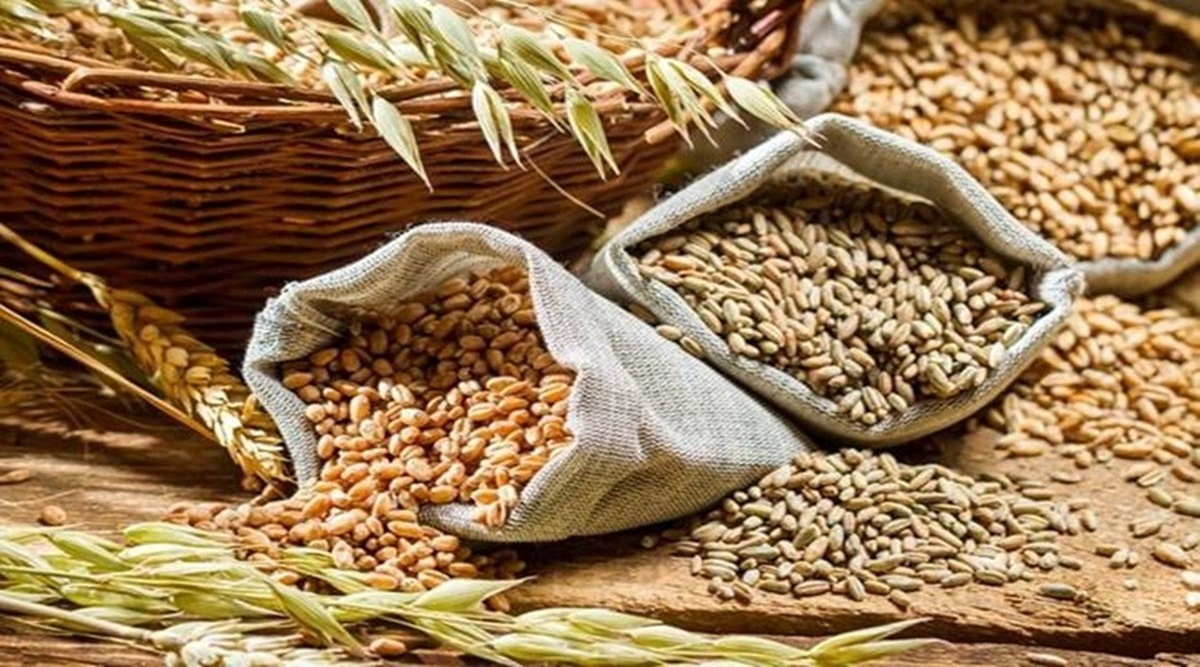
The central bank of Nigeria (CBN) has disbursed the sum of N41 billion to wheat farmers amid the Russian-Ukraine war to cushion the effect of the war.

These farmers were given these intervention funds to aid production as the availability of the wheat dropped drastically in the country due to the impacts of the Russia and Ukraine war.

The Central Bank of Nigeria (CBN), through Heritage Bank, aided in disbursing the funds. Heritage Bank Executive Director, Oko-Oboh while speaking at the Chartered Institute of Bankers of Nigeria’s (CIBN) 15th Annual Banking and Finance Conference, tagged  “Repositioning the Financial Services Industry for an Evolving Global Context”, stated that the Bank had to partner with the CBN to support wheat farmers to enable the growth of wheat in the country following the setback faced in the importation of the staple crop.

He said, “As a Bank, we partnered CBN and other stakeholders such as wheat farmers association of Nigeria, wheat farmers, processors and marketers’ association of Nigeria, Lake Chad Research Institute and other development partners, flour mills of Nigeria, and several seed companies and others to support over 100,000 farmers in wheat production.”

He further stated, “Also, Heritage Bank further factored consideration of value addition of financial services and products flowing to and/or through value chain participants to address and alleviate constraints to growth that have distorted product financing, receivables financing, physical-asset collateralization, risk mitigation products, and financial enhancements.”

Wheat is one of the most consumed staples in Nigeria, as the value chain is quite large that it can be processed into a wide range of foods including bread, crumpets, muffins, noodles, pasta, biscuits, cakes, pastries, cereal bars, sweet and savoury snack foods, crackers, crisp-breads, sauces, and confectionery.

Wheat was Nigeria’s third most imported product in 2019, as according to the observatory of Economic complexity, Nigeria’s import of $1.48 billion worth of wheat in 2019 made it the world’s 6th largest importer of the cereal grain that year with its two top sources from the US, and Russia.

Due to Nigeria’s dependence on imports to satisfy growing wheat consumption, it faced its biggest challenge this year due to Russia’s invasion of Ukraine as 30 percent of the world’s wheat exports were cut off from the global market.

As the war intensified, in the last few months, wheat-based products such as the popular pre-packed wheat flour and bread (sliced and unsliced) have witnessed a steady price increase across the country.

Nigeria and other import-reliant countries, therefore, had two options to either invest massively in critical infrastructure in states where it has competitive and comparative advantage to boost wheat production or look elsewhere away from Russia and Ukraine to import wheat.

With the recent disbursement of N41 billion naira by the CBN to wheat farmers in the country, it will cushion the impact of the Russian-Ukraine war as it will aid in Wheat availability, thereby ensuring stability it the prices of wheat products.
Vendease, African Food Procurement Startup, Raises $30m in Series A Round

0

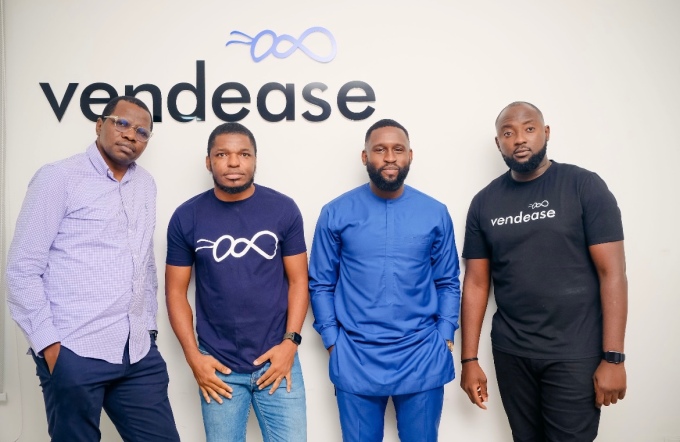
For years, African restaurants have struggled with procurement and preservation of foodstuffs, resulting in waste of food products and loss of revenue. This situation created a huge friction in the African food markets that inspired Tunde Kara, Olumide Fayankin, Gatumi Aliyu, and Wale Oyepeju, to found Vendease.

The startup, which focuses on procuring and preserving food for restaurants in Africa – moving food from farms to restaurants, has grown into a multi million dollar company that has continued to attract investors.

Vendease announced that it has raised $30 million ($20 million equity and $10 million debt) in a Series A funding round. The round was led by Partech Africa and TLcom with participation from existing investors such as VentureSouq, Hustle fund, Hack VC, GFR Fund, Kube VC, Magic Fund and Kairos Angels.

Kara CEO, Fayankin COO, Aliyu CPO and Oyepeju CTO, came together in 2020 with the vision of solving Nigeria’s food industry’s inefficiencies and eventually expanding to other African markets. The platform is designed to mitigate losses and help food businesses thrive.

In about two years since it was founded, Vendease has raised more than $35 million. Last year, the YC-backed startup raised $3.2 million to expand its operations across Nigeria.

Kara told TechCrunch that the company plans to use the new funds to expand and consolidate its operations in eight cities in Nigeria and Ghana. He also said that it is planning to move into new markets and build new products to increase customers’ efficiency.

“We’re building technology to efficiently move food from the point of production to the point of consumption. Everything we build at Vendease: financing, logistics, warehousing, inventory management, is tailored towards ensuring that food flows efficiently from that point of production to the point of consumption,” he said.

Vendease, described as a series of stacks, said most of its customers, including restaurants and food businesses, hospitals, hotels and schools, are subject to $100 billion in annual losses due to several factors. The factors include unreliable supply, wastage, limited data on making informed procurement decisions and little or no capital to fund procurement.

Over the last 12 months, the company said it has moved approximately 400,000 metric tonnes of food for its over 2,000 customers, helping them to save about $2 million in procurement costs and over 10,000 in person-hours.

Kara said that Vendease has saved its customers almost $500,000 in wastage costs due to overstocking by using the businesses’ data and providing them with the necessary resources — particularly around inventory management.

“Since businesses don’t have access to accurate data, they usually buy what they don’t need. We help them to solve that problem in two ways. One, because businesses know they can get anything on our platform in 12 hours, they don’t need to stock some of the things they would’ve stored before. Two, they can also track what they bought and know how much is left before they need to buy again,” he said.

Besides food procurement and preservation, Vendease also offers financial services – Buy-Now-Pay-Later (BNPL) to its customers, which it now uses financial institutions that provide its financing – a different format from its earlier method. The company said it has been able to provide businesses more than $12 million worth of inventory via this embedded finance product.

“Something important to us about our current growth and impact is despite the ongoing global food supply shortage and inflation, Vendease is helping our users save big and provide relative stability for their stock levels. Shielding them (to a large extent) from the most severe effects of the current global shortage. What excites us is we can have even more impact as we extend and entrench our technology within Africa and the rest of the world. And that’s what keeps us going,” Kara said.

Can someone solve the O.D.E of Nigeria and connect the bonds via these polls?

1

Those days, in FUTO, JAMBITES were warned of a mystical course codenamed “O.D.E” and trumpeted in Igbo as “O di egwu” [something mystical, dangerous and challenging]. That course was actually Ordinary Differential Equations (ODE).

Interestingly, it was the easiest course in the university because two smart men taught it: Dr Oyet and Dr Effiong. “Recall from equation 10 before the strike”…Effiong would begin. Effiong had no course notes and could remember the last thing he wrote on a blackboard four months later. He was simply amazing!

As you try to deal with these men, another great man – Dr. Ngochindo – who taught Organic Chemistry was memorable. His style was unusual: the bonds are there and you must see them as he backed the class talking to the blackboard!

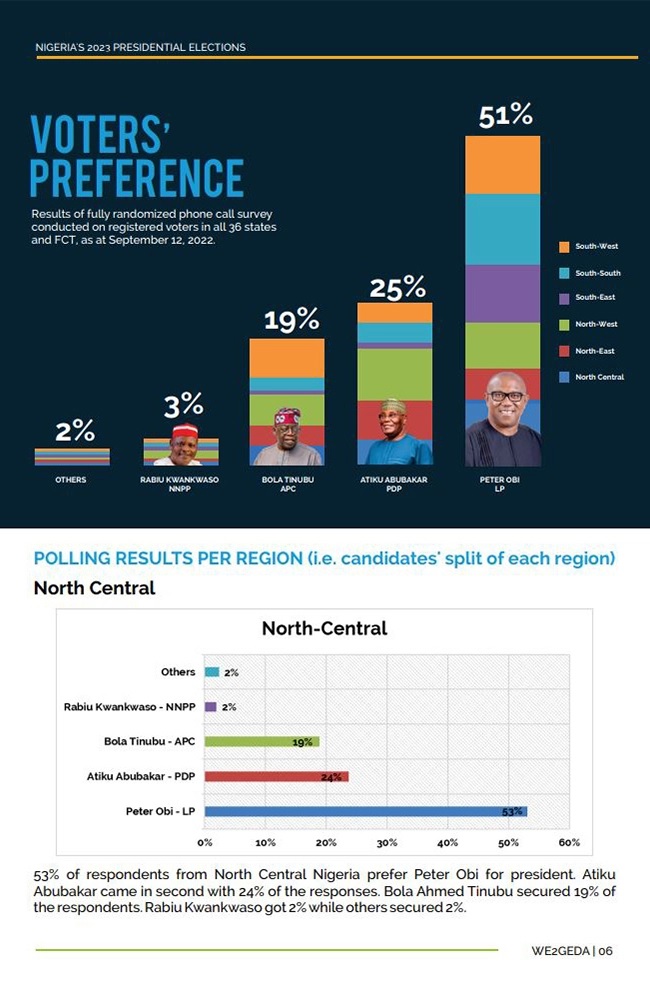
These men are needed for a major service in Nigeria on a new poll: “A new poll conducted by a public advocacy group We2Geda Foundation said the presidential candidate of the Labour Party (LP), Peter Obi, is ahead of other candidates by 51 percent. The poll result was dated September 17, 2022, and signed by the Chairman, Board of Trustees of We2Geda, Ibrahim Abdulkareem, as well as a member of the BoT, Muna Obioha.”

The group said 51 percent of respondents suggested voting for Obi as their preferred candidate, 25 percent suggested voting for Atiku Abubakar of the Peoples Democratic Party (PDP) while Bola Tinubu of the All Progressives Congress (APC) ranked third in the voter preference poll with 19 percent.

“Further analysis also shows that Peter Obi remained a consistent favourite in the four major geopolitical zones including North-Central, South-South, South-West and South-East, while Alhaji Atiku Abubakar was the poll leader in the NorthEast and North-West zones,” the group said.

We2Geda explained that Nigerians between 26 and 50 years constituted the highest number of respondents in a random survey with a total of 15,438 registered voters in 36 states and the Federal Capital Territory.

Can someone solve the ODE of Nigeria and connect the bonds via these polls? It is #open

Comment on LinkedIn Feed

Comment : Its not about the chart or variance. For this poll to be considered at all, the volume of respondents is needed and if I may ask, how did you go about checking for uniqueness of responses?

My Response: The questions you are asking are things they provided in their report. Of course, I cannot add those in a LinkedIn post!

Comment 1b: 15,438 registered voters in 36 states too insignificant to matter for a country of over 200million. I’ve just read an extract of their report. Thanks and no thanks

My response: You need to revisit your statistics class notebook. They oversampled. 15,500 for 200 million in a scientific poll is oversampling! Typically, you need about 800-2,000. It is scientific but it is voodoo for those who do not understand the science of polling. In US, the average size is 1,000 and they use that to model for close to 330 million people . Look at the sample here https://projects.fivethirtyeight.com/biden-approval-rating/ .

Comment 1c: I do not need to revisit my statistics thanks. This is because I understand that the same techniques can not be applied as it was in the US to Nigeria whose elections are affected by various and different factors. This polls has used phones as a means of collecting data. Can this method effectively and uniquely cover 50% of the electorates in Nigeria? In the US maybe, in UK maybe, in Australia, maybe, in Canada maybe but in Nigeria, I ask again can it? Same can be said of online polls when it comes to Nigeria. So using a sample data that effectively omits a vast majority of the electorates should be ignored and politely made insignificant.

My Response: his polls has used phones as a means of collecting data. Can this method effectively and uniquely cover 50% of the electorates in Nigeria?” Yes, weight. If Americans can use 1,000 to model 330m people, 15,500 for 200m is just enough with appropriate weighing. Yet, I am not saying they are correct but I am saying that the sample size does not need to be 10 million to be accepted. I do not believe these polls because the models are nascent with limited historical data for validity. But the sample size is fair.


Tekedia Capital Portfolio, Cinderbuild, Raises Fund Today

0

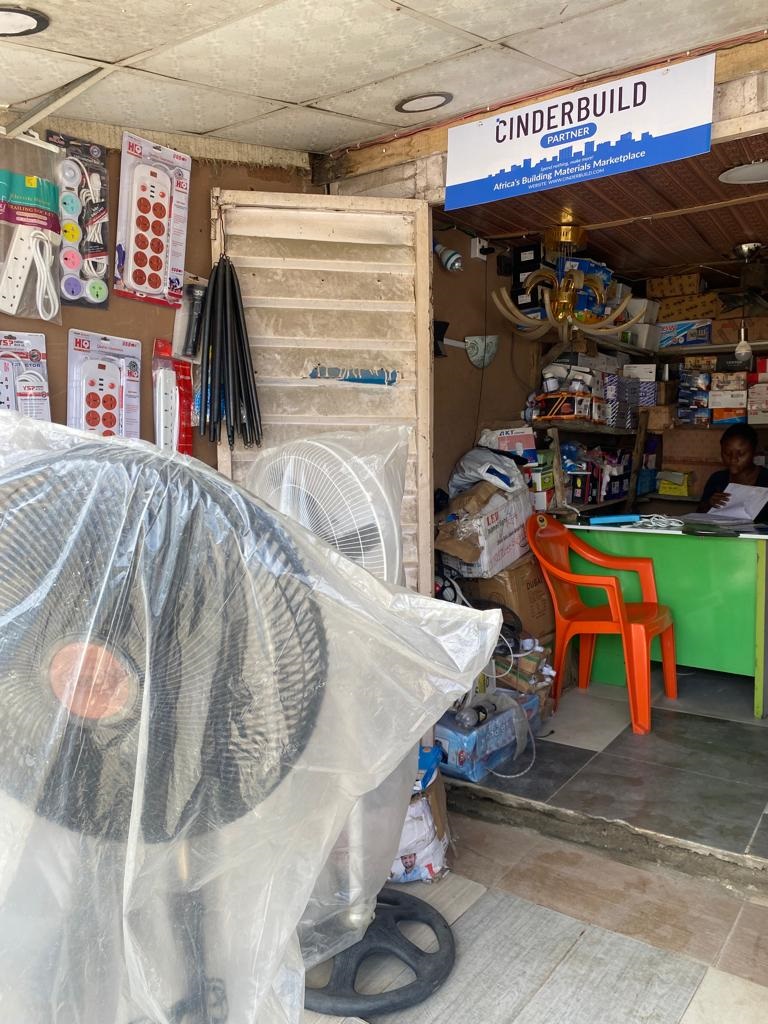
I want to congratulate our CinderBuild Inc. team for the successful fundraise today. Congratulations. Cinderbuild is Africa’s leading building and construction material marketplace. It brings bulk off-takers and suppliers onto one collaborative platform, streamlining the materials procurement process from requisition to delivery.

It offers financing, logistics, price discovery, etc by digitizing every aspect of buying and selling these materials. As you buy building materials, look for the Cinderbuild Partner seal in stores. We power vendors as we deepen the operating system to fix frictions in that industry.

Cinderbuild is a Tekedia Capital portfolio startup. To learn more about Cinderbuild, go here 

For Tekedia Capital, go here 

Africa’s Fastest Internet Speed Still Ranks Below Global Average

0

Africa has continued to lag behind when it comes to mobile internet speed, falling way behind other regions. The 2022 Speedtest Global Index published by Ookla, a US-based internet speed analysis firm, noted that not even the country with Africa’s top mobile internet speed is close to the global average.

The survey, reported by Quartz, said the continent’s fastest internet country, South Africa, failed to meet the global average internet speed.

South Africa has an average mobile internet download speed of 68.9 megabits per second (mbps), which significantly falls short of the global average mobile download speed of 77.7 mbps.

According to the report, the Southern Africa country ranks 46th globally, and in Africa it is followed by Togo, Mauritius, Morocco, Botswana at download speeds.

The world’s top mobile internet speeds are in the United Arab Emirates, South Korea, Qatar, Bulgaria, and Norway which have speeds of 258 mbps, 242.3 mbps, 241.7 mbps, 216.6 mbps, and 191.3 mbps respectively.

Internet speed in Africa and 5G

Quartz, using Ookla’s report, looked at how Africa’s mobile internet’s speed is doing in the era of 5G. With some countries like Nigeria already rolling out the fifth generation network infrastructure, it is expected that internet speed will improve significantly enough to compete at the top in global ranking.

The report said that Ookla also compared mobile internet performance in the second quarter of 2022 on modern chipsets across 21 mobile network operators, with results showing that median download speeds were as low as 2.89 mbps in Guinea and as high as 65.95 mbps in South Africa.

“We can clearly see the impact that 5G has on overall performance as South African operators came first thanks to having 5G networks in place. MTN South Africa was well ahead of the rest of operators, despite facing challenges with load shedding, with median download speed of 65.95 mbps, followed by Vodacom South Africa with a median download speed of 48.70 mbps. If we take 5G out of the equation, Safaricom Kenya was the fastest operator among the analyzed operators,” Sylwia Kechiche, principal industry analyst, enterprise at Ookla says in the report.

It further noted that while more than 13 nations are testing 5G networks, over 40 nations are yet to lay down groundwork for the creation of 5G spectrums. This could keep them locked out of the emerging global digital economy, which demands reliable and fast internet.

For instance, Airtel Uganda has Africa’s highest upload median mobile speed at 14.84 mbps while Guinea’s MTN Guinea has the lowest—1.55 mbps, meaning the continent is lagging behind in the social media video revolution.

Quartz, quoting the survey, pointed out factors contributing to slow internet speed in Africa, including internet outages and shutdowns.

It said that during the second quarter of 2022, users reported 46,810 incidents of internet outage for Vodacom and 34,882 for MTN which is present in 17 African countries.

“There were two top issues reported: no signal and no mobile internet: lack of signal accounted for the majority (46%) of Vodacom’s reported outages, followed by inability to access mobile internet (36%),” the study says. But that was reversed for MTN where majority of the hitches were related to mobile internet (43%), followed by no signal (40%). “Noteworthy is the fact that there were reports of total blackouts: 7% for Vodacom and 5% for MTN.”

Close to half of the countries in Africa are notorious for internet censorship, with blackouts, total shutdowns, social media restrictions and throttling causing the continent to lose billions of dollars in the past four years, the report said.

The survey further notes that mobile internet performance is dependent on the reliability of the underlying infrastructure “such as access to fiber backhaul and reliable power supply, spectrum availability as well as end-user devices.”