DD
MM
YYYY

PAGES

DD
MM
YYYY

spot_img

PAGES

Home Blog Page 4879

Nigerian Civil Aviation Authority NCAA Reports 93 Bird Airstrikes In The First Six Months Of 2022

0

The Nigerian Civil Aviation Authority (NCAA) has disclosed that a total of 93 bird airstrikes were recorded across airports in the country in the first six months of 2022.

Lagos had the highest number of airstrikes with 54 incidents that happened at the Murtala Muhammed Airport (MMA).

The high rate of bird strikes according to the NCAA often leads to airlines spending huge resources to replace engines damaged by such incidents or other parts of the aircraft that hit the birds.

They disclosed that Airlines also lose revenue running into millions of naira when such damaged aircraft are grounded, waiting to be repaired and taken into the air again, which could take weeks.

This was disclosed by Head Bird/Wildlife Hazard Control NCAA, Azika Edozie while speaking at a workshop organized by Search and Rescue Mission of the Nigerian Airspace Management Agency (NAMA).

He said: ”My record shows that we have had at least 93 bird strike incidents in all our airports between January this year to June. And out of this number, 54 of it happened in Lagos Airport alone, which represents about 70 percent of the total occurrences.

”We all have to proffer a solution to this menace and I do hope we have a lasting solution to it because everyone, especially the airlines are losing money.”

He further stated that the responsibility of keeping the airspace safe from bird incidents lied with every stakeholder in the industry, including airline operators, security agencies, and the Federal Airports Authority of Nigeria (FAAN).

He however disclosed that he is optimistic that the agencies in charge will provide a lasting solution to curb such incidents from occurring, as these airlines lose millions of dollars annually.

Also, commenting on this is Adetunji Adetutu, Head of Unit, Bird Control, FAAN, Murtala Muhammed International Airport (MMIA), Lagos in his presentation, emphasized the fact that airstrikes were unavoidable as no airlines are immune from experiencing such

Adetutu explained that FAAN as the airport landlord was doing its best to curb the spread of the incident through the procurement of modern equipment, which he said had gone a long way to reduce its impacts.

He pointed out that some pilots of these airlines are to be blamed for the high rate of airstrikes, stating that they were always in a hurry to depart an airport for the other and violate the instructions of Air Traffic Controllers (ATC) and insisted that it was necessary for the airlines and their pilots to also have a change of culture by adhering to the instructions issued by ATCs.

In his words, ”The final say on what happens to the aircraft lies with the pilots. Until the ATC gives clearance for pilots to depart or land, it is necessary for pilots to listen to their advice.

”Airline operators should have a change of culture on how we carry out our duties. It’s the suitability of the environment that bring birds to the airport environment. We have water, shelter, and food around the airports. Runway should be free of activities at take-off and landing.”

“Apart from birds, we also have wildlife animals, which are also strikes. We hope to propose on mitigation in order to address it. We also need to know the activities of birds too. Statistics that was given earlier indicate that 93 bird incidents were recorded as of September 17, 2022, but 32 of these occurred in just two months.”

It is imperative for the NCAA to take the necessary measures to curb these airstrikes because they distort flight schedules, threaten airspace, and cost a lot of money to fix affected aircraft.

The Baobab Network Invests $200,000 In Four African Startups To Scale Their Business

0

The Baobab Network, a Nairobi-based accelerator that invests in early-stage tech companies across Africa, has recently invested $200,000 in four African startups.

Each of these startups will receive $50,000 in funding and growth support to enable them to scale their business.

The selected cohorts comprise startups from Ethiopia (Shemach), Nigeria (Oval Interactive), and two from South Africa (Lemon And Local Knowledge)

A look at the selected startups

Shemach (Ethiopia):

Based in Addis-Ababa, Ethiopia, Semach is a last-mile FMCG company that connects retailers with manufacturers, directly delivering products to the shop.

Built by a team of passionate and industry-experienced individuals, the startup was motivated to start the business based on observing their local small retailer.

Shemach is solving a long and inefficient supply chain by offering a digital one-stop marketplace for retailers and manufacturers that allows users to get back their time, and money and increase profitability. 

They are in a well-proven market with large players like MaxAB IN Egypt and Alerzo in Nigeria having similar models. Their business model consists of a 6% commission (Which will widen with logistics efficiency and bulk buying) at the moment with a vision of adding BNPL. 

Their traction since January 2022 has been, ~2000 orders delivered, Onboarded 2700 registered retailers, and 11 local FMCG brands. They have just closed a landmark partnership with Unilever in Ethiopia which will impact their take rate.

Oval Interactive (Nigeria):

Oval Interactive is the next generation of online video interactive platforms based in Lagos, Nigeria.The company has built a unique platform and technologies enabling interactive videos, with a combination of cloud technology that enables low-latency video streaming with web and mobile interfaces that allow greater user interaction, data collection, and audience monetization.

The company’s mission is to connect with, engage, and transform the next billion people coming actively online via meaningful mobile experiences.

Lemon Startup (South Africa):

Lemon is a B2B Marketplace for industrial supplies based in Johannesburg, South Africa.

The startup offers a one-stop shop for customers to find, compare and buy industrial supplies, also providing a single point of access for buyers within an enterprise.

Lemon’s digital-first approach eliminates manual processes and reduces time to purchase, freeing procurement teams from high-volume transactional orders.

Local Knowledge (South Africa)

Local knowledge is a tour guiding company that is dedicated to doing something completely unique.

The startup aims to move away from the main tourist attractions and look to show its guests the best-kept secrets that Cape Town has to offer.

By avoiding the main tourist attractions, the company provides an authentic experience as it ensures that guests get immersed into the location and the culture of the places they are taken to.

The company in an effort to thrill their guests, show them what locals in the country enjoy doing on a regular basis, as well as a perspective of what the city has to offer.

Speaking on the cohort, Christine Namara, program lead at The Boab Network, said:  “Our companies have gone on to raise more than $50m in follow-on funding since we first launched our accelerator in 2019, so the model is definitely working.

These selected cohorts will join 25 other startups that The Baobab Network has invested in since it launched its accelerator in 2019, including 5 from the first cohort earlier this year.

The Playbooks of Business At Tekedia Mini-MBA

0

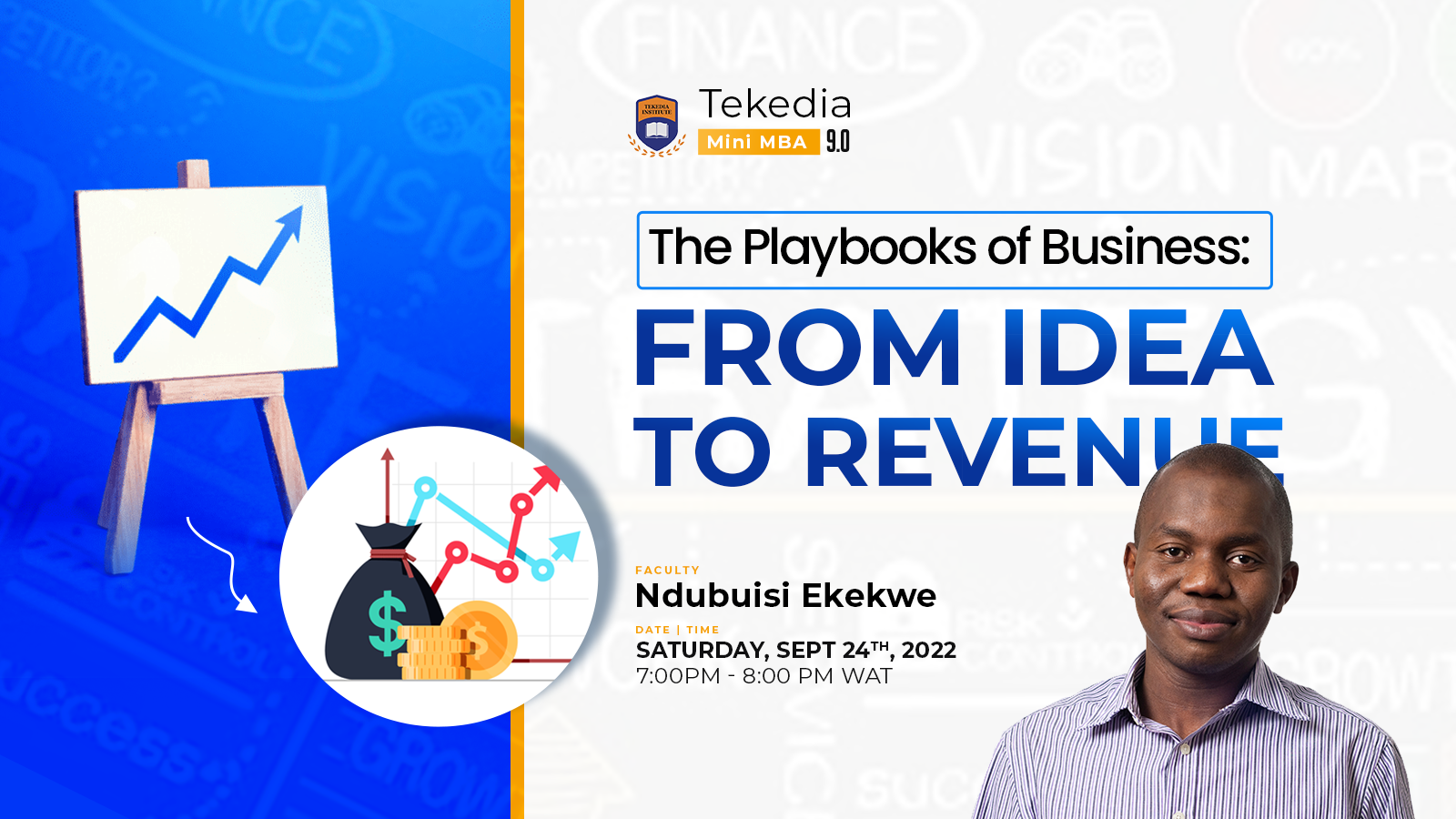
It is one of my favourite sessions in Tekedia Mini-MBA. It is amazing as I take time to explain that translation from “Idea” to “Revenue” in companies. There are many components to make that happen. As a lovable Physics student in secondary school, I like to use Physics to explain things. Here, the word is “transduction”, moving from one energy state to another. The “idea state” has to move to the “revenue state” and for that to happen, you must exert energy in the system. The energy in this case comprises many things organized around processes, tools, and people.

The energy in this case comprises many things organized around processes, tools, and people. Simply, it is the  Grand Playbook of Business. And from Oriendu Market Ovim to Goldman Sachs trading desk in New York, the DNA of all thriving businesses is the same: fix your customer frictions by deploying capabilities, building products and services, via efficient organization of the factors of production.

If you have not joined, go here 

Ndubuisi Ekekwe To Participate in an Event in UN House, Abuja Nigeria

0

On October 14, along with  Matthias Schmale ( United Nations Resident & Humanitarian Coordinator Nigeria), I will lead a conversation on Youth Development and Empowerment in the UN House, Abuja – Nigeria. I will share link here if the organizers decide to make it a public event.

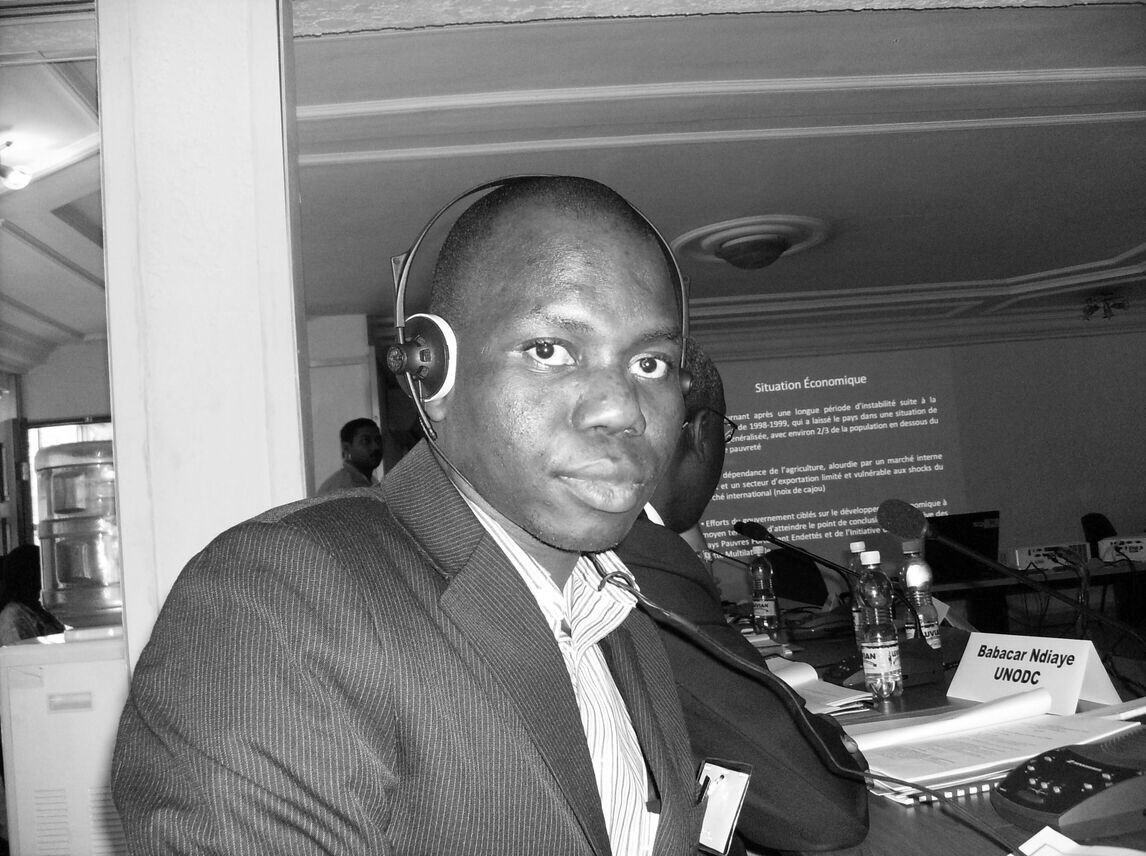
(Photo: in a special UN meeting. The task was to design and execute an economic-centered peace protocol for a country [not Nigeria] in “crisis”. We executed the playbook, working with parliament and the President of the country. Yes, the intended outcome was realized.)

When will a medical doctor be held to have acted negligently?

0

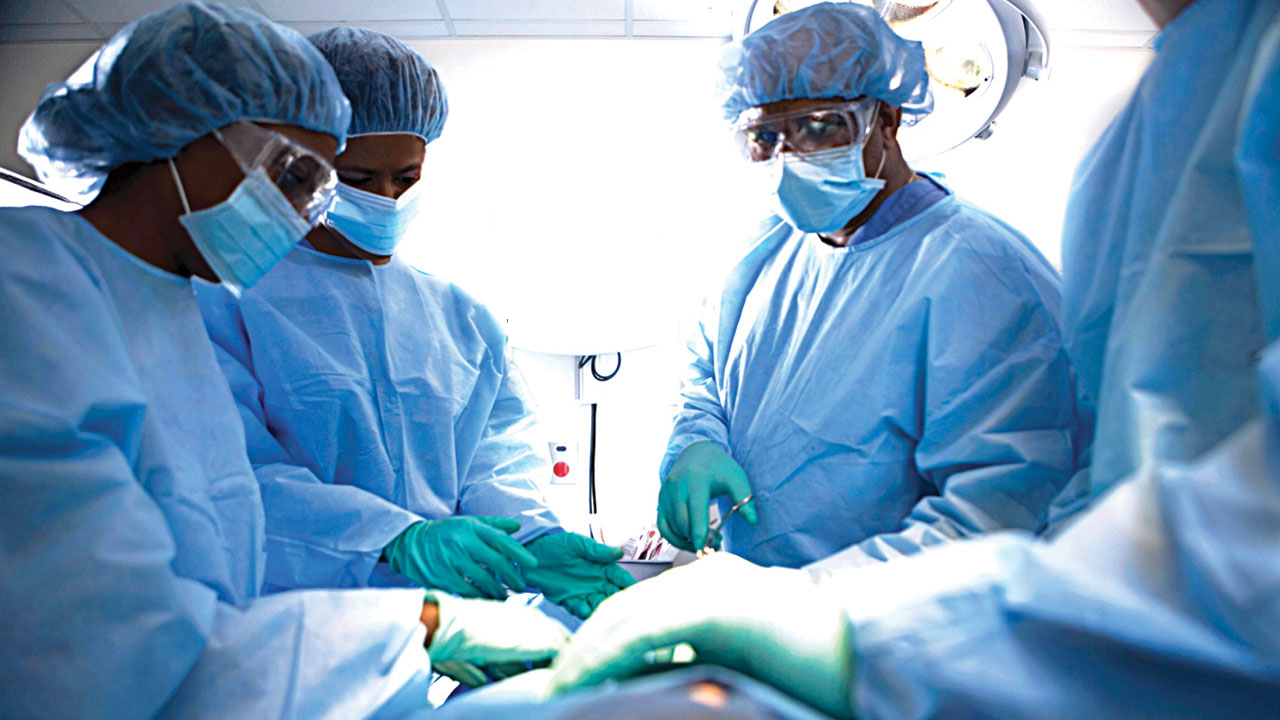
Medical malpractice or clinical negligence is when a health practitioner fails to exercise a reasonable standard of care in attending to a patient. That is to say that medical malpractice or clinical negligence will be said to have occurred if a doctor fails to do what is reasonably expected of a doctor in handling or attending to a patient.

For an aggrieved patient to successfully prove that there was medical malpractice these following four facts must be established if not the action against the health practitioner for clinical negligence will fail. 

They are: 

  1. The patient must establish that the doctor owes him a duty of care. That is to say that they exit a doctor-patient relationship between the patient and the doctor. 
  2. That the doctor breached the duty to provide adequate care owed to the patient or that the care provided to the patient falls below the expected reasonable standard of care. 
  3. That the doctor’s action caused the patient’s injury or that foreseeable harm has occurred to the patient which arose out of the breach of the duty of care by the doctor. 
  4. That the patient suffered an injury that resulted in damages. 

The most critical issue in medical negligence suits is determining whether the doctor has fallen below the expected reasonable care owed to the patient. To determine if the doctor breached the duty of care owed to the patient or that the care falls below what is professionally expected of a doctor, the “Bolam test” is applied.  

The Bolam test gained prominence in the United Kingdom in the case of Bolam V. Friern Hospital Management Committee [1957] 1 WLR 582. 

In this case, the court held that “ a doctor who has acted in accordance with a practice at the time as proper by a reasonable body of medical opinions skilled in the particular form of treatment in question was not guilty of negligence merely because there was a body of competent professional opinion which might adopt a different technique”. 

This landmark holding of the court in the above case established the Bolam test which is still applied in determining clinical negligence or medical malpractice up to this day.

The Bolam test is a peer review system, that is to say, that the colleagues of the doctor standing trial for medical malpractice in the same line of medical practice will determine if the action of the doctor is professionally reasonable or that he acted negligently.

The question that is always raised in applying this test is “what will other doctors acting within reasonable professional precaution do if they happen to be in “the same shoe” or find themselves in the same situation”. Will other doctors do the (exact) same thing the doctor did if they happen to find themselves in his shoes? If the answer is yes then the doctor has not fallen below the expected reasonable care owed to the patient.

This is to say that for a doctor to be discharged of medical malpractice, It must be able to show that any or some medical professionals when in the same situation as the doctor standing trial would have done or will do the same thing, giving the same outcome.

It does not matter if some of the doctors have different opinions, as much as it is established that a doctor acting within reasonable care and professional ethics will do the same.

But, if after applying the Bolam test and it is seen that no doctor acting with reasonable medical precaution will do the same in that exact situation then it will be held that the doctor has acted negligently or has breached the duty of care owed to the patient.

For instance, if a doctor administers a drug to a patient and it causes a side effect to the patient which made the patient develop complications and the patient sues the doctor for medical malpractice, the court will apply the Bolam test to determine the culpability of the doctor. The court will invite other medical experts in that same line of medical practice and ask them “if they have a patient that is sick of what the claimant was sick of, will they have administered the same drugs that the doctor administered?”. If the doctors (or some of the doctors) in their professional opinion answered “yes” that they will administer the same drug under the same situation, then the doctor will not be held culpable for negligence, it does not matter if the opinions of some of the doctors differ but if all the doctors state that they would not have administered that drug in that instance the accused doctor will be held to be acted negligently or have breached the duty of care owed to the patient.