DD
MM
YYYY

PAGES

DD
MM
YYYY

spot_img

PAGES

Home Blog Page 4882

The Greatest Innovation in Tesla is… Pricing Innovation

1

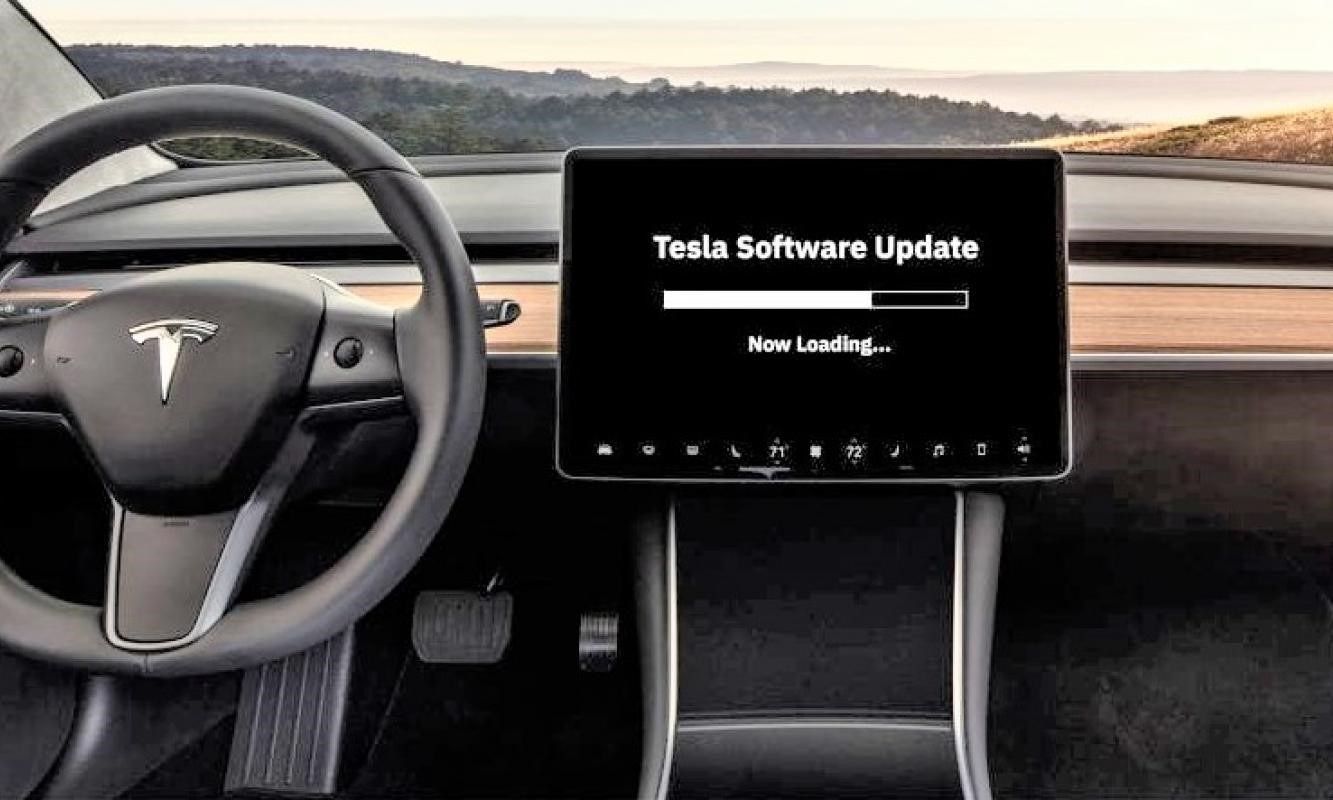
Tesla “recalled” 1.1 million cars. That was the news. But that terminology is very deceptive because for Tesla, no one would be visiting a dealership for a fix. Rather,  the EV leader will do an over-the-air software update to deal with the minor issue with its windows. And by its ability to fix that via over-the-air software update, we can understand why this company is unique. Most other car brands will require you to take a trip to your deal.

For Tesla, it is an “update” which is the terminology for software companies. Tesla continues to open a new basis of competition, and that means transforming how to sell cars into the ways the world sells software. They have this business model where a buyer of your car must call Tesla to acquire new licenses since the ones you have are not transferable.

More so, if you want more “capacity” in that car, you can send more money to Tesla and they will add more. If you check it, Tesla has a Basic Plan, Premium Plan and Enterprise Plan – and it is a car company. But if you open the books, that is how you price software.

People, the main reason why Tesla is valued more than the top 10 car companies in the world combined is because of pricing innovation, not just the engineering feats! It makes selling cars look like selling software. Because of that, investors give it the same multiples as software companies because every car produced by Tesla will keep earning money until it is moved to landfill. No other car brand can say that!

Tesla is recalling some 1.1 million vehicles over fears that the cars’ automatic windows could pinch occupants while closing. The windows are supposed to stop if they detect an obstacle in their path, but Tesla said a possible problem with the system was discovered during testing. The automaker says it will fix the issue via an over-the-air software update. Tesla issued a similar update earlier this year after recalling more than 800,000 vehicles for a problem with a seat-belt alert. No injuries linked to the window issue have been reported, Tesla says.

  • The recall affects select 2017-2022 Model 3 sedans; 2020-2021 Model Y SUVs; 2021-2022 Model S sedans and 2021-2022 Model X SUVs.
  • Tesla CEO Elon Musk has pushed back against calling the issue a recall, saying on Twitter that the “terminology is outdated & inaccurate. This is a tiny over-the-air software update.”

(LinkedIn News)

Comment on LinkedIn Feed

Comment 1: Tesla’s plan of people paying for car already owned makes me believe that the market is still open especially in the emerging markets. Any person who would build cars and give updates for free will kick out Tesla. But then investors are not an arm of charity organizations. Most might join the bandwagon only lowering prices charged.

My Response: ” Any person who would build cars and give updates for free will kick out Tesla.” – I wish you can show how that worked out for Linux vs Windows. Free software is not a great strategy in this world because most are “cheap”

Comment 2: Tesla car is like your iPhone, you don’t buy and go home completely. For you to keep enjoying more functionalities, you will remain connected to Apple, same applies to Tesla. Competing with Tesla in terms of number of EVs sold will always miss the point, the pricing model guarantees steady income, something that didn’t look like it would be possible in automobile industry.

Pricing elevated Microsoft, so until a business finds a way to remain connected to customers’ pockets, it will remain an endangered specie.

Those who are contemplating on price legislation need to get the memo, we should be talking about giving gas cylinders for free, while using software to ensure that the consumer continues to buy gas from designated stations…

Comment 3: Tesla is also ultimately ahead of the curve by catering to higher aspiration of people. While other car makers were adding wood panels and heated seats to cater to luxury, Tesla focused on catering to peoples interest in the environment, which is it’s optimal selling point,and earned first to market status. Others will keep in Tesla’s shadow unless they innovate something relevant- better. There’s an electric car that goes one better to actually suck up carbon emissions from the air- invented by some students. If they allow owners to earn carbon credits for certain number of miles driven- and they brand it properly- it will be a big hit. TESLA might want to look into acquiring that company.

My Response: mazing perspective. Many buy that for that “aspiration” as you noted.
Flutterwave Integrates Google Pay for African Businesses

0

Flutterwave has continued to integrate other payment services through partnership, enabling multi-payment options to make its platform useful across the globe.

On Thursday, the Africa’s leading fintech company announced that it has onboarded Google Pay, a mobile payment service developed by Google, as a payment method.

Under the deal, Google Pay will serve as an additional payment option for merchants on Flutterwave for business. In a statement, Flutterwave said this collaboration will offer safe and seamless payments, as well as convenient checkout experiences for customers.

The digital payment giant described the system as a safe, simple, and helpful way to make contactless payments in-store and also payments in apps and on the web. Users store their cards for Google Pay in Google Wallet, a digital wallet app that is available on supported Android smartphones, tablets or watches.

“With this collaboration, Google Pay users in supported countries across the world can pay businesses on Flutterwave across Africa. With an average transaction completion time of three minutes, this integration is slated to reduce the cart abandonment rate for businesses on Flutterwave,” the company said.

This collaboration with Google Pay comes on the heels of Flutterwave’s integration of eNaira, Nigeria’s Central Bank Digital Currency, which the African unicorn announced earlier this month.

Founder and CEO of Flutterwave Olugbenga Agboola, said the partnership with Google Pay will pave the way for the company’s global adoption.

“The continued and rapid growth of Flutterwave is due to our commitment to building a platform with simplified payments for everyone. The GooglePay payment option will attract more international customers and increase the current success rates for businesses on Flutterwave. Integrating with Google pay will allow users across the globe to participate in the booming e-commerce ecosystem in Africa. It will enable us to further fulfill our promise of creating endless possibilities for all,” he said.

Explaining how it works, Agboola outlined these five steps:

  1. Get on a Flutterwave-supported website
  2. Select what you want to pay for
  3. Fill the order form
  4. Select Pay with Google Pay as your payment method
  5. Complete the payment with your Google Pay details.

“To get paid via Google Pay, Flutterwave merchants must manually opt-in on their dashboard,” he explained.

Flutterwave, as an Africa-focused payment company, is bridging the cross-border payment gap, bringing businesses across the globe close to Africa. In that course, it has processed over 200M transactions worth over $16B to date, serving more than 900,000 businesses, including customers like Uber, Flywire, Booking.com, etc.

Flutterwave has a key advantage of international payment processing in 150 currencies and multiple payment modes including local and international cards, mobile wallets, bank transfers, Barter by Flutterwave etc. This has created huge customer-base for the company in over 34 African countries, including Nigeria, Uganda, Kenya, and South Africa.

Powered by this ground-breaking growth that has put its value at $3 billion, Flutterwave recently moved to enlist on Nasdaq Stock Exchange.

What MultiChoice (DStv, GOtv) Has In Common with MTN, Glo, Airtel, 9Mobile on Pricing

1

In an imperfect market where demand and supply have massive disequilibrium, a  regulation which demands that a telecom company in such a market not allow data expiration on its monthly data plan (no contract, you load and it expires after 30 days), will force the firm to adjust its pricing.

Let us assume that it costs TelcoBBA  $100 to produce 100GB of data and it has ten customers. Depending on regulation, it will price this product in many ways. Let us look at the options:

Option A: Data cannot expire once bought by users. Since that data would be used since timing has been eliminated, TelcoBBA will likely make the prices higher for each of those 10 customers, irrespective of their income brackets. In other words, across the different plans of 1GB, 3GB,  and 10GB which may be available, the company will go for the killer since under all conditions, once sold, it has to serve that $100GB.

Option B: Data can expire after being purchased. Here, TelcoBBA will look at the statistical data to see how much of such purchases expire over time. If say only 70% use their data because it expires, it has “saved” 30GB. If that is the case, it can discount data plans for some customers since some people have paid and never going to use them up.

This brings me to MultiChoice (owners of DSTV and GOtv brands) and its stakeholders: “MultiChoice Nigeria, a pioneer pay TV service provider, as well as other stakeholders in the broadcast communication sector, have rejected a proposed pay-per-view for pay TV proposed by lawmakers.” If you ask them to use Pay Per View (PPV), would you force them to treat the hours for Zee World and European Champions League at the same price rate?

Indeed, you can do PPV in the US for $14 per hour but on a major boxing event, an hour can go for $1,200. PPV is dynamic and never think it means dividing your 30-day DStv plan by 30 days and you pay the minute you want. No way unless DStv has reclassified as a charity!

Comment on LinkedIn Feed

Comment 1: “If you ask them to use Pay Per View (PPV), would you force them to treat the hours for Zee World and European Champions League at the same price rate?”

No, under PPV times become unequal.
The challenge becomes how to weight times round the clock, across seasons, markets and market segments?

Some thoughts/assumptions:
1). Services that cost more to produce or with high license cost will attract higher viewing cost per sec/mins/hr.
The challenge here is finding the price point that is low enough to avoid customers dropout and high enough to make profit.

2). Services are unequally weighted by customers. While Champions League is a watch or die affair to some, others careless about it but will give anything to watch Zee World. MultiChoice can learn individual customers viewing preferences and time and put a premium on them (targeted pricing).

This (2) implies that you and your neighbour can/will be charged differently. This will be very challenging to apply and can land MultiChoice in trouble in an environment were legislation is an attractive instrument for pricing.

Comment 2: “If you ask them to use Pay Per View (PPV), would you force them to treat the hours for Zee World and European Champions League at the same price rate?” The choice to make between Zee World and UCL would have been determined by the customers, had it been there were more brand/product options for the customers to choose as well. However, in this case, it is dstv/gotv if you really want product availability and satisfaction —which has really given MultiChoice a strong market competitive advantage. Other industry players are yet to get it right in that regard. The hard fact, anyway!

My Response: Yes, that was why I opened with that imperfect market. The Nigeria case is like that. In the US/UK, there are many alternatives which will allow PPV to work

MultiChoice (DStv, GOtv), Stakeholders Reject Pay-Per-View Proposed By Nigerian Lawmakers

2023 ELECTIONS: Nigerian Media Coercive Metaphor Practice and the Need for Critical News Reading Strategy

0

The Independent National Electoral Commission has released the list of candidates submitted by political parties for executive and legislative positions. Many political parties and candidates had been engaging with the public and potential voters informally prior to the list’s release. Their interactions and movements have been and continue to be reported by the media through various frames and perspectives. The coverage has largely concentrated on post-primary election issues and the evaluation of candidates’ competence, educational qualifications, and previous political roles.

In all of these cases, the media has successfully shaped the public’s perceptions of the candidates and their political parties. The result has also been that some people have yet to be convinced, despite the media’s use of a legitimization frame, because media sources are not only used to make decisions about commenting on the x-rayed personality traits and accepting the candidates. There are opinion leaders in various communities who wield more power and authority than traditional and new media. Some people prefer to get more information about candidates and political parties from the leaders of their respected community and socio-political organizations.

As previously stated, the media does not necessarily influence people’s views through their reporting; rather, they highlight certain aspects of an issue or a person to the point where the object of discourse is regarded as important and worthy of concern. To accomplish this, various forms of linguistic communication must be used. One of the forms is metaphor, which has several classifications. In this piece, coercive metaphor is examined in light of the ongoing coverage of political needs and issues in Nigeria ahead of the 2023 general elections.

When the media simplifies, animalizes, delegitimizes, emotionalizes, and dramatizes issues or people in relation to specific objects, situations, or conditions, this is referred to as coercive metaphor. While the insights in this piece are derived from the actions of the media and political stakeholders ahead of the 2023 general elections, our analyst notes that they will remain relevant in the future because attitudes, behaviors, and norms governing the studied actions are unlikely to change significantly.

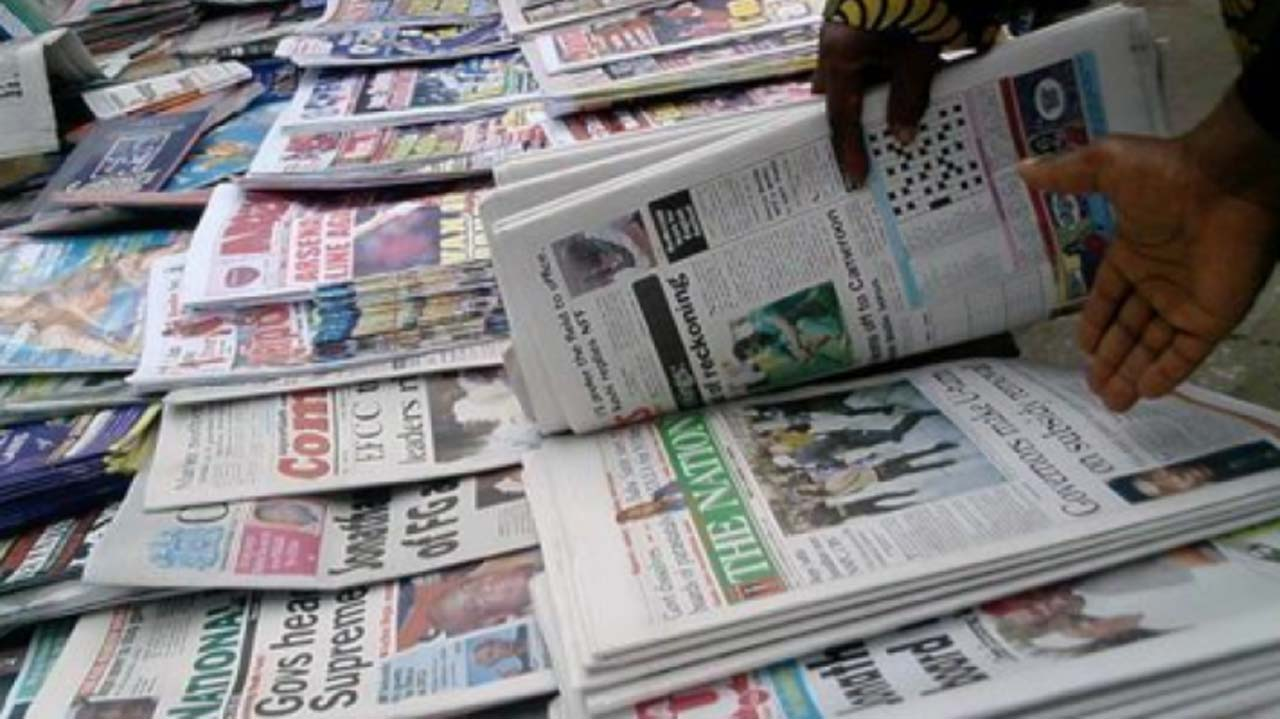
An examination of media coverage of specific issues and political actors reveals that the five types of coercive metaphors have been widely used. Since the emergence of presidential candidates for the dominant political parties (All Progressives Congress, People’s Democratic Party, and Labour Party), the media, particularly newspapers, have made extensive use of these forms. The forms have been used to confer status and to destabilize the image of candidates and political parties.

Let us examine some examples of coercive metaphors from select newspapers. With the intention of making Nigerians realise that focusing or believing in Messiah for the leadership problem is no longer tenable, on September 20, 2022, ThisDay wrote that Kukah: Nigeria Doesn’t Need Messiah in 2023. The news indicated that “Bishop of the Catholic Diocese of Sokoto, Rev. Matthew Kukah said Nigeria did not need a messiah in 2023, but a true leader who would give the whole country, irrespective of tribe, tongue, or faith, a sense of belonging and proper direction. Kukah said Nigerians could not afford another mistake of pinning their hopes on some messiah-like figure.” The headline and subsequent introduction are within the simplification metaphor, which aims at letting Nigerians understand that hanging their hope on messiah-like figure (the key element of the metaphor) would be catastrophic in 2023 and beyond.

While this case is positive, the headline from The Guardian which was developed from an interview with a newsmaker creates fear in the public mind. The newspaper wrote that ‘The build-up to 2023 election doesn’t give cause to be optimistic that things will go well’. It attempts to simplify the current state of political activities, which, according to the newsmaker, are not positive enough, but it eventually expects the public to panic during the elections.

As the elections draw nearer, our analyst equally notes that public and potential voters need to be wary of animalization metaphors. These metaphors are created specifically to brutalize personalities of individuals, groups and organisations ahead of the elections. For instance, the use of quakes in this headline: PDP quakes as Wike’s group opts out of Atiku’s campaign by The Nation is an example of animalization metaphor. As the presidential election approaches, the newspaper wants readers to see the party eroding as a result of internal crises.

Using the same metaphorical approach, Daily Trust wrote Primaries: Despite Generating Billions, APC Faces Cash Crunch. This headline portrays the party as a failure in terms of managing the massive revenue generated from forms sold during its primary elections. These headlines are also good for dramatization metaphor, establishing that some people or groups must be viewed as foes and devils in both situations.

The emotionalization metaphor addresses human angles or interests in such a way that readers see the actors or stakeholders who are expected to provide necessary solutions to the identified problems as devils. For example, Vanguard reported that Gumi laments injustice and poverty as the 2023 general elections approach. Delegitimization metaphor focuses on diminishing or destroying the legitimacy, prestige or authority of someone or groups. For example, the though the headline (Abiodun, Amosun exchange hot words over 2023 elections) conceals elements for identifying the headline as containing delegitimization metaphor, referencing Senator Ibikunle Amosun’s statement by The Punch that Governor Dapo Abiodun won election through rigging points towards destroying his (Dapo Abiodun) image and authority. Tinubu Will Be a Sleeping President – NNPP National Chairman, a headline from Daily Trust is another example of delegitimization metaphor.

Critical News Reading Strategy

According to the insights, Nigerians, particularly potential voters, who are considering the media as a source of information about political parties, candidates, and their agendas, need to improve their critical thinking skills in order to effectively understand the implications of nuances embedded in news stories. News stories, in particular, should not be read solely based on their headlines. Full stories should be given top priority. Not only the messages should be considered when reading news, but also the characters and their positions on the objects (topics) of the discourse.

Cryptocurrencies Increasing Mass Adoption of DeFi: Metacryp, Monero, and The Sandbox

0

When one thinks of Blockchain technology, two things should come to mind: decentralization and privacy. This was the main reason it was created. Today, some cryptocurrencies are providing this and more to users. Here are three cryptocurrencies offering both options to users and are worth looking out for Metacryp (MTCR), Monero (XMR), and The Sandbox (SAND).

Metacryp (MTCR) The New Crypto

It is no news that cryptocurrencies exist without a physical form. This has caused the transition of financial systems from the physical into the virtual. People have always wondered if a virtual world was possible. One where all of life’s normal activities can be carried out from the comfort of users’ homes. That time has come. With the arrival of Metacryp (MTCR), all these and more are possible. Metacryp (MTCR) is a new crypto token that aims to introduce global users to the benefits of blockchain technology. With MetaCryp (MTCR), users will be able to customize features based on their needs, add interesting features, and interact and connect with people around the globe.

What’s so Special about Metacryp (MTCR)?

Metacryp (MTCR) grants its users access to the metaverse, play-to-earn (P2E) gaming, and advanced DeFi features. With MetaCryp (MTCR), users can work and have fun at the same time as contributors earn money for their interaction.

Moreover, this project is powered by an impressive utility token, MTCR.

Cryptocurrency users can use the MTCR token to interact with different in-game elements using a feature known as the unlocking effect. As a decentralized system, these tokens allow their users to make decisions on new developments.

Monero (XMR) Make Transactions Privately

Monero (XMR) is a cryptocurrency project that prioritizes user privacy. It is one of the first to do so and Monero (XMR) developed several proprietary tools for this purpose. The cryptocurrency project became popular in the crypto space because it gave them the benefit of making transactions privately. Although the Network’s Blockchain is public, users can send and receive funds in a way that transactions are hidden from the public using advanced fungibility protocols.

Monero (XMR)’s Blockchain remains private because the technology used is updated regularly. The features that make the network run smoothly are ring Signatures, stealth addresses, and multiple keys. These features make sure that transactions made are virtually untraceable. The platform’s native token is XMR. This is the utility token that powers the network.

The Sandbox (SAND) The Blockchain Based Protocol

Gamers face the challenge of being exploited by gaming companies who only make use of these gamers to make profits for themselves without giving anything to them in return. The Sandbox (SAND) changes this. Users can play and compete in games where their efforts are rewarded with valuable digital assets.

The Sandbox (SAND) is a Blockchain-based 3D gaming protocol. Users can interact, play games, trade, and create digital land which are Non-Fungible Tokens (NFTs).

The Sandbox (SAND) has a Metaverse which is a digital world for gaming and trading activities where there is an abundance of other players and virtual land. The Sandbox (MANA) has many extra features for its users. These features enhance the gaming experience and also provide more opportunities for making passive income. Some of them are:

  • Vox Edit
  • Sandbox (MANA) Game Maker
  • Sandbox (MANA) Map.

Sandbox’s native utility token is SAND. Every transaction in the Sandbox (SAND) Metaverse is conducted using the SAND token.


Metacryp (MTCR);

Presale: http://presale.metacryptoken.io/

Website: http://metacryptoken.io/

Telegram: https://t.me/MetaCrypOfficial