DD
MM
YYYY

PAGES

DD
MM
YYYY

spot_img

PAGES

Home Blog Page 4899

How To Price Your Products

0

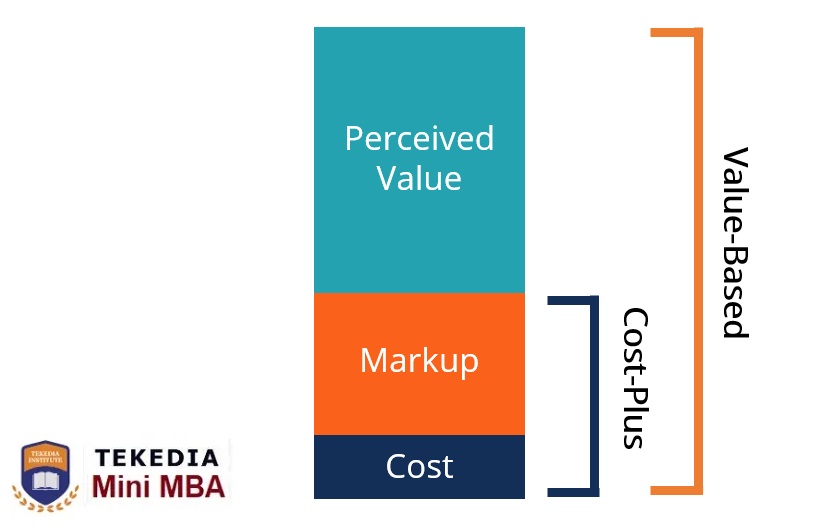
Do not use cost-based pricing (cost plus markup) in your startup. It is a very bad pricing strategy. Because customers do not buy your products because of how much it costs you to produce them, using the “cost of production” component to drive your pricing is an own-goal. When you price, follow the value-based pricing strategy. There, you focus on your ability to fix the frictions customers have through the products and services you have created.

In elementary physics, friction is a force. To overcome friction, you need another force. In the market, customers’ problems are market frictions. To overcome them, you need to create products and services – the most powerful forces in market systems.

It is the value you create that customers buy, and not how much it costs you to produce the force (i.e. the product or service). Communicate VALUE in the market and thrive. At Tekedia Institute Mini-MBA, we have many pricing courses including these two:

  • Effective Product & Service Pricing, Accelerated Revenue, Profit Maximization – Saima Khan, Partner, Strategic Pricing Management Group, Toronto, Canada
  • Driving Profitable Growth, Marginal Cost, Scaling – Ndubuisi Ekekwe

Nigeria’s Public Debt Hits N42.8trn Amidst Revenue Crisis

0

Nigeria’s public debt has moved up once again amidst an increasing revenue crisis rocking the country. A statement issued by the Debt Management Office (DMO) on Monday, said that the Total Public Debt Stock has risen by N1.24 trillion in three months when compared to its position as at March 30, 2022, when it stood at N41.60 trillion ($100.07 billion).

The new figures, which cover the Domestic and External Debt Stocks of the federal government, 36 States and the Federal Capital Territory (FCT), stood at N42.84 trillion ($103.31 billion) as at June 30, 2022.

“The Total External Debt Stock was N16.61 trillion ($40.06 billion) as at June 30, 2022, which was about the same level as the figure for March 31, 2022, which stood at N16.61 trillion ($39.96 billion.)

“Over 58% of the External Debt Stock are concessional and semi-concessional loans from multilateral lenders such as the World Bank, International Monetary Fund, Afrexim and African Development Bank and bilateral lenders including Germany, China, Japan, India and France,” the statement said.

While the external debt was relatively what it was as at March 30, 2022, the DMO said the Total Domestic Debt Stock as at June 30, 2022, was N26.23 trillion ($63.24 billion) due to New Borrowings by the federal government to part-finance the deficit in the 2022 Appropriation (Repeal and Enactment) Act, as well as New Borrowings by State Governments and the FCT.

“The Total Public Debt to GDP as at June 30, 2022, was 23.06% compared to the ratio of 23.27% as at March 30, 2022, and remains within Nigeria’s self-imposed limit of 40%. While the federal government continues to implement revenue-generating initiatives in the non-oil sector and block leakages in the oil sector, Debt Service-to-Revenue Ratio remains high,” the DMO said.

Under the National Development Plan 2021-2025, which contains projections that include 30% capital expenditure increment that will be funded with loans, Nigeria’s public debt stock is projected to hit N50.22 trillion by 2023, with domestic debt at N28.75 trillion and external debt at N21.47 trillion.

This means that the weight of debt on Nigeria’s revenue will largely increase. Currently, Nigeria is spending more than 90% of its revenue on debt servicing, a situation creating a huge deficit in the nation’s budget implementation.

Last week, Finance Minister, Mrs Zainab Ahmed, informed the Senate Committee on Finance that the proposed N19.76 trillion budget for 2023 will have a N12.43 trillion deficit. Though the deficit is attributed to fuel subsidy and import waivers, the volume of Nigeria’s debt, which is gulping more revenue than the country is generating, is impacting its ability to fund its budget.

The 2022 fiscal performance report released in July showed that the cost of servicing debt surpassed the federal government’s retained revenue by N310 billion in the first four months of 2022, which means, the government borrowed to pay debt.

All these are squaring up against the backdrop of poor revenue from the oil sector, which is Nigeria’s main source of revenue generation. The oil sector is bedeviled by massive oil theft and pipeline vandalism – all sabotaging the nation’s oil output, which currently stands at 900,000 barrels per day, 500,000 barrels short of its OPEC quota.

Thus, Nigeria public debt is expected to grow bigger than the projected N50.22 trillion by 2023.

Stakeholders Issues Warning To Nigeria Against Borrowing As The Country’s Economy Worsen

0
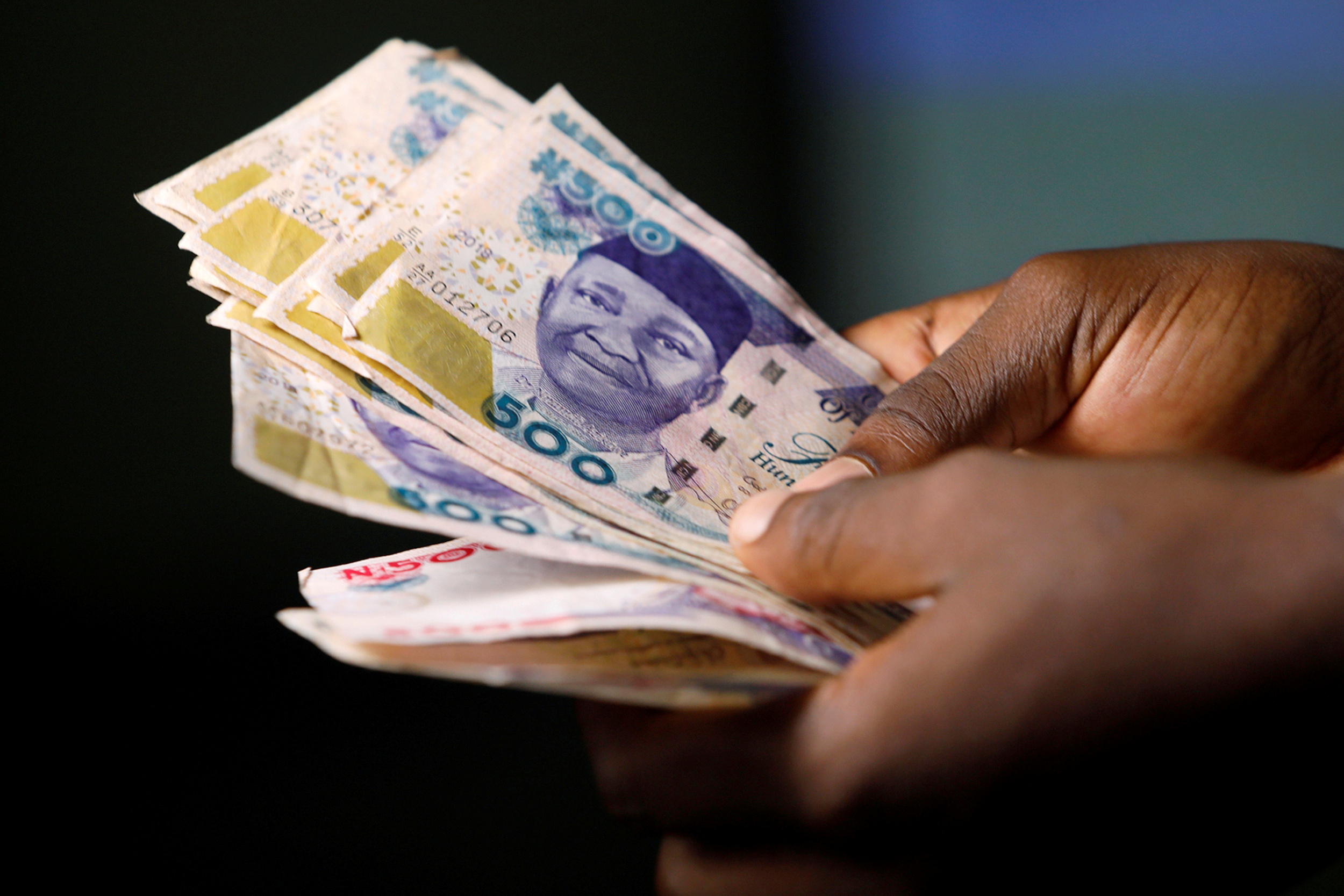
Nigerian naira banknotes are seen in this picture illustration, September 10, 2018. REUTERS/Afolabi Sotunde/File Photo

Although the Nigerian economy grew by 3.54 percent in real terms in the second quarter (Q2) of 2022, however, when compared to Q2 2021, it reported a 1.47 percent decline from a 5.01 percent growth rate.

As the country’s economy continues to worsen, the situation has generated a lot of concerns as stakeholders warn the federal government against further borrowing which they stated was crippling the nation’s economy.

The Buhari-led administration’s unbridled lust for debts has reached a crisis point, with the country settling on the World Bank’s Top 10 International Development Association borrowers’ list.

The World Bank had last year warned the Nigerian government against financing deficits by borrowing from the CBN through the ‘Ways and Means,’ stating that doing so puts pressure on the country’s expenditures, including increasing the cost of debt servicing.

Currently, over 90 percent of all federal public revenue is spent on debt servicing, which has been described as a recipe for disaster.

With debt servicing exceeding retained revenue by as much as N310 billion in the first four months of 2022, the debts are clearly unsustainable.

However, analysts in the financial sector have projected that the continuous borrowings by the federal government in 2022, were due to low oil outputs resulting in a decline in oil revenue which was affected by incessant oil theft.

The country’s debts rose by about N4 trillion in the past five months to take the portfolio to N45.25 trillion. According to the National Bureau of Statistics some weeks ago, it reported that the urban inflation rate stood at 20.95 percent, which is 3.36 percent higher compared to the 17.59 percent recorded in August 2021.

Added to these myriads of fiscal challenges is that Nigeria does not have the financial capacity to fund its next budget.

Displeased with this, Nigeria Employers’ Consultative Association, NECA, has warned against more borrowings that will ravage the nation’s economy.

In a recent statement, NECA cautioned the Federal Government against further borrowing, contending that the nation is faced with acute and self-inflicted revenue challenges and a rising debt profile, among many other economic headwinds.

They noted with dismay that even with the nation’s current level of indebtedness, the Government is still poised to borrow over N11 trillion to finance the 2023 national budget.

In their words;

“Organized businesses have witnessed varied challenges in recent months. From a shortage of FOREX, and a stringent regulatory environment to non-alignment of fiscal and monetary policies, which when combined makes doing the business difficult.

It is obvious to all discerning stakeholders that the nation is faced with acute and self-inflicted revenue challenges and a rising debt profile, among many others. Even with the nation’s current level of indebtedness, the Government is still poised to borrow over N11 trillion to finance the 2023 national budget.

The association also disclosed that most businesses in Nigeria are struggling to stay afloat this period, as quite a number of them are now on the brink of collapse due to the pressures from the economic policy environment.

The organization lamented that at the last count, organized businesses are presently faced with over fifty different taxes, levies, and fees at all tiers of government, some of which are duplicated.

The Music of DESIGN Thinking

0

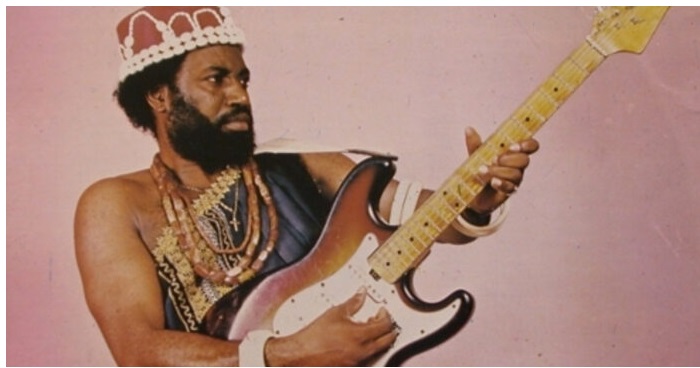
They sang it: “egwu ?ma si na chi” [great music comes from the god]. Oliver de Coque sang his version: “egwu ?ma si na ikuku!…mmiri” [ great music comes from the breeze…and rivers]. Oliver wrote some of his finest songs at the riverside. As he watched the mild water currents, the inspirations came and words were put down.

But I tell you something: great products and services come from DESIGN. At 7pm WAT today,  Tekedia Mini-MBA will focus on design. Our faculty, Aderinola Oloruntoye of software giant, SAP, will connect design and innovation.

We continue to welcome new learners here 

Nigeria to Increase National Minimum Wage to Cushion the Effect of Inflation

0

Not a few Nigerians have felt economically disconcerted and disenfranchised lately as inflation continues to bite really hard and clamps up to an all time high since September 2005 . According to a recent report by the National Bureau of Statistics, in August 2022, the annual inflation rate in Nigeria grew to 20.52 percent from 19.64 percent in the previous month. This is said to have been the highest since September 2005. More so, Food inflation has grown to 23.12 percent from 22.02 percent in July amidst higher prices for staples including rice and bread, and the cost of import has continued to increase due to weakening Naira.

Note also that members of the Academic Staff Union of Universities (ASUU) who have been on strike since February 14, 2022 have decried failure of the federal government to implement the earned academic allowance of public university lecturers and the stagnant remuneration of all public university workers despite the inflationary state of the economy.

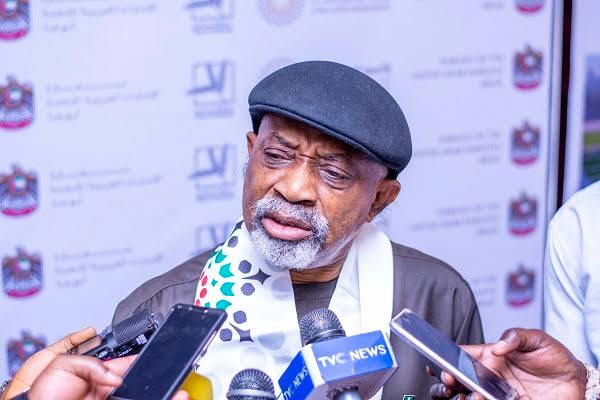
The Federal Government through the Minister of Labour and Employment, Dr. Chris Ngige, has on Monday, September 19, 2022 said it was planning to increase the minimum wage from the current 30,000 Naira to adjust to the subsisting economic reality of the nation.

While addressing members of the Nigeria Labour Congress, NLC at a public presentation of a publication titled, “Contemporary History of Working Class Struggles” on Monday in Abuja, Dr. Chris Ngige made it known that the increment in the minimum wage was necessary due to the current global inflation that has impacted negatively on citizens’ purchasing power. He stated that the 2019 Minimum Wage Act included a new clause for a review which would make it easier for the government.

The minister also made it known that the President Muhammadu Buhari-led government had commenced the wage adjustment with members of the Academic Staff Union of Universities, ASUU.

“The inflation is worldwide, we shall adjust the minimum wage in conformity with what is happening and much more important, the 2019 Minimum Wage Act has a new clause for a review.

“That adjustment has started with the Academic Staff Union of Universities (ASUU), because the stage they are, with their primary employers, the Ministry of Education, is a Collective Bargaining Agreement, CBA, negotiations”.

The minister also cleared misconception that the Federal Government took ASUU to court over the prolonged strike of the union as some people claimed, noting that ASUU was at the stage of Collective Bargaining negotiation with their employers when they embarked on strike.