DD
MM
YYYY

PAGES

DD
MM
YYYY

spot_img

PAGES

Home Blog Page 49

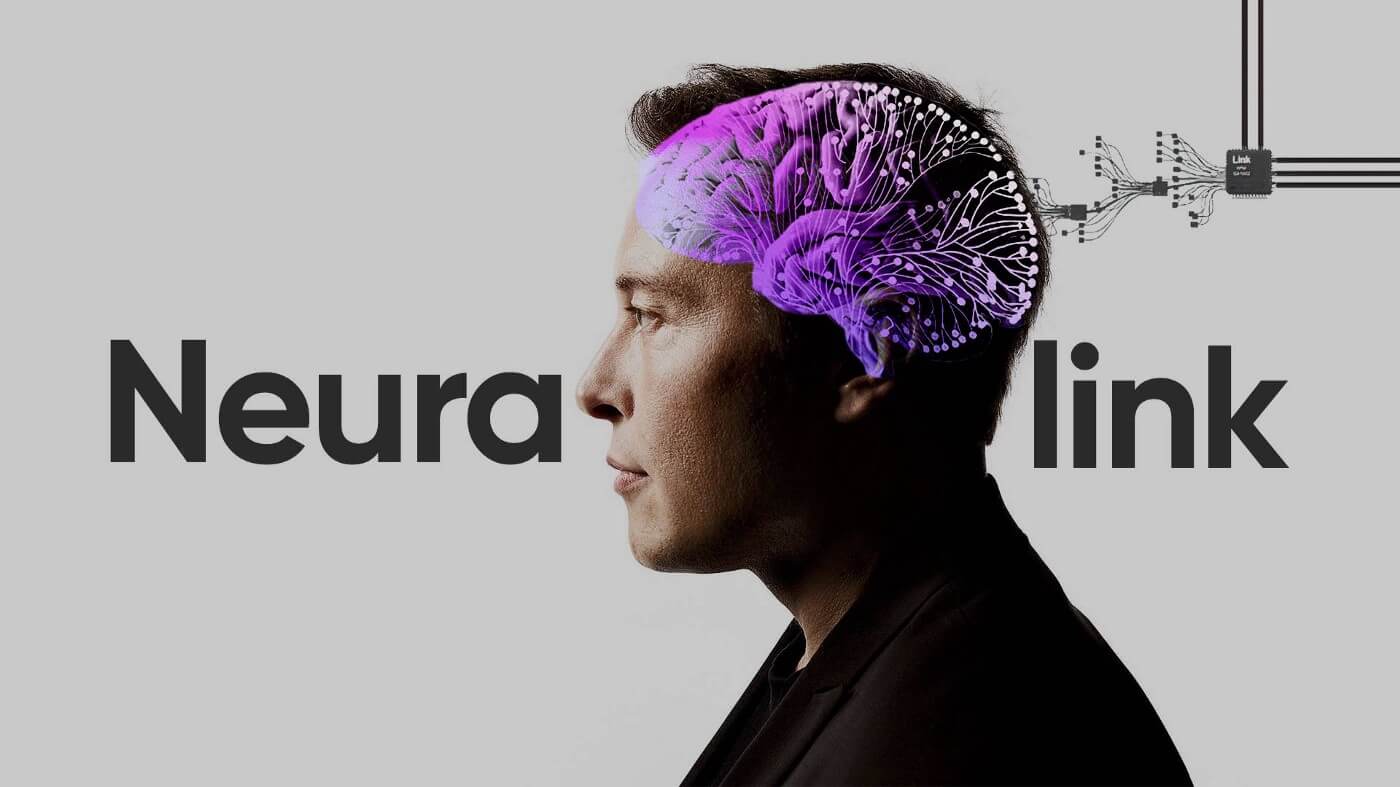
Neuralink Eyes Industrial-Scale Brain Implant Production in 2026 as Musk Pushes Automation, Speed and Scale

0

Elon Musk says Neuralink is preparing to cross a decisive threshold in the development of brain–computer interfaces, with plans to ramp up high-volume production of its brain implants in 2026 and automate much of the surgical process required to implant them in humans.

The move would mark a shift from cautious clinical experimentation to a manufacturing-led phase aimed at rapid scale, potentially transforming both neuroscience and the commercial trajectory of the BCI industry.

In a series of posts on X this week, Musk said Neuralink “will start high-volume production of brain-computer interface devices” this year, while the implantation procedure itself will move to a “streamlined, almost entirely automated surgical procedure” in 2026. He described the change as significant, particularly because the device threads would pass through the dura, the brain’s tough outer membrane, without requiring it to be removed.

The announcement underscores how aggressively Neuralink is trying to solve the two biggest bottlenecks facing implantable brain technologies: surgical complexity and manufacturing scale.

From lab-scale trials to mass production

Neuralink was founded in 2016 with the ambition of creating implantable chips that translate neural signals into digital commands, allowing users to control computers, phones, and other devices with their thoughts. While Musk has often spoken about long-term goals such as human–AI integration, the company’s near-term strategy has been tightly focused on medical use cases, particularly severe neurological conditions where existing treatments are limited.

Those include paralysis, spinal cord injuries, neurodegenerative diseases such as Parkinson’s and Alzheimer’s, and certain forms of vision impairment. In these cases, the potential benefits of invasive brain implants can outweigh the risks, making regulatory approval more feasible.

After years of animal testing and regulatory scrutiny, Neuralink implanted its first chip in a human patient in January 2024. That patient, Noland Arbaugh, who is quadriplegic, has since demonstrated the ability to control a computer cursor, type messages, and play games using neural signals alone. Arbaugh has said publicly that the implant has restored a sense of autonomy and social connection that he had lost after his injury.

By September 2025, Neuralink said 12 people worldwide had received implants and were actively using the system, a modest number that reflects the slow, regulator-driven pace of early human trials. Musk, however, has made clear that this is only the beginning. He has previously said Neuralink could exceed 1,000 patients by 2026, a target that would require a dramatic expansion in both device production and clinical capacity.

Automating the brain surgery bottleneck

One of Neuralink’s most persistent challenges has been the implantation process itself. The current approach involves a human surgeon removing a small section of the skull before a robotic system inserts dozens of ultra-thin electrode threads into specific regions of the brain. Each thread is about 20 times thinner than a human hair, a design intended to minimize tissue damage while capturing high-quality neural signals.

Musk’s claim that the procedure will become “almost entirely automated” suggests Neuralink is trying to turn neurosurgery into something closer to a standardized industrial process. Allowing the threads to pass through the dura without removing it could reduce surgical trauma, shorten recovery times, and lower the risk of complications, while also making procedures faster and more repeatable.

If successful, automation would address a core constraint: neurosurgeons are scarce, highly trained, and expensive, and scaling a technology that depends on manual brain surgery is inherently difficult. A largely robotic procedure could lower costs and enable Neuralink to treat far more patients, though it also raises questions about safety validation, liability, and regulatory oversight when machines, rather than surgeons, perform critical steps.

Manufacturing push and hiring signals

The production ramp Musk described has been building for some time. In late 2024, Neuralink went on a hiring spree, advertising roles for manufacturing technicians, microfabrication specialists, and robotics engineers. Those hires signaled an internal shift toward industrial processes rather than pure research and development.

High-volume production also implies greater standardization of the implant hardware itself. The Neuralink chip, roughly coin-sized, integrates signal processing, wireless communication, and power management, all of which must meet medical-grade reliability standards. Scaling production while maintaining consistency and safety will be a major test, particularly given the scrutiny applied to implantable medical devices.

However, Neuralink operates in a growing but still narrow field. Rivals such as Synchron and Blackrock Neurotech are also developing implantable BCIs, often with a more conservative approach focused on clinical partnerships and specific medical indications. Neuralink’s strategy is more vertically integrated, combining custom hardware, robotics, and software under one roof, and more expansive in its long-term vision.

That vision has made the company both influential and controversial. Musk has repeatedly suggested that brain implants could eventually be used by healthy individuals to enhance cognition or merge human intelligence with artificial intelligence. Such applications remain speculative and far from regulatory approval, but they shape how policymakers, ethicists, and the public view Neuralink’s trajectory.

Concerns include data privacy, long-term brain health, consent, and the societal implications of cognitive enhancement technologies. As Neuralink moves toward mass production, these debates are likely to intensify, particularly if the company begins to scale beyond small clinical populations.

Neuralink’s planned transition to high-volume production and automated implantation marks one of the most ambitious phases in its history. If the company succeeds, it could redefine what is technically and commercially possible in brain–computer interfaces, moving the field from experimental medicine toward something closer to a platform technology.

At the same time, the risks remain substantial. Scaling invasive brain implants is unlike scaling consumer electronics or software. Regulatory hurdles, unforeseen medical complications, and public trust will all shape how far and how fast Neuralink can go.

Trump Media Offers Crypto Token, But It Tests Investor Patience in a Tougher, More Skeptical Market

0

Trump Media & Technology Group is offering shareholders what it has framed as a post-holiday reward, announcing plans to issue a new cryptocurrency token tied directly to ownership of its stock.

The decision is being framed internally as a reward after a bruising year. In reality, the move places the Truth Social parent company at the intersection of two uneasy markets: a volatile crypto sector that has lost much of its speculative fervor and a stock that has struggled to convince investors of a clear growth trajectory.

In a statement released on Wednesday, December 31, Trump Media said it plans to distribute a new crypto token to its shareholders through a partnership with Crypto.com. The token will be built on the Cronos blockchain, a network backed by Crypto.com and used for decentralized finance and consumer-facing crypto applications. The company said each DJT shareholder is expected to receive one token for every share held, though it stopped short of giving a distribution date.

Trump Media added that token holders could receive further incentives in 2026, including possible discounts on company products. That framing positions the crypto less as a standalone investment and more as a shareholder engagement tool, tying digital assets directly to loyalty within the Trump Media ecosystem.

The announcement lands at a sensitive moment. Crypto assets associated with the Trump name have struggled through the latest market downturn, eroding confidence among investors who have grown more selective after years of sharp swings and high-profile failures. The Trump family has lost an estimated $1 billion in the recent crypto sell-off, largely driven by bitcoin’s decline and steep losses tied to the $Trump meme coin.

Performance across Trump-linked ventures has been uneven beyond crypto alone. American Bitcoin Corp, where Eric Trump is a primary shareholder, has had a difficult run since its September initial public offering, with shares down 14% year-to-date. For many investors, these numbers feed into broader concerns about execution risk and the reliance on branding in place of durable fundamentals.

Industry voices say the timing is challenging. Haonan Li, founder of stablecoin merchant platform Codex, said Trump Media’s token is entering a market that looks very different from earlier crypto cycles, when enthusiasm often outweighed scrutiny.

“Projects like this are entering a much more skeptical market,” Li told Business Insider. “Investors already have many ways to get crypto exposure, and spreading a strategy across multiple Trump-linked vehicles risks diluting demand rather than concentrating it.”

Recent price action offers little comfort. The $Trump meme coin has fallen about 14% over the past month. The $MELANIA Trump meme coin, launched in January 2025, dropped sharply shortly after its debut and is now down roughly 94% for the year. Those losses highlight how quickly sentiment can turn against tokens that lack clear utility or sustainable demand.

Li said the structure of the crypto market itself has changed. Earlier cycles were driven heavily by storytelling, when regulation limited real-world use cases and speculative narratives filled the gap. That environment has tightened.

“The lines are blurring, but investors are far more discerning than last cycle, and simply copying what worked before will not be enough,” he said.

Trump Media’s move also needs to be seen against the broader political and regulatory backdrop. President Donald Trump’s pro-crypto posture earlier in 2025 helped lift market sentiment, as investors welcomed signs of reduced regulatory pressure and clearer policy direction. That optimism has faded toward year-end, with prices sliding and attention shifting back to balance sheets, cash flows, and real adoption.

Thus, the token raises practical questions. It is not yet clear how the crypto will be valued, whether it will be freely tradable, or how rewards will be funded. There is also uncertainty around how regulators may view shareholder-linked token distributions, especially as scrutiny of crypto promotions has increased globally.

The promise of free tokens may sound appealing after a difficult year, but the lack of detail leaves room for doubt among shareholders. The company is asking investors to buy into a digital strategy at a time when the market is no longer forgiving of vague roadmaps or brand-driven experiments.

Starlink to Lower Satellite Orbits in 2026 as Congestion and Space Safety Risks Intensify

0

Starlink will begin lowering the orbital altitude of its satellites in 2026, moving thousands of spacecraft from about 550 kilometers to roughly 480 kilometers above Earth.

The move underpins how rapidly worsening congestion in low-Earth orbit is forcing operators to rethink long-term constellation design.

Michael Nicolls, SpaceX’s vice president of Starlink engineering, said the reconfiguration is aimed at improving space safety by concentrating satellites in a less crowded orbital shell. The change will apply to all Starlink satellites currently operating around 550 km, one of the most heavily populated altitude bands in low-Earth orbit.

“Lowering the satellites results in condensing Starlink orbits, and will increase space safety in several ways,” Nicolls said in a post on X. He noted that below 500 km, “the number of debris objects and planned satellite constellations is significantly lower, reducing the aggregate likelihood of collision.”

The announcement comes against the backdrop of a sharp rise in orbital traffic. In just a few years, low-Earth orbit has gone from hosting a few thousand satellites to tens of thousands, driven by broadband megaconstellations, Earth-imaging fleets, and government-backed communications systems. Starlink alone accounts for nearly 10,000 active satellites, making SpaceX the dominant player in an increasingly congested environment.

The risks of that congestion were brought into focus in December, when Starlink disclosed that one of its satellites experienced an in-orbit anomaly that produced a “small” amount of debris and severed communications with the spacecraft at around 418 km in altitude. The satellite rapidly lost altitude, dropping roughly four kilometers, an event SpaceX said suggested an internal failure or explosion. While the company stressed that such incidents are rare, it was a reminder that even a single failure can add to debris risks when constellations operate at scale.

Lowering operational altitude offers several advantages from a safety perspective. Satellites flying closer to Earth experience greater atmospheric drag, which means that if a spacecraft fails or loses control, it will naturally decay out of orbit and burn up in the atmosphere much faster than one operating higher up. That shortens the lifespan of potential debris and reduces the chance that defunct satellites remain hazards for decades.

The move also reflects growing pressure from regulators, space agencies, and sustainability advocates who are increasingly alarmed by the pace at which low-Earth orbit is filling up. Concerns extend beyond collision risks to include radio-frequency interference, the impact of satellite brightness on astronomical observations, and the lack of globally binding rules governing megaconstellations. Several space agencies have warned that without stricter operational standards, the risk of cascading collisions could rise sharply.

The reconfiguration is also a strategic signal for SpaceX. Starlink has evolved into a core commercial business that provides broadband connectivity to consumers, enterprises, and governments, including in remote and conflict-affected regions. That scale brings revenue, but it also places Starlink under far greater scrutiny than traditional satellite operators. Operational decisions, not just launch cadence or satellite count, are now central to how the company is judged.

Condensing Starlink’s constellation below 500 km may also influence how future constellations are designed. Many planned networks have targeted similar altitude ranges, and SpaceX’s move could intensify competition for “cleaner” orbital shells while nudging regulators toward setting clearer altitude preferences or caps. It may also affect satellite lifespans, as lower orbits generally require more frequent replenishment, raising costs but improving disposal outcomes.

As more countries push for tighter space traffic management frameworks and as insurers and customers pay closer attention to operational risk, Starlink’s decision suggests an effort. How constellations are managed, de-orbited, and integrated into a crowded orbital ecosystem is becoming just as important as how many satellites are launched.

Put together, Starlink’s 2026 orbital shift is a sign that even the industry’s most aggressive players are being forced to adapt to the limits of space itself, especially as low-Earth orbit becomes one of the most contested and regulated domains in the global economy.

Bulgaria Adopts the Euro, Cementing Its Place in the EU’s Economic Core Amid Political Uncertainty and Public Unease

0

Bulgaria formally entered the euro zone on Thursday, closing a chapter in its post-communist transition and taking a long-sought step deeper into the European Union’s economic core, even as public opinion remains divided over what the change will mean for daily life.

The development marks one of the most consequential economic and political shifts since the country joined the European Union nearly two decades ago, binding its future more tightly to the bloc’s monetary framework at a time of domestic instability and lingering public skepticism.

At midnight, the euro officially replaced the lev, ending the use of a national currency that had been in circulation in various forms since the late 19th century. Celebrations in Sofia included fireworks and a large projection of euro coins on the façade of the Bulgarian National Bank, underscoring the symbolic weight of the moment for policymakers who have pursued euro adoption since EU accession in 2007.

With Bulgaria becoming the euro zone’s 21st member, more than 350 million Europeans now use the single currency. Croatia was the last country to join, in January 2023, after years of preparation. For Brussels and Frankfurt, Bulgaria’s entry signals that eurozone enlargement remains on track despite recent strains from inflation shocks, slowing growth, and geopolitical tensions.

But the implications go well beyond a change of banknotes and coins for Bulgaria. Euro adoption grants the country a seat on the European Central Bank’s Governing Council, giving it a voice in interest rate decisions that affect the entire euro area. Until now, Bulgaria was bound by ECB policy through its long-standing currency board arrangement, which pegged the lev to the euro, but without any formal influence over monetary decisions.

Successive governments have argued that adopting the euro would enhance macroeconomic stability, reduce borrowing costs, and improve Bulgaria’s appeal to foreign investors. Officials also see the move as a way to anchor economic policy discipline and reinforce Bulgaria’s position within the EU at a time when questions about cohesion and integration persist across the bloc.

On the ground, reactions have been mixed but often pragmatic. Many Bulgarians note that the fixed exchange rate means the conversion is largely arithmetic rather than transformational.

“Our money will be in a different currency – if I have 10,000 leva, now I will have 5,100 euros. It’s all the same. And I think it will be better,” said Stefan Bisterkov, a driving instructor in Sofia.

Businesses have been among the strongest advocates of euro adoption. Companies involved in trade, tourism, and manufacturing expect smoother cross-border transactions, lower currency risk, and easier access to euro-denominated financing. Employers’ groups have also argued that euro membership could help narrow the income gap with wealthier EU states by supporting investment and productivity growth.

“My expectations from adopting the euro are positive,” Reuters quoted Antonia Tsvetkova, a jeweler, as saying. “Anyone who goes on a trip will not have problems exchanging currency. Now everything will be normal.”

Still, opposition and concern remain significant. Opinion polls have consistently shown a divided public, with many Bulgarians worried that the euro could push up prices, particularly for food, utilities, and services. Such fears have accompanied euro adoption elsewhere in Europe, where perceived price increases sometimes outlasted the actual inflationary impact measured by official data.

These concerns are sharpened by Bulgaria’s fragile political environment. The country has endured repeated elections, short-lived governments, and widespread protests over corruption, living costs, and fiscal policy. The most recent government stepped down last month amid demonstrations against proposed tax increases, reinforcing public distrust toward the political establishment managing the euro transition.

Critics argue that adopting the euro reduces national economic sovereignty at a time when confidence in domestic institutions is low. Others see the move as largely symbolic, given that Bulgaria’s currency board already constrained independent monetary policy, but question whether ordinary citizens will feel tangible benefits in the near term.

Economically, Bulgaria enters the euro zone with relatively low public debt and a banking sector that has been closely aligned with euro area rules for years. Supporters say this puts the country in a solid position to benefit from euro membership, including access to ECB liquidity mechanisms in times of stress and deeper integration into European financial markets.

Bulgaria’s accession reinforces the message that the EU’s single currency remains a central pillar of the bloc’s integration project. It also shifts attention to other EU members outside the euro zone, highlighting the uneven pace of monetary unification across the union.

However, the immediate challenge will be managing the transition smoothly, monitoring prices, and maintaining public trust. Over the longer term, the success of euro adoption will likely be judged on whether it delivers faster growth, higher living standards, and greater economic resilience.

China’s DRAM Chipmaker CXMT pushes for $4.22bn IPO, marking Beijing’s Drive to Break Into the Global Memory Chip Market

0

China’s leading DRAM chipmaker, ChangXin Memory Technologies (CXMT), is preparing to tap domestic capital markets in a move that underscores Beijing’s determination to narrow the gap with dominant global memory giants, even as geopolitical tensions and technology controls continue to reshape the semiconductor industry.

CXMT said on Tuesday that it plans to raise 29.5 billion yuan ($4.22 billion) through an initial public offering of 10.6 billion shares in Shanghai. The company said the proceeds will be used primarily to upgrade production lines and manufacturing technologies, while a portion will be channeled into research and development for advanced dynamic random access memory products.

The planned listing comes just weeks after CXMT unveiled its latest DDR5 DRAM chips, a step that directly challenges industry leaders Samsung Electronics, SK Hynix, and Micron Technology. DDR5 represents the current mainstream standard for high-performance computing, data centers, and advanced consumer electronics, and CXMT’s entry into this segment signals its ambition to move beyond older, lower-margin memory products.

Founded in 2016 with strong state backing, CXMT has become a central pillar of China’s push for semiconductor self-sufficiency, particularly in memory chips, one of the most capital-intensive and technologically complex segments of the industry. After nine funding rounds, the company counts heavyweight investors including Alibaba and Xiaomi, and has developed four generations of DRAM technology.

Operationally, CXMT runs three 12-inch DRAM fabrication plants, with facilities in Beijing and at its headquarters in Hefei, Anhui province. These fabs form the backbone of its manufacturing capacity as it seeks to scale output and improve yields, both critical to competing with entrenched global players that benefit from decades of process optimization.

Despite its progress, CXMT remains a relatively small player in global terms. According to data from research firm Omdia cited in the prospectus, the company held about 4% of the global DRAM market in the second quarter. By contrast, Micron, SK Hynix, and Samsung together controlled more than 90%, highlighting the steep challenge CXMT faces in translating technological milestones into sustained market share gains.

Beyond conventional DRAM, CXMT is also investing heavily in high-bandwidth memory, a specialized form of DRAM that is essential for advanced processors, including Nvidia’s graphics processing units, widely used in generative artificial intelligence workloads. The company said it aims to begin production by the end of 2026 at an HBM back-end packaging facility currently under construction in Shanghai, positioning itself to benefit from surging global demand tied to AI data centers and accelerators.

Financially, CXMT is still in a loss-making phase, reflecting the enormous upfront costs associated with memory chip manufacturing. The company recorded losses of 8.32 billion yuan in 2022, 16.3 billion yuan in 2023, and 7.1 billion yuan in 2024, with a further loss of 2.3 billion yuan in the first half of this year. However, it expects revenue to surge by as much as 140% year-on-year in 2025, driven by rising memory prices and higher sales volumes since July.

CXMT said it could turn profitable as early as 2026, depending on wafer shipment volumes and average selling prices.

The timing of the IPO is also notable. Global memory markets have begun to recover after a prolonged downturn, with prices rebounding as inventory levels normalize and AI-related demand accelerates. Listing now could provide both the capital and the market validation CXMT needs to fund its next phase of expansion, particularly as access to advanced foreign technology remains constrained.

At a broader level, CXMT’s public market debut would mark a significant milestone in China’s semiconductor strategy. While the company is still far from displacing established global leaders, its progress in DDR5 and its push into HBM show how Chinese chipmakers are methodically climbing the technology ladder.

The IPO is expected to stir interest as it marks the beginning of China’s long-term bets in memory manufacturing to deliver commercial scale and financial sustainability.