DD
MM
YYYY

PAGES

DD
MM
YYYY

spot_img

PAGES

Home Blog Page 490

Former Periscope Founders Return with AI Startup Macroscope, Targeting Developer Productivity

0

In Silicon Valley’s increasingly crowded AI ecosystem, a familiar set of founders is betting that engineers and product leaders need more than just code generation—they need a system of understanding.

Kayvon Beykpour, Twitter’s former head of product and co-founder of Periscope, on Wednesday announced the launch of Macroscope, an AI-powered platform designed to summarize codebase changes, flag bugs, and deliver real-time insights for developers and product teams.

Macroscope, founded in July 2023 by Beykpour, his longtime collaborator Joe Bernstein, and Rob Bishop, the entrepreneur who previously sold his computer vision startup Magic Pony Technology to Twitter, is positioning itself as what the team calls an “AI-powered understanding engine.” The company, headquartered in San Francisco, has already attracted $40 million in funding, including a $30 million Series A round led by Lightspeed’s Michael Mignano, with backing from Thrive Capital, Adverb, and Google Ventures, according to Tech Crunch.

Beykpour said the motivation came from lived frustrations during his career. “I feel like I lived this pain…at every company I worked at, whether it was the startups that we built ourselves, or whether it was enormous public companies like Twitter,” he told TechCrunch. As Twitter’s product chief, he said much of his time was spent “trying to get a sense for what everyone was doing” among thousands of engineers—a task he described as his “least favorite part of the job.”

How Macroscope Works

Macroscope begins with GitHub integration, giving it access to a customer’s codebase. From there, teams can add optional connections to Slack, Linear, and JIRA. Its system then performs “code walking” using Abstract Syntax Trees (ASTs)—structural representations of programming code—paired with large language models to contextualize how a codebase works.

Engineers can use the platform to:

  • Catch bugs in pull requests (PRs)
  • Summarize code changes and PRs
  • Track how the codebase evolves over time
  • Ask research-based natural language questions about the code

Product leaders, meanwhile, gain real-time summaries of updates, productivity metrics, and answers to natural language queries about team priorities. Beykpour highlighted its accessibility: “You can ask natural language questions, regardless of what your technical ability is. This might be very useful if you’re trying to learn about the code base without distracting a senior engineer.”

Competitive Edge in Code Review

While no product matches the full scope of Macroscope’s offering, the company acknowledges competition in the code review market, including tools like CodeRabbit, Cursor Bugbot, Graphite Diamond, and Greptile. In internal benchmarking across 100 real-world bugs, Macroscope said its platform caught 5% more bugs than the next-best tool, while generating 75% fewer comments, results it has publicly documented in a blog post.

The service is priced at $30 per active developer per month (with a five-seat minimum), alongside enterprise options and custom integrations. It requires GitHub Cloud for use. Early adopters include startups and established firms such as XMTP, United Masters, Things, Bilt, Class.com, Seed.com, ParkHub, A24 Labs, and others.

The startup currently employs 20 people.

Macroscope vs. GitHub Copilot and Beyond

Macroscope’s debut adds another dimension to a growing category of AI-powered developer tools that are reshaping workflows. GitHub Copilot, the most widely known entrant, focuses primarily on code completion and generation, acting as an AI “pair programmer.” Its success has driven Microsoft-owned GitHub deeper into the AI productivity race, embedding Copilot into Visual Studio and offering enterprise-grade copilots for project management.

Macroscope, by contrast, aims to go beyond generation by acting as an organizational intelligence layer—tracking, summarizing, and explaining how codebases evolve. Where Copilot might help write a function, Macroscope helps a product lead understand what functions the engineering team delivered this week.

Other competitors are also carving niches. Replit’s Ghostwriter is targeting individual developers with real-time coding assistance. Amazon CodeWhisperer integrates tightly with AWS, suggesting fixes and code snippets tailored to cloud infrastructure. Tools like Cursor are experimenting with AI-native development environments. Each is pursuing a narrower slice of the market, while Macroscope’s founders pitch theirs as a unifying tool for engineers and managers alike.

For Macroscope, that means serving as the connective tissue between GitHub repositories, project management systems, and leadership dashboards. The company’s challenge will be convincing large enterprises—where the pain point of coordination is most acute—that Macroscope can outperform a patchwork of existing tools.


Lockey Locksmith LLC: Smart Access, Risk Management, and ROI For Modern Workplaces

0

Security is not just an IT conversation. It lives at your doors, loading bays, server closets, and storage rooms. For founders and operators who think in terms of risk, uptime, and customer trust, physical access is a business system that deserves the same rigor as payment processing or data backups. The good news is that modern lock technology has matured. With the right roadmap you can cut key chaos, reduce shrink, and align compliance without making entry painful for staff or customers.

Treat Doors Like Critical Infrastructure

If a front door sticks or a rear exit fails to latch, you have a reliability problem. Think in outcomes. You want high availability of legitimate entry and high resistance to unauthorized access. Start with Grade 1 deadbolts and reinforced strikes that anchor into the framing stud. Add door position sensors on secondary exits so managers get alerts when a door is propped open. For facilities with shift changes, keypad or mobile credentials remove the cost and risk of circulating keys.

Convert Access Into Data You Can Use

Keys are invisible. Digital credentials create event logs that answer who, when, and where. Those logs support investigations, help resolve delivery disputes, and can reduce insurance premiums. Cloud access platforms now integrate with HR systems so onboarding and offboarding automatically grant or revoke physical access alongside email accounts. That alignment closes a common security gap and saves hours of manual work.

Balance UX With Policy

Security that frustrates staff will be bypassed. Aim for simple, consistent patterns. For example, main entrances get mobile or card credentials, private spaces get keypad codes with short time windows, and emergency exits get panic hardware that meets local fire code. Storefronts and clinics benefit from privacy cylinders on interior doors to protect records and valuables while keeping public areas welcoming.

Coastal Reality Check

Hardware lives in the real world. In Palm Coast and other coastal markets, salt and humidity punish cheap metals and misaligned latches. Specify marine grade stainless or solid brass finishes for exterior doors. Schedule short quarterly tune ups that include hinge tightening, strike alignment checks, and a touch of dry lubricant in the keyway. Small preventive steps preserve the smooth feel that keeps doors in service during peak hours and storm season.

Build A Decision Framework That Scales

Do not rip and replace everything. Prioritize like an engineer. Start with the highest risk doors, then work outward. For each opening ask four questions: What is the threat, what is the cost of failure, what is the user experience, and how will we maintain it. Document choices so new managers inherit reasoning, not guesswork.

If you are weighing cost versus benefit on existing hardware, this practical explainer on Rekey or Replace? breaks down when a cylinder swap is enough and when a full upgrade is the smarter long term move.

Local Expertise Multiplies ROI

Technology is only as good as the install. Door materials, frame condition, and code requirements vary by building and region. A proven palm coast locksmith understands common Florida door types, HOA rules, and corrosion challenges that do not show up on a spec sheet. That knowledge reduces callbacks, protects warranties, and keeps your access plan aligned with the realities of your site.

Simple Wins You Can Ship This Quarter

  • Replace short strike screws with 3 inch screws that grab the framing stud.
  • Add door position sensors to back doors and link alerts to your team chat.
  • Move high traffic entries to keypad or mobile credentials to eliminate key circulation.
  • Standardize finishes and hardware models across locations for easier maintenance and spares.
  • Create a playbook for lockouts and lost credentials so night managers are never guessing.

Friendly Help For Your Next Security Upgrade

Lockey Locksmith LLC helps operators turn doors into dependable business systems. The team specifies hardware that fits Florida weather, installs with precision, and integrates smart access so managers get visibility without friction. From rapid rekeys to multi site rollouts with cloud dashboards, you get clear pricing, clean workmanship, and mobile support that keeps your schedule and staff moving.

Lockey Locksmith LLC
Palm Coast, FL 32164
386-449-9023
lockeylocksmithllc.com


Ozak AI Token Enters Phase 6 at $0.012, Presale Surpasses 1,100% Growth Since Launch

0

The Ozak AI presale has now reached Phase 6, where the current price has been fixed at 0.012. Since the start of the event, the token has grown more than 1,100%, marking a clear milestone in its progression. Over 902 million tokens have been sold to date, raising more than $3.2 million. The project team has confirmed that the next price increase will lift the token to $0.014, with a $100 minimum entry required.

Phase 6 Presale at $0.012 Reaches 1,100% Growth

Phase 6 highlights the rapid expansion of the Ozak AI presale. The price point of $0.012 represents strong upward momentum from its earliest stage, where the token was available at fractions of a cent. Current figures show that more than 902 million tokens are now in circulation through the presale, with funds raised surpassing $3 million.

The tokenomics of Ozak AI confirm a total supply of 10 billion $OZ. 30% is allocated to the presale, 30% to ecosystem and community incentives, 20% to reserves, 10% to liquidity and listings, and 10% to the team. Its distribution is made to facilitate growth in addition to the presale and sufficient supply to adopt and develop.

The team has also unveiled the Ozak AI Rewards Hub to increase activity in the community during Phase 6. A pool of 1 million dollars has been awarded to those who finish simple tasks that include daily check-ins, wallet connections, and polls. This program will be used to create awareness of the current presale of 0.012 and create more interaction before the next stage.

AI-Powered Ecosystem Supporting Presale Momentum

The underlying technology has resulted in great presale growth. The platform is designed to provide predictive analytics for financial markets by combining machine learning with decentralized networks. It has the Ozak Stream Network (OSN) for real-time data, DePIN for secure distributed infrastructure, Ozak Data Vaults for storage, and customizable Prediction Agents for user-driven insights.

According to the project, these deliver insights in near real-time so traders and institutions can act fast. The Prediction Agents that can be customized are emphasized as a resource allowing users without the experience of coding to build AI models using them.

The platform is supported by the $OZ token. It powers transactions, enables Prediction Agent customization, supports governance, and rewards contributors. As usage grows, the demand for the token will increase, and the Phase 6 presale price of $0.012 and the 1,100% growth so far are no-brainers.

Conclusion

Ozak AI has entered Phase 6 at $0.012 with 1,100% growth. 902 million tokens sold for over $3 million, and the next price increase is $0.014. AI-driven analytics, decentralized networks, and clear tokenomics mean the presale is getting closer to $1.

For more information about Ozak AI, visit the links below.

Website: https://ozak.ai/

Twitter/X: https://x.com/OzakAGI

Telegram: https://t.me/OzakAGI


Analyst Who Predicted XRP at $3 Now Projects a $10 High, Says This $0.05-Less Token Will Hit $1 Early

0

An analyst who successfully predicted XRP’s rise to $3 now forecasts a significant increase for the digital asset, projecting a $10 high. Alongside this prediction, the same expert has highlighted Ozak AI, a rapidly growing token priced at $0.012 in its presale. This presale has shown impressive growth, reaching a 1,100% increase and signaling the potential for even higher returns as it approaches $1 early.

Ozak AI Presale Performance: A Remarkable Growth Story

The Ozak AI presale has reached Phase 6, with the token price now set at $0.012. Since the event’s launch, the token has surged by more than 1,100%, a clear demonstration of its strong market momentum. Over 903 million tokens have been sold to date, raising over $3.2 million in funding. The project team confirmed that the next price increase will lift the token to $0.014, and participants are required to invest a minimum of $100.

As part of its strategic approach, Ozak AI has allocated 30% of its total supply to the presale. Also, it has allocated some tokens to the ecosystem, community incentives, liquidity, and team development. This ensures that the presale phase is not only sustainable but also poised for future growth, with more than 10 billion tokens in total supply.

Key Features and Collaborations Behind Ozak AI’s Growth

Ozak AI has positioned itself as an innovative player in the cryptocurrency space with its predictive AI platform. The platform provides real-time financial market insights by combining machine learning and decentralized networks. Key functionalities include the Ozak Stream Network (OSN) for real-time data, DePIN for secure infrastructure, and customizable Prediction Agents for user-driven analytics.

Strategic collaborations have further strengthened the platform’s growth potential. Ozak AI has partnered with Pyth Network to enhance the accuracy of its predictive models through real-time financial data across blockchains. Additionally, collaboration with Dex3 improves liquidity solutions and enhances user trading experiences. Ozak AI’s integration with Weblume’s no-code tools and the SINT protocol enables seamless upgrades, making the platform accessible to a broader audience.

The platform’s staking, governance, and reward mechanisms through the Ozak AI Rewards Hub add value beyond speculation. This initiative incentivizes users for participation and ensures that the token continues to gain utility.

XRP and Ozak AI: A Strong Parallelogram of Growth Potential

As XRP holds strong near the $3 mark, bullish sentiment continues to grow. This is due to increased optimism around Ripple’s legal clarity and potential ETF developments. Analysts project that XRP could hit $6 or higher in the next few months. Thanks to these catalysts and institutional interest, the price could rise even more.

XRP’s market cap stands at about $179.84 billion, with a price of $3.01. The 24-hour trading volume is around $4.51 billion, reflecting strong institutional interest and active market participation.

In parallel, Ozak AI‘s growing success in its presale and increasing adoption in the cryptocurrency market highlight the potential for substantial gains. At $0.012, analysts predict that the token could hit the $1 mark and generate massive returns for early investors. The increased demand for Ozak AI’s token during the presale matches XRP’s growth narrative. This presents Ozak AI as a token with potential similar to the digital asset currently making waves in the market.

Ozak AI’s partnerships and innovative features make it an attractive investment option in the AI-driven crypto space. As both XRP and Ozak AI show promising upward trajectories, the combination of predictive AI, decentralized applications, and partnerships with major networks makes Ozak AI a strong contender for rapid growth in the near future.

For more information about Ozak AI, visit the links below:


Website: https://ozak.ai/

Twitter/X: https://x.com/OzakAGI

Telegram: https://t.me/OzakAGI

Fed Cuts Rates by Quarter Point, Signals Two More Reductions as US Labor Market Weakens

0

The Federal Reserve stepped into a delicate balancing act on Wednesday, delivering a quarter-point rate cut while signaling two more before year-end — a move that underscores the growing tension between cooling job growth, persistent inflation, and political pressure from the White House.

The decision lowers the benchmark federal funds rate to 4.00%-4.25%, with the 11-to-1 vote showing less division than Wall Street expected. Governor Stephen Miran, appointed by President Donald Trump, cast the sole dissent, pushing for a steeper half-point cut, according to CNBC.

All three governors who were watched closely — Miran, Michelle Bowman, and Christopher Waller — were appointed by Trump. While Bowman and Waller backed the quarter-point move, Trump has not let up on his calls for aggressive cuts, arguing that borrowing costs must come down quickly to revive the housing market and reduce debt-servicing burdens.

The political backdrop is striking for a central bank long known for its efforts to stay independent. Just a year ago, when the Fed approved a half-point cut, Trump accused the institution of tilting the election in favor of his Democratic rival, Kamala Harris. His continued hectoring — combined with Miran’s outspoken criticism of Powell — has once again fueled doubts over how insulated the Fed truly is.

The Fed’s statement highlighted the tricky crosscurrents at play: economic activity “has moderated,” job gains “have slowed,” and inflation “remains somewhat elevated.”

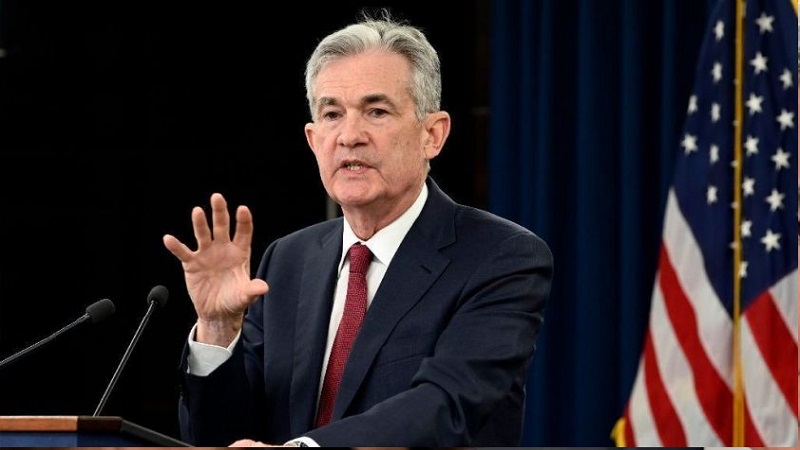
Chair Jerome Powell admitted that the U.S. labor market is losing steam. “The marked slowing in both the supply of and demand for workers is unusual in this less dynamic and somewhat softer labor market,” he said at his press conference, describing the cut as a form of “risk management.”

But not all economists agreed with Powell’s framing. Dan North, chief economist at Allianz Trade North America, argued the Fed is taking a more active role than it admits: “I don’t think that’s risk management. I think that’s steering the ship.”

The markets wavered on the announcement. Stocks swung between gains and losses, while Treasury yields fell on short-dated issues but rose further out, signaling mixed expectations on the economy’s direction.

Reading the Dots

The Fed’s quarterly “dot plot” — a map of policymakers’ rate expectations — pointed to two more cuts in 2025, most likely in October and December. But the projections also revealed deep divisions. Nine officials see one more cut, 10 want two, and at least one — likely Miran — is calling for 1.25 percentage points of reductions this year. Another participant opposed any cuts at all, including the one delivered on Wednesday.

Simon Dangoor, head of fixed income macro strategies at Goldman Sachs Asset Management, said the message is clear: “The doves on the committee are now in the driver’s seat. It would take a significant upside surprise in inflation or a labor market rebound to take the Fed off its current easing trajectory.”

Looking further out, officials projected just one cut in 2026 and another in 2027, suggesting a slow crawl back toward the long-run “neutral” rate of around 3%. That is far less aggressive than the path financial markets had priced in.

The day’s decision came against another swirl of controversy. Trump had sought to remove Governor Lisa Cook, a Biden appointee, accusing her of mortgage fraud tied to federally backed loans. But a court blocked the attempt, keeping Cook on the board — where she voted with the majority for the quarter-point cut. Cook has denied any wrongdoing and has not been charged.

The episode, coupled with Miran’s loyalty to Trump’s rate-cutting agenda, deepened concerns that politics are intruding into the Fed’s traditionally cautious policymaking.

The Economy’s Mixed Signals

The economic picture the Fed is responding to remains uneven. Growth is holding steady, and consumer spending is running hotter than expected, but the job market has softened noticeably.

Unemployment reached 4.3% in August, the highest since 2021, and the Bureau of Labor Statistics recently revised job growth figures downward by nearly one million for the year ending March 2025. That weakens one of the strongest narratives of the post-pandemic economy.

Inflation, while lower than in 2022, has ticked higher in recent months — complicating the Fed’s mission. Powell admitted the risks to employment have grown, while Governor Waller argued that easing now could prevent a deeper downturn later. Waller’s position is closely watched not just for policy signals, but because his name has surfaced as a possible successor to Powell when his term ends in 2026.

Looking ahead, the Fed’s next moves are expected to hinge on whether unemployment keeps rising or inflation resurges. If job losses accelerate, the two additional cuts penciled in for October and December will almost certainly materialize. If inflation proves sticky, Powell could slow the pace — risking pushback from both the markets and the Trump administration.

For now, the Fed is signaling a gradual easing cycle, hoping to stabilize the labor market without reigniting price pressures. But history suggests politically charged rate decisions often carry long-lasting consequences, both for the economy and for the central bank’s credibility.