DD
MM
YYYY

PAGES

DD
MM
YYYY

spot_img

PAGES

Home Blog Page 4900

The Legal Framework and Implications Governing Employment Contracts in Nigeria

0

It goes without saying that there are more people looking for work than there are jobs available in Nigeria currently. It’s also very true that the labour market in Nigeria is one of the most exploited in the world, with many job-seekers signing a lot of very detrimental work engagement offer letters out of desperation.

This is worsened by the fact that in Nigeria, many employers through their respective Human Resource departments are basically laws unto themselves, failing to take into cognizance the existing legal framework governing employment in Nigeria.

This article thus aims to do the following:-

– Explain the proper legal definition of an employee in Nigeria.

– Highlight the Legal Framework and Regulatory agencies governing employment in Nigeria.

– Explain the legal implications of some of the most common employment contract clauses in Nigeria.

– Highlight the difference between a Contract of service and a contract for service.

– Highlight the rights of an employee and employer in Nigeria.

– Highlight the legal protection available to affected parties to an employment contract.

Who is a worker and employee under Nigerian Law?

Under Nigerian labour law, a “worker” is a person that has entered into work under a contract with an employer whether the contract is for manual labour or clerical work or is expressed or  implied or oral/written. 

Nigerian labour law specifically exempts persons it describes as “employees” exercising administrative, executive, technical or professional functions as public officers or otherwise” and goes further to state that such persons are governed by the terms and conditions contained in their contracts of employment.

This alone is a Statutory warning in particular to any person entering into a white-collar/skilled labour contract for salaried pay or remuneration to properly understand what they are getting themselves into when signing an employment contract as this can serve as the Regulatory Framework governing an employee in so far as no conflicts with any relevant law in force arises.

What is the Regulatory Framework and what are the Regulatory agencies governing employment in Nigeria?

Employment in Nigeria is specifically governed mainly by the following laws and agencies:

– The Nigerian Labour Act.

– The Nigerian Employee Compensation Act through which the Nigerian Social Insurance Trust Fund (NSITF) was established.

– The Industrial Training Act through which the Industrial Training Fund was established.

– The Pension Reform Act through which the National Pension Commission(PENCOM) was established.

– The Trade Union Act .

– The National Industrial Court of Nigeria (NICN). 

– The Constitution of The Federal Republic of Nigeria regarding the issue of fundamental rights and trade/worker unionism.

What are the rights of an employee and employer?

While an employer has the right to terminate an employment contract without giving reasons for doing so as long as notice is given or a salary is paid in lieu of such notice to the employee, an employee has the rights to :-

– An annual paid leave of 6-14 days.

– Paid sick leave periods in a year.

– A notice of termination.

– Speak on work conditions.

– Paid maternity leave periods.

– Freedom from discrimination, harassment and abuse in the workplace.

Is Paternity leave provided for under Nigerian Law?

No, it isn’t. Paternity leave provisions are only allowed if provided for in a contract of employment.

How long are maternity leave periods under Nigerian law?

Female workers/employees are entitled to a maximum of 12 weeks of fully-paid maternity leave out of which 6weeks must be taken after birth. Nursing mothers are also allowed a half-hour nursing break twice a day during working hours.

How long are paid sick leave periods under Nigerian law?

Workers/Employees in Nigeria are entitled to a maximum 12 – working day paid sick leave period.

I have been made an employment offer via phone call which i have accepted and i have been told to come over to sign an employment contract. What should be the contents of this contract?

An employment contract should contain the following:-

– The name of the employer.

– The name of the employee, his address, position and date of engagement.

– The nature of employment/job description.

– The duration of an employment contract if it is to be for a fixed term.

– The terms and conditions relating to work hours, holiday pay and conditions for the inability to work due to sickness, injury and provisions for sick pay.

– The notice period to be given by any party wishing to terminate the contract and manner of termination.

– Remuneration (ideally, this should be net statutory deductions such as tax,deductions required under the Pensions Reform Act and Employee Compensation Act among others and stated allowances).

– Uniquely condition clauses.

How is an employment contract to be terminated under Nigerian Law?

Employment contracts are to be terminated by written notices.

What are the notice periods required under Nigerian law to terminate an employment contract?

The notice periods to terminate an employment contract under Nigerian law are :-

– 1day, where the contract has been running for 3 months or less;

– 1 week, where the contract has continued for more than 3 months but less than 2 years;

– 2weeks where the employment contract has continued for 2 years but less than 5 years;

– 1 month, where the contract has continued for 5 years or more.

My boss at the office ordered me to work on at least 3 National holidays even though such an arrangement was not agreed to in my employment contract and paid me for those holidays on which i worked. What is the position of Nigerian law on this?

It is unlawful to pay wages in lieu of an annual holiday.

I simply could not stand the verbal and emotional abuse meted out to me by my employer and as a result, i dropped my resignation letter the very day i received my pay for last month’s work. The employer has been harassing me over not giving due notice and has been demanding that i refund the pay i got in lieu of notice. What is the position of Nigerian law on this?

The law will not be used as a basis for illegality. There is abundant case law showing where the National Industrial Court had held that salary for work done is non-refundable and that in lieu of a notice to terminate an employment agreement, it is only pre-paid allowances and benefits, not core remuneration or salaries, that should be refunded.

Despite resigning from my job, my former employer still has not paid me salary arrears for about 4 months, so i left with the company laptop which the company HR department has been asking me to return or they will file a police petition against me. Is what i did illegal?

What you did is to exercise or place a lien on the company’s property in your custody in lieu of salaries owed, but actually selling the laptop might give rise to an allegation of illegal conversion and self-help which is not allowed under Nigerian law, so the first thing is to get your lawyer to send your former employer a Demand letter and where this fails, file an action for recovery of your unpaid salaries at the National Industrial Court. 

I am a Nigerian born and raised abroad that is coming into the country for the first time to take up a high-paying job with massive benefits. Is there any legal precaution i should take before signing an employment contract?

Yes there is – you are not eligible for salaried full-time employment in Nigeria because you have not completed your mandatory 1-year National Youth Service Corps(NYSC). 

This will automatically render any employment contract you sign void and unenforceable. Instead, you should sign what is called a Contract for Services .

What is a contract for services and how is it different from a contract of service?

A contract for services is an agreement between an independent/self-employed entity (usually with a specialized professional skill) and an employer characterized by an absence of the control usually exerted by an employer over an employee who is usually a full-time salaried staff engaged by an employment contract or contract of service.

Contracts for Service are different from “Contract Staff” engagements which are usually 3rd-party full-time salaried-employment agreements brokered by HR agencies that outsourced their catalogue of skilled workers for a transaction fee or percentage of the employment contract value, usually for short-term roles or jobs that can’t be provided on a full-time pay basis.

Contracts for Service entitle the employed parties to strictly remuneration alone and are usually for  specialized services that can be simultaneously delivered to several other employers such as :-

– ICT (UI/UX, Frontend/Back-end development services).

– AML/CFT Compliance/Data Protection Compliance services.

– In-house Medical personnel services retained by blue-chip companies.

– Company Secretarial services.

– Actuarial/Audit services.

– Engineering services.

I recently found out that my employment contract contains some very exploitative clauses which do not favour me at all and which have been encouraging my employer to treat me badly at the work place. I want to sue him on the grounds that they pressured me into signing the agreement against my free will in the first place knowing i was very desperate. Will i have a chance in court?

Employment contracts like the one you described are very common in Nigeria due to their “Take it or leave it” clauses that leave very little room for negotiations. Such contracts are called  “Contracts of adhesion” or “Standards form contracts”.

Such employment contracts usually involve their terms and conditions proposed by one party, usually the employers, in such a way that provides very little or a total absence of bargaining/negotiating power on the part of job-seekers.

Though such contracts are not illegal,they can be overturned by the National Industrial Court on the sole basis of unconscionability or conflict with any law currently in place and can consequently be interpreted by the court against the employers since they drafted the contract and had the opportunity to remove any ambiguity in the first place.

Other than the exception painted above, prospective employees are expected to retain sound legal counsel to guide them on interpreting very clear contracts that give them a good idea of what they are getting themselves into by signing such agreements which would be very binding. Only illiterate people certified as such by a court can be free from the binding nature of such contracts. 

What are the legal remedies available to me if my employer violates the employment agreement or my rights?

The law through the courts can order civil remedies in the form of :-

– An award of Damages.

– An order for the Terminal payments due to any ex-worker or employee.

– Where both parties agree, job reinstatement in the case of unfair dismissal/termination of employment.

There are also remedies in criminal law for work-related rights abuses. 

Conclusion :- From the above write-up, it can be seen that labour law is actually quite vast and you will be needing diligent legal guidance before hiring anyone or working for anyone. 
Sahara Foundation Prepares Social Innovators and Changemakers

0

Innovation wins the future, and it does that by improving systems and processes. While here we preach the message of entrepreneurial capitalism, it is important we remember that besides markets, there are many critical pillars to advance communities. So, it was truly amazing when I read that the Sahara Foundation of Sahara Group, through the Sahara Impact Fund and partners LEAP Africa, Ford Foundation, and Impact Investors Foundation, is focusing on training, mentoring and equipping young people to become measures ‘for doing the right thing’ against all odds.

Across Africa, that is the major #WIN we need, in markets, government houses, boardrooms, schools, etc, because if the operating system of our existence is built on the fabric of doing the right things, a virtuoso circle will form, triggering abundance in our beautiful continent.

To the Sahara Impact Fund Fellows, congratulations for completing the three-month program. Tekedia Institute salutes everyone. Go and build that sustainable environment by scaling positive energies in your communities. As big brother Obama eloquently said “We are the ones we’ve been waiting for. We are the change that we seek.” #do right always.

Full press below.

 –Press Release

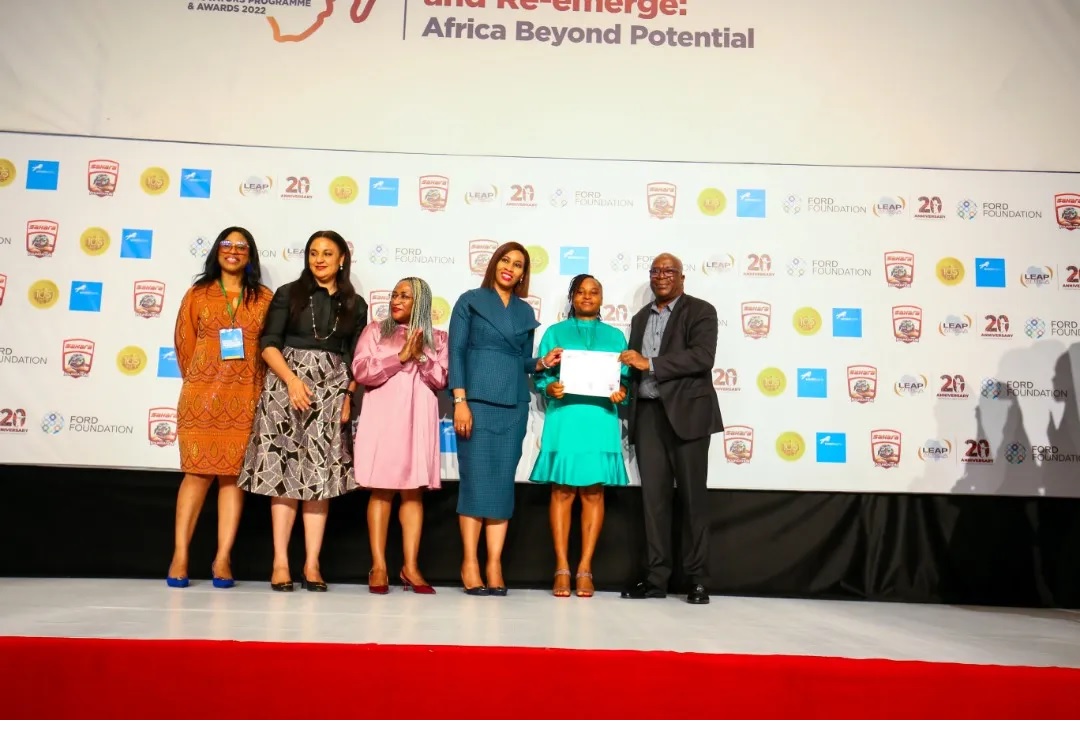
Sahara Foundation, the personal and corporate social responsibility vehicle for Sahara Group, in collaboration with LEAP Africa, Ford Foundation, and Impact Investors Foundation celebrated its 2021-2022 Sahara Impact Fund (SIF) Fellows whose businesses are set to promote sustainable development across Africa.

The Fellows were honoured at the LEAP Africa Social Innovators Programme & Awards (SIPA) ceremony which held on Thursday, 8 September 2022, at Eko Hotels & Suites, Lagos, Nigeria.

This year’s SIPA event themed ‘’Reawaken, Redesign and Re-emerge: Africa Beyond Potential’, drew speakers and panelists from across Africa, Europe, and North America to discuss challenges that impede Africa’s growth and development with a keen focus on social entrepreneurship while providing novel strategies to enable the much-desired transformation.

Speaking at the event, Pearl Uzokwe, Executive Director at Sahara Foundation, lauded the Fellows for their efforts in creating innovations that promote social impact. “We are excited to be part of this transformative partnership that is committed to bringing sustainable change to the African continent. We are also proud of our Fellows who have risen above the structural limitations and social barriers to solve societal problems. I urge you to put your training to good use, think beyond the profit and focus on doing good and doing well”, Uzokwe said.

Present at the event to receive their awards, were 11 SIF Fellows from across 7 African countries.  They include Aminu Moses Rex, Michael Osumune, Olawale Thompson, Aliyara Assurance Oluchi, and Oluwamayowa Salu, from Nigeria. Also awarded were James Thuch Madhier from South Sudan; Ligare Allan Muliru from Kenya; Siwelwa Lazarous from Zambia; Lamin Ceesay from The Gambia; Gadi Banda from Malawi; and Albert Moghomaye from Cameroon.

Ndidi Okonkwo Nwuneli, Founder, LEAP Africa, commended the partners for supporting the initiative and reiterated the need for impact investments for social entrepreneurs to scale sustainably.  She said, “We recognise that youth leadership and inclusion are critical to wealth creation and development across the continent’’. Nwuneli commended the African youths for leveraging their entrepreneurial abilities and innovation to solve Africa’s social problems, adding, “LEAP Africa will continue to raise and empower a movement of young African social entrepreneurs and enterprises capable of transforming Africa into the Africa of our dreams.”

Sahara Foundation, through the Sahara Impact Fund (SIF), leverages the LEAP Africa’s Social Innovators Programme to bridge the gap in social innovation and social entrepreneurship, and foster relations amongst African innovators. It serves as a platform to equip young entrepreneurs with the requisite skills, knowledge and network that enables them to scale their enterprises sustainably and, in turn, impact the society bringing about positive social change through their business ventures.

The three-month Fellowship programme which combines virtual learning and in-class experiences, through its ‘governance unusual curriculum’ challenges the Fellows to be the measure ‘’for doing the right thing’’ against all odds. This inspiring mindset has the potential to turn them into impactful business leaders with the potential to influence a positive cultural paradigm shift and promote a movement of people who willingly and consistently choose to do the right thing.

The programme which helped equip Fellows with the knowledge, skills, and proven methodologies they require to improve their business models and scale profitably, ended with the recognition of outstanding SIF Fellows at the LEAP Africa Social Innovators Programme & Award Ceremony (SIPA).

The Sahara Impact Fund connects social innovators to a network of potential investors, partners, clients, and customers as Sahara Foundation continues to build the next generation of leaders to accelerate Africa’s growth.

With a focus on “increasing access to energy” and “building sustainable environments”, Sahara Group, through the Sahara Foundation is committed to impacting lives and building sustainable societies in Africa.

Egoras Generator is Coming and will be powered by Cooking Gas and Petrol

1

We began with refurbishing foreign generators, and turned old or used generators to become like new. The new phase is to assemble/design generators with most of the parts sourced locally. Since January, we’ve been working with the government to ensure quality standards.

The factory will be at Enugu and we estimate to produce thousands of units per week to use in Nigeria and export across Africa. Our price model for the same capacity foreign brand will be at 40% of cost.

Here is the design; it will work on gasoline (i.e. petrol) and cooking gas. I am proud of what young Nigerians are doing, and even happier that when you provide small guidance, great things are happening. I commend Ugoji Harry for exceptional leadership and executing on the playbook. The goal is to list this business in the stock market. Learn more about Egoras, Africa’s largest refurbishment retailer.

Tekedia Capital >>more than money, we provide world-class engineering support to builders and innovators in a clinically packaged business model. Next investment cycle begins on Monday, Sept 19, 2022. Register here 

Surge In Migration Forces Firms In Nigeria To Adjust Job Employment Criteria

0

As young Nigerians continue to migrate to foreign countries in droves, lately, there has been a huge number of resignations across different job sectors in the country.

This has led to so many vacant positions in different companies across the country, with very few qualified people to fill such positions.

According to findings from a survey of job listings from recruitment websites, it was discovered that few Nigerian banks, such as; Access Bank, First Bank, Guaranty Trust Bank (GTB), First City Monument Bank (FCMB) and Polaris Bank have all reduced the minimum eligibility criteria for their 2022 graduate trainee programmes to a second-class lower grade (2.2) from the usual second-upper class (2.1) and first class grades that used to be the criteria from job-seekers.

Recall “The Great Resignation,” also known as “The Big Quit and Great Reshuffle”, an economic trend that happened in early 2021, in which employees voluntarily resigned from their jobs en masse, seems to be playing out in Africa’s biggest economy.

A large percentage of HR managers across the country revealed that they have processed a number of resignations in the past one month, most of which are due to studies and relocation.

Some of these professionals and experts however disclose that this latest trend, on the flip side, has little positive impact for Africa’s biggest economy, as most banks and firms in the country are trying to expand their recruitment net, which will help reduce youth unemployment that is at an all-time high of 33.3%.

A Director of Transquisite Consulting, Jennifer Oyelade while commenting on the recent employment criteria  by some firms in Nigeria, said;

They have realised that they can’t keep judging applicants based on theory alone, if they have never assessed their competency.

“So, they are throwing their net wider to attract the overlooked talent in a bid to find the underdogs who can lead the flock”.

Also commenting on this is Oludayo Sokunbi, Chief Executive officer at Japa Consults, who stated that some of these banks had to reduce their employment criteria because those with first class and upper class grades have higher chances of getting scholarships abroad than those with lower class.

In her words;

Those with lower class have a higher rate of retention because they have fewer chances of getting scholarships,” Sokunbi said. He added that companies have discovered that grades do not define a person as long as you are open to learning.

“They have discovered that people with lower grades can adapt to work and are more versatile since some of them may have been involved in school activities which may affect their chances of getting better grades”.

Few other professionals have also stated that this current surge in migration has led to a scarce talent gap, which is putting organisations on edge, for them to begin to consider second class lower students in their recruitment process.

Meanwhile, a surge in migration of Nigerians has majorly been due to the myriad of problems that have ravaged the country. Nigeria is currently ravaged by a number of socio-economic issues, some of which include; insecurity, high cost of goods and services, corruption, unemployment, etc.

This is coupled with the industrial strike action by the Academic Staff Union of University lecturers which is heading to a year that has frustrated a large percentage of Nigerian university students.

This has continued to force these students to move out of the country in droves. Data from the British government revealed that the number of Nigerians granted student visas increased by 222.8 percent to 65,929, the highest in four years in June 2022 from 20,427 in the same period of 2021.

On the flip side, whilst this Great Resignation could pose a serious challenge for some organizations in the country, it could also mean that employees at the low-level rank in the company will receive promotion opportunities in order to fill the vacant positions.

Companies will also place value on their employees going forward, which could attract pay rise in order to retain them from migrating.

This could also be an opportunity for unemployed Nigerians to get a shot at being employed which could reduce the unemployment rate in the country.

The newspaper headlines gave Obi a really great answer: “2023: Peter Obi leads”

1

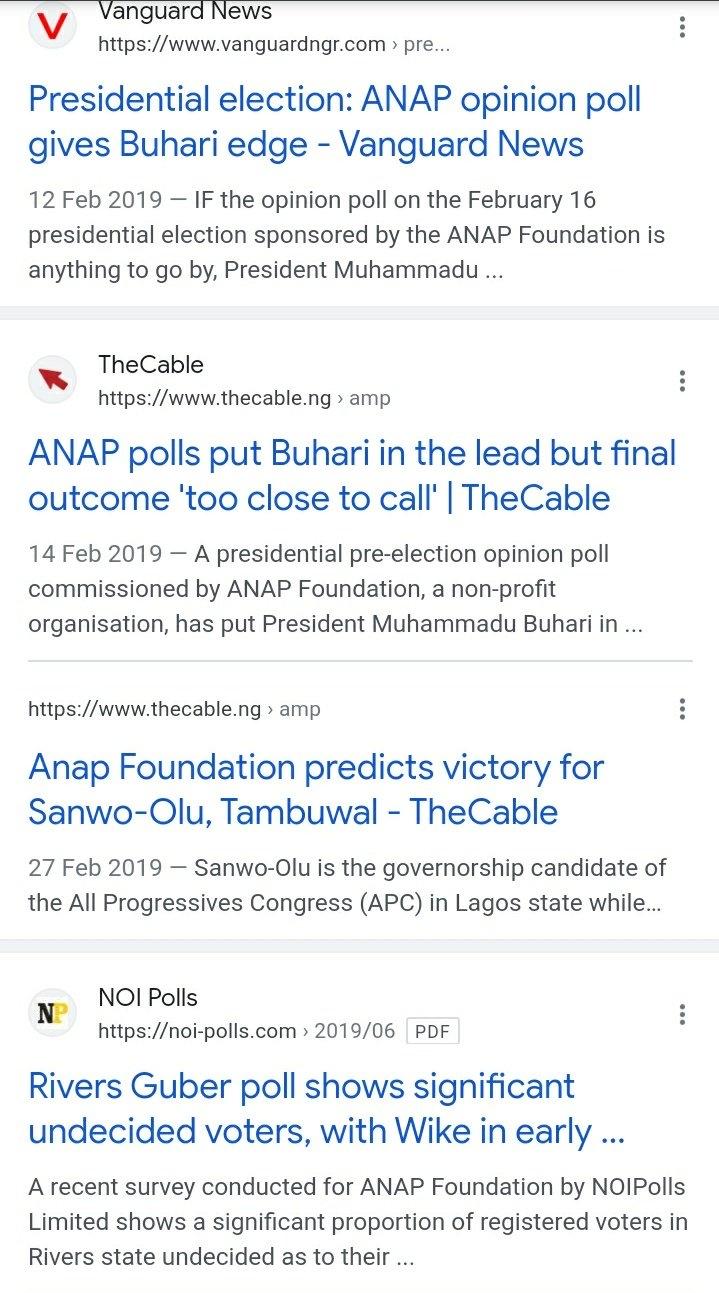
On that hated poll in the current electoral calendar in Nigeria, the headlines by leading newspapers panicked and troubled many stakeholders. Magically, Vanguard, a highly respected national brand, put it in the minds of citizens that yes indeed Peter Obi “leads”. Since in politics, when you are arguing or complaining, you are losing, it was then left for APC and PDP to fight on that declaration.

The Labour Party stayed over the fray while others were arguing over statistics. The headlines were more politically lethal than the polls as they changed the perceptions of the citizens. 

I have gone through the headlines and can conclude: if Peter Obi ends up winning the presidency, the newspapers in Nigeria are the catalysts. They cemented what many felt was an effervescence into a stable solid state political movement [Mr Udeagu Jr who taught me Chemistry in secondary school, thank you].

Ndubuisi: “Mother, why do they say my eyes are big”

Mother: “They are jealous since you need big eyes to see mathematics better”

After she gave me that answer, and I used it  to respond to two bullies in school, they never made that joke again, as they wished they had bigger eyes since I was “seeing” mathematics better.

The newspaper headlines gave Obi a really great answer: “2023: Peter Obi leads…” Yes, he “leads” even if that is just a “a presidential poll”. Please plan to vote as electoral polls, unlike others, have results because elections happen!

The Most Hated Poll Right Now in Nigeria and the Road to Aso Rock in 2023

Comment on LinkedIn Feed

Comment 1: Perception is everything……the trailing PDP & APC did not see the Obi’s LP third force coming from their earlier permutations, they are currently playing catch up and need to go back to the drawing board and restrategize if it’s still possible

The calls have been just right