DD
MM
YYYY

PAGES

DD
MM
YYYY

spot_img

PAGES

Home Blog Page 491

Tekedia Capital Investment Cycle Is ACTIVE; Join To Invest

0

Greetings! Tekedia Capital is excited to announce that the next investment cycle will begin on October 6, 2025 to conclude on Nov 3, 2025.

About 18 companies representing multiple continents and across many industrial sectors will participate.  The demo day showcase will be on Oct 25, 2025.

Please join Tekedia Capital here.

Tekedia Capital offers a specialty investment vehicle (or investment syndicate) which makes it possible for citizens, groups and organizations to co-invest in innovative startups and young companies in global markets [we invest in global startups, not just in African startups]. Capital from these investing entities are pooled together and then invested in a specific company or companies. We invest in promising global companies irrespective of their locations.

Top Strategies for Playing Live Dealer Games at Online Casino Singapore Sites

0

The rise of online casino platforms has transformed how players enjoy their favorite games. While virtual slots and automated tables remain popular, live dealer games have taken center stage in recent years. They provide the best of both worlds: the convenience of online play combined with the social atmosphere of a real casino.

Live dealer games like blackjack, roulette, baccarat, and poker allow players to interact with real dealers via HD video streaming, creating an authentic gaming experience from the comfort of home. But just like in physical casinos, success requires more than luck—it demands strategy, discipline, and a smart approach.

In this guide, we’ll explore top strategies for playing live dealer games at online casino Singapore sites to help you maximize your chances of winning while enjoying a safe and engaging experience.

Why Live Dealer Games Are Popular in Singapore

Before diving into strategies, it’s important to understand why live dealer games have become a favorite among Singaporean players:

  • Realism: Games are conducted by professional dealers, streamed live, making players feel like they’re sitting in a real casino.

  • Transparency: Seeing the dealer shuffle and deal cards builds trust compared to computer-generated results.

  • Social Interaction: Chat functions allow players to communicate with dealers and sometimes even with fellow players.

  • Variety: Popular games like live blackjack, live baccarat, and live roulette are always available.

These factors explain why live dealer games are a central feature at any reputable online casino Singapore.

Top Strategies for Playing Live Dealer Games

1. Choose a Trusted and Licensed Platform

Your strategy starts before you even play. Selecting a reputable platform ensures fair gameplay, secure transactions, and reliable payouts. Always check for licensing from recognized regulators and read reviews about the casino’s reputation.

Playing at a trusted online casino Singapore means you can focus on strategy without worrying about scams or rigged games.

2. Master the Rules of the Game

Every live dealer game has its own set of rules and betting structures. For example:

  • Blackjack: Aim for 21 without exceeding it, while considering dealer upcards.

  • Roulette: Different bets have varying odds—straight bets vs. outside bets.

  • Baccarat: Learn banker vs. player bets and commission rules.

Understanding these rules ensures you don’t make costly mistakes and allows you to apply advanced strategies more effectively.

3. Manage Your Bankroll Wisely

One of the golden rules of gambling is bankroll management. Decide how much money you’re willing to risk before joining a session and stick to that budget.

Practical tips include:

  • Dividing your bankroll into smaller portions for multiple sessions.

  • Avoiding the temptation to chase losses.

  • Setting both win and loss limits to walk away at the right time.

This disciplined approach helps you enjoy the game without financial stress.

4. Use Basic Strategy for Blackjack

For live dealer blackjack, memorizing and applying basic strategy charts significantly improves your odds. These charts guide you on when to hit, stand, split, or double down based on your cards and the dealer’s upcard.

Instead of relying purely on instinct, follow the math. Over time, this reduces the house edge and boosts your long-term success at live blackjack tables.

5. Stick to Smart Bets in Roulette

Live dealer roulette is exciting but requires careful betting. While straight-up bets offer huge payouts, the odds are low. A smarter strategy is to focus on outside bets such as red/black, odd/even, or high/low, which give you nearly a 50% chance of winning.

Some players also use betting systems like the Martingale (doubling bets after a loss) or Fibonacci sequence, but remember these do not change the house edge—they simply manage risk and reward patterns.

6. Play the Banker Bet in Baccarat

In live baccarat, the banker bet statistically offers the best odds, with a house edge of about 1.06%. Even with a small commission on banker wins, this option consistently outperforms the player bet or tie bet.

Avoid tie bets despite their high payout; they have the worst odds and will drain your bankroll quickly.

7. Take Advantage of Casino Bonuses

Many online casino Singapore sites offer promotions specifically for live dealer games, such as deposit bonuses, cashback, or free bet credits. These offers increase your bankroll and extend your playtime, giving you more chances to win.

However, always read the terms and conditions—especially wagering requirements—before claiming any bonus.

8. Observe Before Playing

Most live dealer platforms allow you to join a table as a spectator before placing bets. Use this feature to:

  • Study the dealer’s pace and style.

  • Understand how other players are betting.

  • Familiarize yourself with the game interface.

Observation builds confidence and prepares you for smarter betting once you join.

9. Maintain Focus and Discipline

Live dealer games move at a steady pace, and distractions can lead to poor decisions. To stay sharp:

  • Play in a quiet environment.

  • Avoid multitasking while betting.

  • Take short breaks during long sessions.

Discipline is the difference between casual fun and serious winning potential.

10. Practice Responsible Gambling

Finally, remember that gambling should always be a form of entertainment, not a way to make guaranteed income. Responsible gambling includes:

  • Knowing when to stop.

  • Avoiding play when stressed or emotional.

  • Using responsible gaming tools like deposit limits or self-exclusion if needed.

The best strategy is one that balances fun with control.

The Future of Live Dealer Games in Singapore

As technology advances, the live dealer experience will become even more immersive:

  • Virtual reality casinos could allow players to walk through 3D casino floors.

  • AI-powered dealers may enhance interaction while keeping games fair.

  • Faster mobile streaming will make games smoother on smartphones.

With these innovations, the popularity of live dealer games at online casino Singapore sites is only set to grow.

Final Thoughts

Live dealer games bring the thrill of the casino floor directly to your home, offering authenticity, social interaction, and endless excitement. But winning consistently requires more than luck. By mastering the rules, managing your bankroll, and applying smart strategies for each game, you can significantly improve your chances of success.

Choosing a trusted online casino Singapore platform ensures that your experience is not only fun but also safe and fair. Whether you’re playing live blackjack, roulette, or baccarat, the key is discipline, strategy, and responsible play.

As the gambling industry continues to evolve, live dealer games will remain at the heart of the digital casino revolution—blending tradition with innovation for players across Singapore.

Moniepoint Names Among UK’s Top Fintech Companies 2025 by CNBC

0

Moniepoint, one of the leading business payments and digital banking platforms has been named in CNBC’s list of the UK’s top fintech companies in 2025.

The recognition highlights Moniepoint’s role in advancing financial inclusion for Africans worldwide and its growth internationally.

The list, compiled by CNBC in conjunction with market research firm Statista, identified honourees after analyzing key performance indicators across 2023-24, such as revenue growth, transaction volume, and capital raised.

Moniepoint joins a select cohort of innovative companies driving the UK’s dynamic fintech ecosystem forward. The fintech was listed in the payments category, which includes providers of payment services, gateways, and other products that facilitate transactions between people and businesses both online and in-store.

Companies in this category include Visa, Klarna, Mastercard, MyFawry, Opay, Interswitch, PayPal, Stripe, Wavemoney, Wise, amongst others.

Commenting on the recognition, Tosin Eniolorunda, Co-Founder and Group CEO of Moniepoint Inc., said,

“We are delighted to be honoured once again by CNBC, this time as one of the UK’s top fintech companies. We are Nigerian-founded and proud of our heritage, but we recognise the importance of the UK market as both a strategic bilateral trade partner and a vital remittance corridor for Africa.

“That’s why we launched MonieWorld earlier this year to meet the fragmented, underserved needs of the UK’s African diaspora and, emboldened by this recognition, we look forward to exploring new ways to expand our presence in the UK and other markets, all with a view to promoting financial happiness and inclusion for Africans everywhere.”

Moniepoint’s recognition in CNBC’s list of the UK’s top fintech companies in 2025, follows several recent milestones which reiterate the Company’s significant momentum and ongoing commitment to widening access to the formal financial system. Recall that in 2024, Moniepoint was ranked among Africa’s fastest-growing companies by the Financial Times.

Founded in 2015 by Tosin Eniolorunda and Felix Ike, Moniepoint (formerly TeamApt Inc.) is a leading advocate for financial inclusion across Africa and the diaspora,  especially for individuals and businesses operating in the informal economy, underserved by formal and traditional institutions.

In 2023, Moniepoint reportedly recorded 5.2 billion transactions, worth over $150 billion. By January 2024, around 2.3 million businesses were using Moniepoint payment machines. In October 2024, Monieppint reached unicorn status, a milestone that was achieved through a $110 million Series C funding round, which valued the company at over $1 billion for the first time.

Today, the Company supports more than 10 million customers and processes over one billion transactions monthly with volumes exceeding US$22 billion. Its comprehensive, integrated platform spans digital banking, credit, payments, and business management tools offering a seamless digital financial experience.

In Nigeria, Moniepoint’s payment machines have become ubiquitous across the country, from megastores in Lagos to roadside shops in Kano. These machines have become the preferred option for shoppers because they offer a lower-than-average transaction decline rate and instantly reverse transactions in case of failed payments.

Notably, Moniepoint expanded its offering to Africans in the international diaspora via the launch of the MonieWorld platform earlier this year. MonieWorld offers seamless remittance and digital financial services capabilities to individuals in international markets including the UK; the first time the Company has provided services to consumers outside Africa.

This latest accolade follows Moniepoint’s inclusion among CNBC’s list of the world’s top 300 fintech companies in July. Earlier in 2025, the Company was named in the TIME100 Most Influential Companies list, demonstrating its extraordinary impact.

Moniepoint’s mission is to empower businesses and individuals by providing seamless, reliable, and accessible financial services that drive economic growth and financial inclusion.

The fintech aims to simplify payments, banking, and business management for small and medium-sized enterprises (SMEs) and underserved communities, particularly in Nigeria and across Africa, through innovative digital tools, affordable credit, and integrated financial solutions.

Jerome Powell Says AI Already Reshaping Workforce, But Impact Still Hard to Measure

0

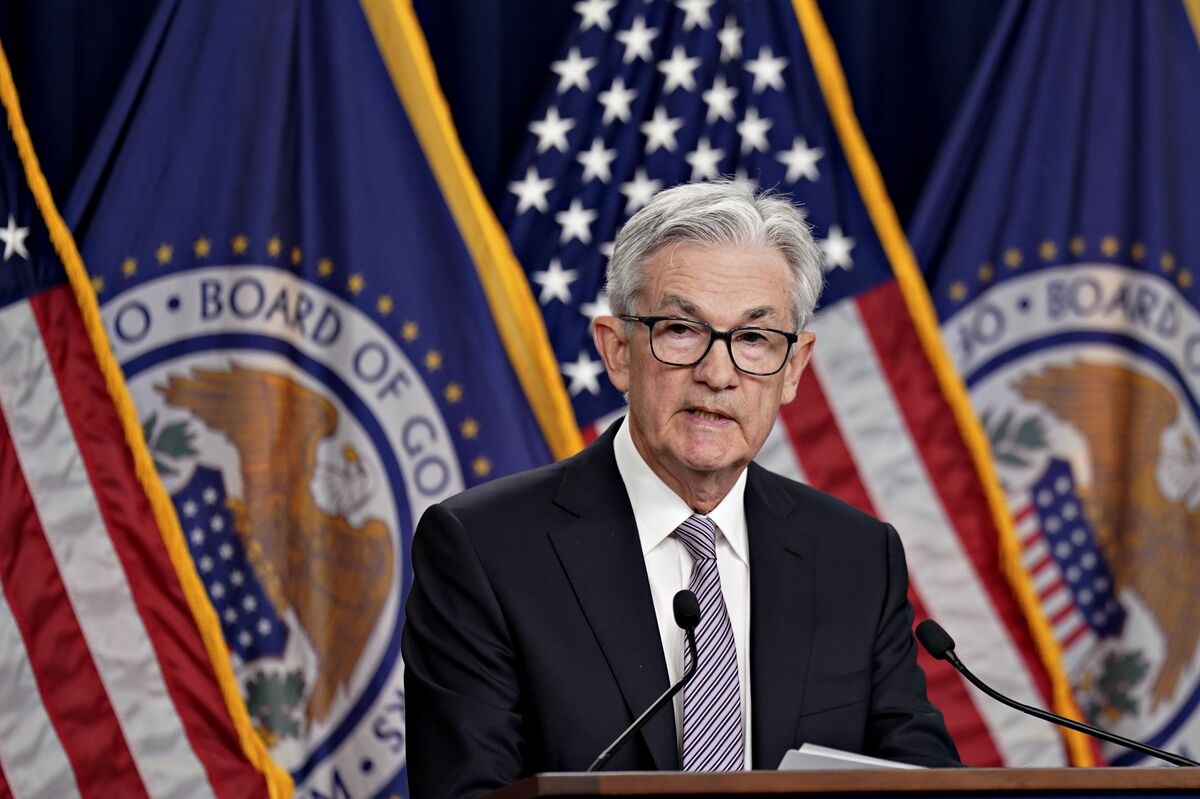
Federal Reserve Chair Jerome Powell acknowledged on Wednesday that artificial intelligence is already upending the U.S. workforce, though he cautioned it is still difficult to determine the scale of its impact.

“I think my view, which is also a bit of a guess, but widely shared, I think, is that you are seeing some effects but it’s not the main thing driving it,” Powell told reporters during a press conference following the conclusion of the Fed’s September policy meeting.

Powell pointed to early signs of AI’s influence on the job market for younger workers, especially recent college graduates.

“It may be that companies or other institutions that have been hiring younger people right out of college are able to use AI more than they had in the past,” he said. “That may be part of the story. It’s also part of the story, though, that job creation more broadly has slowed down.”

While downplaying AI as the sole driver of labor market changes, Powell’s remarks mark one of the most high-profile acknowledgments yet from a U.S. policymaker that the technology is beginning to reshape hiring and employment patterns.

Divided Views Among Business Leaders

Powell’s comments come amid an intensifying debate among CEOs and economists about the speed and severity of AI-driven job displacement.

Anthropic CEO Dario Amodei sparked controversy earlier this summer by predicting that AI could eliminate half of all entry-level white-collar jobs within one to five years. Ford CEO Jim Farley has voiced similar concerns about AI’s disruptive force on employment.

Others have pushed back against such stark forecasts. Nvidia CEO Jensen Huang, whose company is at the center of the AI revolution, has argued that AI will not wipe out jobs but rather create new ones by boosting productivity and giving workers new tools. Huang has described AI as “a tool for everyone” that will allow people to do more, not less.

OpenAI CEO Sam Altman has also urged caution against alarmist timelines, questioning Amodei’s predictions. At a Federal Reserve conference earlier this summer, Altman acknowledged AI’s power but suggested the technology may augment human productivity as much as it replaces jobs.

Even so, more corporate leaders and analysts lean toward the view that AI will have a heavy impact on job security. Already, some companies including JPMorgan and Klarna, have cited AI as a reason for reducing headcount, saying automation is allowing them to streamline operations.

Powell’s Previous Warnings

The Fed chair has not shied away from the broader implications of AI. In testimony before the Senate Banking Committee in June, Powell told lawmakers the technology could “make really significant changes in the economy, in the labor force.”

“It can either augment people’s productivity, or it can replace people, or it can do a little bit of both. But it’s going to be something,” he said at the time.

Balancing Risks and Productivity Gains

The split among business leaders reflects the uncertainty facing policymakers like Powell. Economists have long warned that technological shocks can be uneven, benefiting productivity and corporate profits while leaving displaced workers struggling to adjust.

Powell’s remarks on Wednesday suggest he sees AI as one of several forces weighing on the labor market, but not yet the primary driver. Still, his decision to address the issue at length underscores that the Fed is taking seriously the possibility that AI could accelerate structural changes in employment — and that those changes may complicate the central bank’s job of balancing inflation and growth in the years ahead.

Mourinho: The Entrepreneur in Football

0

When people think of José Mourinho, they often picture his tactical victories, press conference theatre, and collection of trophies across Europe. Yet there is another way to understand his career. Mourinho has acted not only as a football manager but also as an entrepreneur and investor. His approach to clubs resembles the way a venture capitalist approaches companies, seeking rapid returns and moving on when the cycle reaches maturity.

The Value Mourinho Delivers

Mourinho’s core value to any club is immediate impact. He does not arrive to spend five or ten years quietly building an academy pipeline or reinventing the culture. Instead, he promises trophies and a winning mentality in the short term. His track record shows how effective this model can be. At Porto he lifted the Champions League, at Inter Milan he delivered a treble, and at Roma he secured their first European title. Each of these achievements transformed the status of the clubs he managed and raised their international visibility. For boards and investors, Mourinho is a guarantee of relevance.

How He Operates

Mourinho’s coaching style mirrors the way entrepreneurs restructure assets. He reshapes squads by demanding players who embody resilience and experience. He introduces a tactical framework that is both his intellectual property and his competitive advantage. His teams defend with discipline, transition with speed, and thrive in knockout competitions. The cycle often follows a familiar pattern. The first season brings order, the second season brings peak results, and the third season often shows signs of strain. What appears as decline can also be seen as the natural conclusion of an investment cycle.

The Business Behind the Coaching

The financial aspect of Mourinho’s model is as important as the footballing one. He negotiates contracts that place him among the highest-paid managers in the world, while also ensuring that early dismissals come with lucrative compensation. These severance payouts, which have reached tens of millions across different clubs, form a reliable part of his income stream. At the same time, his presence boosts commercial revenues. Sponsors, broadcasters, and fans all respond to the magnetism of the Mourinho brand. For clubs, the short-term costs are high, but the exposure and the likelihood of winning trophies often justify the investment.

Lessons in Leadership

There are lessons from Mourinho’s career that resonate beyond football. The first is the importance of delivering quick wins in order to establish credibility. The second is the recognition that some leadership roles are inherently short term and should be managed as such. The third is the value of a strong personal brand, which can sustain opportunities even when specific ventures falter. Mourinho also demonstrates the importance of contract negotiation that secures protection in difficult moments. Above all, his career shows that adversity can be used as a unifying tool, since he often frames challenges as battles that bring his teams together.

Mourinho’s career is often described as turbulent, but it can also be seen as a sophisticated business model. He enters clubs, delivers rapid results, extracts both sporting and financial value, and then departs when the returns have peaked. This is the behaviour not only of a football manager but of a seasoned entrepreneur. Whether his next destination is Benfica or another ambitious club, Mourinho will approach it as his next venture. In that sense, he remains football’s most recognisable entrepreneur on the touchline, constantly seeking the next opportunity to invest his methods and reap short-term success.