DD
MM
YYYY

PAGES

DD
MM
YYYY

spot_img

PAGES

Home Blog Page 4919

Big Eyes, Polkadot, and Algorand: 3 Cryptocurrencies That Could Return Hefty Profits In The Next 3 Years

0

As the cryptocurrency industry continues to evolve, several well-known blockchain ecosystems have emerged, each claiming to have what it takes to resolve difficulties and constraints that pose limitations to financial transactions.

There is fierce rivalry among blockchains to attract investors, build profit margins as well as establish a support community. Investors are always watching out for trends and making educated guesses on what projects are profitable for investment. Big Eyes Coin (BIG), Polkadot (DOT), and Algorand (ALGO) are cryptocurrency networks that are pioneering game-changing blockchain technologies. In this article, we will highlight why you have to feature these currencies in your portfolio.

Polkadot (DOT): Multi-Layer Blockchain

Polkadot (DOT) is a decentralized protocol that connects various incompatible blockchains. Polkadot (DOT) is an open-source layer-zero blockchain technology that enables blockchains and decentralized (dApps) programs to communicate and share data (assets and data). The ecosystem is powered by the DOT utility token. While major blockchain networks such as Ethereum (ETH) and Bitcoin (BTC) have achieved success in their own businesses, there is no compatibility.

The Polkadot blockchain’s native coin, DOT, is utilized to facilitate staking and governance on the platform. DOT can be purchased and traded on the majority of the main cryptocurrency exchanges available today.

Polkadot is built on the main network known as the relay chain. This main network is linked to a number of parallel chains, which can connect to other networks via a connecting layer or bridge. Polkadot also offers a proof-of-stake consensus method, which is worth highlighting.

Polkadot can process up to 1,000 transactions per second due to its unique infrastructure. Ethereum is currently the most popular DeFi cryptocurrency. However, it will only be a matter of time before DeFi projects like Polkadot catch up and take over the coin market.

Algorand (ALGO)

Algorand (ALGO) is a two-tier decentralized network that serves as a digital currency as well as a blockchain platform. Because it is an open-source blockchain, anyone can inspect and contribute to the platform’s protocol. ALGO (ALGO) seeks to be a highly efficient, scalable platform that allows transactions to be completed rapidly.

This platform employs a two-tier blockchain infrastructure, combining the benefits of layer-1 and layer-2 blockchains. Its foundation layer also provides intelligent contract integration, asset generation, and atomic cryptocurrency swaps, which are all responsible for security and compatibility.

Algorand (ALGO) creators claim that their cryptocurrency would outperform others because of its speed, efficiency, architecture, and governance. This platform claims to solve the “blockchain trilemma” by combining the trustlessness, immutability, and complete decentralization of traditional cryptocurrencies with speed and security.

This platform validates and approves transactions using a modified version of the Proof-of-Stake consensus mechanism, also known as Pure Proof-of-Stake, rather than the mining-based Proof-of-Work method used by Bitcoin and other cryptocurrencies. As a result, it has a significantly lower computational resource demand and can settle transactions in a matter of seconds.

Users can check payment legitimacy without retaining a balance for block verification and individual payments. Algorand (ALGO) aspires to establish a blockchain that delivers actual values to initiatives to build a global economy with an eye toward economic innovation. As a governance token, this platform will grant users voting rights to make critical decisions about the platform’s future.

Big Eyes Coin (BIG): Meme Coin To Revolutionize The Industry

Big Eyes Coin (BIG) aims to be a blockchain ecosystem that promotes unparalleled user growth by utilizing NFTs to give users access to a variety of productive events and information. The community-focused project will contain a dynamic tax structure aimed to ensure long-term viability through the introduction of Autoburn features, liquidity pool acquisition, marketing wallet, and other features.

Big Eyes’ mascot is an anime-style cat with bulging pupils, which deviates from the usual meme coins. Because many meme coins use dogs to identify themselves, the token already has an advantage over its competitors. Big Eyes took this strategic move because its developer regarded the cat’s ambiance as a “billion-dollar industry” that could be capitalized on by focusing on the “cute” market.

Big Eyes Coin (BIG) intends to leverage on the growing relevance of NFTs in the crypto industry. Big Eyes intends to include an NFT collection among its top ten initiatives, with NFT activities taking place throughout the year. You will be able to join the Big Eyes Sushi Crew if you obtain a Big Eyes NFT.

Big Eyes Coin (BIG) provides a completely decentralized environment in which community members may conduct all forms of transactions (buying and selling) at ultra-fast rates with no transaction fees. Consumers will only be required to pay taxes during NFT transactions (buying or selling).

Finally, the cutting-edge development team is devising revolutionary marketing techniques to boost the popularity, acceptability, and adoption of the meme coin. You can’t sit back living small, be part of the BIG community!

For More Information On Big Eyes (BIG):

Nigerians Responded to Egoras Awoof Sale [Video]

1

It is a very simple business model: recruit young people and teach them practical electronics and broad engineering. Ask citizens to bring old or unused household items. Get those young people to refurbish them. Put months-long warranty on the items. Sell them to the citizens at cost model about 40% of new ones.

Many benefits: save the planet, deny landfills of assets, fight for Naira by disintermediating unnecessary imports, help families save, and advance communities. Egoras awoof sales which took place last week was superb. Office locations here.

The destination – to be successful and be listed on the Nigerian Stock Exchange, employing many technical talents while “making life easy for all”.

We’re starting with refurbishment but nothing stops us making new fans, fridges, TV sets, etc if we see cost efficiency at the input level, especially electricity. By investing and deepening talent via our world-class vocational training and mentoring, Egoras can provide a pillar for Nigeria to rise. If you are an #engineer from VocTech to OND to PhD, let us #build for new Nigeria and Africa.

E-payment Transactions In Nigeria, Hits Monthly All-Time High Of N33.2 Trillion In August

0

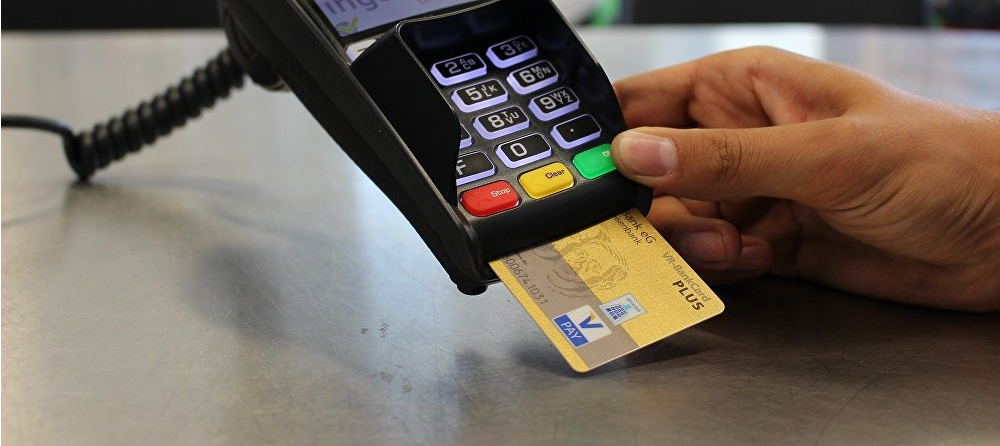
The adoption of the e-payment system in Nigeria, where consumers can pay for goods bought without physical cash, has continued to witness a surge of e-payment transactions in the country.

According to the Nigeria Inter-Bank Settlement Systems (NIBSS), it revealed that transactions worth N33.2 trillion were performed electronically in August through the NIBSS Instant Payment platform (NIP).

This brings the total value of e-payment deals in the last 8 months to N238.7 trillion

The NIBSS data also shows that the August 2022 record came as an all-time high e-payments value recorded in a month since the deployment of the platform.

Compared to the N29.3 trillion recorded in July, this shows a 13.3% growth. Year on year, the e-payment value increased by 50% compared to N22.1 trillion recorded in August last year.

The recent surge witnessed in electronic transactions in the country, reveals that a large percentage of Nigerians are embracing the cashless policy introduced by the Central Bank of Nigeria (CBN) in the year 2011, to curb excesses in the handling of cash in the country.

It is interesting to note that cashless transactions in Nigeria rose by 40.66 per cent year-on-year to N210.08 trillion in the first seven months of 2022.

Also, financial inclusion has been recognized as a very important factor for e-payment adoption, because apart from mobile banking, all other electronic payment platforms require a bank account in the formal financial sector for smooth transactions.

According to NIBSS, the value of e-payment recorded was a reflection of the increase in the volume of deals within the month. The NIP volume rose to 448 million in August, showing a 10.6% increase over 405 million recorded in July.

An analysis of the first 8 months for 2022, released, revealed that the NIP platform recorded N26.6 billion transactions in January. Year on year, this was a 43.7% increase over N18.5 trillion recorded in the same month of last year.

Similarly, in February, deals worth N27.2 trillion were sealed over the electronic platform. Compared with February 2021 when N18.3 trillion was recorded, this represented 48.6% growth.

In March, the platform recorded 31.8 trillion transactions, a 44.5% increase over the N22 trillion recorded in the same month last year.

The value of transactions on the NIP platform stood at N29.2 trillion in April this year. This also shows a 41.6% increase over the N20.6 trillion recorded in April 2021

In May, the value of e-payment transactions stood at N29.6 trillion, a 43% increase compared with N20.7 trillion recorded in the same period last year.

The NIP transactions rose to N31.7 trillion in June 2022, a 37% growth over N23.1 trillion posted at the same time in 2021.

The data for July also reflected a 31% increase from N22.4 trillion last year to N29.3 trillion this year.

For August, the value of e-payments in Nigeria increased by 50% to N33.2 trillion compared to N22.1 trillion recorded in the same period last year.

The e-payment system has been proven to have a significant number of economic benefits which includes, mobilization of savings, and ensuring that most of the cash available in the country are with banks, which will make funds available to both businesses and individuals.

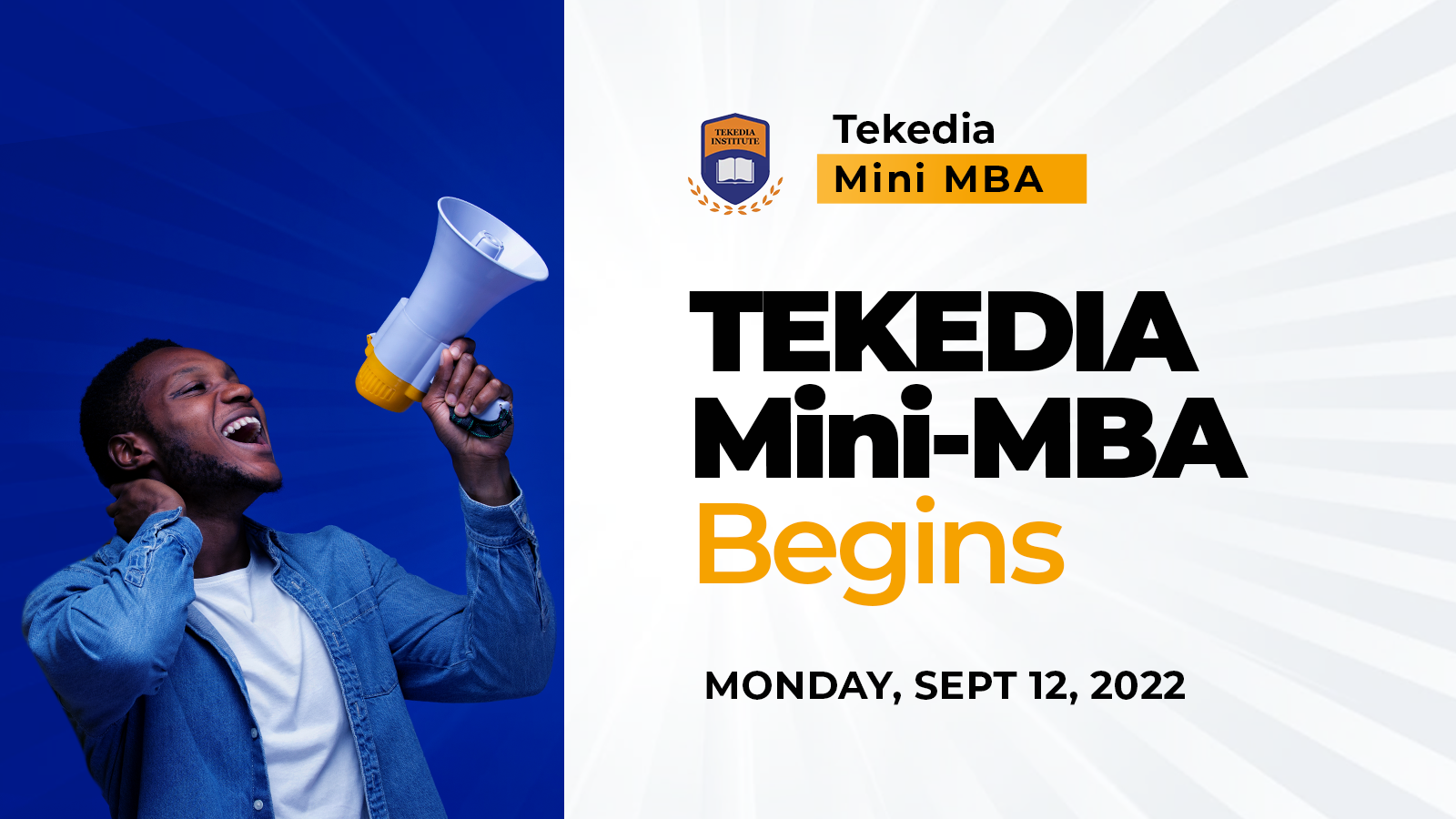
Tekedia Mini-MBA Begins On Monday, Sept 12 2022 at 12 noon WAT

1

Finally, the hour is here. Tekedia Mini-MBA begins tomorrow, Monday, Sept 12 2022, at 12 noon WAT.  On behalf of our faculty, staff and our alumni, let me welcome everyone. We have scheduled business executives from SAP Africa, Microsoft (USA), Barry Callebaut Group (Belgium), etc for the live Zoom classes.

They will focus on business innovation and design thinking. Later, other faculty members will move into business growth. Then, towards the end of the program in December, we move to operational execution; we bring in startups/SMEs CEOs for cases and lessons learned. It is a festival on business mechanics and entrepreneurial capitalism.

I am very confident that by the time you spend 12 weeks in our award-winning business school ( Velocity Mhagic’s $60,000 winner), you will see business and market differently.

This will be the best N60,000 or $140 you would be spending on learning; a promise to be kept. We continue to welcome new learners. Click and register today 

Ndubuisi Ekekwe, PhD, MBA

Professor & Lead Faculty

Tekedia Institute, USA

Who can grade JAMB Mathematics?

3

Who can grade JAMB? Why is it that no person (to my knowledge) has scored 100/100 in JAMB Mathematics in Nigeria? If you have had an exam since the late 1970s, and no student entering university in Nigeria has scored 100%, is it time to ask questions?

Sure – someone broke 99 in the last few years but I am not aware of 100%. Contrast that with JAMB alternatives like SAT (undergraduate) and GRE (graduate). Yours truly scored 800/800 in GRE Mathematics. But it was not a big deal as most engineering PhD students into top-10 universities break that in US.

Do you know of anyone who scored 100/100 in JAMB Mathematics? I am just curious because it seems really intriguing for a Math exam since 1978. Yes, I find it hard to believe that JAMB is that hard for a kid in Nigeria not to have cracked that perfect score in decades.

Update: someone had noted that someone had actually recorded 100 in JAMB. So, the 100 is not for the aliens.

Comment on LinkedIn Feed

Comment 1: 800/800 on GRE?

Incredible!!!

That’s an electrifying brain there. Success truly is predictable. People who make impact today have at some point in their life when growing up shown predictable signs of it.

Be it in politics, religion, academics, entrepreneurship etcetera. Whenever I dive into the biographies of people like Peter Obi, Tinubu, Oyedepo, Elumelu, Strive Masiyiwa and now our own truly, Prof Ndubisi Ekekwe.

I’m always overwhelmed with the results these people were commanding in their early 30s that I used to ask myself, are will (who are in this age bracket) ever going to match 1/10th of their abilities, looking at how far they have come in the journey at such age?

My Response: GRE Math 800/800 is very common. If you get the first say 20 questions out of say 40 correct, it may cut-off and give you 800/800. It is not designed to punish, rather to gauge your mathematical ability. But if you get 2 wrong in the first 10 questions, even if you get the balance 38 correct, you cannot score up to 700.

Why? When you begin, you start with “middle difficulty” in the questions. If you keep getting the questions right, the system will bring “harder and harder”. If you sustain that and by 20th question and you are still getting it, it awards you 800/800 and tells you to go home.

But if you fail two in the first 10, it will offer easier and easier questions, and if you keep failing some, it will return the real easiest. You may get those but it marks you below 600.

Comment 1b: No surprises here really. The Nigerian system is programmed to fail you by default. No wonder people who struggled to finish 2:2 here cross over and start breaking records, a system where the lecturer tells you A is for God, B is for his mum in the village, but C downwards is up for grabs for all all interested. It can be better, but at this time, nahh.

Comment 2: I don’t think we can compare Jamb with GRE. you won’t see a graduate student, PHD or someone going for masters degree taking JAMB. however GRE seems very much open in the sense that someone going for PhD take it just like someoone going for masters and possibly even someone going for bachelors degree, just like you have mentioned.

Imagine an engineering PhD candidate takes Jamb math ? . As we all know, folks that takes Jamb are much younger with less educational knowledge and experience compared to folks that takes GRE.

My Response: used the word “Contrast”, not “compare” and added SAT which is JAMB peer. But since Nigeria does not have central exam for post-graduate, I lumped in GRE. You focused on the GRE, ignoring the SAT.

(GRE is more difficult than JAMB just as GRE is more difficult than SAT. GRE is not measuring your math skills but your math heuristics in a grading scale. If you fail the first two questions and get the last say 38 correct, your score will not be above 600/800. But if you get the first 20 right, you may not even need to stay for the last 20 to get 800/800. That is the difference)