DD
MM
YYYY

PAGES

DD
MM
YYYY

spot_img

PAGES

Home Blog Page 4929

3 Tips for Successfully Navigating Uncertainty 

0

Our world is currently in a very precarious state. Right now, many countries and economies are tottering on the brink of collapse. It’s been barely two years since the darkest moments of COVID 19 – which is still raging – with countries still trying to find their balance to normalcy and embrace the new normal. Then the Ukrainian war was triggered, and this has had a global ripple effect with fuel shortages resulting in hikes in fuel prices, high cost of production, inflation, and the resulting hike in living costs. Significant global food shortages have also resulted from the war.

Lately, there have been reports of demonstrations in major European cities to protest the rising cost of living and dwindling income. While the nation of Sri Lanka has officially declared bankruptcy, Ghana is reaching out for an IMF loan to meet up with its obligations and stay afloat. Many more businesses and economies stand at risk of impacts from events on the global scale. The unflattering realities that are unfolding around us are likely to take a toll on our mental health and wellbeing as it forces us to ponder our fate in the face of the unpredictable future and what this might mean for our jobs, careers, and income levels.

So, what do we do? How does one respond to these external forces over which we have absolutely no control? How do we keep calm and sane and not lose hope and drive? The most important fact to note when navigating through uncertainty is the fact that your mind is your greatest asset; it could also be the converse. The battle is fought and won in your mind, so you must pay utmost attention to your mind, and the inputs that shape your outlook on the situation.

Here is a list of important mindsets to help you stay strong in navigating uncertainty and coming out of it stronger and better.

Mind Your Focus: 

Keep your mind fixated on only the positive. This is not to be misunderstood for denying reality, instead, it should be seen as an attitude for dealing with negativity. Look out for what is working in spite of all that may not be working around you. Be mindful of every progress made and consciously celebrate them. As humans, we have a high sense of aversion to loss, so we tend to amplify any experience of loss, either it happens to us directly or we hear of it remotely. Whatever you focus on shapes your perception and realities to a great extent, it also shapes your expectations as well, so keep your eyes on positivity.

A certain research that was performed with two groups of monkeys. The first group were given one piece of banana each, the result is that it made them very happy. The second group of monkeys, however, were given two pieces of banana each, but then, one banana was taken away from them almost immediately. The result was angst amongst the monkeys. They lost focus on the fact that they still had one piece of banana like the other group, instead their focus was on the one piece that was taken away from them, and that determined their reaction.

Most times, as humans, we exhibit the same kind of cognitive biases. We focus on our loss, instead of our gains. This mindset can only lead to one outcome – defeat. We cannot make progress and move forward when our focus is wrongly placed on what we’ve lost, or don’t have ahead of what we do have, and what we have going for us.

This is particularly important when going through rather uncertain times like we currently are. Do not keep your focus on what is wrong, and not working. It is important to acknowledge these, but they shouldn’t be the main focus or the determinant of our happiness.

Retune Your Decision-Making Mechanism:

In his book Peaks and Valleys(1), author Spencer Johnson posits that life is really made up of peak and valley experiences. The peaks are the good times, when we experience success, and are coasting on to victory, while the valleys are the downtimes, periods when we experience failure and adversity. However, he further posits that it is the bad decisions and actions made in our peaks that oftentimes create our valley experiences, and conversely, it is the good decisions made and the corresponding actions we that take when we are in the valley season that helps us create the next peak experience or season of our lives.

This holds quite true not only for individuals, but is applicable on a collective level for societies, nations, and economies. One could say that the world is going through a valley phase at the moment, and the cause is not far-fetched. Escalating a war, while the world was still grappling with the setbacks from a pandemic and thereby plunging the world into an energy and food crisis, and the ripple effect on national and individual economies is obviously the trigger for the current valley. And whether we will make it to another peak, and how soon that will happen depends squarely on the quality of decisions and actions that the leaders will choose to pursue as we navigate the current valley situation.

The global economic valley will likely create valley experience for a lot of people as it threatens careers, incomes and likelihoods, however, the most important thing to do while we go through the valley experience is to keep our focus on making the kind and quality of decisions that will help us exit the valley experience and to a good extent, insulate us from the external valley experience that we have no control over.

This is the best time to invest heavily in yourself and anything that helps you make progress, and keeps you less affected by economic upheavals. If it is necessary, register for a professional course, diversify your investment, look to create other streams of income, or even hire a coach if that will help you get clarity needed to move ahead. Immerse yourself in social, spiritual, and emotional networks with positive energies, impacts and influence. By all means don’t get stuck in the valley, whether it is self-induced or inflicted by global turn of events. Investments have their costs, but such costs are not necessarily and essentially financial; they could be in the form of discipline, tough but purposeful life decisions on how to optimise the use of resources, time as well as physical, relational, and emotional energy.

Review Your Goals:

When hit by periods of uncertainty one important thing to do is to review our goals. The parameters on which we made our initial projections when we set our goals initially have been drastically altered, this makes it necessary to review our goals based on new realities. Even more important is the fact that we need to consider the mindset that frames the kinds of goals that we set.

There are two kinds of goal mindset possible. First is the ‘approach’ mindset, and the second is ‘avoidance’ mindset. Approach goals are goals that we set for ourselves based on a desirable future; these kinds of goals are of an aspirational nature, and they get us working towards creating a new experience at a higher level than we currently are. On the other hand, avoidance goals are set from the place of pain and loss experienced in the past. They are set on the basis of what we don’t want.

When we are hit with unpleasant experiences, they tend to shape how we view our future and how we set our goals in life, and the result of this is that we tend to set our goals from an avoidance mindset. The danger with this is that it keeps the focus on the past, unpleasant experience, and this leads to a fixed mindset that makes growth almost impossible. What we should do however, is ensure that our goals are made from an approach mindset. In this way, we are forward looking, and this shows to us that we believe in our future more than our past.

Seasons of uncertainty are a very tough experience to deal with, however, with the right mindset in place, they can be successfully navigated with minimal casualties. By keeping our focus on the right direction, making the right decisions, and setting the right goals, we can make unpleasant times work positively for us.

Notes

  1. https://www.simonandschuster.com/books/Peaks-and-Valleys/Spencer-Johnson/9781501108082
High Incidence of Building Collapse in Lagos Excites Fear for Security of Lives and Property

0

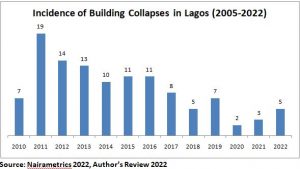
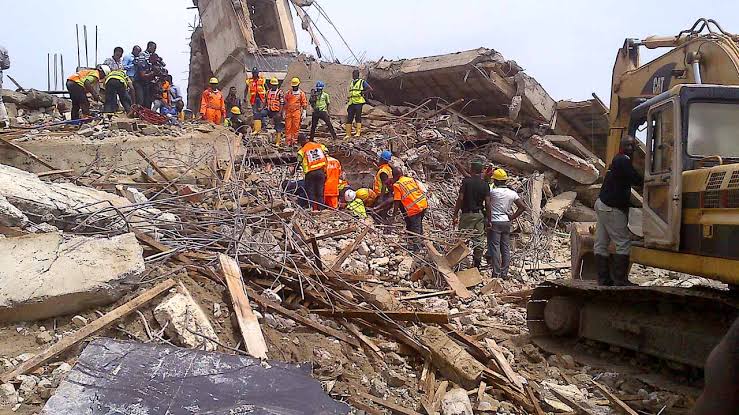
Residents of Lagos and Nigerians in other states of the country have become perturbed due to the incidence of building collapse in Lagos state which have become very alarming. The state recently recorded over 100 collapsed building in eleven years. On Sunday, a seven story building at the Oniru in Lekki collapsed. Two persons were immediately confirmed dead and about 3 other persons were said to be recovered.

In 2022, so far, 5 cases of building collapse have been reported in Lagos involving over 25 casualties. The most recent case occurred  barely a month after the previous case which was recorded in August in Bariga where 2 deaths and 3 ghastly injuries were reported. Earlier, a two-story-building had collapsed in Bariga area with no casualty recorded in May and a three-story-building collapsed in Ebutemeta area in February with 10 casualties reported. The last case that capped the 2021 building collapse in the state occurred in November where over 40 persons reportedly died in the collapse of 21-story-building.

“An average of 4.8 collapses have occurred within the past 5 years and cases have been more intense in Lagos Island and Ebute Meta area” Nairametrics reported. The recent collapse that occurred in Lekki made it the fifth collapse in Lagos so far this year.

the Vanguard reported that the seven-story building was sealed on February 18, 2021 by officials of Lagos State Building Control  Agency, LASBCA but the developer defied and continued with the project. In the news report, it was said that an eye witness at the scene said the building was giving distress vibrations for a couple of minutes before it went down slowly, noting that about 30 escaped before the collapse.

The collapse incidence in Lagos state has been attributed to a number of factors such as high number of old and dilapidated buildings in affected regions, gas explosion, heavy rains, poor construction by developers and negligence of regulatory agencies in ensuring accountability of the construction workers. The most important factors have been identified as poor construction at 36 percent, followed by old buildings at 20 percent, according to Nairametrics analysis.

It was reported that the Lagos Government had earlier issued a directive to the Lagos State Physical Planning Permit Authority (LASPPPA) to stop receiving applications for approval of buildings above three floors in Ebutemeta. This decision, according to Dr. Idrius Solake, Commissioner for Physical Planning and Urban Development, was informed by poor soil and topography level as well as low water levels in the area that made it impossible to erect buildings above 3 floors in the area. The commissioner has tendered his resignation today In less than 24 hours after the Lekki building collapse.

Granting interview to TVC breakfast on Monday, 8 am, Mr Bamidele Onalaja, Chairman of Real Estate Developers Association of Nigeria (REDAN) said the developer at the site, whose identity has yet to be unravelled, could not be confirmed as a member of REDAN.

ICT Sector Gains N4.1 Trillion In 8 Months, Remains Largest Sector In Nigeria’s Stock Market

0

There is no disputing the fact that the ICT sector in Nigeria, has witnessed exponential growth, as it continues to grow in leaps and bounds.

Nigeria currently accounts for 82 percent of Africa’s Information and Communications market. The sector ranked as the most capitalized sector on the Nigerian Exchange (NGX) last month (August), with an N11.74 trillion aggregate market.

It gained N4.12 trillion in the first eight months of 2022, to share at N11.74 trillion, an increase from N7.62 trillion recorded as of ten listed companies. The sector which comprises four activities such as; Sound Recording, Motion Picture, Music Production, and Broadcasting, accounted for 18.4% of the nation’s economy, which was largely due to the growth of the telecommunications sector.

The sector also recorded a 6.5% year-on-year real GDP growth in the second quarter of the year, compared to the 5.56% growth recorded in the corresponding period of 2021. Similarly, on a quarter-on-quarter basis, the ICT sector grew by 13.41% in real terms.

The sector comprises ten listed companies, although only two of them are household names, as they are the biggest telecommunications company in the country, which are MTN Nigeria and Airtel Africa. From the inception of GSM services rollout in 2001 up till 2022, telecoms contribution to the country’s GDP is over $70 billion.

The telecommunication sector, which is a component of the broader ICT sector grew significantly to N2.25 trillion in Q1 2022 from N1.96 trillion recorded in the corresponding period of 2021.

The significant gain recorded by the sector is largely due to the N4.08 trillion gain in the market valuation of Airtel Africa, having overtaken the likes of Dangote Cement and MTN Nigerian in January 2022 to become the largest company listed on the stock market.

The two telecoms giants posted impressive results in their finances in the first quarter of 2022. MTN Nigeria reported a 22.23% growth in revenue to the tune of N470.98 billion, with operating profit rising by 34.72% to N179.33 billion.

Airtel maintained the position as the most valuable company listed in the local bourse with a market capitalization of N7.7 trillion, gaining over N4.08 trillion between January and August 2022, bringing the total stock market value to over N26 trillion.

The impressive contributions of information and communications technology (ICT) to Nigeria’s GDP, is gradually transforming the country from a traditional economy, into one of Africa’s leading digital economies.

Due to the massive growth of the sector, it has made Nigeria one of Africa’s largest ICT markets in terms of its share of telecom subscribers and internet users. The ICT sector has no doubt continued to remain a critical driver of non-oil growth and a significant contributor to Nigeria’s GDP.

The sector has also been an enabler for digitalization and the development of other key sectors such as Agriculture, Education, Manufacturing, and Healthcare.

As I Predicted, Liz Truss Is the Next UK Prime Minister As Boris Johnson Departs

0

Liz Truss is the incoming prime minister of the United Kingdom. When the UK cooked for Boris Johnson and he could not handle it, I predicted on July 7 that Ms Truss could become the next leader. That call has just been validated with her ascension.

Read the piece: ‘“When Boris resigned, I scanned the whole United Kingdom and the only leader I felt was possibly going to become the new Prime Minister was Ms Truss. I had dropped her as the new potential new Prime Minister. British politics is highly predictable as they elect for the “moment”‘.

Looking at her performance in the foreign desk, she could be as tough as Margaret Thatcher. However, her main job now will be to ensure that the UK does not derail economically.

Liz Truss will be Britain’s next prime minister after she was elected leader of the ruling Conservative Party on Monday, ending a race to succeed the scandal-tarnished Boris Johnson.

Truss, 47, has served as foreign secretary and was the clear front-runner for the job. She clinched victory by appealing to the right-wing party faithful as a tax-cutting, anti-“woke” candidate who would take a hard line on post-Brexit dealings with the European Union.

She inherits a country facing a dire winter energy crisis, widespread strikes and economic recession — as well as long-term questions about the erosion of its cherished public services and its status as a world power after Brexit. Those issues were largely absent from discussion in the two-month leadership race, which saw her defeat former finance minister Rishi Sunak by 57% to 43% in the final runoff.

As I Posited, Liz Truss Makes The Finals To Replace Boris Johnson with Implications for Ukraine

The Yoruba Number System and Why Africa’s Inability to Invent Writing Masked Its Contributions to Science

2

In this response on ancient Yoruba’s number system (the 256 Odu coding), I explained that had  Africans (within the region of sub-Sahara)  invented writing at scale, most of the things associated with deep spirituality would have been accepted as science and a component of natural philosophy. But with knowledge passed from generation to generation orally, there were limited ways to develop, challenge and advance fundamental concepts. Consequently,  anything future generations could not understand was explained away with “spirituality”. Before Gottfried Leibniz invented the binary system as explained in his famous l’Arithmétique Binaire, the Ifa Odu had existed for centuries, even before the reign of Oduduwa in the 7th century AD.

Read the comment here and my response below

My Response: The Odu number system can be looked at from two angles: spiritual and scientific. The Yorubas because of lack of writing invention kept the spiritual but lost the scientific. If you look at the earliest works of Pythagoras, you would accuse him of serving Athena, the Greek goddess of knowledge. But because he wrote and explained, we accepted most as the basis of natural philosophy. Without writing, it would be folklores as with Yoruba’s Odu coding.

al-Khwarizmi – the father of algebra — was a highly religious man. He ran the house of wisdom and was a devout religious man in Baghdad. But as he started writing, he explained what later became the foundation of algebra even though he was known as the puzzle solver in Mecca and Medina.

My point is this: had the Yorubas invented writing, the Odu coding could have entered the large sphere of natural philosophy and demystified spirituality. Think about it: if Euclid had not written his works on geometry, it would have been all spiritual to many. In FUTO, students call ODE [ordinary differential equation] “o di egwu” which in Igbo means something mystical and challenging.

Tell the high priest to write what he does as an equation, some spirituality will evolve to science!

Comment on LinkedIn Feed

Comment 1: Indeed, we call on historians and researchers of like-minded to first unravel the History of Yoruba from unlettered time to modern time. The present folklore and taboo are unacceptable. Then Odu-Ifa Corpuscle is a body of knowledge to be studied scientifically. When I was in China, there was an advert where an institute was looking for a core Odu-Ifa practitioner to collaborate to study along with Taoism. But, back at home, we relegate this body of knowledge as archaic.

Comment 2: Odu ifa has been in existence for many centuries. It survived colonialism, and up till today it’s still being used in many countries like Brazil, Cuba, Trinidad and Tobago; the Carribbean generally.

The bottom line is that what is not written or documented, no matter how good or powerful cannot be developed, efficiently utilized and transferred. This is where Africa largely missed it.

Even, in Christianity, God’s spoken words had to be written down (on tablets, scrolls etc), and that is why it can be transferred, developed, efficiently utilized and even made more powerful. Even Jesus would say ‘For it is written’…

The same thing is happening with so many herbal and alternative remedies that are all over the place. I am yet to come across any compendium for these local solutions.. Sadly, Africans perish with their knowledge and discoveries instead of passing it on..

For Odu Ifa, I know there have been some works on it by some Nigerian scholars and professors but the question is ‘are Nigeria youths willing to learn it, will parents allow their kids to learn it?’ These are the things that the Chinese treasure so much and keep teaching their children from inception, and they are better for it.

The Yoruba’s 256 Odu number system