DD
MM
YYYY

PAGES

DD
MM
YYYY

spot_img

PAGES

Home Blog Page 4931

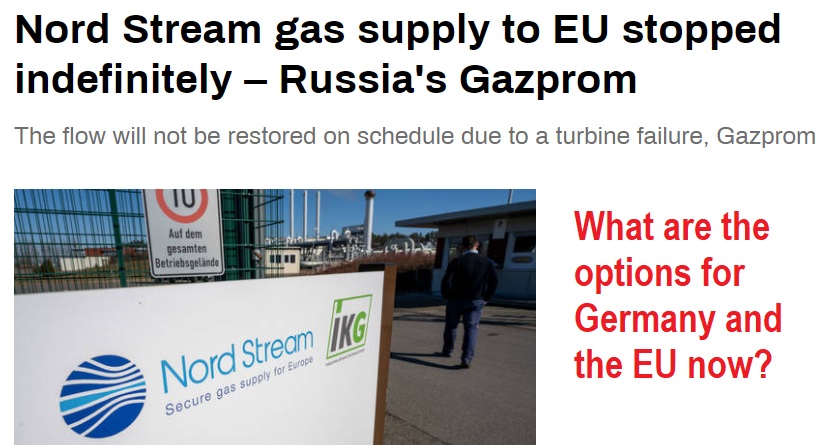
Germany, Europe’s Moment of Truth as Russia Suspends Gas Supply Indefinitely

1

The world has been expecting this as the war in Ukraine moves into the injury time. But no one has predicted with high confidence that Russia would strike this early with its gas. Yes, Russian energy giant Gazprom has announced the suspension of natural gas supplies to the EU via the Nord Stream 1 pipeline, for an indefinite period, due to technical malfunctions.

Last week, I read a piece where Russia was worried that it had so much money that it needed to slow the appreciation of its currency, and the only way to do that was to buy other currencies. I even suggested buying Nigerian naira. Typically, because of sanctions, Russia’s balance of payment became exceedingly favorable (you export so much and import largely nothing) heating up the currency, ruble, which has appreciated in recent weeks.

With so much money in the bank, it now wants to do a killer: freeze export of gas to Germany and the broad EU indefinitely. Global leaders just finished a meeting with a plan to cap the price of Russian oil. Now that Russia is showing that it can live without even supplying hydrocarbons, a new playbook would be needed. This is a consequential move that can push Europe into recession, and Africa may not be spared. An adult leads to lead right now in our world – the global economy is at risk!

Russian state-owned energy giant Gazprom announced Friday that it has “indefinitely” suspended all natural gas deliveries via its Nord Stream 1 pipeline, the key artery linking Russia and the European Union, citing equipment issues at one of its compressor stations.

The announcement appears to realize European fears that Russia intends to cut off gas on the pretext of maintenance problems, a possibility that has led Western countries to scramble to build up supplies ahead of winter.

Gazprom said in a statement Friday that the shutdown was caused by “malfunctions” detected on a turbine at the Portovaya compressor station. It did not provide a time frame for restarting supplies. Russia had halted flows on Wednesday, ostensibly for maintenance, raising anticipation that it intended to cut off supplies altogether.

Gazprom’s announcement comes just hours after G-7 finance ministers announced their plans to implement a price cap on Russian oil exports in an effort to sap President Vladimir Putin’s war funding.

Comment on Feed

Comment: I remember a man pointing out that Germany was too dependent on Russian. He was laughed at and ridiculed as he didn’t know anything about politics and international affairs.

Comment on1: Let’s wait to see what ‘Germany’ and the rest will do. You can’t tell me this phase was not anticipated at a point. Europe is a bloc. Russia is a single nation. Each have their advantages. I wouldn’t bet that a single country will easily out maneuver a determined group no matter the initial advantages the single guy would appear to wield coming into the battle.

My Response: I am not really worried on what happens in EU or Russia but Africa. If EU is forced to scramble for energy, it will price out many African countries that need energy in the global market. I did not post this because of any pity for Germany. Rather, Africa!

Comment 2: When two people fight, you separate them. And if one is a bully and won’t let the other be, then a stronger person contains the bully and puts the fight to an end. The fight just has to end one way or the other. That’s how we were raised as children. But what we have seen between Russia and Ukraine is that those who should have separated the two fighting or contained the bully rather took actions to lengthen the war.

Everyday this war is fought, irreplaceable human lives get lost. What will be the price of the winner of this war in the end? I hope it will compensate for the lost lives. Let the gas supplies be suspended and let the war bite into everyone’s skin- the fighters and those cheering them on from the sidelines. Maybe then, someone will have the common sense to show real leadership.

Comment 3: Well it is high time African Oil producing countries prioritize sister African countries in terms of energy. Europe will find a way out but African countries will have a very challenging year. Food production and energy must be prioritized by African leaders. The West needs to learn that although they have an edge over Russia in media ownership. The real economy is very different. Russia plays a key role in the world energy and nobody can deny that.
The Legal Framework Governing Consumer Protection and Competition in Nigeria

0

It goes without saying that Nigeria has a very serious problem regarding Consumer Rights and Business competition, with many end-users, customers and consumers either resigning to their fates when faced with abysmal product/service quality and delivery or resorting to measures like call-outs and public shaming of brands on Social Media.

Whether It is from very dubious Online loan providers to shoddy Fast food services to sub-par Banking services and Telecommunications services, constant consumer rights violations continue to occur, with most consumers not even being aware that a legal framework on Consumer Rights Protection actually exists in Nigeria.

Regarding business competition, we have witnessed cases of Consumers being at the mercy of companies in certain sectors that come together to form monopolies that constitute the height of unfair business practices.

These 2 situations mentioned above will be forming the focus of this article which will be treating the topics of :-

– The definition of Consumer Protection.

– The rights of consumers in Nigeria.

– The Legal and Regulatory Framework governing Consumer Protection and Competition in Nigeria.

– The remedial options available to aggrieved consumers.

– The dispute resolution options available to aggrieved consumers.

What is Consumer Protection?

Consumer Protection is the practice of safeguarding/securing the rights and interests of end-users/buyers of goods and services as well the public interest against unfair business/market practices.

What is the Legal Framework governing Consumer Protection and Competition in Nigeria?

Consumer Protection and Competition is regulated mainly by the Federal Competition and Consumer Protection Commission FCCPC through the Federal Competition and Consumer Protection Act(‘The Act’) 2018.

What are the objectives of Consumer Protection in Nigeria?

Consumer Protection in Nigeria is aimed at :-

– Ensuring the safeguarding of Consumer Rights.

– Creating Guidelines providing for proper sensitization of consumers to enable the making of better-informed purchasing decisions.

– Ensuring compliance of goods and services providers with laid down quality and safety minimum requirements.

– The normalization of fair Business practices and competition.

– The creation of an efficient justice delivery/remedial system for consumers whose rights have been violated.

What is the applicability limit of the Federal Competition and Consumer Protection Act?

The Act is applicable to :- 

– all commercial/profit-taking activities geared toward the satisfaction of Consumer demand within or having effect in Nigeria, whether they involve government agencies, departments or corporations ;

– to disallowed business conduct by Nigerians or resident foreigners in Nigeria, be they individuals or corporate entities;

– anybody regarding the acquisition of assets/stocks outside Nigeria which will lead to a change of the business directly/indirectly in Nigeria.

– overriding power in the event of conflict with the provisions of any other law regarding Competition and Consumer Protection except when in conflict with the Constitution of the Federal Republic of Nigeria.

What are the rights of a consumer?

The rights of a consumer in Nigeria are :-

– The right to fair dealings.

– The right to safe and quality goods and services.

– The right to select suppliers/vendors.

– The right to cancel advance bookings.

– The right to return goods.

– The right to Customer/End-user Data Privacy.

– The right to inspect goods to be purchased.

What is the operating structure of the Federal Competition and Consumer Protection Commission?

The FCCPC basically handles Consumer Protection matters pursuant to its statutory duty of enforcing the provisions of the Federal Competition and Consumer Protection Act.

The FCCPC handles Consumer Rights petitions and makes  decisions which can be appealed by going to the Competition and Consumer Protection Tribunal (CCPT) . 

Decisions of the CCPT are binding and must be registered with the Federal High Court for the purpose of enforcement.

The powers of the CCPT also override the decision making powers of any other Regulatory agency in any other sector regarding Consumer Protection and Competition.

Please note that appeals of the CCPT are to be commenced at the Court of Appeal of Nigeria within 30days of the CCPT passing its order/judgment.

Who is legally qualified to file/make a petition to the FCCPC?

– Individuals(aggrieved consumers)

– Individuals (on the basis of public interest).

– Accredited Consumer Protection Groups.

– The FCCPC on its own decision.

What actions can the FCCPC take in the course of enforcing the FCCPA?

The FCCPC can:-

– Close off any production center used for the manufacturing of substandard, fake, hazardous or illegal goods.

– Issue Public notices of harmful goods in circulation.

– Work with other sector regulators to penalize businesses found to be in violation of consumer rights via punitive fines, sanctions and Business license suspensions.

How does the FCCPC work to prevent unfair business competition?

The FCCPC does this by carrying out pre-approval screenings of all company merger applications to be sure that:-

– it will not reduce competition via monopoly creation;

– the merger will result in technology efficiency and enhancement;

– the merger will not run contrary to public interest.

Conclusion :- It is hoped that a clearer understanding of the Legal Framework governing Competition and Consumer Protection has been achieved from the above write-up to enable business people and consumers know how to make better informed decisions concerning commencing company mergers and seeking legal remedies for the violation of their Consumer Rights respectively going forward. 

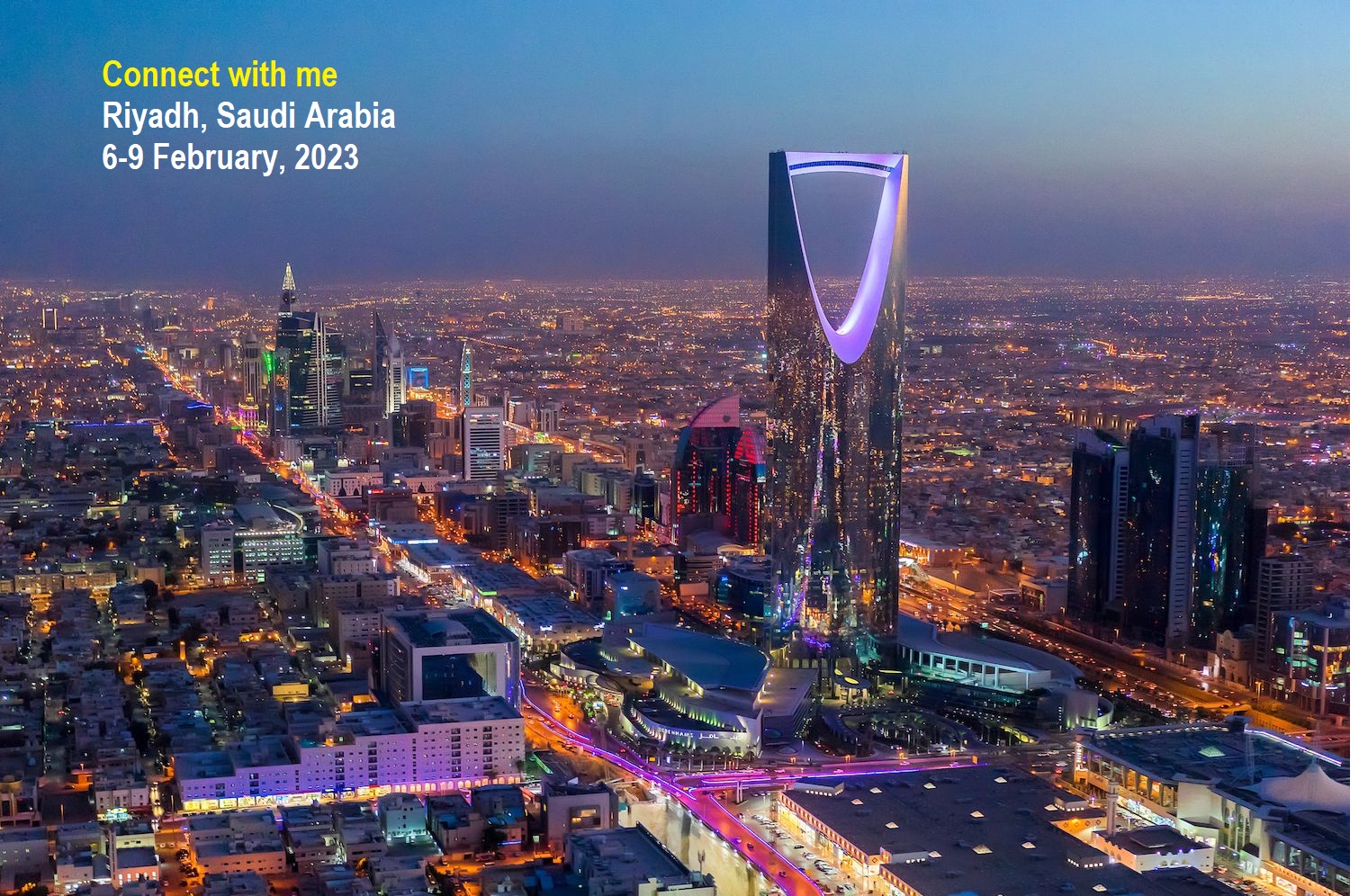
I will be in Riyadh, Saudi Arabia, in February 2023

0

I have limited my travels due to covid-19 paralysis. Now, feeling confident that the evil is behind us, I will begin my usual global shuttles. I will be in Riyadh, Saudi Arabia, in February 2023. While in the Kingdom,  I will like to meet members of Tekedia Capital syndicate (we have many from there). Also, Tekedia Mini-MBA learners, we will connect.

INEC Discloses Why Diaspora Voting May Not Be Possible For Nigeria 2023

0

As preparations for the 2023 presidential election are in top gear, the Independent National Electoral Commission, INEC has recently disclosed that diaspora voting may not be possible in 2023 as it does not have the enabling laws to carry out diaspora voting in 2023.

This explanation was issued amid calls by many Nigerians in the diaspora, stating that it was time for Nigeria to take a cue from other African countries, the likes of South Africa, Cape Verde, Kenya, etc.

Last month August, a group, the Nigeria Diaspora Youth Ambassador, NDIYA, urged the Independent National Electoral Commission INEC, to allow Nigerians in diaspora to participate in the forthcoming 2023 presidential election.

The group in a statement through its president Amb. David Alozie disclosed that Nigerians are interested in exercising their franchise in the coming election, noting that those in the diaspora should not be denied the opportunity to vote.

See what he said;

“Nigerian youths and every Nigerian across the globe are interested in voting during the general elections, especially the president as that has a lot to contribute to how their affairs would be attended to by whoever becomes the commander-in-chief.

“So, for us, this is a simple message to the government on how eager Nigerians in the diaspora are, and if given the opportunity through online, we would be glad”.

In response to various calls for diaspora voting in the coming 2023 presidential election, the Chief Press Secretary to INEC chairman, disclosed that the commission had no laws allowing it to do so at the moment, as the national assembly needs to amend the law to allow it.

In his words;

“The current operative law does not allow diaspora voting. The National Assembly needs to amend the law to allow it. Once that is done, the commission will put the machinery in place to implement such law”.

He further disclosed that the commission is doing everything possible to bring all Nigerians, whether within the country or outside, to actively participate in the nation’s electoral process. All these calls became intense following the rising interest among Nigerians to eagerly participate in the forthcoming 2023 presidential election.

Different persons have stated that Nigeria is overripe for diaspora voting, as it is just a matter of proper planning. They revealed that it was time for the country’s democracy to move from its infancy stage.

Unfortunately, the Nigerian national assembly had during the recent constitution amendment exercise, rejected the bill for an act to alter the provisions of the constitution of the Federal Republic of Nigeria, to provide for diaspora voting, and related matters.

World Bank Steps In To Help Nigeria Get Rid Of Fuel Subsidies

0

The World Bank had earlier noted that Nigeria may spend up to $9 billion on fuel subsidies in 2022, warning that the country’s high spending on subsidies will dwindle its revenue, also negatively impacting the government’s ability to fund the 2022 budget.

Recently, the President of World bank David Malpass disclosed that the bank is ready to support Nigeria in phasing out regressive fuel subsidies while increasing social assistance for the poor and vulnerable.

He also stressed the need for a unified exchange rate in Nigeria, which would significantly improve the business-enabling environment in Nigeria, attract foreign direct investment and reduce inflation.

This was contained in a statement published on the Bank’s website, as it was reported that the World Bank President David Malpass had a meeting with the Vice President of Nigeria, Prof. Yemi Osibanjo.

Here is a readout from World Bank Group President David Malpass’ meeting with Vice President Yemi Osibanjo

“President Malpass and Vice President Osinbanjo discussed Nigeria’s Energy Transition Plan. President Malpass welcomed Nigeria’s commitment to achieving universal energy access and reducing GHG emissions while maintaining reliable baseload.

“President Malpass emphasized the importance of integrating climate and development, as well as the need for an enabling policy and regulatory environment alongside strengthened institutions in the energy sector.

President Malpass affirmed to Vice President Osinbajo the WBG’s readiness to support Nigeria in phasing out regressive fuel subsidies while increasing social assistance for the poor and vulnerable.

“President Malpass encouraged a decisive move toward exchange rate unification and stabilization by Nigeria, highlighting the economic benefits for the Nigerian people.

President Malpass emphasized to Vice President Osinbajo that a unified exchange rate will significantly improve the business enabling environment in Nigeria, attract foreign direct investment, and reduce inflation. 

”President Malpass and Vice President Osinbajo also discussed the importance of increasing domestic revenues through broadening Nigeria’s tax base and increasing the efficiency of tax administration.”

One of the major reasons for the rise in subsidy payment in Nigeria, can be attributed to the fact that the country constantly imports petroleum products, as none of its refineries have the capacity to refine crude oil. Nigeria’s low crude oil production has been attributed to the lack of maintenance, organized oil theft, sabotage, and corruption among others.

It is interesting to note that the cost of fuel subsidies in Nigeria, increased by 890% over a five-year period (2017-2021) in the country, even though fuel prices have only increased by 12.1%.

In January this year, the Federal Government of Nigeria, ignored warnings from different economists, analysts and multilateral agencies such as the World Bank and the International Monetary Fund, by deciding to retain the controversial fuel subsidies for another 18 months following threats of protests by the Nigerian Labour Congress and other interest groups.

As of May 2022, the World Bank noted that Nigeria’s daily oil production, stood at 1.5 million barrels per day, quoted as the lowest in ‘fifteen years’ with an average daily figure of 1.54 million barrels per day in the first four months of 2022.

OPEC on the other hand, reported an even lower daily production figure in May, saying Nigeria’s crude oil production stood at 1.024 million barrels per day. Recently, the Ministry of Finance in Nigeria, disclosed that the federal government has estimated N6.72 trillion on petrol subsidy payments for the full-year 2023.

With Nigeria’s current high subsidy payments, the country has been unable to benefit from the rise in crude oil prices globally.