DD
MM
YYYY

PAGES

DD
MM
YYYY

spot_img

PAGES

Home Blog Page 4932

Let’s Serve Your Filling Station and digitize all end-to-end

1

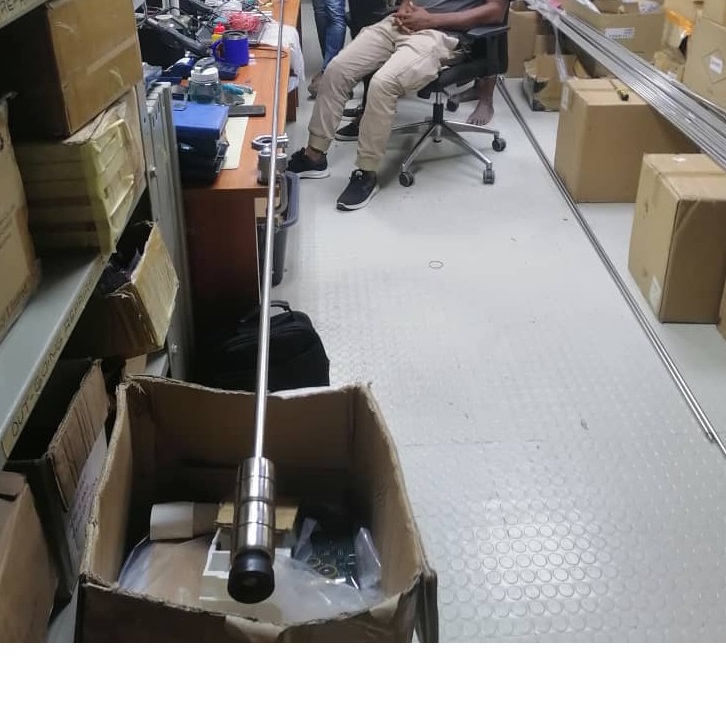
Our automatic tank gauge (ATG) is serving and  digitizing the oil and gas sector in Africa. More and more companies are joining this party as our FuelPay technology delivers world-class uncommon visibility with absolute revenue assurance. With our technology, a filling station attendant, truck driver, depot manager, etc has zero chance of playing tricks. And we deliver this at a cost model of just 30% to what global brands do because we created and engineered the technology in-house.

We now serve 60% of leading filling station brands in Nigeria and want to hit 100% because everyone needs this. Contact the email here  and our team will be on the way to serve you.

Engineers serve nations – we are leading in the digitization of the oil and gas sector downstream sector with robust homegrown technologies.

With our technology, you will not experience this accounting mess:

The Comptroller-General of Nigeria Customs Service, Col. Hameed Ali (retd.), has stated that the Nigerian National Petroleum Company Limited (formerly Nigerian National Petroleum Corporation) cannot justify the volume of Premium Motor Spirit (petrol) being consumed in the country daily to warrant the over N6.34tn subsidy payment on the commodity annually.

Ali, in his presentation to the House of Representatives’ Committee on Finance at the continued hearing on the proposed 2023-2025 Medium Term Expenditure Framework and Fiscal Strategy Paper in Abuja on Thursday, argued that the NNPC cannot scientifically prove the 98 million litres/day consumption it was claiming, alleging that the nation’s oil company was supplying an excess of 38 million litres of PMS daily.

The committee had asked Ali about the like deficit of between N11tn and 12tn in the 2023 budget as proposed in the 2023-2025 MTEF/FSP.


Join Tekedia Mini-MBA Graduation on Saturday, Sept 3rd

0

Tekedia Institute is very excited to invite the general public to Tekedia Mini-MBA edition 8 graduation on Saturday, Sept 3 at 7pm WAT. Over the last 12 weeks, our learners have mastered the mechanics of markets, and acquired skills and knowledge systems from executives in leading global and local companies, on innovation, business growth and operational execution. Join us.

Sat, Sept 3 | 7pm – 8pm WAT It’s Graduation Day – public/open for everyone | Zoom Link

You’re Invited to Tekedia Mini-MBA Graduation – Sat, Sept 3 at 7pm WAT

How To Retrieve Money Mistakenly Paid Into A Wrong Bank Account in Nigeria

60
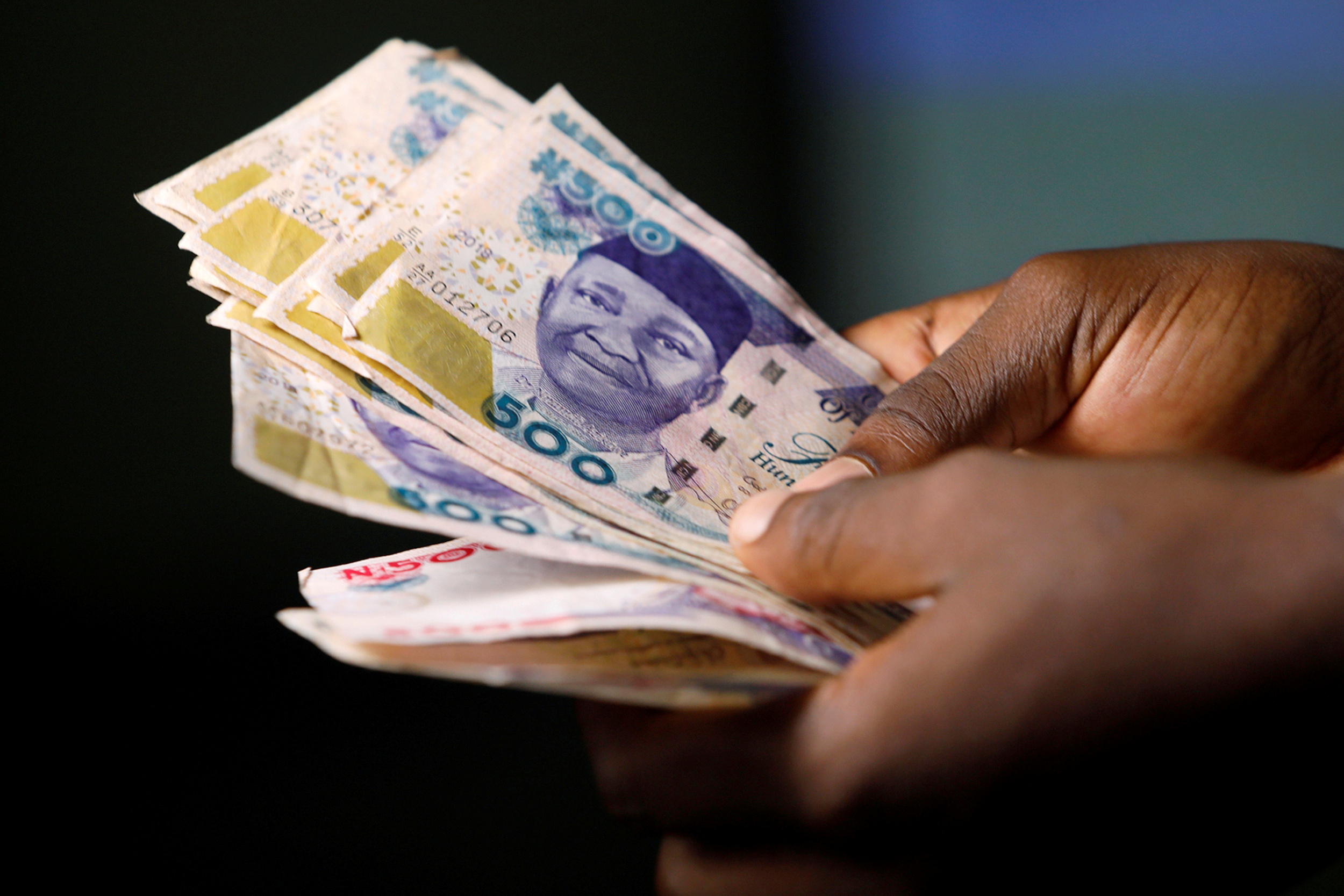
Nigerian naira banknotes are seen in this picture illustration, September 10, 2018. REUTERS/Afolabi Sotunde/File Photo

Introduction:

In this era of mobile banking transfers, any slight error in bank account number may mean wrongfully sending money into the account details of another person other than the person intended to be paid. This is the sad reality of many bank customers who conduct financial transactions on a daily basis.

There have been instances where money have been mistakenly paid into a wrong account number and it becomes difficult to retrieve the said amount of money and customers will flood the banking hall to cause troubles because of mistakes of customer and not that of the banks.

Most times, it is not the problem of banks that causes customers to mistakenly pay money into wrong account as banks will always caution customers to confirm the bank account details of the recipient of their funds before making payment, but due to inadvertence or negligence from customers, these wrongful money transfers do occur and quite often.

In this article, we try to discuss the relationship between banks and its customers and also how to help customers to retrieve money mistakenly paid into a wrong bank account when such mistakes happen.

The nature of relationship between a bank and its customer:

Before we delve into the discussion of money being paid into a wrong account, we need to first determine the nature of relationship that exists between a bank and her customers. Thus, in the case of Trade Bank Plc v. Barilux (Nig.) Ltd. (2000) 13 NWLR (Pt. 685) 483 at 485, the court held that:

“The relationship between a banker and the customer is that of a debtor and a creditor. The customer is the one who has an account with the bank by paying money into it. The trade of a banker is to receive money and use it as if it were his own, he becoming debtor to the person who has lent or deposited with him the money to use as his own. One of the terms of the implied contract between a banker and the customer is that money lent to the bank is not payable except on demand by the customer who has paid it in.” See also the case of U.B.A Ltd. v. O. Abimbolu & Co. (1995) 9 NWLR (Pt. 419) 371 p. 491, paras. C-E.

Thus, the bank can only release money in its custody upon the request by the customer who deposited such money and, in the case, where a customer have wrongfully initiated a transaction authorizing a bank to pay money either by way of electronic transfer or over the counter vide a bank teller or cheque, the bank would not be held responsible for carrying out such transactions. See also section 61 of the Banks and Other Financial Institutions Decree No. 25 of 1991, which states that “banking business” means the business of receiving deposits on current account, savings account or other similar accounts, paying or collecting cheques drawn by or paid in by customers. Thus, in this form of business, the bank does not on its own issue out money to another customer without authorization by depositor of the money.

Who owns money paid into a bank?

Any money paid into a bank belongs to the bank from the moment of such payment, thus, creating as between the bank and the customer a debtor/customer relationship. Indeed, what the bank pays out is its own money. Thus, when money is paid by a customer into the bank, there is a contract between the bank and the customer in which the bank receives the money as a loan from the customer against the promise by the bank to honour the customer’s cheque or other orders of the customer whenever the need arises. See the cases of R. v. Okon (1933-1966) 1 NIILR 241, and Ekwunife v. Wayne (W.A) Ltd. (1989) 5 NWLR (Pt. 122) 422. 

The right of a customer over money paid into his account with the bank:

The customer’s monies in the hands of the bank are not in the custody or under the control of the customer. Such monies remain the property in the custody and control of the bank, and payable to the customer when a demand is made. This is so because, if anything happens to the money thereafter e.g. theft of the money, it is the bank and not the customer that bears the loss. Where the customer makes a demand, e.g. by issuing a cheque and the bank refuses to pay, the customer’s cause of action is in damages under their contractual relationship.

In the instant case in discuss, when the customer mistakenly transfers money into a wrong bank account, it could not be said that it was the bank that made the mistake on the customer’s account by transferring same into another person’s bank account. This is because, the bank cannot not initiate a transaction on its own volition without receiving a mandate from the customer. Thus, the right of a customer over money mistakenly paid into a wrong account in this circumstance extinguishes and can only be remedied by the courts. See the case of Afribank Nig. Plc v. A.I. Investment Ltd. (2002) 7 NWLR (Pt. 765) 40.

Ways to prove payment of money into a wrong bank account:

Where a customer has mistakenly paid money into a wrong account number, it can be established either by providing the bank teller or short message services (SMS) or email notification received from the bank debiting the customer’s account in the sum standing to his credit as well as oral evidence of the person who actually paid the money or by producing a receipt from the bank showing on the face of it that it received the payments. See the case of Aeroflot v. U.B.A. Ltd. (1986) 3 NWLR (Pt. 27) pg.  188 at 190.

Where there is an issue before the court as to whether or not, the stamp and initials on a bank’s payment counterfoil constitute evidence of receipts of the sum of money paid into a bank account, the account holder has the onus to prove by credible evidence that he made the alleged payments into the bank and that the payments were acknowledged by the hank. And where there is any short fall arising front the difference between the counterfoil and the amount actually received by the bank, the onus is on the bank to prove what it actually received. See also the case of U.B.A. Plc. v. Daniel Holdings Ltd. [2000] 6 NWLR (Pt. 659) 48 at 51.

How to retrieve money maid into a wrong bank account:

Where the customer has noticed that the money he paid was mistakenly transferred into a wrong account, these are some of the ways to retrieve the wrong payment:

a).      The customer is required to immediately report the wrong payment to his bank through the customer-care helpline. Under this circumstance, the bank will be in the best position to handle such cases in order to protect its customer from losing his money to an unknown third party.

b).     Where the bank cannot help to retrieve the customer’s money mistakenly paid into a wrong account, it is the duty of the customer to meet with a legal practitioner to help him in filing an application before a competent court of law against the customer’s bank and the third party in whose name and bank account the money was mistakenly paid into his bank account.

c).      Upon filing an application before the court, it will be the duty of the court to weigh the evidence provided by the customer before the court in order to grant an order for the stated sum of money mistakenly transferred into a wrong account to be paid back into the customer’s account. Where the court gives an order for such money to be paid back to the customer, it is the duty of the legal practitioner who represented the customer to  apply to the court that gave the order and obtain a certified true copy of such court order and serve it on the bank which will in turn carry out the directives contained in the said court order.

Conclusion:
It is a trite principle of law that money paid into a bank, does not belong to the customer as debtor/creditor relationship have been created upon payment of the money into the bank by the customer. However, in as much as the money belongs to the bank upon payment by the customer, the bank cannot release the money to the customer unless the customer makes a request or issues a mandate for the release of the money. In circumstance where a customer has authorized the bank to transfer money, it is the duty of the bank to carry out such instructions, especially where there are no restrictions placed on the customer’s account, since the money stands in the credit of the customer. Thus, where the bank carries out a customer’s instruction for payment which was mistakenly paid into a wrong account as a result of the customer’s inadvertence or mistake or negligenc, the bank will not be held liable for such wrong transfers.

However, a timely complaint by the customer to the bank for such wrong transfers can save the situation in reversing the wrongly transferred money, but in the event that the bank may not be of help to the customer, the court of law will be the last resort in such cases. See the cases of C.B.N. v. Auto Import Export (2013) 2 NWLR (Pt. 1337) 80, Wema Bank Plc v. Osilaru (2008) 10 NWLR (Pt. 1094) 150, F.B.N. Ltd v. Osunsedo (1997) 11 NWLR (Pt. 527) 132 and   Barbedos Ventures Ltd. v. F.B.N. Plc (2018) 4 NWLR (Pt. 1609) 241 at 249.

Big Eyes Coin is Simply Purrfect for Hex Coin and Aave Users

0

It is not unheard of for users to adopt more than one coin when making purchases in the crypto market. This is because different projects serve users differently as they cater to their different needs. These projects also have unique use cases that can drive adoption.

Users of projects like Aave (AAVE) and HexCoin (HEX) are offered another great project to invest in; the Big Eyes Coin (BIG).

All About Aave (AAVE)

Aave (AAVE) is a decentralized open-source lending protocol that facilitates easy borrowing and lending. It was launched in 2017 as an improvement on ETHlend which took time to facilitate transactions. Aave effectively matches lenders to borrowers and improves on P2P service delivery, as borrowers can make requests and be immediately matched to lenders.

This is all done with ease by programmable software that processes these transactions once certain conditions are met. This software is smart contracts. Aave has a system of allowing over-collateralized loans to prevent loss to lenders, and incentivize borrowers to pay back. Flash loans are also enabled within the platform to leverage ever-changing crypto market positions.

AAVE is the native token of the Aave protocol, and it serves a governance purpose primarily. This is achieved through staking.

What About Hex Coin (HEX)?

Hex Coin (HEX) is the first high-interest Blockchain certificate of deposit (CD). It was launched in Q4 of 2019 on the Ethereum network. The project was launched as a finished product with no roadmaps or outstanding activities to be carried out, MD since launch, the price of the token has gone up 1,000,000% or 6748x so far.

The project generates and distributes rewards to users who stake, with an average APY of 38%. HEX is the native token of the protocol, and lets you earn rewards on your staked assets based on the size of the assets locked or the total lock time. There are penalties for unlocking assets earlier than the stipulated time, and the average lock time is 5 years.

The project utilizes a hybrid of the proof-of-work and proof-of-stake consensus modules.

Stakers are paid in HEX, while Ethereum miners are paid small amounts of Ethereum to perform transactions.

Compared to Big Eyes Coin (BIG)

Big Eyes coin offers a fun and interactive way to relate with DeFi technology and generate profit. It is a community-governed protocol that prioritizes user interests and investment while catering to environmental protection.

The project intends to be dedicated to community growth and charity activities. The native token of the Big Eyes project is the BIG token, which provides utility and governance throughout the ecosystem. BIG tokens give users access to the Big Eyes Swap and the Big Eyes NFT collection. It promises no tax, no fees, and no hassles.

The total supply of BIG tokens is 200 billion, with activities to carefully distribute these tokens. The project is set to launch soon, so interested users can get into the community early, and enjoy rewards once the token launches.

How to Purchase BIG tokens

  1. Go to the website, and go to the purchase menu to sign up.
  2. Provide your personal information like your name, surname, and email address.
  3. Read and agree to the terms of the Big Eyes Coin project.
  4. Click “submit”, and wait for launch day.

With everyone on the lookout for the next crypto gem, it is obvious that Big Eyes Coin (BIG) wants to make its mark in the crypto world. Users who buy the token early stand a chance to earn potential rewards and profits, and even double their capital. More information on the Big Eyes Project can be seen on their website and white paper.

https://bigeyes.space/

Dogeliens And Polkadot – New Cryptocurrency To Improve The Market

0

As more people start to invest in blockchain-related assets, we are now in the era of blockchain technology. Another one of these assets is cryptocurrency. Cryptocurrency is a digital financial asset based on blockchain technology, as you may have heard. Over a decade has passed since cryptocurrency first appeared. However, it wasn’t until 2020 that cryptocurrencies gained popularity and started appearing frequently in discourse. Many people now, both young and old, trade and invest in cryptocurrencies.

Despite this rise in usage, there are still opposing views on the virtual currency known as cryptocurrency. Many individuals believe that cryptocurrency is a hoax and a Ponzi scheme that everyone should avoid, although many people are investing in and voluntarily adopting it. But it’s best to accept that cryptocurrencies are useful and here to stay. Cryptocurrencies operate on markets and trading since they are financial assets. Similar to stock markets, cryptocurrency markets are typically open to the public for viewing and feature information about the values of these cryptocurrency coins.

The use of cryptocurrencies is constantly growing. The cryptocurrency market is expanding to fulfil the wants of various investors. Cryptocurrency investors are growing in number every day. Social proof has had a significant impact on the different cryptocurrency efforts that have been launched on the market and in the community. Because individuals tend to put more faith in things that many others have tried, more people are investing in the coin market.

Every day, many coin projects enter the market and world of cryptocurrencies. Because more people are eager to test out investing in the cryptocurrency market and the increased interest in blockchain technology, more blockchain and cryptocurrency entrepreneurs are seeking to expand the options available to customers while also promoting their original ideas and the industries they serve. They are creating new Cryptocurrency projects to switch up the coin market. Two examples are highlighted in this article. They are Polkadot (DOT) and Dogeliens (DOGET).

The Multi-Chain Protocol – Polkadot

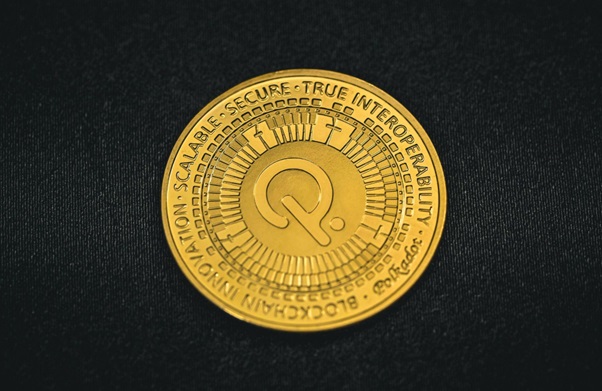
To connect all current blockchains, a new generation of cryptocurrency networks dubbed Polkadot was created. Now, the many cryptocurrency networks’ several blockchains all run independently of one another. Polkadot wants to change this as its main objective.

As it connects numerous networks, it is referred to as a multi-chain network. As long as they agree to communicate, it acts as the foundation for numerous blockchains. The link that Polkadot provides allows for the sharing of data and value between previously incompatible networks. Aside from that, the network is designed to be speedy and scalable, preventing speed issues.

The DOT serves as the platform’s principal token. There are two primary functions it fulfils in the Polkadot network. The initial usage of the token is for governance. This suggests that token owners can affect the Polkadot protocol’s course of action and future. On the contrary, DOT is used for staking.

The P2P Meme Network – Dogeliens

A new DeFi token initiative called Dogeliens has the potential to flourish quickly in the cryptocurrency industry. The Dogelien universe was developed to grow into the largest user-centric community with the unrestricted goal of assisting every member and expanding the community to the stars.

The Dogeliens network is considered the DeFi world’s pup-pet king. To enable users to trade, earn, and stake their tokens utilising peer-to-peer (P2P) and open-source cryptocurrency, this pup-tastic platform was created as a DeFi. Users will be able to exchange and trade their cryptocurrencies as a result without intervention from outside parties or agents.

The development of the Dogeliens ecosystem had as its primary objectives the improvement of the community and inclusive participation. Due to its global accessibility, the Dogeliens universe is growing into a robust community that will surely rank among the largest in the cryptocurrency market.

The Dogelien universe is ruled by the DOGET token. DOGET is a cryptocurrency that can be used in a variety of ecosystem applications. Through DOGET, all platform transactions are finished. DOGET is also employed in farming, staking, and various other tasks. Now that DOGET is ready for presale, everyone should keep an eye on it to invest.

https://ufo.dogeliens.io/register