DD
MM
YYYY

PAGES

DD
MM
YYYY

spot_img

PAGES

Home Blog Page 4938

Three Revealing Statements on Nigeria This Week from Attorney General, Custom Boss, NNPC Boss

1

#1: This message from Nigeria’s attorney general is not sound; he ought to have said this without mentioning any name. He was wrong; being a Nigerian and living abroad does not stop one from participating in native nation’s democracy.

“Any Nigerian who lives abroad, funding the campaign of Peter Obi shall be arrested. It is against our electoral laws”

~ Abubakar Malami SAN

“One thing Nigerians who based abroad failed to understand is that they cannot stay there and detect to us how to govern our country. Someone will seat in United States of America and be telling us what to do and what not to do as if we don’t know what we are doing in this country.

“If you violate the electoral law, you will face the penalty squarely and we will do everything within our power to prosecute both you and the candidate you are funding his campaign.

“We’ve received a signal that some individuals, mostly Nigerians living abroad have taken it upon themselves to fund the campaign of Mr Peter Obi who’s the Presidential candidate of the Labour Party in the forthcoming Presidential election.

“What these individuals failed to understand is that Nigeria is a democratic nation governed by democratic rules and regulations. It is against the electoral act for those living abroad to sponsor any candidate in an election. Those involved should desist from such act or have us to contend with. We will resist it by all means. Such fund cannot enter Nigeria. Although we have put measures on ground to apprehend those who will get themselves involved in such an act.”

~ Abubakar Malami SAN

#3: Customs comptroller-general, Hameed Ali on NNPC

The Nigeria Customs Serviceon Thursday questioned the National Petroleum Company Limited’s claim that the country consumes 60 million litres of petrol daily. The Customs comptroller-general, Hameed Ali, during a session with the House of Representatives’ Committee on Finance on Thursday, said if the company puts daily consumption of petrol at 60 million litres, why does it allow 98 million litres to be lifted daily.

“I remember that last year we spoke about this. Unfortunately, this year, we are talking about subsidy again. The over N11 trillion we are going to take as debt, more than half of it is going for subsidy. The issue is not about the smuggling of petroleum products. I have always argued this with NNPC,” Mr Ali said.

“If we are consuming 60 million litres of PMS per day, by their own computation, why would you allow the release of 98 million litres per day? If you know this is our consumption, why would you allow that release?” he asked.

“Scientifically, you cannot tell me that if I fill my tank today, or tomorrow, I will fill the same tank with the same quantity of fuel. If I am operating a fuel station today and I go to Minna depot, lift petrol and take it to Kaduna, I may get to Kaduna in the evening and offload that fuel. There is no way I would have sold off that petrol immediately to warrant another load. So, how did you get to 60 million litres per day?

“That computation, to me, is not believable, because scientifically you cannot tell me that if I fill my tank today, tomorrow I will fill my tank with the same quantity of fuel. And if I’m running a petrol station today, if I go to Minna depot and lift, and I’m taking to Kaduna, I may reach Kaduna in the evening and offload that product; there’s no way I could have sold that petrol immediately to warrant another load.”

Mr Ali also opposed claims that the smuggling of petroleum contributes to the huge amounts being paid for subsidy.

“So, how did you get to 60 million litres per day? That is my question. The issue of smuggling, if you release 98 million litres in actuality and 60 million litres are used, the balance should be 38 million litres. How many trucks will carry 38 million litres every day? Which road are they following and where are they carrying this thing to?”

The deputy chairman of the House committee, Saidu Abdullahi, said the payment of subsidy has constituted a drain on the economy.

“As a government, we have not done well. We owe it to the people of this country to do what is right for this country. We are talking about over N6 trillion going for subsidy payment that almost doesn’t exist,” he said.

“You talk about 38 million litres which amount to about 500 trucks leaving our shores on a daily basis. We have an investment in NIGCOMSAT. Has there been any time that our satellite captured images of trucks leaving our shore?

“I think it is very clear that what is required is the political will to put a halt to this.

“We talk about insecurity. This is the real course of it. The money that is supposed to go into the provision of social amenities is going into private pockets. I think there is a need to work together to put a halt to this,” he said. (source)

#3: “Nigeria losing 95% oil production at Bonny terminal to theft “

“What is most difficult to manage today is the issue of crude oil theft, it is real and it is happening,” Mr Kyari told a session of state house briefing in Abuja.

“Are we helpless? No, we are not helpless and our efforts are paying off.

“As we speak now, what you see on the screen is a typical site where crude oil is stolen and processed in illegal refineries. And this is so common around the pipeline that I can tell you in one line just less than 200 kilometres we had 295 illegal connections and you see the data,” he said. – Mele Kyari, NNPC (source)


Three statements and why Nigeria must build an integrated monitoring and control center for our oil and gas sector’ Saudi Arabia has a playbook here.

1. “Any Nigerian who lives abroad, funding the campaign of Peter Obi shall be arrested. It is against our electoral laws” ~ Abubakar Malami SAN

– this statement by AGF is unfit for his office. He could have made his statement without mentioning any candidate’s name. Then president Buhari/Osinbajo duo was supported by Nigerians living abroad.

2. Nigeria has daily consumption of petrol at 60 million litres, why does it allow 98 million litres to be lifted daily. – Customs comptroller-general, Hameed Ali

– this voodoo has to be reconciled

3. Nigeria losing 95% oil production at Bonny terminal to theft – NNPC

– declare state of emergency on this oil theft

video credit: CBS
Thank You Members; Tekedia Store in Lagos, Tekedia TV Program

0

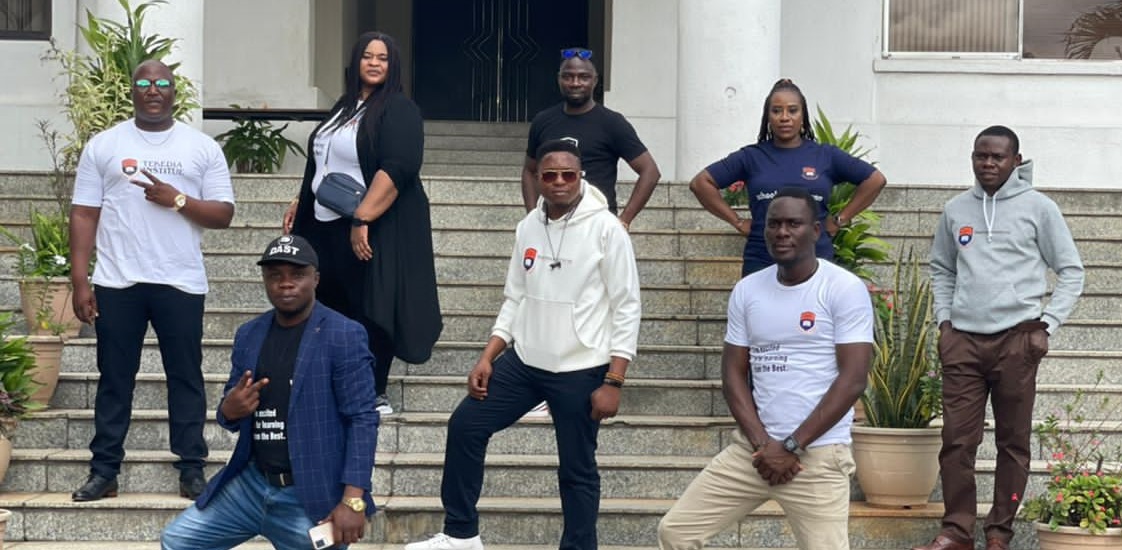
Let me thank again our learners and members who gathered yesterday at Lagos Lagoon Restaurant to celebrate Tekedia Mini-MBA edition 8 graduation. Thank you for the time, energy and every resource you committed to it. I am very happy that everyone made it home safely including those who flew into Lagos.

I also thank these amazing professionals who coordinated this independent gathering. Thank you.

Also, by next year, we plan to have a Tekedia store in Lagos where learners and members can buy business cases, selected courseware, our books, t-shirts, etc but we want every aspect to be learners-driven. Yes, admission is that you have attended Tekedia Institute with the code on your certificate as a way to validate entry. The store will issue an ID like your bank debit card. That admission will also give you discounts in car insurance premium, bulk discounts in certain stores, discounted auto repairs, etc. Call those alumni 2.0 benefits.

Tekedia Institute will not run this – we want it to be 100% learners driven. As an Institute, we want to focus exclusively on academics while our members drive the marginals. We expect the  store to have a studio as we plan to have a TV program in the near future; again, it has to be learners-driven.

Learners who are interested in this should contact Nnamdi Odumody (you will join a special alumni WhatsApp on this). Tekedia Institute will make a special one-time grant to support the Learners-community if they commit to execute the Lagos Store and the TV program. We want it setup as a public benefit entity.

Photos: Tekedia Mini-MBA edition 8 Graduation Hangout in Lagos

A Breakdown of the CBN Guidelines on Mobile Money Services in Nigeria

0

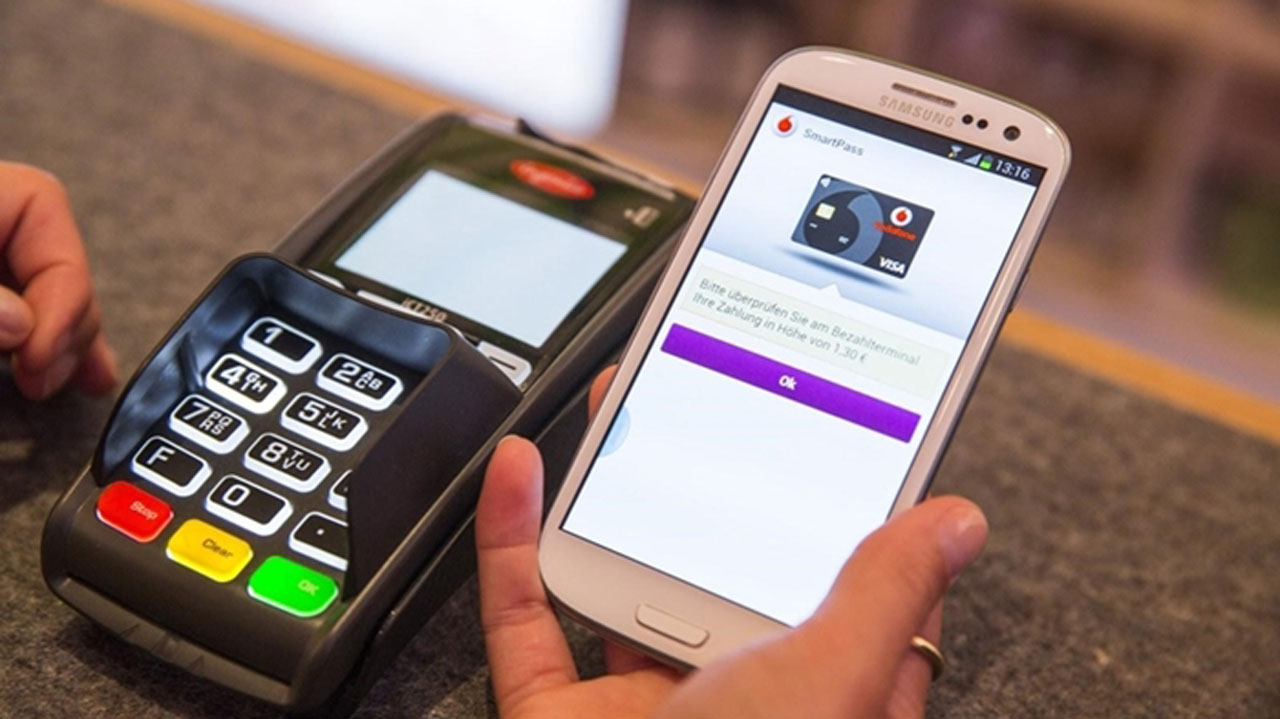
The commercial introduction of Mobile communications technology worldwide soon enough led to its practical application in the rendering of financial services through phone-based platforms for the carrying out of personal transactions, specifically electronic/digital person-to-person payments.

In Nigeria, this led to the Central Bank of Nigeria (CBN), in the exercise of its powers conferred by the Central Bank of Nigeria Act 2007, ultimately launching the Central Bank of Nigeria Guidelines on Mobile Money Services in Nigeria(or ‘the guidelines’) which will be the focus of this article, specifically the topics of:-

– The objectives of the guidelines regarding the licensing, supervision and regulation of Mobile Money services in Nigeria.

– The position of the guidelines on the proper models and participants of a Mobile Money Service scheme in Nigeria.

– The allowed operating structure of Mobile Money Operators (MMOs) in Nigeria.

– The basic provisions of the guidelines on licensing, the use of agency networks, End-user activation, transactions, and participant rights/duties.

– The licensing requirements for MMOs in Nigeria.

What are the objectives of the CBN Guidelines on Mobile Money Services in Nigeria?

The objectives of the guidelines are:-

– to promote safety and effectiveness of mobile money services and thereby enhance user confidence;

– to specify the minimum technical and business requirements for the various participants recognized for the mobile money services industry in Nigeria;

– to ensure a structured and orderly development of mobile money services in Nigeria with a clear definition of various participants and their roles and responsibilities;

– the addressing of business rules governing the operation of mobile money services and the specification of basic functionalities expected of any mobile payment service and solution in Nigeria.

What are the stated models of Mobile Money Service Operations allowed under the Guidelines?

The CBN Guidelines provided for 2 models of Mobile Money services which are :-

The Bank-led Model :- Which is a mobile money service operation having a Bank or Bank-involced consortium as its lead initiator.

The Non-Bank led Model :- This is a mobile money service operation led by a corporation other than a bank or Telecommunications company duly licensed by the Central Bank of Nigeria.

What is the operating structure of MMOs as provided for under the Guidelines?

MMOs under the Guidelines are required to operate as Consortiums having at least 3 major participant companies.

Do the guidelines have any specific provisions on the maintenance of Agency networks in Mobile Money services?

No. The CBN Guidelines on Mobile Money services relies solely on the CBN Guidelines on Agent Banking & Agent Banking Relationships in Nigeria .

What are the rules of the Guidelines on the specific issue of licensing?

The Guidelines provide that all Mobile Money Operators (MMOs) shall:-

– be licensed by the Central Bank of Nigeria;

– be issued a unique scheme code by the Nigerian Interbank Settlement Scheme (NIBBS) for the purpose of managing interoperability;

– be issued a unique short code by the Nigerian Communications Commission;

– ensure that all Telecommunications equipment are type-approved by the Nigerian Communications Commission;

– register users of its scheme based on the technological standards and requirements of the Guidelines;

– ensure that the registration process within its mobile money scheme shall fulfill the entire Know-Your-Customer (KYC) requirements specified in the Guidelines.

What are the provisions of the Guidelines on End-user activation of Mobile Money services?

The Guidelines provide that regarding the issue of End-user activation that :-

– a mobile money system shall require a registered user to activate the service before the commencement of transactions with a security code being a Personal Identification Number (PIN) or a password;

– an MMO shall ensure that the activation process is not compromised or altered within its infrastructure.

What are the provisions of the Guidelines on Mobile Money transactions?

Regarding transactions, the Guidelines provide that :-

– all MMOs shall notify the CBN of their appointed settlement banks;

– no airtime deductions shall be made in respect of charges on any transaction;

– all obligations arising from mobile payment transactions shall be settled into dedicated settlement accounts domiciled with deposit money banks. MMOs are also required to maintain separate accounts for their other business activities;

– all transactions initiated and concluded within the mobile payment system shall have an issued unique transaction reference;

– all transactions shall have a transaction reference number, payer and payee phone number, transaction amount, transaction date, time stamp, and other relevant transaction details & unique identifiers;

– where transactions involve merchants, the following details shall be provided in addition the merchant category and its addresses and codes(?);

What or who are the identified participants of a Mobile Money Service Operation as allowed under the Guidelines?

The participants of a Mobile Money Service Operation as provided for in the Guidelines are :-

1). Banks

2). Licensed corporate organizations

3). Infrastructure providers – Switching, Processing & Settlement facilities for MMOs

4). Consumers/End-users

What are the Licensing requirements for MMOs under the Guidelines?

The licensing requirements for MMOs are:-

– Evidence of the formation of the consortium that will deploy the Mobile Money project (in the form of a Certificate of Incorporation ).

– The Consortium’s profile and functional contact emails and telephone numbers.

– The MEMART (Memorandum/Articles of Association) of the Consortium.

– The shareholding structure of the consortium.

– Statutory forms for the allotment of shares and the particulars of directors of the Consortium.

– CVs (Curricula Vitae) of the Consortium’s board of directors and management team.

– An organogram of the consortium.

– A Business of the consortium which is to include:-

a). the nature of the consortium’s business;

b). the Mobile Money service scheme’s features;

c). security features of the scheme to be put in place;

d). a 3-year financial projection for the company;

e). transaction and other charges that will be borne by customers;

f). the profit-sharing agreement among the parties;

g). a diagrammatic illustration of transaction flows of the scheme.

– The consortium’s IT (Information Technology) policy (you need to consult your lawyer on the required components of an IT policy under the Guidelines).

– The scheme’s Enterprise management framework.

– The scheme’s contingency and disaster recovery plan ( Business continuity programme).

– Draft Agreements with :-

a). technical partners;

b). participating banks;

c). switching companies;

d). merchants;

e). telecommunications companies;

f). any other party.

– A 3-year Tax clearance certificate of each party in the consortium.

– A project deployment plan (time, location and operation).

– Payment of a non-refundable application fee of 100Thousand Naira to the CBN via RTGS Third party transfer.

– Evidence of a Shareholder’s fund of 2 Billion Naira.

Conclusion:- The introduction of the CBN Guidelines on Mobile Money services aided in streamlining the operation of Mobile Money services while providing for sector-wide participation and a major emphasis of End-user Data security and service efficiency. While it is imperative for the Guidelines to be constantly revised, especially in terms of minimum shareholder fund requirements, it remains a very good example of the CBN keeping in tune with the increasingly borderless and intangible nature of financial Person-to-Person transactions in Nigeria. A further understanding of the Guidelines will require a further consultation with your Legal adviser.

Nigeria Generated N1.19trn from VAT in the First Half of the Year

0

Nigeria generated N1.19 trillion from Value Added Tax (VAT) in the first half of the year (H1’22), according to data published by the Nigerian Bureau of Statistics (NBS).

The generated revenue represents a 19% year-on-year (YoY) rise when compared to N1 trillion earned during the same period in 2021. This was led by local payments, which recorded N703.16 billion, representing a 70.5% YoY rise from N412.28 billion in H1’21.

According to the data, foreign VAT payment contributed N229.11 billion, down YoY by 39.6% from N379.33  billion in H1’21. The NBS said on a quarterly basis, VAT rose by 1.96% to N600.15 billion in Q2’22 from N588.59 billion in Q1’22.

On the aggregate, VAT for Q2? 22 was reported at N600.15 billion, showing a growth rate of 1.96 percent on a quarter-on-quarter (QoQ) basis from N588.59 billion in Q1’22.

“Local payments recorded were N359.12 billion, while Foreign VAT Payment contributed N111.13 billion in Q2’22.

“On a QoQ basis, Electricity, gas, steam and air conditioning supply recorded the highest growth rate with 116.47 per cent, followed by Accommodation and food service activities with 42.44 percent.

“On the other hand, Activities of extraterritorial organizations and bodies had the lowest growth rate with –42.39 per cent, followed by activities of households as employers, undifferentiated goods- and services-producing activities of households for own use with –36.57 percent .

“In terms of sectoral contributions, the top three largest shares in Q2’22 were Manufacturing with 33.08 percent; Information and communication with 18.9 percent; and Mining & quarrying with 10.6 percent.

“Conversely, activities of households as employers, undifferentiated goods- and services-producing activities of households for own use recorded the least share with 0.03 percent, followed by Activities of extraterritorial organizations and bodies with 0.05 percent; and Water supply, sewerage, waste management and remediation activities with 0.13 percent .

“However, on a YoY basis, VAT collections in Q2’22 increased by 17.16 percent from Q2’21,” the NBS said.

Nigeria began collecting 7.5% VAT on goods and services following the signing of the amended 2019 Finance Bill into law in 2020 by President Buhari. Since then, the largest African economy has recorded an increase YoY in revenues generated through VAT.

The N1.19 trillion generated in the first half of the year represents a much needed increase from non-oil revenue. As Nigeria grapples with the effects of insufficient oil revenue, the government has taken to borrowing to upset its growing bills.

But as an alternative to borrowing, the government has been expanding its tax regime to upset the revenue shortfalls from oil. Tax measures like stamp duty have been implemented in many sectors of the economy, amidst dwindling remittances by Nigerian revenue generating agencies.

Big Eyes Coin, This Cute Cat Is On A Mission To Preserve The Oceans And Outgrow TRON & Cronos

0

A cryptocurrency is a digital asset that is protected by cryptography, which safeguards the currency from being counterfeit. Many cryptocurrencies are based on blockchain technology and function on decentralized networks. Cryptocurrencies are operated and distributed without the intervention of central authorities like the government and banks.

Cryptocurrency is a relatively new phenomenon; it began in 2009 with the advent of Bitcoin. In a short period, cryptocurrency became a trillion-dollar industry and changed the financial landscape forever. There are several reasons why cryptocurrencies are so popular.

Users are well aware that cryptocurrency trading can be a lucrative endeavor. For instance, Bitcoin’s value was thirty-two dollars in 2011. A decade later, its token price soared to sixty-nine thousand dollars before the crypto crash in 2022.

Likewise, Ethereum’s value has quadrupled every year since its release! Since traders are motivated by profit, they are enticed by cryptocurrencies. In 2021, El Salvador, a country in Central America, began accepting Bitcoin as a legal tender.

After years of rejection, the historic move gave considerable credence to cryptocurrency. Traders are hopeful that other countries will follow El Salvador’s example.

More merchants are accepting cryptocurrency payments, and numerous governments have eased their stance recently. The application of blockchain and metaverse technologies has grown rapidly.

Unfortunately, cryptocurrency has been crippled by a market-wide crash in the summer of 2022. In the following passages, we will study three cryptocurrencies to determine how the market is performing: TRON (TRX), Cronos (CRO), and Big Eyes (BIG).

TRON (TRX)

TRON is the 16th biggest cryptocurrency based on market capitalization, which is 6 billion. TRON’s token price is 0.066 dollars. Both figures mentioned have remained constant in the last twenty-four hours.

The daily trading volume of TRX is 457 million, a significant increase of 9.3%. A decentralized, blockchain-oriented operating system, TRON was released in 2017 by Tron Foundation. Initially, tokens were based on ERC-20 and supported by Ethereum before they moved to the resident network.

The idea behind TRON’s creation was to grant content creators full ownership privileges. Typically, platforms give content creators a small percentage of the income. On the other hand, TRX rewards users with more incentives to encourage them to produce more content.

In addition, TRON facilitates blockchain technology, smart contracts, and decentralized applications (dApps). The transaction mechanism, UTXO, is similar to Bitcoin’s model. All transactions are conducted in a public ledger, and users can track their history.

The TRON network is governed by certain conventions, which include:

  • The data on the network is free and not regulated by a central body
  • Content creators receive TRX tokens as compensation for their work
  • Token holders can utilize their coins to create applications
  • TRON conducts decentralized games

Furthermore, the TRON (TRX) ecosystem has three levels that streamline operations. The three layers of the TRON ecosystem are:

Storage layer: All information is stored and segmented here

Application layer: TRX is employed by developers for the creation of applications and wallets

Core layer: The final layer where instructions are computed in either Java or Solidity language and sent to the Tron Virtual Machine for execution

TRON uses a proof-of-stake (PoS) protocol, making it considerably more energy-efficient compared to other platforms. The proof-of-work (PoW) mechanism enables TRON to conduct approximately two thousand transactions per second, free of cost.

Cronos (CRO)

The second token we’ll uncover is Cronos (CRO). Cronos ranks in 25th place with a market cap of 3.87 billion and a token price of 0.128 dollars. Both values have declined by 3.2% from yesterday.

In the same duration, the volume of CRO tokens traded is 17 million, increasing by 2.2%. CRO is the native token of Cronos Chain, a decentralized, open-source blockchain designed by Crypto.com, and launched in 2016. Cronos went live in 2018.

The original name of Crypto.com was “Monaco Technologies GmbH.” The founding partners were Kris Marszalek, Bobby Bao, Rafael Melo, and Gary Or.

The parent company boasts several commodities, and Cronos is just one example; it aims to utilize its products to expedite the adoption of cryptocurrencies. The advantages of cryptocurrency are that users will have greater control over their money, and their identities and data will be protected.

The main objective of Cronos (CRO) is to give utility to token holders who use the payment, trading, and financial services provided by Crypto.com. Typically, users stake their tokens for verification.

Moreover, Cronos Chain is an Ethereum-enabled blockchain released in 2021, and it’s compatible with the Crypto.com blockchain. The two entities work in the same vein as Binance Smart Chain and Binance Chain. The mainnet is developed using Cosmos SDK and employs a proof-of-authority (PoA) consensus protocol.

Cronos Chain works with Ethereum Virtual Machine (EVM), allowing the former to transfer countless decentralized applications on its platform. The link with EVM also enables Cronos Chain to create a bridge with Cosmos dApps through Inter Blockchain Communications (IBC) protocol.

Big Eyes (BIG)

TRON and Cronos are high-ranking and well-established tokens in a competitive market. The cryptocurrency we’ll discuss next is a brand new one called Big Eyes (BIG), a full-fledged community token created to transfer wealth into the DeFi ecosystem and save the world’s oceans.

Essentially, the more money that moves into the decentralized finance ecosystem, the greater the chances of saving the world’s ecosystem.

Usually, community-oriented tokens are utilized for wealth creation for charitable purposes. Big Eyes is different because it aims to sustain a blockchain ecosystem that grows exponentially using Non-Fungible Tokens (NFTs).

The NFTs will allow users access to exclusive content and events. Big Eyes is an adorable male feline who is aptly named because his eyes are big and cute. BIG loves devouring fish, which is why he intends to save the oceans; after all, he has to eat! Big Eyes was born in Washington, D.C., and adopted by a rocket scientist working at NASA. The two formed a loving bond, and his owner taught BIG about space engineering.

Unfortunately, when Big Eyes was just three years old, his owner passed away. To cope with his owner’s loss, BIG boarded a yacht, travelled the world, practiced yoga, and learned more about the oceans.

Sadly, Big Eyes went overboard and was lost at sea until a humpback whale saved his life. The whale took BIG to Japan, where he studied the culture, made sushi, and practiced Zazen, a form of meditation. It was here that Big Eyes had an epiphany: he would embark on a journey to save the oceans!

How to buy Big Eyes?

If you are looking to buy BIG, the process is divided into three parts. Users must configure MetaMask on their browsers, which may be on their desktops or mobile devices. Once the wallet is ready, users must connect it and select the purchase option. Users can buy ETH by card, acquire BIG with ETH or purchase BIG using USDT. When the presale ends, users can claim their Big Eyes tokens.

Most of the key performance indicators of TRON and Cronos have grown, which is a great sign for new tokens like Big Eyes. Each new token must contend with a market that is a) highly competitive and b) suffering the repercussions of a devastating crash. Big Eyes has several attributes that could potentially make it a success when launched.

The tokenomics or the “cuteomics” of BIG are that the total supply of tokens will be 200,000,000,000. 70% of tokens will be sold at the presale stage, and 20% will be disseminated on exchanges. The remaining 10% will be allocated to a marketing wallet (5%) and charity (5%).

Enter Presale: https://bigeyes.space/