DD
MM
YYYY

PAGES

DD
MM
YYYY

spot_img

PAGES

Home Blog Page 495

UBA Reports N388.4bn Pre-Tax Profit in H1 2025 Amid Rising Costs and Softer Trading Income

0

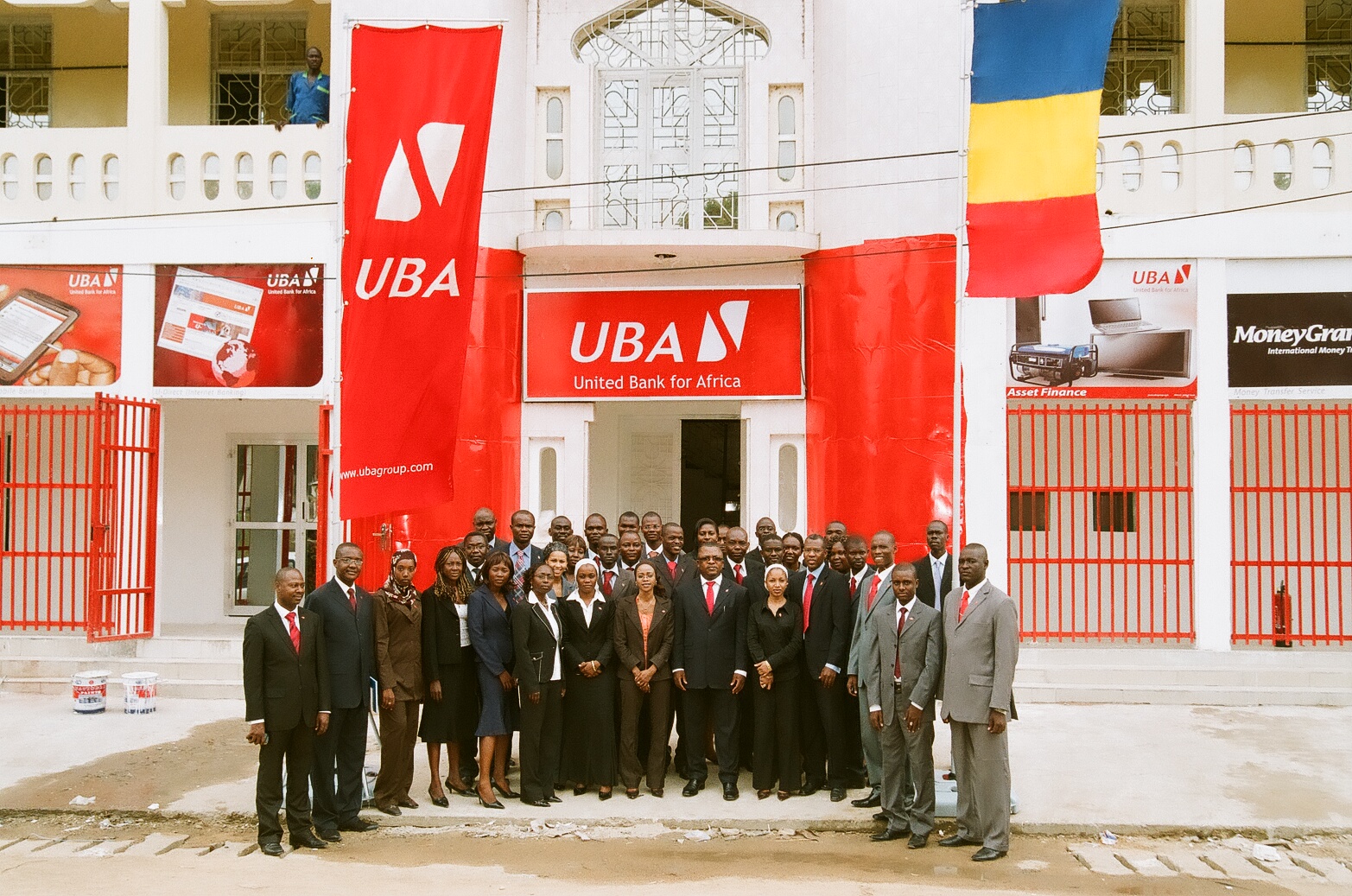
United Bank for Africa (UBA) Plc has released its financial results for the half year ended 30 June 2025, posting a pre-tax profit of N388.4 billion.

The figure marks a slight decline of 3.28% compared with the N401.5 billion recorded in the same period last year, but analysts note it remains a strong showing given the challenging operating environment.

The bank’s resilience was underpinned by robust top-line growth. Interest income surged 32.89% year-on-year to N1.3 trillion, compared with N1 trillion in H1 2024. Treasury bills contributed the lion’s share at N366.4 billion, followed by term loans to corporates at N319 billion. Bonds under investment securities generated N279.2 billion, while cash and bank balances added N113.2 billion. Interest on loans and advances to banks provided a further N105.6 billion.

On the cost side, however, interest expenses climbed sharply to N560.6 billion from N328.9 billion a year earlier. Even with that spike, net interest income still rose 14.59% to N773 billion, up from N674.6 billion. After accounting for an impairment charge of N35.1 billion, net interest income stood at N741 billion, a 20.61% improvement from the prior year’s N614.4 billion.

Fee-based income remained largely flat. Net fees and commission income inched up 1.34% to N147 billion, compared with N145 billion in H1 2024.

Rising Costs Pressure Bottom Line

The results showed operating costs eroded profitability. Net trading and foreign exchange activities swung to a loss of N10 billion, compared with a gain of N98.1 billion in the same period last year. Employee benefit expenses surged 28.65% to N172.2 billion, while other operating expenses rose slightly by 0.19% to N312.9 billion.

These cost pressures pulled pre-tax profit down to N388.4 billion. However, post-tax profit improved 6.06% to N335.5 billion, supported by a reduction in income taxes to N52.8 billion from N85.2 billion a year earlier.

Balance Sheet Growth

UBA maintained balance sheet expansion, with total assets rising to N33.2 trillion from N30.3 trillion in December 2024. Retained earnings increased 12.85% to N1.6 trillion, underscoring continued capital strength.

Dividend Proposal and Market Response

The board of directors proposed an interim dividend of 25 kobo per share for the period ended 30 June 2025, compared with N2.00 per share in the prior year. The payout ratio edged up to 7.83% from 7.3%, but dividend yield fell sharply to 1.4% from 8.9%, reflecting both lower payout and strong appreciation in the stock price.

UBA shares closed at N47.00 on 18 September 2025, up 38.33% year-to-date on the Nigerian Exchange, signaling investor confidence despite softer profit growth.

Balancing Growth and Cost Pressures

Analysts say the coming quarters will test UBA’s ability to balance rapid growth in interest income with mounting funding costs. If Nigeria’s interest rate environment remains elevated, banks could continue to benefit from higher yields on securities and loans, but the corresponding jump in deposit and borrowing costs may squeeze margins further.

In the best potential result, UBA’s scale and balance sheet depth—total assets of N33.2 trillion—provide room to absorb higher costs, while the growth in retained earnings strengthens its capacity for future capital expansion. Continued momentum in fee-based services and digital channels could also help diversify revenue streams and reduce dependence on interest income.

A downside outcome, however, points to risks from foreign exchange volatility and operating expenses. The swing from a N98.1 billion gain in trading and FX to a N10 billion loss highlights UBA’s vulnerability to market instability. Employee costs, which jumped nearly 29%, also raise concerns about expense discipline. If cost escalation outpaces income growth, profitability could remain under pressure even as revenues rise.

Dividend sustainability is another focus for investors. The sharp reduction from N2.00 per share to 25 kobo underscores a more cautious payout strategy. Analysts say future dividends will depend on how effectively UBA manages its capital buffers while navigating regulatory and macroeconomic headwinds.

Still, with shares up nearly 40% year-to-date, the market appears to be betting on UBA’s long-term ability to leverage its pan-African network and large asset base to sustain growth, even in a high-cost environment.

  • Key Highlights (H1 2025 vs H1 2024)
  • Interest income: N1.3 trillion, +32.89% YoY
  • Net interest income: N773 billion, +14.59% YoY
  • Net interest income after impairment: N741 billion, +20.61% YoY
  • Net fee and commission income: N147 billion, +1.34% YoY
  • Other operating expenses: N312.9 billion, +0.19% YoY
  • Pre-tax profit: N388.4 billion, -3.28% YoY
  • Retained earnings: N1.6 trillion, +12.85% YoY

The Evolution of AI Crypto Trading Bots: Transforming Digital Asset Management

0

The cryptocurrency market never sleeps, operating 24/7 across global exchanges with constant price fluctuations and trading opportunities. For individual investors, monitoring multiple digital assets and executing optimal trades around the clock presents significant challenges. Modern technology has introduced powerful solutions to address these limitations through artificial intelligence and automated trading systems. An ai crypto trading bot represents the convergence of machine learning algorithms and sophisticated trading strategies, enabling investors to participate in cryptocurrency markets without constant manual oversight while potentially optimizing returns through data-driven decision making.

These intelligent trading systems have evolved far beyond simple rule-based automation. Today’s AI-powered platforms analyze vast amounts of market data, identify patterns invisible to human traders, and execute complex strategies across multiple exchanges simultaneously. The integration of machine learning allows these systems to adapt to changing market conditions, refine their approaches based on performance data, and manage risk through sophisticated algorithms that can respond to volatility faster than any human trader could achieve.

Understanding Modern AI-Powered Trading Automation

AI crypto trading bots leverage advanced computational methods to analyze market trends, execute trades, and manage portfolios with minimal human intervention. Unlike traditional trading approaches that rely on emotional decision-making and limited time availability, these systems operate on pure data analysis and predetermined strategies designed to maximize returns while controlling risk exposure.

The core advantages of AI-driven trading automation include:

  1. Continuous Market Monitoring – Systems operate 24/7 across all major cryptocurrency exchanges, never missing potential opportunities due to time zone differences or sleep cycles
  2. Emotion-Free Decision Making – Algorithms execute trades based on data and predefined parameters, eliminating fear, greed, and other psychological factors that often lead to poor investment decisions
  3. Advanced Pattern Recognition – Machine learning models can identify complex market patterns and correlations that human traders might overlook or fail to process quickly enough
  4. Multi-Asset Portfolio Management – Simultaneous monitoring and trading across hundreds of cryptocurrency pairs, providing diversification benefits impossible to achieve manually
  5. Risk Management Integration – Automated stop-loss orders, position sizing, and portfolio rebalancing based on volatility metrics and risk tolerance settings

Core Features That Define Advanced Trading Systems

Modern AI trading platforms distinguish themselves through sophisticated features that address the unique challenges of cryptocurrency markets. Advanced algorithms analyze market data across multiple timeframes, incorporating technical indicators, sentiment analysis, and on-chain metrics to make informed trading decisions. These systems typically offer seamless integration with major exchanges through secure API connections, allowing users to maintain full control of their funds while enabling automated trade execution.

The most effective platforms combine multiple trading strategies within a single framework, allowing users to diversify their approaches based on market conditions. This includes grid trading for range-bound markets, momentum strategies for trending conditions, and market-neutral approaches designed to generate returns regardless of overall market direction. According to Statista, the global cryptocurrency market is projected to reach $45.3 billion in 2025, highlighting the growing importance of efficient trading tools for this expanding asset class.

Essential Strategies in Automated Cryptocurrency Management

Successful AI crypto trading bots employ various strategic approaches tailored to different market conditions and investor risk profiles. These strategies have been refined through extensive backtesting and real-world performance data, providing users with proven methodologies for different market scenarios.

Key trading strategies implemented by advanced AI systems include:

  1. Market-Neutral Approaches – Strategies designed to generate consistent returns regardless of overall market direction through hedging techniques and statistical arbitrage
  2. Momentum-Based Trading – Algorithms that identify and capitalize on price trends, entering positions when assets show strong directional movement and exiting before reversals
  3. Grid Trading Systems – Automated placement of buy and sell orders at predetermined intervals, profiting from market volatility and price oscillations
  4. Dollar-Cost Averaging (DCA) – Systematic investment approaches that reduce timing risk by spreading purchases over extended periods, particularly effective during market downturns
  5. Arbitrage Opportunities – Cross-exchange price difference exploitation, where bots simultaneously buy and sell identical assets on different platforms to capture guaranteed profits

Risk Management and Performance Optimization

Professional-grade AI trading systems incorporate sophisticated risk management protocols that protect investor capital while seeking to optimize returns. These include dynamic position sizing based on volatility measurements, correlation analysis to prevent over-concentration in similar assets, and automated portfolio rebalancing to maintain desired allocation percentages.

Advanced platforms also implement trailing stop-loss mechanisms, which automatically adjust exit points as positions move favorably, allowing profits to run while protecting against adverse moves. Machine learning components continuously analyze performance data to refine strategies, identifying which approaches work best under specific market conditions and adjusting algorithms accordingly.

Selecting the Right AI Trading Solution for Your Investment Goals

Choosing an appropriate AI crypto trading bot requires careful consideration of multiple factors that align with individual investment objectives, risk tolerance, and technical requirements. The cryptocurrency trading automation landscape offers solutions ranging from beginner-friendly platforms with pre-configured strategies to highly customizable systems for experienced traders.

Critical evaluation criteria for AI trading platforms include:

  1. Exchange Compatibility – Support for major cryptocurrency exchanges where you maintain accounts, ensuring seamless integration with existing trading infrastructure
  2. Strategy Diversity – Availability of multiple trading approaches suitable for different market conditions and risk preferences, with ability to combine strategies for enhanced diversification
  3. Security Protocols – Implementation of API-only access without withdrawal permissions, ensuring funds remain secure in your exchange accounts while enabling automated trading
  4. Performance Transparency – Access to detailed analytics, backtesting results, and real-time performance metrics that allow informed evaluation of strategy effectiveness
  5. User Experience Design – Intuitive interfaces that make complex trading strategies accessible without requiring extensive technical knowledge or programming skills

The regulatory landscape surrounding AI in financial services continues to evolve, with recent Treasury Department reports highlighting both opportunities and risks associated with AI adoption in financial sectors. These developments emphasize the importance of choosing established platforms that prioritize compliance and security while delivering innovative trading capabilities.

Modern AI crypto trading bots have transformed how individual investors can participate in cryptocurrency markets, offering institutional-level capabilities through accessible platforms designed for various experience levels and investment goals. As the digital asset ecosystem continues to mature, these intelligent automation tools represent an increasingly essential component of sophisticated investment strategies.

Nigeria Immigration Service Unveils Centralized-5,000-Daily Passport Hub — but Costs Double for Citizens

0

The Nigeria Immigration Service (NIS) has launched a centralized passport personalization system with the capacity to produce up to 5,000 passports daily, a dramatic leap from the 250–300 documents that multiple centers could previously deliver.

The new system was unveiled on Thursday at the NIS headquarters in Abuja during an inspection of the Centralized Passport Personalization Centre by the Minister of Interior, Dr Olubunmi Tunji-Ojo, who described it as “a game-changing reform for passport processing in Nigeria.”

“For the first time in 62 years, NIS is operating a single central passport production hub,” the Minister said. “This project is 100 per cent ready, and it will allow Nigeria to be more productive and efficient in delivering passport services.”

The centralization replaces the decentralized model under which several centers handled production — often leading to inefficiencies, duplication, and backlogs. By consolidating output in one hub, officials say Nigeria can now align with international best practices in passport production, where standardization and uniformity are essential for global trust in travel documents.

Faster Processing and Delivery

Tunji-Ojo said the facility, built in partnership with IRISMAT Technologies Limited, deploys advanced machines capable of producing 1,000 passports per hour. This would enable the NIS to meet daily passport demands within four to five hours of operation.

“We promised two-week delivery, but with automation and optimization, we are now pushing for one week,” the Minister said, adding that the reform would “put an end to the era of backlogs and delays.”

According to him, when the Tinubu administration assumed office, the NIS had inherited over 204,000 pending passport applications. That backlog, he said, “is now closed,” with the centralized system ensuring that Nigerians receive value for their money through “automation and efficiency.”

The Minister positioned the move as part of President Bola Tinubu’s reform agenda to modernize public institutions and restore trust in government.

“This is more than just about documents; it’s about restoring trust and showing Nigerians that their government can deliver effectively,” he said.

The Cost Burden on Citizens

But while the centralization is expected to eliminate delays, it comes with a steep cost for Nigerians. The NIS recently doubled passport fees, effective September 1, 2025.

A 32-page passport with 5-year validity now costs N100,000, up from N50,000. A 64-page passport with 10-year validity has climbed to N200,000 — a 100% increase from N100,000.

The Service says the higher cost reflects the push for efficiency, modernization, and the investment required to sustain advanced facilities like the centralized hub. Still, for ordinary Nigerians already battling inflation and rising living costs, the fee hike has raised concerns that faster services are being delivered at a punishing price.

Implications for Nigerians at Home and Abroad

The new system is expected to ease the frustrations of applicants who, for years, have complained of bottlenecks, unofficial charges, and endless delays in passport processing. Diaspora Nigerians, who often face unique hurdles at consular offices, may also benefit from the improved uniformity in production and quicker turnaround time.

Analysts, however, warn that the doubled cost risks placing passports out of reach for low-income Nigerians, potentially widening inequality in access to international travel and migration opportunities. At N100,000 for a 32-page passport, a Nigerian worker earning N70,000 per month, minimum wage, will need about a month and a half’s work wage to secure one.

However, the centralized hub is believed by many to be a representation of an administrative milestone, given Nigeria’s unpleasant passport history. For citizens, the test will be whether the promised one-week delivery and end to backlogs will be enough to justify the financial strain.

FTC Sues Ticketmaster and Live Nation Over “Illegal” Ticket Resale Tactics

0

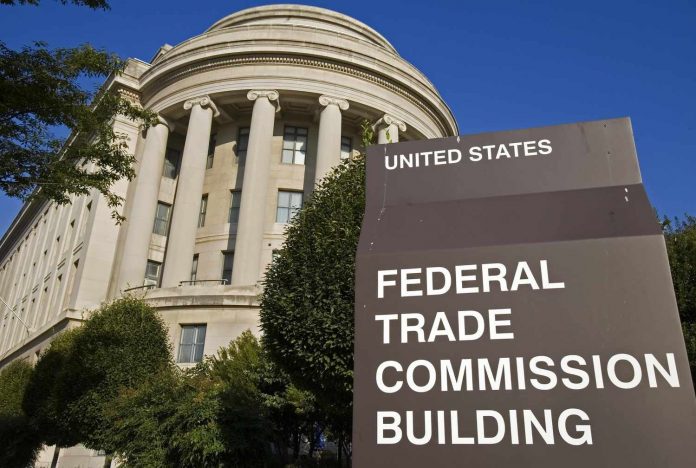
The U.S. Federal Trade Commission (FTC) has filed a sweeping lawsuit against Ticketmaster and its parent company, Live Nation Entertainment, accusing them of engaging in “illegal” resale practices that inflate prices and harm both fans and artists.

The case, filed Thursday in federal court in California and joined by seven states including Florida, Illinois, and Virginia, claims Ticketmaster has “tacitly worked” with scalpers, allowing them to unlawfully buy tickets in bulk and resell them at inflated prices.

“[Ticketmaster and Live Nation’s] illegal conduct frustrates artists’ desire to maintain affordable ticket prices that fit the needs of ordinary American families, costing ordinary fans millions of dollars every year,” the FTC said in its filing.

The FTC alleged that Ticketmaster has adopted a “bait and switch” approach to pricing, advertising one price before raising the total with hidden fees. Regulators further accuse the company of deliberately allowing brokers to exceed ticket limits, feeding a secondary resale market where Ticketmaster collects multiple layers of fees.

The agency said Ticketmaster is “triple dipping” by charging fees from brokers in the primary market, those same brokers in the secondary market, and again from consumers on that secondary market. Between 2019 and 2024, Ticketmaster allegedly made $3.7 billion in resold tickets alone.

“American live entertainment is the best in the world and should be accessible to all of us,” FTC Chairman Andrew Ferguson said. “It should not cost an arm and a leg to take the family to a baseball game or attend your favorite musician’s show.”

Ticketmaster controls roughly 80% of ticketing for major U.S. concert venues, according to regulators. Consumers spent more than $82 billion on tickets through Ticketmaster between 2019 and 2024, underscoring the company’s vast reach. Shares of Live Nation fell about 2% on Thursday after the lawsuit was announced.

Ticketmaster also faces global scrutiny. In the U.K., regulators are investigating its use of “dynamic pricing” during Oasis reunion concerts — a system that adjusts prices in real time, often sending costs soaring.

In the U.S., the Justice Department last year sued to break up Live Nation and Ticketmaster over alleged antitrust violations, a case that grew out of the 2022 Taylor Swift Eras Tour ticketing debacle that sparked congressional hearings.

What Comes Next?

The FTC’s lawsuit sets up several potential possibilities for the future of Ticketmaster, Live Nation, and the broader live events industry.

If regulators prevail: The most dramatic outcome would be a forced breakup of Live Nation and Ticketmaster, echoing the government’s earlier antitrust cases against AT&T in the 1980s or Microsoft in the late 1990s. Such a split could open the door to new ticketing competitors, weaken Ticketmaster’s control of 80% of the U.S. concert venue market, and potentially push prices lower.

Analysts say this possibility would be a seismic shift for the $82 billion U.S. ticketing industry, though it could take years of litigation to play out.

If Ticketmaster survives intact: Another outcome is that the company fights the lawsuit successfully, paying fines or accepting limited reforms without breaking up. This would mirror its past ability to weather controversies, such as the fallout from the Taylor Swift fiasco. In this case, critics warn fans may see little change, with practices like hidden fees and dynamic pricing continuing to dominate.

A third possibility is regulatory compromise, where Ticketmaster could be forced to introduce stricter controls on brokers, improve fee transparency, or limit dynamic pricing models. While less disruptive than a breakup, such reforms could still reshape the economics of live entertainment.

However, the FTC case underscores growing global skepticism about how much power Ticketmaster and Live Nation wield in the concert business. The lawsuit represents the most serious challenge yet to a system viewed as rigged by fans long frustrated by high fees and botched sales. It also raises the prospect of reclaiming greater control over how tickets are priced and sold for artists.

Meta Bets on Smart Glasses as the Next Frontier in Computing

0

Meta is renewing its push to reinvent the way people interact with technology, this time with smart glasses that its executives say could eclipse the smartphone.

Chief Product Officer Chris Cox told CNBC’s Julia Boorstin on Thursday that glasses — not handheld devices — will define the next era of computing.

“We talk to them, we will see with them, we will use gestures the same way we interact with each other to interact with our computers,” Cox said. “The interfaces will get more natural, and so we certainly believe that the next really important wearable technology is going to be a pair of glasses.”

The Ray-Ban Display Glasses

Meta revealed its latest hardware, the $799 Ray-Ban Display smart glasses, on Wednesday. Unlike its earlier audio-only Ray-Ban models, the new version integrates a tiny in-lens display controlled through hand movements detected by a neural wristband.

The glasses go beyond recording video or playing audio. Users can now see messages, watch videos, record content, send voice messages, or even write replies with subtle gestures on their knee.

“We’ve started with just the basics, which is messaging, which we know is the thing people want to do in a more fluid way,” Cox explained.

Meta CEO Mark Zuckerberg offered a live demo of the glasses, attempting to answer a video call from Meta’s tech chief Andrew Bosworth. But the button to accept the call failed to appear on the display, underscoring the technical challenges still plaguing wearable computing.

For Meta, the Ray-Ban Displays are part of a larger gamble on augmented reality (AR). Zuckerberg has argued for years that immersive technologies like AR glasses and virtual reality headsets will ultimately replace the smartphone as the main gateway to the digital world. The Display glasses are a step toward that vision — more advanced than audio smart glasses, but not as fully immersive as the headsets Meta is also developing.

The Industry’s Bumpy Road

Meta’s push comes in a space littered with setbacks. Google’s much-hyped Google Glass launched in 2013 but quickly collapsed amid privacy concerns and limited functionality. Snap’s Spectacles won attention for their sleek design but failed to resonate with mainstream buyers, relegating the product to niche status.

Apple has taken a different path with the Vision Pro, a $3,499 mixed-reality headset pitched as a “spatial computer.” While technologically sophisticated, its steep price has limited adoption, raising questions about how quickly consumers are willing to embrace new form factors.

Meta itself has faced similar hurdles. Its Quest VR headsets have drawn some traction in gaming and enterprise, but mainstream adoption has been slower than expected. The company’s earlier audio-only Ray-Ban Meta glasses were seen as more stylish than useful, highlighting the gap between novelty and necessity.

Analysts say Meta is trying to thread a difficult needle — making smart glasses that are functional enough to justify their price, while avoiding the pitfalls of being seen as awkward, invasive, or unnecessary.

At $799, the Ray-Ban Displays target early adopters, not mass consumers. The hope is that adoption will scale as Meta refines the technology and integrates more applications. Unlike Apple’s Vision Pro, which courts professionals and creatives, Meta is focusing on everyday tasks like messaging, video calls, and recording — betting that utility plus wearability will give it an edge.

A Defining Bet

Cox’s claim that glasses are the future of computing shows Meta’s determination to set the pace in what comes after the smartphone. While the live demo hiccup underscored how unfinished the technology remains, the Display glasses represent a step toward making computing literally wearable and visible.

The question now is whether Meta can succeed where Google, Snap, and even its own past experiments fell short — transforming smart glasses from futuristic gadgets into everyday essentials.