DD
MM
YYYY

PAGES

DD
MM
YYYY

spot_img

PAGES

Home Blog Page 4951

Urbanization and Culture Lag in Nigeria’s Food System: A Call for More Rural-Intensive Agricultural Programmes

0

Urbanization is the movement of people and the transition of major economic activities from rural areas to urban centers. By 2050, the global urban population is projected to increase to 68% from 55% estimated in 2018 and a significant contribution (90percent) of this increment will be from Asia and Africa.

Urbanization in Africa has been very rapid. Over 75 cities have developed within the continent and almost half of sub-Saharan Africa’s population now live in the urban areas. By 2050, the number is expected to reach 60 percent. Also, in the coming years Africa will be home to almost 1billion new urban dwellers which is about what Europe, the US and Japan combined have managed over the last 265 years.

Nigeria is tipped to lead Africa’s urban growth with the country expected to produce an estimated 189million new urban dwellers by 2050. Lagos will significantly drive the numbers, expanding by 77 people per hour between 2020 and 2050.

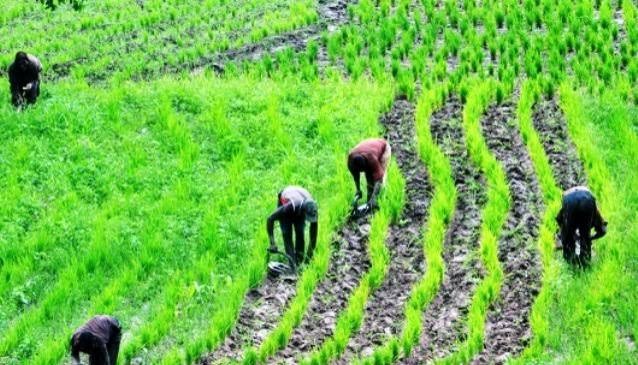
Among the factors impacting agriculture and food production in Nigeria, urbanization stands strong with its footprints felt in the economic, social, political, cultural and psychological lives of the people. One of the impacts of urbanization is the dwindling agrarian culture of the country. The massive exodus of people from rural to urban areas in search of better living conditions has caused many young individuals to develop apathy towards farming, a profession which hitherto has been the ancestral pride of most ethnic groups in the country.

Over the years, the failure of the Government to reach a lasting solution to the rural-urban development gap has led to more food crises in the country. More than 40 million smallholder farmers in the rural communities are increasingly marginalized and incapacitated to produce optimally due to rural-urban drift. According to a Statista report, in 2022, the extreme poverty rate in Africa stood at around 50 percent among the rural population compared to 10 percent in urban areas.

Despite its huge agricultural potential, Nigeria has one of the highest poverty index (more than 40 percent) and undernourished people in the world. In 2021, nearly 13 percent of the world’s population in extreme poverty, with the poverty threshold at 1.90 US Dollars a day lived in Nigeria and more than 80 percent of rural dwellers live within the poverty line.

According to the World Bank’s forecast in January 2021, an additional 10.9 million Nigerians is estimated to enter into the poverty line by 2022 due to the effect of the covid-19 pandemic. The vast opportunities in the agricultural landscape have remained largely untapped due to the underdevelopment of the rural regions where most farmers and farm settlements are concentrated.

One of the attendant effects of the scarcity of agricultural and social infrastructure in rural communities has been an increase in skill and technical deficiency among the local farmers which also culminates in culture lag in the agriculture and food sector. Culture lag is a situation where local farmers are unable to keep up with global agricultural practices at a pace needed to compete globally and address the local food needs. Thus, it should not come as a surprise that Nigeria loses about 7 billion US Dollars worth of agricultural produce yearly and spends 10 billion US Dollars annually on import to meet the local food shortfalls.

In order to position Nigeria to achieve sustainable development and drive continuous innovation for its food system, farmers and young agricultural entrepreneurs in the rural regions of the country need to be strengthened, integrated and transformed into highly skilled and competent individuals capable of producing optimally and competing favourably in the global agricultural ecosystem. This calls for more rural-intensive and inclusive agricultural programmes in the country.

Nigeria Inches Towards International Monetary Fund (IMF) For Debt Bailout

0

There is no disputing the fact that Nigeria’s debt crisis has risen the most under President Buhari’s administration when compared to previous governments since 1999.

As of June 2021, Nigeria’s debt stock tripled to N35 trillion and further rose to N39.5 trillion as of December 2021. In the first quarter of 2022, debt continued to rise exponentially as Nigeria’s total debt stock rose to N41.6 trillion in the first quarter of 2022, which saw a N2.05 trillion increase compared to N39.56 trillion recorded last year.

With the continuous rise in debt, Nigeria’s deplorable financial crisis means it is inching closer to opening talks with the International Monetary Fund (IMF) to pave the way for the rescheduling of the country’s huge foreign debt.

Recall that the IMF in 2018, issued a warning to Nigeria to check its rising levels of debts, also to diversify its revenue bases or face a crisis. The IMF also stated that strengthening fiscal positions was necessary to reduce debt vulnerabilities.

Fast forward to 2020, President Bihari became the first Nigerian leader to take an IMF loan due to the severity of the damage inflicted by the Covid-19 pandemic which induced a slump in crude oil prices in Nigeria’s economy. The IMF approved a loan of US $3.4 billion for Nigeria to meet the urgent balance of payment needs of the country stemming not only from the crash in crude oil prices but also from the outbreak of the Covid-19 pandemic.

The country’s economic crisis continues to worsen as its oil production has fallen to 1.2 million barrels per day. In March this year, Nigeria issued a $2.2 billion Eurobond to enable the NNPC to pay for the importation of petrol, which analysts disclose that the country is increasingly finding it difficult to find a foreign exchange to finance fuel imports.

According to Nigeria’s finance minister, Zainab Ahmed, she disclosed that the country is spending so much money on just debt servicing which is making it difficult to fund its massive petrol imports on the back of collapsing oil exports.

Speaking on Nigeria’s need for a loan for debt bailout, a frontline economist and member of the government’s economic advisory council, Bismarck Rewane disclosed that Nigeria seeking an IMF loan for debt bailout is a sure bet toward economic stability and growth.

In his words, “There is the old saying that the path to Paris is via London and Washington. To get debt forbearance from the Paris club, a country must first get Washington institutions to accept your plan is visible. That’s the way it is for all nations like Nigeria facing severe fiscal imbalance. The rescheduling of debt and all maturing obligations is a necessary path towards economic stability and growth for Nigeria”.

Some other analysts have stated that the government of Nigeria should currently be contemplating approaching the IMF to securitize the debt obligations that are falling due. They disclosed that the longer the government hides in denial of its debt crisis, the situation will continue to worsen for the country, also making it unbearable for the citizens.

Economic experts and past leaders have all expressed their worries concerning President Buhari’s insatiable desire for loans. They have disclosed that a country like Nigeria that does not produce anything tangible for the international market other than crude oil, should be prudent, as the country presently spends 90 percent of its revenue on debt servicing.

It is imperative that the Buhari administration looks inwardly and explores other avenues for boosting the country’s revenue, rather than resorting to endless borrowing that puts the economy in jeopardy.

Welcome Reliance Infosystems To Tekedia Institute, Again

0

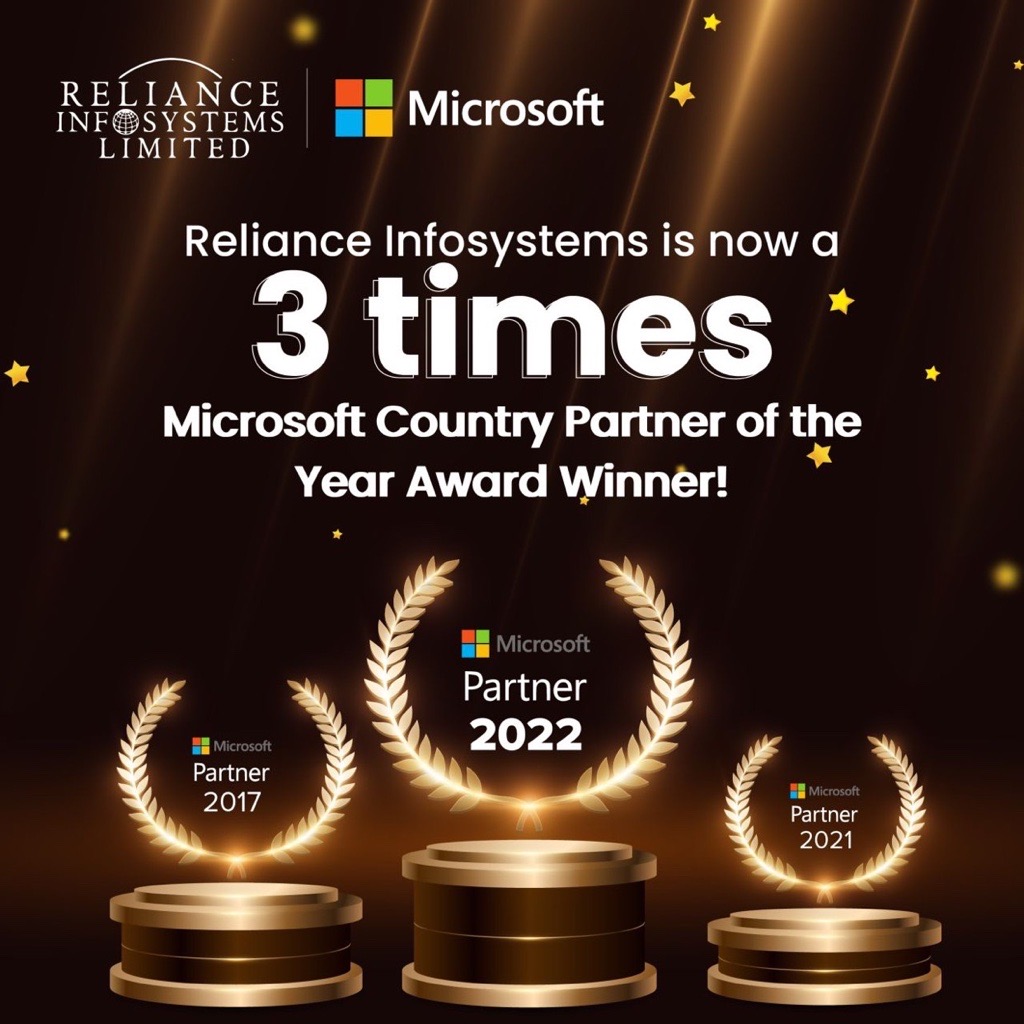
Tekedia Institute is very excited to be welcoming innovators and transformers from one of Africa’s finest technology companies: Reliance Infosystems. Reliance “creates enduring partnerships with customers to provide suitable technology inputs to support their business goals”. It does this by helping organizations to build and implement technology systems that do not just Run them but also TRANSFORM them.

Yes, technology that transforms. And it has laurels – it is the reigning king as Microsoft Country Partner, consolidating its position as Nigeria’s #1 Microsoft technology partner and integrator.

As always, I am waiting for CEO Olayemi Popoola to write a book soon; many of us will read. His mindset provides a window on how to build companies of the future. For instance, he is sending 10 of his team members to attend programs we have designed for startup founders & CEOs. Yes, even in a company with operations in many African countries, UAE, Canada, Pakistan, etc, the team has to think like entrepreneurs.

Reliance, Tekedia Institute is honoured to welcome ~100 innovators, again. Thank you again for choosing us.

A New Piece at Harvard Business Review On Industrialization in Africa Coming

0

When I wrote in Harvard that Africa’s industrialization policy must not follow the Chinese trajectory, many policymakers and leading economists reached out. TV stations like BBC and China’s CCTV called, and we discussed my thesis.  I had posited that within decades,  robots and AI would disintermediate most of the jobs which are currently being done in China – and if Africa’s playbook is to position itself to displace China as wages rise there,  we will be in trouble. (You can read that piece here at HBR  )

Indeed, the Western world will not outsource low paying jobs to anywhere because Apple, Dell and others will use robots and AI to do them in America and Europe. The implication is that Africa needs a new industrialization policy because what worked for China has expired!

A new piece is coming. In this one, I examine industrialization, urbanization, etc in Africa. It would be a good read.

Comment on Social Media Feeds

Comment 1: I agree that automation and robotics will take production back to the industrialized world, but Africa (Nigeria for me) still suffers a significant gap of “DO” ……produce things yourself, local capacity in skills, management and technology adoption……..that’s the foundation of industrialization. We need to be confident and fix that gap and start producing goods locally. We CAN do it, if we a) Believe in our products b) Insist on excellence and standards c) Allow us to access our markets with our growing population. We have a massive market for food, clothes, building materials etc……..Let’s get the fundamentals running.

Industrial Revolution (1-4) are all very interesting analysis of What happened after the cases. We need a DO (a wake up event) to push us forward….and like you said Ndubuisi Ekekwe it may not follow the same pathway and steps that China followed………..

My Response: “We need to be confident and fix that gap and start producing goods locally” – that is going to be a constant in any equation. We cannot have an urbanization rate of 49% with global manufacturing output of 2%. That has to change.

Comment 2: It would be tough for Africa if it’s industrialization policy does not incorporate local content, both human and non human.

Do African leaders realize that they would not be able to ship their workforce abroad like it’s happening today?

I can’t wait for this new piece to be available.

My Response: “It would be tough for Africa if it’s industrialization policy does not incorporate local content, both human and non human.” absolutely, we need the mindset of sankofa as posited in ancient Ghana

Comment 3: Ndubuisi Ekekwe, we need new knowledge to create this new industrialization policy and playbook.

Comment 4“Indeed, the Western world will not outsource low paying jobs to anywhere because Apple, Dell and others will use robots and AI to do them in America and Europe. The implication is that Africa needs a new industrialization policy because what worked for China has expired!” ~ Ndubuisi Ekekwe

From Godwin Akpan – Disruptive Brand Consultant

To Nigerians, we can’t continue to test expired policies or outdated leaders. For us to be among the future countries thriving in the 4th industrial revolution, we must pick a young, vibrant, pragmatic and futuristic leader. We have a chance to rewrite history and make Nigeria a tourist and direct investment destination. Insecurity has plunged our country into the abyss of terrorists. We now have to negotiate with terrorists to live, to farm, travel by road or even attend school.

Your choice and vote will matter more than ever. Thanks to the #ElectoralAct recently signed.

I hope we campaign with respect and sell our candidate’s revolutionary programs and policies not throw tantrums that heighten tension in the country.

Let’s participate to educate and enlighten others not fight recklessly. Remember people are reading your public comments

Klangaverse To Set Groundbreaking Records Like Algorand and Stepn

0

Many cryptocurrency coins have developed and upgraded to reach the promises they made at their launch, with some achieving their promises in a short time such as Stepn (GMT) and Algorand (ALGO). The new coin KLANGAVERSE (KLG) has offered a complete solution, to address problems faced by artists. Can KLANGAVERSE live up to its promises?

KLANGAVERSE (KLG)

KLANGAVERSE (KLG) is a fully decentralized music streaming protocol built on the Binance Smart Chain with a public blockchain infrastructure and many other decentralized technologies. The platform leverages the technology of blockchain to ensure fair compensation for artists, providing a transparent and reliable payment system, and quality music content for the community. KLANGAVERSE aims to give the artists the power to produce and distribute their music in the form of NFTs and get paid by their fans directly into their wallets. The KLANGAVERSE (KLG) ecosystem is decentralized and has a goal to grow with targeted 300,000 community members, artists, and developers by year-end.

The KLANGAVERSE (KLG) ecosystem is powered by its crypto token called KLG which would be used for the payment and management of artists and fans. Hence, this allows artists to decide on how revenues raised from their minted songs will be split among the teams based on the different songs minted on the KLANGAVERSE ecosystem. The statistics of the minted songs in the form of NFT serve as the foundation for revenue calculations for each artist in the KLANGAVERSE ecosystem, in which the data is open to the public. Its immutability can be verified by comparing the transaction history.

KLANGAVERSE (KLG) also promises to introduce additional governance mechanisms such as the KLANGAVERSE DAO (Decentralized Autonomous Organization) used for voting on artists’ revenue sharing, new features, and a variety of other possibilities which will also be transparently stored in the KLANGAVERSE smart contract.

STEPN (GMT)

Stepn GMT) is an NFT-based fitness app that was launched early this year but has amassed over 3 million active monthly users. This is quite impressive for an app that requires you to buy an NFT just to use it. Many have described the app as “Strava meets Pokémon Go.” The platform became extremely popular in April on Crypto Twitter and among Web3 circles.

Stepn (GMT) is supported by the Green Satoshi token (GST), which you earn fractions of for walking, jogging, or running; the amount of GST earned depends on the level of the NFT sneaker you bought. Stepn signifies a proof case for NFTs with real utility. Many crypto enthusiasts in Web3 believe this is where NFTs are headed, beyond a pure digital flex case and into the world of actual use cases. Stepn’s GST (Green Satoshi) token is currently trading at $1.0 which is a decent amount to invest.

Algorand (ALGO)

Algorand (ALGO) is another powerful cryptocurrency that is currently on the rise. It has refused to be affected by the current dip in the world of crypto, it has instead bypassed the dip making a name for itself. ALGO has increased by a decent 10% and emerged number 30 in CoinMarketCap this week.

Algorand (ALGO) has achieved the feat of becoming the official blockchain of one of the world’s most influential, and largest sports organisations by partnering with FIFA for the upcoming world cup. This has not only been a welcome improvement on Algorand (ALGO) but has had a massive impact on its popularity and success. This partnership will surely secure the coin’s global reputation for the next couple of years.

Algorand’s (ALGO) main selling point is its commitment to sustainability in this cryptocurrency world that’s bothered with issues of sustainability, which is believed to become more crucial in coming years. Algorand is already setting itself up for future success as it pledges to be the ‘greenest blockchain with zero carbon footprint.

So if you are looking for a great new crypto to buy, try KLANGAVERSE (KLG) with its great features which are sure to make it very popular and it could in time rival giants Algorand (ALGO) and Stepn (GMT).