DD
MM
YYYY

PAGES

DD
MM
YYYY

spot_img

PAGES

Home Blog Page 4955

The London Meetings for Nigerian Politicians

0

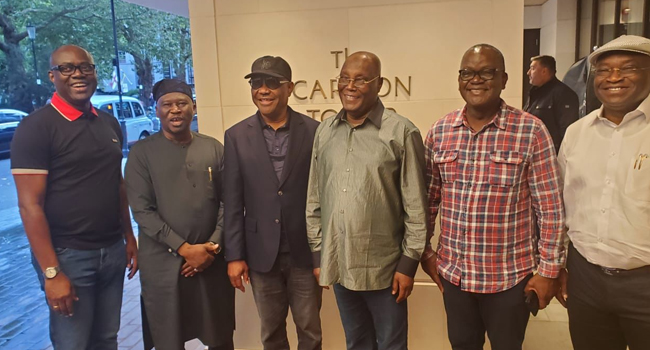
Good People, why are ALL Nigerian politicians meeting these days outside Nigeria? From APC to PDP to LP to all, every weekend, all the important rumours now emanate from London. In other words, these men coordinate in Abuja to travel to London and have meetings. Fellow citizens, these meetings diminish Nigeria. Yes, they could be discussing extremely important national issues in hotel rooms bugged by spy networks.

Statistically, Nigeria has 3 key men with one to become a president next year, and three of them were meeting in London hotels this week. Do not bet that London has not created a database for them, chronicling their playbooks ahead of 2023.

Nigeria does not value “information” and ”knowledge” in an age where both drive competitiveness of nations.

Comment on Feed:

Comment 1: They swept the room for bugs before saying the opening prayer….lol.
But seriously, do we take espionage seriously? Wasn’t there some talk about data from the gifted AU building been transmitted to some location in Asia? It didn’t seem to bother anyone, so why should politicians care about “walls that hear”?

Comment 2: The trend is really worrisome.

I’m just wondering when politicians from the UK, US or other countries will come to Nigeria for their private meetings.

More annoying for me is the fact that in 2022, discussions about Africa development are still consistently being held outside the continent. We certainly need collaborations and strategic partnerships but not handouts. We have to look inward for homegrown solutions to our problems.

Comment 3: I would say they are not technologically conscious neither are their team members or advisors tech savvy enough to know the risks involved in holding important meetings in unsecured locations. If anyone successfully eavesdrop on that meeting, he is a rich man because he can sell that information to opposition.

The toughest enemy to fight is the one that has information on you. The know your strengths and weaknesses, the know your offence strategies and will put up a good defence because they know your playbook. Talk about having the questions before the exams.
Comment 4: Many thanks for sharing Prof. Ndubuisi Ekekwe! That’s the unfortunate situation we find ourselves as a nation today. Even Niger or say Chad can never think of coming to Abuja for their key national interest meeting. What we have in Nigeria are no leaders but bunch of title holders occupying various positions of influence. Like I always said, these guys are carrying us to where we no know! They never mean well for this nation. Stomach infrastructures everywhere…

How To Obtain a Super Agent Banking License in Nigeria

0

The introduction of the Central Bank of Nigeria Guidelines For The Regulation of Agent Banking & Agent Banking Relationships in Nigeria was designed as a very effective method of position disruption in Nigeria’s Banking & Finance sector aimed at :-

– the provision of minimum standards and operation requirements for agency banking operations as a simplistic but effective tool of extending the reach of banking services in Nigeria;

– the enhancement of Financial inclusion in Nigeria;

– the proper provision of agency banking as a cost-effective banking platform.

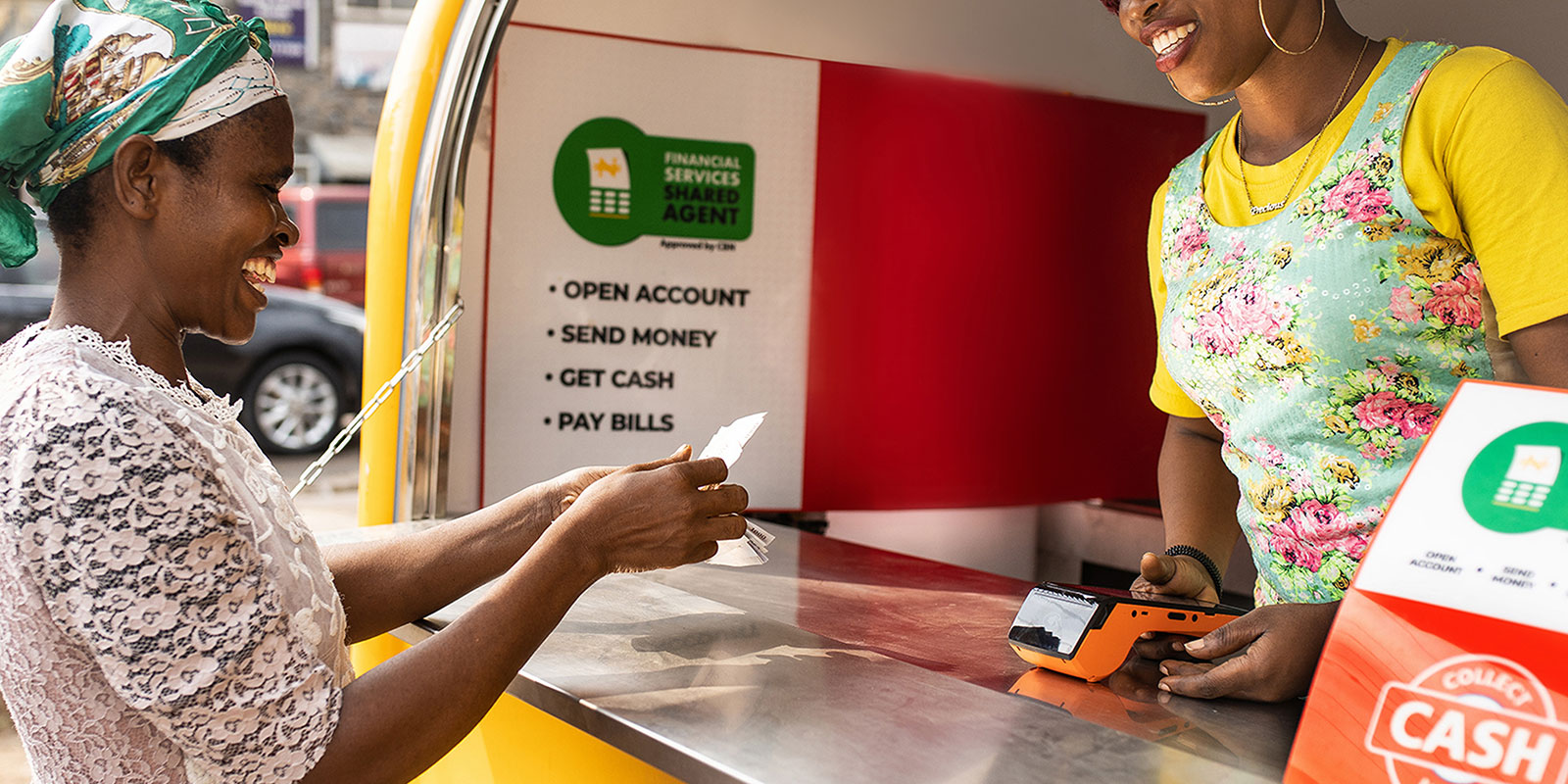
Agency Banking as a concept has successfully led to very high levels of financial inclusion & financial literacy as well as an overwhelming level of convenient banking services leveraging on the nature of communal living in Nigeria and Financial technology, giving rise to another type of value stakeholder in the Finance Industry – the Super-Agent, a rather new Fintech offering that will be the focus of this article which will be looking at:-

– The definition of Agency Banking as a concept & the categories of Banking agents in Nigeria.

– The Regulatory Framework governing Agency Banking in Nigeria.

– The licensing requirements for Super Agents in Nigeria.

– The permissible and non-permissible activities for Super-Agents in Nigeria.

– A basic idea of the operational guidelines for Super Agents in Nigeria.

What is Agent Banking?

Agency Banking involves the provision mainly via Financial Technology of banking services to customers on behalf of a licensed deposit taking Financial Institution or Mobile Money Operator(known as “The Principal”) by a 3rd party known as “The Agent”.

What is the Regulatory Framework governing Agency Banking in Nigeria?

Agent Banking is regulated mainly by the Central Bank of Nigeria (CBN) through Banks and Other Financial Institutions Act (BOFIA) and The Guidelines For The Regulation of Agent Banking & Agent Banking Relationships in Nigeria (or ‘The Guidelines’).

What are the categories of Banking Agents allowed under the Guidelines?

The categories of Banking agents allowed under the Guidelines are :-

  1. The Super Agent :- This is an agent contracted by an MMO or Financial Institution (Principal) who may subcontract other agents in a network over a wide geographical area and retaining overall responsibility for the operation of the agency relationship.
  1. The SubAgent :- A person to whom some or all aspects of the agent banking service delivery have been delegated by a Super-Agent.
  1. The Sole Agent :- An agent who does not delegate agency operation powers to other agents but assumes agency by himself.

Who is in charge of licensing Super Agents?

Super Agent licensing falls under the jurisdiction of the Central Bank of Nigeria through the Regulatory Framework for licensing Super Agents in Nigeria even though it is set in motion by an Agency agreement with either a Financial Institution or Mobile Money Operator.

What are the requirements for  Super Agent licensing in Nigeria?

The requirements for a Super Agent license in Nigeria are :-

– Being a registered company with a minimum shareholders fund of 50 Million Naira unimpaired by losses.

– Sending an application as a registered company through your lawyer for a Super Agent license to the Central Bank of Nigeria through the Director, Banking & Payments System Department.

– Evidence that the company has been a company with an existing business operational for at least 12 months before the application.

– A Certificate of Incorporation of the applicant company along with its Memorandum & Articles of Association.

– A documented referral from a Financial Institution/Mobile Money Operator.

– Proof of having at least 50 agents.

– A copy of the company’s board resolution approving its Super Agent application.

– The company’s profile and functional contact emails, telephone numbers, office and postal addresses.

– A documented shareholding structure of the company.

– A Feasibility report.

– An organogram of the company.

– The IT policy of the company. 

– An Enterprise Risk Management Framework.

– A Contingency & Disaster Recovery Plan.

– A documented outline or the company’s shared agent network including current and potential engagements, geographical spread and benefits to be derived.

– Qualifying criteria for engaging agents.

– Draft SLAs (Service Level Agreements) with sub-agents and Financial Institution/Mobile Money Operator Agent Banking contract.

– An Anti-Money Laundering/Combating the Financing of Terrorism/Know-Your-Customer (AML/CFT/KYC) Compliance Policy.

– Fraud detection plan.

– Risk Management policy.

– Consumer Protection Policy & Policy.

Can a Super-Agent have agency contracts with more than 1 Financial Institution or Mobile Money Operator?

Yes, the Guidelines prohibit exclusivity of agent banking relationships, putting Super Agents at the liberty to have agency Agreements with several Financial Institutions and Mobile Money Operators.

What are some of the post-operating Compliance requirements/ permissible and non-permissible activities for Super Agents?

Permissible Activities

– Super Agents can accept Monetary deposits and withdrawals from customers.

– Utility Bills payment services.

– Salary payment services.

– Local money value transfer services.

– Balance Enquiry services.

– Mini-statement generation & issuance services.

– Collection and submission of account opening & other related documentations.

– Agent Mobile payments / Banking services.

– Cash disbursement & Cash repayment of loans

– Collection of Bank mail/Correspondence for customers.

– Any other activity as the Central Bank of Nigeria may from time to time prescribe.

Non-Permissible Activities

– Charging the customer any fee.

– Giving any guarantees.

– Carrying out transactions where a receipt or acknowledgement cannot be generated.

– Offering Banking services of its own accord.

– Carrying out a transaction when there’s communication failure with the Financial Institution ( The Principal).

– Continuing with the agency business when it has a proven criminal record involving fraud, dishonesty, integrity or any Financial impropriety.

– Rendering Banking services not specifically mentioned in its Agency Banking contract.

– Undertaking cheque deposits & encashment of cheques.

– Providing cash advances.

– Being run or managed by a Financial Institution’s employee or associate.

– Transacting in Foreign currency.

– Subcontracting another agent to operate on its behalf without being a licensed Super Agent.

Conclusion :- While the above write-up is definitely not exhaustive, it can be seen regardless that Agency Banking is a potentially very lucrative Fintech offering that can be leveraged on to provide positively disruptive Financial Inclusion services despite its rather strict Regulatory Framework. It is thus advised that anyone seeking to go into Agency Banking should further consult with his Solicitor going forward. 

The War in Ukraine and Africa’s Food Security

0

The Question: Good morning and happy weekend to you.

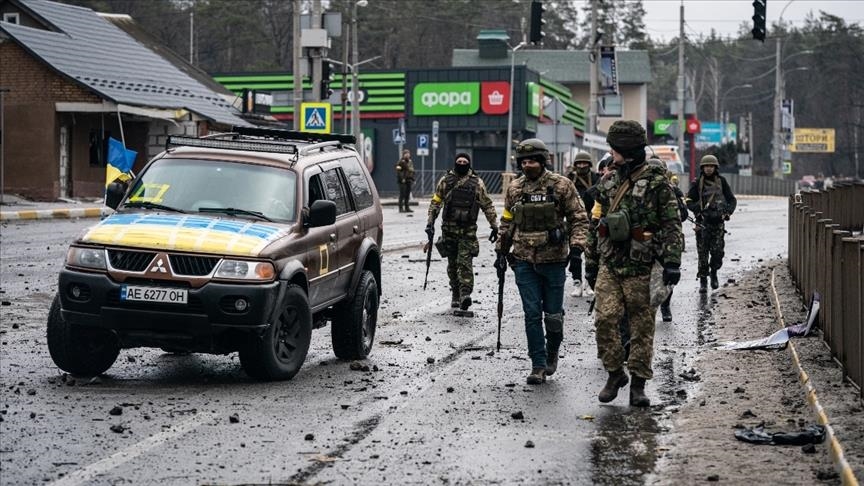
Am calling on our economic “gurus” in the house to please explain to me how the war between Russia and Ukraine is affecting prices of energy and commodities world wide.

From the news we here on TVs and what we hear offline, a lot of countries are in a serious economic crisis and all these have been attributed to the conflict going on in Ukraine.

I read somewhere that Sri Lanka are turning off street lights due to high cost of energy and some countries are rolling out austerity measures to help curtail the effect of the crisis.

I understand that Russia is a top gas exporter in the world, and as a result of its sanctions from the west, gas supply worldwide have reduced. But a country like Nigeria that has large gas reserve, how come we are also experiencing high gas price.

Its also good to add that, in the last 5 to 10 years, a lot of the Middle Eastern countries where in conflict that lasted for a long time. The Middle East as a region exports a significant amount of energy that the world needs, but during their crises, the rest of the world didn’t experience high cost of commodities and energy(I stand to be corrected) as we are experiencing now… So how come the conflict between RUSSIA and UKRAINE is affecting everyone.

Can someone help me with a more professional explanation of this issue.

My Response: I think the problem is that most of the books we read in secondary schools contained fake data. In my economics and social science subjects, I did not see Ukraine anywhere as contributing to Africa’s good security. Russia was also muted. The dominant countries were the USA, UK and the other regulars. But with this war, we are learning the real players who did not have the right media power or influence to insert statistics in books. Magically, a war in Ukraine is making Africans hungry.

Saudi Arabia has never had a war that disrupted oil supplies. The Middle East countries are marginal with Saudi Arabia and Russia running at full capacity. What is happening now is that a big producer (Russia) is off and that is significant. With most of Europe not buying from Russia and many others afraid to send money to Russia due to sanctions, supply becomes limited even when demand is increasing, post-pandemic. Recent data has that Russia is burning $10m worth of gas/day due to inability to export most! When supply is low and demand is high, price increases. In a global village, it affects everyone.

Yet, the biggest issue is perception. When the world thinks of scarcity, bad things happen. The other day, lawyers in Nigeria went on a rampage because they thought the registration materials were not enough for a conference. If people have the spirit of scarcity, it can affect the market. There could be a lot of oil but with Russia involved, many model that this thing is not enough and everyone panics.

Nigeria’s Real GDP Recorded 3.54% Growth in Q2 2022

0

After months of abysmal performance, the Nigerian economy is showing a comeback sign. Latest data released by the Nigerian Bureau of Statistics (NBS), shows a 3.54% Gross Domestic Product (GDP) growth.

The growth was recorded year-on-year in real terms in the second quarter of the year, indicating improvement compared to the 3.11% growth recorded in the same period the previous year.

Per the NBS, the aggregate real GDP recorded was N17.29 trillion in the Q2, 2022, indicating a marginal decline of -0.37 compared to N17.35 trillion recorded in Q1 2022.

Details of the data show Services leading other sectors, followed by the agricultural sector.

The services’ sector accounted for 57.35% of the GDP, followed by the agricultural sector with 23.24% contribution, about 1% increase compared to Q1 2022. Also, the industrial sector contributed 19.4%.

The significant increases which contributed to growth marks the seventh consecutive quarter of GDP growth, since the recession recorded in Q3 2020.

The oil sector dipped by 11.77% year-on-year in Q2 2022, compared to a contraction of 26.04% recorded in Q1 2022. The contraction in the sector’s GDP is following the decline in crude oil production capacity.

Nigeria recorded an average daily oil production of 1.43 million barrels per day (mbpd), lower than the daily average production of 1.61mbpd recorded in the same quarter of 2021 by 0.18 mbpd and lower than the first quarter 2022 production volume of 1.49 mbpd by 0.06mbpd.

The Oil sector contributed 6.33% to the total real GDP in Q2 2022, down from the figures recorded in the corresponding period of 2021 and the preceding quarter, where it contributed 7.42% and 6.63% respectively.

Non-oil sector

The non-oil sector grew by 4.77% in real terms during the reference quarter (Q2 2022). This rate was lower by 1.97% points compared to the rate recorded same quarter of 2021 and 1.31% points lower than the first quarter of 2022.

This sector was driven in the second quarter of 2022 mainly by Information and Communication (Telecommunication); Trade; Financial and Insurance (Financial Institutions); Transportation (Road Transport); Agriculture (Crop Production) and Manufacturing (Food, Beverage & Tobacco), accounting for positive GDP growth.

In real terms, the non-oil sector contributed 93.67% to the nation’s GDP in the second quarter of 2022, higher than the share recorded in the second quarter of 2021 which was 92.58% and higher than the first quarter of 2022 recorded as 93.37%.

Nigeria’s economy has been grappling with persistent headwinds buoyed mainly by shortfalls in oil revenue. This has resulted in inflation as forex scarcity took toll on the cost of goods and services, igniting concern that the country could relapse into another recession.

The GDP growth, though not high enough to erase the economic dips previously recorded, signifies progress that at least, always concern about another recession.