DD
MM
YYYY

PAGES

DD
MM
YYYY

spot_img

PAGES

Home Blog Page 4966

The Africa’s Missing Presence – And Why It Defines The Economic Destinies of Many

1

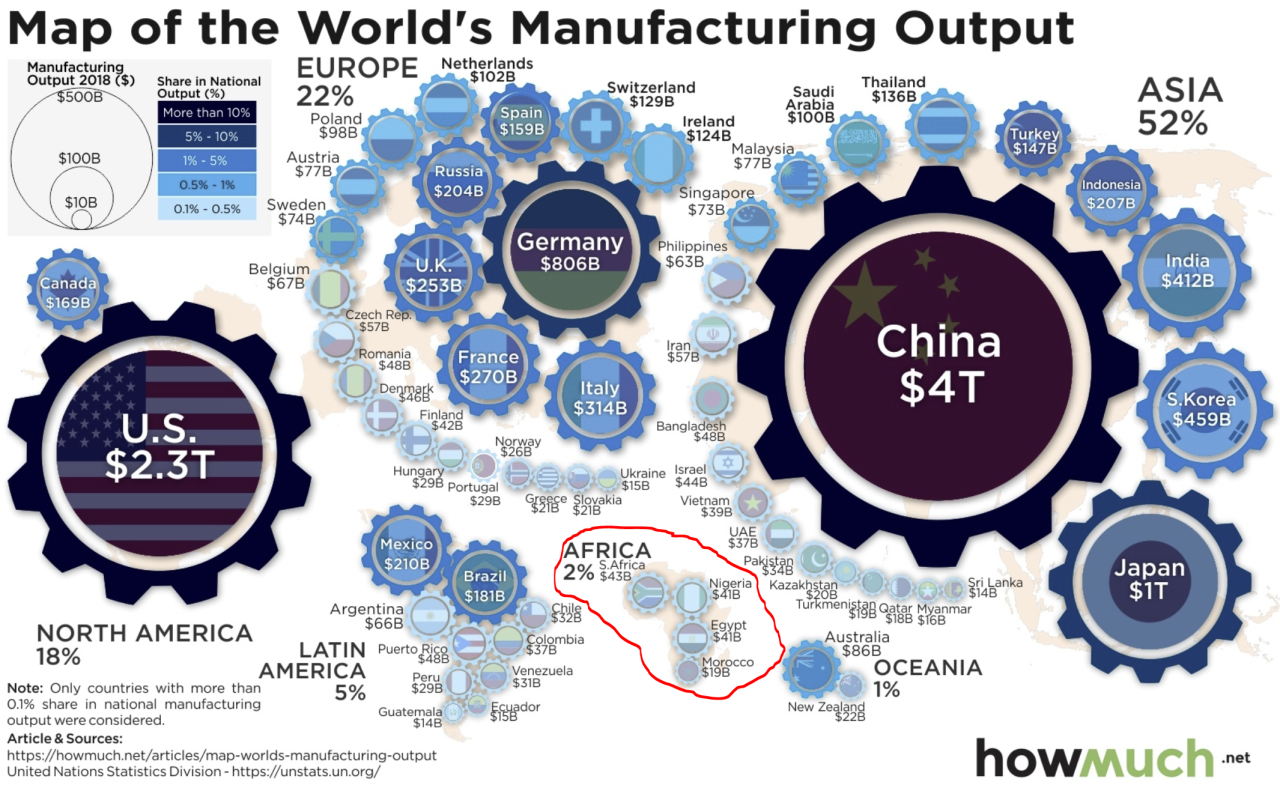
For centuries, the world was in a state of economic stasis. In other words, if you check the gross world product (aggregate of all national GDPs) over the last 2000 years, nothing was happening at scale. But things started changing. The data (the map above) shows the actual wealth of nations since that Adam Smith classic of the invisible hand and productivity. Until Africa begins to show up on this map, it cannot advance the welfare of its citizens.

More money in the national purse does not improve the lives of citizens. That is why crude oil money deceives. You receive $10 billion in your bank account with limited economic activity since the oil is picked raw and moved to another country to be refined. Sure, you can employ 20,000 people. With limited economic activity, your GDP is $20 billion. That GDP is a measure of your economic activity which gives us jobs and opportunities.

But someone who does not have oil, but gets $5 billion in the bank through its farming processes, outperforms. Yes, that farming involves many economic activities: cultivation, transportation, processing, etc. Because GDP measures economic activities, not money in the bank, that person can end up having a GDP of $40 billion since that agriculture enables many activities, providing ways to support lives.

In our modern history, nothing does that economic translation better than manufacturing. Unfortunately, Africa has no impact therein. That must change for Nigeria and Africa.

Comment on LinkedIn Feed

Comment: In all seriousness, our narrative ought to have transcended “How Europe Underdeveloped Africa” to how Africans are developing Africa. Rather regrettably, the narrative has remained constant in our mouths.

Until we graduate from economic over-dependency to self-reliance —not that the needed human and natural resources for such economic growth and development are lacking but the obvious inability, for too long, of the African leaders to activate the inertia —through transformational leadership, across-the-board. In that direction, the sleeping giant will be awakened to her position among the comity of nations.

My Response: We actually regressed from where Europe left us in the manufacturing space. So, instead of making progress, we are moving backwards.


Experience Quality Business Education at Tekedia Institute

0

Learners from 41 countries. 300 global faculty. 12 weeks covering all core elements of business. Solid testimonials. No matter your sector, your industry or discipline, Tekedia Mini-MBA will make you better. Just yesterday, I had to personally respond to META (yes, Facebook) on one of our alumni joining the company; Arinze Onyeasigbulem put that as urgent.

Tekedia Institute offers Tekedia Mini-MBA, an innovation management 12-week program, optimized for business execution and growth, with digital operational overlay. It runs 100% online. The theme is Innovation, Growth & Digital Execution – Techniques for Building Category-King Companies. All contents are self-paced, recorded and archived which means participants do not have to be at any scheduled time to consume contents. Besides, programs are designed for ALL sectors, from fintech to construction, healthcare to manufacturing, agriculture to real estate, etc.

We’re building a generation. Experience it, beginning Sept 12, 2022. Cost remains N90,000 or $170 depending on your payment method. Register here 

Tekedia Institute >> Africa’s temple for mastering the physics of modern business.

IATA’s Trapped Fund: More International Airlines to Suspend Flights to Nigeria

0

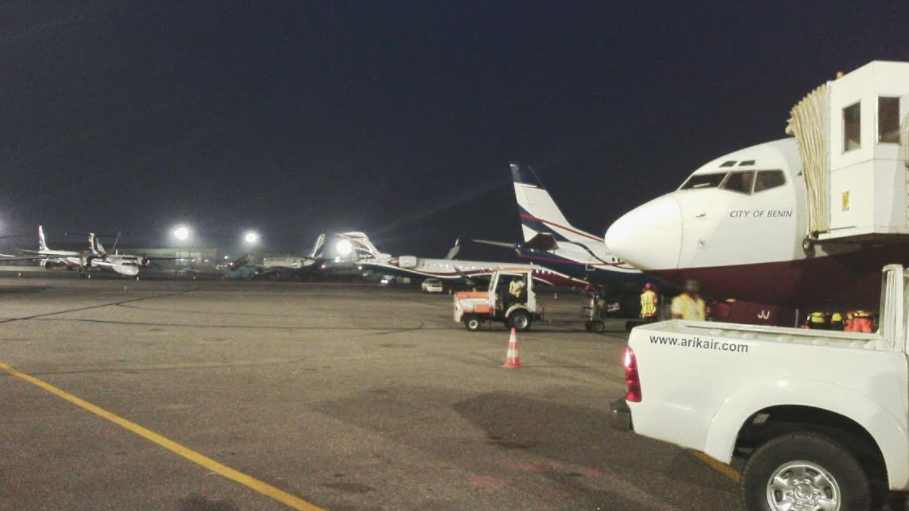
The repatriation faceoff between the Nigerian government and the International Air Transport Association (IATA) is escalating and may stifle the flow of international airlines into the country.

The President, Association of Foreign Airlines and Representatives in Nigeria, Kingsley Nwokeoma, said if the situation is not swiftly addressed, more international carriers would join Emirates Airlines, which earlier this week announced that it’s suspending flights to Nigeria effective September 1.

Nwokeoma made the postulation following the announcement by the British Airways on Thursday that it is going to hike the cost of its flight tickets.

“Good afternoon. Please be informed that information reaching us from BA indicates that the airline is changing to full fares F, J, W and Y any moment from now. Kindly let (us) issue any pending tickets to avoid fare increase,” a notice from the British Airways said.

IATA had decried the Nigerian government’s unwillingness to release now over $450 million earned revenue of foreign airlines. The aviation body said the situation will hurt the country.

“Airlines can’t be expected to fly if they can’t realize revenue from ticket sales. Loss of connectivity harms the economy, hurts investor confidence, impacts jobs and people’s lives. The Government of Nigeria needs to prioritize the release funds before more damage is done,” IATA said.

Punch quoted Nwokeoma as saying that if other countries behave like Nigeria, there will be no aviation industry. He added that the way it is going, Nigerians may end up depending on neighboring countries for international flight services.

“This is just the beginning. It is over $1 billion dollars that is being held and they (foreign airlines) cannot repatriate it. If other countries are like Nigeria, there will not be any industry because this money is used for maintenance. Even the money used to pay their staff in Nigeria is coming from other climes.

“Aviation industry is all about 100 per cent safety. If there is no money, safety will not be 100 per cent guaranteed. So, it is going to continue. Emirates has kick-started it and I’m sure that you are aware that British Airways has cut flights into Nigeria and that is how it is going to start.

“Just like Emirates did, they will first of all cut their flight into Nigeria and they will look at it holistically again and if it is not working out, then it’s not working out. This did not start today. It started over the years and the government is not doing anything.

“Look at it this way, when things were not this bad, what commitment did the government make? Is it now that things are gloomy? So, we hope that we don’t have to go to Benin Republic, Togo or Ghana before we can fly out or do our international travels,” he said.

Lamenting further, Nwokeoma said airline companies need the fund to stay in business.

“I keep asking this question that if other climes are behaving like Nigeria, will there be an aviation sector? The airplanes that come in are not our freight. They have to pay Boeing, they pay AirBus, they pay all these people, they have a payment scheme and where is the money coming from? So, it is an issue,” he said.

Emirates Airlines was the first among many that are involved in the $450 (now $464) million trapped fund to pull out of Nigeria. The United Arab Emirates (UAE)-based company’s share of the fund, which has been increasing by $10 million monthly, was originally $85 million.

While other airlines are yet to take similar steps, there is concern that Emirates’ decision will eventually get contagious and its impact will cripple Nigeria’s aviation industry that has been on life support for months now.

Nigeria’s inability to repatriate the trapped funds is as a result of its forex crisis. Dollar shortage has forced the Central Bank of Nigeria (CBN) to tighten its forex policies, limiting the outflow of foreign currencies to the barest minimum.

Nwokeoma said British Airways’ move to increase fares is to make up for dollars loss and it will result in expensive air tickets.

“It is basically to cover for the dollar loss, but some airlines are doing it already. So, that means air tickets will be more expensive.

“It will be more expensive because it will now be in relationship with the black market rate. So, the F, J, W, Y middle seats will be more expensive,” he said.

Nigeria’s Aviation Minister Hadi Sirika said it is not the first time Nigeria was withholding funds belonging to foreign airlines but there are efforts to see that the funds are released. However, the revolting steps being taken by foreign airlines shows that whatever the Nigerian government is doing to address the challenge is not working.

Chinese Parents To Use Digital Yuan To Pay For Their Children After School Lessons

0

Recall that the Chinese state-owned commercial bank, People’s Bank of China (PBOC) launched the e-CNY otherwise known as the digital yuan to enable the convenience of cash flow, Financial inclusion, and Financial stability in the country.

Recently, the Bank is set to launch a digital yuan-powered “smart contract solution”, that allows elementary school parents to pay for their children’s education using the e-CNY in a bid to improve primary education.

The bank has already partnered with Chengdu’s education and financial authorities that will enable parents to pay for their children’s pre and after-school clubs, sports lessons, and extra-curricular lessons using the digital yuan. Under the program, parents will pay a fixed deposit using digital yuan.

These funds are then put into a “smart contract” with the private contractors who run the clubs or offer the lessons. The contract is only activated when the child attends a club or lesson. If the child misses a session, maybe through illness, the contract is voided, and the deposit is returned to the parents’ e-CNY wallet.

Traditionally, local education and financial authority have had to act as intermediaries in such situations, monitoring attendance and taking payments from parents before passing funds on the private contract.

According to the Chinese state-owned bank (PBOC), it stated that using the digital yuan smart contracts would allow regulatory authorities to step away from the equation and allow parents to make payments directly to private contractors.

The bank is hopeful that the e-CNY smart contracts would be able to replace regulatory authorities between parents and private education entities. It also aims to improve transactions enabling liquidity via zero transaction fees embedded in the e-CNY design.

People’s Bank of China (PBOC), suggested that using smart technology would also enable the promotion of transparency in payments. Although smart contracts are traditionally used in the blockchain and crypto space, the Chinese bank argued that it can also make use of smart contracts in its e-CNY project.

No doubt the Chinese government’s inclusion of e-CNY in its educational industry, seeks to ensure that there is transparency in the payment of fees for children in Elementary School.

On the other hand, a few months ago in the country, there has been tremendous growth in the use of the digital currency. Consumers in China have performed 264 million transactions involving the e-CNY otherwise known as the digital yuan. An estimated 4.5 million merchants across China now accept the e-CNY as means of payment, as experts in the country note that the digital currency has helped to improve quality of life and also helped to stimulate consumption.

These experts also state that the e-CNY has demonstrated to be an invaluable tool in ensuring steady economic development through its functions such as smart contract utility.

The e-CNY also seeks to improve the convenience of capital flow, making China’s financial industry more accessible to the rest of the world, enhancing global competitiveness. The inclusion of the e-CNY smart contract for education, is said to be the latest move to drive the adoption of the currency.

The Reactions to WAEC Results Broken in Geopolitical Zones Explain Why Nigeria Is Fading

0

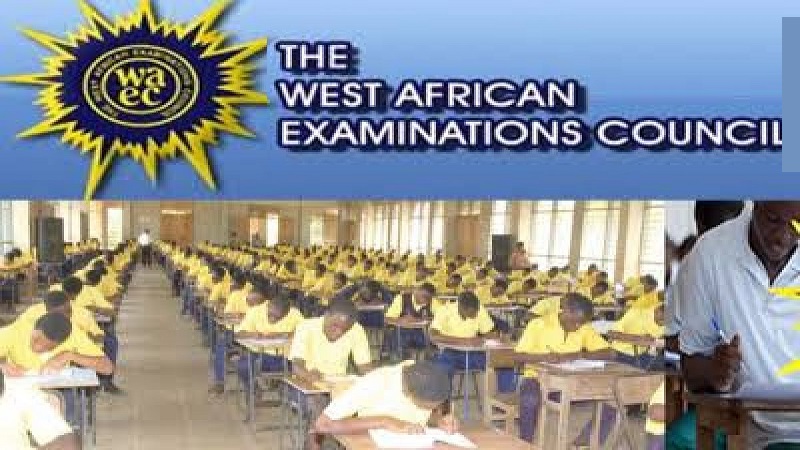
There is really no common core in Nigeria. And if the nation does not fix that, we have no future. WAEC/NBS published statistics on how public schools are performing by geopolitical zones in Nigeria. Instead of professionals being challenged by the data and working to see how to improve, most of the commenters summarized: those outperforming are cheating. I am truly stunned beyond words.

This mindset is the reason Nigeria has faded. So, if an Enugu boy does well, a Kano girl can say he cheated – and then relax. And tomorrow, a Yola girl does well in JAMB and Uyo boy says she cheated. This is typical, no more spirit of competition. How can we engineer healthy rivalry in students?

I was in a Board meeting and shared a sector comparison on how companies were doing. The chairman reminded thus: “those other companies cook their books, we do not. So, we are not worried that they do better”. Needless to say that because of that mindset, the business did not see any reason for improvement. It has a great excuse: the other guys were cheating and that was why they were winning!

I have written to a friend in NBS to see if they will share the breakdown by private schools or combined (everything lumped together). I can write clearly that in private schools, Southwest will outperform other geopolitical zones in Nigeria by a huge gap even though it came 5th in the public school category. Across all indicators, SW has pushed private education to the highest level in Nigeria. 

Osun State alone possibly has more private universities than all private universities in the Southeast combined! And those private universities have private primary and secondary schools. Parents with decent income send their kids to those schools, leaving the public schools dry. So, if you just focus on the public schools in secondary school, you will not get the full picture about Southwest.

That said, I will not expect Southsouth private schools to say that SW students cheat in private schools because I expect them to outperform. Until we have the spirit to think analytically and decide to inject new energies instead of excuses, Nigeria will continue to struggle.

Thirty years ago, Anambra State was one of the least performing states in secondary school education. Today, it ranks top 5 in Jamb and WAEC consistently, demonstrating that policies can change outcomes. But while Anambra State was moving to the top, Imo State which until recently recorded highest literacy rate in Nigeria cannot even make the top 10 in WAEC.

Nigeria can win if we work with facts and data even as 2023 comes!

 In Osun, you have 10 universities; 8 are private. Those schools admit kids of high income parents in their primary and secondary education. University-run basic schools are always above average because the professors’ kids attend them!