Many cryptocurrency coins have developed and upgraded to reach the promises they made at their launch, with some achieving their promises in a short time such as Stepn (GMT) and Algorand (ALGO). The new coin KLANGAVERSE (KLG) has offered a complete solution, to address problems faced by artists. Can KLANGAVERSE live up to its promises?
KLANGAVERSE (KLG)
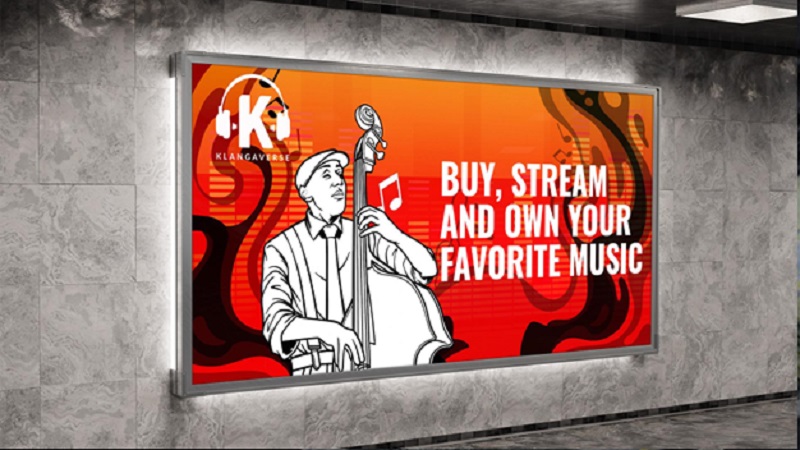
KLANGAVERSE (KLG) is a fully decentralized music streaming protocol built on the Binance Smart Chain with a public blockchain infrastructure and many other decentralized technologies. The platform leverages the technology of blockchain to ensure fair compensation for artists, providing a transparent and reliable payment system, and quality music content for the community. KLANGAVERSE aims to give the artists the power to produce and distribute their music in the form of NFTs and get paid by their fans directly into their wallets. The KLANGAVERSE (KLG) ecosystem is decentralized and has a goal to grow with targeted 300,000 community members, artists, and developers by year-end.
The KLANGAVERSE (KLG) ecosystem is powered by its crypto token called KLG which would be used for the payment and management of artists and fans. Hence, this allows artists to decide on how revenues raised from their minted songs will be split among the teams based on the different songs minted on the KLANGAVERSE ecosystem. The statistics of the minted songs in the form of NFT serve as the foundation for revenue calculations for each artist in the KLANGAVERSE ecosystem, in which the data is open to the public. Its immutability can be verified by comparing the transaction history.
KLANGAVERSE (KLG) also promises to introduce additional governance mechanisms such as the KLANGAVERSE DAO (Decentralized Autonomous Organization) used for voting on artists’ revenue sharing, new features, and a variety of other possibilities which will also be transparently stored in the KLANGAVERSE smart contract.
STEPN (GMT)
Stepn GMT) is an NFT-based fitness app that was launched early this year but has amassed over 3 million active monthly users. This is quite impressive for an app that requires you to buy an NFT just to use it. Many have described the app as “Strava meets Pokémon Go.” The platform became extremely popular in April on Crypto Twitter and among Web3 circles.
Stepn (GMT) is supported by the Green Satoshi token (GST), which you earn fractions of for walking, jogging, or running; the amount of GST earned depends on the level of the NFT sneaker you bought. Stepn signifies a proof case for NFTs with real utility. Many crypto enthusiasts in Web3 believe this is where NFTs are headed, beyond a pure digital flex case and into the world of actual use cases. Stepn’s GST (Green Satoshi) token is currently trading at $1.0 which is a decent amount to invest.
Algorand (ALGO)
Algorand (ALGO) is another powerful cryptocurrency that is currently on the rise. It has refused to be affected by the current dip in the world of crypto, it has instead bypassed the dip making a name for itself. ALGO has increased by a decent 10% and emerged number 30 in CoinMarketCap this week.
Algorand (ALGO) has achieved the feat of becoming the official blockchain of one of the world’s most influential, and largest sports organisations by partnering with FIFA for the upcoming world cup. This has not only been a welcome improvement on Algorand (ALGO) but has had a massive impact on its popularity and success. This partnership will surely secure the coin’s global reputation for the next couple of years.
Algorand’s (ALGO) main selling point is its commitment to sustainability in this cryptocurrency world that’s bothered with issues of sustainability, which is believed to become more crucial in coming years. Algorand is already setting itself up for future success as it pledges to be the ‘greenest blockchain with zero carbon footprint.
So if you are looking for a great new crypto to buy, try KLANGAVERSE (KLG) with its great features which are sure to make it very popular and it could in time rival giants Algorand (ALGO) and Stepn (GMT).
If you don’t already have cryptocurrency this crypto winter 2022 you might want to change your mind cause not only is blockchain technology growing by the day but cryptos too are selling at extremely low prices. Terra Luna tokens, for example, are selling for roughly 0.0001201 dollars.
This is possibly a time to buy the dip for many tokens but also a period to grow your portfolio with high potential tokens. Consider Petrousus (PSUS), Solana (SOL) and Cardano (ADA) for a unique cryptocurrency wallet.
How Petrousus (PSUS) Will Change The Market Significantly
Petrousus (PSUS) is built on the Binance Smart Chain (BSC) which in turn is the world’s largest cryptocurrency broker in terms of the trading volume.
The BSC backbone gives Petrousus scalability and high throughput better than most blockchains. Smart contracts can easily be made through the BSC as well as decentralised applications (dApps).
The PSUS token is the powerhouse behind the ecosystem and comes with its features. The platform is an ecosystem that practises decentralisation, and scalability and is transparent.
The goal of this blockchain is to provide value to the user regardless of their net worth. Petrousus is slick in how it is made up of only two components and it has a long-term plan devised for the platform.
PSUS tokens burning happens the following way as the buyer’s transfer fee will be designated to a specific wallet. Then the token units within the wallet will be taken out of circulation consequently decreasing the token’s availability within the marketplace as time goes by.
More so, the Petrousus (PSUS) ecosystem employs a manual burning method meaning burning occurs when the community is in a decent state. The management team chooses the time to burn and allocate tokens and the decisions are communicated to the native token holders openly and fairly.
PSUS is in presale now and has the potential to boost your portfolio, consider heading to their website now to see if this token is for you.
Solana (SOL) Is Predicted To Continue In The Top 10
Solana (SOL) is a blockchain that uses smart contracts in its ecosystem, it also allows for the creation of cryptocurrencies just like the Ethereum (ETH) blockchain.
What differentiates Solana (SOL) from Ethereum (ETH) is the speed at which it carries out transactions; we’re currently looking at about 50,000 transactions per second.
The Solana (SOL) blockchain is decentralised, secured and offers censorship resistance. It employs the Rust programming language to protect its user’s transactions and the proof of history (PoH) mechanism to carry out scalable and quick executions.
Consider Adding Cardano (ADA) To Your Wallet
Cardano (ADA) was founded in 2015 by an Ethereum (ETH) co-founder and is a blockchain made to process transactions through the ADA which is the cryptocurrency native to its ecosystem.
Cardano (ADA) can carry out different kinds of transactions and seeks to allow interchangeability between various blockchains that are traditionally incompatible.
The main features of Cardano are traceability and identity control applications. Traceability is an application that streamlines and simplifies the processes needed to collect data from different sources. The identity management application is for tracking and auditing product creation processes from the stage of inception to finished goods.
Although SOL and ADA remain extremely profitable tokens, you might want to consider buying a token in presale such as PSUS before it enters the market.
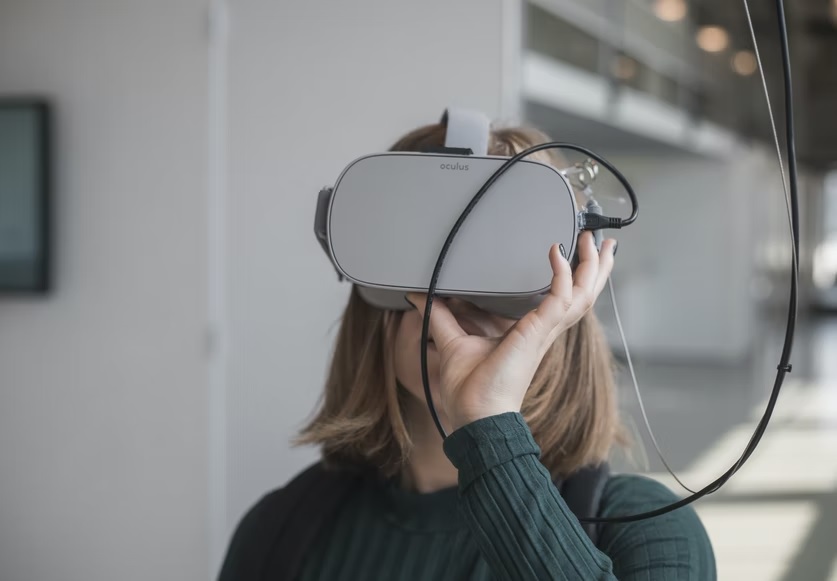
VR (Virtual Reality) technology is already starting to impact our lives in major ways. The military, health care industry, and government all use virtual reality to simulate things, mainly for training purposes. Since all of these departments and institutions have a significant impact on our lives, it’s fair then to say that, by extension, virtual reality does too.
In the coming years, analysts predict that virtual reality will start to have a more meaningful impact on our lives on a more personal basis, however. This post will tell you why.
Social Media
If you have been following what’s been going on in the VR world, then you will already be familiar with the Metaverse, a platform that’s run by Facebook. Many believe that the Metaverse platform is the future of social media. The Metaverse is an interactive virtual world, accessed using virtual reality technology. According to information from this website, another platform that’s similar to Facebook’s Metaverse is Decentraland. Both of these platforms are very popular with users of virtual reality technology because it gives them places to network with other people and makes new friends. It’s clear to see that interactive virtual spaces are the future of social media. If you are a social media user, then at some point in your life, it’s likely that you will have to use a platform like Metaverse or Decentraland in order to communicate with your friends on the internet.
Education
Educational institutions are beginning to use virtual reality technology to streamline teaching and the classroom experience. If you’re reading this, then you have probably left school or college. However, just because you are no longer a student, that doesn’t mean that this won’t impact your life. If you have children or plan on having children, then you will eventually have to use this kind of technology to help your child to understand their classes better. You may even have to invest in this kind of equipment so that your child can learn from home in the event of another pandemic, which scientists say is very likely.
Retail
During the COVID-19 pandemic’s first lockdown, various stores and boutiques, especially high-end ones, began offering ‘virtual shopping’ experiences. You didn’t need a virtual reality headset to access these online environments, although they did help. Having one made it easier for people to determine whether or not they liked what they were looking at. In the future, it’s expected that virtual shopping is going to become a lot more common. After all, virtual shopping is a lot easier and simpler than driving to stores to buy things, especially clothes. Virtual shopping allows people to handle and examine clothing items they want to buy without physically being there.
Gambling
The online gambling industry is starting to utilize virtual reality technology now, too. You can visit digital casinos, using your virtual reality headset. While this kind of thing has existed for a very long time, with a lot of people visiting Bitcoin casinos in the virtual reality space, it’s starting to filter down and become a lot more common among ordinary people. Before, virtual reality gambling was something that only tech experts and investors made use of. Now it’s something that anybody can use, especially since virtual reality headsets are a lot cheaper.
Dating
Since the internet was first made public, people have been using online dating sites. Because people from all over the world have access to the internet, it is possible for people to meet each other, despite living in different countries and even continents. International long-distance dating is a lot more common today because communication has been made easier. Virtual reality dating is becoming more common, because it allows people who live in different countries to still have real dates, without being in each other’s presence physically. This allows people to determine whether or not they like each other, before making commitments.
Real Estate
Finally, if you have tried to buy a house in the last year and a half, you may be familiar with virtual viewings. Many realtors insist upon virtual viewings first, so that they can be sure that the people that are viewing properties are confident that they like what they are viewing first. This is so that they do not waste the realtor’s time. The real estate industry has benefitted tremendously from the use of virtual reality. Virtual reality technology has made the lives of realtors much easier.
Virtual reality technology has had a great impact on our lives already. In the future, it’s clear that it will be even more impactful. Virtual reality will, in the next half-century, become an important part of everybody’s lives. Virtual reality headsets are also becoming a lot more affordable, making them more accessible to people on budgets.
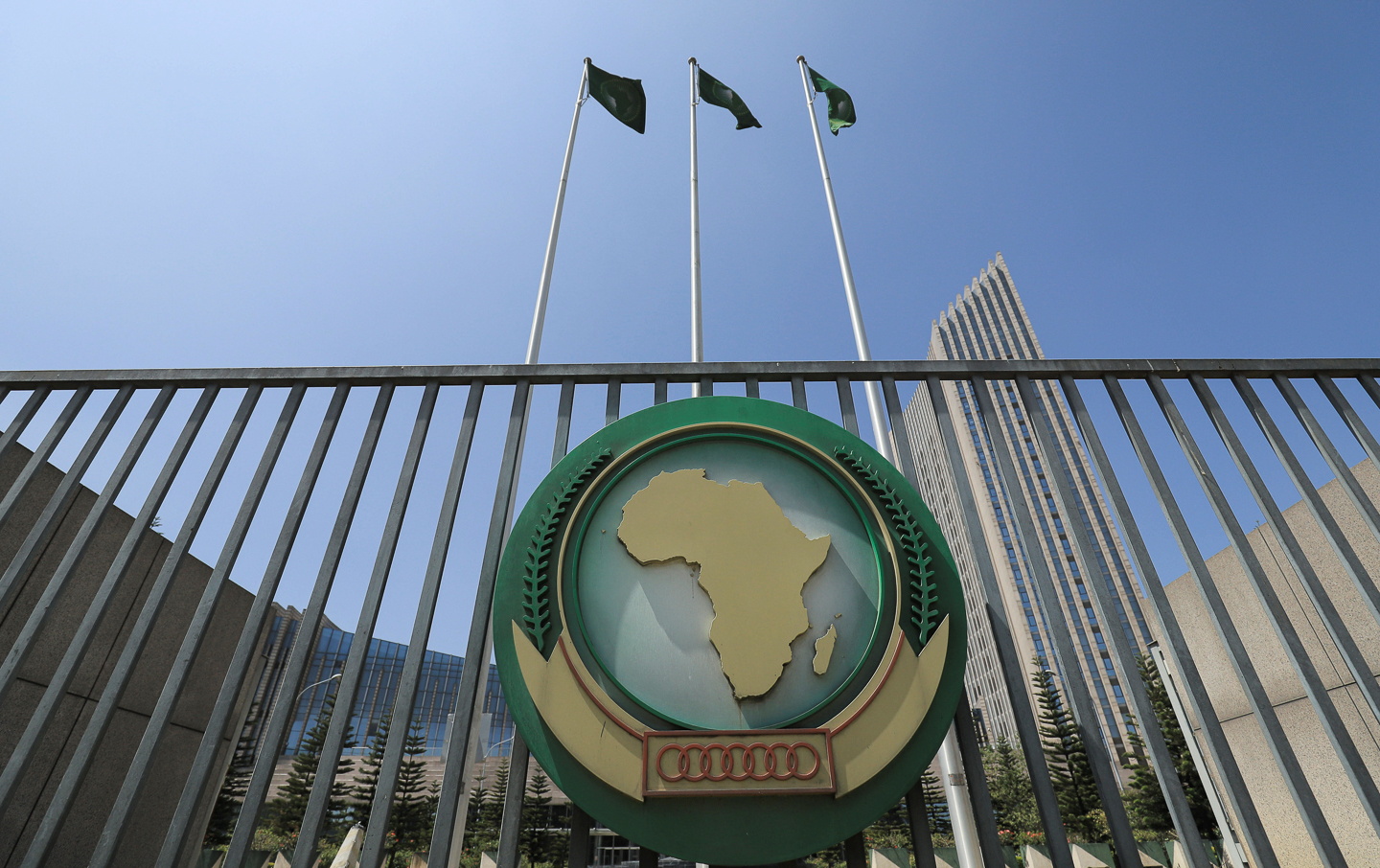
The African Union logo is seen outside the AU headquarters building in Addis Ababa, Ethiopia, November 8, 2021. REUTERS/Tiksa Negeri
Nigeria has just 10 years to get many things right. We have one thing that could cause massive paralysis in the future: urbanization without industrialization. If you check more than 2,000 years of modern history, one thing is evident – rural urban migration typically happens with the urban areas already having decent amenities to support the population growth. In other words, as most global modern cities were urbanizing, critical infrastructures were available to support the translation.
But in some African cities like Lagos and PHC, we are seeing something different: urbanization is happening even though the cities are not ready. The implication is that if the expected 50% of Africans move to the cities, in decades, and the cities are unable to support them, many bad things will happen.
One of those bad things is that the cities cannot just cope, causing havoc. When the rate to provide amenities cannot cope with demand, the equilibrium points shift. Add climate change to it, it becomes scary. Africa must plan for its premature urbanization which is coming before the urban areas are ready. In this Harvard publication, I explained why Africa must build differently.
I had been thinking about another post I needed to make on the topic of Web 3 domains, how I had been serially examining that sector and the sources of Web 3 domains, and how I had consistently been finding ‘Unstoppable Domains’ as the leading vendor…
Following some months, UD got a Series A injection from Pantera Capital, which put the total value at close to a billion USD.
When I started writing about it… everyone was like ‘What’s a Web 3 domain?’… that was around November last year, and roll on 9 months we have a $1 billion Category King.
But as always, I start with a simple idea that should take ten minutes of my time to write, and I discover other things relevant which add on… I end with Tekedia piece resembling a Masters Thesis. 20+ minutes reads are too long for some people.
Such it was when I discovered Victor Akujuo‘s post about ‘2022 being a brutal year for the crypto market’. So I am resisting the temptation to make it a section in the imminent ‘Unstoppable Domains’ Pantera Capital Series A piece, and, instead, just share my ideas topical to the great piece by Victor separately,
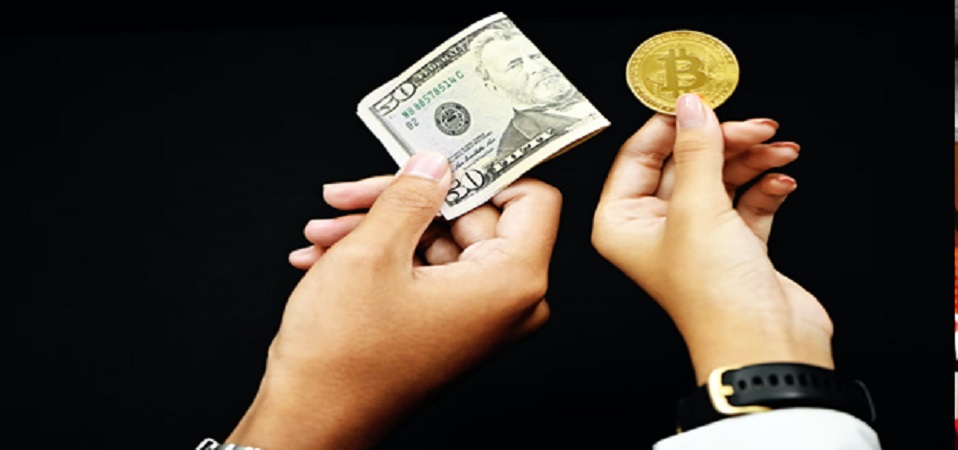
Cryptocurrency was birthed to give an alternative to FIAT as a ‘value instrument’ with which to trade. To this day, many in the US celebrate May 22 as ‘Bitcoin Pizza Day’, to commemorate in May 22 2010, Laszlo Hanyecz from Florida spent 10,000 BTC on two pizzas. It was never intended as an investment vehicle.
Digital Art creations were birthed to be a collectible and attract a collectors following. Collectible items are of subjective value, as their aesthetics is in the eye of the collector, and whoever else chooses to agree with them. People have built collections of all sorts of things, and some of us share this urge with some far less intelligent forms of life. The Satin Bowerbird ‘makes structures out of sticks…furnish it with shiny objects, like gumwrappers, plastic straws ,pens…’ (learningbirdwatching.com), but there is no evidence that this collecting behaviour is helpful to wildlife’s survival, and sometimes can be a hindrance. As a species, we have kept collections of postage stamps, coins, beer mats, bottle tops, and celebrity memorabilia. One of the strangest I have found online is a ‘Navel Fluff Collection’ by one Graham Barker (25 Strangest Collections on the Web).
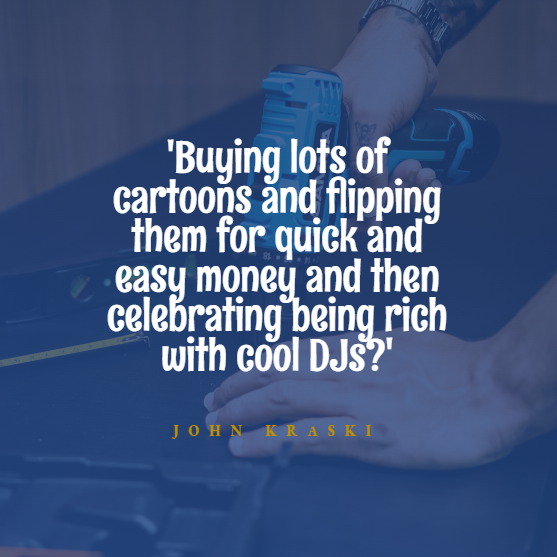
John Kraski (humorous context) on LinkedIn
The value of collectibles vary with the times. For example, as the notoriety of a celebrity fades, so will memorabilia associated with him or her. Again, the primary force behind collecting isn’t as a good investment to profit from in the future.
Web 3, aka decentralized or blockchain domains, were intended as a universal identity in Web 3, to develop a Web 3 website, anchor a Web 3 ecosystem, and be a proxy for long alphanumeric blockchain IDs hard to remember and easy to make a transcription mistake. (Similar to how Web 2 domains replace an IP identity in Web 2 through DNS)
Now, even though most people can’t even cite a Web 3 address where they visited or interacted with virtual content, we already have people ‘domain flipping’ Web 3 domains (buying them up through either Web3 domain vendors or the blockchain system, and offering them for sale at an increased cost). Web 1/2 websites and the domain names that represent them (through DNS), were already very much a thing when domain flipping started in the legacy domain market.
However if anybody is hell bent in getting into domain flipping, I have included an interesting article on common mistakes. It has been written initially for Web1/2 domains but the principles apply to Web 3 as well. Web 1/2 started around 1995, and with Web 3 fairly new, catchy short domains will still be much easier to find.
Would advise strongly against ‘domain squatting’ (Buying up a domain related to a known company and then trying to sell to them (blackmail them into taking it at an an inflated price), or cyber squatting, buying a domain, or a slightly different domain (typo squatting) and carrying on dishonest activities pretending to be the genuine company online. The World Intellectual Property Organization made this illegal in 1999, though interpretation and implementation may differ depending on country.
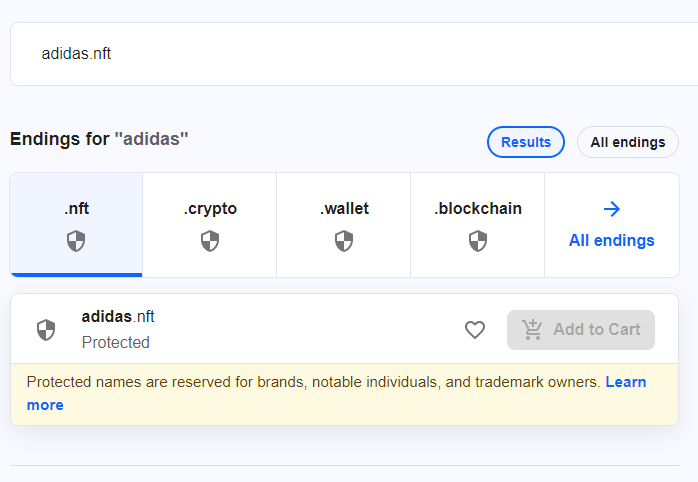
Big corporation interest in Web 3 hasn’t heated up yet, and as well can see, Adidas still has several available Web 3 domain names unsecured, although the vendor in this case, Unstoppable Domains, has had the good sense to restrict them and tag them as ‘protected’, to avoid liability should they sell it to a customer.
The Web 3 domains are all available, but Adidas isn’t biting.
Unstoppable Domains are the current market leader in Web 3 domains. The second biggest player is Handshake Domains, who operate through distributors of which Namecheap seems to have the strongest visibility. Unlike Web1/2, regulated by IANA/ICANN, anybody can come along at any time, start their own blockchain, (or partner with one) and create their own Web 3 domain service offering new TLDs (Third Level Domains). This has the potential to deflate the Web 3 domain reselling market in the same way as the explosion in AI generated artwork is in danger of impacting virtual art collectibles.
SUMMARY:
Look at what you want to do in the BoT (Blockchain of Things) space. Try to spend on only what can deliver you a function.
I buy MATIC, the native crypto on Polygon chain, because I have functional things going on with that chain, and if I have to get smart contracts, or dApps or some other services, I will have to pay for them in MATIC. I don’t hold much, but equally, as it is a chain that more and more things are being built on, and my UD domain is there… activity is ramping up, so its value isn’t going to crash. DeSo is worth looking at as well. (Credit Albert Baldwin)
You can also buy cryptocurrency just to pay for other things, if using FIAT is less practical for you for some reason. Best to not buy more than you need to transact.
Stay clear of Collectibles unless you can appreciate them aesthetically, and you can afford the money.
If you have reached a level of financial independence that allows you to be indulgent, then by all means build your own collection of Virtual Collectibles if they make you ‘feel good’. But bear in mind this requires a mentality that dismisses the investment cost as ‘past tense’, and moving forward, views them from the subjective value you place on them because of the ‘feelgood factor’ and not because they will make money if you sell them. Don’t spend your children’s future school fees on them, thinking there will be money for them when they reach the age.
Avoid accumulating collections of Web 3 domains.
If you have been around for a while in related business, and you are familiar as a customer with the processes of using domain registration and hosting services, then you will be familiar with this. You think of what seems to be a great domain name, and you register it. This happens a few times a year, renewal costs mount up. You never seem to be able to get purpose clarified, and then content consistent with purpose, at the same pace as the accumulation of domain names.
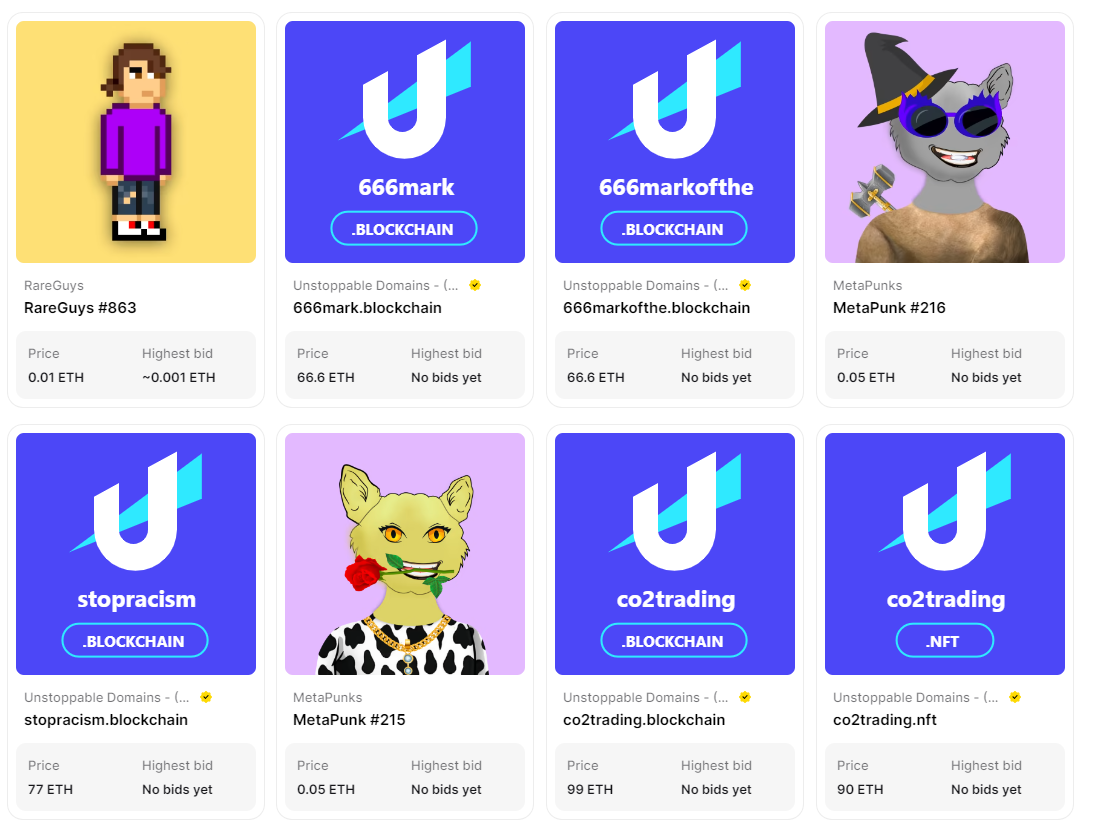
Illustration shows Web 3 (aka blockchain) domains for sale on an NFT marketplace. They are outnumbering digital art. This was a few days after the UD-Pantera Series A
We are really in BoT and some way off Web 3 becoming a working reality. Accumulating ‘collections’ of Web 3 domain names is probably not a good idea. There is no point in having a lot of blockchain assets sitting down doing nothing. Again, it depends on level of Financial Independence. If someone can afford to be indulgent, there are worse things to spend money on than Web 3 domains. I would suggest 1-3 domains. One for business. One for personal identity, a third for some stand alone activity that is best kept separate from 1 and 2. But any number smaller than 3 works!
The bottom line is to pick the tool for the job, not the job for the tool!