DD
MM
YYYY

PAGES

DD
MM
YYYY

spot_img

PAGES

Home Blog Page 4974

How To Set Up a Licensed International Money Transfer Service Business (IMTO) In Nigeria

3

The one thing that Fintech has made possible to the point of looking almost casual is the astonishingly speedy movement of money across the globe. International remittances and transfers have come a long way from the era of money transfers that usually took up to a week and a lot of frustrating Due diligence checks. 

International Money Transfer services (along with International Mobile Money Remittance services) have proved to be a lifesaver for Nigeria in general and the Nigerian Fintech ecosystem in particular, with some reports confidently placing estimated Foreign exchange remittances to Nigeria at $25 Billion a year!  

However, the Regulatory Framework governing International Money Transfer services is still as thorough as ever, which is why this article will be dealing with the following topics specifically:- 

– The Regulatory Framework governing International Money Transfer services in Nigeria. 

– The licensing requirements for International Money Transfer service operators (IMTOs) in Nigeria. 

– The full extent of permissible and non-permissible activities for International Money Transfer service companies in Nigeria. 

What is the Regulatory Framework governing International Money Transfer services in Nigeria? 

International Money Transfer services are regulated by the Central Bank of Nigeria (CBN) through the Banks and Other Financial Institutions Act (BOFIA) and specifically the CBN Guidelines For The Operation of International Money Transfer Services in Nigeria 2014(or ‘The IMTO Guidelines’). 

What are the permissible and non-permissible activities stated for International Money Transfer Service companies under the IMTO Guidelines? 

Permissible Activities 

IMTOs are permitted to :- 

– Accept monies for the purpose of transmitting them to person’s resident in Nigeria or another country. 

– Render cross-border personal money transfer services such as monetary transfers towards family maintenance & monetary transfers services for foreign tourists visiting Nigeria. 

– Render cross-border money transfers between individuals only.  

Non-Permissible Activities 

IMTOs are not permitted to:-  

– Engage in monetary transfers between individuals and corporate entities(based on Anti-MoneyLaundering (AML/CFT) requirements). 

– Engage in Moneylending. 

– Act as an authorized dealer in precious metals. 

– Engage in taking monetary deposits as a service. 

– Engage in maintaining current accounts for its customers. 

– Establish letters of credit. 

– Act as a funds custodian for customers. 

– Engage in Institutional transfers. 

– Buy Foreign exchange from the domestic Foreign exchange market for settlement. 

What are the licensing requirements for IMTOs 

To secure an IMTO license you need to do the following :- 

– submit an application prepared by your lawyer to the office of the Director, Trade & Exchange Department of the Central Bank of Nigeria with the following attachments- 

a). a resolution of your company’s board of directors deciding to offer International Money Transfer services; 

b). a copy of your company’s certificate of incorporation and MEMART (Memorandum &Articles of Association); 

c). a documented copy of your company’s shareholding structure; 

d). statutory Corporate Affairs Commission (CAC) forms on allotment of shares & the particulars of your company’s directors; 

e). profiles of the board of directors and management of your company including their resumes, functional email addresses & numbers along with the company ownership, governance and management structure; 

f). your company organogram; 

g). your company’s business plan; 

h). the IT policy of your company; 

i). the Enterprise risk management framework of your company; 

j). contingency & disaster recovery plan; 

k). credit reports from a licensed credit bureau for the shareholders & key officers of the IMTO; 

l). a 3 years Tax clearance certificate; 

m). your project deployment plan; 

n). a non-refundable application fee of 500Thousand Naira payable to the Central Bank of Nigeria; 

o). evidence of meeting the minimum paid up capital requirement of 2 Billion Naira for Nigerian companies and 50 Million Naira for Foreign companies backed by a guarantee from the parent company based overseas; 

p). evidence of presence in at least 7 countries; 

q). a letter of no objection from the Central Bank of Nigeria where an IMTO license applicant wants to engage in partnership with a foreign technical partner in starting up a worldwide or regional Money Transfer service, in addition to which there must be proof of the Foreign technical partner having a minimum net worth of $1 million as well as being a licensed & registered entity in its home country and having evidence of being firmly experienced in the business of money transfer services. 

Are there legitimate ways of carrying out International Money Value transfer services in Nigeria without the use of an IMTO license for smaller Fintech companies unable to afford the licensing costs? 

Yes, there are. You’ll need to consult your lawyer to find out the options available to you. 

Conclusion :- It is hoped that a basic understanding of how IMTOs work has been achieved with this write-up. This article is however not exhaustive, so you’ll need to further guidance from trained professionals if you’re thinking of venturing into this business going forward.

Tencent Shuts Down Businesses, Cuts 5% Workforce As China’s Economy Tanks

1

China’s economy has struggled to overcome shocks emanating from a series of events including covid-19 and the crackdown on the internet industry.

The situation has resulted in huge loss of revenue to companies. As the economy takes more hits, companies are beginning to downsize to stay afloat.

Tech giant Tencent has cut more than 5,000 staff and shut down parts of its business as it grapples with its first sales fall in its history, the BBC reports.

Revenue at the firm slipped 3% year-on-year in the April-June period, hit by declines in ad spending and at its online gaming business.

The WeChat owner, which has reported double digit growth almost every quarter since it went public in 2004, is feeling the effects of a regulatory clampdown on gaming, as well as wider economic downturn.

China’s central bank on Monday cut interest rates to try to spur activity.

The country, which continues to respond to Covid outbreaks with mass shutdowns, last month reported its economy had contracted sharply in the three months to July and signaled it may miss its official 5.5% growth target.

In an appearance on Tuesday, Chinese Premier Li Keqiang said China was facing “the most difficult point of economic stabilization” and urged provincial leaders to boost their support for the economy.

“We must consolidate the foundation for economic recovery and development with a sense of urgency that cannot wait,” he said.

Other companies have also taken a hit, notably e-commerce giant Alibaba, which said it had seen no sales growth in its most recent update for investors, a first for the company.

Tencent has enjoyed a long run of rapid growth.

Now the country’s most valuable public company, it is known for its WeChat messaging service and roster of online games.

About half of its revenue comes from online advertising, financial and business services, where the effects of the wider downturn were evident, with revenue gains from cloud and other offerings slowing sharply, while ad sales plunged 18%.

The firm has faced challenges since China last year tightened restrictions on children’s game playing and halted approvals of new games. While those approvals have resumed, Tencent has yet to see one of its games given a green light, forcing it to rely on older titles.

Gaming revenue was down 1% in China and in its international markets, “due to industry-wide normalisation in user spending on mobile games post-COVID”, the company said in a presentation.

The firm said it had shut down online education, e-commerce and game live streaming units. The layoffs in the quarter affected about 5% of its total workforce.

“During the second quarter, we actively exited noncore businesses, tightened our marketing spending, and trimmed operating expenses,” Tencent boss Ma Huateng, known as Pony Ma, said.

He added that the firm was focused on “enhancing the efficiency” of its businesses and well positioned once the Chinese economy starts to recover.

Overall revenue was 134bn yuan ($19.8 billion) compared to the year before, while profits plunged by 56 percent to 18.6bn yuan.

But Tencent promised a return to growth even if the economy stayed weak.

The tech giant’s President Martin Lau noted on a post-earnings call that China had issued no new regulation this year that was materially detrimental to the industry. He added that he expects Wechat’s video accounts – a short-video rival to ByteDance’s Tiktok – to boost advertisement sales and become a big revenue driver.

“We believe with those three sets of initiatives taken together, we can return the business to year on year earnings growth, even if the macro environment remains as it is today,” said Tencent’s Chief Strategy Officer James Mitchell.

Serena Williams Bills Her Venture Capital Firm as an Avenue to Extend Her Legacies After Retirement

0

Earlier, we reported here that last week’s Tuesday, Serena Williams took millions of her fans down the emotional path after her sudden announcement of her retirement from professional tennis at age 41 years. In her personal essay published in Vogue, Serena Williams reveals she’s evolving away from tennis to embrace other things that are dear to her.

In the address, the soon to be ex-tenniser notes that no doubt, a career in tennis has given her so much fortune and recognition that she could ever have wished for, but she also wants an equally successful family life, and she thinks it’s about time she made herself available for her loved ones especially her 4-year-old daughter, Alexis Olympia, whom she said craves her attention now more than ever.

Other than the family, the Tennis Amazon noted that another important endeavour that will keep her busy in post-retirement is her long-term interest in investment financing. Not a few people may be oblivious of William’s knack for investing in innovative ideas and growing businesses. However, “the 23 times Grand Slam champion has been moonlighting as a venture capitalist for the past several years” said Lakshmi Varanasi in an Insider article.

Serena ventures, a venture capital firm Serena Williams co-own with Alison Rapaport Stillman has angel invested in over 60 companies across different sectors including financial tech companies like Propel, Esusu and Cointracker; edtech unicorns such Masterclass; and Consumer product start-ups like Billie and Daily Harvest etc.

The following facts about Serena ventures are highlighted by Insider on its website:

  • Venture has 20 startups and over 60 Companies covered in diverse value chains
  • 53 percent of the firm’s current portfolio companies are founded by women
  • Around 70 percent of the firm’s investment are founded from historically underrepresented backgrounds including 47 percent of investments that have black founders and 12 percent that have Latino founders.

In January, the firm participated in a $7million Series A round raised by Chatdesk, customer support messaging platform, founded by African American entrepreneurs, Andrew Olaleye and Ancton Okonkwo. In March, the ventures served as the lead investor in a $2.1million seed round raised by Calico, an e-commerce enabler company founded by Kathleen Chan. Also in March the ventures reported on its website that it raised an inaugural fund of $111million from banks and high networth individuals and families to be invested in founders with diverse problems to solve.

Williams recalled in her essay that she developed her interest in VC investment after she got inspired by Caryn Sendman-Becker, CEO of Clear, a security company. She had attended a conference organized by JP Morgan Chase and Caryn happened to be one of the speakers at the event.

While speaking, Caryn mentioned that less than 2 percent of all venture capital money was invested in women and that was enough to jolt Williams up to do something about the existing gap. ” I kind of understood then and there that someone like me needed to start writing the big cheques” Williams said.

Stillman was reported to have said to Insider via email, “an integral part of Serena ventures’ mission is to back founders who have incredible potentials that might be overlooked by other investors and connect them with the core ingredients of opportunity; capital mentorship and supports”.

Crypto Market Predictions: Can FreeWoly Be As Profitable As Decentraland?

0

The first successful blockchain implementation took place in 2009, and cryptocurrencies have been available to the public for over ten years. As a result, there has been a surge of non-fungible tokens (NFTs) during the past year. NFTs are different digital assets that cannot be exchanged for another unit of the same asset.

We are seeing projects that give greater usefulness to their investors as the current wave of meme currencies circulates across the market. One of these new projects is Freewoly (FWOLY). This article will give an in-depth perspective of the new token while comparing it to the successful crypto market project Decentraland (MANA).

What Is FreeWoly (FWOLY)?

FreeWoly (FWOLY) is an exciting new cryptocurrency project with a highly entertaining Augmented Reality (AR) play-to-earn (P2E) game concept. The game is fun, interactive, and rewarding, with plenty of enjoyment and financial benefits from the play-to-earn model. In addition, the FWOLY coin will back the FreeWoly ecosystem.

The game’s principal character is Woly, a funky little sheep who loves exploring and being calm. The sheep live in a world where cyber-animals look after the affairs of the farm rather than humans. These animals have designated functions and must be charged up from time to time to work perfectly.

Being the main character, Woly has a pretty exciting job of acquiring materials and equipment for the smooth running of the farm. In addition, he has access to every part of the world outside the farm, unlike the other cyber-animals on the farm. To do his job, Woly must overcome certain obstacles to keep the farm running.

Now, that’s where you come in. Your job will help Woly navigate the obstacles and carry out his duties effectively. The more the farm grows, the better you get at the game and the more FWOLY coins you earn. The FWOLY token can be exchanged for another cryptocurrency.

Compared to Decentraland (MANA), FreeWoly aims to build a more engaging and interactive environment that would provide superior benefits to the community.

How Does FreeWoly (FWOLY) Work?

Augmented Reality technology gives the FreeWoly (FWOLY) game an entertaining and thrilling component. Augmented reality offers a dynamic experience that combines the features of the natural world with digitally created pictures, sounds, or haptic input. Augmented reality seamlessly integrates components of the natural world with those in a virtual one to give users or players an interactive, semi-immersive experience.

FreeWoly (FWOLY) seeks to become a highly captivating and thrilling game. The goal of FreeWoly is to provide players with the best of both worlds through the interaction of Farmville and the challenging strategic elements of Pokémon Go. With the potential to develop a loyal fan base and community.

When a user is outside their home area, FreeWoly will employ technology similar to that used in Pokémon Go to monitor their whereabouts and overlay a fun, interactive world onto Google Maps.

The stitch-to-farm mode allows the user to build a virtual farmhouse that is overlaid onto real-world photographs taken with the device camera when they are in their home or another selected area. Additionally, the user may gather things to bolster the farm’s infrastructure. The player can also collect items to improve the farm’s infrastructure, such as wood, fencing, farm machinery, etc.

FreeWoly Tokenomics and Governance System

FWOLY token is a hybrid model token supported by tokenomics and an NFT-based ecosystem. Farmland and animals will be traded using FWOLY within the FreeWoly ecosystem and may be used as a stand-alone coin outside the ecosystem. The token’s listing price will begin at $0.05.

Like Decentraland (MANA), the FreeWoly platform takes on the Decentralised Autonomous Organisation (DAO) architecture for its governance. The platforms’ communities are in charge of the future development of these Metaverse crypto gaming projects.

For more information about FreeWoly (FWOLY), visit the links below:

Presale: https://farm.freewoly.io

Website: http://freewoly.io/

Telegram: https://t.me/FreeWolyOfficial

The Absence of Vultures And Presence of Black Swan

1

In the Igbo Nation, elders will say “a chuo aja ma ahughi udele, mara na ihe mere na ebe ndi mmuo [if you make an animal sacrifice to the gods, and no vulture shows up, you can conclude that something happened in the land of the spirits]. Indeed, for you to kill an animal and present it at the altar to the gods, and no vulture shows up, afterwards, to eat the animal, you have a black swan – an uncommon occurrence.

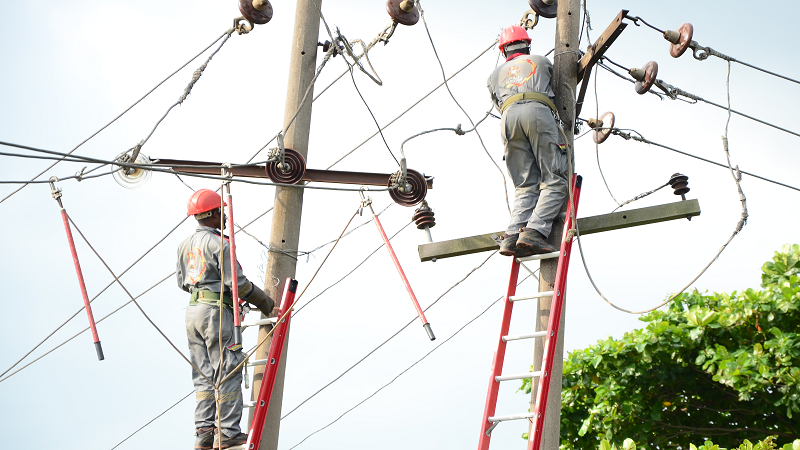
Late Wednesday, BBC Radio reported on the strike of electricity workers in Nigeria. That was the first time I knew that electricity sector workers were going to strike or already striking. I mean, how could such a thing be about to happen and the media did not flood the social-sphere with it?

Possibly, people felt that there was no difference whether the workers were working or striking as Nigerians were going to get the same outcome: darkness. But it should not be so: shutting down a national grid should be like a black swan or indifference of vultures to animal sacrifices.

I am happy the workers have suspended the strike: “The National Union of Electricity Employees (NUEE) has suspended its nationwide strike for two weeks…The union’s strike on Wednesday left cities and towns across Nigeria in darkness after workers shut down power stations. The workers are complaining about welfare issues.” Now, at least, we can pay them to produce official darkness. And that is a better outcome! Sure, I agree, it is not all their faults.

Blame Nigeria which continues to find electrons to light homes, a problem solved more than a century ago in many places.