DD
MM
YYYY

PAGES

DD
MM
YYYY

spot_img

PAGES

Home Blog Page 498

Vitalik Buterin Outlines Comprehensive Roadmap For Ethereum At Japan’s Developer Conference

0

In September 2025, Ethereum co-founder Vitalik Buterin outlined a comprehensive roadmap for Ethereum’s future at the Japan Developer Conference, detailing short-term, mid-term, and long-term goals to enhance scalability, privacy, and security while preserving decentralization.

Layer 1 (L1) Scaling: Focus on increasing the Ethereum mainnet’s capacity by raising the gas limit to process more transactions per block without compromising decentralization. Tools like block-level access lists, ZK-EVMs, gas repricing, and slot optimization are expected to improve throughput and efficiency.

Privacy Enhancements: Implement privacy protections for on-chain transactions (“writes”) using zero-knowledge proofs, encrypted voting, and mixnet-based transaction relays. Privacy for “reads” (retrieving blockchain data) will leverage trusted execution environments, private information retrieval, and dummy queries to obscure user activity patterns.

Pectra Upgrade: Expected in 2025, this upgrade combines Prague (execution layer) and Electra (consensus layer) to enhance scalability and introduce features like increased blob space (up to six units per block) for cheaper Layer 2 transactions.

Mid-Term Goals

Cross-Layer 2 (L2) Interoperability: Emphasize seamless asset transfers and communication between L2 solutions (e.g., rollups) with trustless bridges, faster settlements, and proof aggregation. Techniques like erasure coding and three-stage finalization (3SF) aim to reduce latency and enhance security.

Rollup Advancements: Strengthen Stage 2 rollups with better verification efficiency and standardized proof aggregation to reduce costs and improve scalability. L2s are already scaling Ethereum’s transaction capacity by 17x and reducing fees significantly.

User Experience: Standardize chain-specific addresses (e.g., ERC-3770) and cross-chain message passing to make Ethereum feel like a unified ecosystem rather than fragmented blockchains.

Long-Term Goals

Lean Ethereum Vision: Aim for a minimalist, secure, and simple Ethereum core that is quantum-resistant and formally verified. This includes adopting advanced cryptographic tools like hash-based signatures and ideal primitives for hashing and zero-knowledge proofs.

Quantum Resistance: Prepare for quantum computing threats by replacing elliptic curve cryptography with quantum-safe alternatives, ensuring long-term security.

Transition Ethereum from a crypto-focused platform to critical global infrastructure, supporting decentralized applications (dApps) across finance, governance, and communication. This includes fostering decentralized governance and preserving Ethereum’s experimental culture.

Buterin emphasized privacy as a cornerstone, addressing both transaction and data retrieval privacy to prevent surveillance and ensure user sovereignty. Tools like Railgun, Privacy Pool, and TEE-based RPC privacy are proposed for integration into wallets.

The roadmap reinforces Ethereum’s commitment to energy efficiency, with the proof-of-stake (PoS) transition (completed in 2022) and ongoing optimizations targeting completion by mid-2025 to reduce the network’s carbon footprint.

EVM 2.0 and Governance: The introduction of EVM 2.0 will enhance execution efficiency and developer tools, while on-chain governance mechanisms will empower token holders to participate in protocol decisions.

Ethereum’s roadmap builds on milestones like the Merge (2022), which shifted to PoS, and prior upgrades like Altair (2021) and EIP-4844 (blobs). The roadmap aligns with six core components: Merge, Surge, Scourge, Verge, Purge, and Splurge, with ongoing refinements.

Posts on X reflect enthusiasm for Ethereum’s roadmap, with users like RyanSAdams calling it “the most ambitious and powerful roadmap in crypto” and expressing bullishness on ETH. The roadmap’s focus on scalability (e.g., targeting 100,000 TPS via L2s), privacy, and decentralization aims to maintain Ethereum’s dominance in DeFi and dApps, which currently secure over $230 billion across its networks.


Shiba Inu (SHIB) Attempts Breakout to $0.000030 as Little Pepe (LILPEPE) Gains Huge Social Media Traction

0

Shiba Inu (SHIB) is once again testing resistance near $0.000030, sparking renewed interest in whether it can sustain momentum beyond its current range. But while SHIB attempts a technical breakout, Little Pepe (LILPEPE) is commanding attention with measurable progress. The project has already sold out 12 stages ahead of schedule and is now in stage 13 at $0.0022, marking a 120% increase from stage 1. With a listing price locked at $0.003, current buyers secure a 30% return, though projections suggest far more upside, potentially 30x or higher by the time it lists, given the pace of fundraising. Having raised over $25.5 million and sold 15.8 billion tokens faster than expected, Little Pepe (LILPEPE) is shaping up as more than a quick ROI play, positioning itself for amplified gains as it nears exchange debut.

Shiba Inu Attempts Breakout Toward $0.000030

Shiba Inu (SHIB) is once again testing the strength of its uptrend, trading near $0.0000131 and building pressure toward a breakout. Technical analysts point to resistance levels between $0.0000139 and $0.000016, which must be cleared before the token can realistically make a run at the long-watched $0.000030 target. Momentum has been driven by rising network activity and steady burns, but the real challenge remains sustaining volume to push beyond consolidation zones that have capped gains for months. A successful breakout could set SHIB on course to nearly double in value from current levels, while a failure to hold momentum risks another pullback into the $0.000012 support area. As SHIB works to reclaim higher ground, investor excitement is also spilling into newer tokens such as Little Pepe, which has been hitting milestones at a much faster pace.

Stage 12 Sells Out Fast as Little Pepe (LILPEPE) Pushes Into Stage 13

Little Pepe (LILPEPE) has smashed through another milestone, raising $25,475,000 and selling more than 15.75 billion tokens in just days. The project has now entered Stage 13 at $0.0022 per token, a 120% jump from its earliest presale price. Buyers at this stage are positioned for a projected 30% gain when the listing goes live at $0.003.

Layer 2 Built for Speed, Scale, and Fairness

Little Pepe (LILPEPE) is a dedicated Layer 2 network engineered to manage massive transaction volumes with ultra-low fees. Its lightning-fast throughput ensures smooth experiences for both developers and everyday users, even during periods of heavy activity. To keep trading fair, the system features an integrated anti-sniper mechanism, blocking bots and preventing early manipulation.

Security Audits and Analyst Buzz Drive Confidence

Momentum continues to build as Little Pepe (LILPEPE) checks off critical trust milestones. The project recently passed a comprehensive CertiK audit, validating the integrity of its smart contracts and easing common investor concerns around rug-pulls and vulnerabilities. A secondary Freshcoins.io review awarded the project a trust score of 81.55, while its listing on CoinMarketCap has amplified visibility and accessibility. With presale stages selling out in rapid succession, industry analysts are now watching closely, pointing to strong growth potential ahead.

Massive $777,000 Giveaway Energizes the Community

To reward presale participants, Little Pepe (LILPEPE) is running one of the biggest giveaways in the meme coin market. Ten winners will each take home $77,000 worth of tokens, with eligibility starting at just a $100 contribution plus simple social engagement tasks. At the same time, buyers from stages 12 to 17 are competing for more than 15 ETH in prizes, top contributors will secure 5, 3, and 2 ETH, while 15 randomly selected participants will win 0.5 ETH each. The ETH prize pool closes once Stage 17 sells out, adding urgency to join early.

Little Pepe (LILPEPE) is surging with real traction. The project has raised $25.5M, sold 15.8B tokens, and entered Stage 13 at $0.0022, up 120% from Stage 1. With a $0.003 listing price, current buyers lock in a 30% gain, with analysts projecting up to 30x upside. Secure tokens now before later stages drive prices higher.


For more information about Little Pepe (LILPEPE) visit the links below:

Website: https://littlepepe.com

Whitepaper: https://littlepepe.com/whitepaper.pdf

Telegram: https://t.me/littlepepetoken

Twitter/X: https://x.com/littlepepetoken


BNB Reaches ATM Above $1000 Amid Hype Hitting $59.29

0

Binance Coin (BNB) has surged past $1,000, reaching a new all-time high of $1,004, as reported on September 18, 2025. This milestone has positioned BNB as the fifth-largest cryptocurrency by market capitalization, overtaking Solana (SOL).

The rally is driven by strong market momentum, reports of Binance nearing a settlement with the U.S. Department of Justice to lift compliance requirements, and speculation about the return of co-founder Changpeng Zhao.

Technical indicators, including a bullish Relative Strength Index (RSI) and Moving Average Convergence/Divergence (MACD), suggest continued upward potential, with analysts eyeing targets between $1,033 and $1,500.

However, high volatility and overbought signals (RSI near 70) indicate a possible short-term correction, with support levels around $983-$988. Trading volume spiked significantly during the breakout, reflecting strong market conviction.

HYPE Hits New All-Time High

Hyperliquid’s HYPE token also reached a new all-time high of $59.29 on September 18, 2025, following an 8% daily gain and a 40% surge over the past month. This performance outpaces major cryptocurrencies like Bitcoin, Ethereum, and XRP.

The rally coincides with altcoin momentum fueled by a U.S. Federal Reserve interest rate cut and increased attention on decentralized exchanges (DEXs). Notably, Binance’s promotion of rival DEX Aster’s ASTER token, backed by Changpeng Zhao’s YZi Labs, has drawn attention to Hyperliquid’s growing market share in crypto derivatives.

Despite this, Hyperliquid’s daily trading volume of $790 million lags behind Binance’s $34 billion. Sentiment on X reflects excitement about HYPE’s price discovery, though some warn of a potential pullback if momentum stalls.

Both BNB and HYPE are benefiting from a broader altcoin rally, with the TOTAL3 index (altcoin market cap excluding Bitcoin and Ethereum) hitting $1.14 trillion. However, investors should remain cautious, as historical patterns suggest sharp corrections often follow new highs.

BNB’s surge past $1,000 reinforces Binance’s dominance as the leading centralized exchange. The rally, partly driven by reports of a potential U.S. DOJ settlement, signals growing investor trust in Binance’s regulatory resolution and operational stability.

BNB’s role in transaction fee discounts, staking, and DeFi applications on Binance Smart Chain (BSC) becomes more attractive, potentially driving adoption of BSC-based projects and increasing network activity. BNB overtaking Solana to become the fifth-largest cryptocurrency by market cap could fuel further altcoin momentum, as seen with the TOTAL3 index hitting $1.14 trillion.

The overbought RSI (near 70) and high trading volume suggest a potential short-term correction. Investors may face sharp price swings, with support levels at $983-$988 critical to watch. A resolution to Binance’s compliance issues could reduce regulatory overhang, attracting institutional investors and boosting BNB’s long-term value.

Analysts’ projections of $1,033-$1,500 suggest continued upside potential, but investors should be cautious of profit-taking after such a sharp rally. Given BNB’s volatility and historical post-ATH corrections, traders should set stop-losses and monitor macroeconomic factors like Federal Reserve policies.

For HYPE

HYPE’s 40% monthly gain and $16 billion market cap highlight Hyperliquid’s rising prominence in the DEX space, especially in crypto derivatives. This challenges centralized exchanges like Binance and underscores the growing appeal of decentralized platforms.

Despite trailing Binance’s $34 billion daily volume, Hyperliquid’s $790 million volume signals increasing adoption, which could accelerate if DEX sentiment continues to rise. HYPE’s rally, alongside Binance’s promotion of rival DEX Aster’s ASTER token, suggests a broader shift toward DEX-focused investments.

BNB and HYPE’s simultaneous ATHs, combined with the TOTAL3 index’s growth, suggest the onset of an altcoin season. Investors may shift capital from Bitcoin and Ethereum to high-performing altcoins, increasing market liquidity but also volatility.

The U.S. Federal Reserve’s recent interest rate cut has fueled risk-on sentiment, benefiting cryptocurrencies. However, future rate hikes or economic downturns could reverse these gains, impacting both BNB and HYPE.

BNB’s deflationary auto-burn mechanism and institutional interest support its bullish outlook, but regulatory developments and market volatility pose risks. Similarly, HYPE’s surge is promising, but its smaller market cap and competition from Binance-backed projects could lead to price fluctuations.

Make “A+” in your PROCESS And Win Your Future

0

Young people often ask me: “Professor, Dangote, Elumelu, Ovia… none graduated top of their classes, yet they became billionaires. How do you reconcile that?” Let me explain.

Markets and classrooms run on different operating systems. An A in calculus does not guarantee an A in customer satisfaction for noodles. Academic grades are not destiny—they are indicators of process. What counts is not the grade itself, but the discipline, effort, and tenacity that produced it.

University A’s First Class may be a struggle to achieve at University B with tougher standards. In secondary school, I was not the most gifted mind, but I was relentless. What talent withheld, hard work delivered. One teacher called me “oku na egbu akwukwo”—the fire that consumes books—because if reading Modern Biology four times was the key to an A, I would light that fire.

In university, classmates could earn Bs effortlessly. I sweated for As. Effort became my equalizer. The smartest student I met at FUT Owerri never finished first year—brilliance without process is fragile. He missed exams out of nonchalance and was dismissed. Look closely at Ovia, Elumelu, and Dangote—not their transcripts but their processes: resilience, grit, adaptive learning. Over a long horizon, a hardworking C-student often outperforms a complacent B-student, because process endures where talent can stagnate.

Make “A+” in your PROCESS today!

U.S. SEC Approves Generic Listing Standards For Commodity-Based Exchange-Traded Products

0

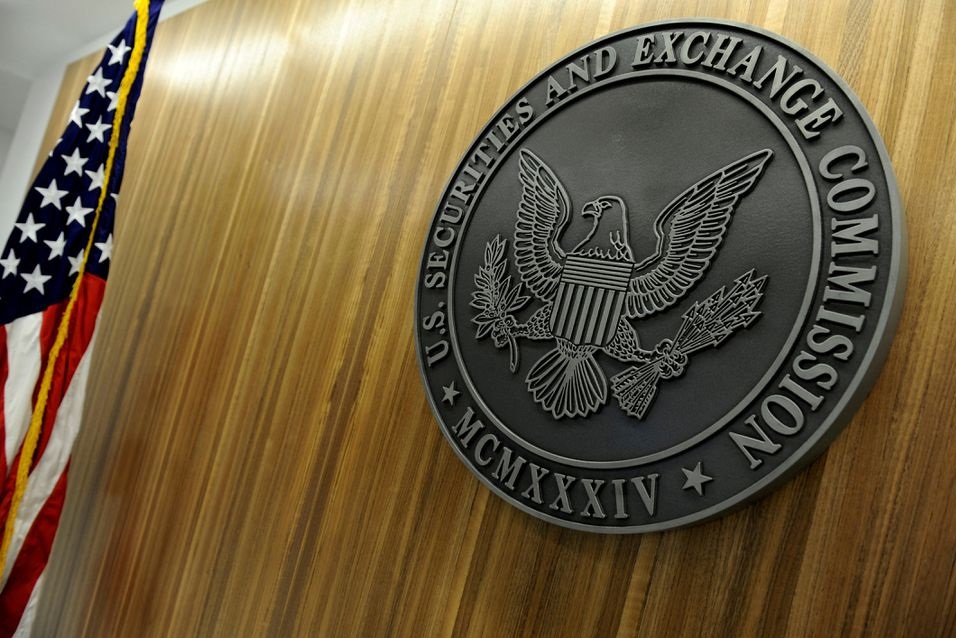
U.S. Securities and Exchange Commission (SEC) has approved generic listing standards for commodity-based exchange-traded products (ETPs), including spot crypto ETFs, streamlining the approval process by eliminating the need for individual case-by-case reviews under Section 19(b) of the Securities Exchange Act of 1934.

This allows exchanges like Nasdaq, NYSE Arca, and Cboe BZX to list qualifying ETFs faster, potentially within 60-75 days instead of the previous 240-day process. The decision is seen as a significant step toward mainstreaming crypto ETFs, with industry experts like Bloomberg ETF analyst James Seyffart calling it a “game-changer” that could lead to over 100 new crypto ETFs in the next 12 months.

To be eligible under the new standards, a crypto asset must either trade on a market that is a member of the Intermarket Surveillance Group (ISG) with surveillance-sharing agreements, underlie a futures contract traded for at least six months on a Commodity Futures Trading Commission (CFTC)-regulated exchange, or be tracked by an existing ETF with at least 40% exposure listed on a national securities exchange.

These criteria ensure regulatory oversight and market maturity for eligible tokens. James Seyffart, in a post on X dated September 17, 2025, highlighted that the approval covers “Commodity-Based Trust Shares,” including crypto ETPs, and noted that tokens with futures contracts listed on exchanges like Coinbase (approximately 12-15 coins) are likely eligible.

While Seyffart did not provide an explicit list of tokens the standards suggest that tokens like Bitcoin (BTC), Ethereum (ETH), XRP, Solana (SOL), Litecoin (LTC), Dogecoin (DOGE), Cardano (ADA), Avalanche (AVAX), Chainlink (LINK), Polkadot (DOT), and BNB could qualify, as they are mentioned in pending ETF applications or have established futures markets.

This move aligns crypto ETFs with traditional commodity-based ETFs under Rule 6c-11, reducing barriers and fostering innovation, though some, like SEC Commissioner Caroline Crenshaw, expressed concerns about investor safety due to less rigorous product vetting.

By removing the need for individual SEC reviews under Section 19(b), exchanges can list qualifying crypto ETFs in 60-75 days instead of 240 days. This accelerates the launch of new crypto ETFs, potentially leading to over 100 new products within a year, as predicted by James Seyffart.

The simplified process makes it easier for smaller or newer tokens to gain ETF exposure, increasing their visibility and legitimacy in mainstream finance. Institutional investors, previously limited by regulatory hurdles or direct crypto custody concerns, can now invest in a broader range of crypto assets through regulated ETFs, reducing operational and compliance risks.

The availability of diverse crypto ETFs could attract significant institutional capital, similar to the $33 billion in net inflows to spot Bitcoin ETFs since their approval in January 2024. This could drive up token prices and market liquidity. The SEC’s move signals growing regulatory acceptance, encouraging more traditional financial institutions to engage with crypto assets.

ETFs provide a regulated, familiar vehicle for retail investors to gain exposure to crypto without needing to manage wallets or navigate unregulated exchanges, lowering entry barriers. Multi-asset ETFs, like Grayscale’s Digital Large Cap Fund allow investors to diversify across crypto assets within a single product.

Critics, including SEC Commissioner Caroline Crenshaw, warn that the generic standards reduce scrutiny of individual ETFs, potentially exposing investors to risks from less mature or volatile tokens. The lack of rigorous vetting could lead to products with weaker market surveillance or higher manipulation risks.

Nasdaq, NYSE Arca, and Cboe BZX can now compete to list new crypto ETFs, potentially driving innovation and reducing fees for investors as exchanges vie for market share.  The requirement for tokens to trade on ISG-member markets or have CFTC-regulated futures contracts ensures some level of market oversight, reducing risks of fraud and manipulation but limiting eligibility to more established tokens.

Increased demand from ETF investors could drive up prices for eligible tokens, particularly for smaller market cap assets like XRP or Solana, which may see heightened interest. Rapid inflows into new ETFs could amplify price volatility, especially for less liquid tokens. Conversely, diversified ETFs may stabilize exposure by spreading risk across multiple assets.

Firms like Grayscale, BlackRock, and others with pending ETF applications (e.g., for Solana, XRP, or multi-asset funds) stand to benefit from faster approvals and increased product offerings. The generic standards may encourage creative ETF structures, such as thematic or multi-asset crypto funds, catering to diverse investor preferences.

The SEC’s approval of generic listing standards for commodity ETFs, including crypto ETPs, marks a pivotal moment for the crypto industry, fostering greater institutional and retail adoption, increasing market liquidity, and enhancing regulatory legitimacy. However, it also introduces risks related to investor protection and market volatility.

The move could reshape the crypto investment landscape, with eligible tokens like Bitcoin, Ethereum, XRP, Solana, and others likely to see increased demand, while setting the stage for further regulatory and market evolution. The approval also coincided with the SEC greenlighting Grayscale’s Digital Large Cap Fund, which includes exposure to Bitcoin.