DD
MM
YYYY

PAGES

DD
MM
YYYY

spot_img

PAGES

Home Blog Page 498

Ghana’s Banking Sector Faces New Era of Reform as Fitch Urges Central Bank to Crack Down on Bad Loans

0

Ghana’s banking sector is bracing for another major shake-up as the Bank of Ghana (BoG) moves to tighten prudential rules, compelling financial institutions to reduce their non-performing loan (NPL) ratios by the end of 2026.

The new measures, announced in August 2025, are seen as part of a broader regulatory posture shaped by the lessons of the country’s landmark 2017–2018 banking sector clean-up.

According to Fitch Ratings, the anticipated improvement in asset quality will be driven largely by accelerated loan write-offs and a more favorable operating environment. The new rules mandate that all regulated financial institutions maintain NPL ratios below 10%. Institutions exceeding 15% will face immediate restrictions on dividend and bonus payments, while those between 10% and 15% will be penalized if they fail to comply within two consecutive years.

Fitch Ratings Findings

As of mid-2025, only four of the country’s 23 banks had NPL ratios below the 10% threshold. More than half reported ratios above 15%, underscoring the scale of the challenge. Still, Fitch believes most banks will be able to bring their NPL ratios below 15% by the end of 2026, mainly through strategic write-offs.

The agency, however, warned that six banks may struggle to meet capital adequacy requirements once regulatory forbearance tied to losses on cedi-denominated government bonds expires at the end of 2025. These banks, weighed down by problem loans and thin capital buffers, are expected to face the greatest difficulty in complying with the new rules.

Ghanaian banks have grappled with weak asset quality for more than a decade. The problem deepened during the sovereign debt restructuring launched in December 2022, which sent the sector’s NPL ratio surging to 26.7% by Q1 2024 from 14.8% at the end of 2022. Payment delays to government contractors, sluggish credit growth, and macroeconomic instability compounded the situation. By mid-2025, the ratio had only modestly improved to 23.1%.

“Most Ghanaian banks have not paid dividends in recent years due to the sovereign default and their reliance on related regulatory forbearance,” Fitch said.

The agency added that the expiration of forbearance at the end of 2025, combined with the threat of dividend restrictions, will push banks to accelerate NPL reduction.

Write-offs as the Key Tool

Encouragingly, the sector’s NPL ratio excluding fully provisioned loans stood at just 8.5% at the end of H1 2025. This suggests banks can execute substantial write-offs without triggering additional provisions. At the same time, strong pre-impairment operating profits, supported by high-yielding sovereign securities, provide a cushion to absorb new provisions without eroding capital. With net loans accounting for only 19% of total banking assets as of April 2025, write-offs are expected to be the main compliance tool.

Fitch also pointed to improving macroeconomic conditions. Ghana’s Long-Term Issuer Default Rating was upgraded to ‘B-’ with a Stable outlook in June 2025, following the country’s successful normalization of relations with most external creditors. The cedi has strengthened, inflation is projected to decline sharply, and banks are expected to benefit from a more stable operating environment.

“Improved operating conditions should help attenuate problem loan generation and support stronger loan growth,” Fitch noted, though it cautioned that persistent payment arrears to government contractors remain a significant risk.

Still, the agency observed that foreclosures and restructurings are unlikely to materially reduce NPL ratios before the new prudential limits take effect. Slow legal processes and lengthy cure periods for restructured loans remain barriers.

Lessons from the 2017–2018 Clean-up

The BoG’s tough stance on NPLs reflects a regulatory posture shaped by its 2017–2018 banking sector clean-up, one of the most consequential reforms in Ghana’s financial history. During that period, the central bank revoked the licenses of nine insolvent banks and merged others to restore stability to a sector crippled by poor corporate governance, undercapitalization, and mounting bad loans. The exercise cost the state nearly GHS 21 billion in bailouts and fundamentally reshaped the industry.

That clean-up underscored the systemic risks posed by unchecked bad loans and weak balance sheets. Regulators now appear determined to avoid a repeat of the crisis, using stricter prudential rules and credible enforcement threats—such as dividend bans and bonus restrictions—to compel banks to clean up their books before vulnerabilities metastasize.

Regional Parallels

The regulatory tightening also mirrors broader trends across West Africa. Last month, Fitch disclosed that while most Nigerian banks are expected to exit regulatory forbearance by December 2025, some may continue under forbearance, facing strict penalties, including dividend bans. The Central Bank of Nigeria, like the BoG, is pressing banks to enter 2026 with stronger capital buffers and cleaner balance sheets.

In Ghana, the new measures signal that regulators have drawn clear lessons from the past that proactive supervision and early intervention are less costly than emergency rescues.

TikTok framework deal nears close as Oracle stays on board — how it compares with past U.S.–China tech showdowns

0

A tentative framework to keep TikTok operating in the United States is moving closer to reality, with sources telling CNBC that the agreement will bring new investors together with existing stakeholders in ByteDance and should close within the next 30 to 45 days.

Oracle, which has long been floated as the U.S. partner to handle TikTok’s data and technical operations, is expected to retain its cloud role under the arrangement. Treasury Secretary Scott Bessent has described the package as a “framework” that emerged from recent talks, and U.S. officials say commercial terms have been in place for months even as negotiations were paused and restarted amid broader trade tensions.

If finalized, the deal would be less about a blockbuster takeover and more about structuring TikTok’s U.S. operations to meet national-security demands while leaving the platform commercially viable. CNBC’s reporting suggests the capital infusion for the U.S. entity could be relatively modest and that no public-listing plan is expected for the new unit — a practical, compliance-first approach rather than a growth-driven reorganization. Oracle’s continued cloud role and the presence of both new and existing investors appear designed to reassure Washington that U.S. user data and critical infrastructure will be insulated from inappropriate foreign access.

However, the political backdrop remains volatile. Congress passed legislation in 2024 requiring ByteDance to divest TikTok or face a ban in the United States, and the White House has twice extended the compliance deadline. President Donald Trump delayed enforcement multiple times and has signaled willingness to keep granting extensions while a deal is negotiated — a process that sources say has already seen deadlines shifted several times this year. Treasury officials say the framework’s timing may hinge on diplomatic conversations between Trump and Chinese President Xi Jinping.

How this mirrors — and diverges from — earlier forced restructurings

The TikTok arrangement shares features with past U.S. actions aimed at Chinese tech companies but also departs from prior playbooks in important ways.

In the case of Huawei and ZTE, Washington relied largely on export controls, government procurement bans, and sanctions that choked off access to U.S. components and markets. Those measures were designed to hobble the companies’ global competitiveness rather than to create viable U.S.-based substitutes; the outcome was effectively exclusion from large swaths of the U.S. market rather than a negotiated, commercially managed divestment. The U.S. response to Huawei emphasized national-security containment through supply-chain restrictions and exclusion from government contracts.

By contrast, the proposed TikTok framework is a form of negotiated remediation: a tailored restructure that keeps the service running for American users while attempting to seal off perceived security risks through governance, ownership, and operational safeguards. The Oracle cloud arrangement echoes earlier proposals in which U.S. firms assumed technical custody roles to address data-residency and software-update concerns. That approach aims to preserve consumer access and investor value while meeting political requirements — a middle path between outright ban and unfettered foreign ownership.

The Ant Group episode from 2020 illustrates another relevant precedent, but one from Beijing’s side. Ant’s IPO was abruptly halted after Chinese regulators moved to restructure the fintech giant under stricter financial controls — a government-led reconfiguration to serve public-policy objectives rather than a market-driven sale or divestment. Ant’s experience shows how national authorities can force sweeping corporate re-engineering when systemic risks are at stake; in TikTok’s case, the U.S. is seeking a negotiated private-sector fix to an analogous set of national-security concerns.

Key differences are therefore strategic: Huawei and ZTE were largely shut out via export and procurement controls; Ant Group was reshaped by its home regulator; TikTok’s resolution is likely to be an international, commercially oriented compromise that leans on U.S. corporate partners and investor commitments to deliver technical and governance assurances.

Where the risks lie

Even a signed framework will not eliminate political or legal risk. Congress could demand stricter oversight or reject the structure if lawmakers judge the safeguards insufficient. Conversely, Beijing could veto or complicate an arrangement that it perceives as an expropriation of a Chinese-owned asset. And the modest size of the planned investment — if accurate — raises questions about whether the new U.S. entity will have the financial heft to stand alone down the line. Treasury officials and White House negotiators have tried to thread that needle of preserving U.S. data security while avoiding a destabilizing rupture in a platform used by tens of millions of Americans.

The bottom line: The emerging TikTok framework is best read as a hybrid response that borrows elements from prior U.S. tech containment strategies while seeking a more pragmatic, market-friendly outcome. It aims to square three competing imperatives: national security, consumer continuity, and commercial viability. How well it succeeds will hinge on the precise mechanics of ownership, governance, and operational control — and on the political winds in Washington and Beijing over the weeks ahead.

Bitcoin Price Retraces Above The $116,000 Zone as Traders Await Fed’s Key Interest Rate Decision

0

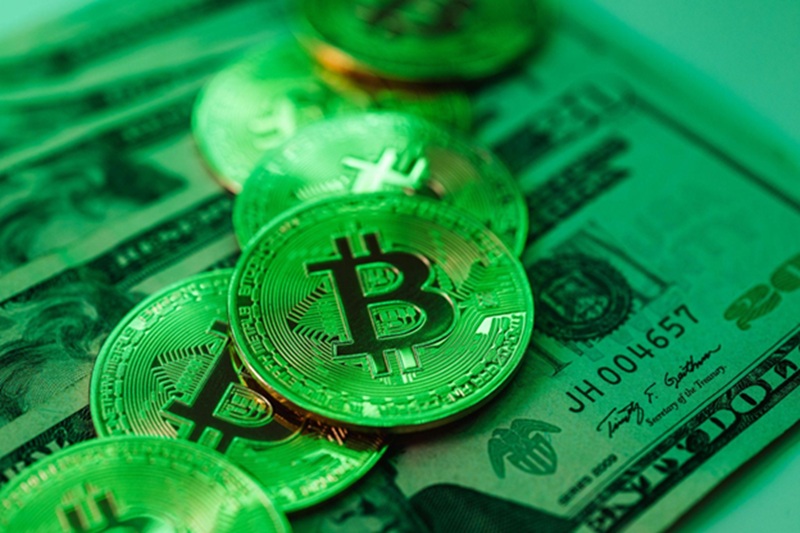
The price of Bitcoin (BTC) has retraced to the $116,000 price zone, hitting $116,795 after briefly pulling back to $114,395 earlier in the week, as traders closely watch the Federal Reserve’s upcoming policy decision.

The leading cryptocurrency continues to consolidate above $116,000, with immediate resistance seen between $117,000 and $118,000. A decisive breakout above this zone could signal a major structural shift on higher time frame charts.

The Federal Open Market Committee (FOMC) will announce its interest rate decision on Wednesday, with markets largely expecting a 25-basis-point rate cut. This decision is expected to set the tone for both stocks and digital assets for the remainder of the year.

Tom Lee, Head of Research at Fundstrat Global Advisors, told CNBC that Bitcoin and Ethereum could be among the biggest beneficiaries if the Fed moves to cut rates. According to Lee, both assets are highly sensitive to liquidity and could experience a “monster move” within the next three months.

He highlighted Bitcoin, Ethereum, the Nasdaq 100, and U.S. small-cap stocks as key areas to watch, emphasizing that lower borrowing costs often restore investor confidence and fuel liquidity-driven trades.

Market Sentiment and Technical Signals

Social data shows 64% of online commentary about Bitcoin is bullish, the highest level since July, reflecting strong optimism ahead of the Fed’s announcement. However, history suggests markets often move against the crowd. While a rate cut could drive Bitcoin higher in the short term, a surprise decision to hold rates steady might spark a swift correction.

On the technical side, crypto investor Jelle noted that Bitcoin’s weekly stochastic RSI has flipped bullish, a signal that has historically led to average rallies of 35%. If history repeats, Bitcoin could surge toward $155,000.

Similarly, Bitcoin network economist Timothy Peterson predicts a more dramatic rise, suggesting that BTC could reach $200,000 within 170 days, citing repeating cycle patterns rather than traditional technical analysis.

Bearish Voices Remain Cautious

Despite the bullish price predictions for BTC, not every analysts is optimistic about the crypto asset. Peter Schiff, a long-time gold advocate and Bitcoin critic, warned that BTC might be “topping out” as it struggles to break decisively past $116,000.

According to Schiff, gold and silver have recently broken out, while Bitcoin is losing momentum. His warning comes just before the pivotal Fed meeting, adding weight to bearish arguments.

Bitcoin has gained 4% over the past week, but strong resistance near $116,000 remains a critical barrier. If BTC fails to hold support following the Fed’s decision, technical traders may reduce risk exposure or step aside, while a clean breakout above resistance could invalidate topping concernsand ignite fresh buying.

Macro Outlook

The broader market is divided. While some expect up to three rate cuts later this year, CryptoQuant data shows that eight of ten bull market indicators have turned bearish, signaling waning momentum.

Despite these warning signs, many traders believe that the macroeconomic environment still favors Bitcoin, especially if the Fed’s policies usher in greater liquidity and lower borrowing costs.

Outlook

With the FOMC meeting set for September 17, traders are closely watching volume on rallies, Bitcoin’s ability to close above $116,000, and the Fed’s official announcement. These factors will likely determine Bitcoin’s next major move in the coming weeks.

Dangote Refinery Ships First Petrol Cargo to U.S., Signaling New Era in Global Fuel Trade

0

Nigeria’s Dangote refinery has sent its first-ever shipment of petrol (gasoline) to the United States, marking a historic milestone for the $20 billion, 650,000-barrel-per-day facility and underlining its ambition to reshape global fuel markets.

The inaugural cargo, carried on the tanker Gemini Pearl, was delivered on Monday to Sunoco’s Linden, New Jersey, facility. According to vessel-tracking data and sources cited by Reuters, the shipment totaled roughly 320,000 barrels.

Global trading giant Vitol purchased the cargo from Mocoh Oil, Dangote’s export partner, before reselling it to Sunoco, one of North America’s major fuel distributors. While it remains unclear what volume Sunoco retained, the deal marked the first time petrol refined in Nigeria has cleared the stringent quality requirements of the U.S. market.

“Top global oil trader Vitol and North American fuel distributor Sunoco took delivery of the first U.S. import of gasoline from Nigeria’s new Dangote refinery on Monday, according to vessel-tracking data and two sources familiar with the matter,” Reuters reported.

The refinery — the world’s largest single-train facility — has been closely watched by market participants after multiple start-up delays since its commissioning. Its ramp-up has already reduced Nigeria’s long-standing dependence on imported fuel, freeing up volumes for export. Most surplus shipments so far have been bound for Europe, but the refinery’s entry into the U.S. gasoline market sets a new precedent.

The Gemini Pearl delivery is just the beginning. Market sources say further U.S.-bound shipments are imminent. A second cargo, arranged by Glencore for Shell, is due to arrive around September 19, while a third Vitol cargo aboard the Seaexplorer is scheduled to deliver around September 22. Market conditions, however, may still alter their final destinations.

Dangote’s disruption of European markets

Even before the U.S. breakthrough, the Dangote refinery had already started reshaping Europe’s fuel trade. European refiners, particularly in the Mediterranean, have faced pressure from the influx of Nigerian gasoline, which has been priced competitively and has diverted traditional supply flows. Traders note that European refiners are being squeezed as Dangote’s exports gain ground, with some facilities warning of margin erosion and possible cutbacks in output.

This shift has been closely watched by analysts who say the African giant has quickly become a disruptive player in a market where Europe once dominated West Africa’s fuel supply. Now, with its first successful shipment to the U.S., a similar disruption could be looming for the North American refinery industry.

Implications for U.S. refiners

The arrival of Nigerian petrol into the U.S. market highlights Dangote’s capacity to meet international motor fuel standards and underscores Nigeria’s evolving role in global energy flows. Analysts suggest this could diversify U.S. gasoline supply sources, historically dominated by refiners in the Gulf Coast, Europe, and Latin America.

If Dangote expands its footprint in the U.S., North American refiners could face increased competition, particularly in the East Coast market, which relies heavily on imports to supplement domestic supply., Dangote’s refinery could disrupt established trade flows in much the same way it has begun to do in Europe, by undercutting prices or offering flexible terms.

While the successful U.S. debut bolsters Dangote’s international credentials, energy analysts believe much will depend on its ability to maintain consistent output, manage costs, and weather swings in global demand. They also caution that scaling exports to premium markets such as the U.S. requires not just product quality but reliable logistics, long-term contracts, and competitive pricing.

However, there is a belief that if Dangote can prove itself a dependable supplier, the refinery may emerge as a disruptive force across both sides of the Atlantic, reducing European dominance in gasoline exports, challenging U.S. refiners in their own backyard, and positioning Nigeria as a new heavyweight in global refined products.

Why BlockDAG’s Nearly $410M Presale and 3M Miners vs XRP’s Apple Rumors & POL’s Post-Bug Struggles: Where’s the Real Value?

0

September 2025 has seen markets brimming with volatility, yet three names keep surfacing among investors’ top crypto projects: BlockDAG, Polygon’s POL, and Ripple’s XRP. Each represents a different angle of growth, technological resilience, infrastructure recovery, and breakout anticipation, but the outcomes couldn’t be more distinct.

BlockDAG (BDAG) continues to impress with a presale price flat at $0.0013, nearly $410 million raised, and a launch price locked at $0.05. Its 3M miners on the X1 app, alongside X-series hardware and a next-generation DAG architecture, position it as a frontrunner for mainstream adoption.

In contrast, POL’s recovery from a recent bug fix shows a project still addressing network reliability, while XRP, trading near $3, hinges on bullish technicals and corporate rumors. As the crypto space evolves, BlockDAG appears to be rewriting what makes a coin stand out among top crypto picks.

POL Struggles After Bug Fix Despite Optimism

Polygon’s POL price action has been in the spotlight since the project deployed a crucial fix to resolve a node software bug. The error, which disrupted validator synchronization and delayed transaction finality, raised concerns about network reliability.

Despite the resolution, POL trades near $0.27, with buyers struggling to push past the $0.30 level. Technicals paint a mixed picture: the RSI sits at 55, suggesting moderate bullish potential, but the MACD signals a looming bearish crossover. Upside targets hover around $0.54, while downside risks could see a retreat to $0.20 if $0.25 fails as support.

While POL’s resilience after the bug fix shows developer dedication, investors remain cautious. For now, it stands as a recovery story rather than a breakout candidate in the top crypto picks list.

XRP Eyes Breakout but Relies on Rumors

The XRP price action is drawing attention thanks to a bullish falling wedge formation, often a precursor to rallies. Currently trading near $3.00, XRP is testing resistance at $3.13. A breakout could fuel momentum toward $4, but traders note volume remains inconsistent.

Adding fuel to speculation are strong rumors of Apple potentially acquiring $1.5 billion in XRP for integration into Apple Pay and Apple Wallet. If confirmed, it would mark the largest corporate crypto acquisition since Tesla’s Bitcoin purchase in 2021. Such a move could boost liquidity and mainstream adoption overnight. However, until rumors are validated, XRP’s setup remains one of potential rather than certainty.

Unpacking BlockDAG’s Tech & Profit Potential

While many altcoins rely on speculation, BlockDAG has combined hard data and adoption milestones to anchor its presale success. At its core are 3 million X1 app miners, users who engage daily and will receive BDAG credits at mainnet. This critical mass makes BlockDAG one of the few presale projects with a live, functioning user base before launch.

The expansion of X-series miners, the X10, X30, and X100, has amplified adoption further. With nearly 20,000 units sold globally, these low-power, ASIC-efficient devices make mining accessible to homes and businesses alike. At an estimated $0.05 listing price, projections suggest miners could generate daily returns of $10, $30, or $100, depending on hardware tier. This blend of accessibility and profitability adds long-term incentive for network participation.

On the technology front, BlockDAG has advanced by blending Proof-of-Work security with a multi-parent DAG structure, creating a hybrid blockchain capable of scaling to 15,000 transactions per second. Unlike traditional chains limited by linear block production, DAG integration ensures faster throughput and lower congestion; two factors critical for real-world applications like DeFi, gaming, and cross-chain dApps.

Together, these elements, mass adoption through the X1 app, decentralized security via X-series hardware, and cutting-edge DAG scalability, explain why BlockDAG has secured nearly $410 million in presale funding. With coins still priced at just $0.0013, analysts argue it’s among the most undervalued assets in the top crypto projects conversation, with realistic price forecasts pushing toward $1 in the near future.

Key Takeaways

In the race for top crypto picks, the contrasts are clear. POL’s bug fix and modest rebound show a network still grappling with stability issues, while XRP’s bullish wedge and Apple rumors hint at exciting possibilities but rely heavily on speculation.

BlockDAG, by contrast, is delivering tangible adoption. With 3 million miners on its X1 app, global rollout of X-series hardware, and DAG-powered scalability, the project is setting new benchmarks for presale credibility. Its ability to merge community adoption with technical advancement explains why it has already raised nearly $410 million with an entry at just $0.0013 for a limited time.

As markets move deeper into 2025, BlockDAG has not only risen as one of the strongest top crypto projects but also as a serious challenger to incumbents.

Join BlockDAG Presale Now:

Presale: https://purchase.blockdag.network

Website: https://blockdag.network

Telegram: https://t.me/blockDAGnetworkOfficial

Discord: https://discord.gg/Q7BxghMVyu