DD
MM
YYYY

PAGES

DD
MM
YYYY

spot_img

PAGES

Home Blog Page 498

Fed Cuts Rates by Quarter Point, Signals Two More Reductions as US Labor Market Weakens

0

The Federal Reserve stepped into a delicate balancing act on Wednesday, delivering a quarter-point rate cut while signaling two more before year-end — a move that underscores the growing tension between cooling job growth, persistent inflation, and political pressure from the White House.

The decision lowers the benchmark federal funds rate to 4.00%-4.25%, with the 11-to-1 vote showing less division than Wall Street expected. Governor Stephen Miran, appointed by President Donald Trump, cast the sole dissent, pushing for a steeper half-point cut, according to CNBC.

All three governors who were watched closely — Miran, Michelle Bowman, and Christopher Waller — were appointed by Trump. While Bowman and Waller backed the quarter-point move, Trump has not let up on his calls for aggressive cuts, arguing that borrowing costs must come down quickly to revive the housing market and reduce debt-servicing burdens.

The political backdrop is striking for a central bank long known for its efforts to stay independent. Just a year ago, when the Fed approved a half-point cut, Trump accused the institution of tilting the election in favor of his Democratic rival, Kamala Harris. His continued hectoring — combined with Miran’s outspoken criticism of Powell — has once again fueled doubts over how insulated the Fed truly is.

The Fed’s statement highlighted the tricky crosscurrents at play: economic activity “has moderated,” job gains “have slowed,” and inflation “remains somewhat elevated.”

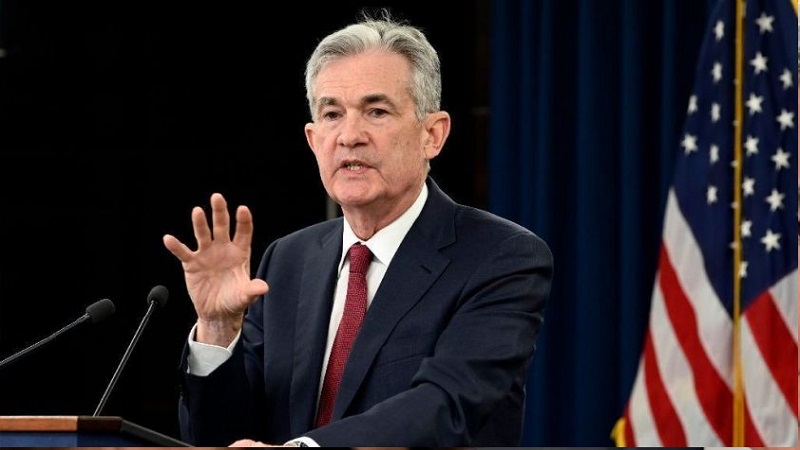
Chair Jerome Powell admitted that the U.S. labor market is losing steam. “The marked slowing in both the supply of and demand for workers is unusual in this less dynamic and somewhat softer labor market,” he said at his press conference, describing the cut as a form of “risk management.”

But not all economists agreed with Powell’s framing. Dan North, chief economist at Allianz Trade North America, argued the Fed is taking a more active role than it admits: “I don’t think that’s risk management. I think that’s steering the ship.”

The markets wavered on the announcement. Stocks swung between gains and losses, while Treasury yields fell on short-dated issues but rose further out, signaling mixed expectations on the economy’s direction.

Reading the Dots

The Fed’s quarterly “dot plot” — a map of policymakers’ rate expectations — pointed to two more cuts in 2025, most likely in October and December. But the projections also revealed deep divisions. Nine officials see one more cut, 10 want two, and at least one — likely Miran — is calling for 1.25 percentage points of reductions this year. Another participant opposed any cuts at all, including the one delivered on Wednesday.

Simon Dangoor, head of fixed income macro strategies at Goldman Sachs Asset Management, said the message is clear: “The doves on the committee are now in the driver’s seat. It would take a significant upside surprise in inflation or a labor market rebound to take the Fed off its current easing trajectory.”

Looking further out, officials projected just one cut in 2026 and another in 2027, suggesting a slow crawl back toward the long-run “neutral” rate of around 3%. That is far less aggressive than the path financial markets had priced in.

The day’s decision came against another swirl of controversy. Trump had sought to remove Governor Lisa Cook, a Biden appointee, accusing her of mortgage fraud tied to federally backed loans. But a court blocked the attempt, keeping Cook on the board — where she voted with the majority for the quarter-point cut. Cook has denied any wrongdoing and has not been charged.

The episode, coupled with Miran’s loyalty to Trump’s rate-cutting agenda, deepened concerns that politics are intruding into the Fed’s traditionally cautious policymaking.

The Economy’s Mixed Signals

The economic picture the Fed is responding to remains uneven. Growth is holding steady, and consumer spending is running hotter than expected, but the job market has softened noticeably.

Unemployment reached 4.3% in August, the highest since 2021, and the Bureau of Labor Statistics recently revised job growth figures downward by nearly one million for the year ending March 2025. That weakens one of the strongest narratives of the post-pandemic economy.

Inflation, while lower than in 2022, has ticked higher in recent months — complicating the Fed’s mission. Powell admitted the risks to employment have grown, while Governor Waller argued that easing now could prevent a deeper downturn later. Waller’s position is closely watched not just for policy signals, but because his name has surfaced as a possible successor to Powell when his term ends in 2026.

Looking ahead, the Fed’s next moves are expected to hinge on whether unemployment keeps rising or inflation resurges. If job losses accelerate, the two additional cuts penciled in for October and December will almost certainly materialize. If inflation proves sticky, Powell could slow the pace — risking pushback from both the markets and the Trump administration.

For now, the Fed is signaling a gradual easing cycle, hoping to stabilize the labor market without reigniting price pressures. But history suggests politically charged rate decisions often carry long-lasting consequences, both for the economy and for the central bank’s credibility.


Nexchain Presale Offers 278% ROI as DOGE Whales Offload 680M

0

Nexchain is positioning itself as one of the strongest crypto presales in 2025. Its blockchain uses a hybrid Proof-of-Stake model paired with sharding and Directed Acyclic Graph technology. This design enables throughput of up to 400,000 transactions per second, while average fees remain at just $0.001.

The presale crypto is in Stage 27, with tokens available at $0.108. A confirmed listing at $0.30 signals potential gains of 278% for early participants. More than $10.26 million has already been raised, with the stage cap set at $11.02 million. This momentum places Nexchain among the leading cryptocurrency presales of the year.

The NEX token serves multiple purposes. It can be used for staking, governance, and payments. Holders also share 10% of daily gas fees when storing assets in private wallets. This mechanism provides a steady return, encouraging long-term participation in the new crypto presale ecosystem.

Dogecoin Whales Trim Holdings

While Nexchain builds its presale momentum, large Dogecoin holders have shifted their positions. Analyst Ali Martinez reported that wallets holding between 100 million and 1 billion DOGE sold a combined 680 million tokens in just four days. 


The sell-off occurred as Dogecoin’s price touched $0.30 before pulling back to $0.27. The timing suggests that major holders may have taken profits during the rally. Such moves often draw market attention due to their scale and their potential to influence short-term price trends.

As of press time, Dogecoin traded close to $0.27, supported by a daily volume of $3.84 billion. Although down slightly on the day, DOGE remains more than 10% higher over the past week.

The broader outlook includes speculation around the Rex Shares-Osprey Dogecoin ETF (DOJE), which is expected to launch this week. If approved, it would provide exposure to DOGE without requiring direct ownership. At the same time, CleanCore Solutions disclosed another purchase of 100 million DOGE, boosting its treasury above 600 million tokens.

Nexchain Roadmap and Tokenomics

Nexchain has emphasized transparency in its coin presale structure. Out of a total supply of 2.15 billion tokens, 20% is allocated to public buyers, with smaller portions for seed, private, and team rounds. Vesting schedules and an annual burn mechanism are included to manage supply and avoid flooding the market.

Nexchain’s roadmap extends into 2026. In the third quarter of 2025, the team plans to roll out the Nexpolia testnet, launch a $5 million airdrop, and introduce new governance structures. By the end of the year, Testnet v2.0 is expected to add stability upgrades, laying the groundwork for the mainnet. Early 2026 is set to bring a public beta, along with integrations through centralized exchanges and DeFi protocols.

Nexchain Draws Investor Attention

While Dogecoin whales adjust their positions, Nexchain is pushing forward with strong presale results. Its combination of fast throughput, fixed low fees, and recurring rewards distinguishes it from short-lived offerings in the crypto pre sales market.

With a confirmed listing price well above the current presale rate, Nexchain offers both immediate upside and long-term value. For investors seeking the next major presale coin, Nexchain is emerging as a leading candidate in 2025.


Learn more about the Nexchain presale here:


Website: nexchain.ai/ 

X: x.com/nexchain_ai 

Telegram: t.me/nexchain_ai 

LinkedIn: www.linkedin.com/company/nexchainai/ 

Final Days for BlockDAG at $0.0013 as PEPE Coin Price Hovers at $0.000010 & Litecoin Targets ETF Momentum

0

Pepe has managed to stay visible, but uncertainty lingers, with the PEPE coin price stuck near $0.000010 and forecasts hinting at possible declines. Litecoin, meanwhile, has seen modest gains, with the Litecoin (LTC) price recovery pushing just above $112, though its progress still hinges on breaking stubborn resistance levels.

The question for traders is simple: do these movements really offer the upside people want right now? That is where BlockDAG (BDAG) changes the focus. With a presale locked at $0.0013 for only a few more days, it is making its case as one of the top crypto picks. Once October 1 passes, the $0.0013 price will disappear.

BlockDAG’s Last Low Entry Point Is Closing Fast

BlockDAG is at a decisive stage. Its presale is locked at $0.0013 until October 1, after which the price will move higher. This is the lowest entry point anyone will get, and the window is closing. Waiting means losing the most favorable deal this coin will ever offer.

This exclusivity makes BlockDAG stand out in a crowded market. Nearly $410 million has already been raised, with 26.2 billion BDAG sold. These are not empty numbers, they show that people recognize the potential for major returns. Missing this moment means paying more later, which cuts into future gains.

Delivery adds further strength. The X1 mobile miner has already attracted more than 3 million users, and thousands of X10 miners are producing BDAG daily. With the Awakening Testnet introducing gasless transactions, plus ecosystem tools like a wallet and launchpad, BlockDAG has secured real traction. These developments cement its place among the top crypto picks for 2025.

At the end of the day, hesitation carries a cost. The $0.0013 price will never return after October 1. This makes BlockDAG more than another presale; it is one of the few that demand attention right now.

PEPE Coin Price Holds Range in September

The PEPE coin price remains near $0.000010, with daily trading volumes above $600 million keeping it in the spotlight. Market cap sits between $4.3 and $4.4 billion, but forecasts warn of possible dips toward $0.000008. Key support levels are around $0.00000910, while resistance is at $0.00001005, leaving PEPE in a tight and risky range.

Community energy continues to fuel momentum, but without fresh innovation or broader utility, many believe PEPE’s reliance on hype could restrict long-term growth. At present, the PEPE coin price reflects strong loyalty from holders, but also the volatility that makes it difficult to judge whether short bursts can translate into lasting gains.

Litecoin (LTC) Price Recovery Backed by Momentum & ETF Hopes

The Litecoin (LTC) price recovery has been holding above $112, with weekly gains of 5–8%. Technical charts show a breakout from a falling wedge, supported by rising transaction volume and renewed trader interest.

Momentum indicators such as the MACD lean positive, while open interest is close to recent highs, suggesting more participants expect further gains. Institutional signals add weight, with a $100 million investment from Luxxfolio and a strong chance of spot ETF approval by early October.

Though not guaranteed, the combination of technical momentum, privacy upgrades through MWEB, and institutional backing strengthens the case for Litecoin to remain in focus.

Closing Thoughts

PEPE is steady near $0.000010, but forecasts warn of dips, leaving the PEPE coin price stuck between hype-driven pumps and sharp corrections. Litecoin has made weekly gains of 5–8%, with the Litecoin (LTC) price recovery showing promise thanks to technical momentum and ETF optimism, though it still needs a resistance break to sustain growth.

Both coins carry potential, but neither matches the urgency surrounding BlockDAG. With its presale still fixed at $0.0013 for just a few more days, BlockDAG offers exclusivity that puts it firmly among the top crypto picks. After October 1, the bottom entry point will be gone for good. The opportunity now is clear: act today, or miss the lowest price forever.

Presale: https://purchase.blockdag.network

Website: https://blockdag.network

Telegram: https://t.me/blockDAGnetworkOfficial

Discord: https://discord.gg/Q7BxghMVyu


Ethena-Backed “Based” on Hyperliquid Enters Top 10 Protocols by 24-Hour Revenue as Ethereum Foundation Rebrands Security Team

0

The decentralized trading platform “Based,” built on Hyperliquid and backed by Ethena Labs, surged into the top 10 blockchain protocols by 24-hour revenue, according to data from DeFiLlama. This milestone highlights the rapid growth of Hyperliquid’s ecosystem amid intensifying competition for its native stablecoin USDH issuance.

Based is a trading platform integrated with Hyperliquid, a high-performance Layer-1 blockchain and decentralized perpetuals exchange known for its speed and low latency. It leverages Ethena’s synthetic dollar infrastructure (USDe and USDtb) for enhanced liquidity and stability.

The platform focuses on derivatives trading, spot auctions, and tokenized assets, benefiting from Hyperliquid’s HyperEVM for seamless DeFi operations. Per DeFiLlama’s real-time metrics, “Based” generated significant fees in the last 24 hours, propelled by Hyperliquid’s overall trading volume exceeding $3-5 billion daily.

This placed it among elite protocols like Tether (USDT), Circle (USDC), and Ethena itself, which dominate fee generation through stablecoin yields and transaction volumes. Ethena Labs, the protocol behind the USDe synthetic stablecoin, has deepened its integration with Hyperliquid.

On September 9, Ethena proposed issuing Hyperliquid’s USDH stablecoin, fully backed by its USDtb token collateralized by BlackRock’s BUIDL tokenized fund. The bid includes: Pledging 95% of USDH reserve revenue back to the Hyperliquid community via HYPE token buybacks and ecosystem funds.

Covering all migration costs from USDC to USDH. Committing $75-150 million in incentives to boost adoption. Partnerships with Anchorage Digital for issuance and Securitize for tokenized real-world assets like equities.

This proposal positions Ethena as a frontrunner in a competitive race against bidders like Paxos, Frax Finance, Sky formerly MakerDAO, Agora, and Native Markets. A community vote on the USDH issuer is scheduled for September 14, 2025 (results pending as of September 16).

Hyperliquid has been a revenue powerhouse in DeFi

In August 2025, it hit an all-time high monthly trading volume of $405.8 billion in perpetual contracts, generating an estimated $1.3 billion in annualized revenue. For the week ending September 1, it ranked in the top 5 protocols by fees, behind only Tether, Circle, and Ethena.

With just 11 employees, Hyperliquid achieved $330 billion in monthly volume by August, outpacing many established chains. Its “Assistance Fund” (AF) uses revenue for HYPE token buybacks, reducing supply and aligning incentives. No VC unlocks or heavy sell pressure further bolsters its tokenomics.

Hyperliquid’s revenue often surpasses Ethereum and Solana combined on peak days (e.g., 3.5x Ethereum in February 2025). At a $40-45 billion FDV for HYPE, it’s seen as undervalued relative to peers like Solana’s $200B+ market cap, with projections for top-10 status by year-end.

This development underscores the convergence of stablecoin innovation and high-throughput DeFi. If Ethena wins the USDH bid, it could unlock $220 million in additional annual revenue for Hyperliquid while reducing reliance on USDC/USDT currently $5.7B in liquidity.

For traders, “Based” offers institutional-grade tools with yields from BlackRock-backed assets, potentially attracting more volume amid crypto’s bull cycle. However, risks like oracle dependencies and market volatility remain.

The crypto community on X is buzzing, with maxis calling Hyperliquid “the future of DeFi” due to its fair launch and performance. Watch for USDH vote outcomes and “Based” revenue updates on DeFiLlama for the next moves.

Ethereum Foundation Rebrands Security Team to “Privacy Stewards of Ethereum”

The Ethereum Foundation announced a significant rebranding and strategic shift for its privacy-focused team, formerly known as the “Privacy & Scaling Explorations” (PSE) team.

The group has been renamed Privacy Stewards of Ethereum (PSE), emphasizing a “problem-first” approach to address Ethereum’s surveillance vulnerabilities rather than purely speculative cryptography research.

This rebranding coincides with the release of a comprehensive roadmap aimed at embedding end-to-end on-chain privacy across Ethereum’s technical stack, making privacy the default experience rather than an optional add-on. The initiative underscores growing concerns about blockchain transparency enabling global surveillance, especially with advancing AI tools for data analysis.

Without these enhancements, Ethereum risks becoming “the backbone of global surveillance rather than global freedom,” potentially driving users and institutions to alternative networks.

The roadmap draws inspiration from Ethereum co-founder Vitalik Buterin’s April 2025 privacy advocacy, which highlighted needs for anonymous payments, application-level privacy, secure data access, and network obfuscation.

Key Components of the Roadmap

The PSE roadmap is structured around three core pillars to achieve seamless, cost-effective, and compliant privacy solutions for use cases like finance, identity, governance, and decentralized applications (dApps). These include protocol-level changes, infrastructure improvements, networking protections, and wallet integrations.

Private Writes: Enables private on-chain actions (e.g., transfers, governance votes) to be as cheap and seamless as public ones, reducing reliance on transparent ledgers.

Development of PlasmaFold, a new Layer 2 (L2) design using zero-knowledge (ZK) proofs for private transfers without “exit games” (fraud-proof delays).- Proof-of-concept (PoC) targeted for debut at Devconnect conference in Buenos Aires, Argentina). Integration with tools like Railgun and Privacy Pools for “shielded balances” in wallets.

Private Reads; Protects user identities and intents when querying blockchain data or interacting with apps, preventing metadata leaks via surveillance tools. Privacy-preserving Remote Procedure Call (RPC) service to shield queries. Experiments with Oblivious RAM (ORAM) and Private Information Retrieval (PIR) for network-level protections.

Upcoming “State of Private Voting 2025” report summarizing progress on anonymous, verifiable voting protocols (e.g., using homomorphic encryption or ZK-SNARKs). Private Proving; Makes ZK proof generation and verification faster, cheaper, and accessible on everyday devices, enabling “prove anywhere” without high computational demands.

Optimizations for ZK proofs on mobile/smart devices. Collaborations for confidential DeFi (e.g., shielded lending pools) and institutional privacy frameworks. Potential Layer 1 (L1) opcodes or privacy-focused virtual machines for censorship-resistant privacy.

The PSE team plans to collaborate with Ethereum’s core protocol developers to implement necessary L1 changes, such as new opcodes for ZK verification. They are also forming an Institutional Privacy Task Force to align with global regulations and explore wallet enhancements (e.g., sphinx protocol for mixing).

This holistic approach aims for widespread adoption, where privacy is performant, user-friendly, and integrated into ecosystems like DeFi (handling over $100 billion in TVL as of mid-2025).

This move positions Ethereum as a leader in privacy-preserving blockchain technology, countering criticisms of public ledgers’ limitations for real-world commerce (e.g., supply chains or financial operations).

By prioritizing intermediary-free, censorship-resistant privacy, PSE seeks to unlock institutional adoption while maintaining Ethereum’s permissionless ethos.

Early reactions on platforms like X highlight excitement around PlasmaFold and ZK advancements, with users noting its potential to make Ethereum “privacy-first” for everyday use.

Amazon Unveils AI Agent to Help Third-Party Merchants Run Their Businesses

0

Amazon is taking another leap into artificial intelligence, this time with an upgrade designed to transform how third-party merchants manage their online operations.

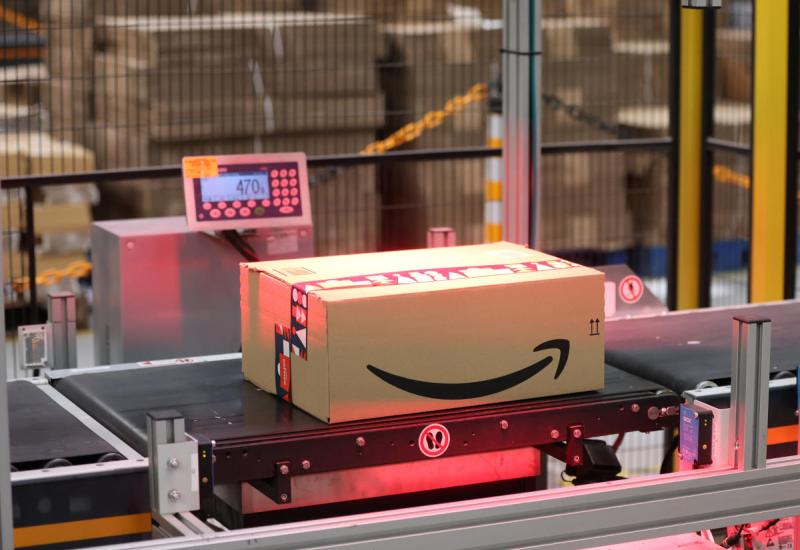
At its annual Accelerate conference for sellers in Seattle on Wednesday, the company introduced an AI agent built into its Seller Assistant platform. Unlike earlier versions, which primarily responded to queries, the new tool comes with agentic capabilities—meaning it can now take action on a merchant’s behalf with their permission.

Amazon said the move is intended to free up merchants’ time so they can “spend more time focusing on product innovation and customer relationships,” while AI handles the more repetitive but critical operational tasks.

The enhanced Seller Assistant can now coordinate inventory orders, plan for business growth, and implement fixes for account issues—functions that could help merchants avoid costly suspensions and delays. Over time, Amazon expects to add more of these automated abilities based on seller feedback.

The rollout builds on Amazon’s expanding suite of AI tools for sellers, who account for more than half of all goods sold on its marketplace. These include product listing generators and tools that can create marketing images and videos. Dharmesh Mehta, Amazon’s vice president of worldwide selling partner services, told CNBC that 1.3 million third-party sellers have already used its generative AI listing tools, which can automatically produce about 70% of a product listing.

“It really gives the seller, in some sense, a team of experts,” Mehta said. “An expert in listing and in pricing and promotions and supply chain, all the things that a small business normally has to either try and learn on their own, hire someone to be an expert, pay someone to be an expert, or sometimes just accept not being that good at, which is not ideal.”

Amazon said it is not currently planning to charge merchants for the new AI features. Instead, sellers continue to pay for the company’s in-house services like fulfillment and account management, which have become a cornerstone of Amazon’s business, generating $40.3 billion in revenue in the second quarter alone.

The move also underscores a shift in the broader AI industry. After early hype around image and text generators, companies are now pivoting toward agentic AI—tools capable of executing multi-step tasks with minimal supervision. Amazon itself previewed an experimental browser-based AI agent from its San Francisco lab earlier this year.

Seller Assistant is built on Amazon Bedrock, a platform that lets users access large language models not only from Amazon but also from AI startups like Anthropic and OpenAI.

The latest update represents a continuation of Amazon’s efforts that began last year with the launch of Project Amelia, the first iteration of its seller-focused AI assistant. That version provided basic troubleshooting and inventory advice. The new version goes further by actively managing parts of the seller’s business.

For Amazon, the rollout signals both a defensive and offensive play. On one hand, it strengthens its ties with the millions of small businesses that fuel its marketplace. On the other, it puts pressure on rivals such as Shopify, which has also integrated AI tools to help merchants streamline product listings and ad campaigns.

With AI tools quickly becoming table stakes in e-commerce, the battle is now over who can offer the most powerful—and most useful—AI assistants to sellers. Amazon, with its deep infrastructure, access to large-scale seller data, and cloud-powered AI backbone, appears determined to stay ahead.

How Amazon’s AI Push Stacks Up

Amazon’s latest AI rollout comes as part of a broader race among global e-commerce giants to embed AI directly into their seller ecosystems. Each company is developing AI agents for specific merchant tasks, reducing their dependence on external AI providers like OpenAI, Perplexity, and others.

Shopify has integrated generative AI through its Shopify Magic suite, which helps merchants automatically draft product descriptions, generate ad copy, and even predict customer behavior. Shopify’s approach leans heavily on streamlining marketing and customer engagement, but it lacks Amazon’s scale in fulfillment and logistics support.

Alibaba, through its sprawling Taobao and Tmall platforms, has rolled out its own AI-driven merchant tools that assist sellers in demand forecasting, inventory planning, and customer service. Leveraging its homegrown Tongyi Qianwen LLM, Alibaba is positioning its AI as deeply localized for Chinese markets, while also reducing reliance on U.S. AI models at a time of geopolitical tensions.

Walmart has taken a more measured approach, embedding AI features into Walmart Connect for advertising optimization and supply chain management. The retail giant recently announced experiments with AI chatbots that help merchants adjust pricing and promotions in real-time.

What unites these efforts is a recognition that AI is no longer just a consumer-facing tool—it is becoming the backbone of merchant operations.