DD
MM
YYYY

PAGES

DD
MM
YYYY

spot_img

PAGES

Home Blog Page 4996

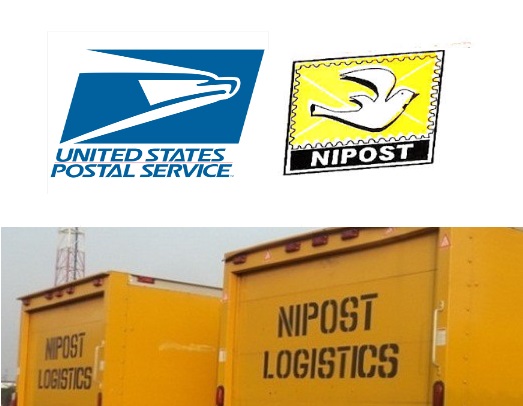
The Strategic Operating “Loss” in US Postal Service and What Nigeria’s NIPOST Must Learn

1

The United States Postal Service (USPS) knows how to “lose” money: “On a U.S. generally accepted accounting principles basis, the Postal Service had a net loss of $4.9 billion for 2021, compared to a net loss of $9.2 billion for 2020. The Postal Service’s operating revenue was $77.0 billion for 2021, an increase of $3.9 billion, or 5.3 percent, compared to the prior year.” But do not be deceived: that is an amazing strategic operating  loss (you can also call this loss-leading operations where you expect to capture value in other ways even as you record direct losses in one way). 

This is what happens: you can visit a post office in New York, buy a stamp for 50 cents, and send mail to the remote part of Alaska. That delivery may possibly cost the USPS more than $5 but it is happy to charge you 50 cents. But by charging the 50 cents, it ensures that rural America and urban America remain connected for commerce. It is evident: if you remove the postal service in a state, a big divide will happen. Simply, you have broken the supply chain, and the rural and urban parts will become further apart. Economically, the rural area will struggle.

By running those losses, USPS keeps the rural economy going. But as it does that, the United States government makes up via taxes, made possible by those better logistics and supply chain USPS powers. That is the reason why they continue to focus on improving operations, and not overly increment of prices to become profitable.

America does it but China is the best in the world when it comes to this. If you live in New York, you can buy an iPhone case from a Chinese vendor on ebay for $1.50 including shipping. Yes, less than $2, and someone will ship a case from China to New York. If you try to buy the same thing within the US, you must go down by at least $7 including shipping. 

How is that possible? China subsidizes shipping and supply chain, making China’s products competitive for global commerce. The marginal losses are taken care of by higher taxes, overall economic growth and new employment.

Come to Nigeria: we miss the memo as everyone wants to run a postal service that is NEVER loss-making. That is possible since the leaders do not understand that without logistics and supply chain, there is no commerce. A loss-making postal service may be necessary since emails and new digital communication systems have taken out the most profitable segments of the old postal service systems. But since the physical world remains, postal services remain vital for healthy economies.

You need to understand my pains when you realize that Ovim postal service (just like the train station) is no more. And when it collapsed as most postal services in Nigeria, the village became far distant to the major cities because the supply chain had been broken.

I am hoping that by 2023, Nigeria will have a GREAT Team and fix this nation once again.

Aba is fading and that affected my village Ovim. Ovim train station was the largest train station in our area serving many communities. Typically, from Aba, every train is expected to stop at Umuahia, Uzuakoli and then Ovim, bypassing some small stations.

Ovim served Ohafia, Arochukwu, Ahaba, and many other communities. As that was happening, businessmen went and built houses around the station. But with the train station gone, everything has collapsed. The hub is gone and Ovim lost a strategic positioning which was used to supply garri to Enugu via rail!

Every kid rode a Raleigh bicycle which was used to move foodstuffs from Oriendu Market to the train station! It was great.

Feedback on LinkedIn Feed

Comment: The Nigerian government might have tried to do this by subsidising petrol.

If petrol was sold at the openn market rate in Nigeria, we would not be able to afford garri and rice any more.

What is left of our national logistic systems would grind to a complete stop.

We would even have civil disorders.

I think every government has it’s own version of subsidy in place, however Nigeria’s version is obviously not working.

My Response: What the US does is not subsidy, it is a pure strategic operating loss-making. This operating loss comes out of utilizing factors of production (there is an economic activity which helps to create finished goods, expanding the GDP). Subsidy does not require any deployment of factors of production. How? If we have 10 trucks of petrol and I pay $200k as a subsidy at inception, I am distorting market equilibrium since someone can re-export those 10 trucks.

An equivalent strategic operating loss in Nigeria would have been reducing the cost to ride Edo Line, Abia transport, BRT Lagos, Kaduna transport line, etc so that those using transportations (within a production line) pay say 10% less with government covering. That government expenditure is within a clear economic activity pipeline and cannot be disintermediated.

Comment 2: Strongly disagree…A loss leading strategy is terrible for an institution such as NIPOST. They are already losing so much money and capacity. There are almost nothing like USPS. I’m not even sure how they exist currently.

My Response 2: “I’m not even sure how they exist currently.” – Not sure where to begin since you noted that you are not even sure. NIPOST was “diminished” when emails came at scale as it was no longer making money via stamps. Before emails, NIPOST was super-profitable and postmaster general was a big appointment. Today, no one cares!  Nigeria instead of absorbing the “losses” stopped investing in it and sold some assets. Today, NIPOST does not operationally exist, it exists because of NIPOST electronic stamp duties we pay for wiring money in Nigeria. If you remove it, they will close shops tomorrow.

Sure – they have the peripheral export service, microfinance, wallet, big city delivery etc. But let us not be confused – without the stamp duty, they have no mission now. They do not cover more than 99% of Nigeria.

Comment 3: Amazing and simple analysis tinged with wisdom. So we need our national corporations like the NNPC and the other essential ones to run being subsidized so they could provide essential services which in turn trigger economic growth. Unfortunately, the political boys don’t see it this far and clear.

My Response: Making NNPC a strategic loss-maker or loss-leading will not be correct. You benefit from strategic loss-making if that activity that generates that loss can enable you to tax the outputs to recover the losses. The loss USPS makes generates $billions in US tax that compensate for that loss.

An equivalent strategic operating loss in Nigeria (in the oil sector) would have been reducing the cost to ride Edo Line, Abia transport, BRT Lagos, Kaduna transport line, etc so that those using transportations (within a production line) pay say 10% less with government covering. That government expenditure is within a clear economic activity pipeline. When we tax that, we recover that “loss”.
How to acquire a Building or Construction permit/approval in Nigeria

1

Not many people are aware that Building projects require an approved Building plan, whether it’s for a residential or commercial piece of Real Estate.

Many people also have a faint idea of Building permits and Building control regulations but have no idea of how they are procured, the requirements for procuring them, and the applicable Regulatory Framework governing the grant of Building permits or approvals.

Building permits are essentially Regulatory approvals given by a government through its relevant agencies that enable the commencement and completion of a construction, renovation or remodelling project on a piece of landed property.

Following from this, what this write-up aims to do is to provide some insight into:

– The Regulatory Framework governing the grant of Building permits;

– The Procedure involved in applying for a Building permit;

– The requirements for applying for a Building permit;

– The time and cost implications of obtaining a Building permit.

It should be noted that Building control regulations within Nigeria are within the control of State and Local Governments and they vary from state to state as well, so this article will be focused on the process of applying for a Building permit in Lagos state.

What is the Regulatory Framework governing the grant of Building permits in Lagos State?

The grant of Building permits in Lagos State is governed specifically by the Lagos State Physical Planning Permit Regulations 2019 and is enforced by a number of Regulatory agencies that include the following:-

– The Lagos State Physical Planning Permit Authority (LASPPA) under the Ministry of Physical Planning &Urban Development;

– The Lagos State Lands Bureau;

– The Ministry of Environment.

– The Lagos State Building Control Agency (LASBCA)

For how long do building plan permits remain valid after being granted?

Building permits have a total validity period of 2 years within which a Building plan applicant must commence construction.

How long does it take to process an application for a Building permit?

Building permit applications usually take a minimum of 60 days.

What are the most important requirements for making a valid application for a Building permit in Lagos?

To make an application for a Building permit in Lagos State, you must have the following requirements included among others:-

– A photograph of the building/construction site;

– 2 passport photographs of the applicant/ a copy of its Certificate of Incorporation where the applicant is a company;

– A Certified True Copy of the Title Document proving ownership of the land on which the construction project is to take place. This Title Document has to be either an Allocation Letter, a Certificate of Occupancy, or a Registered Conveyance where applicable OR a clearance letter from the Lands Bureau where the Title Document is still being processed;

– Where applicable, a clearance letter from the Land Use Allocation Committee;

– An Survey plan(Sun-print copy)of the land to be built on;

– A copy of the applicant’s Tax clearance certificate or evidence of Personal Income Tax payment or where the applicant is a company, 2 directors will have to provide their Tax clearance certificates;

– Evidence of payment by the applicant of application assessment fees ;

– Evidence of payment of Tenement rates, Land Use charges or Ground rent;

– A soil test report where applicable;

– A Fire safety clearance from the Lagos State Fire Service;

– Where applicable, a confirmation letter from the New Town Development Authority;

– A signed letter of structural stability/integrity report by a COREN-accredited professional (especially where the project is a building renovation);

– 5 copies each of a). An Architectural plan duly stamped by a member of the Architects Regulation Council of Nigeria (ARCON); b). Structural drawings duly signed along with a supervision letter from a COREN(Council for the Regulation Of Engineering In Nigeria) accredited engineer affirming good construction standards;

– A COREN-accredited professional stamped calculation sheet for the materials to be used for the construction project;

– An Environmental Impact Assessment report from the Ministry of Environment where applicable.

Are there other fees or cost implications i should know of when applying for a Building permit?

Yes there are. You would most likely be required to pay for the following:-

– A Building plan approval application fee;

– A layout fee;

– A Fencing permit;

– A certificate of fitness levy;

– A Registration fee.

Will the requirements mentioned above still be needed if the building project is a simple renovation such as a Boy’s Quarters?

No, not all of them will be required except for mainly the Survey plan, Architectural plan, the structural drawings, a supervision letter/indemnity letter from a COREN-accredited engineer as well as the applicant’s Tax clearance certificate which must still be submitted before receiving a Building permit for a renovation.

In summary, what are the main steps i need to take in order to commence an application for a Building permit/approval?

To start a Building plan permit application(to be submitted in soft and hard copies), you need to do the following :-

– Get your lawyer to procure your Land Title Documents or to commence your Title registration application immediately as well as your Tax clearance certificate and payments receipts of all required Regulatory fees;

– Get architectural drawings from an ARCON-accredited architect;

– Get from a COREN-accredited engineer, structural drawings with detailed calculations along with a statement of structural stability;

– Instruct your lawyer to submit all these documents and required fee receipts and have the latter confirmed by the appropriate department of LASPPA;

– Wait for a physical inspection of your construction site by officials of the Ministry of Physical Planning & Urban Development.

– Commence your application for a main building permit within 5 days of the grant of your planning permit to the Lagos State Building Control Agency (LASBCA)

It should be noted that every approved Building plan must be kept on the Construction site for inspection at any time through the course of the construction/building project. Also, seeking a Building permit approval for specific types of structures like Filling stations would also require Pre-licensing inspections and approvals from other government agencies like the NMDPRA(Nigerian Midstream & Downstream Petroleum Regulatory Authority)

From the above, it can be seen that though the process of getting a Building permit seems tedious (and it sometimes is), you can avoid a lifetime of liabilities, including jail time for negligence-based manslaughter arising out of deaths from collapsed buildings, when you have the right professional guidance to help you with this extremely important aspect of Real Estate & Construction Regulatory Compliance. Consultation enquiries on this subject matter, including the procedure for Building permit applications in other states apart from Lagos, can be sent to ogbukalegal@outlook.com or 07011261897.

Leading and Managing Teams

0

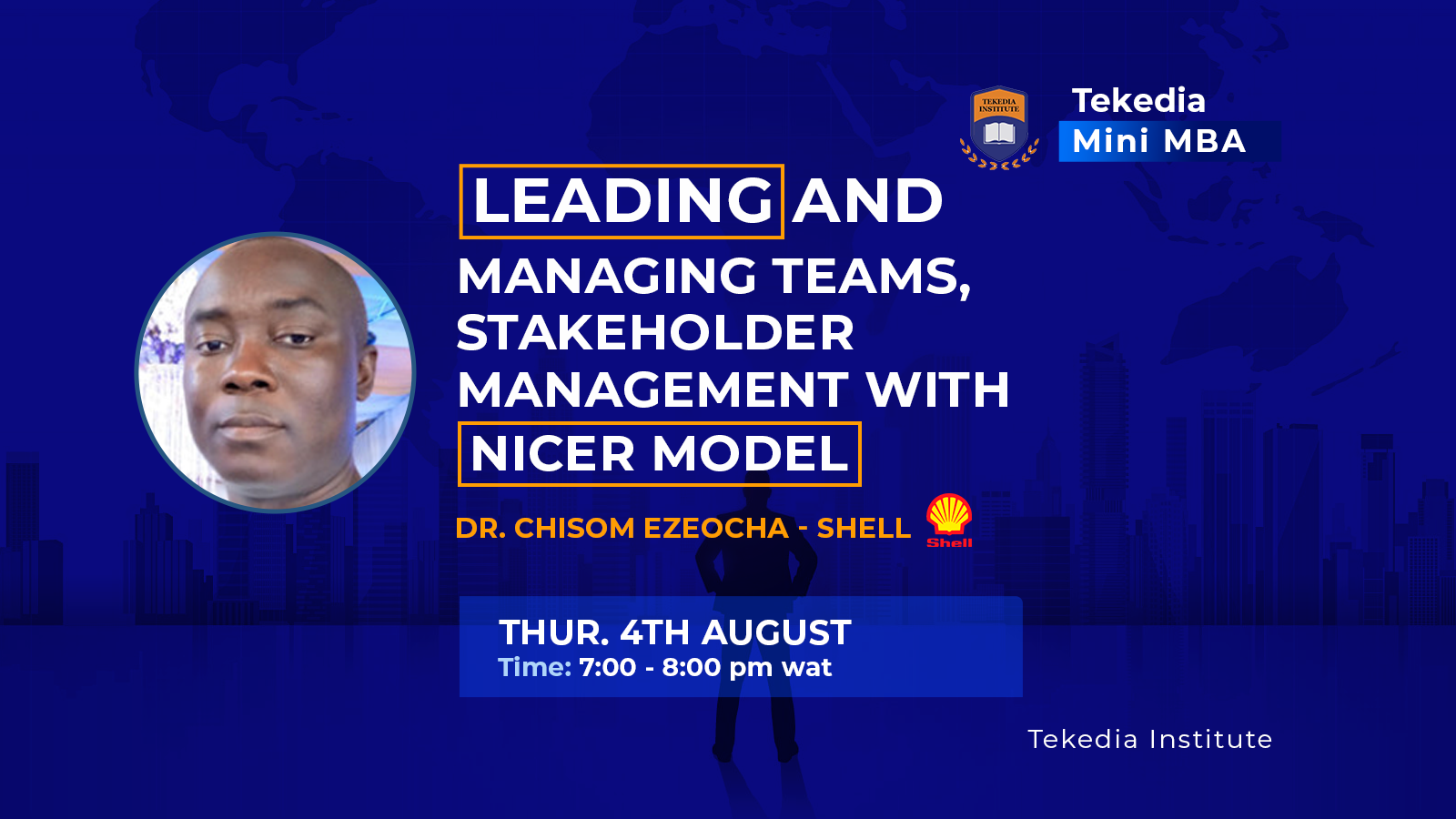
Join us today at 7pm WAT as Dr. Chisom Ezeocha from Shell educates us on how to lead and manage teams. He will also introduce us to NICER model, a tool for stakeholder management. If you are running extremely complex projects like the types they run in oil and gas companies, make sure you attend to understand how they keep those factors of production aligned for success. Zoom link in Tekedia Mini-MBA Board.

Tekedia Mini-MBA >> learn from the best. Register for the next edition.

University of Ibadan College of Medicine Receives Donation of $1million from Dr Philip Ozuah

0

Amidst the Academic Staff Union of Universities strike which is running to its sixth month, the College of Medicine, University of Ibadan (CoMUI) celebrates a huge financial contribution by an alumnus of the college, Doctor Philip Ozuah, to boost provision of hostel facilities for students in the college.

Philip Ozuah who graduated from the University of Ibadan in 1985 is the President and Chief Executive Officer of Montefiore Medicine, Montefiore Health System (MHS) and the Albert Einstein College of Medicine in New York. Ozuah donated the sum of $US1million to the college of Medicine Ui on Monday, 1 August 2022 during the unveiling of the CoMUI’s new students hostel facility.

While keynoting and leading the fundraising session via zoom at the ceremony, Ozuah made the huge donations on behalf of his family. He said the CoMUI made him the man he is and the contribution is just a way of giving back to the college.

Ozuah was reported to be among the highest paid hospital executives in New York. According to a New York post article, he got $13million in compensation. He also got a $9million payout in early retirement money in 2018 when he was president of the Montefiore Health System, and received a $1.6million additional bonus to his $2.8million salary according to Montefiore tax filing.

The former Vice Chancellor of the University of Ibadan, Prof. Abel Idowu Olayinka remarked on his analysis published on his Facebook page on Tuesday that the hefty donation by Philip Ozuah will serve as a catalyst for the timely construction of an ultra modern student Hostel estimated to cost about 2.5billion naira. “Other Alumni and friends of the College of Medicine Should chip in the Window’s mite for the laudable project of the College’s Provost, Olayinka Omigbodun and the Ibadan College of Medicine Alumni Association World Wide (ICOMMA WW) president Otolorin” he said.

Prof. Olayinka Idowu also noted that the donation would serve as a morale booster to the partnership between CoMUI and ICOMMA WW. According to him, ICOMMA WW has been highly supportive of CoMUI.

Commenting on the issue of incessant strike in the public Universities due to financial constraint, Professor Idowu Olayina recalled a proposal by the 1949 alumnus of the then University College Ibadan, Professor Akin Mabogunje, that the Federal Government should hand over the University to the alumni to manage. According to the former vice Chancellor, it is perhaps the time the proposal is interrogated for the overall benefit of the country. Otherwise, if we are to learn from history the current national strike by ASUU may painfully not be the last.

Y Combinator Downgrades Accelerator Class Size by 40%

0

Y Combinator is feeling the pain: “Y Combinator Slashes Startup Accelerator Class Size by 40%”. . When limited partners feel like the economy is crashing or recession is on the way, they send limited funds to general partners who then make limited investments in startups. As the loop circles all the way, funding dries up. That is what is happening in YC. If you run a startup, check your burn-rate because it is going to become harder to raise money before the outlook changes.

Y Combinator has cut the number of startups it is funding and training this summer by about half compared to its winter program, a spokesperson confirmed. The famed Silicon Valley accelerator responded to a downturn in the economy and in venture capital funding in reducing its class size.

The move means as many as 250 companies will pitch themselves to potential investors in early September at Y Combinator’s virtual demo day, a biannual rite of passage that helped launch DoorDash and Coinbase. A smaller class could make it easier for graduates to raise money by lowering the competition for investor attention. The downsizing also follows mounting criticism that Y Combinator had grown too large, damaging its reputation for churning out Silicon Valley’s best startups.

YC needs to get back to the business; our Tekedia Capital needs it as part of our mission here.