DD
MM
YYYY

PAGES

DD
MM
YYYY

spot_img

PAGES

Home Blog Page 4997

Emirates Airline Set Aug 15 to Cut its Operation in Nigeria Due to its Withheld $85m Revenue

0

Nigeria’s forex crisis is escalating, gradually impacting the nation’s bilateral ties in a way that could undermine the already troubled aviation sector.

In June, the International Air Transport Association (AITA), expressed concern over Nigeria’s inability to repatriate $450 million belonging to its members.

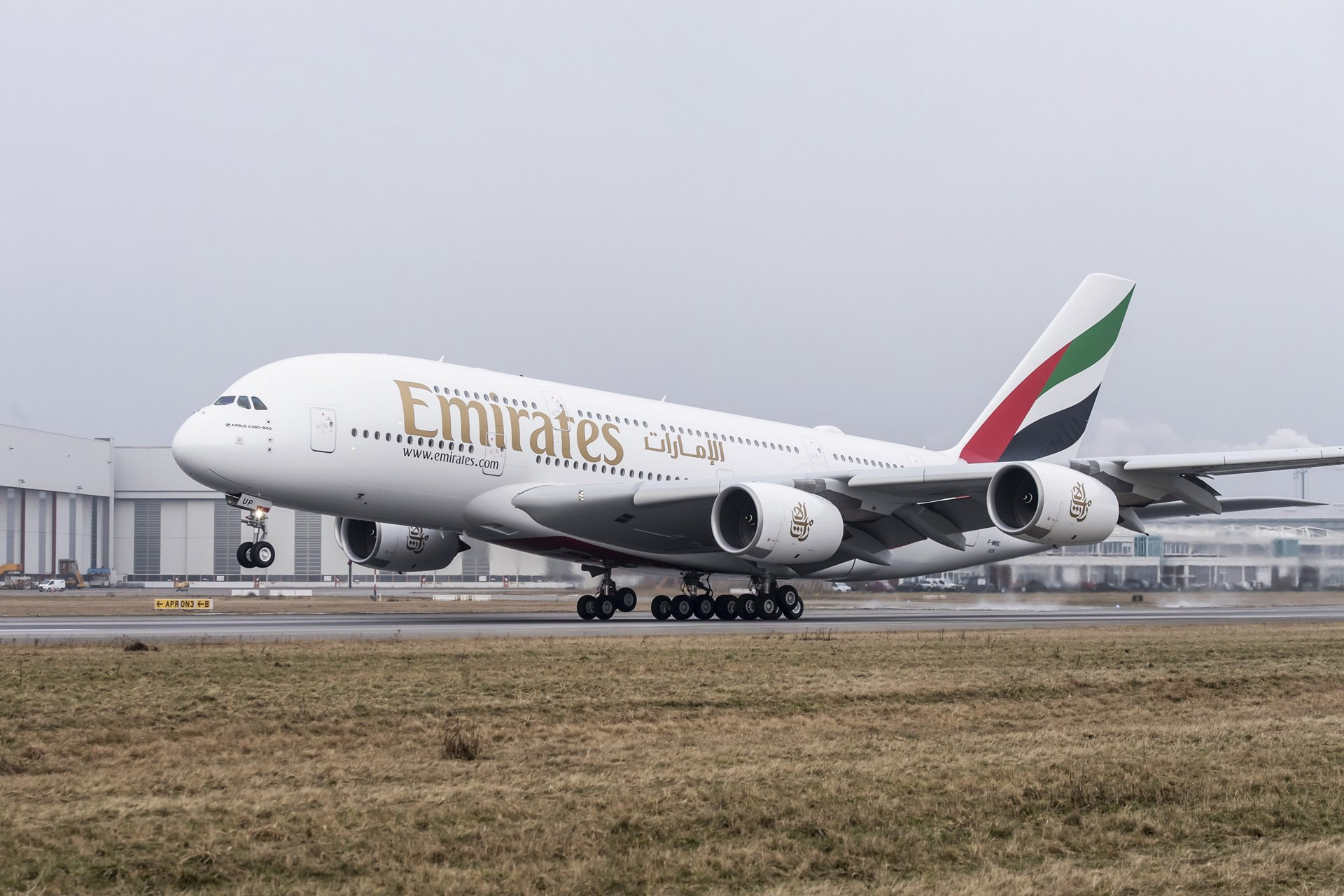
Now Emirates Airlines has announced it is reducing its flight operations to Nigeria from August 15, due to the Central Bank’s continued withholding of $85 million from its ticket sales in Nigeria

“As of July 2022, Emirates has US$ 85 million of funds awaiting repatriation from Nigeria. This figure has been rising by more than $US 10 million every month, as the ongoing operational costs of our 11 weekly flights to Lagos and 5 to Abuja continue to accumulate. With effect from 15 August 2022, Emirates will be forced to reduce flights from Dubai to Lagos from 11 per week to 7 per week,” the airline said in a letter dated July 22 2022 that was signed by Sheik Majid Al Mualla, the DSVP International Affairs, which was addressed to Nigeria’s aviation minister Senator Hadi Sirika.

The arising situation is as a result of the troubled Nigeria’s forex market that has seen the naira, the country’s currency, tumble to its lowest at N710 per dollar. The Central Bank of Nigeria (CBN) is helplessly trying to contain the situation but a lot of factors that include its policies and measures stand in the way.

Al Mualla said that Emirate’s attempts to work out a solution with the CBN have been futile as response from the apex bank has been negative. He also said that meetings had been held between Emirates’ own bank in Nigeria and IATA to discuss improving Forex allocation, but they did not yield positive results.

The bottom line is that Nigeria does not have enough dollar liquidity to fulfill the repatriation obligation. The situation has touched every sector of the nation’s economy, stoking inflation to 17.70%, according to the data last published by Nigerian Bureau of Statistics.

On Thursday, the CBN blamed the Nigerian National Petroleum Corporation (NNPC) for the country’s forex crisis. The apex bank said the naira is on free fall because the NNPC has not been remitting dollars to Nigeria’s foreign reserve.

The central bank said that domestically, there has been zero dollar remittance to the country’s foreign reserve by the NNPC, noting that the CBN does not print dollars.

The NNPC and its subsidiaries are the sole managers of crude oil which accounts for more than 80 percent of Nigeria’s Foreign Exchange (forex) earnings.

Though the CBN said it is working to address the forex crisis, there is nothing yet to show for its efforts as the situation bites harder.

The financial regulator’s initiatives such as the “RT200 FX’’ Programme and the “Naira4Dollar’’ rebate scheme have failed to ameliorate the raging crisis.

Major sources of Nigeria’s forex liquidity have been liquidated. Nigeria’s Excess Crude Account (ECA), has been depleted from over $2 billion where it stood in 2015 to $376,655 in July, 2022.

Against this backdrop, Emirates Airline’s decision to downsize its flight operations in Nigeria may be the beginning of a turmoil in the nation’s aviation sector. There is concern that many other airlines whose monies are also being trapped in Nigeria will soon follow the step of Emirates.
Kenya Threathens Facebook With Ban Over Hate Speech

0

Kenya’s ethnic watchdog, National Cohesion And Integration Commission (NCIC) has issued a warning to Facebook to stop the hate speech on its platform within seven days, or risk a ban, as the country is set to go into election next month.

The NCIC reacted to a report by advocacy group Global Witness, and Foxglove, a legal non-profit firm, which fingered Facebook’s inability to detect hate speech ads. A report which was a collaboration of the Global Witness report and that of NCIC findings, reveals that Facebook was slow to prevent hateful content on its platform, fanning an already volatile political environment.

The NCIC has therefore called on Meta, Facebook’s parent company, on moderation before, during, and after the elections, while giving it one week to comply or risk a ban in the country.

According to the NCIC commissioner, Danvas Makori, he disclosed that Facebook continuously violates the laws of the country as they have on several occasion allowed themselves to be a vector of hate speech, incitement, misinformation, and disinformation.

Facebook is said to have a penetration of 82% in Kenya, making it the second most widely used social network in the country, after Whatsapp.

In a response to Kenya’s threat, Facebook has issued a statement, stating that it has been preparing for the country’s 2022 election over the past year, with the help of a dedicated team that is working closely with election authorities and trusted partners in the country.

Facebook has always praised its super efficient AI models for being able to detect hate speech from being circulated on the platform. However, there have been complaints from different countries.

To test Facebook’s claims that its Al models can detect hate speech, Global witness submitted a total of 20 ads that called for violence and beheadings both in English and Swahili. All except one wasn’t approved. The algorithms Facebook currently uses to detect hate speech works only in certain languages.

What this implies is that, with this defect, it has become easy for Facebook to contain the spread of racial and religious hate speeches online in primarily developed countries and communities where global languages like English, Spanish, and Mandarin dominate. But in the rest of the world, it is as difficult as ever.

Unlike the algorithms that Facebook states that automatically detect 80% of hate speeches without the need of a user to report their first, these human moderators do not regularly scan the site for the hate speech themselves. Instead, their job is to decide whether posts that users have already reported should be removed.

MTN Nigeria Is Now “osisi na ami ego” As H1 2022 Profit Hits N181 Billion

1

Ego. Kudi. Owo. You take your language – MTN knows how to grow it: “Multinational mobile telecommunications company, MTN, has announced that the firm made a total profit of N181 billion for the first half of the year 2022. This profit with a 28% increase, was disclosed to be higher than the amount that was recorded in the same period of last year which was at N141.8 billion.”

As you grow that digital business and move more activities from the meatspace to the cyberspace, you create more opportunities for MTN, Airtel, etc, since they are the companies that will power that future. Indeed, when we hire and pay search engine experts to make it easier for Google to discover our websites (and in the process Google becomes more valuable), little do we argue that in the real sense, Google should pay for those experts, since they are working for it!

Of course, that is not the case because just like MTN, Google has a strategic positioning. In business, when a company has a strategic positioning in the market, it becomes “osisi na ami ego” [ a tree that produces money as the fruits]. MTN is setting new standards in Nigeria.

H1 2022 – MTN Nigeria Reports N181 Billion Profit In 6 Months


H1 2022 – MTN Nigeria Reports N181 Billion Profit In 6 Months

0

Multinational mobile telecommunications company, MTN has announced that the firm made a total profit of N181 billion for the first half of the year 2022. This profit with a 28% increase, was disclosed to be higher than the amount that was recorded in the same period of last year which was at N141.8 billion.

Shares in the company gained at 5.3 percent on Friday. Its financial reports show that this profit is attributed to the boost in the company’s revenue in the first half of the year by 20% in spite of the double-digit inflation witnessed during the period. The total revenue of the firm for the first six months was N950 billion, a 20% increase from 791 billion in the first half of last year.

The highlights of the results include; Mobile subscribers increased by 7.6% to 74.1 million (Added 5.7 million subscribers in H1 2022); Active data users increased by 13.2% to 36.8 million (Added 2.5 million active users in H1 2022); Active fintech subscribers rose by 87.3% to 11.5 million (4.2 million registered (2.4 million active) MoMo wallets since the launch of PSB on 19 May 2022).

Other include Service revenue increased by 19.9% to N947.9 billion; Earnings before interest, tax, depreciation, and amortization (EBITDA) grew by 22.1% to N509.3 billion; EBITDA margin increased by 0.9 percentage points (pp) to 53.6%; Profit before tax (PBT) grew by 24.9% to N268.6 billion;

Earnings per share (EPS) rose by 28.1% to N8.92 kobo; Capital expenditure (Capex) rose by 67.1% to N311.6 billion (up 78.6% to N204.5 billion, excluding the right of use assets); Interim dividend of N5.60 kobo per share, up by 23.1%.

Commenting on the significant increase in profit of the firm, MTN Nigeria CEO, Karl Toriola disclosed that during the first quarter of the year 2022, the company made massive progress by strengthening the resilience of the business in the face of inflation that put a strain on the spending of consumers.

Also, the impact of the Russian-Ukraine war put a strain on the global supply chains across the globe, and the firm had to accelerate capital expenditure for network expansion to mitigate global supply chain and exchange rate risks.

MTN deployed Capex of N311.6 billion to accelerate the rollout of the 4G network which presently covers 75.3%, compared to 65.1% in the first quarter of the year. This doesn’t come as a surprise at all, seeing the huge profit MTN made in the first quarter of 2022. The company relentlessly continues to improve and enhance the quality and coverage of its network to accommodate the increasing demand for data.

Recall when the Nigerian Communications Commission (NCC), earlier this year issued a directive for all operators to restrict outgoing calls for subscribers whose SIMs are not associated with NINs. MTN, knowing full well that such a directive will affect so many of its users, had to actively engage their affected customers by supporting the NIMC in accelerating NIN enrolment of its users.

This aggressive drive of gross connection of its users to aid in NIN enrolment and Sim registration greatly benefited the firm as they added 2.5 million active data subscribers in the first half of the year 2022.

Also, following MTN’s entry into the fintech space with its MOMO payment service bank(PSB), since the launch, the company recorded 4.2 million registered MoMo wallets of which 2.4 million are active, generating MoMo transaction volume of approximately 7 million within six weeks of operations.

The FTC Files Lawsuit to Stop Meta’s Acquisition of Within

0

The U.S. Federal Trade Commission is taking a legal step to stop Facebook parent Meta from purchasing virtual reality (VR) content maker Within Unlimited.

The move is part of the regulator’s anti-monopoly fight that has intensified against Big Tech recently.

A report by Reuters said the FTC, in a request filed on Wednesday in federal court in San Francisco for a temporary restraining order and preliminary injunction, called Facebook a “global technology behemoth,” noting its ownership of popular apps including Instagram, Messenger and WhatsApp, and said its “campaign to conquer VR” began in 2014 when it acquired Oculus, a VR headset manufacturer.

Deciding through 3-2 vote, the FTC argued that the acquisition portrays monopoly given Facebook’s influence in the VR market. The social media company’s acquisition of Oculus has already given it a dominant position in the market.

Facebook agreed to buy Within, which has a popular fitness app called “Supernatural”, in October 2021 for an undisclosed sum. Within was founded in 2014 and has since become a big name in creating original content for virtual reality.

The FTC separately had filed an antitrust lawsuit against Facebook in 2020. The Commission has become more proactive since Lina Khan was appointed its chair last year.

The ultimate goal is to limit the freedom of the Big Tech, flexing their financial muscle, from buying every company they see as a competitor.

Meta, Google, Amazon and Microsoft have been subjects of debate in the US Congress in recent times over anti-competition inquiries. Meta’s acquisition of Instagram was a reference point.

The FTC’s lawsuit against Meta denotes the regulator’s stern position on further acquisition by any member of the Big Tech, particularly companies in the same line of business with the tech firms.

Meta said in a statement that it disagreed with the FTC’s analysis of the market.

“The FTC’s case is based on ideology and speculation, not evidence. The idea that this acquisition would lead to anticompetitive outcomes in a dynamic space with as much entry and growth as online and connected fitness is simply not credible,” the company said.

“We are confident that our acquisition of Within will be good for people, developers, and the VR space,” Meta said.

The FTC has maintained that the acquisition is monopolistic. In its complaint, the Commission argued that the planned acquisition was a way for Meta to dominate virtual reality. VR industry revenues are expected to grow from $5 billion last year to more than $12 billion in 2024, the FTC said in its complaint.

Meta already has the best-selling VR headset, the Quest 2, and controls a Meta Quest Store with hundreds of apps. It has bought game makers like Beat Games, Sanzaru and Ready at Dawn Studios, among others, the complaint said.

“Meta already owns a best-selling virtual reality fitness app, and it had the capabilities to compete even more closely with Within’s popular Supernatural app,” said John Newsman, director of the FTC’s Bureau of Competition, in a statement. “But Meta chose to buy market position instead of earning it on the merits. This is an illegal acquisition, and we will pursue all appropriate relief.”