DD
MM
YYYY

PAGES

DD
MM
YYYY

spot_img

PAGES

Home Blog Page 5

TeraWulf Secures $19bn Anthropic Deal As Bitcoin Miner Accelerates Transformation Into AI Infrastructure Provider

0

TeraWulf has taken a major step in its transformation from a cryptocurrency miner into an artificial intelligence infrastructure company, signing a 20-year lease agreement with AI startup Anthropic that is expected to generate approximately $19 billion in contracted revenue over the life of the deal.

The announcement sent TeraWulf’s shares more than 10% higher in early trading on Monday, extending a rally that has already seen the stock gain about 85% this year as investors increasingly reward companies repositioning themselves to benefit from the AI boom.

The agreement represents one of the largest long-term infrastructure commitments announced by an AI company and underscores the growing race among model developers to secure dedicated computing capacity as demand for AI services continues to surge.

Under the agreement, Anthropic will lease capacity at TeraWulf’s Justified Data campus in Hawesville, Kentucky, where the company is building a purpose-designed AI data center capable of supporting some of the world’s most compute-intensive workloads.

The campus will ultimately provide approximately 401 megawatts of critical IT load, placing it among the largest AI-focused data center developments currently under construction in the United States. Initial capacity is expected to become operational during the second half of 2027, with the full campus scheduled for completion in early 2028.

The scale of the project reveals the enormous computing requirements of frontier AI models, which require thousands of advanced graphics processing units (GPUs), vast amounts of electricity and sophisticated cooling infrastructure to train and deploy increasingly powerful systems.

The agreement gives TeraWulf something that has become highly prized across the AI infrastructure sector: long-term, predictable revenue backed by one of the industry’s leading artificial intelligence companies.

Unlike bitcoin mining, where revenues fluctuate with cryptocurrency prices, mining difficulty and network rewards, the Anthropic lease provides contracted cash flows spanning two decades.

From Crypto to AI: The Growing Pivot

Cryptocurrency miners, following the emergence of AI, have seen rapidly changing fortunes. Companies that once built extensive power infrastructure to support bitcoin mining are now repurposing those assets for AI data centers, where demand for electricity and high-performance computing has surged as technology companies commit hundreds of billions of dollars to artificial intelligence.

Many miners possess a strategic advantage because they already control access to large amounts of electrical capacity, one of the most significant bottlenecks facing AI infrastructure development.

TeraWulf has been among the companies moving aggressively to capitalize on that opportunity. In May, management said artificial intelligence infrastructure would become an important driver of the business as it diversified away from dependence on bitcoin mining.

Monday’s announcement suggests that the transition is now accelerating. Alongside the Anthropic agreement, TeraWulf also announced it will sell its 50.1% stake in the Abernathy joint venture to an investor group led by existing partner Fluidstack.

The transaction allows the company to monetize an investment of roughly $450 million at a premium to the capital originally invested. Management said the proceeds will be redirected toward wholly owned AI infrastructure projects, strengthening its balance sheet while increasing exposure to higher-value data center assets.

The sale also simplifies TeraWulf’s corporate structure, allowing the company to focus capital on facilities where it maintains full ownership and operational control.

As competition intensifies with rivals including OpenAI, Google, Meta and xAI, leading AI developers are signing multi-year infrastructure agreements rather than relying solely on third-party cloud providers.

Owning or leasing dedicated AI computing capacity has become a strategic priority as shortages of advanced chips, power, and data center space continue to constrain the industry’s growth.

The 401-megawatt campus is expected to host thousands of AI servers powered by advanced graphics processors, providing the computing resources needed to train future generations of Anthropic’s large language models and support expanding enterprise demand.

Currently in the digital infrastructure space, facilities originally developed for cryptocurrency mining are emerging as attractive locations for AI computing because they already possess access to high-voltage electricity, industrial-scale cooling systems and large land parcels suitable for expansion.

Analysts see this convergence between cryptocurrency infrastructure and artificial intelligence as one of the defining shifts in the digital infrastructure sector.

Crypto Market Adds $90 Billion in a Week as Bitcoin Miner Stress Reaches Historic Levels

0

The cryptocurrency market has staged another impressive recovery, adding approximately $90 billion to its total market capitalization within a single week. This surge reflects renewed investor confidence, increased institutional participation, and optimism surrounding the broader digital asset ecosystem.

While rising market capitalization often signals strength, another important metric tells a more complex story: Bitcoin miners are experiencing stress levels not seen in previous market cycles. The rapid expansion of crypto’s total market value demonstrates that capital is once again flowing into digital assets.

Bitcoin continues to lead the rally, with Ethereum and several major altcoins also contributing to the overall increase. Positive macroeconomic expectations, growing interest in tokenized financial products, and sustained demand for cryptocurrencies have encouraged investors to re-enter the market after periods of uncertainty.

Beneath the surface of this market optimism lies a significant challenge for Bitcoin miners. Mining remains the backbone of Bitcoin’s security model, requiring specialized hardware and enormous amounts of electricity to validate transactions and secure the network.

Following the latest Bitcoin halving, mining rewards were reduced by half, dramatically lowering the amount of Bitcoin miners receive for producing new blocks. This reduction has intensified financial pressure across the mining industry. Although Bitcoin’s price has recovered considerably, many mining companies continue to struggle with rising electricity costs, increasing network difficulty, expensive hardware upgrades, and shrinking profit margins.

Historical indicators suggest that miner stress has reached levels rarely observed in Bitcoin’s history. Miner stress is measured using several on-chain and operational metrics, including profitability, hash rate growth, selling pressure, and reserve balances.

When mining becomes less profitable, companies often sell larger portions of their Bitcoin holdings to finance daily operations, repay debt, or invest in more efficient equipment. Increased selling from miners can temporarily introduce additional supply into the market, creating short-term volatility.

Bitcoin’s network continues to demonstrate remarkable resilience. The global hash rate remains near record highs, indicating that miners continue investing in infrastructure despite reduced rewards. This reflects long-term confidence in Bitcoin’s future value and the expectation that higher prices will eventually offset today’s operational challenges.

The divergence between rising market capitalization and miner stress illustrates the complexity of the cryptocurrency ecosystem. Investors are focusing on broader adoption, institutional investment, and improving regulatory clarity, while miners must manage immediate operational realities.

These narratives can coexist, with bullish market sentiment occurring alongside financial strain within the mining sector. Institutional demand has become an increasingly important driver of Bitcoin’s price performance.

Exchange-traded products, corporate treasury allocations, and growing acceptance of digital assets by traditional financial institutions have created new sources of demand that were less prominent in previous market cycles. This institutional buying has helped absorb selling pressure from miners and other market participants.

The sustainability of the current rally will depend on several factors. Continued macroeconomic stability, supportive regulatory developments, technological innovation, and expanding real-world blockchain applications could provide additional momentum for the crypto market. Miner profitability remains a key indicator to monitor, as prolonged financial stress could trigger industry consolidation and reshape the competitive landscape of Bitcoin mining.

The addition of $90 billion to the crypto market’s valuation highlights renewed confidence in digital assets. Yet the historic stress facing Bitcoin miners serves as a reminder that every market rally has underlying structural challenges. As the industry matures, balancing investor optimism with the economic realities of network participants will remain essential to the long-term health and sustainability of the cryptocurrency ecosystem.

Construction and Reconstruction of UI International School, Hijab

0

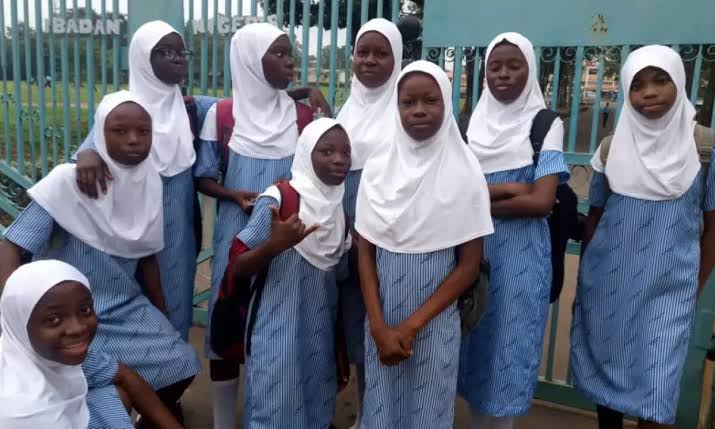
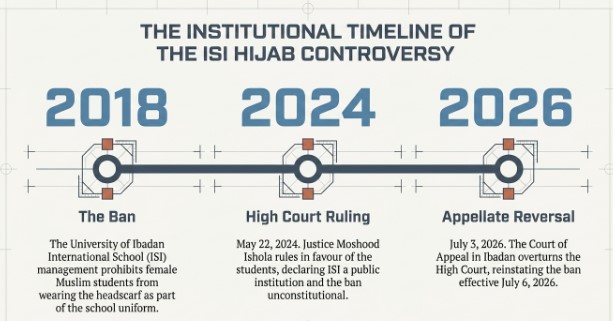
The controversy surrounding the use of the hijab at the International School, University of Ibadan (ISI) has once again exposed one of Nigeria’s enduring social realities: our public debates are rarely about the immediate issue before us. Although the disagreement appears to concern whether female Muslim students should wear the hijab with their school uniform, the public reactions reveal something much deeper. They demonstrate how Nigerians construct the hijab as a symbol of competing ideas about constitutional rights, institutional authority, religious identity, citizenship, and national coexistence.

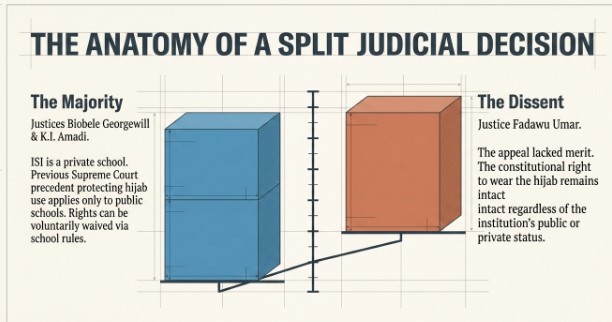
A review of public comments on the ISI controversy reveals that the hijab is no longer perceived as merely a piece of clothing. Instead, it has become a powerful social symbol onto which different groups project their beliefs and aspirations. For one group, the hijab represents an inalienable constitutional right. Their argument is straightforward: because the University of Ibadan is a federal institution, any school operating under its authority should uphold the constitutional guarantee of freedom of religion. In this construction, denying a student the right to wear the hijab is interpreted not as enforcing a dress code but as restricting religious freedom. Consequently, calls to “fight till the end” are framed as civic responsibility rather than religious activism.

Another group constructs the issue very differently. To them, ISI functions as a private educational institution with the right to determine its admission conditions and uniform policy. Parents, they argue, voluntarily choose the school and should respect its established rules. If the school’s policies conflict with personal religious convictions, the appropriate response is to enrol one’s child in another institution rather than compel the school to alter its regulations. Within this discourse, the hijab becomes less a constitutional question than one of contractual agreement and institutional autonomy.

Between these competing positions lies an unresolved question that repeatedly surfaced in public discussions: What exactly is ISI? Is it a public institution because it is connected to the University of Ibadan, or is it a private entity because it is self-financing and independently managed? This disagreement over institutional identity has become as significant as the debate over the hijab itself. The answer determines whether constitutional obligations or institutional discretion should prevail.

Beyond the legal arguments, the comments also reveal how the hijab is socially constructed in remarkably different ways. For many Muslim contributors, it is an essential expression of religious identity, obedience to God, and constitutional liberty. For others, it is interpreted as an unnecessary religious display within an educational environment that should prioritise uniformity and neutrality. Some commenters went further, portraying the hijab as a source of division, while others viewed resistance to it as evidence of religious intolerance.

Perhaps most revealing is the fact that the same piece of fabric simultaneously symbolises modesty, resistance, constitutional freedom, institutional disorder, religious commitment, Arab cultural influence, and even political activism. Such diverse interpretations demonstrate that the public is not debating the hijab itself; rather, they are debating what the hijab should mean within contemporary Nigerian society.

The discourse also exposes worrying patterns of religious polarisation. While many contributors advocated peaceful dialogue and mutual respect, others questioned the sincerity of Muslims, criticised Islamic beliefs, or dismissed the legitimacy of religious accommodation altogether. Conversely, some supporters of the hijab framed the issue in ways that suggested religious victory rather than constitutional negotiation. These positions deepen social divisions by replacing civic dialogue with identity-based confrontation.

Yet there were also voices calling for a more inclusive understanding of religious diversity. Some argued that if Muslim students are allowed to wear the hijab, students from other faiths should similarly be permitted to express their religious identities. Others questioned why Nigeria, in an era defined by artificial intelligence, robotics, and biotechnology, continues to expend enormous social energy on disputes over clothing instead of investing in educational innovation and national development.

The ISI controversy demonstrates that educational institutions have become symbolic spaces where broader struggles over religion, law, identity, and governance are negotiated. Whether one supports or opposes the wearing of the hijab, reducing the debate to a simple choice between religion and school rules overlooks the complexity of the issues involved.

As the ISI case continues to shape public conversation, the country has an opportunity to rethink how educational spaces can accommodate diversity while preserving institutional integrity. Ultimately, the future of Nigeria will not be determined by whether the hijab is permitted at one school. It will be determined by whether Nigerians can transform deeply contested symbols into opportunities for dialogue rather than division. That is the real challenge exposed by the ISI debate, and it is one that extends far beyond the gates of a single school.

Microsoft Cuts 4,800 Jobs, Restructures Xbox, and Spins Off Studios As AI Spending Reshapes Business Priorities

0

Microsoft has announced plans to cut 4,800 jobs, or about 2.1% of its global workforce, while undertaking a sweeping restructuring of its Xbox gaming business that includes divesting several game studios as the technology giant intensifies efforts to improve returns from its gaming operations and redirect resources toward its rapidly expanding artificial intelligence business.

The layoffs, announced on Monday, will see 3,200 positions eliminated within Microsoft’s gaming division, including the immediate dismissal of 1,600 employees, making it one of the company’s largest gaming-related restructurings since completing its blockbuster acquisition of Activision Blizzard.

The latest cuts come as Microsoft attempts to balance record investment in AI infrastructure with pressure to improve profitability across businesses that have struggled to generate expected returns, particularly Xbox.

The restructuring underscores Microsoft’s reassessment of its gaming strategy after investing tens of billions of dollars to expand Xbox through acquisitions and exclusive game development.

Despite acquiring Activision Blizzard in one of the largest technology deals in history and steadily building a portfolio of major game studios, Xbox has continued to trail Sony’s PlayStation and Nintendo in console sales and market share. Rather than relying primarily on console-exclusive titles to boost Xbox hardware sales, Microsoft has increasingly embraced a platform-agnostic strategy, releasing more first-party games across rival platforms to expand software revenue.

The latest restructuring accelerates that transition.

In a memo to employees, Xbox President Asha Sharma said Microsoft would separate or divest several development studios as part of efforts to create more focused businesses while reducing operational complexity.

Among the changes:

  • Compulsion Games, the studio behind South of Midnight, will become an independent company.
  • Double Fine Productions, creator of Psychonauts, will also regain independence.
  • Ninja Theory, developer of the Senua franchise, will be spun off to concentrate on expanding that intellectual property.
  • Undead Labs, known for the State of Decay series, will likewise become an independent business to accelerate the development of State of Decay 3.

Microsoft is also reviewing options for Arkane Studios, the acclaimed developer behind Dishonored and currently working on Marvel’s Blade.

According to Sharma, Arkane’s management has begun consultations with its workers’ union in France regarding the studio’s future, highlighting the international dimension of the restructuring and the regulatory requirements governing workforce changes in Europe.

AI Investment Increasingly Reshaping Microsoft’s Priorities

Microsoft has been undergoing broader restructuring as soaring AI investment consumes an increasing share of corporate resources. The company has emerged as one of the biggest beneficiaries of the artificial intelligence boom through its partnership with OpenAI and the rapid expansion of its Azure cloud computing platform.

Azure remained the exclusive commercial provider of OpenAI’s models until April, helping drive strong enterprise demand for AI infrastructure and cloud services.

However, meeting that demand has required unprecedented capital spending. Earlier this year, Microsoft projected approximately $190 billion in capital expenditure for 2026, far exceeding analysts’ expectations as it accelerates construction of AI data centers, networking infrastructure and computing capacity needed to support generative AI services.

While Azure continues to outperform expectations, the enormous cost of expanding AI infrastructure has placed growing pressure on free cash flow and prompted investors to scrutinize spending across Microsoft’s other businesses.

According to Gil Luria, Managing Director at D.A. Davidson, workforce reductions have become part of Microsoft’s strategy for funding AI expansion without sacrificing profitability.

“Microsoft has been managing down its workforce in order to pay for its AI investments,” Luria said.

“By keeping its headcount down they have been able to accelerate revenue growth while maintaining the same margins.”

The gaming business has faced additional challenges beyond hardware competition.

Artificial intelligence tools capable of automating software development and business processes are beginning to reshape parts of Microsoft’s broader software ecosystem, while rising component costs have squeezed profitability across consumer hardware.

A sharp increase in memory chip prices, driven largely by explosive demand from AI data centers, has significantly raised manufacturing costs for gaming consoles and other consumer devices. Microsoft has already responded by increasing Xbox console prices, even as hardware demand remained subdued.

At the same time, the company has increasingly relied on software subscriptions, cloud gaming and cross-platform publishing to offset slowing console sales. The strategy represents a major departure from the traditional console model, under which exclusive games were primarily designed to encourage consumers to purchase Xbox hardware.

Instead, Microsoft now aims to maximize engagement across multiple platforms, including rival consoles and PC, while growing recurring subscription revenue through Game Pass.

Part of Broader Cost-Cutting Effort

The latest job reductions follow earlier workforce actions undertaken this year. Microsoft previously offered voluntary separation packages to roughly 7% of its U.S. workforce, equivalent to approximately 9,000 employees, as part of wider organizational changes ahead of its new fiscal year. The company has historically implemented staffing adjustments near the end of its fiscal year as management reallocates budgets and investment priorities.

However, the latest cuts are considerably more extensive within the gaming business and reflect increasing pressure to demonstrate returns from years of acquisition-driven expansion.

Microsoft’s shares fell 1.4% following the announcement. The decline adds to a difficult year for the stock, which has fallen nearly 23% during the first six months of 2026, marking its weakest first-half performance since 2022.

Investors will now focus on Microsoft’s quarterly earnings later this month for updated guidance on Azure growth, AI spending, operating margins and the financial impact of its latest restructuring.

The results are expected to provide further insight into how successfully Microsoft is balancing massive AI investment with efforts to streamline legacy businesses, including gaming, amid one of the company’s most significant strategic transitions in years.

Historical Opportunities and Strategic Responses of Hunan’s Cooperation with Africa in the Zero-Tariff Era

Dr. Kaze Armel, Lecturer at Xiangtan University, China-Africa Research Institute, School of Law

Linxiao Lyu, PhD Candidate, University of Dar-es-Salaam, School of Law

The implementation of the zero-tariff policy marks a new phase in China-Africa economic and trade relations, characterized by deep market integration. For Hunan province, this represents both a strategic  opportunity to transform the advantages of being a “pioneer zone” into developmental momentum and a comprehensive test of its industrial resilience and strategic planning capabilities. Driven by the dual engines of “mining industry full-chain cooperation” and “high-end manufacturing + aftermarket exports”, with technological and model innovation as its wings, Hunan province aims to write a new chapter in its opening-up and high-quality development within the broader context of serving the construction of a China-Africa community with a shared future.

  1. Policy Background: The Milestone Significance of China’s zero-tariff policy.

Starting from May 1st, 2026, China will fully implement zero-tariffs on 100% taxable products for 53 African countries that have diplomatic relations with China. This is the solemn implementation of China’s commitment to the Beijing Summit of the Forum on China-Africa Cooperation (FOCAC) in 2024, which demonstrates China’s determination as the first major economy to fully open its market to the continent. By 2025, China-Africa trade volume reached US 348 billion dollars, and China has maintained its position as Africa’s largest trading partner for 16consecutive years. This unilateral opening-up measure goes beyond the traditional scope of economic and trade mutual benefit, and is a vivid practice of the policy concept of “genuine, friendly and sincere” towards Africa and the correct view of righteousness and benefit in the new era. It sets a new paradigm for reconstructing a more just and reasonable South-South economic and trade relationship.

  1. Africa’s response: Strategic Transformation from “Resource Export” to “Industrial Awakening”.

African countries have responded enthusiastically to the zero tariff policy, viewing it as a historic opportunity to break the “resource curse” and promote industrial transformation. The Vice President of Kenya stated at the launch ceremony of the first beneficiary train in Kindiki that zero-tariff will “directly increase the income of farmers and exporters”. Li Jinyangzhu, the Minister of Investment, Trade and Industry of the country, pointed out on social media that this move “opens the door for Kenya to the world’s largest consumer market”.

At a deeper level, Africa’s expectations go far beyond expanding its export scale, but also lie in the ascent of its value chain. African media such as Business Daily have keenly pointed out that zero tariffs will lower the landed prices of African goods, freeing up space for the development of local processing and the creation of higher added value. The President of the Kenya National Chamber of Commerce used flowers as an example to illustrate that the value of processed flowers can increase by three to four times. This marks a cognitive shift: Africa is shifting from passively adapting to global supply chains to actively utilizing opportunities in the Chinese market to shape its own industrial structure.

The Africa Trade Barometer released by Standard Bank of South Africa shows that nearly 36% of African companies list China as their top trading partner. Behind this is Africa’s desire for stable, reliable, and inclusive markets. However, amidst the joy, there is also a clear understanding. Zhuo Wu, President of the Chinese Chamber of Commerce in Kenya, reminded that entering the Chinese market means having to comply with a strict standard system. From quarantine to packaging, any negligence in any link may cause small farmers to miss out on opportunities. Zero tariffs are a “ticket” rather than a “guarantee”, and the level of industrial capacity and standard alignment of African countries will determine how much dividends they can share from this opportunity.

  1. Multidimensional Review: The Strategic Implications of zero-tariff and Hunan’s Province Unique Position.

The zero tariff policy is not simply a tariff reduction, its strategic implications need to be grasped from three dimensions: economy, politics, and Hunan itself.

Economically, this is a profound transformation from “trade balance” to “value chain reconstruction”. In 2025, China’s exports to Africa will be 22.531 billion US dollars, and imports from Africa will be 123.021 billion US dollars. The zero tariff policy is a sincere move by China to actively expand non self importing and optimize its trade structure. For Hunan, this directly means cost dividends and development space. By 2025, Hunan’s imports of dried chili peppers, coffee and other agricultural products from Africa have grown several times, and zero tariffs will further enhance its price competitiveness. At the same time, Hunan’s exports of construction machinery, “New Three Samples” and other products to Africa will also gain greater space due to the potential increase in purchasing power in the African market. The deeper opportunity lies in the integration of the industrial chain. Hunan enterprises can use this window to upgrade their cooperation model from “procurement sales” to “African planting/mining+Hunan deep processing/manufacturing+global sales”, and climb up the global value chain.

Politically, this marks a new stage of South South cooperation led by “market opening”. Against the backdrop of rising global protectionism and deepening geopolitical rifts, China’s move sends a firm signal of openness to the global South. Some Western public opinion misinterprets this as “economic infiltration”, which precisely proves its narrow logic of “false aid, real acquisition”. The true judgment lies in the hands of Africa. For Hunan, this means that it is necessary to innovate the paradigm of cooperation, shifting from “teaching people how to fish” to “teaching people how to fish”. The “Pre evaluation System for African Food Products Exported to China” pioneered by Hunan is aimed at lowering the entry threshold for African products into China through institutional openness. Its core is equality and empowerment, which constitutes the political cornerstone of South South cooperation in the new era.

Strategically, Hunan has established a leading advantage, but challenges still exist. As a pilot zone for deep economic and trade cooperation between China and Africa, Hunan has been ranked first in trade with Africa for seven consecutive years in the central and western regions, with an import and export volume of 58 billion yuan by 2025. The deep cultivation of enterprises such as the China Africa Economic and Trade Expo, the Hunan Guangdong Africa Railway Sea Inter-modal Transport Channel, and Sany Heavy Industry has jointly built a solid foundation of “platform+channel+industry”. However, the shortcomings are also obvious: the number of operating entities is “few and weak”, and there are only more than 2000 actual enterprises in the province; The regional development is severely imbalanced, with Changsha accounting for over 52% of the total, while cities such as Xiangtan and Zhuzhou cities have experienced significant declines due to a single entity and external shocks. For example, the recent policy change in Algeria leading to Geely Automobile’s halving of exports to non African countries is a warning of the complexity and variability of external risks in Hunan. In the era of zero tariffs, Hunan must transform its first mover advantage into a systematic victory, while building a strong barrier for risk prevention and control.

  1. Hunan Strategy: Focus on Distinctive Advantages and forge a dual engine of “Mining + Manufacturing”.

Faced with the historic window of zero tariffs, Hunan needs to leverage its strengths and avoid weaknesses, focus on the most advantageous mining cooperation and mechanical equipment output, and build a new pattern of a virtuous cycle of “resources technology market”.

Firstly, promote the upgrading of mining cooperation from a “trade oriented” to a “full industry chain oriented” model. Zero tariff coverage of all mineral categories provides an excellent opportunity for Hunan to integrate African resources. Related companies have already taken action: Hunan Manganese Union, Wantai, Qixu Mining, Jin’anghai Investment and other projects have been intensively implemented, focusing on the import of manganese, chromium and other minerals and the operation of the entire industry chain. It is expected to bring more than 10 billion yuan in trade increment. But Hunan’s ambition should not be limited to trade. The practice of the Provincial Geological Institute in Africa has pointed out a higher-level path: its participation in the National Highway 1 Survey Project in Congo (Brazzaville) has been included in the World Bank case study; The first Chinese geological testing laboratory established in Madagascar is challenging the long-standing monopoly of Western institutions in the field of mineral product testing; Its “Millions” talent program is committed to cultivating localized technological capabilities for Africa. The “Strategic Metal Oxide Ore Efficient Flotation Separation” and other technologies developed by Hunan Nonferrous Metals Research Institute have been successfully applied to the copper cobalt mine project in the Democratic Republic of Congo, with an internationally leading recovery rate. This indicates that Hunan should take technology and service output as the guide, promote cooperation from simple raw material buying and selling to full industry chain cooperation covering exploration, mining, trade, and even standard setting, and seize the high-end of the value chain.

Secondly, create a green new business card for the “re-manufacturing” export of construction machinery. Compared to new machines, second-hand machinery and re-manufacturing equipment that offer higher cost-effectiveness and better meet the current needs of most African countries are Hunan’s unique trump card. The engineering machinery re-manufacturing base in Changsha area of China (Hunan) Free Trade Zone has exported its products to many African countries. As the largest second-hand mobile phone trading center in central China, Xiangtan Central International Machinery Park accounts for over 65% of the province’s share in the transaction volume of re-manufactured equipment. Its products are distributed in mines and construction sites in Africa, and its export volume has increased by more than 50% annually. The re-manufacturing here is not simply renovation, but through 14 core processes, more than 800 tests, and the installation of intelligent modules, old equipment is “grown” with new performance. The opening of the construction machinery re-manufacturing base of the China Africa Economic and Trade Fair will further elevate this model to a new height of “green regeneration, high-end reconstruction and global service”. The government should strongly support this industry and include it in the key framework of non cooperation, giving policy support in standard certification, export customs clearance, and overseas after-sales service network construction, making it a model for Hunan’s “green overseas” manufacturing.

Thirdly, we will promote the use of customized solutions to expand the market for characteristic mechanical equipment. Hunan’s mechanical equipment exports need to abandon the extensive distribution thinking and shift towards providing solutions that are deeply adapted to local needs. Sany Heavy Industry has improved the adaptability of equipment to withstand high temperatures of 60 ? in Africa, and Zoomlion has launched a manual seeder with a price 40% lower than similar models in Europe and America, which are successful examples. In 2025, Hunan’s exports of construction machinery to countries such as Togo and Cape Verde will surge dozens of times, confirming the enormous potential of this path. Enterprises must deeply cultivate the market, provide a full range of products from high-performance engineering machinery to economically applicable agricultural machinery tailored to different climates, working conditions, and purchasing power in Africa, and provide one-stop services such as financing leasing, technical training, and after-sales maintenance. They must transform from equipment suppliers to comprehensive solution partners.

Fourthly, systematically establish a long-term mechanism for trade upgrading and industrial linkage. In terms of trade, while expanding the import of African agricultural products, it is necessary to take advantage of the zero tariff dividend and focus on the export of high value-added products such as the “New Three” (electric manned vehicles, lithium batteries, solar cells). By 2025, its exports to Africa have grown by 186%, showing strong momentum. In terms of industry, we need to vigorously replicate Longping High tech’s agricultural cooperation model of “technical training+variety promotion” and the trade innovation model of “overseas warehouse+FTN account+local currency settlement” to solve the problem of foreign exchange shortage in Africa. On the platform and channel, it is necessary to consolidate the signed projects of the China Africa Economic and Trade Expo, optimize the “end-to-end” service of Hunan Guangdong non rail sea inter-modal transportation, and truly transform “traffic” into “retention”.

Fifthly, establish a bottom line thinking for risk prevention and control. Opportunities always coexist with risks. A comprehensive risk prevention and control system covering policies, exchange rates, credit, and standard compliance must be established. Strengthen research and early warning on legal policies in African countries; Expand RMB settlement and currency swaps to avoid exchange rate risks; Using credit insurance and block chain technology to address commercial credit risks; Continue to promote mutual recognition and cooperation of standards such as “offshore testing” and “onshore testing”, and resolve technical barriers.