DD
MM
YYYY

PAGES

DD
MM
YYYY

spot_img

PAGES

Home Blog Page 5

Trump Declares US Dominance: Leading China by A Lot in AI and Crypto Race

0

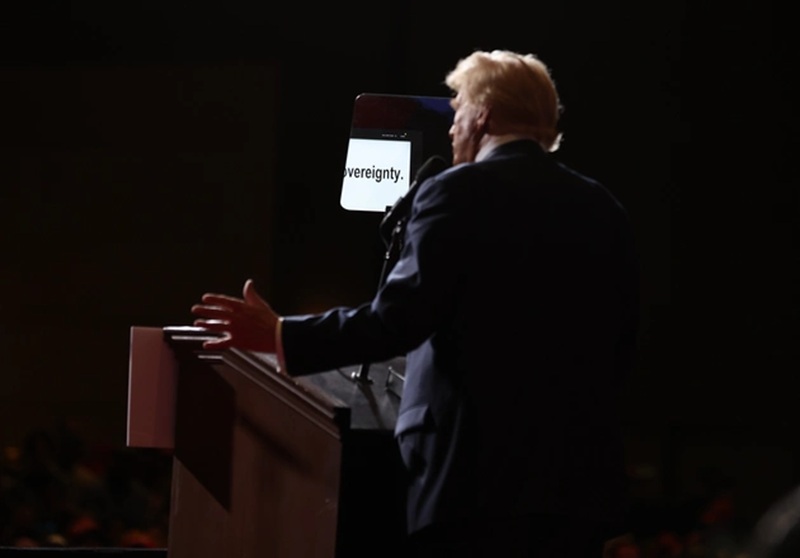
President Donald Trump recently stated that the United States is leading China and other countries by a significant margin in both artificial intelligence and cryptocurrency.

In his remarks, Trump emphasized a clear goal: “We want to stay in front in crypto.”

He made this statement during the Ratepayer Protection Pledge event on July 23, 2026. Part of his broader remarks emphasized “America First” policies and competition with China.

He said,

“Have always said that America’s goal must be to dominate the future and that includes being the number one superpower in artificial intelligence so important and this is I think bigger than the frankly I think it’s bigger than the internet it’s bigger than anything anyone has seen thus far.

“Maybe someday there will be something bigger than this probably will but I think up until this point AI is probably the biggest thing anybody’s ever seen and whoever wins that race is probably going to win period and again we’re leading China and we want to keep it that way.

We live by the motto America first. That’s what’s made us very strong and we’re leading China and all other countries by a lot in AI and just about every other category. Uh including crypto. We want to stay in front in crypto. They’d love to take that over. So many other things they’d like to take over.”

His comments, which quickly circulated among crypto enthusiasts and market watchers, underscore his administration’s view of digital assets as a strategic national priority rather than a peripheral financial trend.

He warned that failing to maintain leadership could allow China to gain control in these critical technologies.

This position aligns with earlier statements and actions during his second term, including executive orders aimed at strengthening American leadership in digital financial technology and removing barriers to AI innovation.

His administration has also pursued initiatives such as establishing a Strategic Bitcoin Reserve from seized assets and signing legislation to create a regulatory framework for stablecoins.

The timing of these comments comes amid ongoing debates in the US Congress over crypto regulation. While some lawmakers push for clearer rules through bills like the Clarity Act, progress has been slow, drawing criticism from industry participants who argue that regulatory uncertainty hampers American competitiveness.

Earlier this month, President Trump called on the Senate to pass the Digital Asset Market Clarity Act, a significant piece of legislation aimed at bringing regulatory certainty to the cryptocurrency industry in the United States.

In a post on Truth Social, Trump described blockchain-based finance and tokenization as a major financial transformation and warned that countries such as China are working aggressively to dominate the sector.

He argued that clear regulations for the digital asset industry would help ensure the United States remains at the forefront of innovation rather than allowing competitors to gain the upper hand

Supporters of Trump’s stance point to substantial investments flowing into US-based AI and crypto projects, contrasting with China’s restrictions on private crypto activities while advancing its own state-backed digital currency efforts.

For the cryptocurrency market, Trump’s vocal support signals potential policy tailwinds. Bitcoin and other major assets have historically responded positively to pro-crypto signals from high-level officials, though actual legislative outcomes will likely determine longer-term impact.

Observers note that positioning crypto alongside AI as a matter of national security could accelerate institutional adoption and infrastructure development within the United States.

As global competition intensifies, Trump’s message reinforces an “America First” approach to emerging technologies.


Tesla’s Latest Earnings Signal a New Era of AI, Robotics, and Automation

0

Tesla’s latest quarterly report offers a snapshot of two of the biggest forces shaping global markets today: the gradual decline of corporate Bitcoin holdings as a balance-sheet asset and the relentless acceleration of investment into artificial intelligence.

Released alongside earnings from Alphabet, the reports reveal how technology giants are increasingly deriving value from AI infrastructure, strategic investments, and emerging technologies rather than relying solely on their traditional businesses.

For Tesla, the quarter reflected a significant shift in capital allocation. The company’s Bitcoin holdings declined in value to approximately $674 million.

Continuing a trend that has made the cryptocurrency a much smaller component of its financial position than it was during the height of the 2021 bull market.

While Bitcoin remains on Tesla’s balance sheet, it is no longer the centerpiece of investor attention. Instead, markets focused on the company’s aggressive investment in AI, robotics, and automation.

Tesla reported capital expenditures of $5.79 billion dedicated largely to AI infrastructure, robotics development, and manufacturing technologies, representing a remarkable 142% increase from the previous comparable period.

The spending underscores CEO Elon Musk’s long-standing strategy of transforming Tesla from a conventional electric vehicle manufacturer into a diversified artificial intelligence and robotics company.

Projects such as Full Self-Driving, the Optimus humanoid robot, AI training clusters, and next-generation manufacturing systems continue to consume significant capital as Tesla races to establish leadership in autonomous technologies.

The report illustrates a broader trend unfolding across global markets. Investors are placing greater emphasis on companies capable of building AI infrastructure than on those simply benefiting from current demand.

Massive expenditures that would once have raised concerns about profitability are increasingly viewed as long-term investments in future competitive advantage.

Alphabet’s quarterly results reinforced this narrative from a different angle.

The Google parent reported an impressive $112 billion in profit, but a substantial portion of that figure stemmed from unrealized gains on its strategic investments, particularly its ownership stakes in Anthropic and SpaceX.

These gains exist largely on paper because the company has not sold those holdings, yet accounting rules require certain valuation changes to be reflected in financial statements.

The performance highlights how venture-style investments have become increasingly important to major technology companies. Alphabet’s early investment in Anthropic has appreciated significantly as demand for frontier AI models continues to surge.

SpaceX’s rising private-market valuation has contributed meaningfully to Alphabet’s reported earnings despite generating no immediate cash flow.

This distinction between realized operating income and paper gains is important for investors evaluating corporate performance.

While unrealized gains can substantially boost reported profits, they remain subject to changes in market valuations and may fluctuate significantly from one quarter to the next. They demonstrate how strategic investments in innovative private companies can materially strengthen corporate balance sheets.

Tesla and Alphabet illustrate two complementary strategies emerging among the world’s largest technology companies. Tesla is investing heavily to build the infrastructure and products it believes will define the next decade of automation.

These earnings reports also reflect a broader evolution in capital markets. Bitcoin remains an important digital asset for many corporations, but AI infrastructure, robotics, advanced computing, and strategic equity investments are increasingly becoming the primary drivers of corporate valuations.

As the AI race intensifies, investors appear willing to reward companies that either build the future directly or own meaningful stakes in those that do. The latest earnings season provides more than financial updates—it offers a clear picture of where the technology industry believes the next wave of value creation will emerge.

Strategy Leads Bitcoin Quantum Defense with New Security Consortium

0

Strategy has announced two significant initiatives that could reshape how investors evaluate its business and how the Bitcoin ecosystem prepares for future technological threats.

The company revealed changes to the way it calculates its modified Net Asset Value (mNAV), while also launching the Bitcoin Security Consortium, an industry initiative focused on protecting the Bitcoin network against the long-term risks posed by quantum computing.

The revised mNAV methodology is designed to give investors a clearer picture of Strategy’s financial position.

mNAV has been one of the key metrics used by analysts to compare the company’s market valuation with the value of its Bitcoin holdings. By refining the calculation, Strategy aims to provide a more transparent framework that better reflects its evolving capital structure, treasury strategy, and overall enterprise value.

The update comes as institutional interest in Bitcoin continues to grow. As more companies adopt Bitcoin as a treasury reserve asset, investors are increasingly looking beyond simple balance sheet metrics.

Strategy’s revised approach acknowledges that the company is no longer viewed solely as a Bitcoin holder but also as an operating business with unique financing strategies, convertible debt instruments, and expanding revenue opportunities.

For shareholders, the change could improve the consistency of valuation comparisons over time. It may also reduce confusion surrounding premium or discount calculations, allowing market participants to better understand how Strategy’s stock price relates to its underlying Bitcoin exposure.

While mNAV remains only one of several valuation tools, the revision demonstrates the company’s willingness to adapt its reporting methods to an increasingly sophisticated investor base.

Perhaps even more noteworthy is the launch of the Bitcoin Security Consortium, which places Strategy at the center of discussions about Bitcoin’s long-term security. The consortium’s initial mission is to research and develop defenses against the potential impact of quantum computing.

Practical quantum computers capable of breaking Bitcoin’s cryptographic security do not yet exist, many researchers believe preparing early is essential. Advances in quantum technology could eventually threaten digital signatures and private key security if the industry fails to upgrade cryptographic standards before such machines become viable.

The consortium intends to bring together cryptographers, Bitcoin developers, academic researchers, cybersecurity experts, and industry participants to evaluate quantum-resistant technologies and recommend practical migration strategies.

Rather than reacting to future breakthroughs, the goal is to proactively strengthen Bitcoin’s resilience through research, testing, and coordinated standards development. This initiative reflects a broader shift across the digital asset industry toward long-term infrastructure planning.

As Bitcoin matures into a globally recognized financial asset, conversations are expanding beyond price movements and institutional adoption to include network resilience, cybersecurity, and technological sustainability.

By combining updated financial reporting with investment in Bitcoin’s future security, Strategy is reinforcing its position as one of the most influential corporate advocates for the world’s largest cryptocurrency. The revised mNAV methodology seeks to improve transparency for investors today, while the Bitcoin Security Consortium looks decades ahead to address emerging technological risks.

These announcements demonstrate that Strategy is not simply accumulating Bitcoin. It is actively shaping both the financial narrative surrounding corporate Bitcoin ownership and the technological roadmap needed to ensure the network remains secure in the age of quantum computing.

As digital assets continue to mature, initiatives like these may become increasingly important in defining the next phase of institutional Bitcoin adoption.

Businesses Lead Bitcoin Accumulation in Q2 2026, as Retail Investors Offload BTC Holdings – Report

0

In Q2 2026, businesses significantly ramped up their Bitcoin holdings, acquiring approximately 115,000 BTC valued at around $7.4 billion, according to data from Bitcoin financial services firm River.

During the same period, individual holders offloaded 78,000 BTC, highlighting a clear shift in ownership from retail investors to corporate balance sheets.

One of the most notable aspects of the trend is that corporations are now accumulating Bitcoin faster than new coins are being created. Since the start of 2026, businesses have reportedly purchased nearly 167,000 BTC, while Bitcoin miners produced only about 81,000 BTC over the same period.

This means corporate buyers are absorbing more than twice the rate of newly mined Bitcoin, tightening the available supply in the market and reinforcing the long-term scarcity narrative surrounding the asset.

The corporate buying spree continues to be dominated by major Bitcoin treasury firms. Strategy led by CEO Michael Saylor, remains the largest corporate holder with more than 847,000 BTC, while Twenty One Capital and Metaplanet have each built holdings of around 43,000 BTC.

River also noted that an increasing number of private companies are allocating operating profits directly into Bitcoin, suggesting that institutional adoption is expanding beyond publicly traded firms.

The contrasting behavior between corporations and retail investors underscores a broader shift in the Bitcoin market.

While individual holders appear to be taking profits or reducing exposure, businesses are increasingly treating Bitcoin as a strategic treasury reserve asset, reflecting growing institutional confidence in its long-term value proposition.

Several factors explain why many individual investors chose to sell during this time. Bitcoin had experienced a sharp drawdown from its all-time highs (which exceeded $120,000 in late 2025), trading in a range often around $60,000–$65,000 amid ongoing bearish pressure, ETF outflows, macroeconomic uncertainty, and geopolitical tensions.

Many retail participants who bought near cycle peaks faced unrealized losses or modest gains and opted to exit rather than endure further volatility. Retail investors often exhibit higher sensitivity to short-term price action compared to corporations with dedicated treasury strategies.

During periods of weakness exacerbated by leveraged liquidations, reduced ETF inflows, and fading euphoria from the prior bull run individuals frequently take profits (or cut losses) to preserve capital, reallocate to other assets, or simply reduce exposure.

The report, also referencing BitcoinTreasuries data, shows funds and ETFs adding 11,000 BTC while governments trimmed holdings by 2,000 BTC.

This corporate buying more than doubled the new supply coming from miners, tightening available BTC in the market and underscoring growing institutional confidence in Bitcoin as a treasury asset. This pattern builds on previous quarters where companies steadily accumulated Bitcoin even during periods of price weakness.

Corporate treasuries now control over 1.26 million BTC, representing more than 6% of the total supply. Major players have led recent purchases, continuing a trend of treating Bitcoin as a strategic reserve asset rather than a speculative trade.

Analysts view this transfer as a move toward longer-term, committed holders. While retail investors may sell during volatility or for profit-taking, businesses appear focused on long-term value storage and portfolio diversification.

The data suggests Bitcoin is maturing as an institutional asset class, with corporations absorbing supply that might otherwise pressure prices downward. As adoption grows, this institutional demand could support Bitcoin’s price floor and reduce volatility over time.

With companies reinvesting profits into BTC and outpacing new issuance, the market dynamics are clearly evolving in favor of those building substantial holdings on corporate balance sheets.

Uber Layoffs Signal a New Era of AI-Powered Workforce Automation

0

Uber has announced one of its most significant workforce restructurings in recent years, cutting approximately 10% of its customer service staff while openly acknowledging that artificial intelligence played a central role in the decision.

The move marks a notable shift in how major technology companies are discussing layoffs, as many firms have previously attributed workforce reductions to cost-cutting, restructuring, or changing market conditions rather than directly linking them to AI-driven efficiencies.

Uber’s decision signals that artificial intelligence is no longer viewed merely as a productivity tool but as a technology capable of reshaping entire business functions.

The layoffs primarily affected Uber’s Community Operations division, the department responsible for customer support, issue resolution, and communication between the company, riders, and drivers.

Alongside the workforce reduction, remote employees within the division were instructed to relocate to one of Uber’s designated hub offices, reflecting the company’s broader effort to centralize operations and improve collaboration among remaining teams.

Megha Yethatika, who oversees Uber’s global Community Operations, explained that the organization had become increasingly complex, fragmented, and siloed over time.

According to her assessment, overlapping responsibilities and disconnected workflows had slowed decision-making and reduced operational efficiency. By restructuring the department and integrating AI-powered tools into customer service processes.

Uber believes it can simplify operations while maintaining—or even improving—the quality of customer support. Artificial intelligence has rapidly transformed customer service across industries.

Modern AI systems can instantly answer frequently asked questions, process refunds, resolve routine complaints, translate conversations across multiple languages, and route complex cases to human representatives.

These capabilities significantly reduce response times while lowering operational costs. For companies that handle millions of customer interactions daily, such automation presents a compelling financial incentive.

Uber’s announcement also raises important questions about the future of work. Customer service has traditionally provided entry-level employment opportunities for thousands of workers worldwide, particularly in remote roles that offered flexibility.

As AI becomes more capable of managing repetitive and standardized tasks, many of these positions face increasing pressure. While new jobs may emerge in AI supervision, system management, data analysis, and quality assurance, they often require different technical skills than those displaced roles.

The requirement for remaining remote employees to relocate to hub offices also reflects a broader trend among technology companies seeking closer collaboration between employees working alongside AI systems.

Centralized teams may be better positioned to monitor AI performance, refine workflows, and respond quickly when automated systems encounter issues requiring human judgment.

Industry analysts believe Uber’s transparency could influence how other corporations discuss AI adoption.

Rather than presenting automation as a supplementary technology, companies may increasingly acknowledge its direct impact on staffing decisions. This openness could encourage more honest conversations about workforce transitions, employee retraining, and the responsibilities companies have as automation reshapes employment.

The restructuring may signal improved long-term operational efficiency and reduced support costs. For employees, however, it serves as another reminder that technological advancement often brings difficult trade-offs.

Businesses must balance innovation with social responsibility by investing in reskilling initiatives and helping affected workers adapt to evolving labor market demands. Uber’s latest restructuring highlights a pivotal moment in the AI era.

Instead of quietly integrating automation behind the scenes, the company has openly connected artificial intelligence to workforce changes. As AI continues to mature, organizations across industries will likely face similar decisions.