
DD
MM
YYYY

PAGES

DD
MM
YYYY

spot_img

PAGES

Home Blog Page 5

Ellison steps in with $40.4bn guarantee as Paramount battles Netflix for Warner Bros assets

0

Oracle co-founder Larry Ellison has moved to personally shore up Paramount Skydance’s bid for Warner Bros Discovery, offering a $40.4 billion personal guarantee in an effort to revive confidence in the deal and pull the Hollywood studio away from a rival offer by Netflix.

The guarantee, disclosed in a filing on Monday, is aimed squarely at addressing concerns raised by the Warner Bros board over Paramount’s financing and the absence of full backing from the Ellison family. Those doubts had pushed Warner Bros closer to accepting a competing cash-and-stock proposal from Netflix for its prized film and television assets.

News of the revised terms lifted shares across the sector. Warner Bros stock rose about 3%, while Paramount climbed more than 7%.

Paramount said the amended structure does not alter its headline offer of $30 per share in cash, even as the contest for control of one of Hollywood’s most valuable content libraries intensifies. Control of Warner Bros’ film franchises, television catalogue, and production capabilities is widely seen as a decisive advantage in the increasingly crowded streaming market.

Under the revised terms, Ellison has also agreed not to revoke the family trust or transfer its assets while the transaction remains pending, a concession designed to further reassure shareholders about the durability of the funding package. Paramount also raised its regulatory reverse termination fee to $5.8 billion from $5 billion, matching the protection offered under the Netflix deal, and extended the expiration date of its tender offer to January 21, 2026.

Despite the added assurances, some analysts remain skeptical that the changes will materially shift shareholder sentiment.

“I doubt many Warner Bros shareholders that are on the fence or planning to vote no were holding out due to issues the revised bid addresses such as a guarantee from Larry Ellison on the funding front,” said Seth Shafer, a principal analyst at S&P Global.

The revised bid follows Warner Bros’ earlier move to urge shareholders to reject Paramount’s $108.4 billion proposal for the entire company, including its cable television assets. At the time, Warner Bros cited uncertainty around financing and the lack of a comprehensive Ellison family guarantee as key weaknesses in the offer.

Still, the door has not been fully closed. Some Warner Bros investors, including Harris Associates, the company’s fifth-largest shareholder, have said they would consider a revised Paramount bid if it offered superior terms and resolved concerns around deal structure and execution.

Under the Netflix agreement, Warner Bros would owe Netflix a $2.8 billion breakup fee if it were to abandon that deal in favor of Paramount. For Netflix, acquiring Warner Bros would significantly deepen its content library and extend its dominance in streaming, creating a combined platform with an estimated 428 million subscribers worldwide.

Paramount, for its part, is positioning the deal as a strategic counterweight to Netflix’s scale, arguing that a combined Paramount–Warner Bros studio would be better placed to compete with industry leaders and extract more value from theatrical releases, television distribution, and streaming.

Beyond shareholder approval, regulatory scrutiny looms as the most formidable obstacle. Any transaction would face close examination by antitrust authorities in the United States and Europe, amid growing political resistance to consolidation in the media industry.

Lawmakers from both major U.S. parties have already raised concerns, and President Donald Trump has said he plans to weigh in on the proposed deals. A merger between Paramount and Warner Bros would create a studio larger than Disney and unite two major television operators, prompting some Democratic senators to warn that such a combination could give a single company control over “almost everything Americans watch on TV.”

A Netflix–Warner Bros tie-up would raise a different set of alarms. While Netflix has argued that the deal would benefit consumers through bundled offerings and lower costs, critics say it would further entrench Netflix’s market power at a time when competition in streaming is already under strain. Netflix co-CEO Ted Sarandos has said he is confident regulators would approve the deal, adding that it would avoid job cuts in an industry grappling with uneven box-office performance.

As the battle plays out, Ellison’s personal guarantee has added a fresh twist to the deal. However, it remains unclear whether the move is enough to tilt shareholders and regulators away from Netflix.
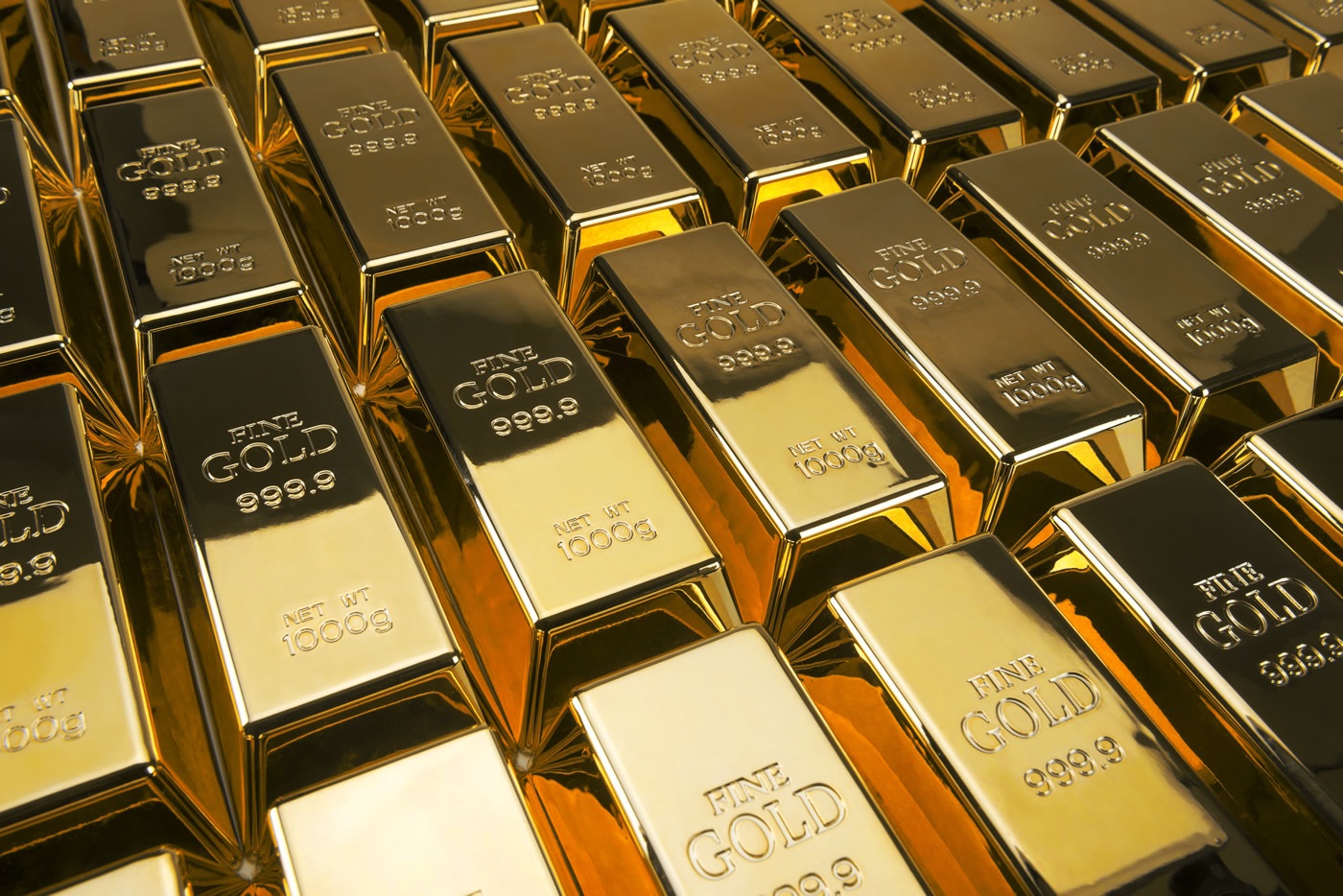

Gold, Silver Surge to Record Highs as Investors Seek Shelter From Fiscal Strains and Policy Uncertainty

0

Gold and silver prices surged to fresh record highs on Monday, extending a rally that has gathered remarkable momentum this year as investors retreat from risk assets and brace for mounting economic and political uncertainty.

Gold futures for February delivery settled 1.9% higher at $4,469.40 per ounce after touching an intraday record of $4,477.70. Spot gold climbed nearly 2% to $4,440.26 per ounce. The precious metal is now up close to 70% since the start of the year, marking one of its strongest annual performances on record.

Silver followed gold’s lead, also breaking into uncharted territory. Futures prices hit $68.96 per ounce, while spot silver traded at $68.98. Silver’s rally has been even more dramatic, with prices up about 128% year-to-date, underscoring the extent to which investors are crowding into precious metals as alternative stores of value.

The surge reflects a broader shift in global markets. Risk assets have struggled to maintain momentum, even after the U.S. Federal Reserve delivered its widely anticipated interest rate cut on December 10, and a brief rebound lifted AI-related stocks in the previous session. Instead of chasing equities, many investors appear to be repositioning portfolios defensively ahead of what they expect to be a more volatile macroeconomic environment in 2026.

Gold’s traditional role as a safe-haven asset has come back into sharp focus amid concerns about slowing growth, geopolitical risks, and, increasingly, the sustainability of government finances. According to Matthew McLennan, head of the global value team at First Eagle Investments, swelling fiscal deficits across major economies have revived gold’s appeal as a monetary hedge.

“Due to outsized fiscal deficits in the U.S., U.K., Europe, and increasingly Japan and China, the monetary value of gold has arguably reemerged,” McLennan said in an interview on CNBC’s The Exchange on December 17.

He added that gold had moved from being undervalued relative to nominal assets used as hedges to a level he considers more rational, pulling other precious metals higher in the process.

“The value of gold as a monetary potential hedge has reemerged,” he said. “Gold went from being depressed relative to the nominal assets that you would want to use as a potential hedge against it, to more rationally valued. And I think the other precious metal complexes followed it higher with some leverage.”

Silver’s sharper gains reflect both its historical tendency to amplify gold’s moves and its growing role in industrial applications, including renewable energy and electronics. That dual demand profile has made silver particularly sensitive to both inflation expectations and long-term structural trends, further fueling investor interest.

The rally has also lifted mining stocks. In premarket trading in the United States, shares of gold and silver miners edged higher, with the iShares MSCI Global Gold Miners ETF rising nearly 2.7%, as investors bet that sustained high prices will boost cash flows and balance sheets across the sector.

Beyond inflation and growth concerns, attention is turning to U.S. monetary leadership. Investors are closely watching the race to nominate the next chair of the Federal Reserve, amid questions about the institution’s independence following repeated public pressure from President Donald Trump on current chair Jerome Powell. Markets are increasingly sensitive to any signal that political considerations could influence future monetary policy.

“What we’re quite focused on here is the long-term fiscal credibility of the United States,” McLennan said. “Because I think that is the condition precept for having an independent Fed and for having a rational chair.”

Labour market dynamics are another key variable. McLennan said wage inflation could shape the outlook for both interest rates and precious metals in the months ahead, particularly if job openings continue to rise alongside corporate earnings. Such a combination could complicate the Fed’s efforts to strike a balance between supporting growth and keeping inflation in check.

For now, gold and silver appear to be benefiting from a convergence of anxieties: ballooning deficits, uncertain monetary leadership, and unease about the durability of the global recovery. With prices already at historic highs and investor sentiment tilting defensive, precious metals are once again asserting themselves as a central pillar of portfolio protection rather than a peripheral hedge.

How China Is Using AI to Rewire Its Energy System as Power Becomes the Biggest Constraint on Artificial Intelligence

0

In the city of Chifeng, in northern China’s Inner Mongolia region, Reuters reports an ultra-modern factory humming to life not on coal or gas, but on wind, solar power, and algorithms.

Owned by green-energy company Envision, the facility produces hydrogen and ammonia using renewable electricity, guided by an artificial intelligence system designed to solve one of the hardest problems in the global energy transition: how to run energy-hungry industrial processes on power sources that are inherently unstable.

The plant operates on a standalone grid that feeds electricity directly from Envision’s wind and solar farms into its production lines. That electricity supply can swing sharply depending on weather conditions, a problem for chemical manufacturing, which traditionally depends on steady, uninterrupted power. To manage this, Envision built an AI-driven operating system that continuously adjusts production levels to match real-time renewable output.

Zhang Jian, Envision’s chief engineer for hydrogen energy, described the system as “a conductor” that synchronizes electricity use with nature. When wind speeds rise, the AI automatically ramps up production to absorb as much green power as possible. When output drops, the system scales back electricity demand almost instantly, Zhang told China Energy News, a state-run publication.

The Chifeng facility is Envision’s blueprint for large-scale renewable hydrogen and ammonia production, fuels that could play a critical role in decarbonizing hard-to-abate sectors such as steelmaking, chemicals, and shipping. It is also a glimpse into how China is deploying AI not just as a digital tool, but as infrastructure — a way to make its sprawling renewable energy system work at scale.

“AI can play a hugely important role in China’s climate action and energy transition,” said Zheng Saina, an associate professor specializing in low-carbon transition at Southeast University in Nanjing. Beyond industrial optimization, she noted, AI can help calculate and project carbon emissions, forecast electricity supply and demand, and manage increasingly complex power systems.

This push comes at a critical moment. Energy has become one of the biggest bottlenecks in the evolution of artificial intelligence globally. As AI models grow larger and data centers proliferate, electricity demand is surging at a pace that is straining grids from the United States to Europe. In China, AI data centers alone are projected to consume more than 1,000 terawatt-hours of electricity annually by 2030 — roughly equivalent to Japan’s total yearly power consumption.

That looming demand surge presents a paradox. AI is being positioned as a key enabler of China’s green transition, yet its own energy appetite risks undermining climate goals.

“AI data centers are expected to cause explosive growth in electricity demand,” Zheng warned. “This is a problem that urgently needs addressing.”

Where China believes it has an edge over the United States is in energy diversity and scale. China leads the world in installed wind and solar capacity, and continues to add renewable power at a pace unmatched elsewhere. While the U.S. has focused much of its AI investment on building advanced large-language models and cloud infrastructure, China has placed parallel emphasis on integrating AI into physical systems, particularly energy.

President Donald Trump is opposed to green energy initiatives and has recently ordered the halt of wind energy programs.

“China is developing very specific, tailored AI solutions that support the grid and individual energy sectors like wind, solar and even nuclear,” said Cory Combs, associate director at Beijing-based research firm Trivium China. “That’s different from the U.S. approach, which has largely centered on model performance rather than system-level integration.”

As renewable energy expands, grid flexibility has become essential. Wind and solar power are intermittent, and without smart coordination, excess electricity is often wasted. AI is increasingly seen as the missing link. In September, Beijing launched an “AI+ energy” strategy aimed at deeply integrating artificial intelligence across the power system.

By 2027, the plan calls for more than five large AI models dedicated to energy applications, at least 10 replicable pilot projects, and over 100 real-world use cases. Within three more years, China wants to reach what it describes as a “world-leading level” in combining specialized AI technologies with the energy sector.

One of AI’s most critical roles is demand forecasting. Power grids must balance supply and demand second by second to avoid blackouts. Fang Lurui, an assistant professor of power-system planning at Xi’an Jiaotong-Liverpool University in Suzhou, said accurate AI-driven forecasts allow grid operators to plan ahead, deciding how much electricity to store in batteries or when to call on backup generation.

“If AI models can accurately predict renewable output and electricity demand throughout the day, the grid can operate more efficiently and safely,” Fang said.

Better forecasting also reduces reliance on coal-fired backup plants and allows more renewable power to be absorbed rather than curtailed.

Some Chinese cities are already experimenting at scale. Shanghai has launched a citywide virtual power plant backed by a digital platform developed by State Grid. The system aggregates electricity generation and load-reduction capacity from 47 operators, including data centers, building heating and cooling systems, and electric vehicle charging networks, allowing them to function as a single flexible resource.

During a trial run in August, the platform successfully flattened a demand spike by shedding 162.7 megawatts of load — roughly the output of a small coal-fired power plant.

Beyond grid management, China is also exploring how AI can strengthen its national carbon market, which covers more than 3,000 companies across power, steel, cement, and aluminum smelting. These sectors account for over 60% of the country’s total carbon emissions. AI could help regulators verify emissions data, improve allocation of free allowances, and allow companies to calculate compliance costs more precisely, according to Chen Zhibin, a senior manager for carbon markets at think tank Adelphi.

Yet challenges remain formidable. Studies suggest the lifecycle carbon emissions of China’s AI industry could double between 2030 and 2038, peaking at nearly 700 million tons — higher than Germany’s total emissions in 2024. China’s grid still relies heavily on coal, complicating efforts to green AI at speed.

To address this, Beijing has mandated that data centers improve energy efficiency and raise renewable power usage by 10% annually. It is also encouraging new data centers to be built in western regions rich in wind and solar resources. On the East Coast, operators are experimenting with unconventional solutions. Near Shanghai, a data center is being built underwater, using cold seawater for cooling and drawing more than 95% of its electricity from a nearby offshore wind farm, according to its developer, Hailanyun.

While AI’s energy footprint is now a central concern, many researchers argue that the technology remains indispensable. Xiong Qiyang, a PhD candidate at Renmin University of China who co-authored one study on AI emissions, said the trade-off is unavoidable but manageable.

“AI’s energy use is a real concern,” he said. “But it does much more good than harm in helping key sectors reduce emissions. That makes AI an essential tool in China’s green transition.”

China’s bet amid intensifying competition in artificial intelligence is that by pairing AI with a vast and diversified renewable energy system, it can stay ahead in both the AI race and the energy transition, even as other economies struggle to keep the lights on.

China Imposes Up to 42.7% Provisional Tariffs on EU Dairy Products, Escalating Tit-for-Tat Trade Dispute

0

China has escalated its trade confrontation with the European Union by announcing provisional anti-subsidy tariffs of up to 42.7% on select dairy imports from the bloc, effective from December 23, following a preliminary investigation that concluded EU subsidies have inflicted “substantial damage” on its domestic dairy sector.

The move, detailed in a statement from the Ministry of Commerce, targets a range of products including fresh and processed cheeses, blue-veined varieties such as France’s renowned Roquefort—aged in the caves of Roquefort-sur-Soulzon—curd, and certain milk and cream with fat content exceeding 10%.

Notably, infant formula, a high-value export category, has been spared, providing some relief to major players like Danone and Nestlé.

Tariff rates are tiered based on cooperation during the probe: around 60 participating companies, including Denmark’s Arla Foods (known for brands like Lurpak and Castello) and Ireland’s Kerry Group, will face duties between 21.9% and 29.7%, while non-cooperators are slapped with the maximum 42.7%.

Most firms are expected to pay around 30%, according to industry estimates.

The investigation, initiated in August 2024, scrutinized subsidies under the EU’s Common Agricultural Policy (CAP) and national schemes, which Beijing claims have enabled unfair pricing amid China’s domestic challenges, like a milk oversupply, declining prices, and shifting consumer demand driven by an aging population and economic slowdown.

This action fits into a broader pattern of retaliatory measures, sparked by the EU’s October 2024 imposition of up to 45.3% tariffs on Chinese electric vehicles (EVs) after a year-long anti-subsidy probe that found state aid distorted competition.

Beijing has since targeted other EU exports, including brandy (with provisional duties up to 34.9% in July 2025, later challenged by the EU at the World Trade Organization) and pork.

Just last week, China finalized pork tariffs at 4.9% to 19.8% for five years—significantly lower than September’s provisional 62.4%—potentially signaling room for negotiation amid ongoing talks.

Analysts view the dairy tariffs as calibrated pressure, exempting sensitive items while hitting symbolic EU strengths like French cheeses and Irish milk powders.

Economically, the tariffs could disrupt $589 million in annual EU dairy exports to China (stable from 2023), representing about 5% of the bloc’s total dairy shipments but a larger share for specific nations.

Ireland, a top supplier of milk powders and cheeses, stands to lose the most, with exports valued at over €200 million annually; France follows with its premium cheeses like Roquefort and Camembert, potentially facing €150 million in hits.

Denmark and the Netherlands, key players via Arla and FrieslandCampina, could see combined losses exceeding €100 million.

For China, the measures bolster domestic giants like Mengniu and Yili, which have invested billions in modernizing farms but struggle with overcapacity—producing 45 million tons of milk annually amid stagnating consumption.

Shares in Mengniu briefly climbed before closing flat, reflecting optimism for local market share gains.

Stakeholder reactions have been swift and critical. The European Commission labeled the tariffs “unjustified and unwarranted,” based on “questionable allegations and insufficient evidence,” and vowed to submit detailed comments while pursuing dialogue.

Industry voices echoed dismay: Conor Mulvihill of Dairy Industry Ireland called dairy a “political pawn” in the EV spat, while Henrik Damholt Jorgensen of the Danish Dairy Board urged negotiations to avert long-term harm.

French producers, already reeling from domestic challenges like labor shortages, fear rerouting to less lucrative markets like New Zealand or the U.S.

Broader implications highlight deepening EU-China trade fissures. China’s trade surplus with the EU has ballooned to a record $300 billion in 2025, more than double imports, fueling accusations of dumping and overcapacity.

French President Emmanuel Macron, in recent interviews, has warned of Europe’s “life or death” industrial moment, labeling China’s surplus “untenable” and urging investments in the EU to avoid further barriers.

Dutch officials have echoed concerns over Beijing’s retaliatory tactics, such as export restrictions on chips.

As provisional measures, these tariffs could be adjusted in a final ruling expected by mid-2026, similar to the pork case, but analysts warn of potential escalation into luxury goods or autos if EV talks stall.

Michael Saylor Predicts Bitcoin to Reach $1 Million in 10 Years as Strategy Eyes Supply Cap

0

Strategy CEO Michael Saylor has projected a dramatic long-term rise in Bitcoin’s value, linking future price levels to how much of the cryptocurrency’s total supply his company, Strategy, ultimately controls.

Speaking on The Breakdown with David Gokhshtein, the Strategy executive chairman said the firm plans to continue accumulating Bitcoin until it holds between 5% and 7.5% of the asset’s total supply.

According to Saylor, Strategy would only slow its purchases once it approaches that threshold, which he described as a natural ceiling driven by Bitcoin’s scarcity rather than a change in corporate strategy.

Saylor noted that reaching such ownership levels would likely coincide with significantly higher Bitcoin prices. He suggested that if Strategy were to control around 5% of Bitcoin’s circulating supply, the cost of a single coin could rise to approximately $1 million in 10 years.

He attributed these potential price increases to Bitcoin’s fixed supply and structural constraints, arguing that long-term valuation growth would be fueled by scarcity dynamics rather than short-term speculative demand.

In a recent post on X, he shared a chart of Strategy’s recent Bitcoin accumulation, with the caption, “Green Dots Beget Orange Dots.”

The post features a chart tracking the company’s 90 Bitcoin purchases since 2020, with orange dots marking buy events, a green line showing average cost at $74,972, and current holdings of 671,268 BTC valued at $59 billion as of December 21, 2025.

The caption “Green Dots Beget Orange Dots” metaphorically links profitable unrealized gains (green line below price) to triggering additional buys (orange dots), reflecting a strategy of accumulating during dips for long-term appreciation.

Recent data confirms this approach, as Strategy added 10,645 BTC for $980 million on December 16 2025, at $92,098 per coin, achieving 24.9% year-to-date BTC yield amid market volatility, as echoed in community replies praising conviction over short-term timing.

As Strategy chairman, Saylor’s optimism often precedes corporate buys, aligning with the firm’s debt-financed accumulation strategy amid the 2025 average price of $102,112. He described Bitcoin buying as a process of deploying ever-larger amounts of capital against a fixed and diminishing supply, naturally slowing accumulation over time.

Amidst Saylor’s prediction of BTC to reach $1 million per coin in 10 years, the crypto asset according to analysts underperformed in 2025. At the time of writing this report, Bitcoin was trading at $89,530, beneath its peak. Recall that the crypto asset had traded as high as $94,461 this year, before it retraced. Overall in 2025, Bitcoin is down nearly 5%. This performance has increased pressure on long-term holders, with profits continuing to decline.

Notably, the underperformance of Bitcoin relative to gold has sparked concerns among analysts that speculative assets may be entering a prolonged downturn. Gold continued its upward rally today, reaching a fresh all-time high of $4,409 during the early Asian trading session.

A market watcher explained that gold’s move to fresh all-time highs heading into year-end suggests that investors continue to prioritize capital protection while rotating into risk assets selectively.

Bitcoin critic and Gold advocate Peter Schiff has stated that Bitcoin hype is what is preventing people from buying Gold.

He said,

“Bitcoin is what’s preventing so many people from buying gold or silver. It’s so unfortunate that they will lose most of their money in Bitcoin instead of making even more money in precious metals”.

In an earlier post on X, he criticised CNBC for focusing on BTC, while ignoring much bigger rallies in precious metals like Gold and silver.

He wrote,

“Now CNBC is focusing on today’s meaningless Bitcoin rally as reflecting an increased appetite for risk assets in general. But they are ignoring much bigger rallies in precious metals and mining stocks, which indicate that investors are rotating into assets seen as safe havens.”

The post underscores Schiff’s longstanding preference for precious metals over cryptocurrencies during economic volatility, positioning gold and mining stocks as indicators of investor caution rather than speculation.

Nevertheless, some market participants hold a more optimistic view on Bitcoin’s outlook, arguing that long-term fundamentals outweigh short-term volatility.

Cathie Wood, CEO of ARK Invest, has expressed confidence in Bitcoin’s long-term potential, citing its expanding use cases, rising institutional allocation, and the maturation of market infrastructure such as spot Bitcoin exchange-traded funds (ETFs). According to Wood, these developments could unlock fresh capital inflows and reduce barriers to entry for traditional investors.

Large financial institutions have also contributed to the optimistic sentiment. Analysts at firms such as Fidelity Digital Assets have noted that Bitcoin’s network fundamentals including hash rate growth and wallet adoption continue to strengthen, even during periods of market correction. This resilience, they argue, suggests that Bitcoin is evolving beyond a speculative asset into a more established component of global financial markets.

While risks remain and price fluctuations are expected, these optimistic voices maintain that Bitcoin’s long-term trajectory remains intact. For them, periods of market uncertainty represent not a signal to exit, but an opportunity to accumulate ahead of what they believe could be another phase of sustained growth.