DD
MM
YYYY

PAGES

DD
MM
YYYY

spot_img

PAGES

Home Blog Page 5

AI Bias Stems from Patterns of Datasets Created by Humans

0

AI bias refers to systematic and repeatable errors in AI systems that produce unfair, prejudiced, or skewed outcomes. These arise because AI models especially machine learning and large language models learn patterns from data created or curated by humans, who are inherently imperfect and influenced by societal, historical, and cognitive factors.

Bias is not always intentional—it often reflects real-world inequalities baked into training data, design choices, or deployment contexts.
Understanding the different types of AI biases is crucial for developers, users, and policymakers, as unchecked bias can lead to discriminatory hiring, flawed medical diagnoses, unfair lending, or amplified stereotypes.

Biases are often grouped into three broad buckets: input and data bias, system and algorithmic bias, and application and interaction bias. These stem from the training data itself—it’s rarely perfectly representative of the real world. Data reflects past societal prejudices like historical hiring data favoring men leads to AI recruiters downranking women.

Data underrepresents or overrepresents groups like facial recognition datasets dominated by lighter-skinned faces, causing higher error rates for darker skin tones.
How features are measured or labeled is flawed using flawed proxies like zip code for socioeconomic status, which correlates with race. Certain events are under- or over-reported in data.

Amazon’s 2018 hiring tool still cited in 2025 discussions was scrapped because it penalized resumes with women’s terms, trained on male-dominated tech hiring history. These emerge from the model’s design, architecture, or optimization choices—even with clean data. The math or rules favor certain outcomes like optimization prioritizing speed over fairness.

Treating all groups as homogeneous when subgroups differ; a health model averaging across demographics ignores unique needs of subgroups. Testing metrics or benchmarks don’t match real-world use. Biases that appear only after combining datasets or in complex models. AI reinforces users’ or developers’ preconceptions.

Over-reliance on AI outputs, ignoring errors; common in high-stakes decisions like healthcare or policing. Developers unconsciously embed their own views in labeling, feature selection, or prompts.
AI amplifies cultural stereotypes. Broader societal manifestations these cut across categories.

Racial, gender, age, socioeconomic, cultural, or political biases often appear as downstream effects e.g., LLMs favoring certain languages or ideologies due to English-heavy web data.
Many sources map bias as a cycle: real-world inequalities, data, model design, deployment,  amplified injustices.

Even with advances like better debiasing techniques like adversarial training or diverse datasets, biases remain because: Data is historical and web-scraped; mirroring internet inequalities. Models optimize for accuracy on average, not fairness across groups. Biased outputs generate more biased data. Recent examples (2025–2026) include healthcare AI exacerbating treatment gaps, generative tools producing culturally skewed content, and recruitment systems still showing gender and racial skews despite fixes.

AI tools have downgraded resumes with women’s terms, favored male candidates, or rejected applicants based on age, race, or disability proxies like Amazon’s scrapped tool; ongoing lawsuits against Workday’s AI screening in 2025, certified as class actions for disparate impact on older, Black, or disabled candidates.

Qualified individuals from marginalized groups face systematic exclusion, leading to immediate rejections and long-term career setbacks. Lawsuits, settlements, PR damage, and regulatory scrutiny like the NYC, California rules on AI hiring tools. Algorithms underestimated care needs for Black patients using spending as a proxy or downplayed women’s symptoms in summaries e.g., 2025 studies on LLMs like Gemma showing softer language for female patients.

Psychiatric treatment plans varied by race; misjudgments in imaging or risk scoring led to delayed or inadequate care. Worsened health outcomes, higher malpractice risks; settlements up to $17M, and deepened inequities for marginalized groups. Tools like COMPAS falsely flagged Black defendants as higher recidivism risks; nearly twice the rate of white defendants, influencing sentencing and bail.

Higher misidentification rates for darker skin tones, contributing to wrongful arrests or surveillance harms. AI bias isn’t a bug—it’s a mirror of human data and decision-making. Exploring it reveals opportunities for more robust, transparent systems via fairness audits, diverse teams, and ongoing monitoring. True progress comes from acknowledging these patterns without oversimplifying them as purely societal or fixable by one method.


AI Bookspam Wave Increasing Grut of Slops in 2026

0

The AI bookspam wave refers to the massive surge of low-quality, often entirely or mostly AI-generated books flooding self-publishing platforms—especially Amazon’s Kindle Direct Publishing (KDP)—since the rise of accessible generative AI tools like ChatGPT in late 2022/early 2023.

This has created a glut of slop: short, generic, poorly edited ebooks in niches like romance, self-help, summaries, guides, and knockoff biographies that mimic popular titles or authors. Thousands of AI-assisted or fully generated titles appear monthly. Reports from 2023–2025 describe it as an explosion or flood, with categories like teen romance, travel guides, or public-domain rewrites getting swamped. Some operators churn out dozens or hundreds under multiple pen names.

AI companion books, summaries, analyses, or imitations popping up alongside real bestsellers almost immediately. Knockoffs of popular works, such as AI versions of existing biographies; multiple fake Earl Weaver books appearing right after a legitimate one. Scammy rewrites or guides that ride on real authors’ success, sometimes using similar titles and covers.

Outlier claims, like one person reportedly making six figures with romance novels via AI, or exaggerated stories of publishing 1,500+ titles often met with skepticism. Many read as incoherent, repetitive, or lacking depth—hallmarks of unedited AI output. Some include dangerous advice. Readers complain of wasted money on Kindle Unlimited, and authors see diluted sales or review bombing. This isn’t entirely new—self-publishing has long had low-effort spam—but generative AI lowered the barrier dramatically, enabling rapid production at near-zero marginal cost.

Amazon has tried to manage it: Disclosure rules: Publishers must flag AI-generated content; text, images, translations during upload. Failure can lead to removal. Capped at ~3 new titles per day per account, implemented around 2023–2024 to slow spam factories. Bans on certain low-value companion guides without proven engagement; algorithmic suppression of duplicates or low-quality items.

Other actions: Account terminations for abuse, and occasional mass de-listings. Similar efforts at Barnes & Noble and distributors like IngramSpark. Despite this, enforcement is imperfect. Sophisticated spammers use editing, human oversight, or evasion tactics, and the sheer scale makes full cleanup tough. Amazon also rolled out AI features like “Ask This Book” a chatbots querying ebook content which has sparked separate author concerns over rights and competition.

Harder to find quality amid the noise. Search results clog with generic junk, eroding trust in self-published ebooks. Refunds and bad reviews hurt the ecosystem. Increased competition in saturated niches like romance, nonfiction guides. Real books can get buried in algorithms favoring volume or paid promo. Some see sales cannibalized by knockoffs; traditional publishers worry about diminished investment in new talent.

On the market: It highlights self-publishing’s double-edged sword—democratization vs. quality collapse. Critics call it content spam that devalues writing; defenders note AI can assist editing or ideation, and not all AI-involved books are bad. AI marketing scams, flattering emails offering promo and bot comments promoting these books have surged too. Traditional publishing isn’t immune—some agents and publishers get flooded with AI submissions.

By 2025–2026, the wave hasn’t fully receded, but it’s evolved: more hybrid human+AI work, better detection, and reader pushback. Data on exact flood scale is fuzzy, but anecdotes from authors, Reddit, and outlets like WIRED, NPR, and Authors Guild show persistent frustration. Not every self-published book is AI spam—far from it—but the low-effort subset creates a visibility problem.

This mirrors AI’s effect elsewhere: abundance of mediocre output drowns signal in noise. Human creativity, emotion, originality, lived experience still stands out for many readers, and classics and backlist titles remain untouched. Long-term, it may accelerate shifts toward curation, verified human authorship signals, or premium AI-disclosed vs. human-crafted branding. Some experiment with AI as a tool, but pure spam rarely builds sustainable careers—most self-publishers earn little regardless.

Revised Stablecoin Yield Language in the U.S CLARITY Act Postponed

0

The release of the revised stablecoin yield language in the U.S. CLARITY Act, a key part of broader crypto market structure legislation has been postponed from this week to next week or later. Senator Thom Tillis (R-N.C.) confirmed in a Thursday interview that he won’t release the compromise text on stablecoin yields this week.

The main reason is uncertainty around the Senate Banking Committee’s markup schedule for the broader bill—he wants clearer timing before going public with the draft. The CLARITY Act aims to provide regulatory clarity for digital assets, including stablecoins. The yield provision is one of the most contentious parts because it pits traditional banks against crypto firms.

Banks’ position via groups like the ABA: They worry that yield-bearing or reward-paying stablecoins could pull deposits away from traditional banking products. They push for strict limits, especially on idle balance rewards. Crypto firms argue that rewards often tied to usage or transactions are essential for competition and innovation in stablecoins like USDC or USDT. Some see outright bans as anti-competitive.

The current draft language still under negotiation reportedly maintains a ban on rewards for simply holding idle stablecoin balances but allows certain yields or rewards linked to actual transactions or activity. This is seen as a potential middle ground, but talks with banks and crypto companies continue.

This isn’t the first delay—the yield issue has already stalled progress multiple times, including an earlier markup postponement. The GENIUS Act already includes some restrictions on issuers paying interest and yield directly, but the CLARITY Act negotiations are trying to refine or strengthen rules around what exchanges or platforms can offer to users.

Clarity on whether stablecoins can sustainably offer yields and rewards affects issuer business models, user incentives, and competition with traditional finance. Prolonged uncertainty can contribute to market hesitation. Lawmakers are aiming for a Senate Banking Committee markup, but unresolved issues including this one, plus others like DeFi rules keep pushing dates back.

Some reports note the odds of the broader bill passing in 2026 have fluctuated amid these hurdles. Expect more updates next week if the markup schedule firms up. Negotiations are ongoing behind the scenes, so the final compromise could still shift. This is a classic Washington standoff between incumbents protecting deposits and innovators seeking growth in the stablecoin space.

The delay pushed to next week or later stems from uncertainty over the Senate Banking Committee markup schedule. Without a firm date, releasing the text risks premature backlash. This adds friction to an already tight calendar. If the committee doesn’t advance the bill by late April and early May, odds of full passage in 2026 drop sharply, some analysts say near zero due to midterm election dynamics.

The bill still needs multiple steps: committee markup, Senate floor vote (60 votes), House reconciliation, and signature. Current draft language still under negotiation bans rewards amd yield on idle balances but allows activity-based yields tied to transactions or usage. This remains the core compromise.

Prolonged uncertainty hurts planning for issuers like Circle/USDC, Tether/USDT and platforms. It limits innovation in reward structures that drive user adoption. Earlier similar news caused sharp stock drops like Circle’s shares fell ~20% in one day on yield-limit fears. Banks continue lobbying to tighten restrictions, fearing deposit flight. A recent White House report downplayed the economic impact, a full ban might boost bank lending by just ~0.02%, with net consumer welfare costs.

Crypto firms view strict limits as protectionism. Ongoing talks including with banking groups show the issue isn’t fully resolved. Adds to hesitation and volatility in crypto markets, especially stablecoin-related tokens and companies. Prediction markets for bill passage have fluctuated recently seen dips. Delays regulatory clarity in the world’s largest economy, while other regions advance their own stablecoin rules. This could slow U.S. competitiveness in the multi-hundred-billion-dollar stablecoin market.

Broader crypto legislation like market structure, DeFi elements remains stalled until this and other disputes clear. It’s a procedural hiccup in a months-long negotiation, but it highlights deep divisions. No major immediate market shock reported from this specific delay, but cumulative uncertainty erodes momentum. Expect updates next week if markup timing solidifies—watch for any shifts in the idle-balance ban vs. activity-based allowance.

US State Department Approves Potential Foreign Military Sale to Germany Valued at $11.9B 

0

The U.S. State Department announced that it has approved a potential Foreign Military Sale to Germany valued at an estimated $11.9 billion. This involves an integrated combat system including supporting equipment and services for the German Navy.

Germany requested up to eight shipsets of equipment, primarily for its future F127 frigate program; a new class of air-defense warships planned to replace the aging F124 Sachsen-class frigates in the mid-2030s. The package includes: AEGIS-based Integrated Combat System (ICS) MK 6 MOD X computing infrastructure.

Associated AN/SPY-6(V)1 active electronically scanned array radars. MK 41 Baseline VIII Vertical Launch Systems for missiles. AN/SLQ-32(V)6 electronic warfare systems. Cooperative Engagement Capability, navigation systems, and other related support. Principal U.S. contractors are Lockheed Martin Corp. and RTX Corp formerly Raytheon.

The State Department has formally notified Congress of the proposal, as required for major arms sales. The U.S. government described the sale as supporting American foreign policy and national security goals by: Enhancing the security of a key NATO ally. Improving interoperability between German maritime forces, the U.S. Navy, and other allies.

Bolstering Germany’s naval capabilities amid broader European defense needs. This deal aligns with Germany’s post-2022 Zeitenwende policy of significantly ramping up defense spending; its 2026 budget is around €108 billion, with substantial allocations for naval assets. This is one of the larger recent U.S. arms notifications to a European NATO partner.

It reflects ongoing transatlantic defense cooperation, with Germany integrating advanced American technology especially AEGIS-derived systems into its fleet for air and missile defense. The approval is a potential sale; actual implementation depends on further negotiations, contracts, and funding. No immediate transfer of funds or equipment occurs upon congressional notification.

This transaction continues a pattern of U.S. support for German rearmament efforts, following previous approvals for missiles and other systems in recent years. Transforms the future F127 class replacing older F124 Sachsen-class into highly capable air and missile defense warships, providing layered protection against cruise/ballistic missiles and other aerial threats in the Baltic, North Atlantic, and beyond.

Accelerated modernization aupports Germany’s Zeitenwende policy of increased defense spending; signals naval forces are now a strategic priority previously underfunded compared to land forces. The frigates could enter service in the mid-2030s. Technological dependence vs. capability locks in proven U.S. systems for rapid, reliable interoperability but raises some domestic debate over European strategic autonomy vs. purely European alternatives that could delay timelines or raise costs.

Germany becomes a credible contributor to NATO’s maritime air and missile defense network for the first time, reducing reliance on U.S. Navy assets and creating a denser web of interoperable Aegis-equipped ships across allies. Improves allied ability to counter regional threats from Russia or others in key European waters through better sensor-to-shooter integration and cooperative engagement. Reinforces U.S.-Europe defense ties amid ongoing security challenges.

For the United States its a strategic and economic win which dvances U.S. foreign policy by bolstering a key NATO ally while generating major revenue for American firms Ensures German ships integrate seamlessly with U.S. and allied forces, supporting broader NATO operations without added U.S. personnel burden. One of the largest recent FMS notifications to Europe, highlighting continued U.S. leadership in high-end naval combat systems.

This is a potential deal requires further contracts and funding after congressional review and builds on prior U.S. approvals. It reflects pragmatic transatlantic cooperation: Germany gains advanced capability quickly, while the U.S. strengthens alliance deterrence and export markets. Long-term, it could influence European defense industry dynamics by favoring proven U.S. tech over slower indigenous options.

AI Squeeze on Entry-Level Jobs Drives Graduate School Surge, but Rising Costs and Doubts Temper Demand

0

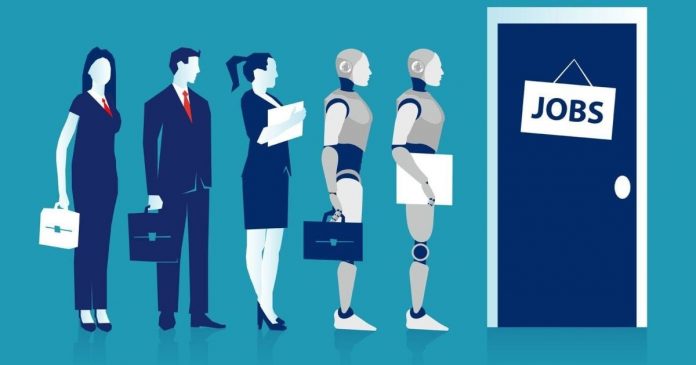
As artificial intelligence begins to erode traditional entry-level roles, a growing number of recent graduates are reconsidering their immediate career paths and turning instead to graduate school, not as a default next step, but as a calculated response to a shifting labor market.

New data from education firms Jenzabar and Spark451, published by CNBC, show that nearly 78% of prospective students considering postgraduate education plan to enroll within the next 12 months, up from 69% a year earlier. The increase suggests a renewed pull toward advanced degrees, even as the broader economic backdrop does not fully resemble a downturn.

Historically, graduate school enrollment rises during recessions, when job opportunities shrink and workers seek to reskill.

Kristin Blagg of the Urban Institute said the pattern remains relevant.

“We know that there is a trend to go back to school to re-skill during a recession,” she said. In uncertain periods, “people shelter in higher education,” adding that “it makes sense that it’s counter-cyclical.”

What distinguishes the current cycle is the disconnect between headline economic strength and underlying anxiety. According to the Bureau of Labor Statistics, the U.S. economy added more jobs than expected in March, while the unemployment rate edged down to 4.3%. Yet for younger workers aged 16 to 24, unemployment remains elevated at 8.5%, pointing to a labor market where access, rather than availability, is becoming the central challenge.

That challenge is increasingly tied to structural change. Artificial intelligence is not simply reducing hiring volumes; it is altering the composition of jobs. Entry-level roles, particularly in administrative, analytical, and support functions, are among the most exposed to automation. Companies are beginning to reorganize hiring around this reality, with some executives openly citing AI as a reason to slow recruitment or cut junior positions.

At the same time, geopolitical uncertainty is compounding economic unease. Consumer confidence fell sharply in April amid concerns over the Iran war and its potential spillover effects. Blagg noted that such uncertainty can influence decision-making: “That is something that could push people to think about other opportunities.”

Yet the response from students is not straightforward. Christopher Rim, chief executive of Command Education, said the current environment is producing hesitation rather than a clear shift.

“What we’re seeing right now amongst our clients is actually the inverse of that dynamic,” he said, referring to past downturns.

While interest in graduate school is rising, so is skepticism.

“Students are approaching graduate school with extreme caution,” he said. “Recent college graduates are generally uncertain about whether a graduate degree is worth the investment, especially given how fast the labor market is shifting.”

This caution reflects a more forward-looking concern. For many, the question is not just whether graduate school improves immediate prospects, but whether it will remain relevant by the time they graduate. The pace of technological change has introduced a new layer of risk, where skills acquired today may face rapid obsolescence.

Even so, advisers argue that advanced degrees still offer a form of protection. Eric Greenberg of Greenberg Educational Group said, “Concern about getting a job right out of college is leading to more interest in graduate school.”

He added that the trend is “even more magnified because it’s not only about what’s going on today, but what is going to happen in the not-so-distant future.”

“Graduate school is much more of a hedge now,” Greenberg said. “If somebody has more education, more knowledge, more of a skill set, they will typically get a better job. It’s kind of like an insurance policy.”

The framing of graduate education as an “insurance policy” underscores how its role is evolving. It is no longer simply a pathway to advancement, but a buffer against uncertainty. That shift is also evident in how prospective students are evaluating programmes.

According to the Jenzabar/Spark451 survey, career outcomes and practical experience now rank among the most important decision factors. Internships, job placement support, and industry alignment are taking precedence over traditional academic markers. Mike McGetrick of Spark451 said institutions must “demonstrate real, tangible return on investment,” signaling a more transactional approach from applicants.

Despite the rising interest, enrollment trends have yet to fully reflect this shift. Graduate enrolments remained broadly flat in fall 2025, with private nonprofit institutions recording a slight decline, according to the National Student Clearinghouse Research Center. The expectation is that 2026 could mark a turning point if current intentions translate into actual enrolment.

The financial calculus, however, remains a significant constraint. While data from the Bureau of Labor Statistics show that advanced degree holders typically earn more and face lower unemployment, the cost of obtaining those credentials is substantial.

Analysis from the Urban Institute indicates that the median debt for master’s degree graduates is about $54,800, rising sharply to $173,180 for professional degrees such as law or medicine. By comparison, those with only a bachelor’s degree carry a median debt of roughly $27,300.

Christopher Rim emphasized the stakes involved. “Graduate school is an investment,” he said, adding that the current environment is forcing a more deliberate approach. “This market is pushing students to a more general understanding that graduate school is not a casual next step, but should be an intentional and strategic stepping stone toward clear professional goals.”

Policy changes are set to further reshape the equation. New borrowing limits introduced under legislation signed by Donald Trump will cap federal loans for graduate students at $100,000 over a lifetime, with a $200,000 limit for professional programmes. Grad PLUS loans, which previously allowed borrowing up to the full cost of attendance, will be eliminated entirely.

Blagg said the implications of these changes remain unclear. “Up until recently, you could borrow up to your cost of attendance [for advanced degrees], so we had people borrowing quite a lot,” she said, adding that “we don’t really know yet what that will do for overall debt.”

The reforms, which take effect for new borrowers from July 1, are likely to constrain access for some students while forcing others to weigh more carefully the return on investment.

Together, the data point to a transition in how graduate education is perceived and used. It is no longer simply a refuge during economic downturns, nor a guaranteed pathway to upward mobility. Instead, it is becoming a strategic response to structural disruption, particularly the rise of artificial intelligence and the narrowing of traditional entry points into the workforce.