DD
MM
YYYY

PAGES

DD
MM
YYYY

spot_img

PAGES

Home Blog Page 5

TokenWorks Announces CMD Token which Uses Randomized Frankenstein Approach, as Bittensor’s TAO Price Decline

0

TokenWorks announced the $CMD token, which uses a randomized Frankenstein approach to build its smart contract rules. It is described as a “Frankenstein-esque smart contract” to democratize token creation in the era of vibecoding.

Users submit rule ideas e.g., no trading on weekends or add a 1% tax that buys and burns every 24h before launch, paying a fee to participate. Over 10 rounds, one idea per round is randomly selected on-chain and automatically applied to the smart contract using AI. This creates a quirky, unpredictable stitched-together rule set. Each winning idea gets 1% of the final token supply. 10% of the total supply is distributed among all participants.

Participation started on April 10, 2026. This seems like a fun, community-driven experiment in meme and token mechanics—letting the crowd and randomness + AI patch together unusual features like trading restrictions, taxes, burns, or other behaviors directly into the contract

AI rule integration in the $CMD token from TokenWorks is the mechanism that automatically turns community-submitted ideas into live, enforceable code inside the final smart contract. The project runs 10 rounds each lasting 12 hours. In every round: One user-submitted rule and idea is randomly selected on-chain using verifiable randomness, likely something like Chainlink VRF or a similar oracle.

That selected idea is then automatically translated and applied to the evolving smart contract using AI. After all 10 rounds, the token launches with the 10 stitched-together rules baked in — creating the quirky Frankenstein token. This is what makes it different from normal token launches: instead of developers manually coding every feature, AI acts as the surgeon that patches each winning idea into the contract.

Users pay a fee and submit natural-language ideas. These are stored on-chain or in a linked system. At the end of each round, a random winner is chosen transparently on the blockchain. This ensures fairness and prevents any central party from picking favorites. An AI model or a pipeline of models takes the winning natural-language description and converts it into Solidity or the relevant smart contract language code. The AI must understand the intent of the rule.

It generates the necessary functions, modifiers, hooks e.g., in _transfer, beforeTokenTransfer, or custom logic. It handles edge cases, security considerations, and integration with existing code. The generated code snippet is then automatically inserted into the base smart contract template. This could happen via: On-chain execution (if the contract is upgradeable or uses a modular/proxy pattern).

An off-chain service that compiles and verifies the new contract version and deploys and upgrades it with on-chain verification or multisig for safety. A system where the contract is designed to be highly modular from the start, and AI helps compose the modules. After all 10 patches, the complete contract is finalized, audited (presumably), and the token launches with the full set of Frankenstein rules active.

The end result is a token whose mechanics are a random collage of community ideas — some might synergize nicely, others might create weird or funny interactions. Non-technical users can propose sophisticated mechanics without knowing how to code Solidity. Speed: 10 rounds in ~5 days (10 × 12 hours) would be impossible if humans had to manually implement and test each rule.

AI can interpret vague or creative vibecoding ideas and turn them into functional code. Scalability: Handles the unpredictable nature of what wins each round. AI-generated smart contract code can contain bugs, vulnerabilities or unintended behaviors — especially when multiple rules interact in unexpected ways. This is a high-risk meme and experiment token. TokenWorks will likely have some verification, testing, or human oversight layer, but details aren’t fully public yet.

Patching a contract 10 times can increase complexity and deployment costs. The selection is on-chain for transparency, but the AI step itself may have some off-chain component, common in such hybrids. The exact technical implementation which AI model, how the patching is executed on-chain vs off-chain, whether the contract uses upgradeable proxies, etc. hasn’t been fully detailed in the initial announcements, but the core promise is clear: random community idea ? AI ? live rule in the contract.

Bittensor’s TAO Price Decline is Connected to Covenant AI Leaving the Network

Bittensor’s TAO token dropped sharply around 15-18% or more intraday, with some reports noting peaks near 27% in short windows after Covenant AI announced its exit from the network. Covenant AI; operating high-profile subnets like Templar/SN3 for large model pre-training, Basilica/SN39, and Grail/SN81 was one of Bittensor’s biggest and most successful contributors.

They gained attention for training the Covenant-72B model decentralized across nodes, which helped fuel a strong TAO rally, up ~90-100% in recent weeks/months and even drew praise from NVIDIA’s Jensen Huang.

In a public statement Convenant founder Sam Dare accused Bittensor of decentralization theatre. Governance power is concentrated with co-founder Jacob Steeves who allegedly controls the triumvirate and makes unilateral decisions. Specific grievances: suspension of emissions to their subnets removal of moderation privileges in community channels, unilateral deprecation of subnet infrastructure, and timed large TAO token sales that applied economic pressure during disputes.

They concluded they could no longer responsibly build or raise capital in the ecosystem and chose to exit rather than pass risks to supporters. The market reacted fast: TAO fell from around $330-340 to lows near $263-285 within hours, wiping out hundreds of millions in market cap; some estimates $900M in a sharp session and erasing much of the recent rally. Trading volume spiked significantly, with added pressure from liquidations and reports that Covenant-related wallets sold ~37,000 TAO. Subnet-specific tokens dropped even harder.

Price has since partially recovered in the volatile session hovering around $260-300 depending on exact timing, but sentiment took a clear hit. Bittensor is a decentralized AI network where subnets compete for emissions based on performance and staking. Subnets like Covenant’s demonstrated real technical wins in decentralized training, but the project has long faced questions about actual decentralization vs. founder influence, economic sustainability and governance.

This isn’t the first internal drama in crypto projects, and exits or disputes happen when incentives or control clash. Covenant’s success made their departure particularly visible and painful for confidence in the decentralized AI narrative. More volatility and FUD are likely.

TAO is testing supports; further downside risk exists if other subnet operators voice similar concerns or if liquidations cascade. Broader market factors didn’t help. Depends on how the core team responds, whether other builders stay or leave, and if Bittensor can show genuine progress toward distributed governance + real-world AI utility and revenue. The halving mechanics and institutional interest were prior tailwinds, but trust is now a bigger variable.

Covenant operated major subnets responsible for an estimated ~9% of network emissions. Their departure creates a short-term vacuum. Other teams may compete for the slots, but replicating specialized work (decentralized large-scale pre-training, compute scheduling, fine-tuning) won’t happen overnight. Assets like trained models and contributor networks could leave with them.

As one of Bittensor’s most visible and technically successful contributors; praised even externally, the exit raises questions about governance and incentives. It fuels debates on whether the network truly delivers decentralized AI or risks decentralization theatre. This could deter new builders or capital raises for projects staying in the ecosystem.

Critics point out that high emissions and subsidies have funded development, but external revenue remains low e.g., top subnets generating far less than the subsidies paid out. If builders can exit after benefiting from rewards, it challenges the value proposition for TAO holders and stakers.

This highlights a classic crypto tension: hype around decentralization can collide with practical control and incentives. Crypto moves fast, and one high-profile exit doesn’t necessarily doom a network, but it does force a reality check.


Bitcoin Surges Past $73K as Cooler Core Inflation Fuels Rate-Cut Hopes, Traders Eye $80,000 by The End of April

0

The price of Bitcoin climbed above $73,000 following Friday’s Wall Street open, buoyed by fresh U.S. inflation data that came in largely in line with expectations while signaling underlying price pressures may be easing.

The Consumer Price Index (CPI) rose 0.9% on a seasonally adjusted basis for the month, bringing the annual inflation rate to 3.3%. The increase was partly driven by a sharp 10.9% surge in energy costs.

Despite the headline figures pointing to elevated inflation, core CPI excluding volatile food and energy prices offered a more encouraging signal. It rose just 0.26% month-over-month, coming in below most Wall Street forecasts and suggesting that the recent energy shock has yet to significantly spill over into broader consumer prices.

In response, Bitcoin rallied from approximately $71,900 to $72,320 immediately after the data release, eventually extending gains to trade above $73,000. The asset recorded a 1.6% increase over 24 hours, supported by improving retail sentiment, which shifted from “neutral” to “bullish,” alongside steady levels of market engagement.

Among major cryptocurrencies, altcoins outperformed Bitcoin. Ethereum (ETH) gained 2% to reclaim the $2,200 level, while Solana (SOL) rose 2.6% to trade above $84. Both assets saw heightened retail interest, with Solana maintaining bullish sentiment and Ethereum remaining in neutral territory.

Other digital assets also posted modest gains. Dogecoin (DOGE) rose 1.6%, while XRP (XRP) advanced 1.1%, though sentiment around XRP remained bearish and Dogecoin held steady in neutral territory.

March’s inflation report is notable as the first to fully reflect the oil price shock tied to geopolitical tensions involving Iran. Crude oil prices briefly exceeded $115 per barrel during the month, pushing U.S. gasoline prices above $4 per gallon for the first time since August 2022.

Major financial institutions, including Bank of America, JPMorgan, and Wells Fargo, had projected monthly CPI figures ranging from 0.87% to 0.99%, with a median estimate of 0.90% and an annual rate of 3.3%, aligning closely with the actual release.

The softer-than-expected core inflation reading has reignited market speculation that the Federal Reserve could have room to implement interest rate cuts later in 2026, a scenario that typically supports risk assets such as cryptocurrencies.

Bitcoin’s recent price surge invalidated what initially appeared to be a bear pennant on the daily chart. Traders now eye a move back toward $80,000 by the end of April, as several indicators point to bulls retaking control of the crypto market.

Meanwhile, a new narrative is emerging around Bitcoin’s role in global finance. Investor Anthony Pompliano has sparked widespread discussion with claims that Bitcoin could be entering the center of geopolitical negotiations.

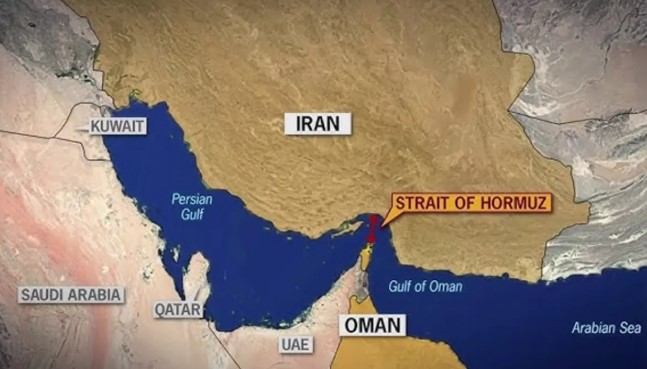
Reports suggest that as part of a ceasefire agreement between the United States and Iran, Tehran may request a $1-per-barrel transit fee for oil shipments through the Strait of Hormuz to be paid in Bitcoin.

If realized, such a move would be historic, positioning Bitcoin as a neutral financial layer in international agreements between nations with limited trust. With Iran facing strict U.S. and European sanctions that restrict access to dollar-based systems, alternative payment rails such as cryptocurrencies are increasingly being explored.

Bitcoin’s decentralized and censorship-resistant nature makes it particularly attractive in this context. Unlike fiat currencies, it cannot be easily frozen or controlled by a single authority. Compared to gold, it offers superior portability and transaction speed, while avoiding the counterparty risks associated with stablecoins.

Outlook

Bitcoin’s trajectory will likely hinge on a combination of macroeconomic signals and evolving geopolitical developments.

If core inflation continues to soften, expectations of Federal Reserve rate cuts could strengthen, providing further upside momentum for Bitcoin and the broader crypto market. Lower interest rates typically weaken the dollar and increase liquidity—conditions that favor digital assets.

At the same time, the growing conversation around Bitcoin’s potential role in global trade and conflict resolution introduces a powerful long-term narrative. Should even a fraction of these geopolitical use cases materialize, Bitcoin’s positioning could shift from a speculative asset to a strategic financial instrument.

US and Iran Delegations are Scheduled to Hold Round of Direct Peace Talks in Islamabad, Pakistan

0

US and Iranian delegations are scheduled to hold the first round of direct peace talks in Islamabad, Pakistan, starting Saturday morning local time. Pakistan has played a central mediating role, with Prime Minister Shehbaz Sharif inviting both sides after brokering a fragile two-week ceasefire that took effect earlier this week.

Key Details on the Talks

US delegation: Led by Vice President JD Vance, and includes envoys such as Steve Witkoff and Jared Kushner. Vance departed for Islamabad on Friday, describing the talks as potentially positive if Iran negotiates in good faith, while warning that attempts to play the US would not be well received. He noted that President Trump has provided clear guidelines.

Iranian side: Expected to be led by senior officials possibly including Parliament Speaker Mohammad Baqer Qalibaf. Tehran has said the talks will be based on its 10-point proposal, which includes lifting all sanctions and aspects related to control over the Strait of Hormuz. Talks at the Serena Hotel in a heavily secured area of Islamabad.

Delegations have been arriving, with Pakistan declaring local holidays and ramping up security. The initial round is set for Saturday, though negotiations could extend or involve multiple rounds. This follows weeks of escalation involving US and Israeli strikes on Iran, Iranian responses, and disruptions in the region including fighting between Israel and Hezbollah in Lebanon.

The ceasefire aims to pause direct US-Iran hostilities for two weeks to allow negotiations toward a longer-term deal. Issues include Iran’s nuclear program, ballistic missiles, regional proxies, sanctions relief, and reopening the Strait of Hormuz (a critical chokepoint for global oil).

The situation remains tense and fragile: The Strait of Hormuz is still effectively closed or restricted, Israel has continued operations against Hezbollah which Iran says violates the truce, and both sides have traded accusations. Iran has signaled it may approach talks cautiously due to deep mistrust, and some reports note threats to pull out if the ceasefire doesn’t extend to Lebanon.

Markets have largely priced in a degree of de-escalation and potential for a deal, but with volatility reflecting the risks: Oil prices spiked dramatically during the height of the conflict due to Hormuz disruptions. They dropped sharply on ceasefire news and talk of reopening the strait, as traders bet on reduced supply risks. However, they’ve rebounded or shown choppiness recently amid doubts about the truce holding, with some reports of oil edging higher or nearing $100 again on Friday uncertainty.

Stocks: Major indices like S&P 500, Dow, etc. rallied on the ceasefire announcement and talks prospects, viewing it as an off-ramp that could stabilize energy costs and global trade. Gains were notable in the days following the Pakistan-brokered pause, though Asian and European markets showed mixed or negative moves on Friday amid lingering strains.

Investors appear to have baked in a baseline expectation of at least short-term calm or progress in Islamabad, helping equities and pressuring oil lower initially. But the shaky truce, ongoing regional fighting, and wide gaps between US and Iranian positions mean markets remain sensitive to headlines. A positive outcome could support further risk-on moves; breakdowns or violations could spike volatility and energy prices again.

In short, yes—the talks are happening tomorrow in Pakistan, and markets have been reacting as if diplomatic progress is the base case, while hedging against the very real chance things could unravel quickly. Outcomes are highly uncertain given the mistrust and unresolved flashpoints like Hormuz and Lebanon. Developments over the weekend will likely drive the next big moves.

3 Key Signals Paint a Bullish Picture for US Stocks 

0

Three (3) key signals paint a bullish picture for US Stocks, this highlights a strong technical and sentiment-based recovery in US equities following a volatile March selloff, which was heavily influenced by geopolitical tensions from the US-Iran conflict and associated oil price spikes.

US stocks have rebounded sharply, with the S&P 500 rallying about 8% from its March 30 low and adding roughly $4.5 trillion in market cap over a short period. This includes the index’s longest winning streak since October 2025. Analysts, particularly from The Kobeissi Letter, point to these aligned indicators as evidence of renewed confidence and potential for further upside.

Improved market breadth especially in Tech/Nasdaq 100: About 65% of stocks in the Invesco QQQ Trust tracking the Nasdaq 100 are now trading above their 10-day moving averages. This is a sharp improvement—a 40-point jump in just five sessions, the steepest since November. For context, that figure bottomed out at only 12% in the second week of March. The breadth has extended to broader indices as well.

Over 70% of stocks in both the S&P 500 and Dow Jones Industrial Average have reclaimed their 10-day moving averages. This suggests the rally is broadening beyond a few mega-cap names. Historically, such sharp reversals in Nasdaq 100 breadth have preceded higher prices 80% of the time over the following 12 months. The S&P 500’s recent performance—its longest streak of gains in months—signals technical healing after the March downturn.

This momentum, combined with the breadth improvement, points to a historic recovery setup according to observers. In March, 26.4% of US publicly traded companies recorded net insider purchases—the highest level in five months. This was up from 20.9% in February and above the 10-year average of 23.5%, marking the second straight monthly increase. Insiders stepping in to buy shares after a pullback is often viewed as a vote of confidence from those closest to company fundamentals.

The energy sector was an outlier, with insider buying dipping to 17.5%, possibly reflecting skepticism about sustained high oil prices amid the conflict. Fundstrat’s Tom Lee has reinforced the optimistic tone, arguing that the market has likely bottomed and that the S&P 500 could climb toward 7,300 later in 2026. He highlighted the market’s resilience, noting that stocks held up or rose even as oil prices surged during the height of geopolitical escalation.

As of early April 2026, the S&P 500 was trading in the mid-6,800s around 6,817 on April 10, recovering from Q1 weakness that saw it down roughly 4-5% amid the turmoil. These signals are primarily technical and sentiment-driven, reflecting short-term healing after a risk-off period. Longer-term support could come from expectations of continued corporate earnings growth, AI-related productivity gains, and any de-escalation in geopolitical risks.

However, markets remain sensitive to oil prices, inflation data, Fed policy, and unresolved international developments. Valuations are elevated in parts of the market, and external shocks could interrupt the momentum. That said, the combination of improving breadth, price action, and insider conviction does paint a constructive near-term picture for US stocks.

After the March shakeout, multiple indicators are flashing green for renewed bullish momentum. Investors should monitor upcoming earnings starting with big banks and geopolitical headlines closely for confirmation.

Federal Reserve Bank of Kansas City Approves Limited Master Account for Kraken Financial

0

The Federal Reserve Bank of Kansas City approved a limited-purpose master account for Kraken Financial, the Wyoming-chartered special purpose depository institution affiliated with the crypto exchange Kraken. This makes it the first digital asset bank in U.S. history to gain direct access to the Federal Reserve’s core payment systems, including Fedwire.

Kraken Financial can now connect directly to U.S. payment rails like Fedwire without relying on intermediary and correspondent banks. This should allow faster, cheaper, and more efficient fiat (USD) settlements, especially for institutional clients, reducing operational complexity and costs.

Approved for an initial one-year term. Tailored restrictions based on the company’s risk profile and business model; it operates as a non-lending, fully asset-backed depository institution. No access to broader Fed services, such as the discount window (emergency lending) or earning interest on reserves.

It is not a full banking charter with FDIC insurance. This approval followed years of regulatory engagement; Kraken first applied around 2020 and comes amid ongoing Fed discussions about access policies for non-traditional institutions. It has been described by some as a pilot or experiment in integrating digital asset firms into the traditional payments system.

Kraken and supporters including Sen. Cynthia Lummis hailed it as a historic milestone for crypto’s integration into mainstream finance, potentially improving on and off-ramps and institutional adoption. Traditional banking groups expressed worries about risk and the precedent before final Fed guidelines on such accounts. Some lawmakers have questioned the transparency of the decision.

This is a significant plumbing development for crypto infrastructure—it strengthens Kraken’s institutional offerings but remains narrowly scoped for now and does not extend full traditional banking privileges. It reflects the evolving regulatory landscape as digital assets seek deeper ties to the U.S. financial system.

Faster, cheaper, more reliable USD settlements — Direct access to Fedwire eliminates reliance on intermediary and correspondent banks, reducing costs, delays, counterparty risk, and operational friction for institutional clients like hedge funds, trading firms.

Stronger institutional offering — Improves on/off-ramps, liquidity management, and integration of fiat with digital assets; seen as a step toward potential atomic settlement and programmable products in the future. First digital asset bank with direct Fed payment system access; acts as a one-year pilot and experiment for non-traditional institutions.

Boosts credibility and could pave the way for other crypto firms while still limited—no interest on reserves, no discount window, no FDIC insurance. Positions Kraken better for institutional growth and potential IPO-related appeal by embedding crypto infrastructure deeper into U.S. financial plumbing. Crypto-native firms can now handle fiat movements more efficiently, potentially eroding some correspondent banking revenue and leveling the playing field.

Groups like the Bank Policy Institute and ICBA criticize the move for bypassing finalized guidelines, lacking transparency, and introducing risks from uninsured, lightly supervised entities like the Wyoming SPDI model. Concerns include systemic risk, AML compliance, and possible deposit shifts away from traditional banks. Signals gradual convergence of crypto and traditional payments under a crypto-friendly regulatory tilt, but with safeguards and ongoing scrutiny like questions from Rep. Maxine Waters on legal basis and risk controls.

The limited scope; Tier 3 review, tailored restrictions, one-year term aims to mitigate concerns, but success or issues could influence future Fed policy on skinny accounts for fintech and crypto entities. This is a pragmatic but constrained step toward mainstreaming digital asset infrastructure—beneficial for efficiency and adoption in crypto, while raising caution flags in traditional banking circles. Long-term impact depends on how the pilot performs and whether restrictions evolve.