DD
MM
YYYY

PAGES

DD
MM
YYYY

spot_img

PAGES

Home Blog Page 5

Hullabaloo Lagos

1

“Live in New York City once, leave before it makes you hard.” If Mary Schmich was a Lagosian, she would have said this about Lagos and not New York. The parallels between these two metropolises lie between sublime and mundane. Consider a universe of ant colonies where sugar and sweets are concentrated in a single colony; the ensuing population-pull would be unsustainable, especially the noise that overwhelms every creature in it.

Such is the state of the less affluent areas of a megacity. In 2024, New York Times analyzed data from 311 calls made around the city and noise took the number one spot. I doubt we would get a different result if the Lagos State Environmental Protection Agency should do the same. Lagosians who were born and bred in the city seem to have blended in with noise.

However, you only need to leave Lagos to agree with Damilare Kuku that Nearly All the Men in Lagos are Mad. I feared I was phonophobic, but even if I were, my eyes could see speakers and megaphones everywhere. It is really difficult to organize one’s thoughts in this hubbub. As I write, some lads in the hood are having a good time blasting speakers as though it is happening in my room. In Lagos today, anyone can mount speakers, turn up the volume to maximum and damn the consequences – because there’s none.

To escape noise in Lagos is to attempt the impossible feat of running from one’s own shadow. Riding in the front seat of a danfo on my way from work, the driver stepped on the brakes to add to the long queue of traffic congestion as we approach Egbeda roundabout from Iyana-Oba. Without sparing a moment’s thought, the alcohol-intoxicated driver honked incessantly. My God, what an irritant! “Why did you have to do that? Can’t you see the traffic?” I queried him. Before I could finish speaking the trailer behind us startled me with a louder honk. I jerked out of my seat but was pulled back by the seat belt. I flashed my five fingers at them and said “Waka! Shege banza! Are you mad?” I will beat you if you don’t stop that!” They continued as if I were a fly on their windscreen. Then it struck me – I had just become one of the mad men in Lagos.

Ah, finally home. I sighed as I alighted from the keke at Gate and waving at the friendly Lagos Neighborhood Safety Corps officer sitting on a bench. I wondered if he had ever paused to consider the noise from the loud megaphones echoing “POS! POS! POS! Withdraw your money here!” We can see your signpost – why the megaphone? The sexually transmitted disease herbal medicine man must surely be deaf from years of exposure to the relentless noise from his own megaphone. No one wants to be left behind in this hullabaloo. Even those who spread their wares by the road have speakers. Tomorrow the orange hawkers and kpomo sellers would join them.

Lagos is a city that refuses to be ignored, and its noise is perhaps the most honest expression of that refusal. Every megaphone, every honk, every blaring speaker is a sound of a city straining under the weight of ambition and survival. Yet there’s a cost to all of this sound. This is to the government to engage the Lagos Neighborhood Safety Corps to curb this menace. Megaphones and speakers should be prohibited except for certain categories but with license and stipulated decibels. Lagos could be more excellent with effective noise regulations.
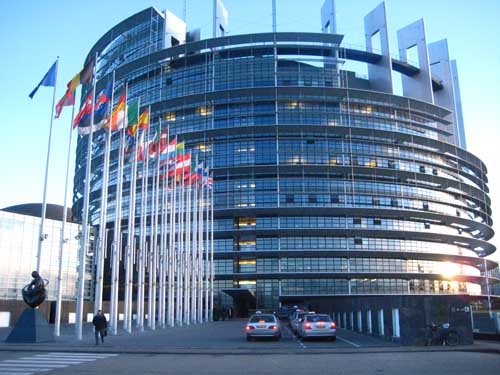

Europe’s AI and Satellite Dependence on U.S. Firms Is ‘Dangerous,’ France’s Bouygues CEO Warns

0
European Commission

The head of one of France’s largest industrial and telecoms groups has warned that Europe risks surrendering strategic control of critical technologies if it continues to rely heavily on American infrastructure providers such as Elon Musk’s Starlink and dominant U.S. artificial-intelligence companies.

Speaking to CNBC on Thursday, Bouygues CEO Olivier Roussat said Europe is underestimating the geopolitical and economic risks tied to dependence on foreign-controlled AI systems and satellite networks, at a time when technological sovereignty is becoming increasingly central to national security, communications resilience, and industrial competitiveness.

“There [are] two things for the future where we need [Europe to] realize how big it is. This is AI, and this is satellite,” Roussat said during an interview on CNBC’s “Squawk Box Europe.”

“Europe doesn’t realize exactly how dangerous it is to just rely on the American infrastructure,” he added.

The comments come as Europe intensifies efforts to reduce dependence on U.S. and Chinese technology ecosystems. Policymakers across the European Union have increasingly pushed for “strategic autonomy” in sectors ranging from semiconductors and cloud computing to AI and space infrastructure.

Roussat’s remarks also underscore growing unease within Europe’s telecom and industrial sectors over the concentration of critical digital infrastructure in the hands of a small number of American firms. The issue has gained urgency following the rapid global expansion of SpaceX’s Starlink satellite network, which has become the dominant low-earth-orbit satellite internet provider worldwide.

Starlink, operated by Musk’s SpaceX, now runs a constellation of roughly 10,000 satellites and has emerged as a crucial communications provider in disaster zones, military conflicts, and remote regions. Its growing influence has also raised concerns among European executives and officials about the continent’s exposure to decisions made by a private foreign company.

Roussat argued that Europe needs to develop sovereign alternatives rather than becoming structurally dependent on external providers for connectivity and emerging AI systems.

“It’s not sure that we absolutely need to get a Starlink or something like this,” he said. “We need something to get some sovereignty.”

His warning touches on a broader debate unfolding across Europe over digital independence. European governments have become increasingly concerned that the region lacks globally dominant technology champions in critical sectors such as cloud infrastructure, frontier AI, semiconductors, and satellite communications.

The concern has sharpened as American technology giants pour hundreds of billions of dollars into AI infrastructure. Companies such as Microsoft, Amazon, Google, and Nvidia now control much of the computing capacity underpinning advanced AI development globally.

European officials have warned that the continent risks becoming primarily a consumer rather than a producer of advanced digital technologies. France, Germany, and the European Commission have, in recent years, backed initiatives aimed at creating homegrown cloud infrastructure, semiconductor manufacturing, and AI systems.

The satellite sector has become another battleground. Europe already operates major space programs through organizations such as the European Space Agency and satellite operator Eutelsat, but Starlink’s scale and speed of deployment have transformed competitive dynamics in the industry.

The geopolitical implications have become increasingly apparent following conflicts in Eastern Europe and the Middle East, where satellite connectivity has played a critical role in communications, military coordination, and infrastructure resilience. Analysts say this has prompted European governments to reassess whether key communications infrastructure should remain heavily dependent on foreign private-sector operators.

Roussat expresses this concern as Bouygues pushes ahead with one of the most ambitious telecom consolidation efforts in Europe in recent years. In April, Bouygues joined rivals Free-Iliad and Orange in a bid to acquire a controlling share of French telecom operator SFR in a deal valued at about 20.35 billion euros ($23.6 billion). Under the proposal, Bouygues Telecom would hold a 42% stake in SFR.

If approved, the transaction would reshape France’s telecoms market by reducing the number of mobile network operators from four to three. The French telecom sector has faced years of aggressive price competition that has squeezed margins and limited investment capacity.

Executives across Europe’s telecom industry have long argued that fragmentation has weakened the sector’s ability to compete with larger American and Asian rivals. European telecom operators have pushed regulators to permit greater consolidation, arguing that a larger scale is needed to fund next-generation infrastructure investments, including 5G, fiber networks, AI systems, and future satellite capabilities.

The proposed SFR transaction will face close scrutiny from European antitrust regulators, who have historically taken a cautious stance toward telecom mergers over concerns that reduced competition could raise consumer prices.

Roussat said the outcome would test whether European regulators are prepared to support the creation of stronger regional telecom players capable of competing globally.

“The game for them [the European Commission] is to set up conditions where we will have a fair competition between us, and I think it’s possible,” he said.

Euro Zone Faces Second Major Energy Shock in Five Years as Middle East Conflict Drags Growth and Fuels Inflation

0

The European Commission warned on Thursday that the eurozone economy will experience a noticeable slowdown in 2026 following the outbreak of war in the Middle East, which has triggered the region’s second significant energy crisis in less than five years.

The extent of the damage will depend heavily on the duration of the conflict and its impact on global energy supplies.

“Before the end of February 2026, the EU economy was set to keep expanding at a moderate pace alongside a further decline in inflation, but the outlook has changed substantially since the outbreak of the conflict,” the Commission said in its Spring 2026 Economic Forecast.

The Commission now expects euro zone GDP growth to slow to 0.9% in 2026, down from a previous projection of 1.2% and well below the 1.3% recorded in 2025. Growth is then forecast to edge up only modestly to 1.2% in 2027.

Inflation forecasts were revised significantly higher, rising to 3.0% in 2026 (from 1.9%) and 2.3% in 2027 (from 2.0%). These upward revisions reflect surging oil prices above $100 per barrel and severe disruptions to shipping through the Strait of Hormuz, which have created a substantial supply-side shock.

The Commission noted that domestic consumption is still expected to remain the primary driver of growth, but both consumer and business sentiment have deteriorated rapidly. Investment is likely to be constrained by tighter financing conditions, lower profits, and heightened uncertainty, while weaker global demand is weighing on exports.

ECB Likely to Hike Rates in June for Credibility

The worsened inflation outlook strengthens the case for the European Central Bank to raise interest rates at its June 11 policy meeting. Markets are pricing in one or two additional hikes over the next 12 months, which would lift the deposit rate from the current 2% toward 2.50–2.75%.

ECB policymaker Olli Rehn, Governor of the Bank of Finland, acknowledged the difficult balancing act.

“The euro area was sliding towards the ECB’s ‘adverse scenario’ of slower growth and higher inflation, which may force it to raise rates for the sake of credibility,” he said.

However, Rehn struck a relatively measured tone, noting that longer-term inflation expectations remain well anchored around the ECB’s 2% target. He pointed out that gas prices have not risen as sharply as oil, wage growth continues to moderate, and there are limited signs of second-round effects so far.

“From the standpoint of medium-term orientation, the critical thing is whether we see evident signs of second-round effects, and/or de-anchoring of inflation expectations… we see some vibration in the short-term inflation expectations, but no significant deviation in medium- to long-term inflation expectations,” he said.

Rehn also made clear that the ECB will not be dictated by market pricing, saying: “Market forces have priced in some rate hikes, but our policies are not dictated by the market forces. We take our decisions independently.”

The Commission outlined a more pessimistic alternative scenario in which the conflict drags on, causing energy prices to peak later in 2026 (with Brent crude potentially reaching $180 per barrel) before gradually normalizing by the end of 2027. In this case, inflation would remain elevated, and the economy would fail to rebound in 2027. European Economy Commissioner Valdis Dombrovskis said that under this adverse scenario, growth forecasts for this year and next would be roughly halved.

Worsening Public Finances and Regional Divergences

Weaker growth, higher interest rates, energy subsidy measures, and increased defense spending are expected to strain public finances. The euro zone budget deficit is projected to widen from 2.9% of GDP in 2025 to 3.3% in 2026 and 3.5% in 2027.

France, Germany, and Italy are all set to see larger deficits than previously forecast. Italy is expected to overtake Greece as the bloc’s most indebted country in 2027, with public debt reaching 139.2% of GDP.

Rehn highlighted important differences in exposure across the region, noting: “You have obviously quite different impacts of the energy price shock… Northern European countries, France and the Iberian Peninsula would be partly shielded… with Germany, Italy and Central Europe hit harder.”

Despite the challenges, the Commission emphasized that the euro zone is better prepared for this shock than the 2022 energy crisis caused by Russia’s invasion of Ukraine. Years of investment in energy diversification, renewables, and efficiency improvements have enhanced resilience. Policymakers have also been advised to avoid overly generous fuel subsidies that could further strain limited fiscal space.

The latest forecasts underscore the euro zone’s persistent vulnerability to external energy shocks and the delicate trade-off facing the ECB between controlling inflation and supporting growth. While a rate hike in June looks almost certain to safeguard credibility, further tightening must be carefully calibrated to avoid pushing an already fragile economy into recession.

Economists believe the duration of the Middle East conflict remains the single biggest risk factor. A swift resolution and reopening of the Strait of Hormuz would materially ease pressures. A prolonged war, however, risks creating stagflationary conditions, higher inflation combined with weaker growth, that would test both monetary and fiscal policy frameworks across Europe.

Nvidia’s Earnings Report Highlights How AI is Helping Institutions Redefine Revenue Streams

0

NVIDIA once again demonstrated why it remains the centerpiece of the global artificial intelligence boom after reporting stronger-than-expected earnings, announcing a massive increase in shareholder returns, and reinforcing investor confidence in the long-term trajectory of AI infrastructure spending.

The company not only exceeded Wall Street expectations for revenue and profitability, but also stunned markets by increasing its quarterly dividend by 25 times while authorizing an additional $80 billion stock buyback program. Together, the announcements signaled a company operating from a position of extraordinary financial strength.

At the center of Nvidia’s performance is the relentless global demand for AI computing power. Over the past two years, the AI race has evolved from experimentation into a full-scale infrastructure buildout involving hyperscalers, governments, enterprises, and startups.

Nvidia’s graphics processing units, particularly its AI accelerators, have become the foundation of this expansion. From training large language models to powering autonomous systems and enterprise copilots, Nvidia chips are increasingly viewed as the picks and shovels of the AI economy. The earnings report highlighted how deep this demand cycle has become.

Revenue growth remained explosive, driven primarily by data center sales as cloud providers continue investing billions into AI clusters. Companies such as Microsoft, Amazon, Google, and Meta are all racing to expand AI capacity, and Nvidia remains the primary beneficiary. Even as competitors attempt to develop in-house AI chips, Nvidia’s software ecosystem, CUDA dominance, and networking stack continue to create a formidable moat.

The most eye-catching development, however, was Nvidia’s decision to dramatically increase its dividend. A 25x jump in quarterly payouts is rare for a technology company still experiencing hypergrowth. Traditionally, companies prioritize reinvestment during expansion phases, but Nvidia’s move suggests it now generates more cash than it can efficiently deploy internally. The dividend increase sends a message that management expects AI-driven revenues to remain durable for years rather than quarters.

Equally significant was the announcement of an $80 billion stock repurchase authorization. Buybacks are often interpreted as a signal that executives believe shares remain undervalued relative to future earnings potential. In Nvidia’s case, the move also reflects extraordinary free cash flow generation.

Few companies in history have been able to combine rapid growth, dominant market positioning, and shareholder-friendly capital returns at this scale simultaneously. The broader implications extend well beyond Nvidia itself. The company has increasingly become a macroeconomic indicator for the AI era. Semiconductor stocks, cloud providers, data center operators, and even cryptocurrency-related infrastructure firms frequently move in correlation with Nvidia’s outlook.

Investors now view the company as a real-time barometer for global AI capital expenditure. Critics still warn that AI enthusiasm may eventually cool or that valuations across the sector remain stretched. Regulatory risks, geopolitical tensions surrounding semiconductor exports, and rising competition from rivals such as Advanced Micro Devices and Intel also remain important variables.

Yet Nvidia’s latest results suggest the current AI cycle is far from slowing down. Instead, the company appears to be entering a new phase: not just as the dominant AI hardware supplier, but as one of the most financially powerful corporations in the world.

Zcash’s ZEC and Hyperliquid’s HYPE are Increasingly Gaining Momentum

0

The cryptocurrency market delivered another sharp rotation of momentum as privacy-focused token Zcash surged while Hyperliquid’s HYPE token continued its remarkable climb through the digital asset rankings. ZEC gained roughly 12% on the day while HYPE advanced approximately 15%, making both assets the strongest performers among major cryptocurrencies.

The rally reflected a broader shift in investor attention toward infrastructure tokens and alternative blockchain ecosystems that are increasingly seen as beneficiaries of the next phase of crypto adoption. HYPE’s move was especially significant because the token officially surpassed Solana in fully diluted valuation, marking a symbolic turning point in the market’s evolving hierarchy.

For much of the previous cycle, Solana represented the dominant high-performance blockchain narrative outside Ethereum. Hyperliquid, however, has rapidly transformed from a niche decentralized derivatives venue into one of the most influential onchain trading ecosystems in crypto.

The market’s enthusiasm around HYPE has been driven by several overlapping themes. First is the continued growth of decentralized perpetual futures trading, which many analysts believe could become one of crypto’s largest financial verticals.

Hyperliquid has positioned itself as a high-speed alternative to centralized exchanges, offering users direct access to leveraged markets while maintaining self-custody of assets. As regulatory scrutiny intensifies globally, investors increasingly view decentralized trading infrastructure as strategically valuable. Second, Hyperliquid has benefited from strong ecosystem effects.

Trading activity, liquidity depth, and user retention have all accelerated as more capital rotates into onchain finance. The token’s rise above Solana in FDV also signals how investors are beginning to prioritize revenue-generating crypto protocols rather than purely speculative Layer 1 narratives. Markets appear increasingly focused on platforms with measurable cash flow, active users, and sustainable network demand.

Zcash’s rally reflects renewed interest in privacy technologies at a time when surveillance concerns and financial monitoring are becoming central political issues worldwide. Privacy coins have historically moved in cycles, often regaining momentum during periods of heightened regulatory discussion or macro uncertainty. Traders appear to be repricing the importance of transactional privacy as governments simultaneously expand digital payment oversight and explore state-backed financial infrastructure.

That backdrop became even more important after reports that President Donald Trump ordered the US government to integrate cryptocurrency into payment systems. The announcement marked one of the clearest signals yet that digital assets are moving closer to the center of mainstream financial infrastructure in the United States.

The implications are enormous. Government integration of crypto payments could accelerate adoption of stablecoins, blockchain settlement systems, tokenized assets, and decentralized financial rails. It would also represent a dramatic shift from the early years of crypto, when federal agencies largely approached the industry with skepticism and enforcement-heavy regulation.

Markets interpreted the development as validation that blockchain technology is no longer operating on the financial fringe. Instead, crypto is increasingly being viewed as a strategic technological layer for payments, settlement, and digital commerce. Investors responded by rotating into tokens tied to infrastructure, liquidity, and financial utility.

Together, the rise of HYPE, the resurgence of ZEC, and Washington’s growing embrace of blockchain payments illustrate a broader transformation underway in digital assets. Crypto markets are evolving beyond speculative trading into a competition over who will control the next generation of financial infrastructure.