DD
MM
YYYY

PAGES

DD
MM
YYYY

spot_img

PAGES

Home Blog Page 5

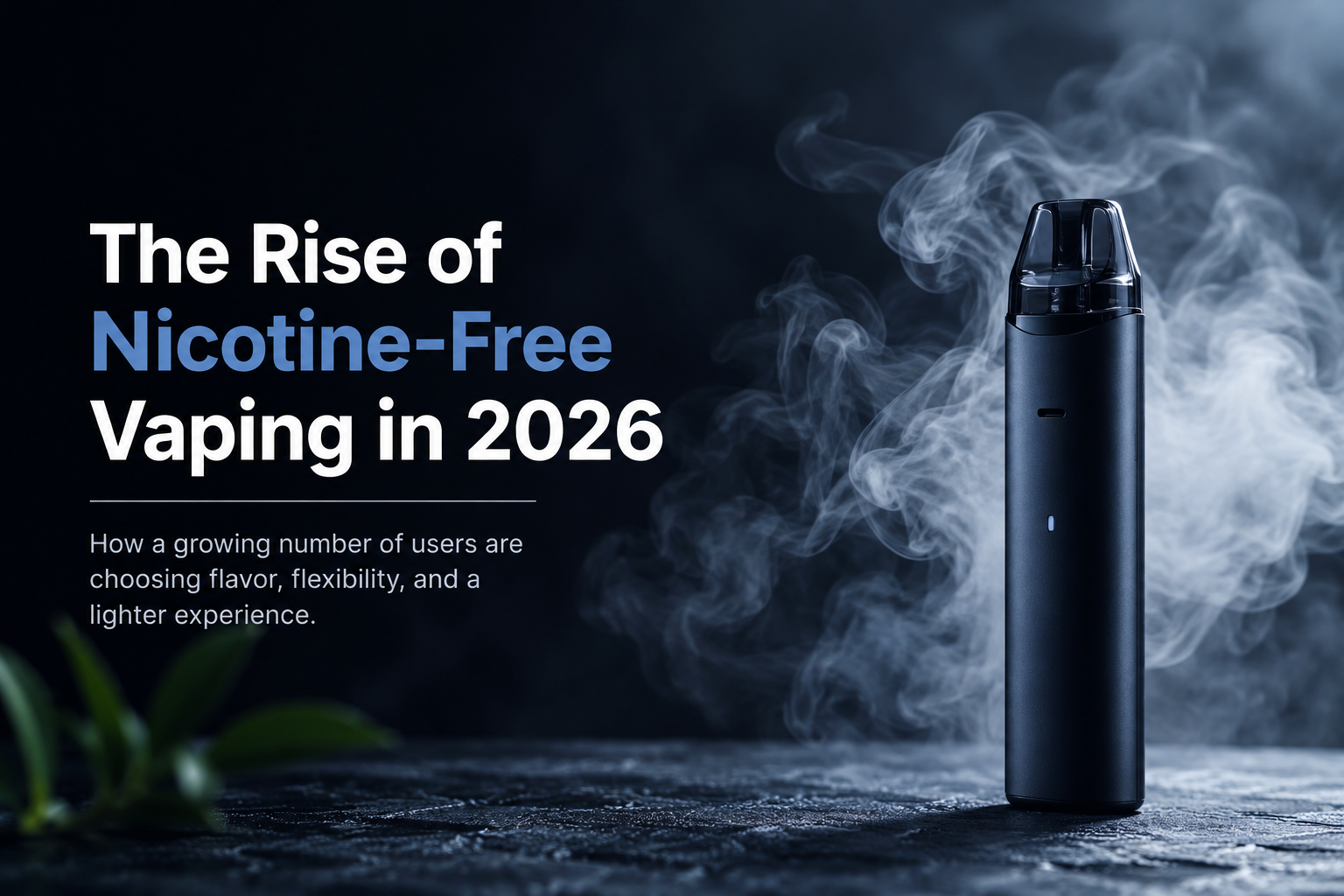
The Rise of Nicotine-Free Vaping in 2026

0

In recent years, the vaping market hasn’t really moved in one single direction. It has started to split, slowly but noticeably, into different patterns of use. Nicotine-based products are still the most common overall, but there is a steady shift happening on the margins toward nicotine-free options.

What’s interesting is that this shift doesn’t really feel like something being introduced by the industry. It feels more like users gradually changing how they approach the same devices. For a growing group of adult vapers, vaping is less about nicotine delivery and more about flavor, routine, or simply how they use it in specific moments of the day.

In practice, this shows up in simple behavior changes. Some users don’t fully switch — they alternate depending on context. A disposable device with nicotine might be used during the day, while nicotine-free options appear more often in casual situations like evenings out, short breaks, or travel, where lighter setups feel more practical.

Over time, the devices themselves have also improved. Earlier nicotine-free vapes often had clear trade-offs — weaker flavor output, inconsistent performance, or shorter lifespan. That gap has narrowed with better coil systems, improved airflow design, and the wider use of rechargeable disposable devices and pod systems that now perform more consistently across different usage styles.

This is also reflected in how products are now structured in the market. Many retailers and manufacturers now separate nicotine-free products into dedicated categories, making them easier for users to identify and compare. Some platforms simply group them under dedicated zero nicotine vape sections.

Instead of being treated as a niche add-on, nicotine-free options are now just another part of the same ecosystem.

Flavor still plays a major role in why users stay within this category. Without nicotine, fruit and ice blends are often described as feeling slightly more open and less muted, although the difference is usually subtle.

There is also a practical side that shows up in real use. Nicotine-free vaping tends to appear in specific situations rather than as a constant habit — travel days, social environments, or short breaks during work, where users prefer something lighter and less tied to routine.

It also helps that nicotine-free versions now exist across different device types, including compact pod systems, rechargeable disposable vapes, and higher-capacity devices designed for longer, more flexible use.

Overall, this is not a replacement of traditional vaping. It is more of a parallel layer that users move in and out of depending on situation, preference, and daily context.

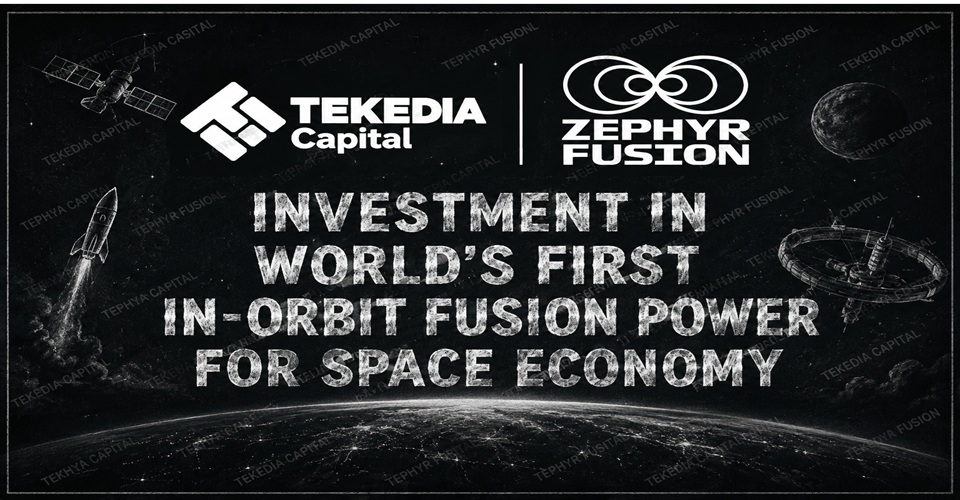
Tekedia Capital Invests in Zephyr Fusion, to Power Space Economy with Fusion Energy

0

Tekedia Capital is excited to announce that we have invested in Zephyr Fusion, a company building next-generation fusion energy systems focused on powering the emerging space economy.

At Tekedia Capital, we invest in companies engineering the future, and we believe that space infrastructure will become one of the defining economic frontiers of this century. Simply, the space needs energy and we hope that Zephyr Fusion will provide the juice to advance the space commercial age.

Pedagogical Innovation in Teaching Psychology of Communication

0

In any higher institution of learning, teaching is a core component of a lecturer’s work, in addition to research and community service. At the TNM Media Academy, Ibadan, one of the foremost institutions for media and journalism studies, when the Head of Department informed me that Psychology of Communication is one of the courses I will teach at the National Diploma level, I initially wanted to reject it because I felt that psychology is not my core area of interest and not closely aligned with my academic orientation. But my decision changed completely when he said, “We know you can handle it,” a statement that challenged my confidence and reshaped my perception of the assignment.

After our conversation, as I was going home, I kept thinking deeply about how to teach the students in a way that would have a lasting impact on them and enable them to replicate it in their profession and society in general, using the principles and techniques they would have gained from my teaching approach. This reflection extended beyond the classroom and became a personal intellectual responsibility. Arriving home, I still found myself not comfortable with the course, as I felt uncertain about my depth in the subject area. However, the doubt was gradually addressed when I went on a self-search mission to know which university, polytechnic or any other type of higher institution in Nigeria or outside the country is offering the course, for me to learn one or two things from the existing approaches and understand how it is structured in different academic environments.

One of the pictures analysed during psychology of images task

Surprisingly, little information is available on the websites of most institutions in Nigeria. This gap limited immediate reference points and made comparative understanding difficult. This gap was addressed when I searched foreign institutions, where I found topics and practical tasks such as defining the psychology of communication and engaging in critical analysis of communication materials, as well as structured conversations in various contexts with the intent of revealing cognitive and neuroscience aspects of communication. These approaches appeared more applied, analytical and reflective in nature, giving students opportunities to connect theory with real communication experiences.

Considering Nigeria’s context, the majority of techniques being deployed by most faculty members cannot deliver the expected and meaningful impact in our context, especially where learning often remains theoretical and less practice-driven. It is on this basis that I crafted topics that focus on verbal and non-verbal communication in relation to media and journalism studies, ensuring relevance to students’ professional development. In the last few weeks, since I started teaching the course, my attention has been on walking the students through the application of concepts such as perception, motivation, attitudes, personality, and behaviour, among others, using the “thinking about thinking” principle, which encourages them to reflect on their cognitive processes during communication.

To really deepen the students’ skills and knowledge, I taught a concept, and thereafter they worked on practical tasks using news, programme and advertising materials, allowing them to analyse communication from real media content. They also carried out practical tasks using observable human and non-human materials around them, ensuring that learning was not restricted to the classroom environment. For example, they were asked to take a picture of a dilapidated building around the campus premises and conduct a psychological image analysis. This task helped them to understand how a brownfield environment could shape their relationships and possible well-being, while also strengthening their ability to interpret visual and environmental cues in communication contexts.

In all, students examine how personality perception and social judgement affect interpersonal exchanges, alongside the role of human needs and motivation in shaping engagement. Beliefs, values, and attitudes are studied as drivers of communication choices. The course also introduces critical thinking and metacognition, encouraging learners to question assumptions and evaluate claims in academic enquiry.

Hullabaloo Lagos

1

“Live in New York City once, leave before it makes you hard.” If Mary Schmich was a Lagosian, she would have said this about Lagos and not New York. The parallels between these two metropolises lie between sublime and mundane. Consider a universe of ant colonies where sugar and sweets are concentrated in a single colony; the ensuing population-pull would be unsustainable, especially the noise that overwhelms every creature in it.

Such is the state of the less affluent areas of a megacity. In 2024, New York Times analyzed data from 311 calls made around the city and noise took the number one spot. I doubt we would get a different result if the Lagos State Environmental Protection Agency should do the same. Lagosians who were born and bred in the city seem to have blended in with noise.

However, you only need to leave Lagos to agree with Damilare Kuku that Nearly All the Men in Lagos are Mad. I feared I was phonophobic, but even if I were, my eyes could see speakers and megaphones everywhere. It is really difficult to organize one’s thoughts in this hubbub. As I write, some lads in the hood are having a good time blasting speakers as though it is happening in my room. In Lagos today, anyone can mount speakers, turn up the volume to maximum and damn the consequences – because there’s none.

To escape noise in Lagos is to attempt the impossible feat of running from one’s own shadow. Riding in the front seat of a danfo on my way from work, the driver stepped on the brakes to add to the long queue of traffic congestion as we approach Egbeda roundabout from Iyana-Oba. Without sparing a moment’s thought, the alcohol-intoxicated driver honked incessantly. My God, what an irritant! “Why did you have to do that? Can’t you see the traffic?” I queried him. Before I could finish speaking the trailer behind us startled me with a louder honk. I jerked out of my seat but was pulled back by the seat belt. I flashed my five fingers at them and said “Waka! Shege banza! Are you mad?” I will beat you if you don’t stop that!” They continued as if I were a fly on their windscreen. Then it struck me – I had just become one of the mad men in Lagos.

Ah, finally home. I sighed as I alighted from the keke at Gate and waving at the friendly Lagos Neighborhood Safety Corps officer sitting on a bench. I wondered if he had ever paused to consider the noise from the loud megaphones echoing “POS! POS! POS! Withdraw your money here!” We can see your signpost – why the megaphone? The sexually transmitted disease herbal medicine man must surely be deaf from years of exposure to the relentless noise from his own megaphone. No one wants to be left behind in this hullabaloo. Even those who spread their wares by the road have speakers. Tomorrow the orange hawkers and kpomo sellers would join them.

Lagos is a city that refuses to be ignored, and its noise is perhaps the most honest expression of that refusal. Every megaphone, every honk, every blaring speaker is a sound of a city straining under the weight of ambition and survival. Yet there’s a cost to all of this sound. This is to the government to engage the Lagos Neighborhood Safety Corps to curb this menace. Megaphones and speakers should be prohibited except for certain categories but with license and stipulated decibels. Lagos could be more excellent with effective noise regulations.

Europe’s AI and Satellite Dependence on U.S. Firms Is ‘Dangerous,’ France’s Bouygues CEO Warns

0
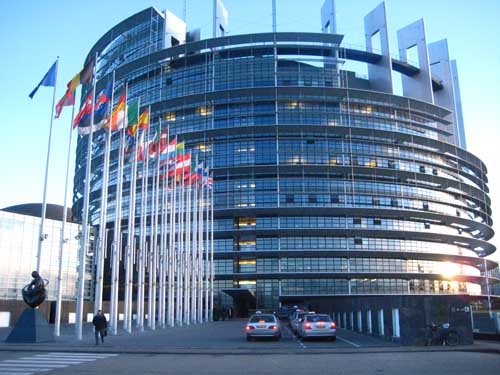
European Commission

The head of one of France’s largest industrial and telecoms groups has warned that Europe risks surrendering strategic control of critical technologies if it continues to rely heavily on American infrastructure providers such as Elon Musk’s Starlink and dominant U.S. artificial-intelligence companies.

Speaking to CNBC on Thursday, Bouygues CEO Olivier Roussat said Europe is underestimating the geopolitical and economic risks tied to dependence on foreign-controlled AI systems and satellite networks, at a time when technological sovereignty is becoming increasingly central to national security, communications resilience, and industrial competitiveness.

“There [are] two things for the future where we need [Europe to] realize how big it is. This is AI, and this is satellite,” Roussat said during an interview on CNBC’s “Squawk Box Europe.”

“Europe doesn’t realize exactly how dangerous it is to just rely on the American infrastructure,” he added.

The comments come as Europe intensifies efforts to reduce dependence on U.S. and Chinese technology ecosystems. Policymakers across the European Union have increasingly pushed for “strategic autonomy” in sectors ranging from semiconductors and cloud computing to AI and space infrastructure.

Roussat’s remarks also underscore growing unease within Europe’s telecom and industrial sectors over the concentration of critical digital infrastructure in the hands of a small number of American firms. The issue has gained urgency following the rapid global expansion of SpaceX’s Starlink satellite network, which has become the dominant low-earth-orbit satellite internet provider worldwide.

Starlink, operated by Musk’s SpaceX, now runs a constellation of roughly 10,000 satellites and has emerged as a crucial communications provider in disaster zones, military conflicts, and remote regions. Its growing influence has also raised concerns among European executives and officials about the continent’s exposure to decisions made by a private foreign company.

Roussat argued that Europe needs to develop sovereign alternatives rather than becoming structurally dependent on external providers for connectivity and emerging AI systems.

“It’s not sure that we absolutely need to get a Starlink or something like this,” he said. “We need something to get some sovereignty.”

His warning touches on a broader debate unfolding across Europe over digital independence. European governments have become increasingly concerned that the region lacks globally dominant technology champions in critical sectors such as cloud infrastructure, frontier AI, semiconductors, and satellite communications.

The concern has sharpened as American technology giants pour hundreds of billions of dollars into AI infrastructure. Companies such as Microsoft, Amazon, Google, and Nvidia now control much of the computing capacity underpinning advanced AI development globally.

European officials have warned that the continent risks becoming primarily a consumer rather than a producer of advanced digital technologies. France, Germany, and the European Commission have, in recent years, backed initiatives aimed at creating homegrown cloud infrastructure, semiconductor manufacturing, and AI systems.

The satellite sector has become another battleground. Europe already operates major space programs through organizations such as the European Space Agency and satellite operator Eutelsat, but Starlink’s scale and speed of deployment have transformed competitive dynamics in the industry.

The geopolitical implications have become increasingly apparent following conflicts in Eastern Europe and the Middle East, where satellite connectivity has played a critical role in communications, military coordination, and infrastructure resilience. Analysts say this has prompted European governments to reassess whether key communications infrastructure should remain heavily dependent on foreign private-sector operators.

Roussat expresses this concern as Bouygues pushes ahead with one of the most ambitious telecom consolidation efforts in Europe in recent years. In April, Bouygues joined rivals Free-Iliad and Orange in a bid to acquire a controlling share of French telecom operator SFR in a deal valued at about 20.35 billion euros ($23.6 billion). Under the proposal, Bouygues Telecom would hold a 42% stake in SFR.

If approved, the transaction would reshape France’s telecoms market by reducing the number of mobile network operators from four to three. The French telecom sector has faced years of aggressive price competition that has squeezed margins and limited investment capacity.

Executives across Europe’s telecom industry have long argued that fragmentation has weakened the sector’s ability to compete with larger American and Asian rivals. European telecom operators have pushed regulators to permit greater consolidation, arguing that a larger scale is needed to fund next-generation infrastructure investments, including 5G, fiber networks, AI systems, and future satellite capabilities.

The proposed SFR transaction will face close scrutiny from European antitrust regulators, who have historically taken a cautious stance toward telecom mergers over concerns that reduced competition could raise consumer prices.

Roussat said the outcome would test whether European regulators are prepared to support the creation of stronger regional telecom players capable of competing globally.

“The game for them [the European Commission] is to set up conditions where we will have a fair competition between us, and I think it’s possible,” he said.