DD
MM
YYYY

PAGES

DD
MM
YYYY

spot_img

PAGES

Home Blog Page 5

Strategy Books Roughly $4 Billion Unrealized Profit on Bitcoin as Price Surges

0

Michael Saylor’s Strategy has swung into a substantial unrealized profit on its Bitcoin holdings, now sitting on approximately $4 billion in paper gains after a sharp rally in the cryptocurrency.

The upward price movement, has lifted the value of Strategy’s massive Bitcoin treasury above its aggregate acquisition cost, underscoring the growing impact of Bitcoin’s price performance on the company’s balance sheet.

Strategy, the largest corporate Bitcoin holder, owns 840,447 BTC purchased at an average cost of about $75,385 per coin.

Just a week earlier the same position carried unrealized losses near $9.5 billion. Bitcoin’s climb from the low $60,000s to levels above $80,000 in recent days pushed the firm’s average acquisition price into the green and produced the rapid reversal.

Every $1,000 move in Bitcoin’s price now shifts Strategy’s paper profit or loss by roughly $840 million, underscoring how tightly the company’s balance sheet tracks the asset.

Strategy’s total cost basis across the holdings stands near $63.4 billion. The firm has financed much of its accumulation through convertible debt, preferred stock, and equity offerings while maintaining a long-standing commitment to treating Bitcoin as its primary treasury reserve.

In recent months it has adjusted that approach by selling limited amounts of Bitcoin at times to support liquidity needs, preferred dividends, and share repurchases, while also building sizable U.S. dollar cash reserves.

Despite those sales, the overall Bitcoin stack remains the largest held by any public company and represents roughly 4 percent of Bitcoin’s total eventual supply.

Executive Chairman Michael Saylor has long argued that Bitcoin serves as a superior long-term store of value compared with cash or traditional assets.

The latest mark-to-market swing illustrates both the upside potential and the volatility inherent in that strategy. Shares of Strategy have historically moved in close correlation with Bitcoin prices, and the return to unrealized profitability arrives after a period of deep underwater marks that weighed on reported results.

Market observers note that the speed of the recovery highlights Bitcoin’s capacity for sharp moves in either direction. The price of Bitcoin has jumped 23% in the past week, after the U.S Tresaury Department announced plans to increase longer-dated bond buybacks.

This upward price movement has changed  the unpleasant picture of the first two quarters of 2026, restoring optimism to the market after months of intense pressure on the price.

The first half of the year proved extremely difficult for investors, as the declines in January and February were followed by a 20.5% plunge in June, which brought bearish sentiment back to the market.

However, the reversal that began with moderate growth in July turned into a genuine explosion in August.

As of today, the month-to-date return stands at a phenomenal 22.7%, which looks abnormal compared with August’s historical average of just 0.82%.

Following the breakout from a multi-month trading range, technical analysts have begun talking about the complete end of the bear market phase.

Notably, Strategy continues to report its holdings and cost basis regularly through regulatory filings, giving investors clear visibility into the size and performance of the position.

As Bitcoin trades above the firm’s average entry price, the $4 billion unrealized profit marks a notable milestone in one of the most aggressive corporate Bitcoin accumulation programs ever undertaken.

Outlook

The outlook for Strategy remains closely tied to Bitcoin’s ability to sustain prices above the company’s average acquisition cost.

If Bitcoin continues its advance, Strategy’s unrealized gains could expand rapidly, potentially strengthening investor confidence in its Bitcoin-focused treasury strategy and supporting the company’s market valuation.

A sustained move higher could also create additional opportunities for Strategy to raise capital and continue expanding its Bitcoin holdings. At current ownership levels, however, every major Bitcoin price swing carries an increasingly significant impact on the company’s balance sheet.
Trump Weighs 7.5% China Tariff Ahead of Planned Xi Summit as US Rebuilds Trade Barriers

0

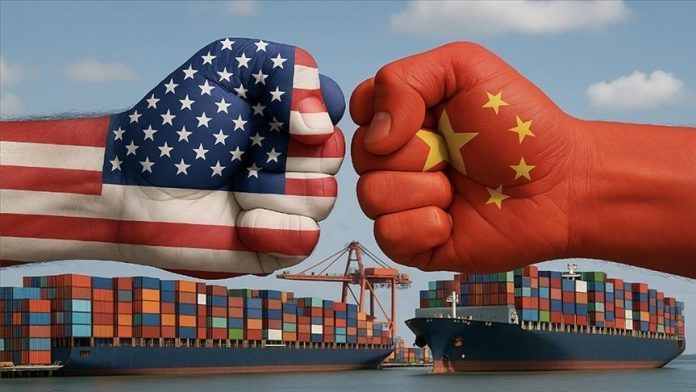
The Trump administration is preparing to impose a new 7.5% tariff on Chinese goods over allegations of excess manufacturing capacity, a move that would raise the effective U.S. tariff burden on Chinese imports to about 20% ahead of a planned September meeting between President Donald Trump and Chinese President Xi Jinping.

Bloomberg reported, citing people familiar with the matter, that the proposal would allow Washington to revive part of Trump’s broader protectionist trade agenda while keeping additional duties on Chinese goods within a ceiling that Beijing has previously indicated it could accept under the current U.S.-China trade truce.

The exact rate has not been finalized, however, and the administration could still change the structure or timing of the measure. One option under consideration is to announce a higher tariff and suspend part of it, leaving an effective additional duty of 7.5%, according to one person familiar with the discussions.

The proposed action would come at a sensitive moment in U.S.-China relations. Trump and Xi are expected to meet in Washington on September 24, while the current one-year trade truce between the world’s two largest economies is due to expire on November 10.

The two governments are also negotiating an extension of the agreement, making the proposed tariff a potentially important bargaining tool ahead of the summit.

The key issue for Beijing is whether Washington will respect the tariff ceiling discussed during previous negotiations. China has previously said the U.S. agreed to limit additional tariffs on Chinese exports to 20%.

“We hope that the US will honor its commitments, ensuring that regardless of the reasons given for imposing or replacing tariffs on China in the future, US tariffs on China will not exceed the levels outlined in the Kuala Lumpur trade consultations,” China’s Ministry of Commerce said in May.

The proposed 7.5% measure is tied to a U.S. investigation into excess manufacturing capacity in China and other major trading partners.

The Trump administration launched the Section 301 investigation in March, targeting more than a dozen economies over concerns that government support and industrial policies have resulted in excess production that can flood international markets with subsidized goods.

The issue has become bold in the U.S.-China trade relationship as Chinese manufacturers expand production in sectors ranging from electric vehicles and batteries to solar equipment, steel and other industrial goods.

Washington states that China’s excess capacity can weaken U.S. manufacturers by allowing Chinese companies to sell goods at prices that American producers struggle to match.

The investigation is also part of a broader effort by the Trump administration to construct a new legal foundation for tariffs after the Supreme Court struck down Trump’s earlier global levies imposed under the International Emergency Economic Powers Act.

The ruling forced the administration to search for alternative legal mechanisms to maintain many of its trade restrictions.

Section 301 of the Trade Act of 1974 gives the U.S. Trade Representative authority, under presidential direction, to impose tariffs or other measures in response to foreign trade practices that Washington determines are discriminatory or inconsistent with U.S. rights under international trade agreements.

The administration is now using investigations into issues such as forced labor and industrial overcapacity as the basis for new tariffs.

Washington imposed a 12.5% tariff on Chinese goods in July, citing China’s efforts to address forced labor concerns. Beijing criticized the measure but did not immediately retaliate, instead pointing to the 20% ceiling it said had been agreed during earlier negotiations.

The potential new tariff would therefore take the effective second-term tariff burden on Chinese imports back toward that level. That would represent a significant distinction in Trump’s approach to China compared with his treatment of some traditional U.S. allies.

While Washington has so far sought to preserve its tariff truce with Beijing, the administration has imposed a 50% tariff on billions of dollars of Canadian goods and has raised the possibility of abandoning the North American trade agreement negotiated during Trump’s first term.

The potential tariff also comes as Washington attempts to use trade policy to address what it sees as a structural imbalance in global manufacturing.

China’s enormous industrial base has made it a dominant supplier in several strategic industries. The United States and its allies see that capacity not only as an economic challenge but as a national security concern, especially in sectors considered important to the energy transition, advanced manufacturing and technology.

The legal basis for the new tariffs could nevertheless become another source of uncertainty.

A coalition of 25 states, including New York, California and Illinois, filed a lawsuit earlier this month at the U.S. Court of International Trade challenging the administration’s use of Section 301. The states argue that Trump is improperly using the forced-labour rationale to recreate tariffs that were struck down by the Supreme Court. Small businesses have also brought legal challenges against the administration’s tariff programme.

The White House has maintained that the Section 301 tariffs are legally valid and supported by previous court decisions.

The administration has not confirmed the proposed China tariff. A White House official said any tariff announcements would come directly from the administration and dismissed reports about planned measures as speculation. The Office of the U.S. Trade Representative and China’s Ministry of Commerce did not immediately comment.

The uncertainty is likely to persist until the administration completes its excess-capacity investigation.

U.S. Trade Representative Jamieson Greer said in July that the investigation would take longer than a separate probe into forced labor because of its complexity. Administration officials are nevertheless seeking to publish the findings before Trump’s expected September 24 meeting with Xi.

That timing gives the proposed tariff broader significance than its headline rate suggests.

Trump appears to be trying to rebuild his tariff regime on a more durable legal foundation while avoiding a renewed escalation that could jeopardize the fragile trade truce with Beijing. A 7.5% effective increase would allow him to maintain pressure on China over industrial overcapacity while keeping the overall burden near the 20% threshold Beijing has previously accepted.

The calculation is believed to be more difficult for Xi because Beijing has an incentive to preserve the trade truce, particularly as both economies remain exposed to the consequences of a renewed tariff escalation. But another U.S. tariff tied to China’s industrial capacity could also bolster Beijing’s view that Washington is attempting to constrain China’s manufacturing rise.

The September summit could therefore become a critical test of whether the two sides can separate their broader strategic rivalry from the immediate need to manage trade.

However, the biggest issue for markets and businesses may not be whether the additional tariff is exactly 7.5%. It is whether Washington and Beijing can establish a predictable framework for tariffs before the current truce expires in November.

Analysts are projecting two potential outcomes:  If the administration proceeds with the measure while maintaining the 20% ceiling, the result would be a controlled escalation rather than a return to the tariff war that defined much of Trump’s first term. But if negotiations break down, however, the proposed tariff could become the starting point for another round of retaliation, supply-chain disruption, and higher costs for businesses on both sides of the Pacific.

Amazon Raises Hardware Prices by Up to 60% as AI-Driven Memory Shortage Pushes Costs Higher

0

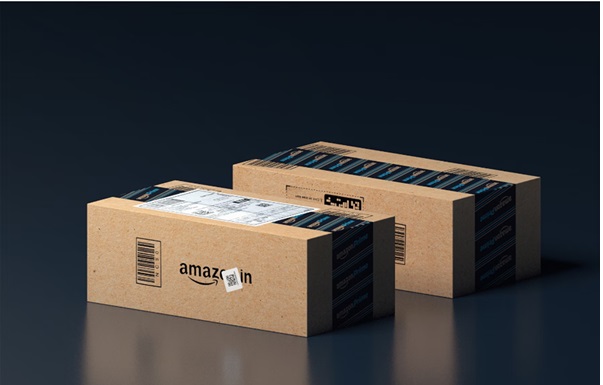
Amazon has sharply increased prices across several of its hardware product lines, with some devices becoming as much as 60% more expensive as the global shortage of memory and storage components raises manufacturing costs.

The increases, introduced over the weekend, affect products including Fire TV devices, Echo smart speakers, Kindle e-readers and Eero networking equipment. The changes mark a significant shift for Amazon, which has historically used relatively aggressive pricing on its consumer hardware to encourage adoption of its devices and broader ecosystem.

One of the clearest examples is the Echo Dot. Amazon raised the price of the smart speaker from $49.99 to $79.99, a 60% increase. Price-tracking services such as CamelCamelCamel show how sharply the price has moved compared with its previous levels.

Amazon attributed the increases directly to higher component costs.

“The consumer electronics industry is facing significant increases in memory and storage component costs,” the company told TechCrunch. “After absorbing these increases for as long as we could, we recently adjusted pricing across our product lines.”

Amazon said it would continue to offer occasional promotions to customers over the next year, suggesting that list prices may remain elevated while discounts become an important way of managing consumer demand.

The increases provide another indication that the artificial intelligence boom is now affecting the economics of mainstream consumer electronics. The explosive construction of AI data centers has driven enormous demand for memory and storage components, tightening supply for manufacturers of everything from servers to smartphones, smart speakers and televisions.

The resulting shortage, sometimes referred to as “RAMmageddon,” is raising the cost of components that had previously become increasingly inexpensive as manufacturing capacity expanded.

Memory manufacturers are now prioritizing higher-value products used in AI systems, including high-bandwidth memory, while broader demand for conventional DRAM and NAND storage remains strong. That combination has put pressure on supplies available to consumer electronics manufacturers.

For companies such as Amazon, the problem is difficult because hardware margins are often thin. A significant increase in memory and storage costs can therefore have a disproportionate impact on the profitability of devices unless manufacturers either absorb the additional expense or pass it on to consumers.

Amazon’s decision suggests it has reached a point where absorbing those costs is no longer sustainable across its hardware portfolio. The timing could also alter the economics of buying consumer electronics. Higher component costs are likely to make manufacturers more cautious about discounting products, potentially reversing years of falling or relatively stable hardware prices.

The pressure is not limited to Amazon.

Apple has also raised prices recently and has sought to soften the impact on consumers by introducing a device-leasing programme that allows customers to spread payments over time. That approach effectively shifts part of the affordability problem from the upfront purchase price to financing.

However, the implications extend beyond a single company’s products for consumers. If memory costs remain elevated, manufacturers across the electronics industry could face similar choices: raise prices, accept lower margins, reduce specifications, or delay product launches.

The supply pressure is closely linked to the economics of AI infrastructure. Technology companies are spending enormous amounts on data centers and computing capacity, creating demand for memory and storage at a scale that competes directly with consumer electronics supply chains. That creates an unusual situation in which a consumer buying a relatively inexpensive smart speaker is indirectly competing for the same broad semiconductor manufacturing capacity being consumed by the AI infrastructure buildout.

The shortage is expected to persist through 2027, with memory prices potentially peaking and stabilizing in 2028. If that forecast holds, manufacturers could face elevated component costs for several product cycles rather than a short-lived supply disruption.

For Amazon, the price increases also raise a strategic question about its hardware business. The company has historically treated devices such as Echo and Fire products as tools for expanding its ecosystem and driving engagement with services, rather than simply maximizing hardware profits. A 60% increase on a mass-market product such as the Echo Dot could make that strategy more difficult by putting devices out of reach for some consumers and reducing the incentive for existing customers to upgrade.

Amazon’s promise of periodic promotions may therefore become important. The company can maintain higher official prices while using temporary discounts to preserve demand during major shopping periods. But if component costs remain elevated for years, promotions alone may not be enough to restore the economics that made low-cost consumer hardware attractive.

The broader lesson is that the AI boom is increasingly creating costs outside the data-center industry. The competition for memory and storage capacity is moving through the supply chain and reaching ordinary consumer products, forcing companies to reassess prices that were once supported by abundant and relatively cheap components.

Trump Administration Proposes Over $100,000 H-1B Visa Fee, Raising Stakes for US Tech Talent

0

The Trump administration has proposed making a controversial H-1B visa fee of $103,265 permanent, a move that would dramatically increase the cost of hiring highly skilled foreign workers and could reshape how U.S. technology companies, universities and research institutions recruit talent from abroad.

The proposal, published Monday in the Federal Register, would replace the $100,000 fee President Donald Trump temporarily imposed on certain H-1B applications last year. It is now subject to a 30-day public comment period before the Department of Homeland Security can decide whether to issue a final rule.

The proposed charge would represent an extraordinary increase from the traditional cost of an H-1B application, which has generally ranged from about $2,000 to $5,000 depending on the employer and circumstances of the application.

The H-1B programme allows U.S. employers to hire foreign workers in specialty occupations, including technology, engineering, education, medicine and research. The programme provides 65,000 visas annually, with an additional 20,000 available to foreign workers holding advanced degrees from U.S. institutions. Visas are generally approved for three years and can be extended to six.

For employers that depend heavily on international recruitment, the proposed fee could fundamentally alter the economics of hiring foreign workers. Last year, some companies, including Walmart, paused hiring due to the decision.

A six-figure government charge would be particularly significant for startups, universities and research organizations that cannot absorb the cost as easily as large technology companies. It could also encourage companies to shift some hiring and development work outside the United States rather than incur the expense of bringing foreign employees into the country.

The administration’s proposal comes as the H-1B programme is already under considerable pressure.

Trump imposed a $100,000 fee last year, but federal courts subsequently blocked the administration from collecting it. A federal judge ruled in June that the fee was illegal, while an appeals court in Boston is reviewing that decision. A separate court is considering a challenge brought by a major business group after a Washington, D.C., judge rejected the case.

The new proposal could give the administration another mechanism for pursuing the same policy while potentially triggering a new round of litigation.

The legal dispute goes to the heart of the administration’s authority over the H-1B system.

The U.S. Chamber of Commerce, Democratic-led states, unions and employer groups have challenged the fee, arguing that the president’s authority to restrict the entry of foreign nationals does not allow the administration to override the statute establishing the H-1B programme.

The challengers also point out that the Department of Homeland Security cannot impose what amounts to a revenue-generating fee without explicit congressional authorization. The administration disputes that interpretation. It has argued that the charge is not a conventional tax and that the courts have limited authority to second-guess the president’s immigration powers.

The scale of the proposed increase is already having an effect on employer behavior.

According to administration court filings, U.S. Citizenship and Immigration Services had received only 85 payments of the $100,000 fee from 70 employers as of February 15. The relatively small number suggests that the previous fee has already discouraged some employers from pursuing H-1B hires.

H-1B demand has also fallen sharply under the administration’s broader immigration restrictions. Employers registered for about 344,000 H-1B visas last year, more than 25% below the number registered in 2024 and less than half the roughly 794,000 registrations recorded in 2023, according to USCIS data.

That decline is notable because the programme has historically been one of the main channels through which U.S. technology companies and other employers recruit specialized workers from overseas.

Trump and supporters of tighter immigration controls believe that the programme has been abused by companies seeking cheaper foreign labor and, in some cases, replacing American workers.

Business groups and many employers counter that the H-1B system addresses shortages in specialized occupations where U.S. companies cannot find enough qualified workers domestically. They also note that the ability to recruit internationally is essential for maintaining the United States’ position in technology, scientific research and other high-skilled industries.

The proposed fee therefore goes beyond an immigration policy dispute, with experts warning that it could become a competitiveness issue for the U.S. economy.

The technology sector is exposed because many companies depend on engineers, software developers, researchers and other specialized workers whose skills are in high demand globally. A significantly higher cost of bringing such employees into the United States could encourage companies to recruit talent in Canada, Europe, India and other technology centers instead.

It could also change the calculus for multinational companies deciding where to establish research and development operations.

The administration has simultaneously moved to make the H-1B system more selective. It has ordered enhanced vetting of applicants and proposed a selection system that would give greater weight to highly skilled and highly paid workers.

Earlier, DHS also proposed separate fees of up to $4,500 for certain applications involving H-1B workers seeking to extend their stay or transfer to the United States from overseas.

Together, the measures point toward a significantly more restrictive and expensive H-1B system, with the administration seeking to reduce what it views as low-value use of the programme while favoring highly compensated workers.

If the $103,265 fee survives the legal challenges and becomes permanent, hiring an H-1B worker would carry a government cost that in some cases could exceed the employee’s annual salary at smaller companies and research institutions. That would make the H-1B visa not simply an immigration pathway, but a major financial consideration in corporate hiring decisions.

Cramer Warns Rising Treasury Yields Are Becoming A Bigger Threat To Stocks As AI Borrowing And Oil Drive Inflation

0

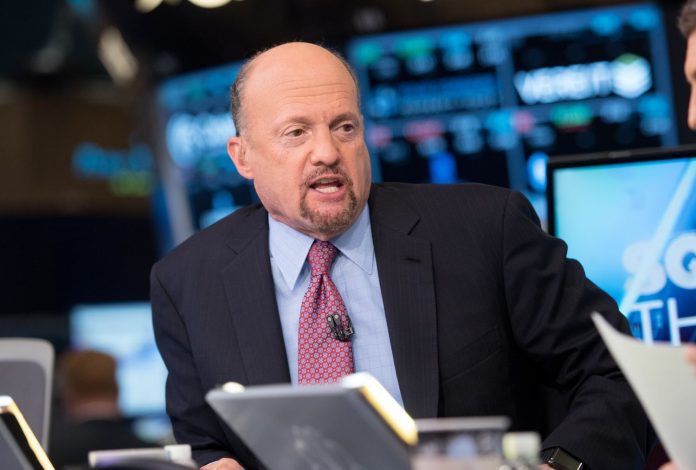
CNBC’s Jim Cramer has warned investors that the bond market is becoming increasingly difficult to ignore as rising long-term Treasury yields, persistent inflation and heavy corporate borrowing linked to the artificial intelligence boom put additional pressure on U.S. equities.

“Normally, I don’t like to talk about bonds, because you don’t want to hear about bonds,” Cramer said Monday on CNBC’s “Mad Money.” “Unfortunately, it’s very important now that long-term interest rates are on the rise.”

The 10-year Treasury yield has climbed from below 4% in February to nearly 4.7%, while the 30-year yield recently moved above 5.3%, its highest level in almost two decades.

The rise in yields has become a growing concern for investors because it changes the relative attractiveness of stocks while increasing the discount rate applied to future corporate earnings. Higher Treasury yields can also raise financing costs for companies, potentially reducing investment and profitability.

The pressure has increasingly appeared in equity markets. The S&P 500 has fallen in five of its past seven trading sessions as investors reassess the outlook for interest rates and corporate earnings.

The bond market’s deterioration has also raised questions about demand for U.S. government debt. A recent 30-year Treasury auction attracted weaker demand than the previous month’s sale, even though yields remained elevated, adding to concerns that investors may require higher returns to absorb the government’s expanding borrowing needs.

The Treasury Department attempted to address some of those concerns last week by announcing that it would more than double planned purchases of longer-dated government securities. The announcement initially pushed Treasury yields lower and stocks higher, but the improvement quickly faded. Yields rose again on Thursday and Friday, suggesting investors remain focused on the underlying forces driving long-term borrowing costs rather than Treasury’s debt-management operation alone.

Cramer said the Treasury has limited ability to address those fundamental pressures.

“The only real solution to this problem is to either cut spending or raise more revenue and the Treasury can’t do either of those things on its own,” he said.

The size of the U.S. government’s debt is central to the concern. With the national debt now around $40 trillion, the government faces enormous financing requirements, meaning Treasury must continue issuing large quantities of securities to fund deficits and refinance maturing debt.

But Cramer pointed to two additional forces that could keep long-term rates elevated: higher oil prices and a surge in corporate borrowing to finance AI infrastructure.

Oil prices have risen sharply during the war with Iran, adding to inflationary pressure across the economy. Higher energy prices feed into transportation, manufacturing, and consumer costs, complicating the Federal Reserve’s efforts to bring inflation back toward its target. That creates a problem for both ends of the yield curve. Persistent inflation can keep short-term rates higher for longer, while investors may demand higher yields on longer-dated Treasurys to compensate for inflation risk and the government’s borrowing requirements.

The AI investment boom is adding another layer of pressure through corporate debt markets.

Technology companies and major hyperscalers are committing enormous sums to data centers, computing capacity, electricity infrastructure and other equipment needed to expand AI services. Some of that spending is being financed through debt issuance.

That means Treasury securities are now competing with corporate bonds for investors’ capital.

“As more incremental dollars go to shares or bonds from a hyperscaler, Treasury yields have to creep higher in order to stay competitive,” Cramer said.

The dynamic creates a feedback mechanism for equity markets. Higher Treasury yields make government bonds more attractive relative to stocks, while higher corporate borrowing costs make it more expensive for technology companies to finance AI infrastructure. That could become essential as investors demand evidence that the enormous capital expenditures associated with AI will eventually produce sufficient revenue and profits.

The issue is not simply the amount companies are spending. The cost of financing that spending matters as well. If interest rates remain elevated, the time required for large infrastructure investments to generate attractive returns can become longer, putting additional pressure on valuations.

Cramer said a sustained decline in long-term rates ultimately depends on reducing the inflation pressures that are keeping yields elevated.

“We want long-term interest rates to go lower, but that’s only gonna happen if we can get inflation under control by reopening the Strait of Hormuz, and that’s a tall order,” he said.

He also argued that the Treasury’s intervention may have unsettled investors rather than reassuring them.

“The Treasury Department’s attempts to get this under control I think have only made investors more nervous,” Cramer said.

The broader concern is that Treasury can alter the composition and timing of government debt issuance, but it cannot by itself eliminate the structural forces pushing yields higher. Fiscal deficits determine how much debt ultimately needs to be financed, while inflation, economic growth and monetary policy influence the returns investors demand for holding it.

That leaves the stock market vulnerable if long-term yields continue rising even without a recession.