DD
MM
YYYY

PAGES

DD
MM
YYYY

spot_img

PAGES

Home Blog Page 5

AMD Shares Slide as AI-Fueled Optimism Collides With Cautious First-Quarter Outlook

0

Shares of Advanced Micro Devices fell sharply in early premarket trading on Wednesday after the chipmaker’s first-quarter revenue outlook failed to live up to the market’s loftiest expectations.

The sharp pullback in early Wednesday trading underscored a growing reality in the AI-driven chip rally: strong earnings are no longer sufficient when expectations are stretched to extremes.

The stock slid about 9% in premarket trading after the company’s first-quarter outlook failed to fully satisfy investors who had been positioned for an even more aggressive forecast, given the scale of global spending on artificial intelligence infrastructure. The selloff came despite AMD delivering a solid fourth quarter that beat Wall Street estimates and reinforced its status as one of the most important challengers to Nvidia in the AI chip market.

AMD reported fourth-quarter revenue of $10.27 billion, topping LSEG consensus estimates of $9.67 billion. The result capped a year in which the company benefited from surging demand for data-center processors, particularly graphics and accelerator chips used in AI training and inference.

For the first quarter, AMD projected revenue of $9.8 billion, plus or minus $300 million. While the midpoint was still above the broader market estimate of around $9.38 billion, some analysts had expected a more forceful signal that AI-related demand would drive a steeper sequential ramp.

That disconnect between expectations and guidance proved costly for the shares.

“Expectations were pretty sky high,” said Chris Rolland, a semiconductor analyst at Susquehanna, in comments on CNBC.

He added that AMD’s disclosure of China-related revenue shipments in the quarter, which were not fully reflected in analysts’ models, made the headline beat appear stronger than it otherwise would have been.

“When you account for that, the beat was far less substantial than we would’ve thought,” Rolland said.

China exposure and regulatory risk

The reference to China highlights a sensitive area for U.S. chipmakers. Export controls imposed by Washington have limited the types of advanced AI chips that can be sold into the Chinese market, forcing companies like AMD and Nvidia to redesign products to comply with restrictions.

Any revenue tied to China is closely watched by investors, both for sustainability and for the risk of further regulatory tightening. AMD did not provide extensive detail on how much of its recent growth was linked to China-specific products, but the mere presence of that revenue added complexity to the market’s assessment of underlying demand.

Despite the near-term disappointment, there was little indication that AMD’s longer-term AI story has weakened. Demand for its data-center products remains strong, and analysts say the company continues to signal large-scale deployments ahead.

Rolland noted that AMD has hinted at multi-gigawatt AI contracts, a scale that underscores how rapidly computing requirements are expanding as companies race to deploy and monetize AI systems.

That trajectory is reinforced by AMD’s recent strategic partnerships. In October, the company announced a landmark agreement with OpenAI, under which the ChatGPT developer could take up to a 10% equity stake in AMD. As part of the deal, OpenAI plans to deploy 6 gigawatts of AMD Instinct GPUs over several years, starting with an initial 1-gigawatt rollout in the second half of 2026.

The partnership positions AMD as a core supplier in one of the world’s most visible AI ecosystems and marks a significant endorsement of its hardware roadmap.

In addition, Oracle said it will deploy 50,000 AMD AI chips beginning later this year as it expands cloud capacity to meet rising demand for AI workloads from enterprise customers.

Valuation pressure in an AI market

AMD’s stock has more than doubled over the past year, fueled by optimism that it can capture meaningful share in a market long dominated by Nvidia. That rally, however, has also raised the bar for performance.

Investors are increasingly demanding not just growth, but clear evidence that AI-related revenue will scale rapidly enough to justify current valuations. Any hint of moderation — even in the context of a beat-and-raise quarter — risks triggering sharp reactions.

The response to AMD’s guidance mirrors a broader pattern across AI-linked stocks, where earnings season has become less about whether companies are benefiting from AI, and more about how quickly that benefit is accelerating.

Looking ahead, the focus will be on how quickly AMD can convert its growing list of AI partnerships into sustained revenue growth, particularly in its data-center segment. Investors will also watch for clearer disclosure around the mix of training versus inference workloads, competition with Nvidia’s next-generation chips, and the impact of export controls on international sales.

For now, Wednesday’s selloff suggests that the AI boom has entered a more demanding phase. For AMD, the long-term opportunity remains intact, but the market is signaling that optimism alone is no longer enough.

DOJ Document Shows Epstein Reportedly Invested $3M in Coinbase During Early Days 

0

Recently released U.S. Department of Justice (DOJ) documents from early February 2026 confirm that Jeffrey Epstein invested approximately $3 million in Coinbase in December 2014.

This occurred during Coinbase’s Series C funding round, when the company was valued at around $400 million (Coinbase is now valued at over $50 billion as a public company). The investment was made through Epstein’s US Virgin Islands-based entity, IGO Company LLC, and amounted to roughly $3,001,000 according to asset listings in the files.

The opportunity was facilitated by Brock Pierce (co-founder of Tether and Blockchain Capital), who had a prior relationship with Epstein. It was structured as a direct investment rather than through a fund.

Coinbase co-founder Fred Ehrsam appears to have been aware of Epstein’s involvement, with emails showing discussions about meeting him and forwarding wire transfer details.

In 2018, Epstein reportedly sold half his stake back to Blockchain Capital for around $11–15 million, representing a significant return (several times the original amount), while possibly retaining the other half. This revelation surfaced in the latest batch of unsealed Epstein-related files, highlighting his access to early-stage tech and crypto investments even after his 2008 conviction.

This fits into broader patterns of Epstein’s documented interest in cryptocurrency and tech, including ties to Bitcoin-related projects like Blockstream.

The revelation that Jeffrey Epstein invested approximately $3 million in Coinbase during its 2014 Series C funding round at a ~$400 million valuation has surfaced in the latest February 2026 DOJ document releases, sparking renewed scrutiny but limited immediate fallout for the now-public company valued at over $50 billion.

Reputational Risk for Coinbase and Early Crypto

The emails show Coinbase co-founder Fred Ehrsam was aware of Epstein’s involvement, with discussions about arranging a meeting like Ehrsam noting availability for a potential in-person discussion in New York. No evidence suggests wrongdoing by Coinbase or its team, and the investment was a tiny fraction (<1%) of the round, which included major VCs like Andreessen Horowitz and DFJ.

Still, it highlights the opaque, “move fast” nature of early crypto fundraising—where due diligence on investors may have been lax amid the industry’s outsider status. This fits broader patterns in Epstein’s tech ties like Blockstream investments, MIT DCI funding for Bitcoin Core devs, raising questions about how convicted figures accessed elite networks post-2008 conviction.

Epstein reportedly sold half his stake back to Blockchain Capital via Brock Pierce around 2018 for $11–15 million (a ~4–5x return at then-valuations of $1.6–2 billion), possibly retaining the rest. This was a private secondary transaction with no public market impact.

Today, the original stake’s hypothetical value (if held) would be enormous given Coinbase’s growth, but any remaining shares likely passed to his estate post-2019 death. No ongoing Epstein-linked ownership is indicated in current filings.

Coverage from Bloomberg, Yahoo Finance, Decrypt, frames it as a “bombshell” footnote in crypto history, emphasizing Epstein’s interest in Bitcoin/crypto for discreet wealth movement. Social media shows crypto communities discussing it—some tying it to broader “decentralization myths” or custody risks, others dismissing it as irrelevant ancient history.

No major stock price drop for Coinbase (COIN) is tied directly to this in reports; reactions lean toward optics and ethics rather than fundamentals. Some users criticize Coinbase’s past “Clarity Act” stances or stablecoin yield issues in the same breath, but it’s more narrative noise than coordinated backlash.

Reinforces calls for stronger KYC/AML in early-stage crypto VC, especially as the sector matures and faces institutional/regulatory scrutiny. Fuels speculation about “hidden influences” in crypto infrastructure, though documents show no control or ongoing leverage—Epstein was a passive investor via intermediaries.

No allegations of illegality against Coinbase; the focus remains on Epstein’s network. It underscores how small early bets could yield outsized returns in a high-growth space. This is more a historical embarrassment and reminder of crypto’s wild-west origins than a current crisis.

Coinbase has not issued a public response in the reports, and the story hasn’t dominated mainstream finance headlines beyond crypto-specific outlets. It adds to the Epstein files’ pattern of exposing uncomfortable elite connections without derailing major players like Coinbase today.

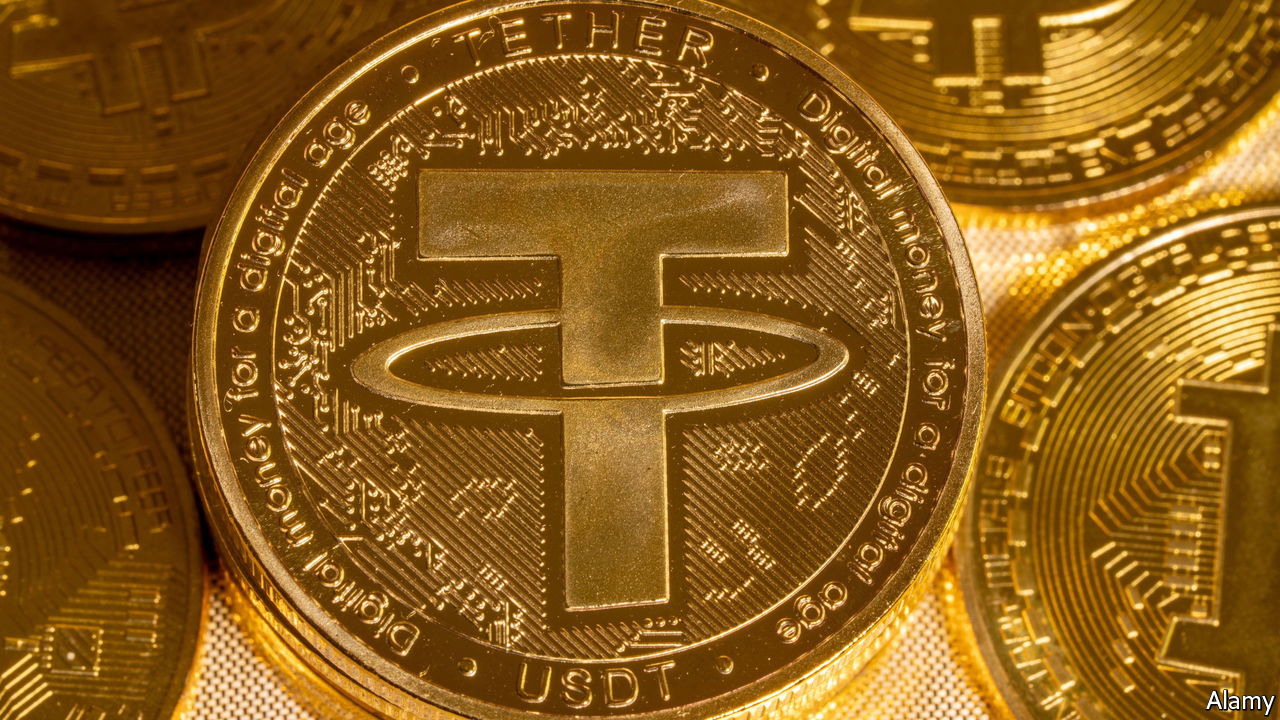
Tether’s $946M Mint of Tokenized Gold Product Reinforces its Gold Strategy 

0

Tether has minted approximately $946 million worth of its tokenized gold product, XAUt (Tether Gold), on the Ethereum blockchain. This occurred around late January to early February 2026.

On-chain data from Etherscan showed Tether minting roughly 192,000 to 192,657 XAUt tokens in this batch. Each XAUt token is backed 1:1 by one troy ounce of physical gold (LBMA-certified bars) stored in secure vaults, primarily in Switzerland.

At the time of the mint, this equated to about 6 metric tons of physical gold, given prevailing gold prices around $4,900–$5,000+ per ounce during that period. This issuance reflects strong demand for tokenized gold as a digital store of value and hedge, especially amid gold’s rally to record highs surpassing $5,000/oz in recent months and broader interest in real-world assets (RWAs) on blockchain.

Tether has been aggressively expanding its gold operations: The company is one of the world’s largest private holders of physical gold, with reserves around 140 tons valued at roughly $24 billion at recent prices, acquired at a pace of up to 1–2 tons per week.

XAUt’s market cap has hit new highs, recently reported around $2.9 billion or more, and it dominates a significant share around 50–60% of the global gold-backed stablecoin/tokenized gold market.

This mint contributes to Tether’s strategy of diversifying reserves beyond US Treasuries which back its flagship USDT stablecoin and capitalizing on gold as a safe-haven asset. The move came during a period of crypto market volatility, highlighting a potential shift toward perceived stability in tokenized commodities.

Tether’s overall gold-backed token supply has grown rapidly—up 38% in Q4 2025 alone in earlier reports—outpacing even USDT growth in some quarters. For context on current pricing as of early February 2026 data: XAUt trades around $4,900–$5,050 per token closely tracking spot gold.

Total tokenized gold sector continues expanding, with whale accumulation and institutional interest driving liquidity. This is part of Tether’s broader push into commodities and RWAs, positioning it as a major player bridging traditional finance and crypto.

Tether’s gold reserves represent a major component of its overall asset strategy, primarily serving to back its tokenized gold product XAU? (Tether Gold) and diversify the reserves supporting its flagship USDT stablecoin.

Tether holds approximately 140 metric tons of physical gold in total, valued at roughly $23–$24 billion depending on fluctuating spot gold prices, which have recently exceeded $5,000 per troy ounce. This positions Tether as one of the largest known private (non-governmental, non-central bank) holders of physical gold globally, surpassing the official reserves of several countries and rivaling major institutions outside of central banks and ETFs.

Around 16.2 metric tons precisely 520,089.350 fine troy ounces as per the latest attestation report http://gold.tether.to . Each XAU? token is backed 1:1 by one fine troy ounce of LBMA-certified physical gold, with the circulating supply closely matching this about 520,089 tokens in circulation, market cap around $2.6–$2.7 billion.

This makes XAU? the dominant player in the tokenized/gold-backed stablecoin market, holding roughly 60% share. Additional reserves primarily for USDT diversification and corporate holdings: The bulk of the 140 tons, including gold acquired beyond direct XAU? backing.

Earlier USDT reserve audits e.g., end of Q3 2025 showed significant gold exposure around $12.9 billion, equating to ~104 tons at then-prices, with further additions in Q4 2025 (27 tons reported). All physical gold is stored in secure, high-security vaults in Switzerland often described in reports as former nuclear bunkers or “James Bond”-style facilities for emphasis on security.

It consists of LBMA Good Delivery standard bars, ensuring high purity and tradability. Tether has aggressively accumulated gold, especially in 2025–2026 amid gold’s strong rally (prices up significantly due to safe-haven demand, inflation concerns, and geopolitical factors): Purchases of 1–2 tons per week equating to potentially over $1 billion monthly at current prices.

In Q4 2025 alone, ~27 tons were added. Over the past year, more than 70 tons were acquired overall. This is part of CEO Paolo Ardoino’s stated goal to allocate 10–15% of Tether’s broader investment portfolio to physical gold, viewing it as a hedge against economic uncertainty and a diversification away from heavy reliance on US Treasuries which remain the primary backing for USDT.

Tether publishes quarterly reserves reports for XAU? on its dedicated site, including attestations confirming at least 1:1 backing. Broader USDT reserves which include some gold are attested by firms like BDO. Users can verify allocations, though full independent Big Four audits for gold specifically are noted as a priority in some regulatory contexts.

This gold strategy bridges traditional commodities with blockchain, fueling tokenized real-world assets (RWAs) while enhancing perceived stability for Tether’s ecosystem amid crypto volatility. The holdings continue to grow, reflecting strong demand for digital gold exposure.

Coinbase Adds DeepBook and WAL to its Listing Roadmap 

0

Coinbase has recently added DEEP from DeepBook and WAL from Walrus to its official asset listing roadmap. This update was announced via Coinbase’s blog and their CoinbaseMarkets account on X.

Both tokens are built on the Sui blockchain network. DeepBook (DEEP): Powers on-chain liquidity and order book functionality on Sui. Walrus (WAL): Focuses on decentralized storage solutions.

Adding tokens to the Coinbase roadmap means they’ve passed initial reviews including compliance, legal, and technical checks and are under consideration for full trading support. However, it’s not a guaranteed or immediate listing—trading availability depends on factors like sufficient market-making support and technical infrastructure readiness.

Coinbase will announce the specific trading start date separately once conditions are met. They also warn users not to send these assets to Coinbase until an official listing is confirmed. This news has generated buzz in the crypto community, especially for the Sui ecosystem, as it could bring more visibility and liquidity to these projects.

Many see it as a bullish signal for $SUI-related infrastructure tokens. The addition of DeepBook (DEEP) and Walrus (WAL) to Coinbase’s official asset listing roadmap carries several key implications for the projects, the Sui ecosystem, investors, and the broader crypto market.

For DEEP and WAL Tokens, Bullish Signal and Validation

Inclusion means both tokens have passed Coinbase’s initial due diligence on compliance, legal, security, technical, and other criteria. This acts as institutional-grade endorsement from one of the most regulated U.S. exchanges, boosting credibility and visibility.

Coinbase listings historically drive significant inflows from retail and institutional users, often leading to short-term pumps (sometimes 20-100%+ on announcement or listing day) due to hype and easier access. Past roadmap additions have frequently preceded price surges, though not guaranteed.

As of early February 2026, community chatter notes positive sentiment, with some tokens showing recovery or gains post-announcement. Trading isn’t live yet—launch depends on securing market-making support for tight spreads/liquidity and technical integration readiness.

Coinbase will announce the exact trading date separately. They explicitly warn: do not send DEEP or WAL to Coinbase wallets until confirmed, to avoid loss of funds. As Sui’s native decentralized central limit order book (CLOB) for on-chain liquidity, a Coinbase listing could accelerate adoption in DeFi, attracting more traders and volume to Sui’s orderbook infrastructure.

WAL (Walrus): Focused on decentralized storage (a growing niche like Filecoin/Arweave equivalents), this adds mainstream exposure and could drive usage for data-heavy apps on Sui. Both are core Sui infrastructure projects (built natively on Sui).

Coinbase spotlighting them highlights Sui’s maturing layer-1 status, especially in DeFi liquidity and decentralized storage—key for scaling real-world applications. This follows Sui’s push into high-performance chains. It signals broader validation, potentially attracting more builders, capital, and partnerships.

Community reactions emphasize this as a “big signal” for Sui’s core tech gaining global recognition. Easier access to DEEP/WAL on Coinbase could funnel more users/liquidity into Sui dApps, indirectly benefiting $SUI via higher TVL, transaction fees, or ecosystem growth.

Even in a mature market, Coinbase additions remain high-impact for altcoins—especially infrastructure tokens—due to the exchange’s U.S. user base and regulatory trust. It differentiates from hype-driven listings on less-regulated platforms.

Delays or non-listings happen if conditions aren’t met (e.g., insufficient liquidity providers). Short-term hype can lead to “sell the news” dumps post-listing. Crypto remains speculative; past performance isn’t indicative.

X discussions show excitement, with some users highlighting high APYs on Sui lending protocols for these tokens and viewing it as a long-term positive despite current market dips. This is a strong positive development for DEEP, WAL, and Sui—positioning them for greater adoption and liquidity—but treat it as a step toward (not confirmation of) full listing.

U.S. Private Hiring Stalls at Start of 2026, Deepening Concerns About a Softening Labor Market

0

The U.S. labor market opened 2026 on a notably weak footing, with private-sector hiring barely registering in January and reinforcing signs that the economy has settled into a prolonged slowdown rather than a sharp downturn.

New data from payroll processor ADP show that employers added just 22,000 jobs during the month, a figure that fell short of already muted expectations and underscored how narrow the sources of job growth have become.

The January gain was lower than December’s downwardly revised 37,000 increase and well below the Dow Jones forecast of 45,000. The headline number also masks a deeper fragility in the job market. Without a surge of 74,000 hires in education and health services, private employment would have declined outright. That concentration highlights the extent to which hiring momentum is no longer broad-based, but instead relies heavily on one structurally resilient sector.

Health care and education have been the primary engines of U.S. job growth for more than a year, driven by demographic pressures, persistent staffing shortages, and steady demand that is relatively insulated from interest-rate cycles. January’s data show that this dynamic has not changed. By contrast, most other sectors either grew marginally or contracted, suggesting that businesses remain cautious about expanding payrolls amid uncertainty around demand, borrowing costs, and global trade conditions.

Outside health-related roles, the gains were modest. Financial activities added 14,000 jobs, pointing to selective hiring in areas such as insurance, real estate, and financial services, even as parts of the sector face pressure from volatile markets. Construction employment rose by 9,000, likely reflecting ongoing infrastructure projects and pockets of resilience in non-residential building, despite higher financing costs. Trade, transportation, and utilities, along with leisure and hospitality, each added just 4,000 jobs, a subdued showing for sectors that typically benefit from consumer strength.

Losses, however, were more pronounced. Professional and business services shed 57,000 jobs, the steepest decline among all categories. That sector, which includes consulting, legal services, and corporate support functions, is often seen as a bellwether for white-collar confidence. The drop suggests companies are trimming discretionary spending and delaying expansion plans.

Manufacturing employment fell by 8,000, extending a period of weakness tied to soft global demand, elevated borrowing costs, and lingering effects of supply chain realignments. The “other services” category, which includes personal and repair services, lost 13,000 jobs, adding to evidence that parts of the consumer-facing economy are under strain.

In net terms, virtually all job creation came from the services sector, and even there it was narrowly concentrated. Goods-producing industries continued to lag, reinforcing concerns that the U.S. economy lacks the breadth of growth typically associated with a healthy labor market.

Company size data adds another layer to the picture. Mid-sized firms, employing between 50 and 499 workers, accounted for all of January’s net job gains. Small businesses were flat, while large employers cut 18,000 positions. This pattern suggests that big companies, which tend to be more exposed to capital markets, global trade, and shareholder pressure, are actively managing costs and headcount. Small firms, often more sensitive to financing conditions, appear reluctant to hire, likely reflecting tighter credit and uncertain demand. The totals do not add up precisely because of rounding, ADP noted.

Wage growth offered little new comfort as pay for workers who stayed in their jobs rose 4.5%, unchanged from December. While that pace is well below the peaks seen in the immediate post-pandemic period, it remains above levels typically associated with the Federal Reserve’s inflation target. For policymakers, this combination of weak hiring and still-firm wage growth complicates the outlook: the labor market is cooling, but not in a way that clearly alleviates underlying price pressures.

The January ADP report continues a trend that defined much of 2025: a low-hire, low-fire environment. Employers appear unwilling to expand aggressively, yet layoffs remain relatively contained. This stasis suggests companies are waiting for clearer signals on the economic trajectory, including the direction of interest rates, fiscal policy, and global growth.

ADP’s data usually precedes the more closely watched nonfarm payrolls report from the Bureau of Labor Statistics, which provides a fuller picture of employment, wages, and participation. That release, normally due Friday, has again been delayed by a partial U.S. government shutdown, leaving markets and policymakers without a timely official snapshot of the labor market.

Overall, the latest figures point to an economy entering 2026 with limited momentum. Hiring is narrow, confidence among employers appears subdued, and job growth depends heavily on health care and education. With manufacturing and professional services under pressure and wage growth still elevated, the labor market offers little clarity for policymakers debating whether current conditions warrant patience or a shift toward additional support.