
DD
MM
YYYY

PAGES

DD
MM
YYYY

spot_img

PAGES

Home Blog Page 5009

AMD Surpasses Intel on Market Capitalization

0

The global economic headwinds continue to breed surprises in the tech industry with big companies dropping in revenue figures while the underdogs move up.

On Friday, AMD surpassed rival Intel’s market cap for the second time.

AMD recorded $153 billion market capitalization after its stock rose over 3%, pushing the chipmaker up above Intel whose shares fell nearly 9%.

Intel’s market cap dropped to $148 billion on Friday after trading, missing all revenue expectations.

Intel has been working to boost earnings through acquisition. The company has also made some internal changes as revenue growth continues to decline. With many of its clients such as Apple, opting to develop their own chips, Intel needed to take drastic steps to sustain its revenue growth.

While there has been some improvement following Intel’s attempts to sustain its market position, AMD’s new position marks a significant shift in the market.

As CNBC noted, even though the shift is mostly symbolic, it signifies a much more competitive market for PC and server chips, where the two companies compete directly. It also suggests that investors may value an asset-light chipmaker over one that’s investing heavily in manufacturing. AMD outsources production to outside “fabs,” or chip factories, whereas Intel has said it plans to continue building and operating plants.

The battle to contain global chip shortage has propelled a massive investment in the semiconductor industry recently. For underdog companies like AMD, high demand of chips means an opportunity to expand growth.

With the company’s product quality having improved in recent years, AMD chips have a found a competitive edge against big players in the industry. AMD chips are notably squaring up with Intel’s products in terms of performance, even surpassing their speed and efficiency for some applications.

Intel shares fell 9% at the second quarter of the year following earning reports that fell short of expectations. The company’s shares price has significantly dropped by 23.0% for reasons attributed to lockdown in China, logistics challenges, decrease in demand for PCs and the 25% increase in the price of processors since the beginning of the year.

AMD had in previous stock news, announced revenue of $5.9bn for the first quarter of 2022 – 71% up on the same period last year. The company has predicted a 60% increase in full-year revenue while Intel on Thursday, dropped its forecast for full-year earnings per share $3.60. to $2.30.

Intel’s CEO Pat Gelsinger, who was appointed last year to lead the company out of turmoil, said in an interview with CNBC on Friday that the company’s strategy of coming back is like climbing Mount Kilimanjaro.

On Tuesday, AMD announced $6.6 billion gross margin of 46%, for the second quarter of 2022, operating income of $526 million, operating margin of 8%, net income of $447 million and diluted earnings per share of $0.27 on GAAP.

“We delivered our eighth straight quarter of record revenue based on our strong execution and expanded product portfolio,” said AMD Chair and CEO Dr. Lisa Su. “Each of our segments grew significantly year-over-year, led by higher sales of our data center and embedded products. We see continued growth in the back half of the year highlighted by our next generation 5nm product shipments and supported by our diversified business model.”
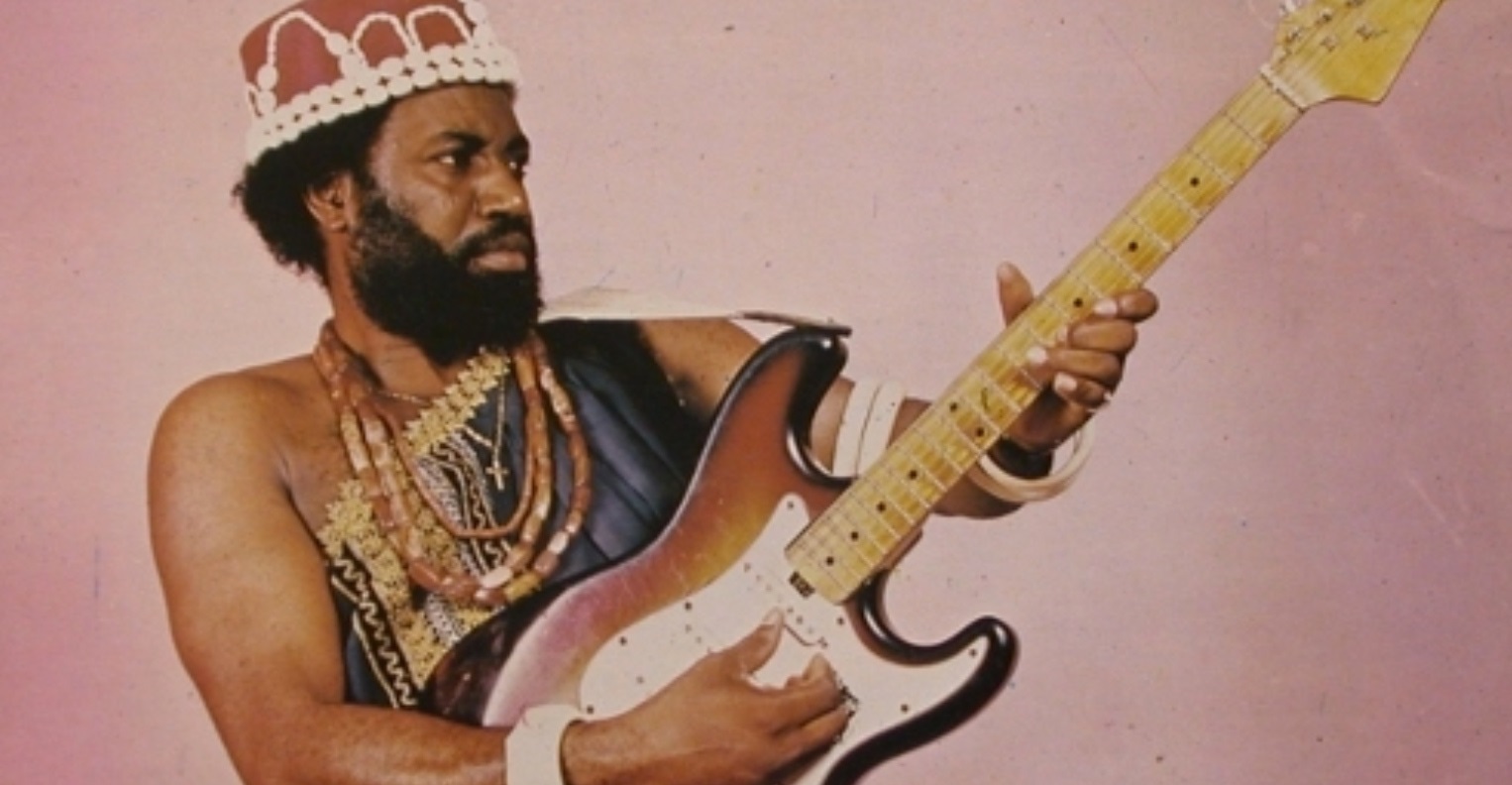

Great Products Come from Design!

0

Good People,  it is an hour before our Live session with Dr Obinna Anya begins. He will be connecting from Google HQs in California. The Igbo Nation says that “ahia oma na-ere onwe ya” [good products sell themselves]. Paraphrasing king Oliver de Coque’s good music comes from Chi, good products come from design. Today, we will be discussing how to design products with human-centricity. Yes, human-centered design!

To join the next edition of Tekedia Mini-MBA, go here 


Nigeria’s Minister of Comm & Digital Economy Condemns Government’s Move to Impose 5% Tax on Telecom Services

0

The minister of communications and digital economy, Isa Pantami, has condemned the plan by President Muhammadu Buhari’s administration to introduce a new 5% tax on telecom services.

Pantami made his belief known on Monday while speaking at the ongoing maiden edition of the Nigerian Telecommunications Indigenous Content Expo (NTICE) organized by the Nigerian Communications Commission in Lagos.

The minister argued that the ICT sector is becoming heavily burden with taxes than other sectors, promising to challenge the move.

“We will definitely challenge the decision. There are about seven sectors of Nigeria’s economy contributing largely, and these sectors are less than two per cent of Nigeria’s economic sector. ICT contributes more than other sectors, and it should be encouraged, while those sectors contributing less to GDP should be monitored properly and ensure they do more. If we fail to do this, we will continue to increase and increase tax by the day,” Pantami said.

Last week, the Minister of Finance and National Planning, Zainab Ahmed, announced government’s plan to levy further excise duty on calls, data and SMS services. The decision has been largely decried. It is seen as an insensitive move that will compound the suffering of Nigerians.

But Ahmed defended the decision saying that the government really doesn’t have a choice but to explore other means to fill the revenue gap emanating from dwindling oil revenue.

“The issue of revenue is not something that needs to be shied away from. Our revenue can no longer take care of our needs as a country. Also, Nigeria is no longer making enough money in oil revenue; hence the attention is shifting to non-oil revenue,” she said.

In response, Pantami expressed concern that the decision, if it succeeds, will amount to further hardship as everyone depends on telecom services.

“You introduce excise duty maybe to discourage the consumption of certain products like alcohol, like tobacco and many pieces where you didn’t produce it.

“How can you do financial services in Nigeria without broadband? How can we communicate with ourselves? How can you, we, a hospital without Internet?” he asked.

Engr Gbenga Adebayo, Chairman of the Association of Licensed Telecommunications Operators of Nigeria, ALTON, said last week that the telecom industry won’t be able to absorb the impact of further taxes on behalf of subscribers.

“We currently pay a lot of taxes, running into 39 of them, so we can’t add more to our existing burden. We won’t be able to absolve this on behalf of subscribers. The five per cent excise duty will be paid by the subscribers. It will collected by the operators on all voice and data services including OTT and remitted to the Nigerians Customs”, he said.

The Nigerian government has failed to diversify the economy, making oil the main source of its revenue. With the oil market currently complicated for Nigeria due to lack of local refineries that is forcing the country to import refined petroleum products, thus making no profit as it pays subsidy to keep the products affordable, the government is shifting attention to the telecom sector that has served as the nation’s economy cash cow since 2020.

SEC Charges 11 People For Alleged $300 Million Crypto Ponzi Scheme

0

Wall Street watchdog, the Securities and Exchange Commission (SEC), has charged eleven people in an alleged $300 million cryptocurrency pyramid scheme, highlighting how authorities are increasing enforcement in digital asset markets.

The fraudulent crypto pyramid and Ponzi scheme, Forsage allegedly raised more than $300 million from retail investors in an illicit way, in countries across the globe, including the United States.

The scheme claimed to be a decentralized smart contract platform, where it allowed millions of retail investors to enter into transactions via smart contracts that operated on the Ethereum, Tron, and Binance blockchains.

SEC further alleges that the scheme which has been running for more than two years was set up and functioned like a standard pyramid scheme, in which investors earned profits by recruiting others into the operation.

It had a structure wherein it allegedly used assets from new investors to pay earlier ones. The acting chief of SEC’s crypto assets and the cyber unit, Mrs. Carolyn Welshans in a statement stated that fraudsters cannot circumvent the federal security laws by focusing their schemes on smart contracts and blockchains.

Forsage, through its support platform, declined to offer a method for contacting the company and did not issue any statement. SEC has however charged the organization’s four founders and a series of people with promoting the nine-figure scheme.

The Securities and Exchange Commission also charged three U.S based promoters who endorsed Forsage on their social media platforms. Two defendants, both of whom did not admit or deny the allegations, agreed to settle the charges, subject to court approval.

According to the SEC, a few other individuals accused in the scheme, continued promoting the scheme and denied the allegations in several YouTube videos. A YouTube channel that claims to be the official one for Forsage has garnered around 170,000 views and has roughly 6,500 subscribers.

The YouTube channel comprises videos, most roughly a minute of people talking about how their lives have been improved by Forsage. This is not the first time that Forsage has been labeled as a fraudulent scheme. The scheme in September 2020, was subject to cease-and-desist orders from the Philippines SEC.

In March 2021, the platform also received the same order from the Montana commissioner of securities and insurance. There is no disputing the fact that the crypto ecosystem has been infiltrated by fraudulent Ponzi schemes operating as legit.

It is therefore imperative for individuals most especially investors to educate themselves properly about the crypto ecosystem to avoid falling for these Ponzi schemes and as well losing their investments. These schemes are otherwise known as pump-and-dump, an orchestrated fraud in the crypto ecosystem that involves misleading investors into purchasing artificially inflated tokens.

Once investors have purchased such Tokens at inflated prices, the people who own the biggest pile of tokens will then sell out resulting in an immediate crash in the token prices. Usually, these pump-and-dump schemes are usually accompanied by false promises around three broad categories, which are; guaranteed exorbitant returns, hype from influencers, and solving real-world use cases.

The Struggle of Naira Positions “Made in Nigeria”

1

Can the crash of Naira bring the mojo on “Made in Nigeria”? The experts at Euromonitor International, a London-based strategic market research firm, think so. From its data, many supermarkets, stores, etc are looking for ways to source things internally.

People, you do not even need to look further: this is the deal, pick a truck, go to Ovim Oriendu Market in Abia State, and any produce you want, you will get. Since our sister, Dr Ngozi Okonjo-Iweala,  became the head of all traders (lol) in World Trade Organization, Oriendu Market has modified itself to do global businesses. We now do business with all nations and can supply all supermarkets and stores in Nigeria.

See what the firm said; “This trend will also be supported by campaigns that seek to raise awareness and call for supermarkets to support products that are ‘Made in Nigeria’, as well as putting pressure on the government to reduce the reliance on imports for essential goods”.

With the high inflation rate ravaging the global economy, coupled with the devaluation of the Naira, a large percentage of people in Nigeria are now looking for alternatives in supermarkets and local stores. Despite the negative impact of the high inflation and the fall of the Naira, industry experts are looking at the positive side of supermarkets and stores switching to locally produced goods.

They disclosed that including and developing SMEs in the supply chain allows the nation to grow and diversify by providing various options and a continuous supply pipeline for products and services. A case study of South Africa, as local production, is one of the things that has enabled the country to thrive in retail which has boosted their economy.

Uwa bu ahia [the world is a market]. Let’s make things in Nigeria, Nigerians!

Supermarkets/ Stores Switch To Local Products As Naira Rout Worsens