DD
MM
YYYY

PAGES

DD
MM
YYYY

spot_img

PAGES

Home Blog Page 5017

ASUU Calls for Bill to Stop Public Officers’ Children from Schooling Abroad

0
Nigeria needs stronger education systems

The lingering strike action that has kept university students at home for over four months now has prompted the Academic Staff Union of Universities (ASUU) to call for a bill to regulate how children of public officers enroll in schools outside the shores of Nigeria.

The infamous ASUU strike that has crippled academic activities in tertiary institutions around the country inspired a two-day warning protest led by the Nigerian Labour Congress (NLC) on Monday and Tuesday.

NAN reports that the call was made by Kingdom Tombra, Chairman of the Niger Delta University, Wilberforce Island chapter of the union, during the solidarity protest on Tuesday in Yenagoa.

“If this is done, it will build a better society by developing formidable educational institutions and improve funding of the university system in Nigeria.

“This struggle is not against government, but about the working class and against the ruling class and we are very committed to it.

“If the rich and poor go to the same university or institution, I don’t think the strike will occur again.

“If they school here and their children are here they will show total support for the university system and the tertiary institutions in Nigeria,” he said.

Lecturers in government-owned universities commenced a nationwide strike on February 14, over the adoption of University Transparency and Accountability Solution (UTAS) as a payment system in the university sector.

Adding his voice, John Ndiomu, the NLC Chairman in Bayelsa, urged the federal government to sign the renegotiated draft agreement between it and ASUU.

“Adopt University Transparency Accountability Solution (UTAS) in place IPPIS, Pay Earned Academic Allowances (EAA).

“Release of Revitalization Fund, Release white paper on visitation to Federal Universities. Amend NUC law to control proliferation of state universities without funding,” the labour leader said.

The bill has been touted as a possible solution to incessant ASUU strikes. There is belief that stopping public office holders from sending their children to study abroad will force them to prioritize education in Nigeria.

However, this is not the first time the bill is being considered. In March, a member of the House of Representatives, Sergius Ogun, introduced a bill seeking to bar public officers from sending their children abroad for education unless they prove they can afford it without using public fund. The bill was vehemently rejected with some members of the House arguing that it would infringe on the fundamental human rights of Nigerians.

Thus, ASUU’s attempt to push for the bill once again will only end in futility as many of the representatives expected to pass the bill have their kids in different schools overseas.

Some of the demands of ASUU that the federal government is yet to meet are: revitalization of public universities, earned academic allowances and the deployment of the University Transparency and Accountability Solution for payment of university lecturers.
The Naira Crashes to Its Biggest Fall – Exchanges N710 Per Dollar

1
Naira USD

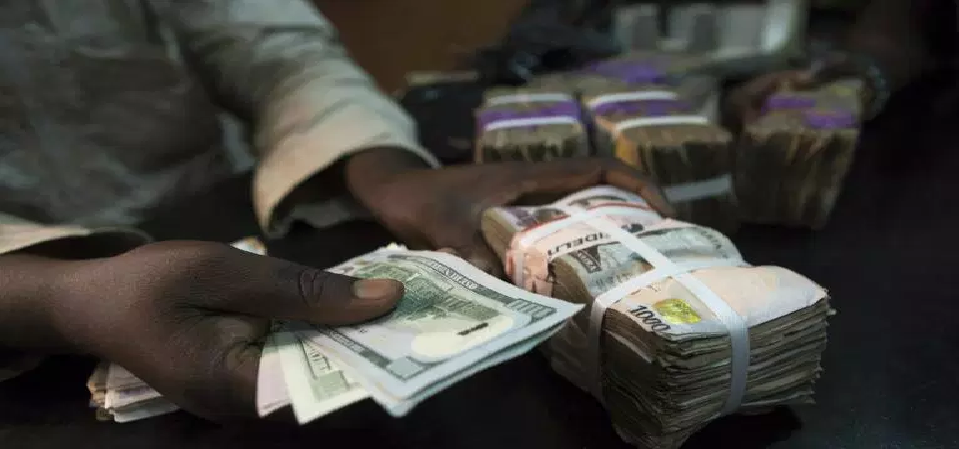
The naira has crashed further to its deepest fall, hitting N710/$1 on Wednesday at the parallel market, according to the rates published by exchange rate aggregator Aboki Forex.

The N710/$1 rate is a 6.7% crash from the naira’s N670/$1 position on Monday, worsening Nigeria’s inflation that was last pegged at 17.71 by the Nigerian Bureau of Statistics (NBS).

The Central Bank of Nigeria (CBN)’s policies and measures geared towards protecting the naira from hitting the bottom at the foreign exchange market have failed. There also appears to be no plan by the apex bank, which has taken to blame, to wedge the embattled currency from falling further.

Last week, the CBN warned Nigerians using naira to purchase dollar to desist or be prosecuted. Nigerians opting to save their funds in dollar indicates the loss of faith in Nigeria’s economy and the CBN’s ability to save the naira.

In addition to apportioning blame, the central bank had gone after some players in the parallel market. Last year, it had prohibited the sale of foreign currency to bureau de change operators, accusing them of sabotaging the naira by selling foreign currencies above the approved price.

The decision brought further burden on the naira as it compounded the liquidity challenge that has spurred dollar scarcity in the country.

The BDCs, Nigeria’s major operators of the parallel market, were major sources of foreign currency supply to those who don’t have access to the CBN.

Since then, the exchange rate has fallen from around N501/$1 to over N700/$1.

Experts have repeatedly issued timely warning that measures being taken by the CBN governor, Godwin Emefiele, to protect the naira will breed disaster.

The naira’s ordeal has been partly attributed to the central bank’s excess printing of new notes since 2015. The apex bank has been accused of minting money in excess to lend to the federal government.

The Ways and Means Advance, an arrangement through which the federal government can borrow from the CBN, has illegally yielded about N20 trillion converted to long term (30-year) loans to the government.

The CBN Act prohibits it from giving more than 5% of the federal government’s previous year’s revenue.

Another factor that has been fingered in the naira’s downfall is fuel importation. The oil windfall is supposed to serve as a panacea to Nigeria’s liquidity crisis, but it has greatly been undermined by lack of functioning refineries in the country, which forces the government to import refined petroleum products – spending earned foreign currencies that should have boosted the country’s foreign reserve and dollar liquidity.

The naira has greatly lost its value in both the parallel market and the Investor and Export window. In March 2014 when Emefiele became the CBN governor, the naira stood at N164 at the I&E window, but has depreciated through devaluations to N430.

The mission of Egoras – Refurbishing Africa and Import Substitution

0

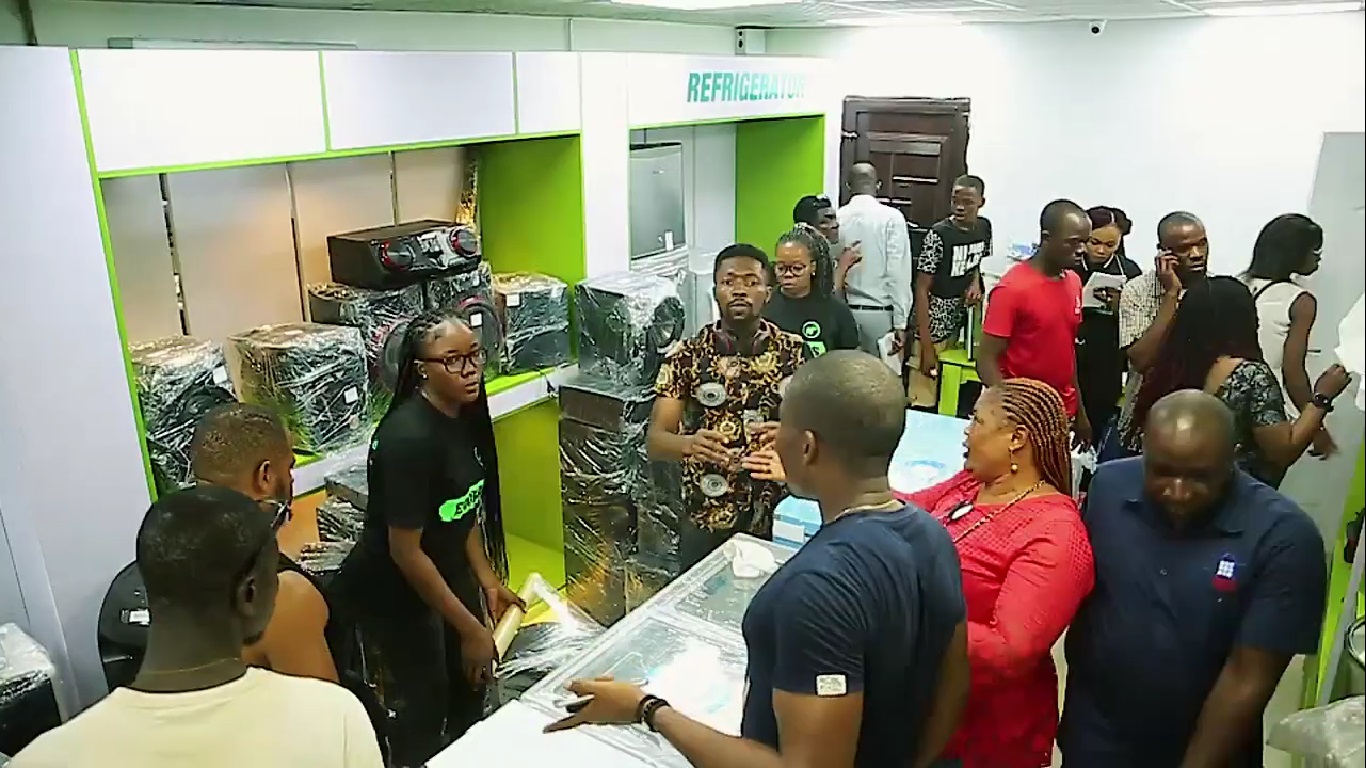
Simple: we buy your old or broken household items (electronics, furniture, phones, dishwashers, etc) and take them to the largest refurbishment factory in Nigeria. Our young engineers, trained by the best in the game, transform those items. In our Egoras supermarkets, we sell those items at close to 75% lower than what you could have bought a new import. We provide up to a 6-month warranty (some items, 12 months).

We create jobs (will hit more than 2,000 by Dec 2022), we clean the earth preventing wastes in the landfills, we train future makers and builders on practical engineering, we empower families by saving them money – and we HELP Naira by substituting imports. That is the mission of Egoras.

See locations of our stores here ; more are coming across Nigeria. (If you are a technical person, we’re hiring REAL engineers and technicians; you will work with CEO Ugoji Harry and also get to attend leadership developments events I will anchor)


Meaning of Egoras: Ras is a family of genes that undergo mutation to oncogenes.  “Ego” expresses self-esteem. When a product passes through our processes, it undergoes a transformation, making it better at the other end. We think your used items will become better with Egoras because in Egoras, our engineers do what biological RAS do in the positive aspect of transmutation of household items!

Unicorns: The Trophies of the FUTURE

1

This is it: the Kuda team waited for me for 3 hours in Lagos for a possible small investment in Kuda. When it was all done, I did not write that cheque. I had arrived from US to run a program for our nation’s leading CEOs; the innovators abandoned everything in the startup, and camped as I guided the executives on the mechanics of business systems.

Today, Kuda is worth at least $500 million. I wanted to write them a cheque of $100k but later pulled out as I did not understand how they would make money (it is a self-styled bank of the free). Had I pushed the trigger, that $100k would have become at least $7.5 million within two years!

Do not pity me (I am fine…lol); pity the 99.99% who are disconnected from this new dimension of value creation and capture. It is because of that anomaly that I created Tekedia Capital, to provide opportunities for We The People to co-own a piece of the empires of the future.

While early startup investment is risky, the fact remains that out of these new species of companies, the future empires will emerge. The largest financial institution by market cap in Nigeria (yes, Flutterwave) is less than 7 years old.

 People, open your playbook because by 2025, Nigeria would be radically transformed if you check what is happening in these new species of companies. Upon them, I see a promise, to win trophies called Unicorns, special startup-like-animals worth at least $1 billion. Africa is breeding them at scale (click and watch my video – Africa’s Unicorn Farms).

The current insecurity wave in Abuja

0

Abuja used to be the safest city in Nigeria and this is not even debatable. We the Abuja residents used to boast about how safe and secure our city is. Abuja residents used to throw jabs and shades at residents of other cities and states but nobody dwelling or residing in Abuja can boldly talk about how safe the city is anymore.

The insecurity situation keeps getting worse. It has been bad but never this bad as the whole security formation collapsed after the kuje prison break. According to the security report, there are Boko Haram and ISWAP members loitering in the Abuja metropolis and scattered and strategically placed in different parts of Abuja waiting for the right time to strike.

National Parks and recreational centers in Abuja are being shut down for fear of invasion. Private Restaurants and private businesses are being asked to shut down or if they must operate they must not operate late at night for fear of invasion. There are constant newsletters from security operatives about the planned attacks by Boko Haram and ISWAP.

Soldiers lost their lives yesterday after they were ambushed by terrorists around the Bwari area of Abuja and the report is that the terrorists were actually heading to the headquarters of the Nigerian Law school which is located in Bwari to carry out their attack.

I as an Abuja resident who has resided in Abuja for a while now haven’t experienced this type of security breach in the capital city. Abuja residents have been living in constant fear; fear of the unknown. No one knows where they are going to attack next.

For the record, this is not a political witch-hunt neither is it criticism against the government or those in governance or against whomsoever but this is a statement of fact, verified facts and not to induce fear or panic in the minds of residents of Abuja but to let those who may not be aware to know that Abuja is actually one of the unsafest places to live right now in Nigeria. The person seating close to you or sharing that Keke ride or boarded that taxi with you may be a Boko Haram member that was “jailbroken” out of Kuje prison.

It is disheartening that Abuja residents are still struggling with fuel scarcity which started last year and they will now sleep with one eye closed hoping they don’t die in their sleep. 

It has never been this bad!.