DD
MM
YYYY

PAGES

DD
MM
YYYY

spot_img

PAGES

Home Blog Page 5018

BudgIT Asks Nigerian Government to Reform Subsidy, Stop Indiscriminate Borrowing

0

Nigeria’s rising debt, which is being accelerated by subsidy payments that have been compounding the nation’s economic situation, is increasingly becoming a cause for concern to both people and organizations. With the impact tearing through people and industries as inflation rises, more organizations are joining the call to the federal government to curtail it.

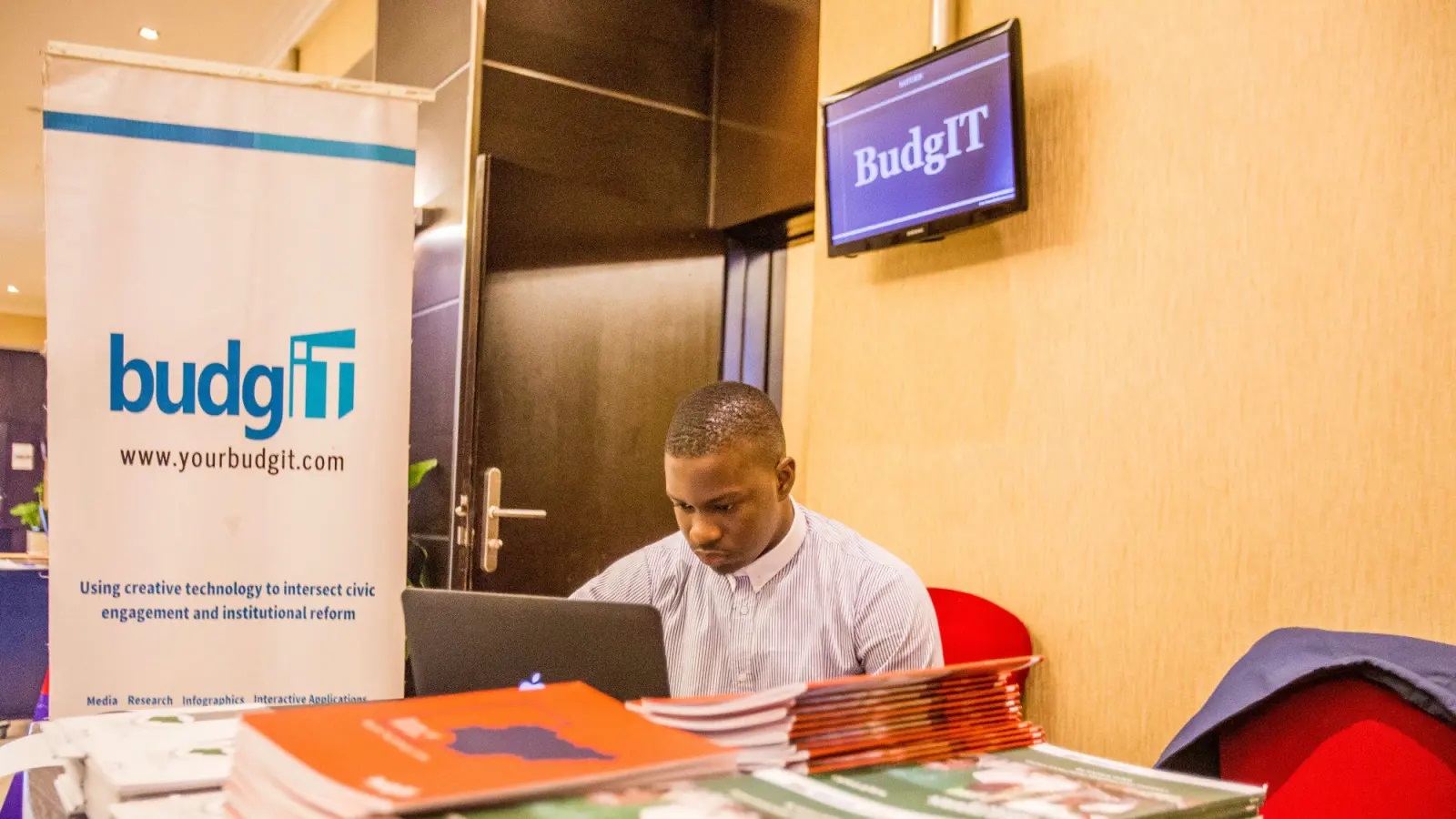
BudgIT has joined the chorus of organizations expressing concerns over the impact of borrowing and subsidy payments on the fiscal performance of the federal government’s 2022 budget.

On Monday, the civic-tech organisation said in a statement signed by Iyanu Fatoba, assistant head, media and communications, that Nigeria’s economic misfortune has deteriorated over the last eight months.

Nigeria’s total debt, including the central bank’s Ways and Means Advance, stands around N61 trillion and is likely going to increase as the subsidy payments continue amidst dwindling revenue.

BudgIT said the most pressing concern is the debt service-to-revenue ratio, which has reached alarming levels within the first four months of 2022.

The organization cited the 2022 fiscal performance report released last week, which indicated that Nigeria is now borrowing to pay debt. The report noted that in the first four months of the year (Jan-April 2022), Nigeria generated N1.64 trillion, whereas it spent N1.94 trillion, N310 billion more than its generated revenue, on debt servicing.

According to the statement issued by BudgIT, “This is in spite of warnings given by the International Monetary Fund (IMF) that Nigeria would be spending over 100 percent of its revenue on debt service in 2026. Unfortunately, those predictions are Nigeria’s current realities.”

The organization lamented that debt servicing is not only worsening the nation’s poverty situation, but it is also gulping budgetary allocation for capital expenditures for key sectors such as education.

“Recall that BudgIT, in a consultation memo released in February 2022 titled: ‘Leveraging budget reforms for economic development,’ had articulated several reform issues bordering on Nigeria’s public financial management regime that affect the very core of governance, separation of powers, expenditure efficiency, and the livelihoods of millions of Nigerians; 83 million of whom live in extreme poverty.

“Four months later, some of those same challenges exist, with additional ones, if not properly managed, may spell fiscal crisis for an already impoverished nation. In particular, the debt service spending is only N93.6 billion less than the combined total personnel and capital expenditure for the period under review. Also alarming are the expenditure targets for the Tertiary Education Trust Fund (TETFund), which have only been 15 percent (of the total N5.10 billion naira) for the period under review.

“There is no gainsaying that the fortunes of the most populous black nation on earth, Nigeria, have worsened in the last 8 months after the 2022 budget was passed,” it said.

Gabriel Okeowo, BudgIT’s country director, said the government needs to discontinue indiscriminate borrowing to fully implement the budget that Nigerians have counted on to ease their economic woes.

“It is in light of the above that we call on all well-meaning Nigerians, CSOs, media, the private sector, the international community, and reformers to join the call for the federal government to do the following: discontinue indiscriminate borrowing through ways and means, which is creating a ballooning set of interest payments, running parallel to the external debt, as well as increasing the money supply and creating more monetary volatility; check the oil theft that is now commonplace in the petroleum industry, and has encumbered the country’s ability to meet its production quotas-the latter having fallen to 1.25 million barrels as at May 2022,” the statement added.

The civic-tech group also made recommendations for the government.

“Ramp up the remittance of operating surpluses by MDAs and GOEs to boost FG’s independent revenues, which is currently underperforming, and take considered action to reform subsidy, this achieves the twin objectives of having citizen buy-in and revenue savings that are channeled into priority areas,” it said.

While the current situation bites harder, the federal government is yet planning to take further N4 trillion loan to address subsidy-induced budget shortfalls. With the revenue plummeting due to government’s inability to cash in on the oil windfall, Nigeria is likely to continue borrowing to service debt

CinderBuild Raises Fund from a Major European Investor

0

I am very excited to share that Tekedia Capital portfolio startup, CinderBuild Inc., has raised new capital from a major European investor. Cinderbuild is a marketplace for building and construction materials in Africa. As a CinderBuild verified Buyer, you’re guaranteed uninterrupted product availability, at the very best price, all the time. We achieve this for you by partnering with verified suppliers in your region. Indeed, CinderBuild brings bulk off-takers and suppliers onto one collaborative platform, streamlining the materials procurement process from requisition to delivery.

It saves cost. It saves time. And offers financing so that your project can move faster. Many great brands like Dangote Cement, Cutix Cables, APEX, etc are partnering with us, providing genuine products at best prices for cement, electricals and cables, roofing, flooring and tiling, etc. Our vision is clear: digitize the building materials and construction industry!

Buyer, Seller, please visit cinderbuild.com and open a free account.  We have offices in Ikoyi, Lagos and San Francisco, USA, and are scaling across Africa. For partnership in any part of Africa, reach out.

Ndubuisi Ekekwe

Board Member, CinderBuild

Social Media Outages, Necessity of Online Presence for Small Businesses

0

Recall last year, on the 4th of October 2021, when social media platform Facebook and its subsidiaries, Instagram and Whatsapp faced an outage that made it globally unavailable for a period of six to seven hours.

A large percentage of people blamed it on their internet service provider, while some others disclosed that they felt their data subscription had elapsed which prompted them to renew their internet bundle subscription, but still couldn’t access these social media platforms.

Soon they got to the realization that the issue wasn’t a faulty internet connection or a finished data subscription, but rather it was the fact that these social media platforms were down due to an internal technical issue. Despite the fact that users and business owners on these platforms had to switch to other available platforms, the consequences of the outage was pretty high.

Many were cut off from interacting with family and friends, while a majority of those affected were small business owners who solely rely on these platforms to run their business, as well as connect with customers as they faced an unexpected financial hit.

Some of these businesses experienced a fall in engagement, and traffic while others had their sales taking a hit in direct correlation to their social media channels being disrupted due to the unexpected outage.

After the outage was resolved, it sparked an open conversation for businesses most especially small businesses that are subject to these social media platforms functioning, with no other strong foundation, on the need to own a business website.

Ever since the outage, many small businesses began to spread their presence on other platforms. There is no disputing the fact that these social media platforms have been phenomenal in how businesses operate.

Through it, businesses are able to gain access to resources, increase their worthiness, cultivate strategic partnerships as well as increase their contact with customers and suppliers. Albeit, over-reliance on it can put them in a vulnerable position, if an unexpected outage occurs.

Imagine a scenario where there is a shut down of all social media platforms running for a week or a month, this automatically means that most businesses especially small businesses with no website will cease to exist. This is why it is advisable for small businesses to own a website that cannot be affected by a social media outage.

Also, early last month, Twitter experienced an outage that disrupted services for millions of its users. The micro-blogging platform attributed the outage to “trouble with internal systems,” but did not further elaborate. It also experienced a similar issue in February this year, which lasted for nearly an hour. Although outages on these social media platforms rarely occur, small businesses should be intentional about owning a business website.

The Need For Small Businesses To Have A Website

There is a strong need for small businesses to own a website, because even when an outage occurs on social media, customers can still get through to the business through their website.

A lot of people have described businesses that solely rely on social media platforms as “building on rented space”. What this implies is that they do not have full ownership of the platform they are building on, and it can be easily taken away from them by the real owners leaving them to start from scratch.

Social media has the ability to help businesses succeed and have a huge reach, however many businesses make the mistake of using them as their digital homes, downplaying the value and importance of a website.

The Facebook, Instagram, and WhatsApp blackout that happened last year October should be a wake-up call for small businesses. We live in a world of uncertainty where anything can happen at any time.

Business owners, who do not own a business website need to ask themselves if social media was down for a week or month would their business still operate.

A business must have a home for it, which is a website and not a social media page. By creating a website they have the advantage of having a digital space that is theirs and cannot be affected by any social media blackout as customers/clients can still reach them on their website.

Also having a business website gives business owners the autonomy to post whatever content they want to, unlike on social media platforms, where a content can breach policies which can make the business page to be suspended or deleted. A business that relies solely on social media takes many nights of sleep away from its owners as the unexpected can happen at any time.

Intel’s Future Brightens

2

Which one is a better business model?

Scenario A: You raise and spend $10 billion to build a semiconductor foundry. In that foundry, you only fabricate your own internally designed microchips. You do this in a world with Nvidia, ARM, AMD, ADI, TI, Qualcomm, etc. Simply, you cannot expect to have a winning design across generations of microprocessors and broad integrated circuits.

Scenario B: You raise that $10 billion and instead of just focusing on your own internal designs, you open it up for every designer. Yes, fabless chip designers (practically everyone) can access that foundry.

Scenario B is a better business model. Simply, every winner is your customer and the pressure to win a generation does not matter since if you can win many of the fabless customers, they will have enough products to keep that foundry busy. Scenario A is a bad strategy in a knowledge world because if you do not make the hit design internally, that foundry has nothing to do. Statistically, you have a higher chance of finding a winner in Scenario B than in A.

People, the future of Intel brightens because it has moved into Scenario B: “Intel announced Monday that it has landed a key client, electronics chip designer MediaTek, as part of its early push into offering semiconductor manufacturing services to other companies”.

As Intel moves into this redesign, other leading contract chip manufacturers like TSMC (Taiwan) and Samsung Electronics (South Korea) will see asymmetric competitive attacks. Both Taiwan and Samsung are under the crosshairs of geopolitical paralysis as China and North Korea bark respectively. 

In other words, if bad things happen, TSMC or Samsung will be off market, cutting out chips and rattling the world since microchips power our world. Who will use them when you have the new Intel?

CBN Accuses Banks of Sabotaging eNaira’s Adoption

0

The Central Bank of Nigeria (CBN) is clearly losing the fight to save the naira from total collapse. The naira dropped to N670/$1 in the parallel market on Tuesday, compounding Nigeria’s inflation.

The apex bank has blamed the naira’s ordeal on many things, including people. But it has also taken measures to prevent it from falling to the ground. One of the measures is the eNaira – a central bank digital currency (CDBC) launched after the CBN banned financial institutions from carrying out cryptocurrency transactions because it is sabotaging the naira.

But like every other measure that has been taken by the financial regulator to protect the naira, the eNaira has failed to live up to expectations – and like in every other case of its failures, the CBN has someone to blame.

Last week, the CBN governor, Godwin Emefiele attributed the eNaira’s failure to “apathy” by bankers who are doing their best to discourage their customers from using the app.

Following the launch of the eNaira in October, Emefiele admitted that it will pose a threat to traditional banking as it requires banks’ customers moving funds from their bank accounts to their eNaira digital wallets.

Though the digital currency recorded over 700,000 downloads in its first quarter, it has failed to maintain the momentum – undermining its purpose.

After blaming the apathy on banks, Emefiele admitted that there is a need for more enlightenment for the eNaira. He thus urged Nigerians to download the app and also transfer funds from their bank accounts into their wallets.

“There may be a little bit resistance to you from the banks. This is because moving that money from your account into your wallet is a disadvantage to the banks. I want to say so boldly and bluntly. It is a disadvantage to them. I will say very bluntly, because I am a banker myself, there is apathy by the banks because they know that they will lose some income if you insist on using your eNaira wallet for transactions,” Emefiele said.

Urging Nigerians to embrace the CBDC, he added that using the enaira “is almost costless at least till today. So you should go and tell your bank that you want your account to be linked to your wallet. It will cost you little or nothing compared to those other products that you have that would cost you money in the bank.”

However, Emefiele announced the new steps the CBN is taking to promote the eNaira. He said the apex bank is working with MTN Nigeria to activate the use of USSD code for eNaira transactions in the country. In addition, he disclosed that the CBN in conjunction with the Bankers Committee will be ramping up its enlightenment programmes to increase sustained awareness on the eNaira.

“We have been focused up till now on the banked population. We are almost completing tests with MTN to provide a channel where the unbanked can onboard using the code *997#. We believe that once this is done, we are going to be targeting the unbanked population. And we are also going to be using agency banking arrangements available and other means to ensure that we drive our enaira product.

“I must say that the eNaira is the product that has the lowest cost in terms of you moving money electronically from one location to another location. Today I am aware that people are now using the eNaira on Remita.net to make purchases. You can make payment for DSTV using the eNaira you can pay government bills. You can buy airtime and you can conduct a host of other transactions through the eNaira at the lowest possible cost,” he said.

However, experts believe that publicity will not change the situation because apathy toward the eNaira stems from many factors but particularly, the value of the naira.

Last week, Emefiele warned Nigerians to desist from using the naira to buy dollar, threatening to prosecute anyone found doing so. The warning, which came disappointing to Nigerians who are already tired of the apex bank’s blame game, signals growing apathy toward the naira itself.

With the naira rapidly heading toward N700/$1, Nigerians are converting their savings to dollars to preserve its value.