Tekedia Institute is excited to note that Tiamiyu Ismail has joined our Business Growth team. He is an experienced growth professional.. He also writes on Tekedia (read his piece here). Read more about him here.



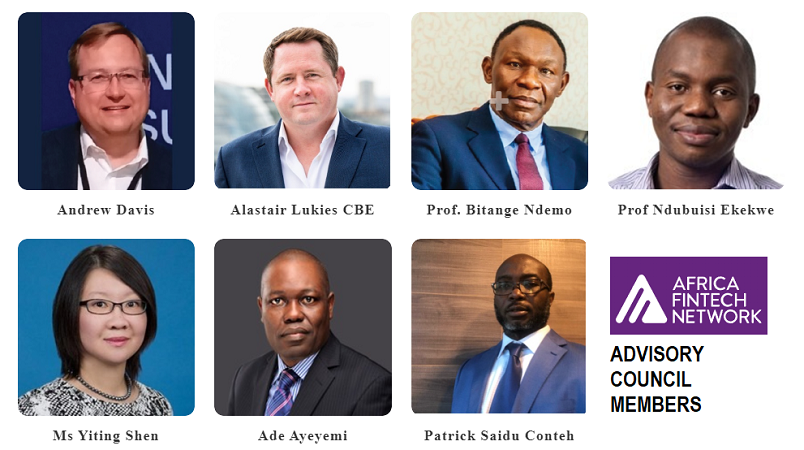
We have advanced fintech in Africa. I am truly honoured to have been in the Board of Africa Fintech Network, working with Ade Ayeyemi, Group Chief Executive Officer of Ecobank, Prof Bitange Ndemo, Dr Segun Aina, and other eminent global leaders, for two years now. Our work is shaping this industry for good. We stay at the top, making sure African fintech innovators and project champions have fertile grounds to operate. This work is just starting. #service
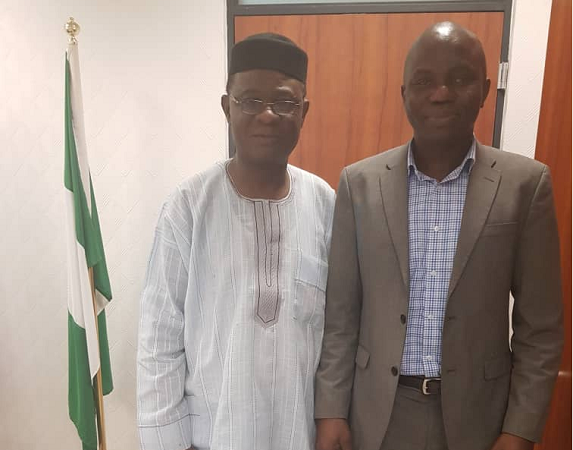
When I write about national issues, do not think I am attacking governments or our leaders. I can tell you boldly that they do not see the articles that way. In short, many call me and ask for my opinions on many national issues. Early this year, I received an unsolicited “offer” to become a Director General in a federal government agency. I thanked them but made it clear that it was not the right role for me!
The APC, PDP, LP, etc reach out, seeking my small insights. I admire those working and serving in governments – but we still have to hold them accountable. Ndubuisi Ekekwe has one policy: I belong to ALL parties but I choose none. What that means is this: I do not go partisan and I try to be objective and balanced, just as what you expect from an academic person.
I have many invitations to the National Assembly from our senators and House members. The last time I went, some took selfies with me. So, do not be confused thinking I am writing against APC. I want you to understand that APC runs the nation and it has to own the good and the bad. We need to make that point because unlike other parties, it is the one running the show. If PDP or LP or Accord wins, they take the heat.
I write this to help those fixated on “attacks”. Nothing like that. The government invited me last time to attend the Diaspora event in the main ballroom of Aso Rock. I attended and we all chatted with the Vice President, Senate President, etc. This is Nigeria and it belongs to ALL of us, not APC, PDP or LP. We want a working nation and constructive criticism is appreciated even by the government.
(photo, the last time in the National Assembly. I met many of our leaders and shared how to move the nation forward)
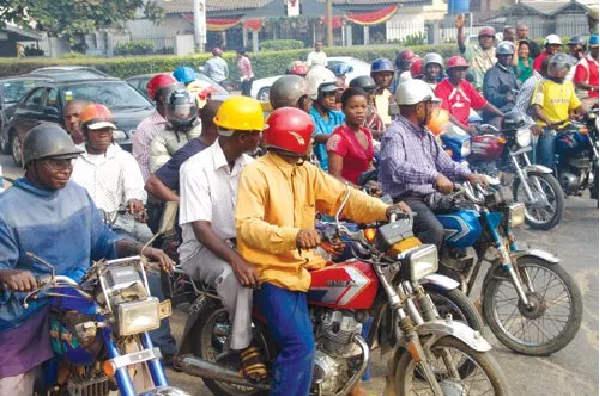
For years now, the Nigerian security architecture has been overwhelmed by the raging insecurity in the country. With terrorism, banditry and kidnapping flourishing unabated, the government appears to have exhausted every plan to quell the unrest – now it is thinking of adopting the most common solution to challenges in Nigeria.
On Thursday, the Attorney-General of the Federation, Abubakar Malami, said President Muhammadu Buhari is weighing the possibility of imposing a nationwide ban on the sale and use of okada (motorcycles) by Nigerians.
Per Peoples Gazette, Malami said the administration is considering the wholesale ban due to insecurity that has refused to be contained even though the security agents are giving it their best.
“The government would look into that possibility with particular regard to restriction on use and distribution of motorcycles which is the most conventional logistical means being deployed by terrorists,” Mr Malami said at the State House shortly after a meeting of the National Security Council.
Malami acknowledged that the move will exacerbate Nigeria’s poor economic situation, but said the decision wasn’t easily taken by the administration.
He said federal authorities have been able to find a connection between motorcycles, mining operations and insecurity across the country. But he didn’t explain why the decision will affect nationwide operation of okada when the affected places are mainly the northeast and the northwest.
As the PG noted, Boko Haram insurgents have operated predominantly in the country’s northeastern flank since 2009, while bandits terrorize northwest communities. Among the measures taken by the affected states in the regions is okada ban and cutting off telephone networks. The measures have however, failed to yield favorable results as both banditry and terrorism have continued to flourish in those regions.
In Southern Nigeria, particularly the southwest and southeast, separatist agitation reigns, though it bears lesser weight of insecurity compared to the north.
Malami said the decision was informed by an intelligence report that the administration could not disregard even though it will bring about harsh economic realities. He did not say when the ban will be announced.
The implication
Apart from the mobility crisis that will result from the decision to ban okada, the economic implication will likely outweigh the gain. Millions of Nigerians rely on okada for last mile mobility while hundreds earn a living selling motorcycles and its spare parts.
Revenue in the Motorcycles market is projected to reach $0.92bn in 2022, showing an annual growth rate (CAGR 2022-2026) of 8.68%, resulting in a projected market volume of US$1.29bn by 2026, according to market data firm Statista.
The market’s largest segment is On-road Motorcycles with a projected market volume of $0.55bn in 2022. Motorcycles market unit sales are expected to reach 680.65K motorcycles in 2026, the firm said.
This means that a ban on commercial motorcycles will cut over $100 billion off Nigeria’s economy in the near term, putting thousands of people out of business particularly in states like Anambra and Lagos where the business is predominant.
Security experts have said that the poor economic situation of the country is contributing largely to its insecurity, warning that lack of job has the tendency to push people into violent crimes.
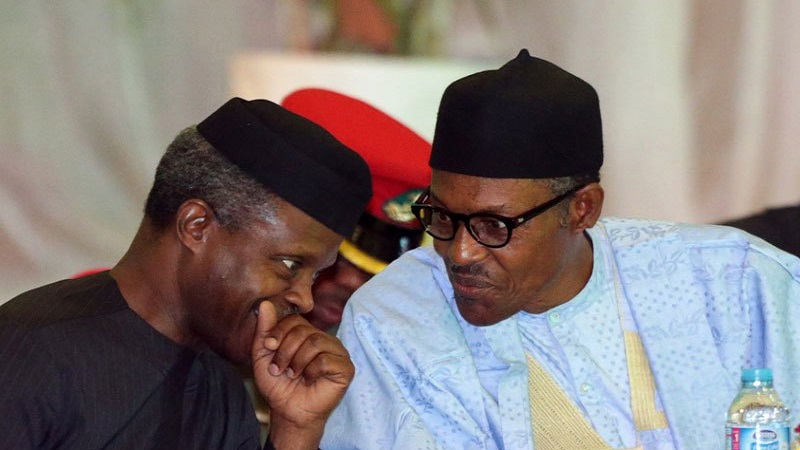
Nigeria’s public debt, which has increased significantly over the past seven years, reaching a mammoth height of N61 trillion, is increasingly eclipsing the nation’s revenue generation.
According to the 2022 fiscal performance report released on Thursday, the cost of servicing debt surpassed the federal government’s retained revenue by N310 billion in the first four months of 2022, which means, the government borrowed to pay debt.
The report said debt servicing gulped N1.9 trillion in the first four months of the year, whereas the government generated a total of N1.6 trillion during that period.
Though the development sends a rattling signal, analysts say it was long expected considering that Nigeria has been borrowing mainly for consumption.
Minister of Finance, Budget and National Planning, Mrs. Zainab Ahmed, said in Abuja, while addressing the situation, that urgent action is needed to address revenue underperformance and expenditure efficiency at national and sub-national levels.
The report indicated that there is an alarming gap between revenue generated by the government and debt servicing, and it will require drastic measures to upset it.
“The aggregate expenditure for 2022 is estimated at N17.32 trillion, with a pro-rata spending target of N5.77 at end of April,” the report reads.
“The actual spending as of April 31st (sic) was N4.72 trillion. Of this amount, N1.94 trillion was for debt service, and N1.26 trillion was for personnel costs, including pensions.
“As at April, N773.63 billion has been spent on capital expenditure.
“As of April 2022, FGN’s retained revenue was only N1.63 trillion, 49 percent of the pro-rata target of N3.32 trillion.”
The report noted that the federal government’s performance, based on its N285.38 billion oil revenue for the referenced period, amounts only to 39%, although it generated a total of N632.56 billion, which amounts to 84%, from non-oil tax revenue.
“CIT and VAT collections were N298.83 billion and N102.97 billion, representing 99 percent and 98 percent of their respective targets,” the report added.
“Customs collections (made up of import duties, excise and fees, as well as federation account special levies) trailed target by N76.77 billion (25.42 percent).
“Other revenues amounted to N664.64 billion, of which independent revenue was N394.09 billion.”
Against this backdrop, there is growing concern that the revenue challenge will deteriorate at the end of the Q3, as oil revenue decreases further due to insufficient oil output and petroleum subsidy payments.
The federal government is yet to find a way to address the debt – revenue disparity as its previous attempts to remove the subsidy were fiercely resisted because of concern that it will compound the already bad economic situation of the people.
The government plans to borrow additional N4 trillion to fill the budget deficit emanating from subsidy payments.