DD
MM
YYYY

PAGES

DD
MM
YYYY

spot_img

PAGES

Home Blog Page 5027

The Nigeria’s Inflection Point: Debt Servicing Repayment Exceeds Revenue

2
Finance Minister, Nigeria

The IMF predicted that it would happen in 2026 but their model is really off by years. Yes, Nigeria has entered a new chapter in its reckless economic shipwrecking: “Nigeria’s fiscal position worsened in the first four months of the year as the cost of repaying debt surpassed the government’s revenue in the first quarter of 2022.” Simply, we as a people work for servicing debts. 

The International Monetary Fund (IMF) has warned that debt servicing may gulp 100 percent of Nigeria’s revenue by 2026, if the government fails to implement adequate measures to improve revenue generation.

The IMF’s Resident Representative for Nigeria, Ari Aisen, disclosed this while presenting the Sub-Saharan Africa Regional Economic Outlook report on Monday, 30th May 2022 in Abuja.

According to him, based on a macro-fiscal stress test that was conducted on Nigeria, interest payments on debts may wipe up the country’s entire earnings in the next four years.

(IMF predicted a full year in 2026, this is a quarter and that means that IMF is technically correct since Nigeria can recover next quarter and have the revenue receipts exceeding debts servicing obligations.)

I do not know what to write other than to point out that Naira will experience more pressure. I had noted that N700/$ by Dec 2022 is a possibility if we do not try new ideas since whatever we are doing now is not working. This is not a political statement; this is a statement from a concerned  citizen.

Nigeria has a quagmire: crude oil price cannot go sideways – it can only move up or down. The problem for Nigeria is that when the price goes up, it makes more money in the international market but also spends more to subsidize petrol since it has to import the by-product. And when the price drops, Nigeria does not make as much money internationally, affecting many things. But since prices can only go up or down, NOT sideways, we are in a mess. Interestingly, we do not have a solution on how to fix that problem.

Nigeria’s fiscal position worsened in the first four months of the year as the cost of repaying debt surpassed the government’s revenue in the first quarter of 2022.

According to details of the 2022 fiscal performance report for January through April, Nigeria’s total revenue stood at N1.63 trillion while debt servicing stood at N1.94 trillion, showing a variance of over N300 billion.

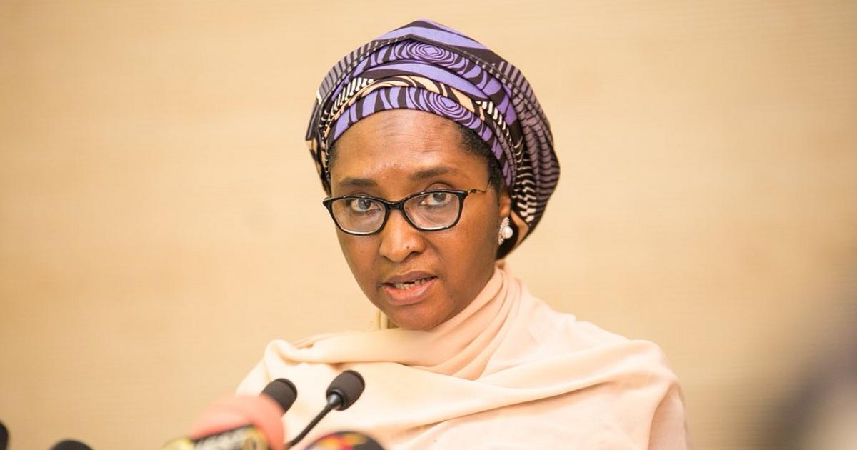
Nigeria’s Minister of Finance, Budget and National Planning, Zainab Ahmed, on Thursday warned that urgent action is needed to address the nation’s revenue challenge and expenditure efficiency at both the national and sub-national levels.

The report showed that gross oil and gas federation revenue for the first four months of the year was projected at N3.12 trillion but as at April 30, only N1.23 trillion was realised, representing a mere 39% performance.

Get your PVC – 2023 is becoming exceedingly important for the future of Nigeria. 

Tekedia has more reports on this here.

Comment on LinkedIn Feed

Comment: Subsidy is not the problem. Excess spending on Subsidy is the problem. The other issue is the lack of think thank group designing operations model for the country. The executive are there to execute, judiciary to interpret law, legislation for policy. Who is designing how they along with other apparatus in the country blends in? This is where the issue lies!

My Response: “The other issue is the lack of think thank group designing operations model for the country. ” – I actually think we have many think tanks. What we do not have is DO tanks.

Comment follow: ok sir, but a think thank will control, influence and enforce things at all levels.

My response: ” but a think thank will control, influence and enforce things at all levels.” – Only in America, Europe, etc. In Nigeria, who cares when universities can be on strikes for months. The biggest think tank in a nation is the university system. If you can shut it down for months, you get the idea that no one cares….

Debt Servicing Gulped N310bn More Than Revenue Generated by Nigeria in First Four Months of 2022
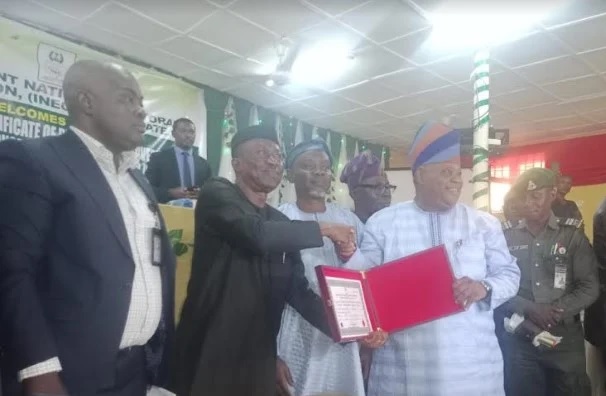
Certificate of Return: What the law says

0

Congratulations to Senator Ademola Adeleke as INEC finally issued him the certificate of return on Wednesday, the 20th of July as the winner of the Osun state governorship election held over the weekend; the certificate of return was issued to him four days after the election was conducted.

A certificate of return is an electoral document issued to the winner of an election, declaring the candidate the rightfully elected candidate of the election.

Mr. Adeleke, who contested the July 16 election on the ticket of the Peoples Democratic Party (PDP), polled 403,371 votes to defeat the incumbent governor, Gboyega Oyetola, of the All Progressives Congress (APC), who scored 375,027 votes, and 13 other candidates.

Before the certificate of return was finally issued, the camp of Senator Adeleke was already agitating about why after days the election was concluded INEC is yet to issue the certificate of return, the camp of the election winner was already clamoring that INEC is breaking the law for not to have issued the certificate of return days after the election. The most vocal about the issue was David Adeleke, the megastar musician who is also the nephew of Senator Adeleke, the winner of the election. In his tweet on Tuesday, the 19th of July while poking INEC on their reason for not having issued the certificate of return to his uncle he posted this: “@inecnigeria should we send you fuel money? LOL

“Please no one should tamper with the will of the Osun People!

“Issue the certificate as required by Law!”.

This tweet gained multiple retweets and comments as numerous other online activists joined the star musician and his family in calling out INEC and its officials, accusing INEC of breaking the law for not having issued the certificate of return to the winner of the election 3 days after the election. Unfortunately, this agitation was clothed in so much ignorance and lack of knowledge of the laws of Nigeria, specifically the electoral laws.

For the sake of legal knowledge and because we are in the election period in Nigeria we will be taking a look at what the law says about issuing the certificate of return to winners of elections and what is the number of days INEC has to issue the certificate of return and if INEC fails to issue a certificate of return to the winner of the election what should the winner do and what document can be used in the place of the certificate of return for the swearing-in ceremony of the winner of the election.

The latest electoral act of 2022 provides answers to these issues. It is provided in Section 72 of the act that a (sealed) certificate of return at an election shall be issued within “14 days” to every candidate who has been returned as the winner of the election by the Returning Officer in an election.

The implication of this provision is that INEC has up to 14 days to issue a certificate of return to any winner of an election and only after 14 days have passed without INEC issuing the certificate of return to the winner can we then say that INEC is breaking the law but anything less than 14 days after the election was held, INEC is still acting within the confines of the law.

But when the court in an election petition nullifies the certificate of return issued to a previous candidate, INEC has just 48 hours to issue a fresh certificate of return to the candidate the court has held to be the rightful winner of the election.

If for any reason INEC fails, refuses, or neglects to issue a certificate of return to the winner of an election, the candidate will obtain a certified true copy of the order of the court declaring him the winner of the election; rightfully elected and order of the court is enough and sufficient for the purpose of swearing in of the candidate into the office he/she was elected for.

In summary, INEC has the window of 14 days to issue a certificate of return to the winner of an election and no law is broken if the certificate is issued within that time frame but when the court nullifies a previous certificate of return issued to another candidate, then INEC has just 48 hours to issue a fresh certificate of return to the candidate the court has held to be the rightful winner of the election.

The Atiku Abubakar’s Proposal to Fix Electricity in Nigeria

1

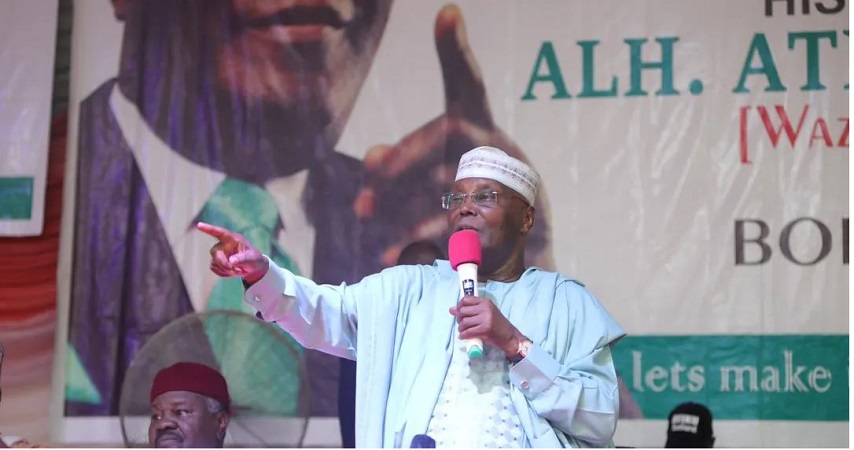
Nigeria’s national grid has been collapsing with reckless abandon. Of course, we know that if that trajectory does not change,  the harmattan season may come earlier, economically. So, there are many ideas on how to fix it; one is coming from the nation’s former Vice President and PDP presidential flagbearer, Atiku Abubakar: “The IDF [infrastructure debt fund ]  will have an initial investment capacity of approximately $20 billion. In addition, I’ll cause the creation of an infrastructure development credit guarantee agency to complement the operation of the IDF by de-risking investments in infrastructure to build investor confidence in taking risks and investing capital”. 

In their words,” Dear customers, we regret to inform you of a system collapse on the national grid at precisely 11:27 a.m today July 20. We are in talks with the transmission company of Nigeria to ascertain the cause of the collapse and a possible restoration timeline. We will keep you updated on the situation”.

Also displeased with the constant national grid collapse is People Democratic Party (PDP) Presidential aspirant Atiku Abubakar who via a series of tweets on Twitter proposed a solution to put a stop to the incessant collapse of the national grid.

See what he said, “I am reliably informed that there was a total national grid collapse at precisely 12:23 pm today. This is one collapse too many. It is the 6th time this is happening in this year alone. Due to the priority that I place on the power sector upon which the successes of other sectors are hinged, I am proposing infrastructure that will involve the facilitation of a review of financial, legal, and regulatory environment to promote private investment in power among the sectors.

”I’ll promote the identification, with tax breaks, a consortium of private sector institutions to establish an infrastructure debt fund (IDF) to primarily mobilize domestic and international private resources for the financing and delivery of large infrastructure projects across all sectors of the economy.

“The IDF will have an initial investment capacity of approximately $20 billion. In addition, I’ll cause the creation of an infrastructure development credit guarantee agency to complement the operation of the IDF by de-risking investments in infrastructure to build investor confidence in taking risks and investing capital”. 

I commend Mr. Abubakar for coming up with a solution; we need just that as the campaign season picks up. This proposal is not novel; Nigeria has tried it in many forms and it has one big problem: “credit guarantee” does not scale. 

In a 2018 presentation in Washington DC, at Ronald Reagan International Trade Center (see link here),  I made a case that credit guarantees cannot help Africa. My thesis was based on this: if you want someone to invest $1 million and guarantee $1m, when that person finishes investing that $1m, he will expect you to guarantee more funds, to unlock new investments.  If you do not have more capacity to guarantee more, scaling that project will stall. That is what has happened in most parts of Africa: credit guarantees work but are also limited once the guarantor cannot expand them.

What was my proposal in Washington DC? Go back to the root cause why a guarantee was even necessary? If you remove those impediments, investors will come and if they find opportunities, they can scale that mission, not just in the small pilots for guarantees, but for every part of the nation.

My suggestion to the nation is simple: credit guarantee is not scalable since it is bounded. However, we need to address the reasons why people see opportunities in the energy sector and yet refuse to invest. Interestingly, we know the #1 reason: a court now determines how much producers of power can charge their customers, irrespective if that will bankrupt the sector.

Sure, price ceilings are necessary for products produced by utilities but what is happening in Nigeria goes beyond managing oligopolies in municipalities. What we have is simple: many Nigerians believe that power has to be free and the court has blessed that thinking, making it hard to price energy reflectively.  The result is evident: many players in the energy sector are collapsing.

Yes, someone has to fight for investors so that investing in Nigeria’s energy sector does not translate to burying cash. We need to tell the court that while it can fix the prices customers pay for DStv and Zee World, when it comes to electricity, we need to modulate.

How do you reconcile a scenario where investors see HUGE opportunities in Nigeria’s electricity sector and yet few want to invest in the sector? Focusing on credit guarantees will not help. In my opinion, we need to focus on removing the bottlenecks and whatever makes it necessary to even guarantee people to come and make money!

Comment on LinkedIn Feed

Comment: I think a bigger question is where are they going to get the funds to guarantee investments made through the IDF in the first place. After all, the country is practically broke. The only possibility I see to guarantee such funds is to borrow again, and we all know how that goes in Nigeria with corruption?

My response: a great point. That is like 50% of the nation’s budget depending on the exchange rate of choice.

JAMB Benchmarks 2022 University Admissions Cut-Off Mark at 140, Says Less than 25% Scored 200 and Above

1

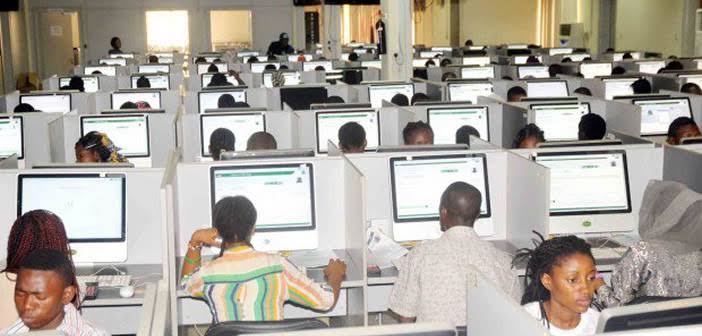
The Joint Admissions and Matriculation Board (JAMB) is a Federal Government’s agency that conducts and standardize entrance examination into tertiary institutions in Nigeria. The body also sets cut-off point for its Unified Tertiary Matriculations Exams (UTME) every year.

Following the year 2022 edition of the UTME which held between Friday, May 6, and Saturday 14, the examination regulatory board, JAMB has on Thursday, 21 July announced 140 marks as the national minimum cut-off point for admission into public universities and 100 marks and above for admissions into Polytechnics and colleges of education for the year 2022 admissions exercise.

JAMB was reported to have reached this decision at the ongoing policy meeting on admissions to tertiary institutions in Nigeria.

According to the JAMB’s registrar, Professor Ishaq Oloyede who announced the cut-off, every institution is at liberty to fix its own cut-off mark even up to 220 but no one would be allowed to go below the minimum marks of 140 for universities and 100 for polytechnics and colleges of education.

The just concluded UTME recorded mass failure as the JAMB’s registrar revealed that 378,639 candidates which is about 22 percent of the total 1,761,338 candidates who wrote the 2022 UTME scored 200 and above.

Nigeria Experiences Blackout As National Grid Collapses Again – PDP Presidential Aspirant, Atiku Abubakar, Proposes Solution

0

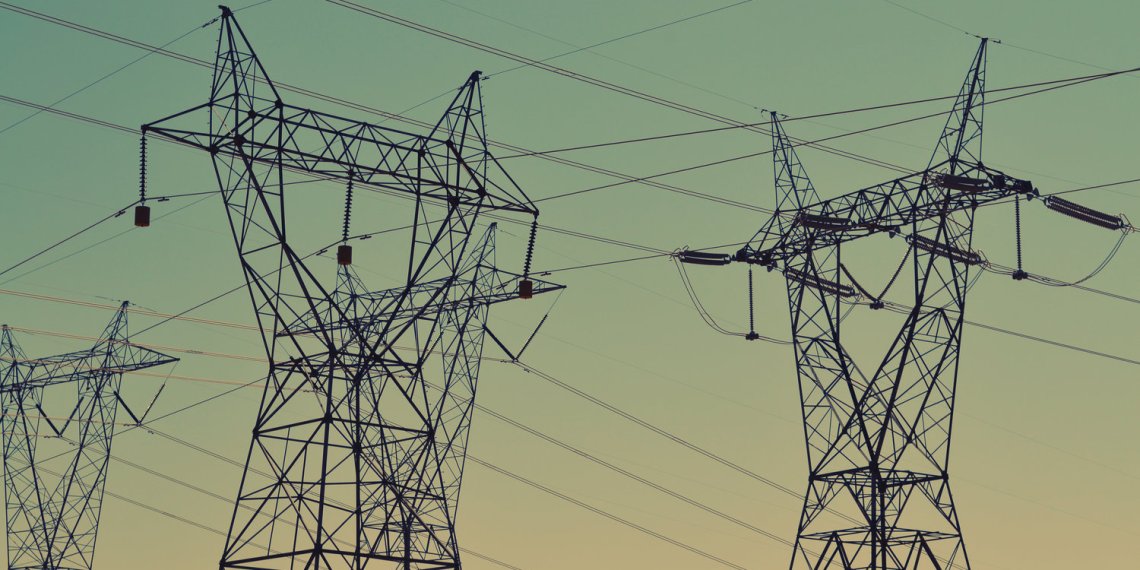
The national grid in Nigeria on Wednesday suffered another system collapse which resulted in blackout in so many parts of the country. The incessant collapse has been a reoccurring issue in Nigeria, which is said to be the 18th time a nationwide blackout would be recorded in the country this year.

The federal government earlier last month attributed the incessant collapse of the National grid to poor generation by generation companies, Gencos, Low water levels at hydro water plants, and constant attacks on transmission towers.

The government also disclosed that its effort to expand the grid has often been frustrated by communities who deny the right of way to transmission projects.

Reacting to the recent collapse of the national grid, the Eko Electricity Distribution Company (EKEDC) disclosed that they are currently in talks with the transmission company of Nigeria to ascertain the cause of the collapse so that it can be restored as well as preventing it from happening in the future.

In their words,” Dear customers, we regret to inform you of a system collapse on the national grid at precisely 11:27 a.m today July 20. We are in talks with the transmission company of Nigeria to ascertain the cause of the collapse and a possible restoration timeline. We will keep you updated on the situation”.

Also displeased with the constant national grid collapse is People Democratic Party (PDP) Presidential aspirant Atiku Abubakar who via a series of tweets on Twitter proposed a solution to put a stop to the incessant collapse of the national grid.

See what he said, “I am reliably informed that there was a total national grid collapse at precisely 12:23 pm today. This is one collapse too many. It is the 6th time this is happening in this year alone. Due to the priority that I place on the power sector upon which the successes of other sectors are hinged, I am proposing infrastructure that will involve the facilitation of a review of financial, legal, and regulatory environment to promote private investment in power among the sectors.

”I’ll promote the identification, with tax breaks, a consortium of private sector institutions to establish an infrastructure debt fund (IDF) to primarily mobilize domestic and international private resources for the financing and delivery of large infrastructure projects across all sectors of the economy.

“The IDF will have an initial investment capacity of approximately $20 billion. In addition, I’ll cause the creation of an infrastructure development credit guarantee agency to complement the operation of the IDF by de-risking investments in infrastructure to build investor confidence in taking risks and investing capital”. 

The constant collapse of the national grid which often leads to nationwide blackout and epileptic supply of electricity, calls for serious attention with immediate actions taken to curb such problems.

It is appalling and disheartening that this is happening at a time when the country is ravaged by high inflation, hike in the price of diesel and petrol, constant devaluation of the Naira, and high prices of food items.

This has further compounded the woes of Nigerians, making living unbearable for so many households as well as seriously affecting businesses most especially the Small and Medium scale enterprise.

Despite the privatization of the electricity industry with a bid to address the situation, it has only worsened. There are insinuations that the problem of the constant grid collapse has been associated with the leadership at various levels in the country, as a large percentage of them are averse to genuine solutions.

Their lackluster attitude has continued to compound issues, using their positions to stifle any idea that could lead to change. In order to further prevent the collapse of the national grid, there have been calls from experts urging the federal government of Nigeria to switch to alternative energy sources which is now a global trend.

They further disclosed that solar power, hydropower generation, and wind energy should be given the necessary attention and implemented in the country, integrating them into the country’s strategic power plan.