DD
MM
YYYY

PAGES

DD
MM
YYYY

spot_img

PAGES

Home Blog Page 5031

Setting up a Courier/Logistics business in Nigeria – Available Licenses, Requirements and; Regulatory Framework

0

Modern day commercial activities cannot be complete without solving the timeless problem of LOGISTICS which involves the gap-bridging activity of getting goods from the manufacturer or vendor to the end-user/customer. 

The need for logistics services increased to an even more problematic level during the Covid-19 pandemic in 2020 that saw international and national commercial activities heavily dependent on physical or in-person contact and interactions grind to a near-halt, especially in places like Lagos in Nigeria with a humongous population of at least 20million people by conservative estimates who have daily personal, utility and business needs from food and medicines to retail and wholesale goods purchases. 

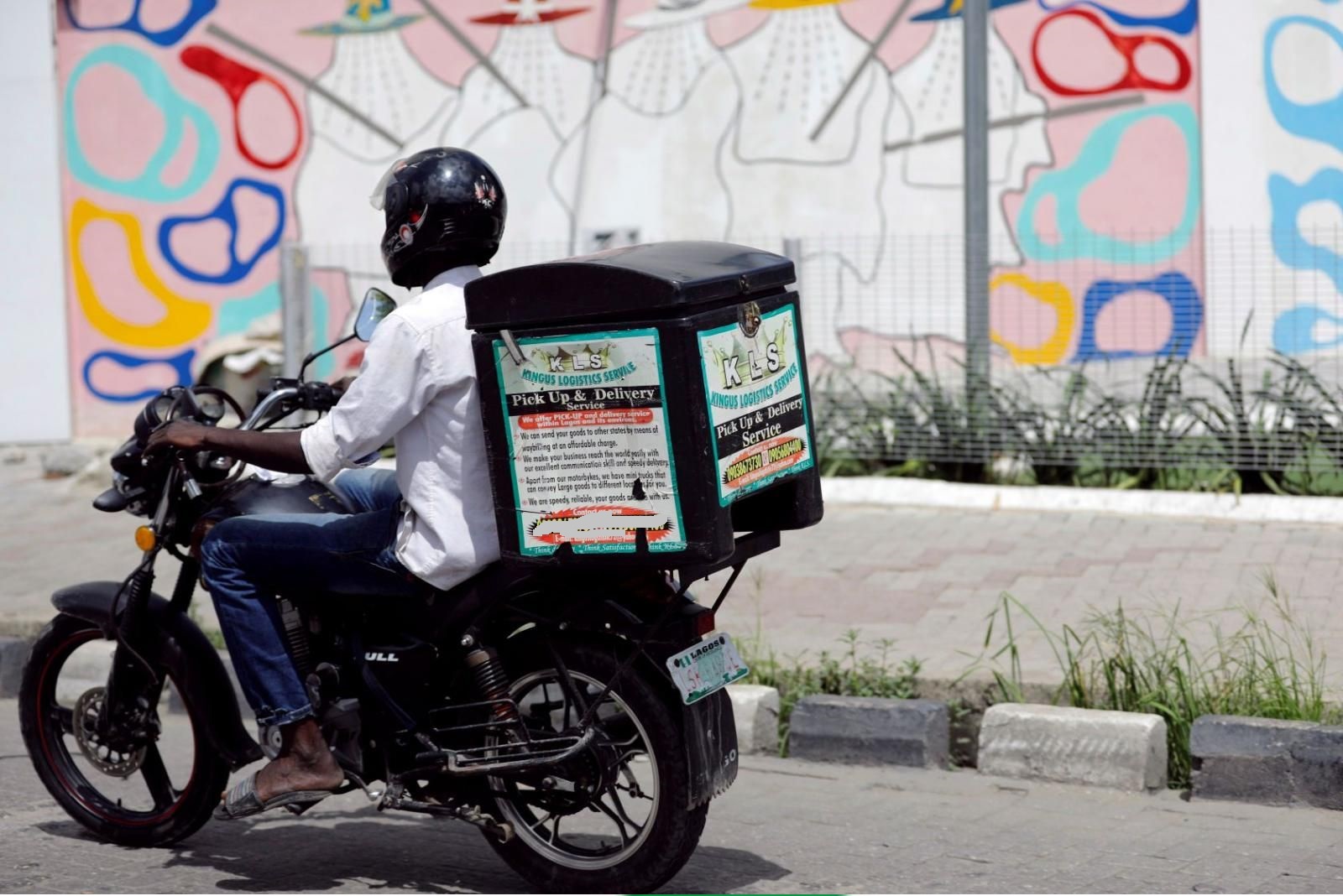
The pandemic also gave rise to a previously overlooked subsector of the Logistics Industry – Courier services heavily dependent on intra-city, inter-city and inter-state speedy deliveries in heavily populated areas with typical traffic problems, creating a demand gap left by the top-level Industry players like DHL which began to be filled by SMEs using smaller delivery platforms like pick-up trucks, tricycles (otherwise called “Keke” in Nigeria) and Motorbikes, some of them operating via Digital business models. 

This led to the agency in charge of regulating this industry, The Nigerian Postal Service(NIPOST), through the  Federal Ministry of Communications and Digital Economy, released a set of revised Guidelines known as the Courier & Logistics Services Operations Regulations 2020 to govern the licensing and operation of Courier and Logistics companies in Nigeria. 

As a result, this article aims to let you know:- 

– The legal definitions of Courier and Logistics services in Nigeria under the Regulations; 

– The available categories of licenses under the Regulations and their licensing and renewal requirements; 

– Any further Regulatory Compliance requirements existing under laws other than the regulations and the NIPOST Act. 

What areCourier” and “Logisticsservices under the Regulations? 

The Regulations define Courier services as “Door-to-Door” time- sensitive logistics services which include the delivery of documents, parcels, merchandise and/or cargo with a total weight of not less than 0.5kg and not more than 50kg. 

The Regulations go further to define Logistics as “delivery services which include haulage, conveyance & dispatch/delivery of items or goods weighing not less than 50kg. 

What are the available Licence categories and their licensing application and renewal requirements? 

Under the Regulations, the following license categories are currently available in Nigeria :- 

  1. 1. An International Courier license :- This is for logistics companies that wish to engage in rendering logistics services across International borders.
  1. 2. A National Courier license :- This licence is for companies that wish to carry out logistics services Nationwide.
  1. 3. A Regional Courier license :- This licence is for companies that wish to engage in logistics services within a Geo-Political zone.
  1. 4. State/Special SME license :- This licence category is for companies seeking to render logistics services within a State, city or having not more than 5 motorcycles.

The licensing requirements for the above categories include :- 

– An application from your lawyer to the Postmaster-General of NIPOST; 

– The Certificate of Incorporation and Memorandum/Articles of Association of the applicant company; 

– The Business plan, Company profile and Operations manual of the company (the operations manual in particular must involve consulting a lawyer to advise you fully on the provisions of the Regulations); 

– A Goods-in-Transit policy of the applicant company; 

– A Tax clearance certificate; 

– Evidence/Proof of Share Capital being allotted and subscribed to; 

– A filled application form P306 along with a non-refundable licence application fee of 20,000Naira payable to the Treasury Single Account (TSA); 

– Evidence of storage and warehousing facilities on inspection; 

– Office location details; 

– Evidence of Compliance regarding Expatriate quota Regulations where Non-Nigerians are to be hired by the applicant company; 

– Evidence of payment of licensing fees for a particular category. 

The applicable license and renewal fees for each category are as follows:- 

International Courier license 

License fee – 20 Million Naira.

Licence renewal fee- 1,875,000.00 Naira. 

National Courier license 

License fee – 3 Million Naira

Licence renewal fee-625,000.00 Naira 

Regional Courier license 

Licence fee – 2 Million Naira 

Licence renewal fee- 437,000.00 Naira 

State/ Special SME license 

Licence fee – 250,000.00 Naira 

Licence renewal fee-100,000.00 Naira 

How long do License applications take to be determined? 

License applications take at least 30 days from the date of receiving the application to be determined. 

For how long are licences under the Regulations valid until renewal? 

Licences granted under the Regulations are valid for 1(One) year and are to be renewed not later than 3months to the expiration date of a license. 

Are there penalties for failing to renew a license? 

Yes there are. A licence renewal default attracts a penalty of 50% of the renewal fee in addition to paying the main renewal fee as well as possible license revocation. 

Can a License application be rejected and if yes, on what grounds? 

Yes, a License application can be rejected on the basis of unsuitability or on grounds of public policy/the public interest. 

What are the complete ethical compliance requirements of the Regulations? 

You will have to consult your lawyer on this as the requirements are quite numerous and need to be explained in-depth. 

What is the name of the actual agency in charge of regulating Courier services in Nigeria? 

The agencies in charge of regulating Courier services in Nigeria are the Nigerian Postal Service and The Federal Ministry of Communications & Digital Economy through the Courier Regulatory Department(CRD). 

Are there further laws and/or regulations that are to be complied with by existing or intending Courier companies at the Federal or State level? 

Yes there are. At the state level especially in Lagos State, there’s a Transport Sector Reform Law (TSRL 2018) that also has to be complied with. 

I would like to brand all my courier vehicles with my company logo and other trademarks as a form of advertisement for my business. Can i do this freely? 

No, you cannot. In states like Lagos branded cars and vehicles along with billboards and public/outdoor advertisement or signage platforms are governed by the Lagos State Structure for Signage & Advertisement Agency (LASAA) which issues permits in response to applications for the purpose of engaging in the activities mentioned above. 

Branding in this case can either be Semi-branding (with just the name, address and phone numbers of the company being displayed) or Full branding (involving the additional display of images representing the company, product, service or any other Trademark. 

It should be noted that for Courier companies an application for a LASAA permit should also be made specifically for a Mobile Advert permit allowing for the use of branding on Courier vehicles for the purpose of advertisement. 

What are the requirements for a LASAA/Mobile Advert Permit? 

The requirements for this type of permit (renewable annually) include the following :- 

– A completed Mobile Advert Form; 

– A photograph of the vehicle and its registration details; 

– A copy of the license of the vehicle; 

– Permit fee payment proof. 

The fees for securing a Mobile advertisement permit are :- 

Truck/Trailers 

Semi-branding – 9,900.00 Naira

Full branding – 49,900.00 Naira 

Coaster Buses 

Semi-branding – 9,900.00 Naira

Full branding – 49,900.00 Naira 

Jeeps 

Semi-branding – 7,900.00 Naira

Full branding – 39,900.00 Naira 

Cars 

Semi-branding – 3,900.00 Naira

Full branding – 19,900.00 Naira 

Motorcycles (Okada) 

Semi-branding- 1,900.00 Naira

Full branding – 19,000.00 Naira 

Tricycles (Keke) 

Semi-branding – 1,900.00 Naira

Full branding – 19,000.00 Naira 

Bicycles 

Semi-branding – 1,900.00 Naira

Full branding – 19,000.00 Naira 

Pushcarts (Can apply to Wheelbarrows)

 Semi-branding- 1,900.00 Naira

Full branding – 19,000.00 Naira 

Conclusion :- It can be seen from the above write-up that the Regulatory Framework governing Courier/Logistics services in Nigeria is quite detailed and open to constant evolution, albeit with somewhat strict penalties for default put in place . Going into this lucrative field with the right planning requires that you have the right professional guidance to enable you make better-informed decisions and ensure a better Compliance record from the Pre-licensing stage to the post-licensing, operation and licence renewal stages going forward.
Aviation Workers In Nigeria Stand In Solidarity With ASUU, Vows To Shut Down Operation If Demands Are Unmet

0

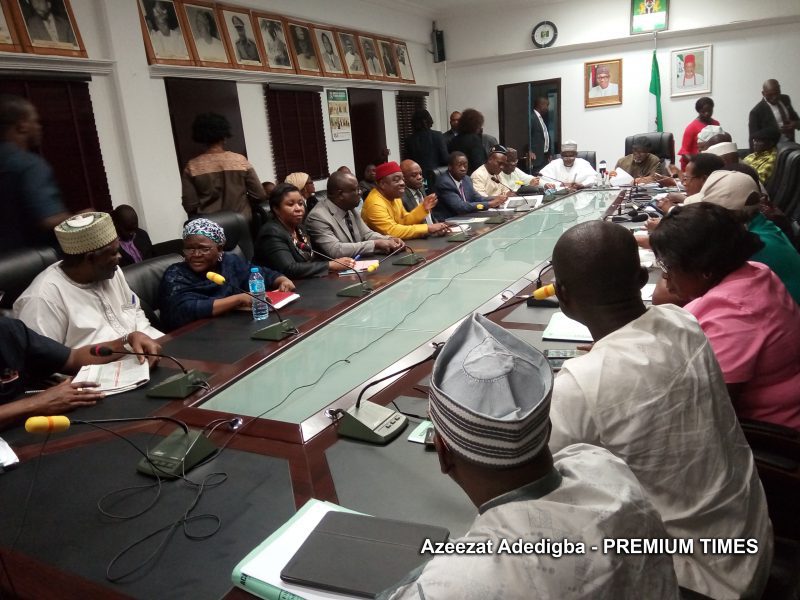
As ASUU strike enters the 155th day over unmet demands from the federal government, the association of Nigeria aviation professionals (ANAP), has declared its intention to stand in solidarity with ASUU by vowing to shut down operations across the country.

The association, infuriated by ASUU’s unmet demand has called on the federal government to do the needful immediately, so that the strike can be called off, otherwise, they will be forced to shut down the aviation sector in solidarity with ASUU.

ANAP added that the continuous stay at home by University students has greatly contributed to the social vices in the country, as these students due to idleness have now engaged in some mischievous activities in the society, capable of destroying their future.

The association further stated that the over four months of unending strike action by ASUU has ridiculed the country’s educational system, making it a laughing stock before the world.

It noted that Education remains the bedrock of any nation aspiring for greatness, noting that ASUU strike will eventually lead to a regrettable situation in the future if not properly handled.

ANAP warned that the future of Education will be bleak as little or no attention was focused on the system, as most of the children of the politicians school abroad.

The union stated that its members will align with the Nigeria Labour Congress (NLC) position in protest against the unfortunate situation in the tertiary education sector.

This incessant strike action by ASUU is not strange at all, as this is always a recurring action across all federal universities in the country. The union continues to embark on strike due to the apparent failure of the federal government to sign a negotiated 2009 agreement it had with the union.

This habitual failure of the government to respect agreement with the union has been the root cause of most of these strike actions. The government has always been in the habit of promising to meet their demands urging them to call off the strike, and when ASUU adheres to their plea, they default in payment of the agreement.

This time around, members of ASUU have had enough of their gimmick, as they would not call off the strike until their demands are met. No doubt, this incessant strike action has greatly contributed to the social vices in the country.

Some University students rather than utilize the strike period to learn a skill to develop themselves, they rather engage in despicable acts like robbery, prostitution, Fraud, Internet scam, and the likes.

It is disheartening that the federal government of Nigeria fails to understand that quality education is one of the most important factors in the development of a country. A close observation of developed countries, one will observe that they place so much value on the educational sector, providing adequate support.

It has been proven that a country’s development is primarily based on its people. However, for the people to play an active role in shaping the country, education is responsible for that.

Therefore, education remains the backbone of any country. If the literacy rate of a country is high, it will lead to a low unemployment rate and greater GDP growth.

Oyo State: Can a deputy governor be impeached?

1

The good people of the Oyo state received with shock and with mixed feelings the news of the impeachment of the deputy governor of the state, His excellency, Rauf Olaniyan.

Although some people who are engrossed with the political atmosphere of the Oyo state saw it coming after the number two citizen of the state dumped the political party he was elected on in 2019 with his principle to occupy the office of the deputy governor which is the Peoples Democratic Party (PDP), and decamped to the All Progressive Congress (APC).

Allegations were leveled against him for gross misconduct; abuse of office, financial recklessness, embezzlement of public funds, abandonment of his office, insubordination, and other offenses, and a panel was instituted to verify and ascertain the veracity of these allegations.

Since the impeachment news, the question has been can a deputy governor be legally or constitutionally impeached in Nigeria since he is occupying the office on a joint ticket. A deputy governor is elected on a joint ticket with the governor. Also, can  only the deputy be impeached while the governor retains his seat and get a replacement for the deputy, can a deputy stay in office  if a governor is impeached for an offense committed by the governor.

“Laymanly” speaking, if a deputy governor is to be impeached he is to be impeached together with the governor since they share a joint ticket because according to the Nigerian constitution, the deputy governor is only elected on a joint ticket with that of the governor and there is no office of the deputy governor without the office of the governor.

These are some of the “roadside” arguments that have been making round the corner, although they are reasonable, but as reasonable as these arguments or assertions may sound that a deputy cannot be legally impeached independently, that is not what the law says; fortunately the constitution has provided answers to these questions which will lay to rest and stifle all other “roadside” arguments.

The impeachment of a deputy governor in Nigeria is legal and constitutional as it was provided for in S. 188 of the constitution of the federal republic of Nigeria, 1999 (as amended). According to the provisions of that segment of the constitution, a governor can be impeached so also a deputy can be impeached independent of the governor.

When a deputy governor is accused of gross misconduct, it is enough to cause an impeachment process to be instituted against him by the lawmakers independent of the governor, his principal.

Once a deputy governor is impeached, he is to vacate the office of the deputy governor with immediate effect and the governor is to quickly get a replacement for the impeached deputy by nominating a proposed deputy subject to the approval of the state house of assembly.

It is pertinent to state that a deputy governor is estopped from approaching the court to challenge his impeachment if all the constitutional provided procedures for the impeachment were duly followed, although in recent times, the court has stated categorically that any aggrieved person has every right to approach the court including an impeached deputy governor.

The Double Play Strategy – Learn How AWS Now Provides 74% of Amazon’s Profits

0

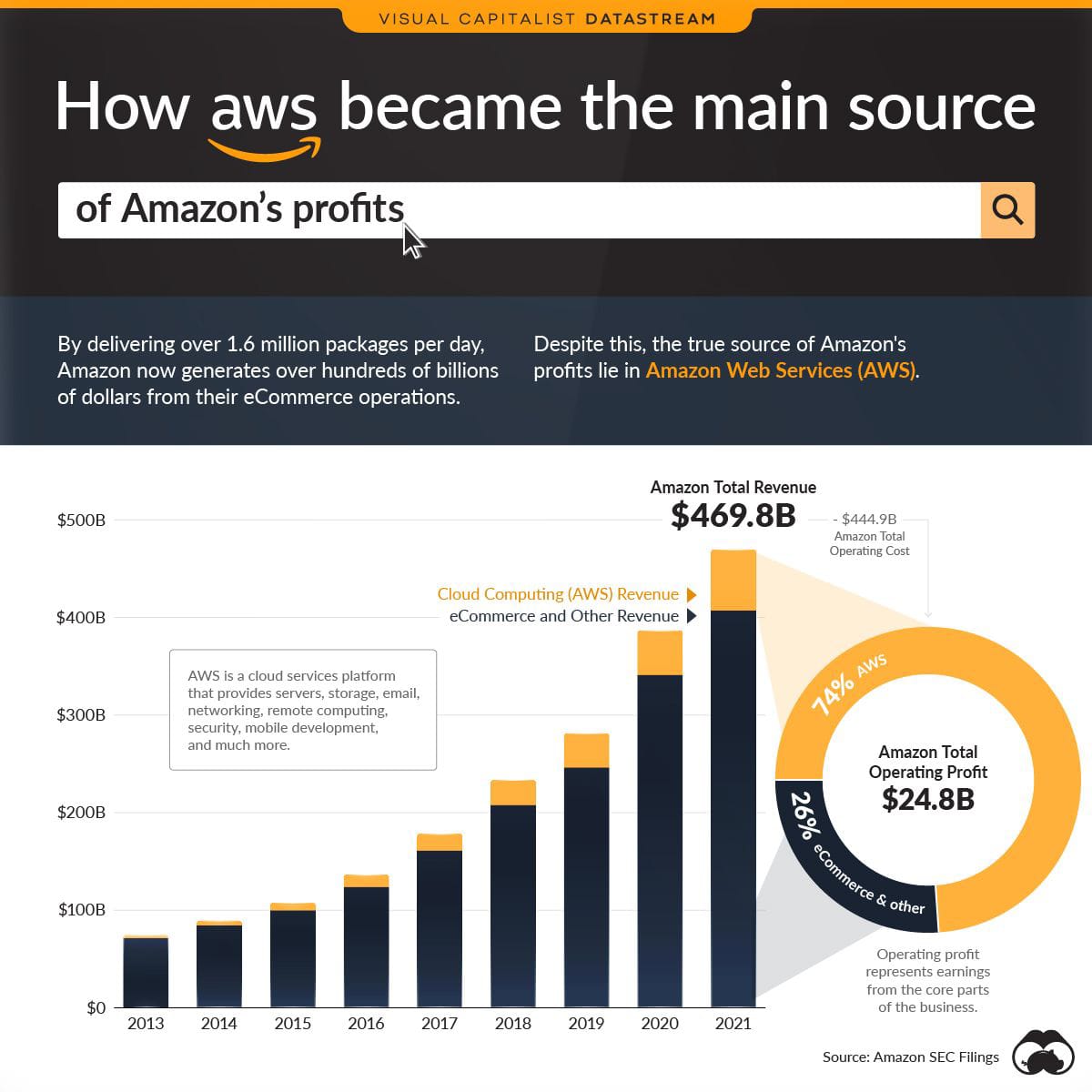
In baseball, double play is a defensive play where two players are put out. It turns out that the leading ecommerce companies like Amazon and Alibaba have such strategies in their businesses. Amazon runs an ecommerce operation, which is not super profitable (was a lost maker for years), but makes money via AWS, a cloud computing service. Below is the breakdown of Amazon profit; AWS runs the show now.

For Alibaba, its double play comes from its asset-light marketplace and Ant Financial which processes payments across its ecosystems. Besides the commission for selling on Alibaba, Alibaba takes another cut for handling the payment. 

When you examine these companies, one thing is obvious: no one makes good money by running just an ecommerce operation; you need a double play to supplement it. This double play is connected with One Oasis Strategy which I explained here in Harvard.

Amazon won ecommerce via Double Play Strategy and we can learn from that.

Fintech Start-up Zilla Offers Shoppers Interest-Free Credit To Buy Goods And Pay Later

0
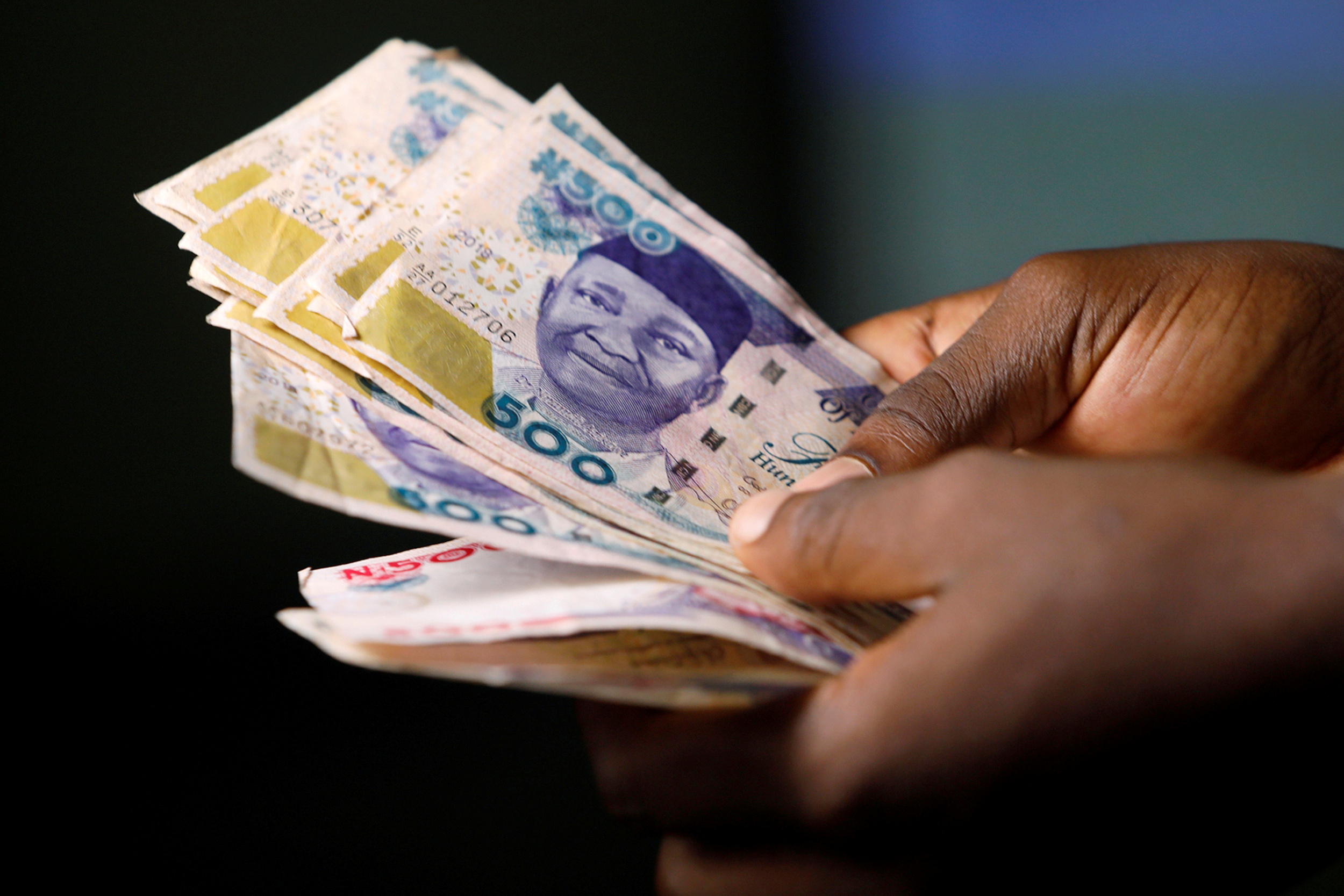
Nigerian naira banknotes are seen in this picture illustration, September 10, 2018. REUTERS/Afolabi Sotunde/File Photo

Fintech start-ups continue to innovate the financial services industry with new approaches to solving old problems. There is no doubt a significant influx of fintech start-ups into the tech ecosystem offering new solutions.

Fintech firm Zilla has set its sights on millennial shoppers in a bid to win over more clients to its buy now pay later platform that allows consumers to make purchases and pay for them later with zero interest.

The company already has 30,000 people on its sign-up list since its 10 months of operation. The Fintech firm links buyers of consumer goods to merchants in Nigeria, and steps in at the point of sale to fund the balance after the customer has made a part payment of 25 percent.

Customers who are not financially enabled to make an outright purchase, repay the credit to Zilla in four equal installments at no interest over right weeks. The fintech firm last September raised a pre-seed of $300,000 in funding to provide soft loans to finance the purchase of anything from electronics, gifts, fashion accessories, beauty and skincare products, travel, and healthcare.

Zilla app which is available on iOS and android have already hit the market, aimed at making a connection between users wanting to procure goods and over 4,000 merchants more seamless.

The company through its business model seeks to provide a faster and more formidable alternative for shoppers unwilling to face the constraints and rigors of getting credit cards.

As Zilla seeks to enable consumers to make purchases and pay for them later, no doubt the buy now pay later industry is significantly expanding. Many retailers across the globe are now partnering with buy now pay later (BNPL) apps to make it easy for consumers to make purchases on their websites.

A new report forecasts that buy now pay later (BNPL) will account for $438 billion (5.3%) of global e-commerce transactions by 2025, as it becomes the fastest-growing e-commerce payment method in markets like India, Brazil, U.S, and the U.K.

The buy now pay later payment method has been attributed to the increasing of sales, which often decreases the number of abandoned cards on an e-commerce site. This payment method also makes consumers happy as it offers them flexible payment terms which often makes them feel empowered.

With Zilla’s Buy now pay later payment method, coupled with zero interest rate, it will no doubt give other competitors a run for their money. Its entry into the Nigerian market is a very strategic one considering the high inflation rate ravaging the global economy, with Nigeria among the top countries with the highest inflation rate.

This inflation has negatively reduced the disposable income of a large percentage of households in the country. Members of these households will find this buy now pay later very convenient for them, as a large percentage of them do not possess the immediate cash outlay for the payment of goods purchased.

The inflation continues to affect the purchasing power of consumers in Nigeria, thus BNPL will often be the preferred choice for payment. With Zilla’s BNPL, shoppers can even purchase a large number of products without necessarily having the immediate cash outlay.