African fintechs are getting caught in a very ugly situation that will likely jeopardize the burgeoning industry.
Flutterwave, the most valuable African fintech, was in April called out for gross misconduct. Early this month, a Kenyan court froze the accounts of Flutterwave payment technology limited, Boxtrip travel and tours limited, Bagtrip travel limited, Elivalat fintech limited, Adguru technology limited, Hupesi solutions, Cruz ride auto limited and one Simon Ngige over allegations of money laundering and fraud.
Last week, Ping Express CEO, Anslem Oshionebo and COO, Opeyemi Odeyale were sentenced to 27 months in federal prison for allowing the platform to be used for fraudulent transactions. A report from the US Department of Justice, said the Texas based company admitted to transmitting more than $167 million overseas, including $160 million transmitted to Nigeria, without seeking sufficient details about the sources or purposes of the funds involved in the transactions, or the customers initiating the transmissions.
The duo have pleaded guilty for their failure to maintain an effective anti-money laundering program. The IT/Business Development officer was sentenced to 42 months in prison for his role.
The company, Ping Express, faces five years of probation and a fine of up to $500,000.
The culmination of these events became glaring last week by the report that a group of African fintechs, including Flutterwave, Eversend, Busha, GetEquity and Payday are suspending their virtual card services due to a policy update from their card partner – Union54.
Union54 said the policy update was necessary “mainly due to our partner’s commercial inflexibility and inability to move quickly to implement technical solutions that are required to solve the operational issues we have experienced.” But there is more to that. TechCrunch, reported below citing sources, that the decision was necessitated by increasing chargeback fraud activities in the affected companies.
African fintechs halt virtual dollar cards after Union54 chargeback fraud surge
Last Friday, Barter, the consumer app of Africa’s most valued startup Flutterwave, told customers via email that they would not be able to access its virtual dollar card service from July 17. Hence, customers would be unable to create new virtual dollar cards, fund existing ones or make online and in-store payments and purchases with them.
Subsequently, other African fintechs such as Eversend, Busha, GetEquity and Payday sent identical messages giving various timelines between July 17 and 18. They attributed the virtual dollar card service disruption to an update from a card partner—which happens to be Union54—without citing a definite recommencement time.
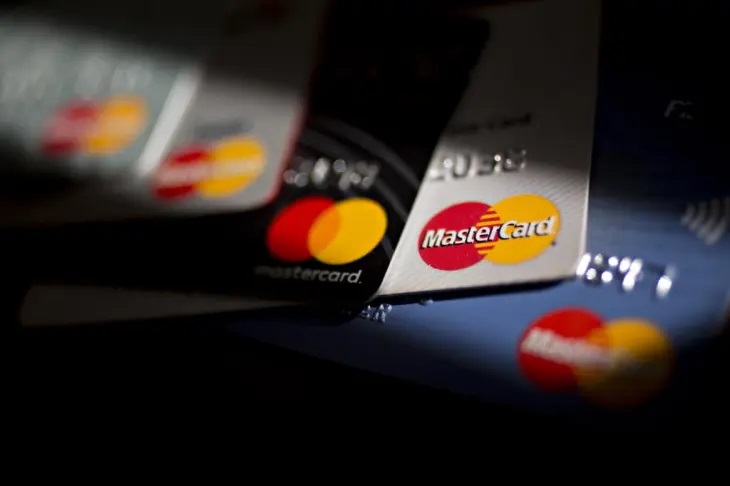
As part of Mastercard Principle membership and the first fintech company from Africa, Union54 acts as an “issuing bank” and can provide debit cards (physical and virtual). The startup plays an essential role in the growth of the African fintech space with its card issuing product. But in May, Union54 began experiencing some operational issues with its product, resulting in the temporary suspension of its Bank Identification Number (BIN), the first four to six numbers on a payment card that identifies a card issuer.
According to a memo sent to its clients in May and obtained by TechCrunch, Union54 said though it resolved several of these issues, some remained. And as the company sought solutions, it became apparent that there were “some fundamental blockers to Union54 operating a long-term, profitable card issuing product, mainly due to our partner’s commercial inflexibility and inability to move quickly to implement technical solutions that are required to solve the operational issues we have experienced.”
Sources told TechCrunch that the main issue Union54 had been experiencing since its launch was chargeback fraud. Here, cardholders claim to have not initiated purchases before proceeding to dispute a transaction, placing a complaint and contacting the issuing bank—in this case, Union54—for a chargeback. If Union54 feels the claim is valid, it will remove the transaction amount from the merchant’s account and return it to the cardholder.
A follow-up memo allegedly sent by Union54 confirms what sources and local tech publication, Benjamindada.com, have said about these chargebacks. “Ever since we launched, there’s been a consistent increase in fraud cases emanating from our Bank Issuing Number (BIN),” the memo read. “During one of our conversations with Mastercard, they declared that never in their history has there been such frequent instances or cases of card fraud from this region.”
Upon further investigation, Union54 discovered that cardholders were increasingly attempting to defraud merchants by requesting chargebacks after their orders had been fulfilled. Many cardholders also tried to make purchases with empty cards, said Union54. Another plausible scenario, which Union54 didn’t state, could be the use of the cards by fraudsters to perform transactions without the knowledge of the original cardholders.
Merchants—who bear the brunt of chargeback fees that potentially affect their bottom line—can contest cardholders’ claims and ask the issuing bank to reverse the chargeback. And that’s what international merchants such as Facebook, Google and AliExpress did; in addition, they reported Union54’s BIN to Mastercard, which resulted in its number’s suspension.
At first, Union54 decided to stop authorizing card payments on June 16 and cease operations by June 30. The two-week timeframe was to “allow for the defunding of cards and refunds of remaining float deposits, as well as for our clients to access any user, card or transaction data required for your ongoing operations.” In the first memo, Union54 said its API would no longer be available from July 1. However, the fintech pushed the shutdown to July 18 as Mastercard, which requires merchants to maintain a chargeback rate of less than 1.5% of transactions, gave Union54, which also doubles as an acquirer, an ultimatum to improve its processes.
In the follow-up memo, Union54 explained how the company could not redeem the situation despite the extension. Union54’s efforts “weren’t deemed enough by Mastercard” as clients’ virtual dollar cards failed more frequently, disrupting customer experiences, an excerpt from the memo read.
Union54 hopes to get a resolution soon, though. CEO Perseus Mlambo sent a tweet today saying fintech is undergoing a compliance audit that shouldn’t take more than two weeks. However, in the memo, fintech said it’d be working with its partners, merchants and Mastercard to get its cards service back up within the next 6-8 weeks. TechCrunch reached out to Union54 for comments but didn’t get any at the time of publication.
Some industry analysts say this event calls for better KYC/AML compliance checks in the card issuing space as inconsistent due diligence for cardholder chargeback claims could invoke more fraudulent activities.
“It [The news] didn’t come as a shock for those playing in compliance because of the huge fraudulent activities in the space. Suppose a card scheme raises red flags that a region is having a lot of fraudulent activities. In that case, you as a provider will probably want to withdraw from the markets,” said Lanre Ogungbe, co-founder of Identitypass, a Nigerian digital compliance and security company that delivers seamless identity verification solutions to African businesses.
“KYC is not the A-Z of security checks, but what it does is to backtrack and trace a fraudulent transaction. And for many fintechs in the region, we seem to place more emphasis on aesthetics rather than the compliance and security side of things.” The report also comes at a period where various fraud allegations regarding executives and companies in the region have rocked the fintech space within the past few weeks.
In the past couple of years, virtual dollar debit cards provided by fintechs have proved a lifeline to many Africans and replaced local alternatives from banks whose cards have transaction limits. With these virtual cards, customers (individuals and businesses) can make international online transactions on platforms such as Alibaba, Google, Amazon, Netflix and Spotify. So it’s not hard to see why these customers—who have had to rely on these virtual cards built on Union54’s backend—expressed their displeasure on social media following the news. Many have begun searching for alternative options, which include Sudo Africa, another card issuing platform and other fintechs which claim to be unaffected by Union54’s downtime (as a result of using another provider), such as Chipper Cash, Mono and Bitmama.
Like this:
Like Loading...