DD
MM
YYYY

PAGES

DD
MM
YYYY

spot_img

PAGES

Home Blog Page 5033

The Double Play Strategy – Learn How AWS Now Provides 74% of Amazon’s Profits

0

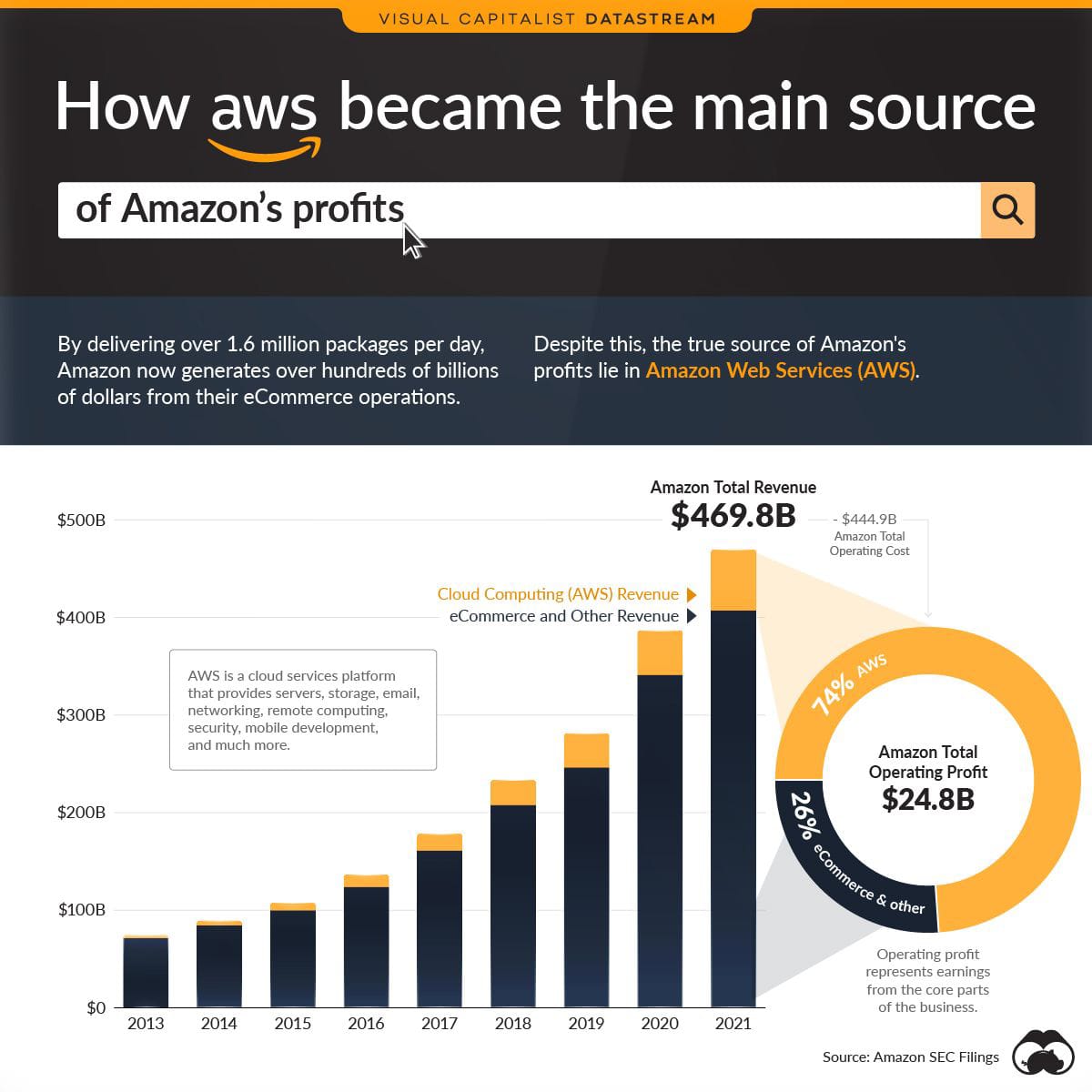
In baseball, double play is a defensive play where two players are put out. It turns out that the leading ecommerce companies like Amazon and Alibaba have such strategies in their businesses. Amazon runs an ecommerce operation, which is not super profitable (was a lost maker for years), but makes money via AWS, a cloud computing service. Below is the breakdown of Amazon profit; AWS runs the show now.

For Alibaba, its double play comes from its asset-light marketplace and Ant Financial which processes payments across its ecosystems. Besides the commission for selling on Alibaba, Alibaba takes another cut for handling the payment. 

When you examine these companies, one thing is obvious: no one makes good money by running just an ecommerce operation; you need a double play to supplement it. This double play is connected with One Oasis Strategy which I explained here in Harvard.

Amazon won ecommerce via Double Play Strategy and we can learn from that.

Fintech Start-up Zilla Offers Shoppers Interest-Free Credit To Buy Goods And Pay Later

0
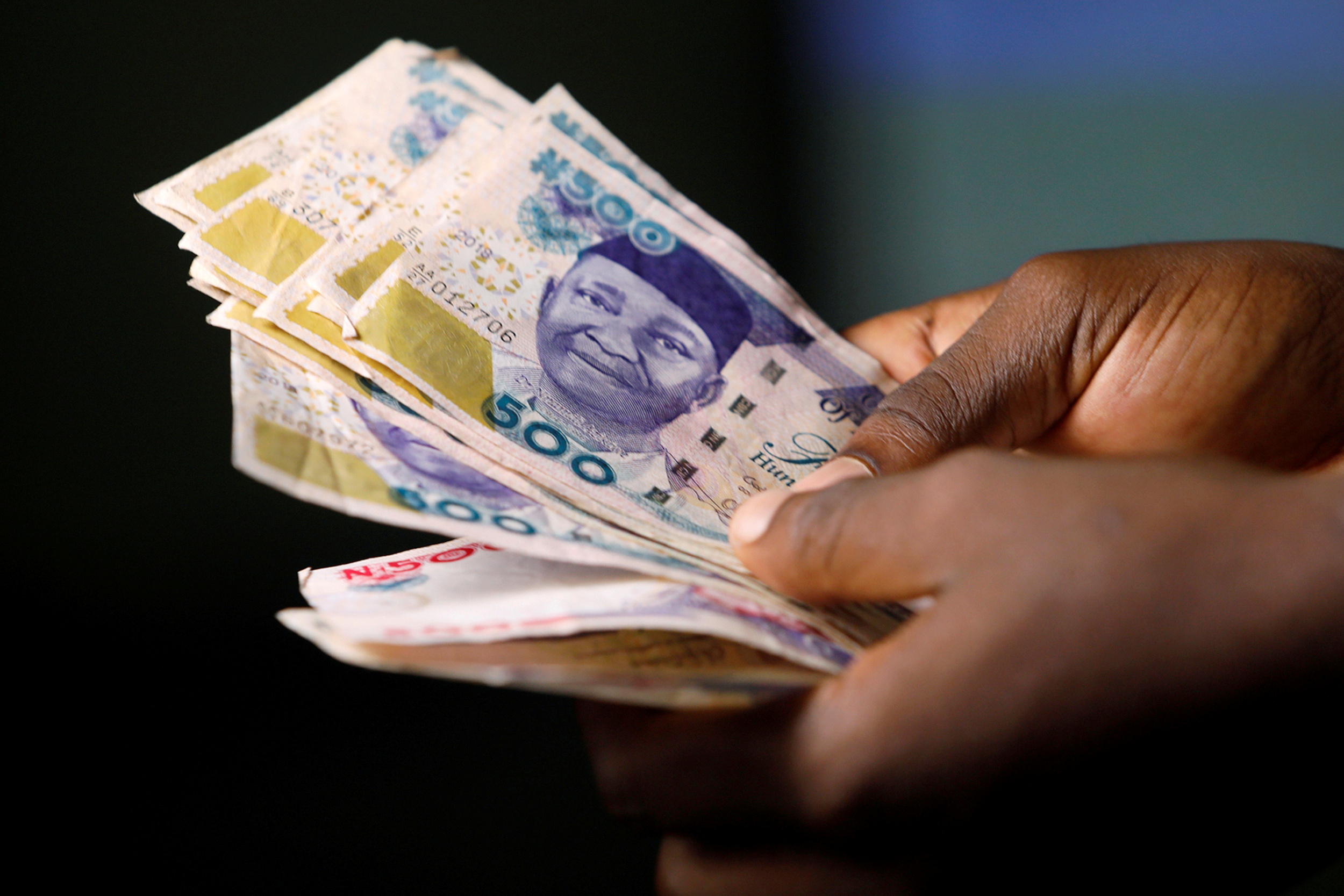
Nigerian naira banknotes are seen in this picture illustration, September 10, 2018. REUTERS/Afolabi Sotunde/File Photo

Fintech start-ups continue to innovate the financial services industry with new approaches to solving old problems. There is no doubt a significant influx of fintech start-ups into the tech ecosystem offering new solutions.

Fintech firm Zilla has set its sights on millennial shoppers in a bid to win over more clients to its buy now pay later platform that allows consumers to make purchases and pay for them later with zero interest.

The company already has 30,000 people on its sign-up list since its 10 months of operation. The Fintech firm links buyers of consumer goods to merchants in Nigeria, and steps in at the point of sale to fund the balance after the customer has made a part payment of 25 percent.

Customers who are not financially enabled to make an outright purchase, repay the credit to Zilla in four equal installments at no interest over right weeks. The fintech firm last September raised a pre-seed of $300,000 in funding to provide soft loans to finance the purchase of anything from electronics, gifts, fashion accessories, beauty and skincare products, travel, and healthcare.

Zilla app which is available on iOS and android have already hit the market, aimed at making a connection between users wanting to procure goods and over 4,000 merchants more seamless.

The company through its business model seeks to provide a faster and more formidable alternative for shoppers unwilling to face the constraints and rigors of getting credit cards.

As Zilla seeks to enable consumers to make purchases and pay for them later, no doubt the buy now pay later industry is significantly expanding. Many retailers across the globe are now partnering with buy now pay later (BNPL) apps to make it easy for consumers to make purchases on their websites.

A new report forecasts that buy now pay later (BNPL) will account for $438 billion (5.3%) of global e-commerce transactions by 2025, as it becomes the fastest-growing e-commerce payment method in markets like India, Brazil, U.S, and the U.K.

The buy now pay later payment method has been attributed to the increasing of sales, which often decreases the number of abandoned cards on an e-commerce site. This payment method also makes consumers happy as it offers them flexible payment terms which often makes them feel empowered.

With Zilla’s Buy now pay later payment method, coupled with zero interest rate, it will no doubt give other competitors a run for their money. Its entry into the Nigerian market is a very strategic one considering the high inflation rate ravaging the global economy, with Nigeria among the top countries with the highest inflation rate.

This inflation has negatively reduced the disposable income of a large percentage of households in the country. Members of these households will find this buy now pay later very convenient for them, as a large percentage of them do not possess the immediate cash outlay for the payment of goods purchased.

The inflation continues to affect the purchasing power of consumers in Nigeria, thus BNPL will often be the preferred choice for payment. With Zilla’s BNPL, shoppers can even purchase a large number of products without necessarily having the immediate cash outlay.

Russia Fines Google $373 Million for Promoting “Fake News”

0

Russia has maintained efforts to keep mainstream media in check as its war with Ukraine rages on. It started with an outright ban on news outlets and escalated to other platforms, particularly US tech companies.

The attack on the media got a legal backing in March after the Russian parliament overwhelmingly voted to pass a bill criminalizing fake news – which is – reports not approved by the Kremlin. The bill, which was swiftly signed into law, recommends up to 15 years imprisonment for anyone spreading information contrary to what the Kremlin approves.

Since early this year, it has been a roller-coaster ride for journalists in Russia. Since the war began, the Kremlin has added over 5,000 websites to its “denylist,” according to the research and security firm Top 10 VPN. Almost all foreign journalists in Russia have been kicked out and over 80 news outlets and 30 financial sites have been stripped of access since February 24th.

The Kremlin also blocked Twitter and Facebook for allowing disapproved content on their platforms but Google was allowed for a reason believed to be that Russia can’t afford to do without it now. However, the Kremlin is taking another step to ensure that the web search giant is under its control – fines.

Reuters reports that Alphabet’s Google was fined 21.1 billion roubles ($373 million) on Monday by a Moscow court for a repeated failure to remove content Russia deems illegal, such as “fake news” about the conflict in Ukraine, Russia’s communications regulator said.

Alphabet’s YouTube has been a particular target of the state’s ire but, unlike Twitter and Meta Platforms’ Facebook and Instagram, it has not been blocked.

The regulator, Roskomnadzor, said the Tagansky District Court had fined Google 21.1 billion roubles for repeatedly failing to restrict access promptly to banned materials, and singled out YouTube for particular criticism.

It said YouTube had not deleted “fakes about the course of the special military operation in Ukraine, discrediting the armed forces of the Russian Federation”.

It also said YouTube was permitting content promoting extremist views and calls for children to participate in unauthorized protests.

Google, which can appeal, did not immediately respond to a request for comment.

The fine was calculated as a share of Google’s annual turnover in Russia. It had been handed a similar 7.2 billion rouble penalty late last year.

Google’s Russian unit’s bank account has been seized, prompting the subsidiary to file for bankruptcy and making it impossible to pay staff and vendors.

Anton Gorelkin, deputy head of the parliamentary committee on information policy, said Google was showing a demonstrative disregard for Russian law.

“It is not hard to predict what this attitude will lead to: Google risks losing the Russian market altogether,” he wrote on Telegram.

Tekedia Capital Offers To Help African Fintechs That Need US Compliance Guidance via Our Experts

0

African Fintech Founders, CEOs, etc: I have read some troubling accounts in the African fintech space. As an investor, I feel bad. This is not the way we will win the future. These demons must be cast out – fast. The virtues of honesty, decency and transparency are the only trajectories that will take everyone to the mountaintop.

Every fintech startup in Tekedia Capital with international exposure has access to a network of top US banking executives. These are my friends and associates; one is a Managing Director of a bank and heads a top US bank’s compliance unit. This bank has more than US$40 TRILLION under custody and administration. That is the highest level it could get.

To help African fintechs which  are struggling to build a better compliance regime, Tekedia Capital is available to connect these compliance experts to speak and provide guidance.  Just let us know, my team will schedule for them to speak with you (and will mentor you to build the right system based on US standards). There is a reason God has blessed me to know the right people,  and if this is one way I can help, so be it.

But we need to address this matter as a community. Email my team on contact here. Note: no one will ask you to pay anything; I just want this mess to stop before foreign investors lose interest in the ecosystem.

We will help on the KYC/AML and the chargeback fraud nemesis many of you are having. Ask for help.

Financial Modeling and Investment Valuation at Tekedia Institute

0

He is a very brilliant young man. He graduated with First Class honours from the University of Lagos. He works in the temple of business where amazing professionals make business work, across sectors and territories, by deepening our understanding of the mission of firms, and the utilization of factors of production.

Tekedia Institute Faculty Philip Bakare – ACA, Dip.IFR(ACCA), BSc will be in class tomorrow to teach “Financial modeling and Business Valuation”. How do you know what that business is worth? How do you make it physics? Come and learn from the best at Tekedia Institute

To register for the next edition of Tekedia Mini-MBA, go here .