DD
MM
YYYY

PAGES

DD
MM
YYYY

spot_img

PAGES

Home Blog Page 5033

Financial Modeling and Investment Valuation at Tekedia Institute

0

He is a very brilliant young man. He graduated with First Class honours from the University of Lagos. He works in the temple of business where amazing professionals make business work, across sectors and territories, by deepening our understanding of the mission of firms, and the utilization of factors of production.

Tekedia Institute Faculty Philip Bakare – ACA, Dip.IFR(ACCA), BSc will be in class tomorrow to teach “Financial modeling and Business Valuation”. How do you know what that business is worth? How do you make it physics? Come and learn from the best at Tekedia Institute

To register for the next edition of Tekedia Mini-MBA, go here .

Russian President Vladimir Putin Signs Law To Ban Use Of Digital Assets For Payments

0

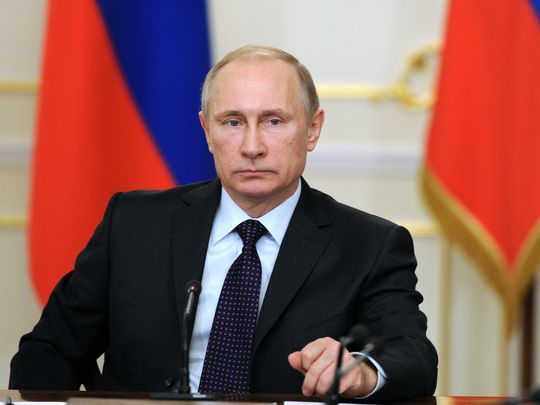
President of Russia Vladimir Putin has signed into law a national ban on the use of digital assets for payments. The new law requires that digital assets will no longer be accepted as monetary surrogates and therefore cannot be accepted as payments for goods and services.

Other monetary units are also banned, re-affirming rubles as the only officially accepted currency within the Russian federation.

While the new law prohibits the use of digital financial assets to pay for “transferred goods”, performed works, and rendered services, it permits for other cases in the use of DFA payments.

The central bank in Russia holds that cryptocurrencies should only be used for International settlement which was well received amid harsh sanctions imposed on them following their invasion of Russia.

Despite the adoption of crypto for international payment the government still holds the opinion that the ruble should remain the country’s only legal tender.

Recall that last year Russia’s financial monitoring agency introduced a crypto monitoring service, aimed at the integrity of the mechanism for the circulation of digital currencies into the financial system and ensuring control over cash flows in the circuit of credit institutions.

The agency has disclosed its plans to improve the capabilities of its crypto monitoring service. The ban on crypto in the country was enforced after the government identified specific criminal cases involved in cryptocurrencies adding that the bank of Russia seeks to improve its systems and identify transactions and blockchains that are hidden.

The bank also stated that due to the fact that cryptocurrency records and transactions are stored on the blockchain technology, without the identity of wallet-owners, it makes them difficult to track.

Due to the invasion of Russia on Ukraine, as the country seek to evade sanctions, the Russian government had to develop its digital currency called rubles. The Russian government also cited the environmental impact of cryptocurrencies.

They disclosed that these coins have for long been a cause for concern due to the amount of power used in mining. The government had to ban crypto mining in Russia as they revealed that it affects electricity consumption, as it deals with a severe energy crisis.

It disclosed that Bitcoin mining consumes around 91 terawatt hours of electricity annually. Russia now joins the list of five countries where Bitcoin is banned. Countries where Bitcoin is banned are as follows; China, Bangladesh, Egypt, Morocco, and Russia.

Despite the widespread adoption of these cryptocurrencies in countries around the world, these countries above-mentioned have cracked down on it’s adoption citing various reasons.

Furthermore, these governments want to uphold a regulatory check on transactions and trades initiated from an individual account. Countries like Russia and Thailand disclosed that using cryptocurrency can make it difficult to trace, which can also be used to sponsor terrorism.

The lack of transparency surrounding cryptocurrencies has been a major concern for the government of these countries aforementioned, which is why they are strongly against adoption the use of it in their countries.

African Fintechs Threatened by Fraud: Union54 Policy Update Forces Fintechs to Halt Virtual Dollar Cards

0

African fintechs are getting caught in a very ugly situation that will likely jeopardize the burgeoning industry.

Flutterwave, the most valuable African fintech, was in April called out for gross misconduct. Early this month, a Kenyan court froze the accounts of Flutterwave payment technology limited, Boxtrip travel and tours limited, Bagtrip travel limited, Elivalat fintech limited, Adguru technology limited, Hupesi solutions, Cruz ride auto limited and one Simon Ngige over allegations of money laundering and fraud.

Last week, Ping Express CEO, Anslem Oshionebo and COO, Opeyemi Odeyale were sentenced to 27 months in federal prison for allowing the platform to be used for fraudulent transactions. A report from the US Department of Justice, said the Texas based company admitted to transmitting more than $167 million overseas, including $160 million transmitted to Nigeria, without seeking sufficient details about the sources or purposes of the funds involved in the transactions, or the customers initiating the transmissions.

The duo have pleaded guilty for their failure to maintain an effective anti-money laundering program. The IT/Business Development officer was sentenced to 42 months in prison for his role.

The company, Ping Express, faces five years of probation and a fine of up to $500,000.

The culmination of these events became glaring last week by the report that a group of African fintechs, including Flutterwave, Eversend, Busha, GetEquity and Payday are suspending their virtual card services due to a policy update from their card partner – Union54.

Union54 said the policy update was necessary “mainly due to our partner’s commercial inflexibility and inability to move quickly to implement technical solutions that are required to solve the operational issues we have experienced.” But there is more to that. TechCrunch, reported below citing sources, that the decision was necessitated by increasing chargeback fraud activities in the affected companies.

African fintechs halt virtual dollar cards after Union54 chargeback fraud surge

Last Friday, Barter, the consumer app of Africa’s most valued startup Flutterwave, told customers via email that they would not be able to access its virtual dollar card service from July 17. Hence, customers would be unable to create new virtual dollar cards, fund existing ones or make online and in-store payments and purchases with them.

Subsequently, other African fintechs such as Eversend, Busha, GetEquity and Payday sent identical messages giving various timelines between July 17 and 18. They attributed the virtual dollar card service disruption to an update from a card partner—which happens to be Union54—without citing a definite recommencement time.

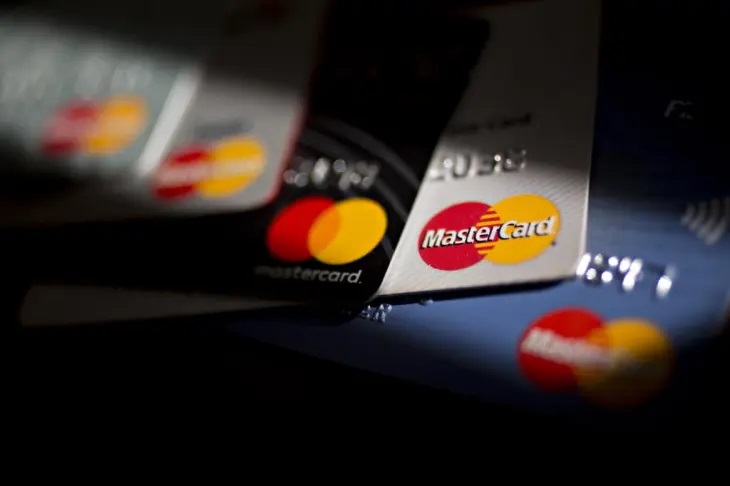
As part of Mastercard Principle membership and the first fintech company from Africa, Union54 acts as an “issuing bank” and can provide debit cards (physical and virtual). The startup plays an essential role in the growth of the African fintech space with its card issuing product. But in May, Union54 began experiencing some operational issues with its product, resulting in the temporary suspension of its Bank Identification Number (BIN), the first four to six numbers on a payment card that identifies a card issuer.

According to a memo sent to its clients in May and obtained by TechCrunch, Union54 said though it resolved several of these issues, some remained. And as the company sought solutions, it became apparent that there were “some fundamental blockers to Union54 operating a long-term, profitable card issuing product, mainly due to our partner’s commercial inflexibility and inability to move quickly to implement technical solutions that are required to solve the operational issues we have experienced.”

Sources told TechCrunch that the main issue Union54 had been experiencing since its launch was chargeback fraud. Here, cardholders claim to have not initiated purchases before proceeding to dispute a transaction, placing a complaint and contacting the issuing bank—in this case, Union54—for a chargeback. If Union54 feels the claim is valid, it will remove the transaction amount from the merchant’s account and return it to the cardholder.

A follow-up memo allegedly sent by Union54 confirms what sources and local tech publication, Benjamindada.com, have said about these chargebacks. “Ever since we launched, there’s been a consistent increase in fraud cases emanating from our Bank Issuing Number (BIN),” the memo read. “During one of our conversations with Mastercard, they declared that never in their history has there been such frequent instances or cases of card fraud from this region.”

Upon further investigation, Union54 discovered that cardholders were increasingly attempting to defraud merchants by requesting chargebacks after their orders had been fulfilled. Many cardholders also tried to make purchases with empty cards, said Union54. Another plausible scenario, which Union54 didn’t state, could be the use of the cards by fraudsters to perform transactions without the knowledge of the original cardholders.

Merchants—who bear the brunt of chargeback fees that potentially affect their bottom line—can contest cardholders’ claims and ask the issuing bank to reverse the chargeback. And that’s what international merchants such as Facebook, Google and AliExpress did; in addition, they reported Union54’s BIN to Mastercard, which resulted in its number’s suspension.

At first, Union54 decided to stop authorizing card payments on June 16 and cease operations by June 30. The two-week timeframe was to “allow for the defunding of cards and refunds of remaining float deposits, as well as for our clients to access any user, card or transaction data required for your ongoing operations.” In the first memo, Union54 said its API would no longer be available from July 1. However, the fintech pushed the shutdown to July 18 as Mastercard, which requires merchants to maintain a chargeback rate of less than 1.5% of transactions, gave Union54, which also doubles as an acquirer, an ultimatum to improve its processes.

In the follow-up memo, Union54 explained how the company could not redeem the situation despite the extension. Union54’s efforts “weren’t deemed enough by Mastercard” as clients’ virtual dollar cards failed more frequently, disrupting customer experiences, an excerpt from the memo read.

Union54 hopes to get a resolution soon, though. CEO Perseus Mlambo sent a tweet today saying fintech is undergoing a compliance audit that shouldn’t take more than two weeks. However, in the memo, fintech said it’d be working with its partners, merchants and Mastercard to get its cards service back up within the next 6-8 weeks. TechCrunch reached out to Union54 for comments but didn’t get any at the time of publication.

Some industry analysts say this event calls for better KYC/AML compliance checks in the card issuing space as inconsistent due diligence for cardholder chargeback claims could invoke more fraudulent activities.

“It [The news] didn’t come as a shock for those playing in compliance because of the huge fraudulent activities in the space. Suppose a card scheme raises red flags that a region is having a lot of fraudulent activities. In that case, you as a provider will probably want to withdraw from the markets,” said Lanre Ogungbe, co-founder of Identitypass, a Nigerian digital compliance and security company that delivers seamless identity verification solutions to African businesses.

“KYC is not the A-Z of security checks, but what it does is to backtrack and trace a fraudulent transaction. And for many fintechs in the region, we seem to place more emphasis on aesthetics rather than the compliance and security side of things.” The report also comes at a period where various fraud allegations regarding executives and companies in the region have rocked the fintech space within the past few weeks.

In the past couple of years, virtual dollar debit cards provided by fintechs have proved a lifeline to many Africans and replaced local alternatives from banks whose cards have transaction limits. With these virtual cards, customers (individuals and businesses) can make international online transactions on platforms such as Alibaba, Google, Amazon, Netflix and Spotify. So it’s not hard to see why these customers—who have had to rely on these virtual cards built on Union54’s backend—expressed their displeasure on social media following the news. Many have begun searching for alternative options, which include Sudo Africa, another card issuing platform and other fintechs which claim to be unaffected by Union54’s downtime (as a result of using another provider), such as Chipper Cash, Mono and Bitmama.

US Needs $3bn More to Remove Huawei, ZTE Equipment from Its Networks

0

Two years after former US President Donald Trump signed the Secure and Trusted Communication Network Act, mandating US telecoms to replace any suspect foreign network equipment from their networks, resulting in the ouster of Chinese telecom giants, Huawei and ZTE, the telecom regulator is battling to contain the cost.

The Federal Communications Commission (FCC) told Congress on Friday that it needs additional $3 billion to fund the removal of Huawei and ZTE telecom equipment from the US, Reuters reported.

In 2020 when the Secure and Trusted Communication Network Act came into effect, the FCC had estimated that it will cost $1.9 billion to remove the equipment. The demand for additional $3 billion brings the total cost to $4.9 billion, which, given the circumstance, is not clear would be enough.

“To fund all reasonable and supported cost estimates…, the Reimbursement Program will require $4.98 billion, reflecting a current shortfall of $3.08 billion,” Jessica Rosenworcel, the chairwoman of the Federal Communications Commission, said Friday in a letter to Senator Maria Cantwell, who heads the Committee on Commerce, Science, and Transportation.

Since Congress only appropriated $1.9 billion to fund the removal process, companies would be reimbursed for only about 40% of the costs, she added.

The Congress had in 2019, when it passed the bill, promised to reimburse telecoms the cost of removing Huawei and ZTE infrastructure.

“Absent an additional appropriation, the Commission will apply the prioritization scheme Congress specified,” Rosenworcel said in the letter, adding that the Commission would begin processing reimbursement claims “as allocations are issued in the coming days.”

The Commission said it received 181 applications at the start of 2022.

Companies are not required to complete the work until after they receive reimbursement and the FCC only has enough to reimburse companies about 40 percent of their costs without additional funding from Congress.

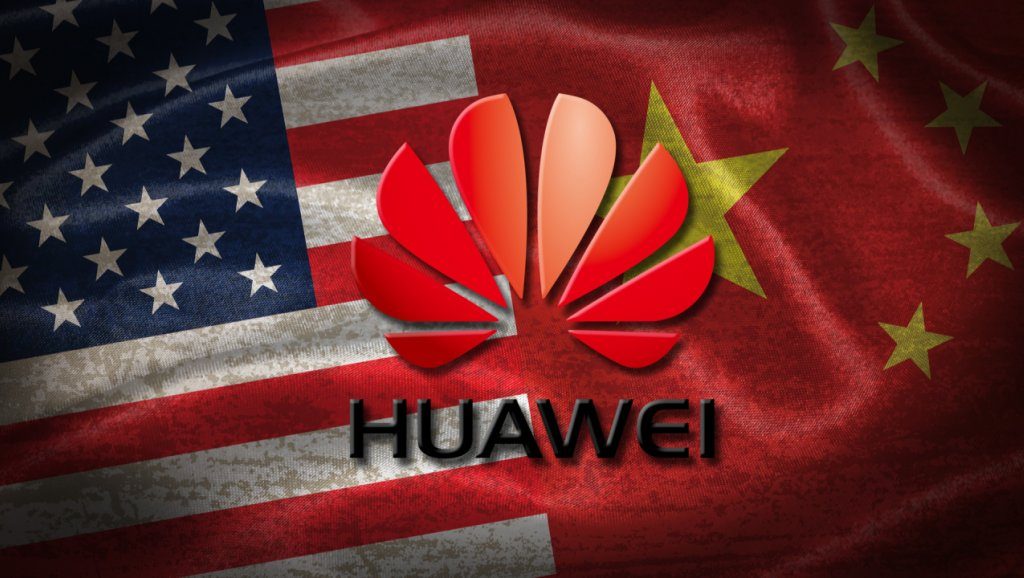
Washington had designated Huawei and ZTE national security risks and sought to unbundle their telecom equipment from US’ 5G infrastructure deployment. The decision eliminates any chance of the Chinese Communist Party using the companies as spy tools in the United States.

But it has come at a cost that has more than doubled in just two years, and may likely see further increase before the job is fully done.

Aero Contractors Suspends Operations; We’re Offering 2.5% Discount on Camel from Lagos to Abuja

4
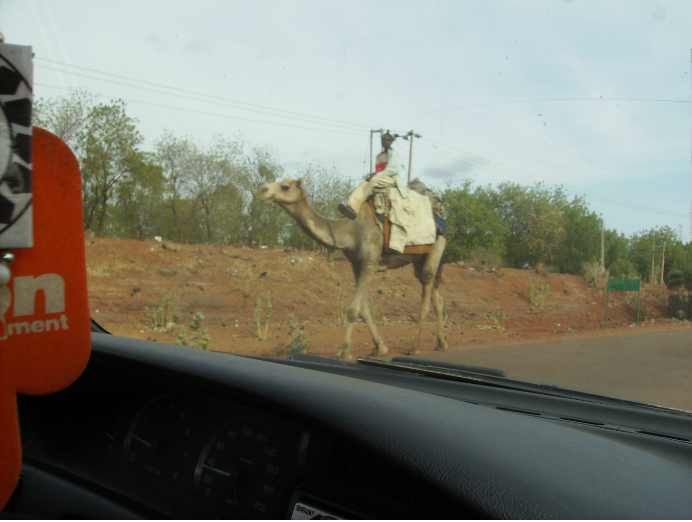
Camel in Sokoto. Sokoto is a hospitable place

The first time I boarded a plane was a trip from Lagos to Air Force base in Port Harcourt. My head of department, Prof SOE Ogbogu,  had sent a note to me to go in person, and decline an offer in Schlumberger Port Harcourt.  The oil industry giant had offered a job out of FUTO but I wanted to work in Victoria Island to make it easier to sneak out for a US visa interview. I had reasoned that staying in PHC would complicate that process but if in VI, it would be a lot easier. So, I left a job which was to pay better and chose the banking world.

For that first flight, the company was Aero Contractors. Today, they have suspended operations in Nigeria. I did three internships in NNPC; Aero Contractors was the deal for them to travel to Escravos. The reason for suspension? “The past few months have been very challenging for the Aviation industry and the airline operators in particular. With the  high cost of maintenance, skyrocketing fuel prices, inflation, and forex scarcity resulting in high foreign exchange rates.” Ibom Air has also parked its aircrafts.

So, what are the options now? I have an answer: camel. I know many people in Sokoto who can help. If you drive from Usman Danfodio University main gate to the campus, you will see many camels there. Those men are available for business: they can help “camel” you from Lagos to PHC now that airlines are packing up. We’re giving a 2.5% discount on all camel trips. Nigeria, a nation in motion!

(The photo: I took this picture myself on my way to Usman Danfodio University to help set up the electronics lab. It was part of life those days we traveled around Nigeria with  no fear of evil men. Not anymore.)

“This does not in any way affect the Maintenance activities of the Approved Maintenance Organisation (AMO) otherwise known as AeroMRO, the Approved Training Organisation (ATO) also known as Aero Training School, the Helicopter and Charter Services operations.

“This decision was carefully considered and taken due to the fact that most of our aircraft are currently undergoing maintenance, resulting in our inability to offer a seamless and efficient service to our esteemed customers.

“We are working to bring these aircraft back to service in the next few weeks, so we can continue to offer our passengers the safe, efficient, and reliable services that Aero Contractors is known for, which is the hallmark of Aero Contractors Company of Nig. Ltd.

“The past few months have been very challenging for the aviation industry and the airline operators in particular.

“With the high cost of maintenance, skyrocketing fuel prices, inflation, and forex scarcity resulting in high foreign exchange rates. These are amongst the major components of airline operations.

“In the meantime, we are working assiduously to return to service as quickly as possible, and do assure our esteemed customers and stakeholders of our determination, that our short absence will not create any major void in the market, as we are coordinating with our business partners to ensure minimum discomfort to ticket holders.

“As members of Spring Alliance (a commercial alliance with member airlines providing mutual support in the area of operations), we are liaising with our partner airlines to minimise the impact on our esteemed customers.

“Our customer service team will be working to help affected esteemed customers reach their destinations.

“We sincerely apologise for any inconvenience caused to our esteemed customers and promise to return to service as soon as possible.

“We thank you in advance for your cooperation and understanding at this time.”

Comment on Social Media Feed

Comment: I’m not happy with the way you have put up this piece. It tends to portray that you are happy with the look of things. Please, kindly know that a lot of people follow you and are always ready to read your recommendations for our political problems. We are saddened with the situation of the Country and the least we can expect is for a respectable Nigerian Professor to make jest of our situation.

My Response; “I am not happy” that our aircrafts are packing up in Nigeria. But bringing new styles, when writing, helps engage readers. Read it again, no one is happy that airlines are used for decorations in airports. Pick your English Literature secondary school book, and re-study figures of speech and communicating with sarcasm.