DD
MM
YYYY

PAGES

DD
MM
YYYY

spot_img

PAGES

Home Blog Page 5035

U.S Governors Vow To Boost Computer Science Education At Schools

0

Governors from all 50 states in the United States have committed to funding a computer science curriculum at more schools after hundreds of executives such as the likes of Jeff Bezos and Bill Gates sent a letter to them urging them to take action.

The effort, announced on July 14 at the National Governors Association, was organized by the state-based non-profit code.org, which aims to provide computer science to students and help them seek careers in technology.

The executives in a letter, therefore, urged the governors to update the school curriculum in each state to give students in every school access to computer science education. According to Microsoft founder Bill Gates, he revealed how computer science was pivotal to his success in life after being introduced to it at an early age.

In his words, “When I was 13, computer science changed the course of my life. I was really lucky to have access to a computer that early on. I hope this initiative will give every student the same opportunity”.

It is interesting to note that Governors in the U.S are already walking the talk, as they already have signed the ‘compact to expand k-12 computer science Education’ committing to expanding access to computer science education through various strategies including funding and increasing participation from traditionally underserved populations.

Despite the fact that computer science learning opportunities are not universally accessible, they are increasing specifically with schools now including it in their curriculum. There is no disputing the fact that the world has significantly advanced as we are currently in the digital age, therefore there is a strong need for school students to learn computer skills at an early stage.

The computer science field has no doubt been described as one of the fastest growing and highest paying career paths in the world. With the evolving digital age, there is a strong need for students, regardless of whatever field, to have an avid knowledge in the usage of computers.

Currently, a lot of job openings with knowledge of computer science are growing in almost every industry, and such job openings are projected to grow at twice the rate of any job. To keep up with these latest career opportunities, young people need to be taught computer science in schools.

Despite the current digital age that the world has evolved into, I am still perplexed why only a few schools have included it in their curriculum with so many others still reluctant to do so. A close observation of most innovation in the world today, one will observe that such was driven by computer science.

A case study of Microsoft founder Bill Gates who attributed his success to being exposed to computer science courses at an early age. Imagine a lot of innovations the world would have witnessed if about 90% of schools in the world included computer science in their school curriculum.

One crucial factor in building capacity for computer science is to provide professional development and support for teachers who teach it. To effectively build these students on computer science courses, teachers must have an extensive knowledge and practice with computer science to properly engage these students.

Because a lot of teachers are only used to the basics and traditional instruction method which is not effective in today’s digital world. Students need to learn beyond the basics and delve into skills like coding, Web Designing, Software Developing, etc. In today’s world, having a beyond-basic knowledge of computers connects people to a grid of opportunities.

African Development Bank (AFDB) Coding For Employment Program Selects 500 Digital Ambassadors To Pilot The Program

0

The African Development Bank (AFDB) through its coding for employment program, has picked 500 change makers, 45% of whom are women, from four countries for the pilot digital ambassadors program.

These selected digital ambassadors will be put through a three-month course, in which they will be trained to acquire digital skills, such as software development, as well as soft skills, such as problem-solving, project management, and communication.

They will then lead a peer-to-peer training model that seeks to expand digital skills to more African youths, especially those in rural communities with limited internet connectivity.

In 2018, the bank in collaboration with the Rockefeller Foundation, Microsoft, and Facebook launched a coding for employment program. The program which was launched was aimed at preparing Africa’s youth for future jobs as well as equipping the next generation of young digital innovators from Africa by training them in demand-driven information and communications technology (ICT) as well as matching graduates directly with ICT employers.

This program was set up by the African Development Bank to equip youths in Africa with the necessary in-demand skills which will no doubt create a positive impact on the African workforce, thereby leading to the region’s economic transformation.

The coding for employment program which is at the center of AFDB jobs for Africa youths strategy, has predicted that by 2025, the program will equip about 50 million more youths with employable skills.

This will create about 25 million jobs in the ICT sector, agriculture, and other key industries across Africa. It is indeed highly commendable for the good work African Development Bank (AfDB) has been constantly doing towards equipping youths in Africa with on-demand skills.

Over the last 15 years, it might interest you to know that the African development bank has invested $1.64 billion in programs to prepare youths in Africa for technology, innovation, and careers in science.

As the world evolves into a fourth industrial revolution, the demand for digitization in almost every sector is on the rise. These digital innovations have been pivotal to solving some countries’ myriad problems as well as generating new job opportunities.

Unfortunately, in Africa, the digital gap is very wide which poses a serious challenge to the youths in the region from securing on-demand jobs which leaves the region underdeveloped.

This is why the African Development Bank through its constant skill acquisition program seeks to reduce the digital gap in Africa as well as equip the youth with relevant skills to also develop the region.

Through these skills, youths in Africa will become innovative by developing innovative solutions that will boost the economy of the region and also make it compete among developed regions.

With the high unemployment rate of youths in Africa, these programs will drastically reduce the number of unemployed people in the region.

It is pertinent to note that a highly skilled labor force in a thriving digital ecosystem will increase the ability of African countries to compete on a global scale, by attracting investments; promoting innovation in service delivery and value-addition to natural resources, as well as generating knowledge-intensive activities.

Rigging Alert as Nigeria Approves N400 billion for FarmerMoni, TraderMoni Months to Election

1

It is the largest and the most corrupt institutionalized distortion of democracy in the world. When they began it last time, I called the election for Buhari, months to the election. Now, the APC government is back. Yes, they were sleeping for 3 years and just months to the election, they have found N400 BILLION to share. OBIdient, ATIKUlated, etc disciples, it is going to get extremely harder now because by the time people see alerts, days to elections, common sense will go.

You may say – they can take the money and still vote for the right person. Do not bank on it. In my village, Ovim, Abia State, we had one of the finest men ever lived in that community – Dr ENC Ukpabi, the first indigenous students affairs dean in University of Nigeria Nsukka. He was exceedingly generous and a pillar in the community. His doors were never closed. He returned from America and made his community the united states.

But he also caused problems for the reverends: during catechism, required before baptism in the Church, people were expected to pass an exam. When the Reverend asked them, “Who is your savior?” Many men and women said “Dr Ukpabi”. They failed (forgot the teaching in the catechism that Jesus is the Saviour). Try again, the same result. Simply, many villagers could not understand who could be better than Dr Ukpabi. 

If APC credits many of our citizens with N30,000 days to the election, good luck debating that paradise has not come to the earth already. What a shame that we continue to score these own-goals on our democracy where the best should WIN fairly.

Tufiakwa that rigging credit alert is back.

As Election Nears, Nigeria Approves N400bn for TraderMoni, FarmerMoni, etc

As Election Nears, Nigeria Approves N400bn for TraderMoni, FarmerMoni, etc

0

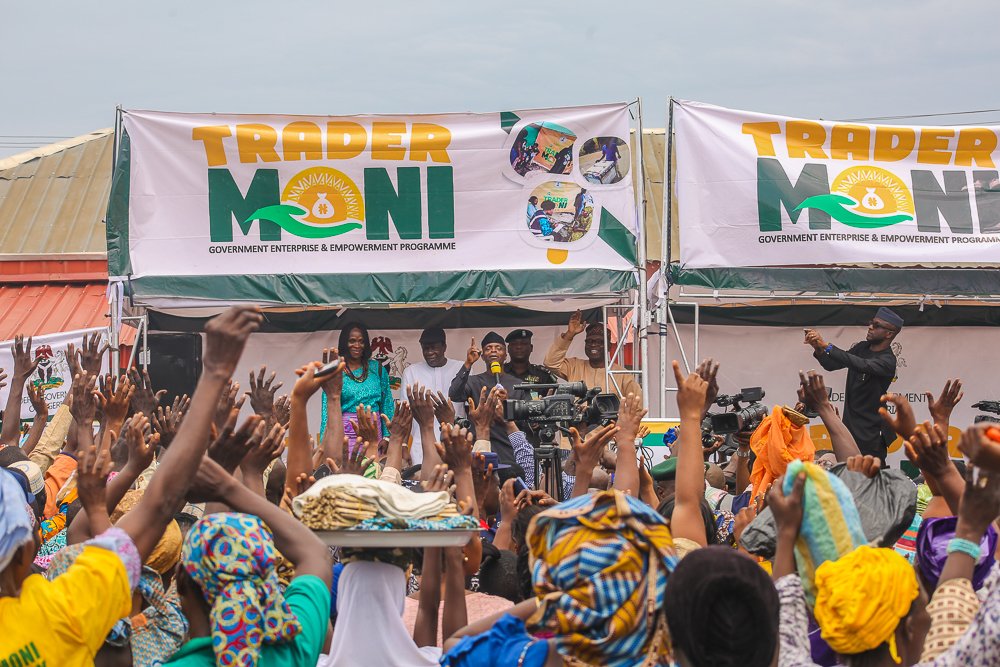
Once again, the Nigerian government is planning to commence its humanitarian programs across the country as the general elections draw near.

An approval for the disbursement of N400 billion under the National Poverty Reduction and Growth Strategy (NPRGS) for various poverty reductions schemes such as TraderMoni has been granted, NAN reports.

Per NAN, a member of the NPRGS, Governor Abdullahi Sule of Nasarawa, disclosed this to State House correspondents after a meeting of the National Steering Committee of NPRGS on Thursday at the Presidential Villa, Abuja.

President Muhammadu Buhari, had in 2021, inaugurated NPRGS to be chaired by Vice President Yemi Osinbajo.

Mr Sule said the meeting was to review the implementation of what was approved in the budget.

“It is a meeting of the steering committee of the Presidential Poverty and Growth Strategy.

“The last meeting we had, the fourth meeting, we were able to set up various working groups that were going to prepare the total budget that was required.

“So, they were able to do that and then we were also able to obtain the president’s approval.

“Based on the president’s approval and availability in the budget, this meeting that we had was actually just to go through the implementation of whatever has been approved, both in the budget and by the president.”

He said that the first highlight of the meeting was to commend the technical groups that had been able to put together their budget request.

The governor listed some of the programmes through which the Federal Government was implementing the NPRGS.

“Looking at what is available in the budget this year, which is roughly N400 billion, the Humanitarian Ministry is going to take N350 billion for the expansion of the various programmes like Government Enterprise and Empowerment Programme(GEEP), Conditional Cash Transfer, Farmer Money, Market Money and the rest of that.

“There is also another N50 billion that is going to be reserved for the various other programmes like in the Ministry of Agriculture for rural roads, electricity in terms of solar.

“Those are the various areas that we discussed,” he said.

President Muhammadu Buhari on June 22, 2021 inaugurated the committee tasked with driving the target of lifting 100 million Nigerians out of poverty in 10 years.

However, just as in the past, the timing of the program rings a bell. Close to the 2018 general elections, the Buhari administration began the TraderMoni initiative, a collateral-free loan of N5,000 and N10,000 given to petty traders and artisans.

The scheme, which fell under the National Social Investment Programme of the Federal Government, drew wide criticism with many, including international watchdogs, describing it as vote buying.

The chairman of Amnesty International, an anti-corruption organization, Awwal Rafsanjani, described it as a form of voter inducement. He noted that the initiative being no “part and parcel of the manifesto of the ruling party and being not in the Nigerian constitution,” was an “official use of public funds in the name of TraderMoni to actually induce voters.”

“It was not done three years ago. It was only started close to election time. So, the allegation by many Nigerians that this is clearly a case of vote buying using public funds goes contrary to our constitution and to having a free and fair election.

“That is why the Independent National Electoral Commission itself has seen this danger. The vote buying we are seeing has transformed to have more official recognition through the acts that unfortunately we are seeing performed by some of the agencies using public funds.

“This is despite the statement by the President that public funds will not be used for his re-election campaign. But this, unfortunately, is contrary to what Nigerians are seeing,” he said.

Besides vote-buying, another concern has been that the social intervention programs, which have been trailed with allegations of corruption, have done nothing to alleviate poverty in Nigeria.

Last month, The African Network for Economic and Environment Justice, ANEEJ, revealed that the $322.5 million stolen funds from former Military Head of State Gen Sani Abacha has been shared in four years (between 2018-2022) to 1.9 million poor and vulnerable Nigerians.

Unfortunately, the disbursed fund has done nothing to ameliorate the economic situation in the country, as more Nigerians have fallen into abject poverty within this period.

Advocates of good governance have urged the federal government to channel the fund to projects that will bring value to Nigerians. The N400 billion earmarked for the social intervention program is said to be more than enough to send university students, who have been at home for over four months now due to the strike action of academic staff union ASUU, back to school.

IATA’s Trapped $450m: Nigerian Travel Agencies Urge CBN, FG to Repatriate Fund

0

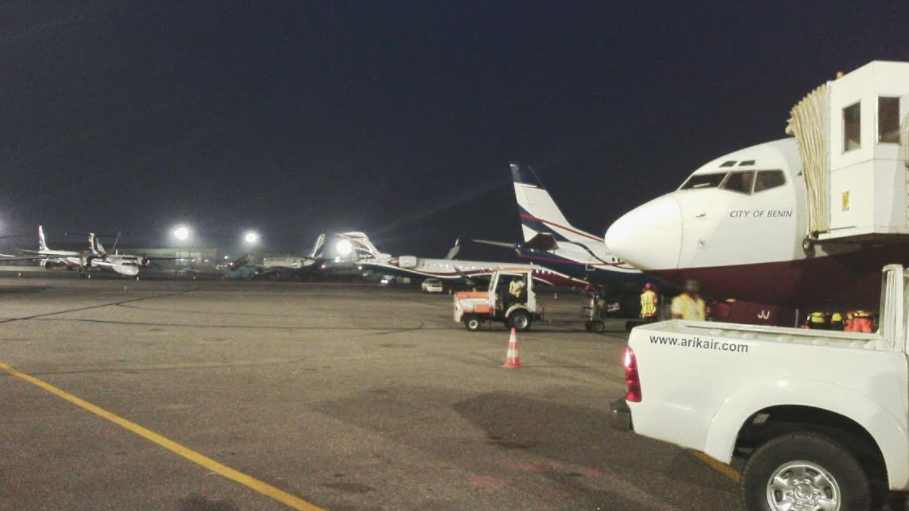
Nigeria’s forex crisis has created a huge challenge for its travel industry that stakeholders are worried it would undermine the growth of the aviation sector in the long term.

The International Air Transport Association (IATA) had last month, appealed to Nigerian government to release $450 million belonging to international carriers operating in the country, which has been withheld for long.

The Central Bank of Nigeria is understood to be holding on to the money due to tight forex policies it has put in place to wedge the naira from free-falling.

However, the situation is creating an anti-bilateral posture that stakeholders in the Nigerian travel industry are appealing to the federal government to address before it jeopardizes future investment opportunities for the country.

The National Association of Nigeria Travel Agencies, NANTA, has urged the Federal Government and the CBN to intervene in releasing the trapped fund, which stood at over $450 million as of May 2022.

In a statement released to the media, NANTA President, Mrs. Susan Akporiaye, said that NANTA as a strategic partner in the downstream aviation sector had over the years, appealed to the Federal Government through the CBN and the Aviation Ministry to consider the possibility of reducing the humongous trapped funds.

She said the foreign airlines may resort to taking measures that will hike airfare for Nigerian travelers.

“The current situation presents a real threat to the industry and the continuity of our business as travel professionals bearing in mind the potential job losses and the attendant national economic losses just as the country gradually comes out of the pandemic era.

“The foreign airlines may resort to taking out lower inventory in the system resulting in high cost of tickets from the Nigerian market. As a result of the situation the foreign airlines find themselves in, a six-hour trip to London may attract a fare rate of about $2,000 or more.

“Foreign airlines may also encourage tickets sold outside the country to flood Nigeria, thereby affecting the survival of Nigerian travel agents and consequent loss of taxes and levies from such transactions,” she said.

The situation was exposed at the just-concluded 78th Annual General Meeting of IATA in Doha, Qatar, by the Vice President of the organization for Africa and the Middle East, Kamal Al Awadhi, who described talks to repatriate funds as a “hectic ride.”

Mrs. Akporiaye said the trapped fund is capable of reversing the excellent representation that Nigerians have made in the global travel industry as it paints the wrong narrative.

“We are by this outing once again, appealing to the Central Bank of Nigeria, the Ministry of Aviation and the office of the Vice-President to speedily intervene to bring down the amount of trapped funds to help resolve the operations of these airlines

The current development does not show Nigeria as a good business destination for an investor.

“With this situation, a bleak future more than the effects of the pandemic, awaits Nigeria travel trade operators if nothing concrete and effectual is done urgently to address this disturbing situation by the CBN.”