DD
MM
YYYY

PAGES

DD
MM
YYYY

spot_img

PAGES

Home Blog Page 5036

Amid Intense Scrutiny from US Govt., TikTok’s Chief Security Officer Steps Down

0

TikTok’s Global Chief Security Officer Roland Cloutier is stepping down amid intense scrutiny from the US authorities, effective September 2, the company has announced.

The short-form video app said that in view of the recent data security challenge, it’s taking more steps to prioritize the security and privacy of the company’s global community.

“With our recent announcement about data management changes in the US, it’s time for me to transition from my role as Global Chief Security Officer into a strategic advisory role focusing on the business impact of security and trust programs, working directly with Shou, Dingkun and other senior leaders,” Cloutier said in a statement.

The shakeup was prompted by a report made last month by BuzzFeed which revealed that some TikTok’s employees in China have access to US users’ data.

TikTok’s US operations have been placed under the radar since former President Donald attempted to ban it over concern that it is being used by Beijing as a back door to the private data of Americans.

Though the company has made a lot of changes to its security architecture, including establishing relationships with top public, private, and governmental organizations – like the National Cybersecurity Alliance, Identity Theft Awareness Center, Global Cyber Alliance, Europol, and INTERPOL, there is still a lot of gap to be filled.

This is because its operations are tied to ByteDance, its parent company headquartered in Beijing, China. TikTok acknowledged in a blog statement that staying ahead of next-generation cyberthreats requires continuously strengthening the security of its platform. The situation has been exacerbated by the report that its US data is accessible in China, forcing changes also in the company’s roles.

“Part of our evolving approach has been to minimize concerns about the security of user data in the US, including the creation of a new department to manage US user data for TikTok. This is an important investment in our data protection practices, and it also changes the scope of the Global Chief Security Officer (CSO) role,” TikTok said in a statement.

“With this in mind, Roland has decided to step back from his day-to-day operations as Global CSO, effective September 2nd. He will take on the role of strategic advisor to the company, continuing to work together with senior leadership to help us focus on the business impact of our security and trust programs,’ it added.

US lawmakers have increased their warning about TiKTok’s operations, prompting an FCC Commissioner to ask Google and Apple to remove the app from their app stores.

In response to the BuzzFeed report, TikTok has outlined some steps it is taking to address the security concerns. They include: Establishing a new department with US-based leadership, to solely manage US user data for TikTok, routing 100% of US user traffic to Oracle Cloud Infrastructure, and working with Oracle on several measures as part of its commercial relationship to better safeguard the app, systems, and the security of US user data.

Reminder – “Satellite Internet In Nigeria, Africa: Business and Career Opportunities” Course is Today

0

Tekedia Mini-MBA added a new course – “Satellite Internet In Nigeria, Africa: Business and Career Opportunities” when the Nigerian government approved Elon Musk’s SpaceX Starlink application to operate in Nigeria. We do believe that massive opportunities await. That happened when the terrestrial players like MTN, Glo, etc first came. Yes, jobs came, trading opportunities opened for gadgets, etc. The emerging satellite era offers something similar.

As a great school that educates on the current and the future, we have a course on that possibility. The Live session will be today at 7pm WAT. The pre-recorded courses are already in the Board. You understand everything about this redesign.

Our faculty will be Joseph U. Ibeh of Northern Sky Research, USA. He is a respected satellite internet business analyst. Texas-based BeepTool which has a SpaceX license will also teach another segment, focusing on the value chain. Zoom link in the Board.

To register for the next edition of Tekedia Institute Mini-MBA, go here  . We’re the best; join us.

Congratulations UBA and Chairman Elumelu for Launching UBA Dubai

0

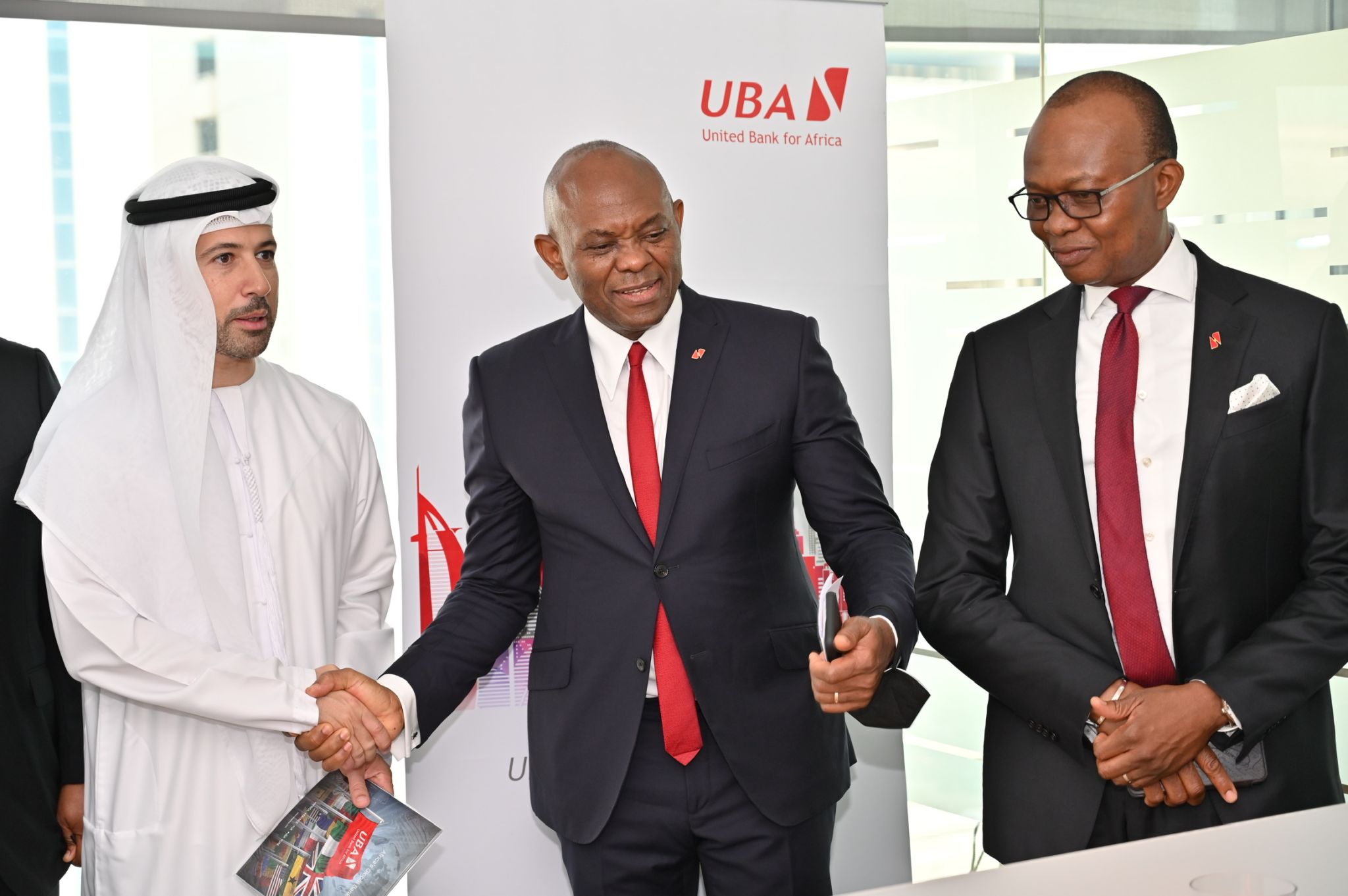
Join me to congratulate the BIG BOSS, Tony Elumelu, and the whole UBA nation for launching UBA Group Dubai yesterday.  There is something amazing about UBA: it #moves. I thank Chairman for his uncommon vision on building a continent through Africapitalism, a philosophical and pragmatic framework that Africa will rise via entrepreneurial capitalism.

Some of us who are always privileged to be in the same room with him appreciate what it means to learn from a legend. He has mentored many. He has extended his hands many times to teach.

UBA – win more markets and territories. And thank you for your support. That Fasmicro Group is Africa’s only Intel Corp Authorized and Certified Partner would not have happened if not for UBA. As I thank Chairman Elumelu, I commend the operator – Kennedy Uzoka, Group Managing Director/CEO,  a friend and a business leader, and one of Africa’s finest bankers. He makes professors feel important! Lol.

UBA is “aku”; it is “uba” [wealth expansion]; and everyone can find his or her opportunity inside UBA. We bank with UBA!

Osun Voters Go to Poll with Less Than 10% Informed Campaign Issues from 5 Parties

0

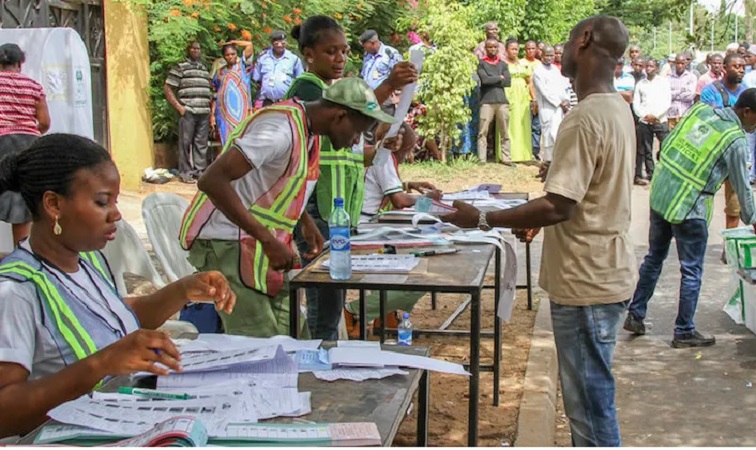
With less than 24 hours until the Osun 2022 governorship election, the non-governmental organization, Positive Agenda Nigeria, which has been observing political actors’ campaign activities since April, revealed that more than 1 million voters are anticipated at different polling places across the state, and they will choose their preferred candidate with less than 10% of informed campaign issues. This was one of the findings from the organization’s final weekly report on how parties, candidates, and supporters had interacted with the general public and prospective voters between April 6 and July 13, 2022.

The five political parties that engaged the electorate most frequently during the campaign period were the People Democratic Party, the All Progressives Congress, the Labour Party, Accord and the Social Democratic.

According to the report “A total of 737 traces of informed policy engagement were discovered. Less than 10% of the total was highly informed policy engagement. This indicates that parties, media handlers and supporters deployed moderately and slightly informed policy engagement metrics. According to our analysis, 38.80% of the total traces (n=737) were moderately informed policy engagement while 53.32% were slightly informed policy engagement. Further analysis of the levels of policy engagement across campaign issues and/or policies shows mixed results for others as a category. Parties and their supporters slightly and highly engaged potential electorate when discussing infrastructure, health, and workers’ welfare, salary and employment.”

“Out of all the political parties contesting tomorrow’s governorship election in the state, only two of them, the APC and the PDP, recorded the highest campaign messages across the five communication media types (Facebook, Twitter, Newspapers, Radio jingles and Campaign speeches) we monitored from day one to the 69th day of the monitoring exercise. Forty-two-point eighty percent (42.80%) went to the APC while the PDP took 43.10%. Accord, Labour Party and SDP shared the remaining percentage. One of the main implications of our findings this week is that the political parties, especially the two major parties, greatly believed in defending their candidates than the rate they defended them and their policies in weeks eight and nine. As they defended, they equally promised potential electorates what they would do better should they are voted for tomorrow.

This shows that the political parties understand that defenses and acclaims are two strong strategies that can help them persuade voters before tomorrow’s election— the closer the election, the more the strategies are deployed. Still, verbal attacks did not stop, and those attacks were more prominent on Facebook and Twitter than on the other three media types monitored. Like the previous two weeks, the parties were also confident of emerging victorious in tomorrow’s election, though they kept urging voters to vote for them. Aside from the canvassing, the parties, their supporters and the media team kept selling the competencies of their candidates to the potential electorate,” the report added.

The group recommends that the security agencies intensify their efforts in ensuring that perpetrators of violence do not go scot-free, especially now that physical political attacks have become constant in the state. “We also advise political actors in the state to place national peace and objective over their personal political goals and interests. Also, security agencies, corrupt practices and financial crimes control and management commissions should consider preparing strategic intelligence from research-based results like this towards addressing vote-buying and selling effectively before and during the poll.”

The full report is available here for download.

Nigeria Listed Among Top 10 Countries With Worst Inflation Rate By World Bank

0

Inflation in economic terms refers to the rate at which the general prices of goods and services rise incessantly in a given country. As inflation continues to dominate the global economy, global inflationary pressures have increased in Q2 2022, following the impact of the Russian-Ukraine war.

The world bank recently published a list of the top 10 countries with the worst inflation rate, with Nigeria occupying the 8th position with an annual inflation rate of 16.95%. The list was topped by the Republic of Sudan, having an inflation rate of 382.82%.

Check out the list of Top 10 countries with the worst inflation rate published by the World Bank

1.) Sudan – 382.82%

  • The Republic of Sudan recorded the worst inflation rate in the world in 2021 with 382.82%, a multiple of the 150.32% recorded in the previous year.
  • Sudan’s inflation rate has decreased to 220.7% in April 2022 from 263.2% recorded in March 2022.

2.) Lebanon – 154.76%

  • Lebanon’s inflation rate almost doubled to 154.8% in 2021 from 84.86% recorded in 2020.
  • Lebanon’s annual inflation rate increased to a three-month high of 211.43% in May 2022 from April’s five-month low of 206.24%, pointing to the highest level since February,

3.) Zimbabwe – 98.55%

  • Zimbabwe’s inflation rate trickled down to 98.55% from 557.2% recorded in the previous year.
  • It is worth noting that Zimbabwe’s inflation rate increased to 191.6% in June 2020, to its highest rate in over one year.

4.)Suriname – 59.11%

  • Suriname, a small country on the north-eastern coast of South America, had Its inflation rate jump significantly to 59.11% in 2021 from 34.89% recorded in 2020.
  • On a positive note, the inflation rate in Suriname decreased to 59.8% in April 2022 from 62.2%recorded in the previous month.

5.) Ethiopia – 26.83%

  • Ethiopia’s annual inflation rate rose to 26.84% in 2021 from 20.36% recorded in the preceding year.
  • According to AfDB, the GDP growth of Ethiopia is projected to fall to 4.8% in 2022 but pick up to 5.7% in 2023, driven by industry and by private consumption and investment.
  • The annual inflation rate in Ethiopia eased for the first time in four months to 34% in June of 2022, from 37.7% recorded in the previous month.

6.) Zambia – 22.02%

  • Zambia recorded an inflation rate of 22.02% in 2021, a significant increase compared to 15.73% recorded in the previous year.
  • Meanwhile, Zambia’s annual inflation rate decelerated for the 11th straight month to 9.7% in June of 2022, from 10.2% in the previous month.

7.) Turkey – 19.59%

  • Turkey saw its inflation rate climb to 19.59% in 2021 from 12.28% recorded in 2020.
  • Meanwhile, the inflation rate of Turkey accelerated for the 13th consecutive month to 78.62% in June of 2022, the highest since September 1998.

8.) Nigeria – 16.95%

  • Nigeria’s inflation rate increased to 16.95% in 2021, from 13.25% recorded in the previous year. Nigeria is the most populous country on the African continent and the largest economy on the continent.
  • Nigeria’s inflation rate accelerated to 17.71% in May 2022 from 16.82% recorded in the previous month. The National Bureau of Statistics (NBS) is set to release the inflation figures for June 2022 on Friday, 15th July 2022.

9.) Haiti – 16.84%

  • Its annual inflation rate stood at 16.84% in 2021, a significant decline compared to 22.79% recorded in the previous year.
  • Although Haiti’s economy was contracting and facing significant fiscal imbalances before the COVID-19 pandemic, its impacts triggered an even greater economic downturn. In 2020, GDP contracted 3.3% and is estimated to have contracted by 1.8% in 2021.
  • Haiti’s inflation rate climbed further in February 2022 to 25.17%, from 23.95% recorded in January.

10.)  Guinea – 12.59%

  • The inflation rate of Guinea rose to 12.59% in 2021, from 10.6% recorded in the previous year. This is also the highest inflation rate recorded by the country since 2012 when its inflation rate topped 15.2%.
  • Meanwhile, recent data shows that Guinea’s inflation rate dropped to 10.99% in April 2022.

From the list above, it is obvious that the African region remains the worst hit, with six of them occupying the world bank list of countries with the worst inflation rate. According to the world bank, the global inflation rate, measured by the consumer price index rose to 3.42% in 2021 from 1.92% recorded in the previous year, hitting the highest level in nine years.

Recall that earlier this month, the world bank stated that the federal government of Nigeria’s response to inflation is inadequate as the country continues to suffers double-digit inflation.

It disclosed that Nigeria’s inflation rate is pushing 7 million Nigerians into poverty, food insecurity, and fueling criminality in the country. The World Bank added that the number of poor Nigerians is projected to hit 95.1 million in 2022, warning that many non-poor Nigerians were only one small shock away from falling into poverty.

It also cited negligence on the part of the Nigerian government, stating that despite the inflation shock pushing millions of Nigerians into poverty, the government continues to put a lackluster attitude without any concerted action towards curbing the inflation.

Although the Central Bank of Nigeria has taken a step to unify the official exchange rate, unfortunately, the exchange rate is not yet reflective of the market forces. The world bank, therefore, urged the CBN to aim for greater flexibility by re-establishing a dollar inter-bank market, also allowing banks to trade currency on their behalf to increase liquidity and move towards a single rate.

It warned that if serious measures are not put in place to curb the inflation rate, Nigeria might have one of the highest inflation rates globally. As inflation continues to ravage the global economy, global inflation has been forecasted to reach 7.9% in 2022, and 5.0% in 2023.

Countries with greater dependency have been predicted to feel higher inflationary effects in 2022. Russia’s invasion of Ukraine has been attributed as the main factor contributing to higher inflammatory pressures.

Higher volatility in commodities, Transportation problems, and supply disruptions have no doubt disrupted global supply chains which also inflated input prices.