DD
MM
YYYY

PAGES

DD
MM
YYYY

spot_img

PAGES

Home Blog Page 5050

Nigeria And The EU Partner For Innovative Modern Agriculture

0

The European Union is investing €1.3 billion in the Nigerian agricultural sector. This was disclosed in Lagos by the head of the European Union Delegation to Nigeria and the Economic Community Of West African States (ECOWAS), ambassador Isamuela Isopi, during the official launch of team Europe.

The launch was disclosed to be part of the activities that marked the 8th edition of EU-Nigeria Business Forum that was held in Lagos between June 30 and July 1st, 2022, with the theme ‘Nigeria and the New Economy’.

The TEI- Green economy would put forward innovative, modern solutions to established sectors like agriculture as a new growth engine. According to ambassador Isamuela Isopi, she disclosed that the launch of the TEI-Green economy will bring together projects that would create jobs for unemployed youths and accelerate economic growth in the country.

In her words, “We launch the TEI-Green Economy, which brings together projects and measures of access to finance, promoted and funded by the EU, the EU member states and EU Development finance institution with the objective to achieve low carbon, resource-efficient and climate-resilient development that would create jobs for the youth and accelerate economic growth through the development of climate-smart agriculture, as well as the circular digital economy”. 

The aim of this objective is built on three (3) pillars, which are, the expansion of renewable smart energy, the development of climate-smart agriculture, and the sustainable transformation of Agri-SMEs in selected value chains.

Through the implementation of the TEI-Green economy, it is expected to yield the emergence of new, and existing growth in Agribusiness to achieve improved growth in production and exportation, as well as the improvement of smallholder livelihood through capacity building and investments.

The TEI-Green economy is also expected to reduce the loss of livestock and crop, as well as the improvement of food security. Indeed this partnership is loaded with so many benefits. Looking at the list of development that the TEI-Green economy will bring in the Agricultural sector, it will no doubt positively impact Nigeria’s economy.

Despite the fact that the agricultural sector in Nigeria has received few fundings from the government of Nigeria, it is still faced with a myriad of problems. With the Russian-Ukraine war that has led to severe famine in most countries in the African region, which is the worst hit, African countries need to revamp their agricultural sector so that they can start producing their food and quit the heavy reliance on foreign countries for food aid.

In Nigeria, the country has been ravaged by heavy reliance on the importation of food commodities which is affecting the economy. Hopefully, this partnership with the EU will improve the production scale of Agricultural commodities in the country as well as ensure that there is food security.

Also, looking at the high percentage of unemployed youths, the project will enhance the employability of Nigerian youth and women. This TEI program has been disclosed to run till 2027, hopefully before it elapses, a lot of transformation  would have happened in the agricultural sector.

The EU, having observed Nigeria, identified agriculture as one of the backbone of the Nigerian economy, which was revealed to be providing the main source of livelihood for most Nigerians and contributing about 22 percent to the nominal GDP of the country.

Unfortunately, the country continues to rely on oil with so much dependence on the mineral resource. A nation cannot grow without the diversification of its economy. The EU, therefore, disclosed that its reason to invest in the agricultural sector, is to diversify it as well as help Nigeria attain the SDGs and put the country on a sustainable development path.
Agile Leadership: How High-Performance CEOs Make Headways with Boldness

0

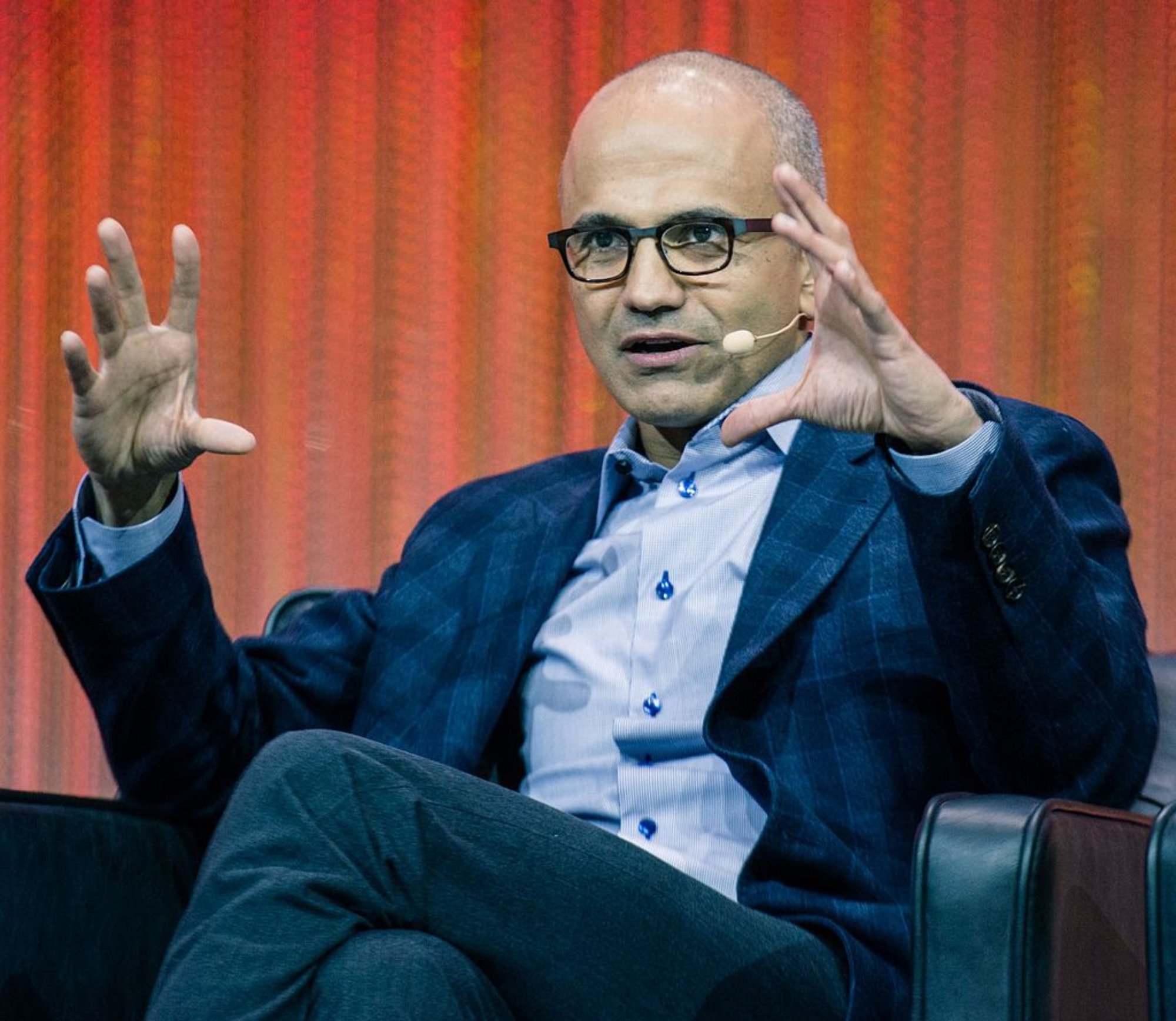
Have you ever considered escaping into the farthest east, seeking respite in the tiniest hole of the mount Himalayas? Such is usually the thought of most Chief Executive Officers hired to stir the wheels of companies when they are in their most lonely and clueless periods. Building a successful business is often heaped with too many frictions and uncertainties, yet CEOs are expected to navigate these bottlenecks and create category-king companies.

From circumventing the disruptive tendency of the invisible hands (demand and supply) to weathering the brute competition in their industries, CEOs also have to deal with several incidences of backstabbing from disgruntled and disloyal employees or colleagues or board members. All of these are not calling for the timid, apparently.

In the law 28 of his 48 laws of power, Robert Greene generalized the necessity of knowing how to enter actions with boldness. The American classic writer espoused his proposition with a somewhat radical thought from Niccolo Machiavelli, adapted from the latter’s book, the Prince, which superimposes impetuousness over cautiousness. According to Machiavelli, it is better to be impetuous than to be cautious because fortune is a woman that would rather be attracted to the impetuousness of the bold than the cautiousness of the cold and timid.

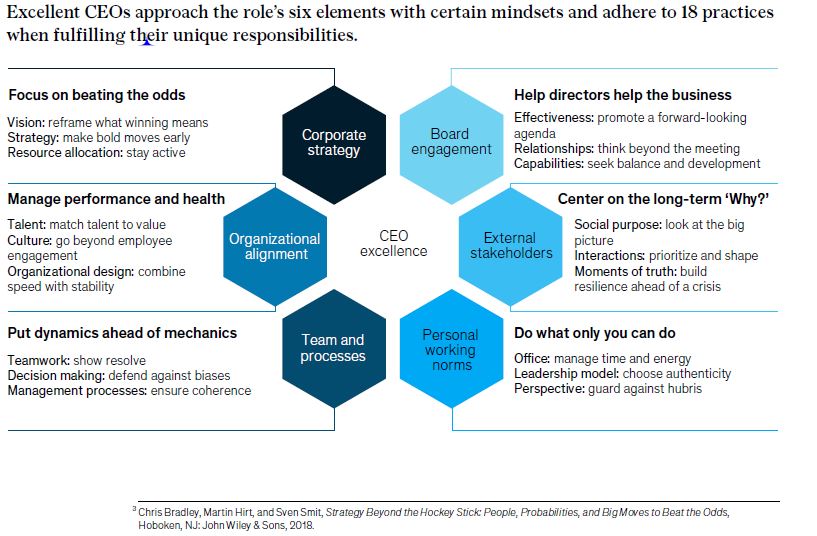
Observers of the law in the corporate ecosystem are often called agile leaders or ruthless pragmatists. Several reports reveal the ability to make quick and sound decisions as one of the strongest hallmarks of successful CEOs across industries and cultures. According to a 2019 McKinsey & Company’s report on the mindsets and practices of excellent CEOs, the CEO’s biggest move account for 45 percent of a company’s performance and 3 out of 5 newly appointed CEOs that live up to performance in their first 18 months share certain mindsets and practices that evokes agility.

McKinsey researchers, Carolyn Dewar, Martin Hirt and Scoff Keller, developed a model of CEOs excellence following extensive research into factors that constitute the mindsets and practices of successful CEOs. The research drew largely from Company’s proprietary database on CEO performance, containing 25 years worth of data on 7800 CEOs from 3500 public companies across 70 countries and 24 industries.

The model encompasses six core elements of an excellent CEO which include; setting corporate strategy; aligning the organisation; leading the top team; working with the board; being the face of the company to external stakeholders and managing personal resources like time and energy. These elements further decompose to 18 specific responsibilities that are exclusively characteristic of CEOs.

The first call to action for a CEO is to develop the corporate strategy, and this involves setting the company on a clear goal path and having a roadmap or grand plan to always refer to in the face of uncertainty. By this, one could think about the vision and mission statements, philosophies and objectives of the company. It is reported that most CEOs tend to focus on options with the firmest business case to reduce strategic uncertainties, however, this should not detract from their ability to make bold moves in strategic decisions, especially in cases of resource allocation, pragmatic mergers, acquisition, and divestitures, capital expenditure, productivity improvement and differentiation improvement.

According to the researchers, moving boldly means to shift at least 30 percent more than the industry median. This increases one’s chances of rising from the middle quintiles of economic profit to the top quintile. CEOs that make bold moves earlier in their tenure outperform those who move later and those who do so multiple times avoid common decline in performance. Furthermore, findings show that CEOs that are hired externally tend to make bold moves faster than those promoted to the position from within. This is likely because internally promoted CEOs are already accustomed to some set of structure and routines that may be impeding their tendencies to change.

Some leaders are often too tardy and hesitant in making strategic decisions even with the most basic and inevitable aspects of their businesses such as resource allocation. Report shows that one-third of companies reallocate a mere one percent of their capital from year to year. Companies that reallocate more than 50 percent of their capital expenditures among business units over ten years create 50 percent more values than companies that reallocate more slowly. Furthermore, it was found that the top 10 percent of high performing CEOs are 35 percent more likely to dramatically reallocate capital than average performers.

Another function of the CEO is Organisational alignment. This is the art of strategically positioning people to perform optimally towards achieving the overall goal. High performance CEOs think systematically about their people; which roles they play, what they can achieve and how the company should operate to improve people’s impact. However, it is instructive to note that strategic alignment extends from matching talents with values to making bold moves with pruning the organisation of irrelevances including helplessly redundant employees. Thus, the best CEOs are described as those that put equal rigor and discipline into achieving greatness on both strategy and talents.

Study shows that almost half of senior leaders say that their biggest regret is taking too long to move lesser performers out of important roles or out of the organization completely. Many CEOs also express worries about asking the same few overstretched individuals to take on extra assignments because they cannot trust the people who would otherwise perform them. Furthermore researchers agree that CEOs who tolerate poor performance and bad behaviours diminish their own influence.

‘’Agility is one of the most widely used and misunderstood management buzzwords’’ argue these researchers from the McKinsey & Company. Contrary to most people’s belief, agility is not just about quick decision and execution; it also involves accelerating at a deliberate, stable pace. These researchers suggest that companies that are both fast and stable are nearly three times more likely to rank in the top quartile of organizational health than companies that are fast but lack stable operating disciplines.

Thus, according to the researchers, excellent CEOs increase their companies agility by determining which features of their organisational design will be stable and unchanging and creating dynamic elements that adapt quickly to new challenges and opportunities, for example; temporary performance cells, flow-to-work staffing models, and minimum viable product iterations etc.

Autocheck Acquires CoinAfrique to Expand Operation into Francophone Africa

0

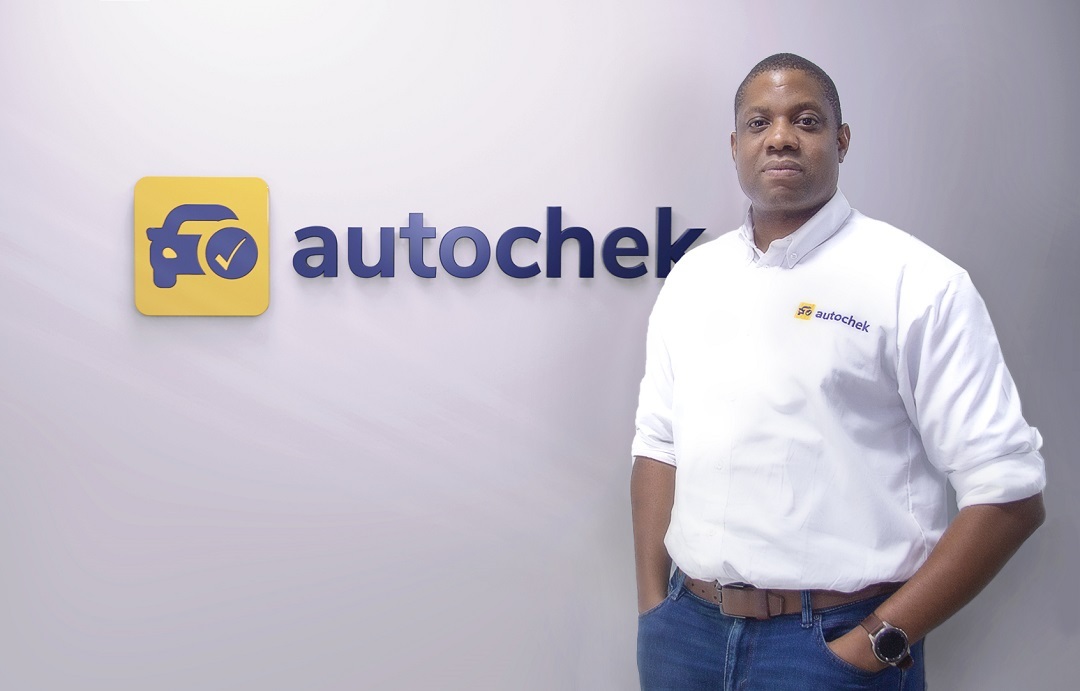
Autocheck, a Nigerian automotive e-commerce company, has acquired CoinAfrique to expand its operation into Francophone Africa as part of its aim to foray into new markets.

CoinAfrique runs a classified ad marketplace with a huge customer base that Autocheck said would boost its growth by helping to accelerate its car financing services across the Francophone sub-region. This is because the classified ad marketplace is said to attract 60,000 new ads and 1.5 million visits every month, with the car category accounting for 50% of the business transactions happening on the site.

The acquisition comes about two months after Autocheck purchased KIKAL Auto, a Moroccan auto marketplace that paved the way for the Nigerian startup’s expansion into North Africa.

Under the deal, CoinAfrique and Autocheck employees will team up to run the regional operations.

“We see many opportunities to unlock value for users across all the categories on our platform and to expand into new countries, and we are looking forward to leveraging Autochek’s market leading loans product and expertise to deliver more transformative experiences for our users,” said Mathias Papet, CoinAfrique co-founder in a statement.

CoinAfrique was cofounded in 2016 by Eric Genetre, and has recorded significant growth in French-speaking African countries. The company has become the leading platform when it comes to the classified marketplace for Francophone Africa, having 800,000 monthly active users from businesses and individuals who buy and sell vehicles, electronics, real estate and other goods.

On the other hand, Autochek is making waves in the rapidly growing automotive market in Africa. The continent’s market value is expected to hit $42 billion in the next five years, a 5.5% compound annual growth rate between 2022 and 2027.

The acquisition of CoinAfrique will consolidate Autocheck’s foothold in the Francophone region. The company already has presence in Ivory Coast, Nigeria, Ghana, Uganda and Morocco. Autocheck will now have the opportunity to launch its operation in the 12 countries where CoinAfrique is active.

Having strong partnerships, Autocheck boasts of a successful foray into the new markets. The startup said it has more than 1,500 dealers as partners, and works closely with more than 70 banks to offer financing to its customers in its current markets.

In addition, the company offers swift access to car credit as its loans are approved in about 48 hours.

Autocheck raised $13.1 million in a seed round in October last year, thanks to a number of investors willing to bet on its strategy to achieve growth. The investors include pan-African VC firms TLcom Capital, 4DX Ventures, Golden Palm Investments, Enza Capital, Lateral Capital, Norrsken22, Jam Fund, ASK Capital and Mobility 54 Investment SAS, the venture capital arm of Toyota Tsusho and CFAO Group.

Speaking on the acquisition, Etop Ikpe, CEO and co-founder of Autochek, said: “Matthias and Eric are pioneers of the classifieds model in Africa and they have built an outstanding platform with many significant partnerships with car dealers, fintech platforms, and other stakeholders in the Francophone automotive sector. They are joining the Autochek family with many years of business and infrastructure development experience across Europe and Africa and we are looking forward to leveraging their expertise to improve the automotive finance value proposition across the continent.”

The beating of Prophet Odumeje is condemned

0

I watched with so much horror how Prophet Chukwuemeka Ohanemere Odumeje, the self-acclaimed liquid metal, and Holy Ghost indabosky was thoroughly beaten by security forces while they are demolishing his church building in Onitsha, Anambra state today.

According to an eyewitness report, he (Odumeje) tried to resist the security forces working under the command of the Anambra state government from demolishing his church building and they all descended on him, thoroughly rough-handled him, brutalized him, and even tore his clothes while they are dragging him around like a common thief who stole in the village market square. 

The church, Mountain of Holy Ghost Intervention and Deliverance Ministry, belonging to Odumeje was demolished by members of the state task force set up by the Anambra state government charged to demolish buildings that have been marked up for demolition and the owners of the building refused to vacate the structure. 

In an official statement of the governor of Anambra state through his spokesperson Christian Aburime, on why the state government demolished the church building of Prophet Odumeje, the Governor stated that the prophet and owners of other buildings marked for demolition failed to comply with the government’s directive to remove the structures as they were all still in occupation of the buildings and making  use of it against the directives of the state government. 

The governor said the church building and other structures marked for demolition were illegal structures built along the waterway blocking the drainage systems. 

Hence, Following the expiration of the more than two months’ notice, beginning from April 2022, served on developers and building owners who built several illegal structures along the waterway in Fegge and environs within Onitsha, Anambra State Government has begun the demolition of such structures and unfortunately, the Mountain of Holy Ghost and Intervention Ministry, the church of Prophet Odumeje happened to be one of such buildings. 

While the government may have acted rightly and legally justified for demolishing the church building of Prophet Indaboski and other illegal structures, it must be stated categorically and unequivocally that the manner in which the state task force descended heavily with arms on an unarmed civilian is totally uncalled for and should be frowned upon and condemned by all and sundry and the state government should take active steps in punishing those security agents that was seen beating and dragging Odumeje as shown in the video circulating in social media spaces.

We can’t stop shouting that Nigeria’s security forces are one of the most unprofessional sets of individuals; power-drunk touts with arms and government backings, they lack discipline and indiscretion, and they are always eager to show off their use of force power on unarmed citizens.

Security agents should never be this uncivilized in a civilized society and this is a call to the Anambra state government to not encourage abuse of power and must publicly punish those security agents. It does not matter that they are working under the command of the state government, their mode of operations is totally condemned and should be publicly disassociated from the government of Anambra state. 

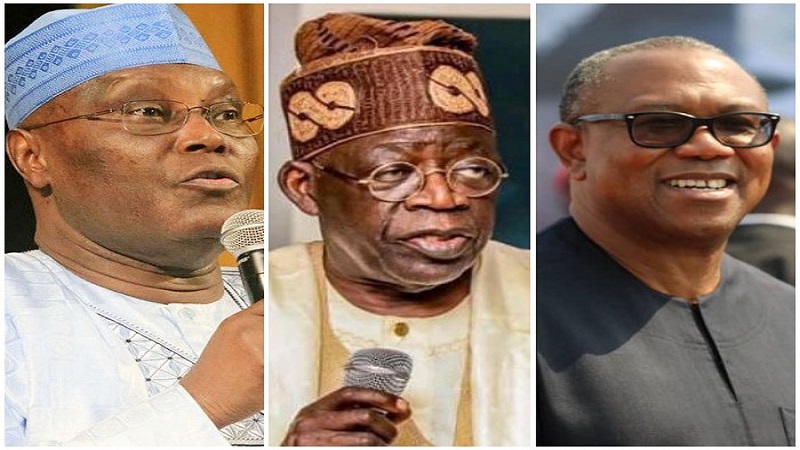
Waiting for Obi Atiku Tinubu Debates; Nigerian Press, Make Calendar

1

Nigerian Press: You guys have started it again. Yes, enough of the biographies. Now is the time for real debates. A president’s pseudo convoy was attacked. Criminals let criminals out in Kuje prison. The security architecture is gone, from east to west, north and south. So, the moment is now: who can reverse this trajectory? Nigerians want to know – and the Press must help us.

Organize debates, fix dates, invite them, and if any decides not to show up, do not bother: Nigerians will take note. Please schedule at least three debates with the first one coming in September.

I want to see DEBATES. While debates may not be a barometer for good governance, debates push leaders to think over issues they will encounter on Day 1. Also, if there are debates, and in the process of preparing for them, politicians can build a team which can get to work on Day 1.

People, I want to see these men go into the debate ring, and make their points before Nigerians. This is a very important election as this is the first time in the history of Nigeria when the government has ceased to exist in many areas. I mean, no person expects the government to do anything, from printing simple passports to protecting them in their farms.

To avoid a repeat of this current paralysis, we need to ask these men questions: what are your plans? They must not be classified secrets at this phase of this national competition. We’ve read all those biographies. Now, we want to know the solutions they have for Nigeria? We want to know the plans instead of waiting for the package after the election!  NEVER again on the mistakes of old!