DD
MM
YYYY

PAGES

DD
MM
YYYY

spot_img

PAGES

Home Blog Page 5051

BIG INSIGHTS: How to Contain Vote Buying and Selling During Osun 2022 Election

0
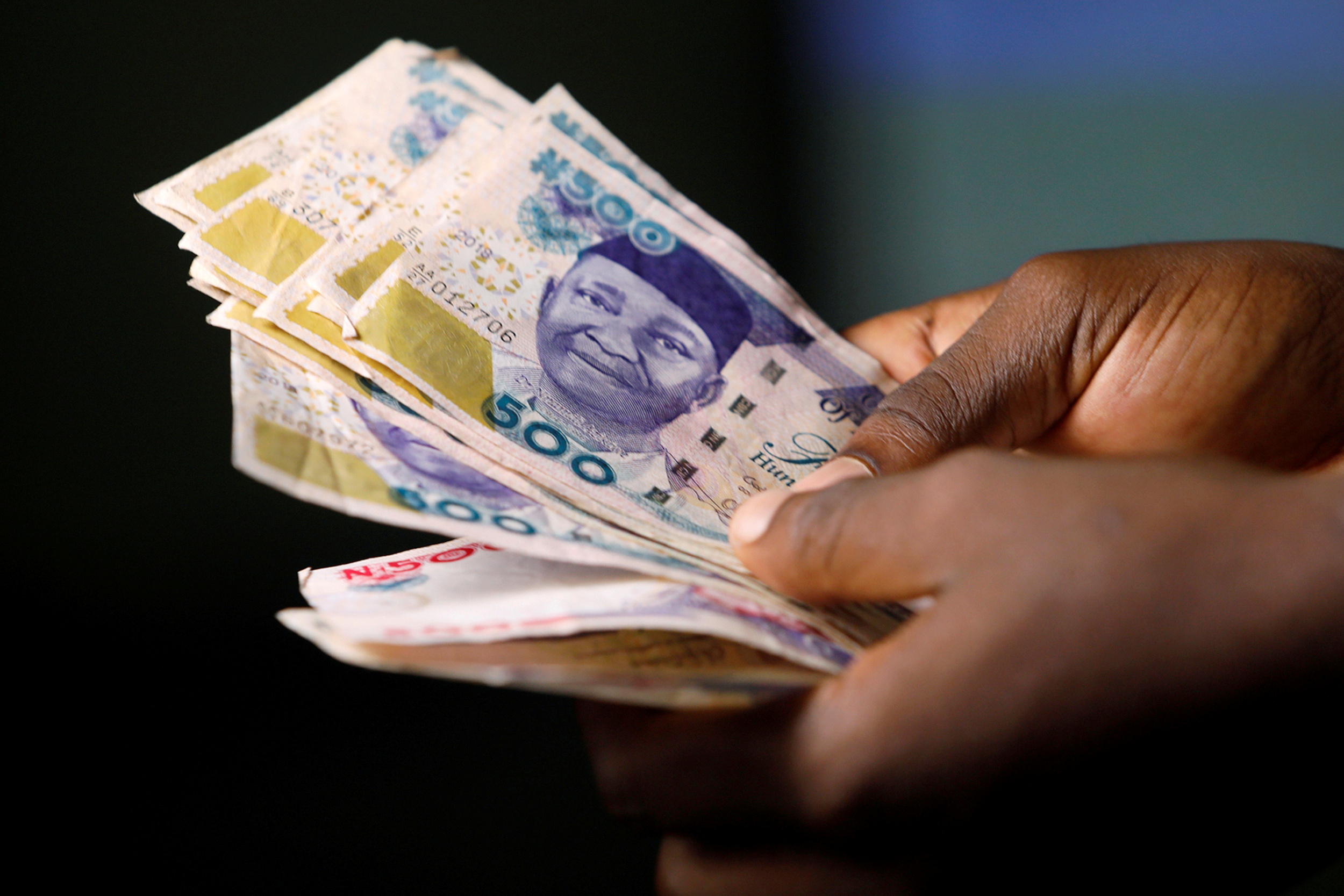
Nigerian naira banknotes are seen in this picture illustration, September 10, 2018. REUTERS/Afolabi Sotunde/File Photo

Political parties and their followers have been telling Osun voters since April benefits they would gain if they vote a particular candidate on July 16, 2022. The two months of intense campaigning on digital platforms and in different parts of the state show that the political actors’ priorities were very different from what the voters wanted parties and candidates to talk about or address. This is the main finding from the continuing monitoring of the election campaign by our analyst and his colleagues at Positive Agenda Nigeria.

Because of the failure to address pressing demands and difficulties in the state, some voters are likely to abstain from voting for both the ruling party (APC) and the main opposition party (PDP). According to PAN’s week 8 assessment, parties and candidates are focusing more on personal attacks than on topics. Consequently, voters are thinking about avoiding the two parties.

PAN detected discussion of vote buying by political actors on traditional and new media as well as during campaign rallies as the critical danger to reliable polls on July 16. In order to examine how voters believe vote buying and selling occurred during the 2018 governorship election in the state and ongoing tactics being used by the perpetrators prior to the July 16 election, this piece relies on the preliminary results of the survey component of the PAN’s campaign monitoring project.

Trust as an Elusive Commodity

The Positive Agenda Nigeria asked Osun voters whether they trusted politicians and other people because a lack of trust in the political elites has been the main issue in Nigeria since 1999 that the country returned to democratic governance. According to analysis, the majority of the 262 electorate who took part in the study trust their relatives more than they do their neighbors, fellow ethnics, people from other ethnic groups, and work colleagues. More than 50% have no trust in politicians at all, and 32.06% feel the same way about party representatives. Our analyst notes from these results that voters are more inclined than other stakeholders to believe that their relatives won’t participate in vote buying. Additionally, it shows that Osun voters, like those in the rest of the country, think that political parties and politicians won’t keep their campaign pledges.

Vote Buying and Selling Patterns

PAN returned the sampled electorate to the state’s 2018 governorship race in order to learn more about how players engage in vote buying and selling. It was found that 35.11% and 24.80% of the electorate received money from political parties and candidates, respectively, while 38.54% collected money from party representatives. Additionally, more than 40% reported receiving food supplies before the election. More than 75% of the electorate observed that voters received gifts from political parties in order to vote their candidates. Only 51.10% of respondents claimed that voters had actually accepted gifts from campaign officials prior to the 2018 governor’s race. For the current election, these outcomes stay unchanged. The majority claimed that political figures had contacted them with various incentives, particularly the provision of food items such as bread, beans among others.

Strategies for Buying and Selling Vote

In addition to using first-person strategy as the second strategy to identify the sampled electorate’s selling of their vote, the first-person strategy was used to discover that 56.87% of the electorate reported receiving money or gifts from political parties to persuade them to vote for the parties’ candidates. In addition, 57.63% of the electorate said they knew persons who had their votes offered for sale. Overall, more than 54% of the electorate claimed that party officials solely gave money to voters throughout the election. Who offers electorate money most? The PAN further investigated this result and found that vote purchasers identified by the sampled electorate included ward party youth leaders (56.87%), the ward party chair (55.72%), ward party candidates (46.94%), fellow voters (45.03%), and family members (35.49%). When comparing these results to the prior results, our analyst observes that it is clear that the electorate’s lack of trust in politicians showed up in their selection of important vote-buyers during the 2018 governorship race. With less than 12 days until the 2022 election, our analyst observes that there is a trend for vote buyers to purchase votes at houses and polling places in the order of the electorate’s preference.

The Great (In)decision

It is obvious that some voters received financial rewards or tangible benefits during the 2018 election. Can we argue that the majority, though, altered their minds about whether to support the politician from whom they received gifts or not? PAN investigated this using a second-person approach by posing the following question to a sampled electorate: Did any voter discuss with you that he or she changed his or her decision by supporting the candidate from whom he or she received no funding? 33.60% of respondents chose yes, while more than 43.0% disagreed. In contrast, 53.80% of electorate claimed that some voters admitted to them that they voted candidates based on the money they had received. Making such decision could be linked with the fact that most party representatives asked the voters to pledge that they would vote the candidate who gave them money, PAN’s analysis reveals.

Our analyst spoke with a few social commentators and public affairs analysts in order to elucidate potential enabling factors for selling votes. These analysts collectively hinted that voters accepted money and materials from politicians because of the challenging economic conditions that predominate during election periods and the failure of the candidates to keep their campaign promises. Results from the PAN show that the bad economy appears to be in line with the fewer than 50% of voters who stated that their households were doing better before the 2018 governorship election, while 41.60% stated that their households’ living standards were the same with every other household in the state. Less than 40% of electorate said that, three years prior to the 2018 election, their family’s quality of life had significantly improved.

The PAN’s findings, which show that more than 90% of the sampled electorate are willing to return favour to anyone who aided them, assist us understand accepting cash and material rewards. Regarding this, our analyst points out that voters who received incentives are more likely to support the party and the candidate who made the gesture to them. Only 30.6% of voters are likely to vote against the party and the candidate if they believe that they have suffered economic hardship as a result of politicians’ failure to keep their campaign pledges.

Strategic Options

Concerned stakeholders should investigate the conclusions from this article as the election in 2022 approaches. The pattern of buying votes reported by the electorate should be carefully examined by the Independent National Electoral Commission, security agencies, and organizations in charge of controlling financial crime in order to develop an intelligence gathering tool for the arrest and prosecution of offenders. For instance, it is imperative to carefully observe major party figures at the ward level both before and during the election. This is required since it has come to light that parties and candidates are using ward-level youth leaders, chairs and candidates to buy votes.
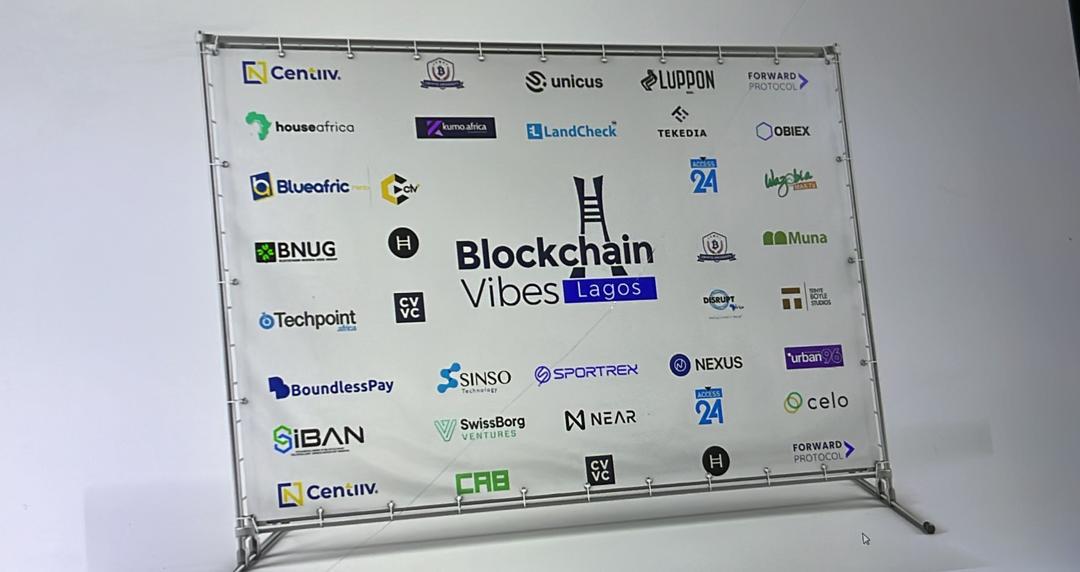
Tekedia Capital Participating in Blockchain Vibes, Lagos – 9 July 2022

0

Tekedia Capital, the recipient of Nigeria’s Best Venture Capital and Angel Fund of Year 2021, is proud to announce that it is attending #BlockchainVibes22. Tekedia Capital believes in the generation-shaping opportunities which blockchain offers and is enthusiastically participating in the event.

We invite you to join us in Lagos by registering at internationalblockchainsummit.org . Major blockchain global leaders are already in the nation for this event.

  • Date: Saturday, 9th July 2022
  • Time: 9am WAT
  • Venue: Glover Memorial Hall, Marina , LAGOS
  • Website: internationalblockchainsummit.org

Blockchain Vibes is an event that is centered on educating the crypto and tech enthusiasts about blockchain technology, bringing them into the future of decentralization and creating awareness on the evolution of money. It will bring together top stakeholders in the blockchain and cryptocurrency ecosystem to share deep insights on key topics such as NFTs, DEFi, WEB3.0, and lots more. It promises to be educative and interactive. This event is highly Recommended!

Send Your Business Cases to Tekedia Learners – Tekedia DesignLab will Fix Them

0

We’ve launched the DesignLab for Companies by Tekedia Learners. Our learners will help you solve your business frictions. Send them to Tekedia Institute. We will put them before groups of learners. Within 4 weeks, they will return with solutions.

We’re Africa’s temple for the mastery of entrepreneurial capitalism and our learners have been exposed to the most modern business models, frameworks, and systems which are reshaping the ordinance of market systems and global economies. They’re ready to help your business needs on growth, go-to-market, strategy, innovation, etc.

They are business school learners and we want them to learn with real business cases, not just the hypothetical or past cases.  We welcome your partnership – click and begin 

Google Reaches $90m Settlement Deal with Developers Over App Store’s Policies

0

Google and US developers have reached a $90 million settlement, ending the class action lawsuit brought by app makers over the tech giant’s practices deemed illegal and oppressive.

Google said in a blog post that the fund, being part of a larger settlement, “allows both parties to move forward and avoid years of uncertain and distracting litigation.”

“As part of the settlement, we’re establishing a $90 million fund to support U.S. developers who earned $2 million or less in annual revenue through Google Play during each year from 2016-2021. A vast majority of U.S. developers who earned revenue through Google Play will be eligible to receive money from this fund, if they choose. If the Court approves the settlement, developers that qualify will be notified and allowed to receive a distribution from the fund,” it said.

In addition to the fund, Google said it will implement new benefits that help developers innovate and communicate with their users. That will include continuing to provide developers with a tiered pricing model, and maintaining Google’s 15% commission rate for the first $1 million in annual revenue earned from Google’s Play Store for US developers.

The settlement was necessitated by app makers’ suit, which accused Google of maintaining policies that effectively forced developers to use its Google Play billing system — which for many years had a default 30 percent charge on all transactions.

Like Google, Apple faced the same issue with developers using the Apple Store, that the iPhone maker doled out $100 million in settlement for, after cutting its fee to 15% in a bid to appease developers.

Google had in July 2021, given a similar concession to smaller developers following this suit, cutting its app store’s fee to 15 percent for the first $1 million earned through any app.

Hagens Berman, the law firm representing the plaintiffs in this class-action, said some 48,000 small app developers in the US will be able to claim a payment from the $90 million fund. The law firm said some claimants could receive as much as $200,000 while the minimum payment is $250.

“Today, nearly 48,000 hardworking app developers are receiving the just payment they deserve for their work product — something Google sought to profit from, hand over fist,” said Hages Berman managing partner Steve Berman in a press statement. “With this settlement, developers will have more room to grow and more money in their pockets to promote their hard efforts.”

Under the settlement agreement, Google included other provisions aimed at helping developers. The web search giant said it’s revising its Developer Distribution Agreement to make it clear that developers can continue to use contact information obtained in-app to communicate with users out-of-app, including about subscription offers or lower-cost offerings on a rival app store or the developer’s website.

In addition, in new versions of Android, Google said it will maintain certain changes implemented in Android 12 that make it even easier for people to use other app stores on their devices, while being careful not to compromise the safety measures Android has in place.

It added that to showcase independent and small startup developers building unique high-quality apps, “we’re creating an “Indie Apps Corner” that will appear on the apps tab on the U.S. Google Play homepage and shine a spotlight on these developers.”

This settlement marks a shift from the app stores’ practices that have pitted Apple and Google against developers, and signals a possibility of further changes in the near future.

The issue came to limelight in 2020 after Apple removed the video game Fortnite from Apple Store. Fortnite had informed players they could purchase in-game currency at a discount from publisher Epic Games’ website, violating Apple’s developer policies. Apple and Fortnite entered a legal battle that the former won, though it has been appealed.

Google and Apple have been accused of abusing their app stores’ duopoly, prompting a proposed legislation by US lawmakers that will force the duo to make room for competition, allowing “sideloading,” or the ability for users to install apps from non-official sources.

Google said Android Operating System already supports sideloading, but Apple’s iOS does not. But the proposed legislation, if passed, and the EU’s Digital Markets Act, if it’s given final approval by the European Parliament for 2023, would make sideloading mandatory.

China’s President Xi Jinping Says “One Country, Two Systems” Is Here To Stay

0

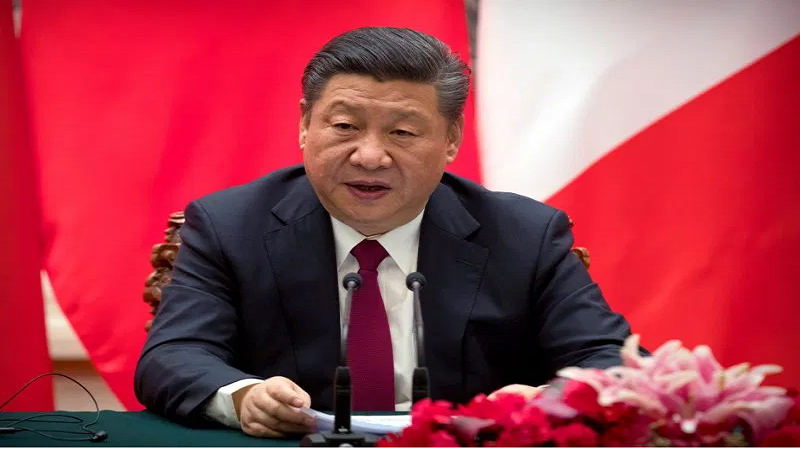
The ‘one country, two systems’ is a basic state policy that the Chinese government adopted to realize the peaceful unification of the country. Chinese President Xi Jinping recently disclosed that there is no reason to change Hong Kong’s “one country, two systems” formula of governance.

The British government on July 1st, 1997 returned Hong Kong to Chinese rule, with Beijing promising wide-ranging autonomy, unsettled individual rights, and judicial independence for at least until 2047.

This sparked the reaction of China’s critics who accused Britain of trampling on those freedoms unavailable on the authoritarian mainland, with a sweeping national security law imposed by Beijing on the city in 2020 after a mass pro-democracy protest the previous year.

The prime minister of Britain Boris Johnson, therefore, came out to say that China had failed to meet its handover commitments on democratic rights it made 25 years ago when Hong Kong was handed back to China.

China has issued a rebuttal to Britain’s statement by rejecting the accusations, stating that the law restored order from the chaos so that the city could prosper.

China’s President Xi Jinping disclosed that the “one country, two systems” formula, was successful under china’s comprehensive jurisdiction, stating that the system is a good one and there is no reason to change it.

In his words, “One country, two systems formula was successful under China’s comprehensive jurisdiction. For this kind of good system, there is no reason at all to change it. It must be maintained over the long term. After experiencing wind and rain, everyone can painfully feel that Hong Kong can’t be chaotic, and must not become chaotic again.

Hong Kong’s development cannot be delayed again, and any interference must be eliminated”. 

Hong Kong continued to flourish, the society remains very stable, and full development is being witnessed in all undertakings. The “one country, two systems has enjoyed widespread popularity in Hong Kong, gaining wholehearted massive support from the Hong Kong compatriots, as well as people in other parts of China, which is also thought of highly by the International community.

Hong Kong continues to actively participate as a separate member in relevant International organizations such as World Trade Organization (WTO), Asia Pacific economic cooperation, and the world customer organizations.

Hong Kong’s legal system is separate from the legal system in mainland China as it maintains its laws, own courts, and independent judiciary system.

No doubt the one country two systems have played an active role in building and advancing socialism in China.

The one country two systems approach both adheres to the spirit of peaceful coexistence applying the norm of international relations to relations between regions of different socio-political systems within one country, achieving peaceful coexistence between the different social systems in one country.