DD
MM
YYYY

PAGES

DD
MM
YYYY

spot_img

PAGES

Home Blog Page 5054

Zenith Bank Retains Position As Nigeria’s Best in Commercial Banking, Corporate Governance

1

Zenith Bank Plc has continued to prove its mettle in Nigeria’s banking industry, maintaining its lead in many fronts to earn itself local and international recognitions.

Zenith Bank has been named the best commercial bank in Nigeria at the World Finance Banking Awards 2022, and also the Best Corporate Governance ‘Financial Services’ Africa 2021 by the Ethical Boardroom, for the second consecutive year.

World Finance Magazine presented the awards to the Group Managing Director/Chief Executive of Zenith Bank Plc, Ebenener Onyeagwu, at the London Stock Exchange yesterday, in recognition of the bank’s ability to embrace digital transformation and best-in-class sustainability and corporate governance practices, leading to a stellar business performance in a difficult economic climate.

Commenting on the awards, Onyeagwu praised the commitment of the bank’s management and staff to carry out its operations in line with global best practices.

“These awards reflect our strong business fundamentals, resilience and ability to adapt to the ever-changing dynamics of the market through our innovative solutions, as well as our commitment to global best practices. As a member and signatory to various domestic and international sustainability frameworks including the United Nations Global Compact (UNGC) and the Central Bank of Nigeria Sustainable Banking Principles, we continue to support the achievement of the Sustainable Development Goals (SDGs) by creating value for our shareholders, customers, clients, investors, communities and the environment through our practices, operations and investments.” he said.

A statement issued by the bank noted that it places a premium on its core business strategy anchored on People, Technology and Service, to create value for its numerous clientele. It said the tier-1 bank leverages its team of dedicated professionals, to harvest its robust Information and Communication Technology (ICT) infrastructure to provide cutting-edge solutions and products through its network of branches and electronic/digital channels.

The awards, which were published in the June 2021 edition of The Ethical Boardroom magazine, is in recognition of the bank’s adherence to global best practices and institutionalization of corporate governance, setting an industry-wide example of best practices in that field.

Zenith Bank has racked up several awards in recent years. The long list goes as follows: Zenith Bank was voted as Bank of the Year (Nigeria) in The Banker’s Bank of the Year Awards 2020, Best Bank in Nigeria in the Global Finance World’s Best Banks Awards 2020 and 2021, and Best Corporate Governance ‘Financial Services’ Africa 2020 by the Ethical Boardroom. Also, the bank emerged as the Most Valuable Banking Brand in Nigeria in the Banker Magazine Top 500 Banking Brands 2020 and 2021, and Number One Bank in Nigeria by Tier-1 Capital in the “2020 Top 1000 World Banks” Ranking by The Banker Magazine.

Similarly, the bank was recognised as Bank of the Decade (People’s Choice) at the ThisDay Awards 2020, Retail Bank of the year at the 2020 BusinessDay Banks and Other Financial Institutions (BOFI) Awards, and Best Company in Promotion of Good Health and Well-Being as well as Best Company in Promotion of Gender Equality and Women Empowerment at the Sustainability, Enterprise and Responsibility (SERAS) Awards 2020.

“Zenith Bank has been generally adjudged a Corporate Governance compliant bank by the Nigerian Stock Exchange (NSE) hence its listing on the Premium Board of the Exchange. The bank continues to sustain this reputation and reappraise its processes to ensure that its business conforms to the highest global standards at all times,” the bank said in a statement.

Inflation, High Interest Rate Centralizes Bitcoin and Cryptos as Facebook’s Novi Crypto Wallet Shuts Down

1

It took the paralysis created by Russia’s war in Ukraine for many veils to be lifted on cryptocurrency investment (not as a means of exchange of value). Yes, with inflation skyrocketing and interest rates jumping,  the world of cryptocurrency which was built on “decentralization” has simply demonstrated that it is nothing but a big part of our centralized world.

Indeed, if you need Naira, US dollars, etc to buy cryptos, the implication is this: if you cannot find those Naira, USD, etc, cheaply, cryptos will struggle. And as that happens, because of high interest rates, other asset classes (treasury bills, fixed deposits)  in the centralized world become enticing to investors. Magically, BTC investment becomes less optimal when other options are evaluated.  In the end, BTC has been centralized where it matters: allocation of funds to asset classes.

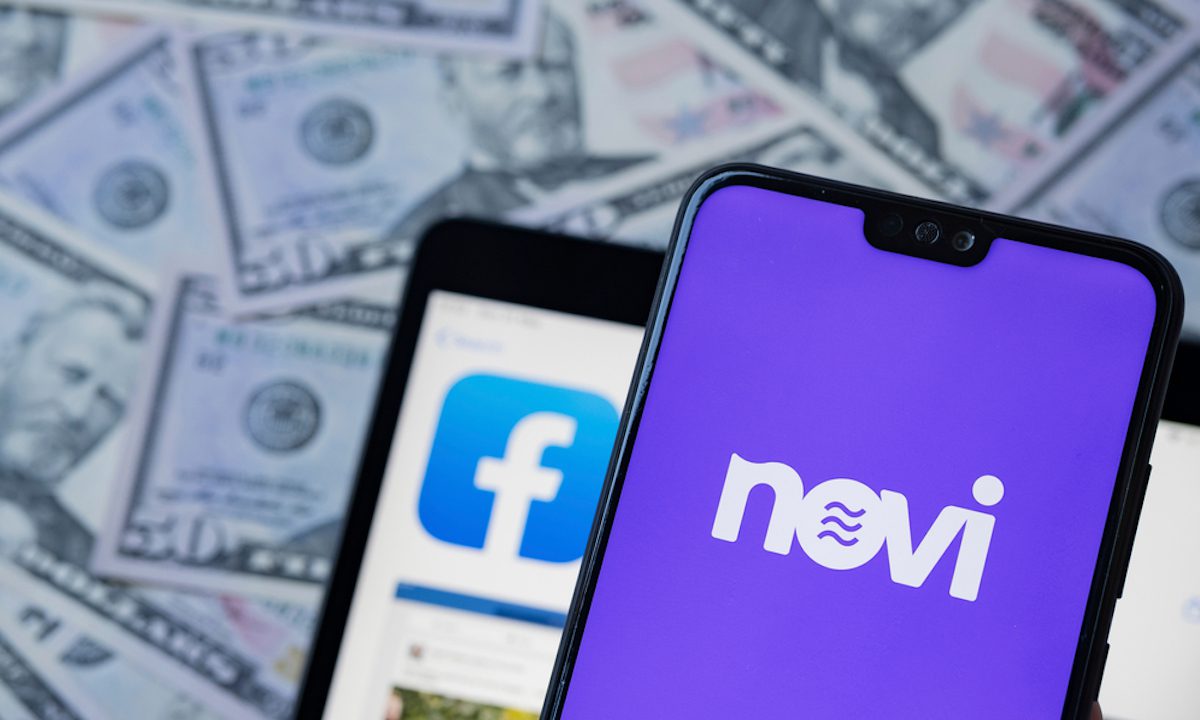
As that rages, Meta (Facebook’s parent company) has seen enough and is shutting down Novi! This showdown is not coming from regulatory activism or lawmakers fiat instructions. Rather, this is a pure play market force in action. And Meta might have done it since the exuberance of a decentralized currency has been stymied by a centralizing inflationary paralysis.

As the cryptocurrency industry nosedives further, plummeting investors’ funds and crippling the market’s value along the way, companies in the industry are being confronted with the tough decision of whether to stay in business or shut down operations.

The headwinds that have forced leading crypto asset bitcoin to stay below and a little above $20,000 dollars, is also forcing many institutions’ crypto-linked operations to shut down. Meta, Facebook’s parent company, has been caught in the wind.

Facebook expects a recession and it is phasing out many products while hiking performance for workers: ‘You might decide this place isn’t for you, and that’s OK with me’.

Facebook parent Meta is cutting back on hiring and turning up the heat on its employees as slow growth and macroeconomic headwinds push the company to downgrade its economic outlook.

In a weekly employee Q&A session on Thursday, the social media giant’s chief executive Mark Zuckerberg told employees that Meta is reducing its plans to hire engineers by at least 30% this year. Citing the market downturn and the looming recession, Zuckerberg said Meta will now only hire around 6,000 to 7,000 new engineers in 2022—a stark drop from its initial plan to hire more than 10,000.

Facebook’s Parent, META, is Shutting Down its Novi Crypto Wallet

Facebook’s Parent, META, is Shutting Down its Novi Crypto Wallet

0

As the cryptocurrency industry nosedives further, plummeting investors’ funds and crippling the market’s value along the way, companies in the industry are being confronted with the tough decision of whether to stay in business or shut down operations.

The headwinds that have forced leading crypto asset bitcoin to stay below and a little above $20,000 dollars, is also forcing many institutions’ crypto-linked operations to shut down. Meta, Facebook’s parent company, has been caught in the wind.

Meta is shutting down Novi, its cryptocurrency digital wallet. Bloomberg made the report citing a notice where the company announced it would sunset the platform on September 1st, with July 20th being the final day to add funds.

The decision marks another premature end to Meta’s bid to delve into crypto. The company’s first attempt at it was Libra, a huge crypto project that Meta had partnered with several other institutions to develop. But it met the government’s resistance and was forced to wind down.

According to the report, Meta advised users to withdraw their balance “as soon as possible,” as it would “attempt to transfer” any remaining money to customer bank accounts and debit cards after Novi’s final day of operation.

The social media behemoth began the pilot of Novi last October, but has failed to grow past the beginner’s phase as the crypto crash takes a toll. But it didn’t use a new Diem or Libra token. Per Bloomberg, Novi ended up using Paxos Trust Co.’s USDP stablecoin to allow wallet users from parts of the U.S. and Guatemala to conduct transactions while Coinbase Global Inc. safeguarded the funds.

But not minding the failures that have characterized its attempts at cryptocurrency operations, Meta said it’s going to give it another shot.

“We are already leveraging the years spent on building capabilities for Meta overall on blockchain and introducing new products, such as digital collectibles,” a company spokesperson told Bloomberg. “You can expect to see more from us in the web3 space because we are very optimistic about the value these technologies can bring to people and businesses in the metaverse.”

Per Engadget, the company announced last month that it was rebranding Facebook Pay to Meta Pay, a move CEO Mark Zuckerberg described as a “first step” toward creating a digital wallet for the metaverse.

However, Novi’s shutdown is a big one among many, highlighting the consequential realities of the crypto market’s crash. Notable crypto exchange platforms are deeply immersed in the dip, forcing some to file for bankruptcy. To make the matter worse, there is no working to pull the industry back to the bull market.

Why Entrepreneurs Must Look Beyond Cashflow to Build a Sustainable Business

0

Many business founders tend to prioritize cash flow in the day-to-day operations of their businesses. The cash flow craze probably stems from a general belief that businesses are out to make money and keep an impressive financial record. But is cash flow all there is about building a sustainable and enduring business?

According to a report by the Small Business Administration cited in Investopedia, 20 percent of small businesses fail in the first year, 50 percent fold up after five years and 67 percent find it difficult to persist further than the first 10 years.  The most common reasons start-ups fail were identified as; lack of funding, inability to retain talents and build a strong management team, faulty business model, unsuccessful marketing initiatives, etc. Thus, from the foregoing, it is clear that cash flow is one of several reasons a business can survive the test of time.

It is not out of place to think that a business founded on a philosophy of making money rather than creating wealth is dead on arrival. ‘’…a company is not just a balance sheet. The successful company is no longer one that just makes money’’ argues Andre Hoffman, the Vice Chairman of Roche Holding Limited.

In one of his digital execution for business growth lectures, Professor Ndubuisi Ekekwe, lead faculty at Tekedia Institute and Harvard Business Review contributor, notes that a business must develop because it aims to solve existing market friction (the demand-supply gap). According to the professor, ‘’in the quest to bridge a market friction, business owners need to build the capacity to do so by attracting investors and creating a formidable structure and team that will position the enterprise to solve the identified problems and thus contribute to the national wealth.’’

However, experiences have shown how a number of start-ups are able to attract funding in their early years due to the ability of the founders to cash in on trends and communicate market problems and opportunities to investors but soon have to take on accumulated debt as they are unable to push through market resistance due to weak internal structure.

Having a strong management structure is predictive of a start-up’s ability to continue operations well into the future. Without a good structure, the likelihood of a business manifesting misplaced priorities, mismanagement of finances and human resources, and other symptoms of a failing business is high.

In a diagnostic report of the early failure signals of agritech start-ups in Nigeria by FIDAS Africa, structural problems were identified as a major source of pain to agritech start-ups in Nigeria. In the analysis, elements such as people, profit, portfolio, result-oriented, and organization-inclined were used to appraise ten agritech start-ups in Nigeria. It was found that there is a wide gap between the profit element and people, result-oriented and organizational-inclined elements of these organizations.

It was also found that the start-ups have a very low potential for creating and delivering value to stakeholders due to a weak alignment between their vision and mission statements. The vision and the mission statements of the companies aligned by 28.5%; only 8.1% of the vision statements were found in the mission statements.

The study further reveals that while companies believe in positioning people for creating and capturing value, they tend to pay less attention to how the people would generate profits through their portfolios. There is also an indication that companies are more interested in markets, products, and survival while there is least concern for employees, public image, technologies, and philosophy.

Referencing the law of physics that states that the force of a given object is determined by its mass and acceleration (F = ma), Professor Ekekwe notes that for start-ups or businesses of any scale to build the necessary force to win over the market, they must ensure a balance in their weight (numbers of personnel) and acceleration (employees’ engagement and acquired competencies and skills).

Think or Sink? Nigerians in Another VUCA World Ahead of 2023 General Elections

0

People, businesses, and not-for-profit organizations have been residing in a world that is predicated on information symmetry and asymmetry since Nigeria gained its independence in 1960. The two information kinds must be possessed for enterprises, non-governmental organizations, and governmental organizations to succeed. A leader who owns symmetry messages or information is one who has knowledge that others in other enterprises or organizations do not. The ability to create and capture value that managers of other establishments are unable to generate and from which they do not gain offers managers of human and material resources an advantage. The management of other organizations are acting or acting in this situation of information asymmetry. This indicates that the managers are lacking the necessary information.

Our check indicates that this description has appeared throughout time in academic writing and professional journals, particularly in the field of integrated marketing communication. However, American military personnel developed the VUCA world idea some time ago as a result of challenging circumstances they encountered while performing their duty. Based on a variety of sources that our analyst investigated, American military personnel utilised this notion to clear up recognized snags using leadership-related presumptions to comprehend challenging scenarios and propose suitable answers.

Since then, VUCA, which stands for volatility, uncertainty, complexity, and ambiguity, has been used in nearly every aspect of business and human life in both the global north and south. It is not the purpose of this piece to explain how it has been applied in the corporate sector. Instead, it concentrates on offering some perspectives on how Nigeria and Nigerians are experiencing the world ahead of the general elections in 2023, particularly the presidential election.

Volatility

The VUCA world necessitates significant capacities and talents to respond to unforeseen changes based on available information and emerging material resources, such as technologies, it is evident from the American military perspective depicted before. Leaders need to deliberately use knowledge and resources to create opportunity for all stakeholders to succeed in their own ways. Nigerians understood what they want in terms of meaningful and lasting growth that left no one behind, regardless of ethnic group, sex, religion, and socioeconomic class, throughout the more than 30 years of the military governments. However, citizens are limited in their ability to exercise their civic rights due to the suspension of the laws and regulations that would otherwise enable them to make well-informed choices. This was primarily responsible for the harsh VUCA environment.

When the country fully reverted to democratic rule in 1999, things appeared to be looking up because constitutions and legal provisions for some political decisions had been reinstated. Like other democracies throughout the world, the country began to experience its share of unforeseen events, political ploys, and non-state actors prepared to undermine democratic government in all of its manifestations. Since 1999, the socioeconomic and political indices have been unpredictable, placing businesses and people in a VUCA world. As stated earlier, the focus of this piece is on situating the general elections in Nigeria in 2023 within the context of the volatile, uncertain, complex, and ambiguity (VUCA) world that has long served as a useful framework for comprehending challenging circumstances requiring strategic leadership.

Since 2021, Nigerians have seen significant political permutations from the political leaders and their parties on who will be the next president, similar to what happened before the previous elections. Our analyst believes that the political elites have been successful in stoking and maintaining a number of concerns ahead of and during primary elections. They were successful in turning the virtual world into a battleground by selling application forms for various posts at prices that attracted the attention of all citizens, particularly internet users. Due to opposing viewpoints that were stated and influenced by political elites’ machinations before the elections, buddies on the sphere turned into adversaries.

Uncertainty

Political parties and politicians practically sold the zoning idea to the southern region. Due to the main opposition party, the People’s Democratic Party, failing to uphold the idea, it was unclear a few days before the primary elections if the ruling party, the All Progressives Congress, would eventually implement it. Based on this, our analyst concludes that both groups were successful in luring Nigerians who lacked first-hand knowledge of the idea’s demise into the world of information asymmetry.

Complexity

When the main opposition dropped the zoning idea, the realization of the ambitions and aspirations of the southern region initially became difficult. It was tense when the ruling party nominated Senator Bola Ahmed Tinubu, a former governor of Lagos State who has been seen as a political godfather of the South West. Nigerians, particularly the youth, were startled that political figures that had ruled the country since 1999 still made the race for president. They consider Mr. Peter Obi, the former governor of Anambra State, to be the main opposition party’s candidate because he is more qualified and competent. They contend that Mr. Peter Obi was expelled from the party by forces opposed to expected positive changes in Nigeria.

Ambiguity

Although Mr. Peter Obi has been told by the political gladiators that he cannot win the presidential election in 2023, the majority of young people (netizens) believe he has the capacity and ability to lead Nigeria in the current VUCA world (where socioeconomic indices are not favoring citizens and the country’s place in international politics is eroding annually). Many of the gladiators have frequently criticized Mr. Peter Obi, who is running through the Labour Party, for lacking structure. They added that social media does not win elections. They assert that LP has no actual voters who will be present at the various polling places, only online voters. Unlike online voters, who would be posting, like, and sharing information on numerous social networking sites on election day. With these comments, the political gladiators and public affairs analysts have successfully raised the level of ambiguity around the choice of the presidential candidate (Mr. Peter Obi).

Mr. Peter Obi, the new product that young people hope would improve the socioeconomic and political climate of their country, fits into the ambiguity component of the VUCA world. Everyone now appears to be experiencing the haziness of reality and the ambiguity of the conditions. Yes, there is a daily increase in the number of young people signing up to vote. However, are they able to build the kind of structure required to win elections in Nigeria? Answering this question is crucial since political gladitators and public affairs specialists are still sowing misunderstanding about Mr. Peter Obi’s voting cause and effect.

Think or Sink?

Political elites are undoubtedly well-positioned as holders of symmetric knowledge due to their closeness and strategic relationship with other societal elements. Consider how you can behave differently during the 2023 presidential election, together with every other citizen. Voting should be based on considering the advantages and disadvantages of a candidate’s leadership style, accomplishments, and capacity to lead in the VUCA scenario that was previously portrayed for Nigeria. Our analyst points out that not only corporate and political leaders or politicians need to comprehend the assumptions of the VUCA environment to solve difficulties in order to make effective decisions during the election. The premises must also be taken into account by the populace, particularly the electorate.

For instance, citizens should look for accurate information from dependable sources because political parties, officials, candidates, and their followers will continue to utilize a variety of strategies to create muddled causes and consequences. Understanding how media conventions or procedures produce electoral and governance concerns favour the political elites more than the general public during an election cycle is necessary. Not all national media works for the benefit of the public. Citizens must have a fresh viewpoint on each problem and use flexibility in their decision-making if they are to overcome the unpredictable conditions.

As other players would continue to prosper through the aspects created for the complicated problems, it is necessary to develop collaborative leadership in order to address the identified complex issues. The secret to handling unclear situations is to listen and think in different ways. It is not always necessary to view candidates who are deemed competent and qualified as saints. It is necessary to go further into their histories and present to see how they could support Nigeria in the VUCA world of today.