DD
MM
YYYY

PAGES

DD
MM
YYYY

spot_img

PAGES

Home Blog Page 5064

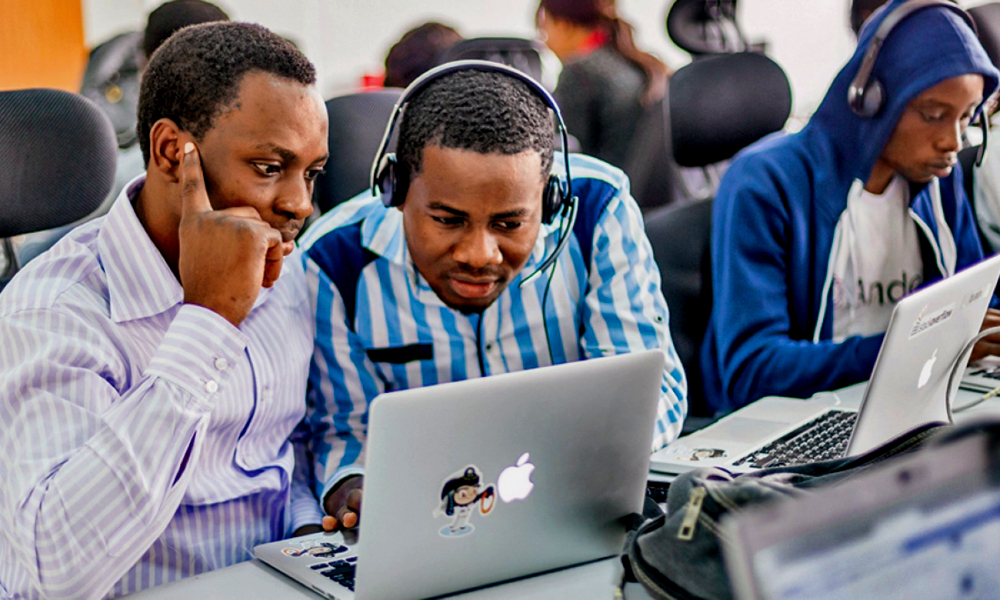
Skill Paddy To Tackle Unemployment Among Nigerian Youths With Tech Skills

0

No doubt, the rate of unemployment in Nigeria is very high, which saw it rise to 35 percent in 2021. In a bid to tackle the high unemployment rate in Nigeria, E-learning platform Skill Paddy has volunteered to offer learners a three-month program, and also aid participants to gain on-the-job experience.

According to the CEO of Skill Paddy, Kunle Erinle, he disclosed that the platform is not solely aimed at only addressing the issue of unemployment in Nigeria, but it will also help in bridging the productivity gap which currently exists in so many industries.

In his words, “The world is changing very fast today, eight out of the ten biggest companies in the world are in tech industry. This translates to 10 million jobs in the digital technology space, with one million of these jobs open in Africa. Most of these jobs remain open year after year because people with the right skills are either not applying or non-existent. It is a real challenge for us as a continent, and that is why Skill Paddy exists”.

SkillPaddy is said to officially roll out its first batch of courses for roles that are currently in high demand in today’s job market. Courses such as graphic design, software testing, business analysis, product management, etc.

The start-up has also extended its partnerships to Honeywell group, Chocolate city group, Employment Trust fund, etc to help them transition into industries that are driven by tech.

With the current tech advancements in the world today, it is safe to say that tech is the future. In today’s digital world, everywhere you go, you must come in contact with one technological advancement or the other. The highly digital life in today’s world and the development of our technological world have become the new normal.

With almost 50% of the world’s population using the internet, over 90% of the world’s data has been created in the last few years. With the rate at which technology is rapidly evolving, businesses are now beginning to transform digitally, so that they can be able to offer their customers a seamless and frictionless experience.

Kudos to Skill Paddy for offering this platform to empower Nigerian youths with the needed tech skills, because digital skills are now a necessity more than ever, to stay relevant and competitive in today’s global economy.

The tides have changed in today’s world, it is not just enough to possess a degree, but one needs to arm himself or herself with on-demand digital skills, in other to stay relevant and navigate effectively in the workplace.

It has been predicted that by 2050, Youths in Africa will make up one-third of the global workforce. Unfortunately, there is a massive talent shortage which will likely make a large number of them remain unemployed.

Already, the inadequacy of digital skills among Nigerian youths is evident in their inability to fill vacant positions in organizations today, as there are not enough youths with the right digital skills to fill up these positions.

Digital skills are no doubt a strong component of economic growth. Also in schools, there should be an inclusion of digital skills in the curriculum. Regardless of whatever discipline a student studies, having digital skills in today’s world will advance their career.


More Than $10bn Stolen by NNPC, Stakeholders in Subsidy Fraud – Reps

0

The House of Representatives has alleged that more than $10 billion worth of the nation’s crude oil has been stolen via fraudulent fuel subsidy claims by the Nigerian National Petroleum Corporation (NNPC) and other industry stakeholders, NAN reports.

It is the latest in the series of corruption scandals rocking President Buhari’s administration, where oil theft is currently reigning.

The House has therefore constituted an ad-hoc committee to investigate the petroleum products subsidy regime between 2017 and 2021 by the NNPC.

This followed the adoption of a motion by Sergius Ogun (PDP-Edo) on the floor of the House on Wednesday in Abuja. In his motion, Mr Ogun said he was informed that as of 2002, the NNPC purchased crude oil at international market prices, which stood at 445,000 barrels per day.

He added that it was to enable it to provide petroleum products for local consumption, saying he was concerned that as of 2002, the installed capacity of Nigeria’s local refineries stood at 445,000 barrels per day.

However, he said that their capacity utilization began to nosedive and eventually fell entirely to zero due to the ineffectiveness and alleged corruption of critical stakeholders in the value chain.

The lawmaker said that due to a decline in the production capacity of the refineries, NNPC found it more convenient to export domestic crude in exchange for petroleum products on a trade by barter basis.

According to him, the component cost in the petroleum products subsidy value chain claim by the NNPC is highly over-bloated.

Mr Ogun claimed that the transferred pump price per liter, used by the NNPC in relation to PPMC, was under-quoted as N123-N128 instead of N162-N165.

He said that the fraudulent under-reporting of N37-N39 per liter, translated into more than N70 billion a month, or N840 billion naira a year.

Mr Ogun expressed worry that the consumption rate of petrol was 40 million to 45 million liters per day, adding that the NNPC used 65 million to 100 million liters per day.

According to him, the subsidy regime has been used by the NNPC and other critical stakeholders to subvert the nation’s crude oil revenue to more than $10 billion.

Mr Ogun said records showed that as of 2021, over $7 billion of 120 million barrels was diverted. The lawmaker added that subsidy was charged against petroleum product sales in the books of NNPC and against crude oil revenue in the books of NAPIMS, to the tune of more than N2 trillion, according to NAN.

The Nigerian downstream sector has been infected with oil theft that the NNPC director Mele Kyari said costs the country an average of 200,000 barrels of crude oil per day, which amounts to 73 million barrels in a year. This means, using an average $100 per barrel crude oil price, Nigeria loses more than $7.3 billion yearly.

But that’s outside the subsidy regime, which in itself, has been characterized by corruption. Stakeholders have long been accused of subsidy fraud, prompting the decision by Buhari to make NNPC the sole importer of petroleum products in Nigeria, which is believed would eliminate the middlemen committing the fraud.

Unfortunately, the House’s allegation against the NNPC means that subsidy fraud has become institutionalized, as it now is being practiced by the supposed watchdog.

Ndubuisi Ekekwe To Keynote Leadership Agenda Summit 2022 in Dubai, Lagos

0

Good People, I hope to do justice for the honour which HIS HIGHNESS, H.H Sheikh Ahmed Faisal Al-Qassim, and organizers, bestowed on me to keynote  the Leadership Agenda Summit 2022 in Dubai. I hope to connect with all  at Harbour Palace Hotel Dubai UAE. Get ready for tomorrow!

(There is also going to be a sync-webcast in Lagos)

If you can, join us. You can attend free here 

—Press Release

[London , United Kingdom] – Brian Reuben Organisation dedicated to facilitating strategic conversations, connections, and collaborations among leaders around the world is bringing together hundreds of senior leaders from the public and private sectors for the 2022 edition of the Leadership Agenda Summit scheduled to hold on the 30th of June, 2022 concurrently at the Harbour Palace Hotel Dubai UAE and BWC HOTELS, Victoria Island Lagos Nigeria.

According to Dr Brian Reuben, the summit aims to  facilitate new investments, encourage business development, share best practices, guarantee peer-to-peer networking, offer new industry insight, showcase excellence and promote thought leadership across the world.

“We approach the design of the Summit each year with sophistication, discipline and most importantly, shared vision. In 2022, we look forward to an extraordinary assemblage of leaders from all walks of life who will come together to create A BRAND NEW WORLD” said Dr Reuben.

Confirmed speakers include Rt Honorable Lord Michael Howard, former opposition leader of UK and member of the House of Lords, Sayed Zafar Islam, member of the Upper House of India Parliament, Prof Ndubuisi Ekekwe, Founder of Tekedia Institute, His Excellency Tomasz Zaleski, Chairman of the Private Office of His Highness Sheikh Ahmed Bin Faisal Al-Qassimi, Dubai, Mazi Sam Ohuabunwa, Former Chairman Nigeria Economic Summit Group, Dr Cosmos Maduka, Chairman of Coscharis Group, Nigeria. Others include brand strategist Charles O’Tudor, Amb Dr Hillary Emoh, Dr Austin Tam-George, Tunde Falase among other senior leaders.

The 2022 edition of the Leadership Agenda Summit is hosted under the grand patronage of the Private Office of His Highness Sheikh Ahmed Bin Faisal Al-Qassimi. The Leadership Agenda Summit brings leaders together to discuss emerging and re-emerging global issues and how to collaborate in solving them. It provides unrivalled access to an influential network of leaders in the public and private space. Closing with a big reception, it offers the ideal setting for business introductions, investment meetings and more.

To register to attend this summit free of charge please email projects@brianreuben.com.

Why Kenya’s KUNE Collapsed Despite Raising $1million; B2C Delivery Business is Hopeless in Africa

7

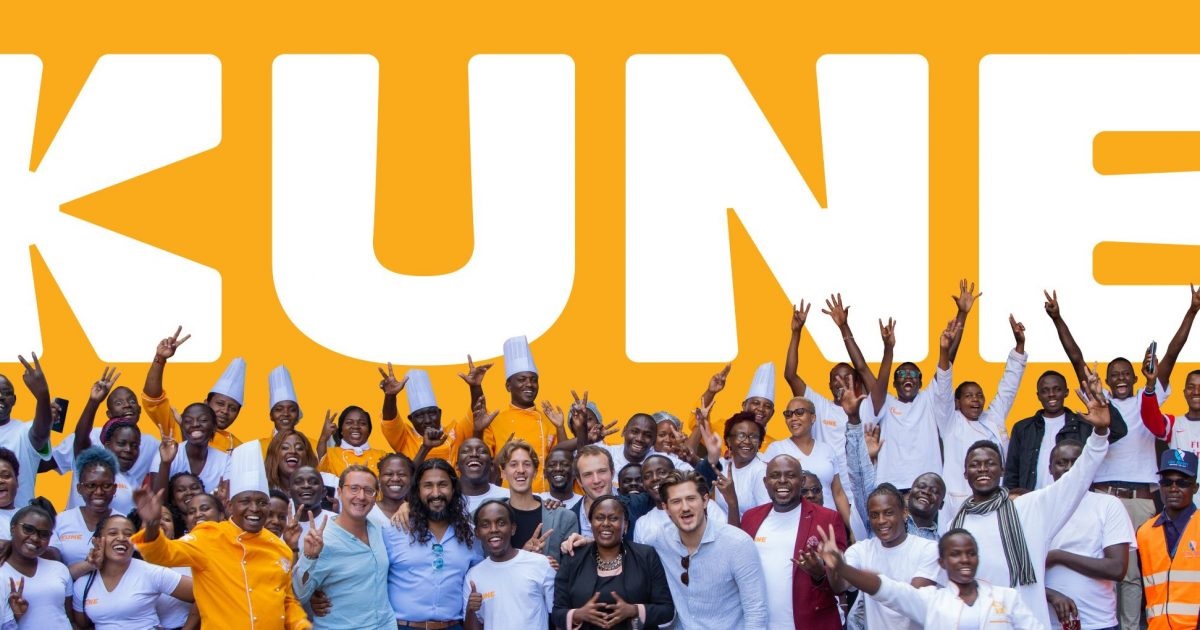
I received many notes from the community to comment on the B2C foodtech delivery company which collapsed in Kenya, after raising  US$1 million: “Kune is a foodtech based in Nairobi that produces $2/$3 kunelicious meals for individuals & corporates”. The company collapsed last week.

(Sure, why is he piling on people who just lost a company? My feed is a school and when I write, I do hope some people here learn. I hope the founders do not read this piece though – and do not share it with them. We need to respect them at this time.)

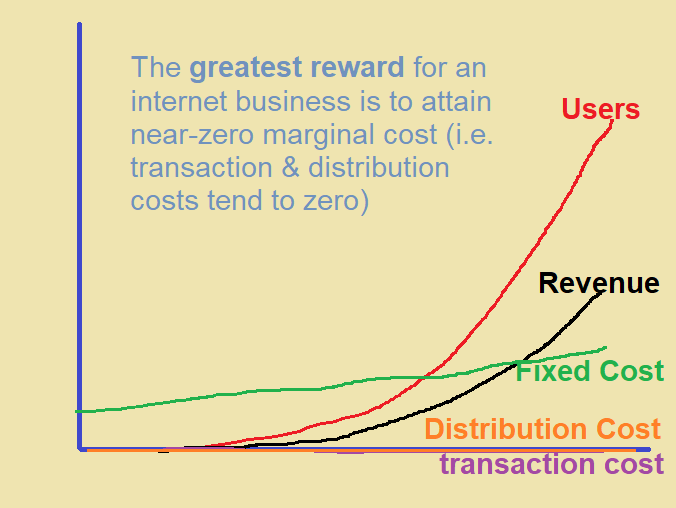
As I wrote in Harvard a few years ago, B2C business with a delivery component in sub-Saharan Africa is hopeless except in South Africa. The problem is not making a nice ecommerce website or nice foodtech app, the real deal is the logistics. Simply, a food delivery startup in Kenya cannot improve its marginal cost because as it grows, the distribution cost (a key component of marginal cost) will not go towards near-zero as you expect in great aggregators. In other words, it cannot compound its leverages over time!

Yes, it is very hard to run an aggregation business when supply is bounded and cannot be negotiated/commoditized for the cost element to become a non-factor. The supply here is the delivery system with the drivers as the main components. Even if you control demand – having many users ready to order food – unless you can reduce the cost of those deliveries down to near-zero, profitability will become hard. This is the reason why companies like Uber may not be profitable in their ride-sharing business unit for years; they influence and control demand, but they have no absolute control over supply which affects their margins; Uber drivers are not infinite and have push effects on the business.

Contrast with great aggregators like Google and Facebook where supply (contents generated by users) is nearly infinite and also free (Google caches your website, Facebook gets your baby photos, etc, free). With that, they just focus on discovery experience for users, thereby positioning  themselves for super gross margins since the raw materials are nearly free. Kune is like Jumia which continues to struggle without the ability to curtail costs efficiently; Jumia’s adjusted earnings before interest, taxes, depreciation and amortization (EBITDA) loss was $53 million in Q1 2022, a 70% year-over-year increase.

Uber, Kune, and Jumia are united by one thing: poor marginal cost. From Kalahari to Mocality to Efiritin to OLX (most bankrupt), when a digital business cannot improve marginal cost, it dies or will struggle to make profit over time! That is the reality which can only change when companies fix that distribution cost by going hybrid like Konga has done; Copia Kenya is another example which fixed that paralysis.

It is key to understand that B2C delivery firms in most parts of Africa are not digital businesses even though they have apps and websites. These are meatspace companies whose marginal costs are dominated by what happens in the physical world, during that delivery process.

My recommendation remains: do not run such companies. You will face a double whammy – a marginal cost problem on delivery and an unbounded competition from open markets (ecommerce) and bukkas (foodtech) which make it hard to adjust prices to compensate for those delivery costs.

The KUNE team will rise; it is nothing but an experience.

More on COPIA Business Model

Many questions on Copia business model. Many want to understand how Kenya’s Copia has also fixed the marginal cost paralysis I noted. It is very simple: when you can grow revenue and users without increasing distribution cost, good things happen.

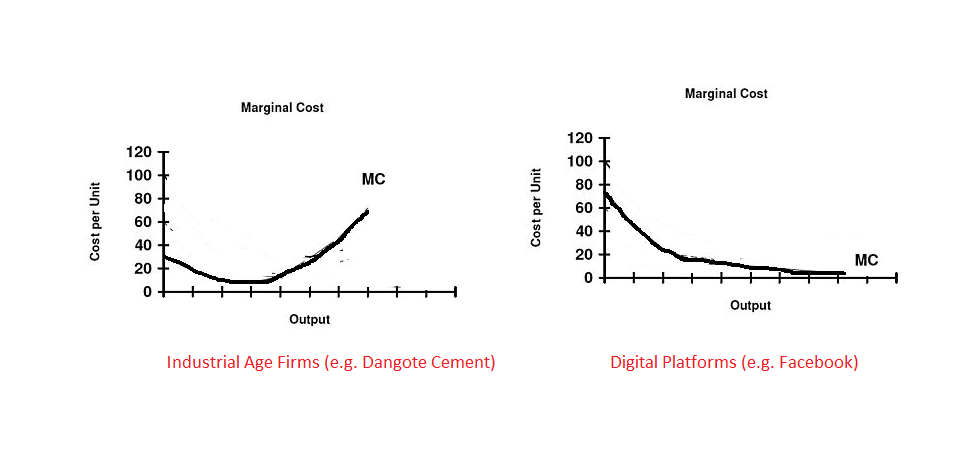
Copia’s networks of agents enable it to attain near-zero marginal cost even as it scales revenue. That is the reason  I have noted that it runs the best ecommerce business model in Africa. When you plot its data, it will look like this plot below or the RHD (right hand side) .  Most other ecommerce firms look like industrial age marginal cost (LHD) .

Understand Your Marginal Cost!

If you run an ecommerce or foodtech delivery business and the plot looks like the LHD plot, you are not actually running a “digital” firm. The digital nativity does not come by nomenclature, it comes from the marginal cost positioning which makes it possible to have great scalable advantage in the market.

Comment on LinkedIn Feed

Comment 1: On Copia, one tiny detail and its influence is missing, the grants that they receive which is not a loan, check such https://www.gatesfoundation.org/about/committed-grants/2014/10/opp1114460. I think it would be ideal to evaluate based on what the actual cost and profitability of a business is, without the support from grants. In essence, can a business sustain all aspects of its operations purely from the sales that they generate?

My Response: Gates Foundation gave them $275,119 but the last fund Copia raised was $50 million. Copia has raised $$millions and is not run on any grant money. I think it is doing a favour picking those grants so that the grantors can use its statistics to look good in their annual report. But no mistake, Copia rakes real money in 2019 – $26m https://qz.com/africa/1757623/kenyas-copia-global-raises-26-million-in-series-b-funding/ . In Jan 2022 – $50 million https://disrupt-africa.com/2022/01/20/kenyas-copia-global-raises-50m-series-c-to-ramp-up-african-expansion/ . Check their data, it is the fastest growing ecommerce firms in Africa and it raises tons of cash.

Do Not Waste Time Starting B2C Ecommerce Business in Nigeria

FCC Commissioner Demands Apple and Google Remove TikTok from App Stores

0

Days after the news that TikTok’s Chinese employees have access to the data of U.S. users, a fresh move to stop the high-flying short-form video app has started.

On Tuesday, a leader of the U.S. Federal Communications Commission, Brendan Carr, shared a letter dated June 24, where he asked both Apple and Google to remove TikTok from their app stores over concerns that China is using it harvest private data of Americans.

“TikTok is not what it appears to be on the surface. It is not just an app for sharing funny videos or meme. That’s the sheep’s clothing,” he said in the letter. “At its core, TikTok functions as a sophisticated surveillance tool that harvests extensive amounts of personal and sensitive data.”

TikTok’s unending troubles in the U.S. stems from its ownership by Chinese company ByteDance. The app came under intense scrutiny under former president Donald Trump, who wanted it banned in the U.S. to prevent national security breach.

Carr’s letter, which he shared via Twitter to Apple CEO Tim Cook and Alphabet CEO Sundar Pichai, referenced a recent BuzzFeed report that TikTok’s engineers in China accessed U.S. data between September 2021 and January 2022. The letter also pointed to reports that TikTok is non-compliant with Google and Apple stores policies, asking the CEOs to remove the app or provide statement to him latest July 8.

Carr who was nominated by Trump in 2018 to a five-year term with the FCC, demanded that the statements should explain “the basis for your company’s conclusion that the surreptitious access of private and sensitive U.S. user data by persons located in Beijing, coupled with TikTok’s pattern of misleading representations and conduct, does not run afoul of any of your app store policies.”

TikTok’s U.S. ordeal, which seemed to have been laid to rest after Trump’s executive order to ban it failed, is once again resuscitated by the BuzzFeed report. Trump’s successor, President Joe Biden rescinded most of the orders targeting the operation of Chinese apps in the United States.

Though Washington is yet to react to the development, the move by the FCC signals a fresh government’s interest in TikTok’s U.S. operation that may escalate to wider scrutiny once again.

TikTok said in response to BuzzFeed report that given how the app is scrutinized, it is working to remove every doubt that U.S. consumers’ data is accessed by the Chinese government.

“We know we’re among the most scrutinized platforms from a security standpoint, and we aim to remove any doubt about the security of US user data. That’s why we hire experts in their fields, continually work to validate our security standards, and bring in reputable, independent third parties to test our defenses,” it said.

TikTok said part of the steps it’s taking to protect users’ data is to reroute all of U.S. user traffic to Oracle Cloud Infrastructure.

“We’ve now reached a significant milestone in that work: we’ve changed the default storage location of US user data. Today, 100% of US user traffic is being routed to Oracle Cloud Infrastructure. We still use our US and Singapore data centers for backup, but as we continue our work we expect to delete US users’ private data from our own data centers and fully pivot to Oracle cloud servers located in the US,” it said.

Both Cook and Pichai are yet to respond to Carr’s demands.