DD
MM
YYYY

PAGES

DD
MM
YYYY

spot_img

PAGES

Home Blog Page 5091

Coca-Cola Partners With Jack Daniels To Produce Alcoholic Drinks

0

American multinational beverage company, Coca-Cola, has signed a deal with Brown-Forman Corporation, the producer of Jack Daniels, to produce alcoholic products. This will mark the fourth new alcoholic drink in Coca-Cola’s portfolio in less than two years.

This deal will see both companies produce “Jack and Coke” cocktails, a ready-to-drink canned version. This canned version will contain a mixture of Coca-Cola and Tennessee whiskey, a product of Jack Daniels.

The packaging for the canned drink will display both logos for Coke and Jack Daniels, as well as symbols signifying that it is only for people of drinking age which is usually from 18 and above. Coca-Cola is no doubt retracing the step of its early days when it offered alcoholic drinks.

It might interest you to know that when Coca-Cola was launched in 1886, it was an alcoholic drink, before the company exited from selling alcoholic products in 1903. What majorly prompted them to exit from the alcoholic market was after the U.S government made a law that barred the consumption of the substance, which made the company produce the Coca-Cola soft drink.

Decades later, the Coca-Cola Company has made a return to the alcoholic market, as it launched its first-ever alcoholic drink in the year 2018 in Japan. A fizzy, lemon-flavored condition laced with spirits. In 2021, it launched a Topo Chico Hard Seltzer which contained 4.7% alcohol, coming in a slew of tropical-inspired flavors.

Its recent partnership with Jack Daniels marks the fourth new alcoholic drink in coke’s portfolio in less than two years, but the first pairing for its namesake. The company has already partnered with Molson Coons Beverage on Topo Chico hard Seltzer, simply spiked lemonade, and constellation brands on Fresca mixed cocktails.

There have been recent reports about the decline in the consumption of Soda, which has seen Coca-Cola push its soft drink brands into alcohol through partnerships. It might interest you to know that Coca-Cola isn’t the only soft drink company that is partnering with alcoholic brands as other soft drink brands have also entered into partnerships with alcoholic companies.

Brewers of these alcoholic drinks in collaboration with soft drink brands like Coca-Cola also benefit greatly from this partnership, which will enable them to diversify their portfolios away from beer.

Coca-Cola is no doubt going hard into the alcoholic market, the company recently disclosed that it will broaden its alcohol portfolio, by developing a policy around marketing and selling its alcoholic drink responsibly.

Their approach includes the company targeting consumers above the legal purchasing age in its advertising and refraining from implying that consumers will receive any health benefits from using these products.

Coca-Cola has no doubt been an exceptional soft drink company, as each generation comes of age, the company always seems to find a new creative way into the market to enable more sales from it’s products. From concepts like; “It’s the real thing” for the boomers, to “share a coke” for millennials, the company continues to keep the product fresh and relevant.

Also, there have been reports that alcoholic beverages have been the fastest-growing alcohol segment since 2018, which has seen Coca-Cola enter into the alcoholic market, with its recent partnership deal with Jack Daniels to produce alcoholic beverage drinks. The brand is very prolific and one amazing thing about the Coca-Cola brand is that even if the only thing you drink is water, they have got a product for you.
Egypt’s CASF Invests in Nigeria’s BNPL Startup, CredPal

0

Egypt-based VC fund The Cairo Angels Syndicate Fund (CASF) has invested an undisclosed amount in Y-Combinator and Google-backed Nigerian fintech CredPal.

This comes nearly three months after CredPal secured $15 million in equity and debt in a bridge funding round to scale its consumer credit offerings across Africa. The equity was provided by an existing investor, Greenhouse Capital and new investors including Uncovered Fund, LongCommerce, First Circle Capital, and Adii Pienaar, co-founder and former CEO of WooCommerce.

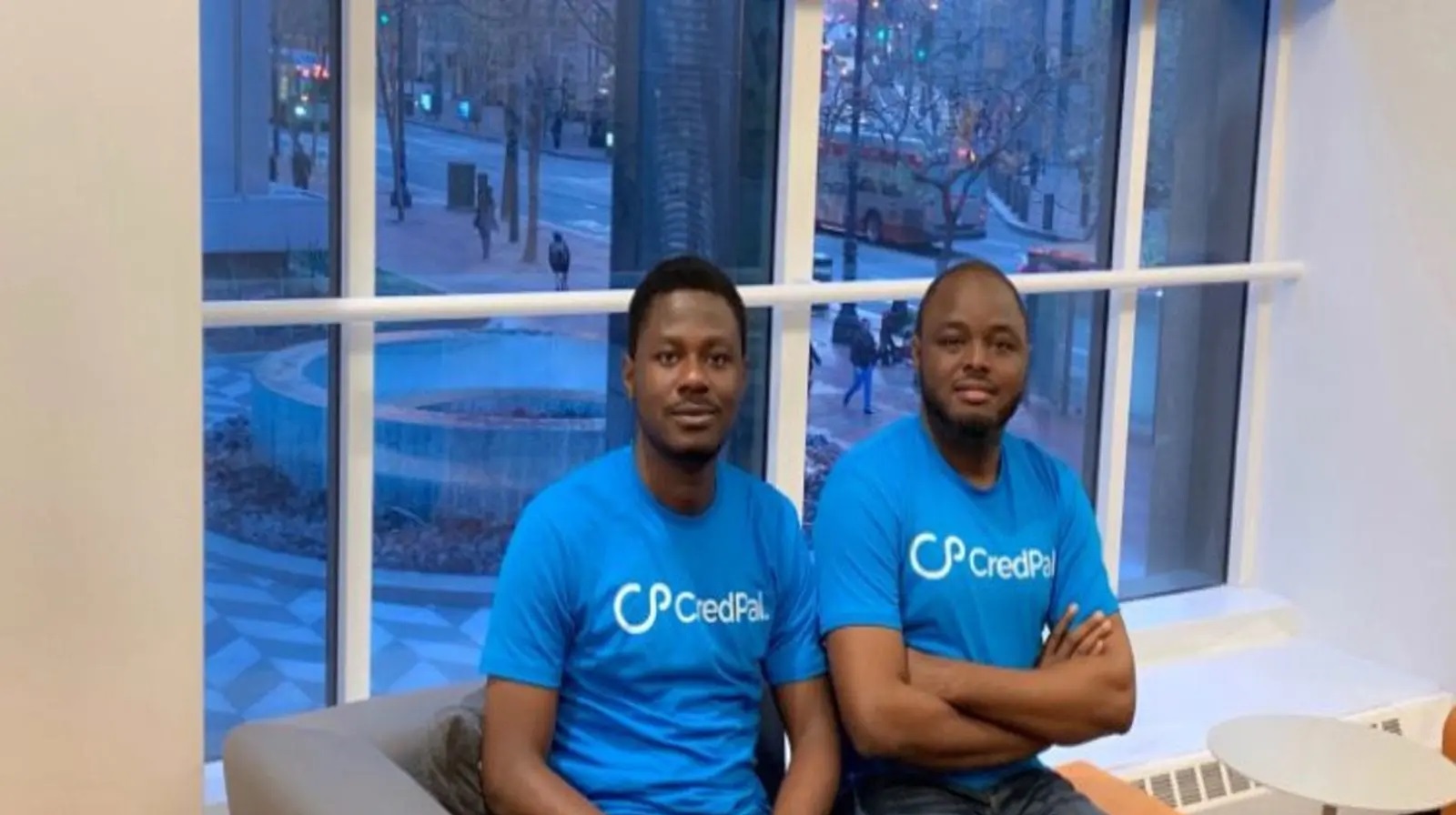
Launched in 2018 by Fehintolu Olaogun and Olorunfemi Jegede, CredPal is a buy-now-pay-later (BNPL) fintech that allows businesses and individuals to buy anything and pay for it in instalments with online and offline merchants.

CASF, a micro venture capital fund that invests in early-stage startups in the Middle East and Africa, has been leading the way for local investors in the African tech ecosystem, dominated so far by foreign investors. This is CASF’s first investment in Nigeria.

Launched in 2018 by Fehintolu Olaogun and Olorunfemi Jegede, CredPal is a financial technology company that has developed an innovative solution that allows businesses and individuals to buy anything and pay for it in installments across online and offline merchants by providing them with instant access to credit at the point of checkout.

The startup provides a platform that facilitates users to set up their accounts and choose their payment plans leveraging technology to minimize risk and seamlessly connect to multiple financial institutions that provide credit for customers.

CredPal has over 85,000 active customers and more than 4,000 active merchants. The funding in this round will be used to expand across Africa with a focus on key markets, such as Egypt, Kenya, Ghana, and Cameroon.

“This support from Cairo Angels Syndicate Fund reinforces our mission to improve the quality of life of Africans through easy access to consumer credit. My co-founder and I are very pleased to have them as investment partners and can’t wait for how much we’ll achieve together” stated Fehintolu Olaogun, Co-Founder and CEO, CredPal.

Aly El Shalakany, CEO of the Cairo Angels Syndicate Fund, said, given Africa’s underserved BNPL market, CredPal has a great growth potential.

“We couldn’t be more proud of our investment in CredPal, which is our first investment in Nigeria. Fehintolu and Olorunfemi have built an incredible FinTech platform that provides credit to thousands of underserved individuals and businesses in Africa and will be expanding rapidly to other key markets, including Egypt.

“BNPL has proven to be a successful business model that is a compelling alternative to traditional forms of consumer credit, especially in emerging and frontier markets where credit card penetration is very low and usually unavailable to the masses,” he said.

Nigeria Loses $1.7 billion Malabu case Against JP Morgan

1

Nigeria has lost its $1.7 billion suit against JP Morgan Chase over how the American bank transferred the proceeds from the sale of OPL 245 in that corruption-ridden Malabu oil transaction. Nigeria made a case that the bank was  “grossly negligent” for wiring the money paid by oil majors like Eni and Shell into a Dan Etete-controlled escrow account. Nigeria’s core argument was that JP Morgan should have smelt “fraud” in the transaction.

When Nigeria filed this case, I wrote that it was always hard to win a case against banks when the core argument rests on a bank’s inability to decipher intents, under full banking ordinance and approved mandates. In other words, you assume that the bank expects the transaction to be fraudulent even as the bank is meeting legal contractual obligations of its customers. 

Consider this: the Central Bank of Nigeria released all the alleged funds which former CSO under President Jonathan was alleged to have mismanaged. When CBN was called to explain why it did not stop those transactions, the apex bank argued before the Senate that it could not have stopped the transactions since the right signatories approved the funds! Simply, CBN was not thinking into the transactions, it was only checking if the approved person is offering the instructions. 

Sure, banks do have obligations to stop transactions when they have overwhelming concerns of fraud but many banks do not like to do that since it means they will lose fees and the customers.

Nigeria expected JP Morgan to smell fraud. JP Morgan actually did. But it did what banks do: it punted. How did it do that? It wrote to Britain’s financial crime agency which signed off for it to make the payment.  On that strength, it got a cover: afterall, the UK government approved the transaction  and you cannot just blame this bank. It is like a bank in Lagos has concern to execute a customer transfer request, writes EFCC and receives approval to go ahead, and then in the future, a party comes and accuses the bank that it made a mistake to have allowed the transactions.

Nigeria needs journalism practice that pushes people to solve problems

0

Editor’s Notes

Despite the existence of theoretical grounds that emphasise the need for development and developmental journalism practices, Nigerians have been bombarded with negative events more than positive events throughout the years. Solutions journalism originated as a new style of journalism practice as a result of the media stakeholders’ failure to produce good news more than bad news. Reporting on people’s responses to issues is the emphasis of solutions journalism.

In this regard, our analyst interacts with Dr. Adebiyi Rasheed Ademola, who recently received a Solutions Journalism Fellowship from the Solutions Journalism Network in the United States, which was implemented by Nigeria Health Watch in Abuja. He believes that it is high time that media practitioners and owners have mindset shift in terms of news they produced and how they produced them for the public consumption.

Excerpts

Tekedia: Can we meet you, please?

A: I am Rasheed Ademola Adebiyi. I hold a PhD from the University of Ibadan. I teach at the Department of Mass Communication, Fountain University, Osogbo, Nigeria. Currently, I am a 2022 fellow of the Solutions Journalism Africa Fellowship with the main aim of mainstreaming Solutions Journalism practice and teaching in the media ecosystem in Osun State, Southwest Nigeria.

Tekedia: Can you tell us more about the fellowship?

Adebiyi: Thank you very much. As I stated earlier, the main mandate of the fellowship is to advocate for the practice and teaching of Solutions Journalism by newsrooms and media learning centres. The fellowship is supported by the Solutions Journalism Network, New York and implemented by the Nigeria Health Watch, Abuja. I intend to achieve this in four different ways. One, I put forward advocacy. Two, I train the newsrooms and their journalists on solutions reporting. Three, I create a WhatsApp hub for SoJo in the state. Four, I monitor the generation of solutions stories. I have been on advocacy visits to selected newsrooms and Departments of Mass Communication in the state talking to them on how to mainstream this brand of journalism into their curriculum and practice.

I have been advocating for four mind-shifts- focus, pedagogical, role and space. I have been engaging newsrooms on how to shift focus from problem reporting to solutions reporting. I have had conversation with the learning centres on how to shift from the philosophical background of bad news is news to good could be news. I have also told the media ecosystem in the state to move from the watchdog role to the guide dog role. I have also advocated for more space for solutions reporting. On this mandate, I have visited Rave FM, Osogbo, Osun State Broadcasting Corporation (OSBC), Osogbo, Nigerian Television Authority, Osogbo as well as state offices of News Agency of Nigeria and Voice of Nigeria. I have also met with media professional bodies in the state such as the Nigerian Union of Journalists, National Association of Women Journalists and Online Media Practitioners of Nigeria. The reception has been wonderful. I also had a training for selected journalists last Wednesday. Besides these interactions with professionals, I also engaged the academia through seminars and presentations. I am due to present to a panel comprising of both the media teachers and practitioners at the Lagos Studies Association conference coming up later this month (June, 2022).

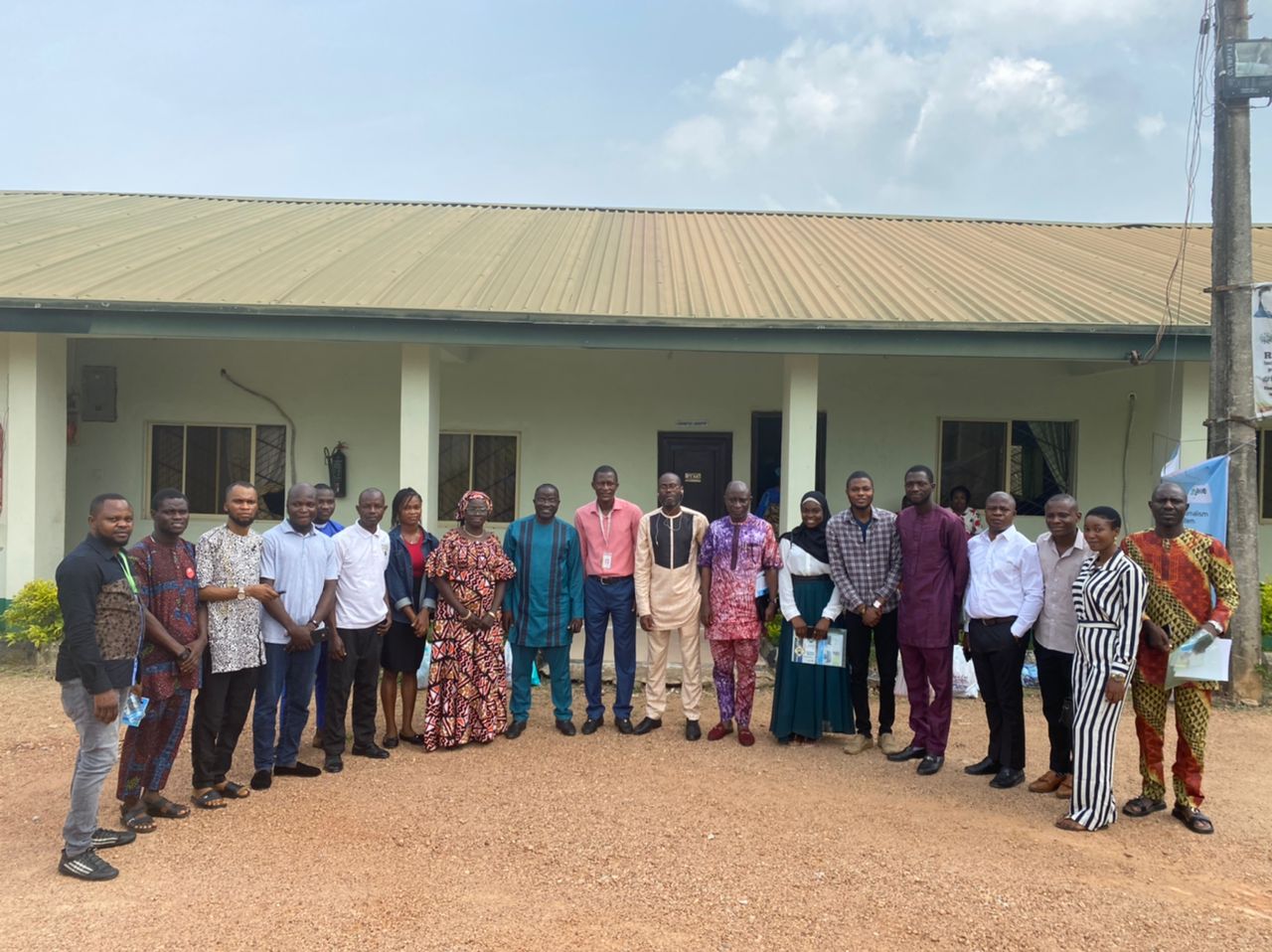
The Convener, Facilitators and Participants after training

Tekedia: You have mentioned a lot about Solutions Journalism, its practice and teaching. Could you tell us how it is different from the usual journalism practice that we know?

Adebiyi: Well, Solutions Journalism is a new trend in journalism that focuses on response to social problem. It is rigorous and evidence based and it seeks to draw insights from the response. Not only that, solutions reporting also looks for evidence that the response works (or not) and reports limitations of the response. It is different from the problem-focused reporting because instead of considering the problem, it engages the response to the problem thereby giving agency to people to solve their own problems. It gives the opportunity to people to at least take off their eyes from the everyday problem which is becoming normal in their lives and directs such focus on responses to these problems. SoJo also ensures that the whole story is told. The whole story in the sense that for every problem in any society, there are responses to such by people within the society whose voices are not being accentuated. So, what we are advocating is that journalists and reporters should tell the complete story of what is happening in the society.

Tekedia: Interesting. What was your experience on the journey so far?

Adebiyi: The experience has been wonderful. The reception has been amazing. Interestingly, the newsrooms have been generating some kind of solutions-related content. For instance, both the TV and radio stations visited have one or two programmes which are focusing on responses one way or the other. So, in those instances, we pleaded that SoJo should be incorporated into their everyday consumable content such as news. By bringing solutions stories into the news, they increase the frequency at which people have access to the solutions-focused stories.

For journalists, they see SoJo as what they have been doing but it comes only once in a while. To them, we urged them to put more focus on solutions reporting. A lot of the time, the question was to understand the difference between solutions reportage and development reporting. We always provided the difference as solutions journalism is a strand of development reporting which is seeking to put people in the driver’s seat of their development journeys. Questions that bothered on their fears were thrown at us, we tried to answer the questions as creatively as possible. This is because these fears are likely barriers against the practice of solutions journalism. Largely, the experience has been wonderful.

Tekedia: Moving forward, what is your focus after the fellowship?

Adebiyi: After the fellowship, continuous engagement of the issues raised in the course of the fellowship would continue. I have a plan to establish a Media Innovation Laboratory where I continue to engage issues militating against independent media such as financing, ownership interference, engagement of development issues and other problems. On the advocacy journey, I saw a gap in continuous professional education for journalists and media practitioners. I intend to fill the gap with the proposal of a media laboratory where we would continue to engage those issues and more.

Tekedia: Thank you for your time.

Adebiyi: My pleasure.

INEC should go fully digital

0

Why is no one asking questions about how strenuous INEC has made registering and getting PVC in Nigeria since the introduction of enfranchisement and Democracy. I can go with the conspiracy theory that claims that it is an intentional ploy to disenfranchise citizens, especially voters in the south. 

In the United States and the United Kingdom that Nigeria has been copying its political and democratic structure, there’s nothing like Voters’ cards or registration of voters. In the USA all you need to have to vote is a means of identification like your driver’s license or whatever valid ID you can provide to show you are a citizen, in the UK you don’t even need to provide any means of Identification because your details are already saved in the government’s database. 

Why will a Nigerian have different valid means of Identifications like Drivers license, NIN, BVN, International Passport, etc and they will still be expected to go and spend the whole day in the INEC voters registration centers to register for Voters card and after registration, the voters’ card will take months before it will be ready for collection and the citizen will also go and queue up for the whole day to sort out his own PVC and collect it. 

It is a shame. 

The Nigerian system is fundamentally structured to stress individuals. If we are to go by the augments in favor of the need for voters card/ PVC, why not make it totally digital and less strenuous, so that anyone of age who is ready to get one can apply at the comfort of his home online and if you the person is not technologically savvy to run the online application he can approach accredited cyber cafes to apply for the PVC, even if it is for a fee. Citizens would rather pay an application fee and get what they need quickly instead of going to INEC registration venues to fight and struggle and queue under the scorching sun or heavy rain just to be attended to. 

Why can’t the Nigerian government also have a unified database for citizens? How many means of identification will a Nigerian acquire in his or her lifetime and the process of getting any of these means of identification is unnecessarily stressful. Getting an international passport takes months, getting a NIN takes months, and the whole process is marred with the Nigerian factor of corruption. 

Since digital electioneering has been introduced, it will be in all good consideration and conscience if the means of registering to participate in the electioneering process for qualified citizens is totally digitized too if not anything other than this will amount to an intentional ploy by INEC and their cohort to disenfranchise some targeted set of voters.