DD
MM
YYYY

PAGES

DD
MM
YYYY

spot_img

PAGES

Home Blog Page 5095

Insecurity Crisis In Nigeria Tumbles Foreign Investment In The Agric Sector By 99%

0

Sources disclose that capital importation in Nigeria’s agriculture sector tumbled by 99.23 percent from $237.83m in the fourth quarter of 2021 to $1.76m in the first quarter of 2022. This signifies that there was a 99.23 percent decline within three months.

This was contained in the Nigerian capital importation report for Q1 2022 released by the National Bureau of Statistics. According to the report, it disclosed that at least 352 farmers had been killed and kidnapped in the past 12 months, amid rising insecurity in Nigeria.

In the figures obtained from the Nigeria security tracker, it showed that the 352 comprised 216 killed farmers and 136 kidnapped farmers. However, the figures are said to exceed 352 as there were cases of killings and kidnappings of farmers by unknown numbers.

Not only is the agricultural sector affected, but the rising insecurity has also affected the ease of doing business in the country, as a 2019 world bank annual ratings on the ease of doing business, ranked Nigeria 131 among 190 economies.

The insecurity challenge has constituted a threat to lives and properties which has seen a large number of farmers killed on their farmlands, while those who narrowly escaped are faced with the fear of returning which has affected food production in the country.

The insecurity crisis has discouraged local and foreign investors from investing in the agricultural sector, which is stifling and retarding socio-economic development as well as posing a serious challenge to the Gross Domestic output

Due to the halt of agricultural activities in some parts of the country, following the insecurity crisis, food Security which is essential for the country, has declined, thereby threatening food supply which has led to the increase in food prices.

Nigeria is known to be one of the largest producers of yam, cassava, and cowpea. Ironically, the country remains a food deficit nation with over-dependence on the importation of food commodities, grains, as well as livestock products.

It is estimated that Nigeria has cultivable land of 71 million hectares, yet only half is currently used for farming. Many have attributed this reason to the worrisome insecurity crisis that has seen herdsmen gruesomely attack and kill farmers, who a large percentage of them helplessly continue to abandon their farmlands.

This has seriously affected the country, as a large percentage of its population continues to groan under soaring food prices, coupled with hunger, malnutrition, and poverty, with an estimated 80 percent of its population living on less than $1 a day.

The government of Nigeria continues to handle the issue of insecurity with levity and disdain which has led to the decline of local and foreign investors in the Agricultural sector in the country.

No investor will be ecstatic to invest in a country that is ravaged by a widespread insecurity crisis, because it will pose a serious challenge to their investments. They will rather avoid such territories than avoid the risk of loss.

There is growing evidence that investing in underdeveloped and developing countries’ agricultural sectors is among the most efficient ways to reduce poverty and hunger, as such investment can generate a wide range of developmental benefits.

Unfortunately, due to the insecurity crisis in Nigeria, it will no doubt lead to lack of investors, especially in the agricultural sector which will no doubt affect the food production output as well as stagnate production.

The state of insecurity is currently at a frightening level which portends serious adverse implications for the country’s economic growth. It’s high time the government does something serious about the insecurity crisis in the country, because it will surely aggravate Nigeria’s capacity to attract and retain new investments if no serious measures are put in place.

INEC Releases 209 More Machines to the Southeast, Lagos and Kano As Huge Turnout Slows PVC Registration

0

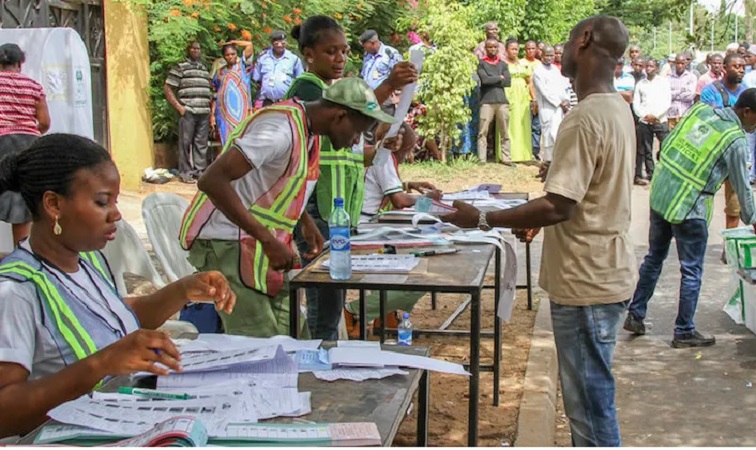
Following reports of glitch-filled voters’ registration across the country, particularly in the Southeast, Lagos and Kano, the Independent National Electoral Commission (INEC) has been propelled to increase the number of voter enrolment machines in the affected areas.

Nigerian youths are coming out in numbers never seen before for voters’ registration as the country’s 2023 national assembly and presidential elections approaches. However, reports from the registration centers suggest that the INEC is unprepared for the huge turnout, resulting in an alleged attempt to disenfranchise some Nigerians.

The development, which came with tribal undertone as many of the complainants’ claim that the INEC personnel are deliberately refusing to register the Igbos, was criticized by well-meaning Nigerians. The Igbos are reportedly trooping out en masse in Lagos and the Southeast for the registration exercise, a development said to be a remarkable shift from their previous insouciant attitude toward elections.

The criticism which was followed by a call on the electoral umpire to urgently address the issue has compelled it to act. A statement signed by the Chairman, Information and Voter Education Committee, Barr. Festus Okoye on Friday, says that the INEC has released additional 209 machines to the areas overwhelmed by the huge turnout.

Read the statement below:

“The Independent Electoral Commission has received reports from our States indicating an unprecedented surge in the number of citizens that wish to register as voters and the challenges they face across the country.

“In some States, the sudden turnout of prospective registrants is overwhelming. Consequently, the Commission convened an urgent meeting with all the Resident Electoral Commissioners (RECs) yesterday Thursday 9th June 2022 to review the situation so that eligible Nigerians who wish to register are able to do so.

“The necessity to urgently deploy more voter enrolment machines to ease the congestion at the registration centres was identified as a priority. In response, the Commission has immediately released additional 209 machines deployed mainly to the five South Eastern States, Lagos and Kano where the pressure is most acute.

“The Commission will monitor the situation over the next few days. Thereafter, it will meet to review the progress of the exercise. Every step will be taken and all options will be explored to ensure that eligible Nigerians are given the opportunity to register as voters. The Commission appeals for patience and understanding of all citizens.

“Every Nigerian who is 18 years of age and above has the constitutional right to register and vote in any part of the country he/she resides without let or hindrance. The sudden surge is an affirmation of the increasing confidence Nigerians have in our electoral process. The Commission will continue to ensure that this confidence is sustained.”

Join Ndubuisi Ekekwe at RECALP 2022 on Monday, June 13 at 9am WAT

0

Good People, join me on Monday (June 13) on Dove TV, the official TV of the Redeemed Christian Church of God, at 9am WAT, as I speak on Careers and Entrepreneurship during RECALP 2022 on the theme “Equipping the next Generation”. You can also be in the audience at 39/41 Ogudu Rd, Ojota Rd, Lagos.

RECALP

CBN to Introduce USSD to Push for Wider Adoption of eNaira

0

In October, Nigeria became the first country to launch a Central Bank Digital Currency (CBDC) dubbed eNaira. The swift development of the eNaira followed a cryptocurrency frenzy that rattled central banks globally, threatening fiats as it burgeoned through wide adoption.

For a country like Nigeria that its currency – the naira – was on a free fall, giving the people a digital fiat as an alternative to cryptocurrency seemed like a solution.

However, the launch of the eNaira has done not much to save the naira from losing value, mainly due to poor adoption. As of early this year, the eNaira has recorded nearly 700,000 downloads, 165,000 consumer wallets and 2800 merchant wallets. A very poor turnout compared with the number of people who use cryptocurrency despite that it is prohibited in Nigeria.

Now the Central Bank of Nigeria (CBN) wants to introduce the Unstructured Supplementary Service Data (USSD) code as part of steps to entice more people to use the digital currency.

NAN reports that Kingsley Obiora, the CBN Deputy Governor disclosed this at the IMF African Department Speakers Series held virtually on Friday. Obiora said the introduction of the USSD code became necessary to improve financial inclusion in the country and to ensure people without smartphones could still transact on the eNaira platform.

“We have made serious progress in the last seven to eight years because when the current governor resumed in 2014, one of the pillars of his vision was to significantly improve financial inclusion.

“So at the time, we were at 48 per cent of our population within the financial system and given several policies that he conceived and implemented, we are almost at 70 per cent.

“That still leaves us with about 30 per cent of our population out of the financial system and we believe the CBDC can help reduce that number even more.

“A lot of people might not have smartphones but that is essentially the next step of our improvement in the CBDC, to introduce the USSD code, so those that do not have smartphones can still transact,” Obiora said.

The CBN deputy governor said that the barrier to entry on the CBDC platform was low, which made it possible for everyone with a Bank Verification Number (BVN) to be onboarded into the eNaira platform in a few minutes.

Obiora said the value of the country’s digital payments grew from 324 billion dollars in 2008 to about 2.4 trillion dollars presently, adding that Nigerians were now used to digital payments.

”As you know, within the content we have one of the largest Fintech companies, Futterwave, Paystack, etc,” the apex bank boss added.

He said that the CBDC had significant benefits for Nigeria, which was why the CBN decided to introduce it.

Obiora listed the benefits to include rapid financial inclusion, reducing the cost of processing cash, enabling direct welfare payments to citizens, and reducing the informal economy.

Others are improving tax collection, boosting cross-border trade and remittances, reducing the cost and improving the efficiency of payments and just endearing economic growth in general.

He, however, listed some of the key risks to introducing the CBDC including banking sector disintermediation, operational risks of knowing that there is non-stop service, cyber security risks, internet disruptions and financial literacy.

Obiora said that Nigeria was doing well based on a PwC report, which showed that Nigeria was number one in terms of adoption, adding that the CBN would keep growing and improving on the system.

Cryptocurrency remains a big subject yet to be addressed by Nigeria’s financial regulator. Though the Securities and Exchange Commission has outlined guidelines to regulate the entire Nigeria’s digital asset ecosystem, the CBN is yet to come on board with the idea.

Obiora said cryptocurrency would not become part of the country’s financial system for now because of the volatility that it could create for the system.

Unemployment: National Agricultural Mechanization Cooperative Of Nigeria (NAMCON) To Revolutionize Agriculture In 36 States

0

In a bid to address the issue of unemployment in Nigeria, the National Agricultural Mechanization Cooperative Of Nigeria, NAMCON is set to establish agro extension service centers in 528 local government areas across the 36 states of the federation.

The establishment of these centers is aimed at providing jobs for unemployed 15 youths per local government area. These youths will be employed as technical staff, agro extension service staff, and operators.

NAMCON has prioritized five key intervention areas in the agricultural sector, which are, Nigeria mechanism Agro-extension service scheme, women nurturing birds for wealth empowerment program, strategic skill acquisition program and farmers house, mass housing project for farmers, and Nigeria Agro space market.

Sources disclosed that the training has already commenced in Kaduna state. About 2,300 people resident across the 34 local government areas in the states are said to be currently undergoing training.

NAMCON disclosed that it aims to train and empower the beneficiaries in poultry farming, which is mostly made up of youths and women. This program, set up by NAMCO, will no doubt assist the government in the creation of jobs and also help to alleviate poverty in the country.

Looking at the crisis of food shortages that a large number of African countries are faced with, majorly due to the Russian-Ukraine war, such training programs will come in handy, because the input of those registered on the program will help to curb food insecurity across the country and possibly lead to the exportation of food products, which will boost Nigeria’s economic revenue.

NAMCON disclosed that it has a target to empower 15 million people in Nigeria in mechanized farming. This is commendable, because looking at the Agricultural sector in Nigeria, it is one sector that has remained untapped.

There are so many hidden potentials in the agricultural sector yet to be explored. With this program, such underlying potentials will be maximized which will see the inclusion of so many unemployed youths in the agricultural sector.

With the inclusion of tech-savvy youths in the agricultural sector, they will leverage technology and create a pathway for Nigeria to increase food productivity and competitiveness to curb food insecurity in the country.

NAMCON should ensure to support the agricultural system to enable youths to drive innovation in the sector, and also grow their incomes and the country’s revenue through sustainable and scalable food and technological farming practices.

In Nigeria, the high rate of unemployment and poverty has for a long time been a cause of concern to the government. Some youths out of frustration of being unemployed have subscribed to vices in the society, thereby causing chaos and insecurity in the country.

This unemployment issue can no doubt be solved by empowering these youths through agricultural development programs that will enable them to have opportunities for self-employment in Nigeria.

However, youth participation in the agricultural sector in the country has been largely low because the sector has been made unattractive due to risk, lack of funding, inadequate technology, and the likes. In order to change the negative perception of agriculture these youths have about agriculture, it will require a level of multilevel intervention from the government and agricultural bodies in the country, for them to view agriculture as a lucrative career path.